MOTOSHARE 🚗🏍️
Rent Bikes & Cars Directly from Owners
Motoshare connects vehicle owners with people who need bikes and cars on rent. Owners earn from idle vehicles, and renters get flexible ride options.
Visit Motoshare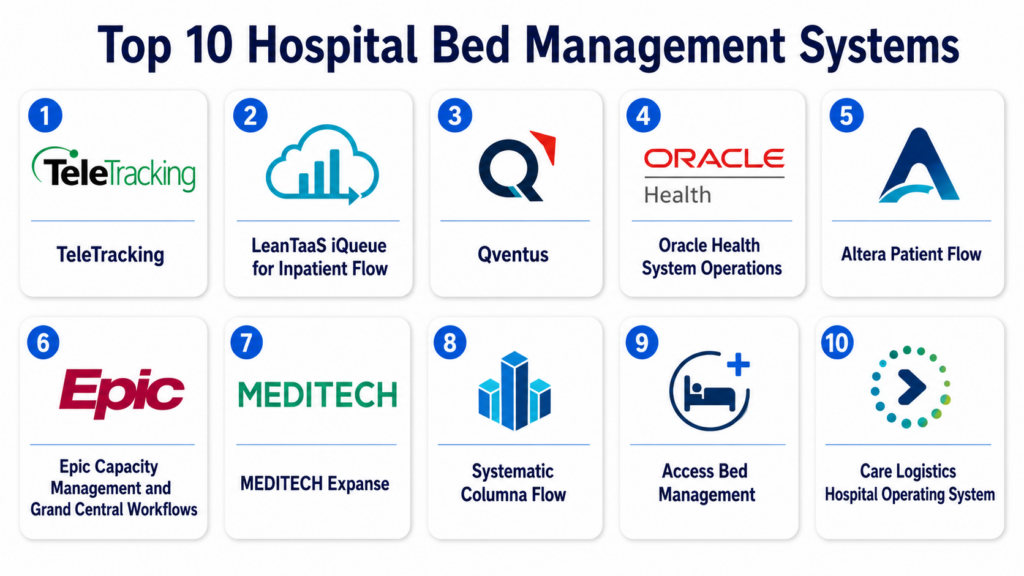
Introduction
Hospital Bed Management Systems help hospitals track bed availability, patient admissions, transfers, discharges, cleaning status, isolation needs, nursing capacity, and patient flow in real time. In simple terms, these systems help care teams know which beds are occupied, which beds are being cleaned, which beds are blocked, which patients are waiting, and which units are under pressure. Bed management is a core hospital operation, but it is often difficult because it depends on emergency demand, inpatient capacity, discharge timing, transport, housekeeping, staffing, and clinical priority. Real-time bed visibility and coordinated workflows can help hospitals reduce delays, improve patient throughput, and use existing capacity more effectively.
Real World Use Cases
- Real-time bed visibility: Track available, occupied, dirty, clean, blocked, isolation, ICU, step-down, and specialty beds.
- Admission and transfer coordination: Match patients to appropriate beds based on acuity, gender, service line, isolation, equipment, and staffing.
- Discharge planning: Forecast likely discharges and coordinate downstream bed availability earlier.
- EVS and housekeeping workflows: Assign bed cleaning tasks, monitor turnaround time, and reduce bed-ready delays.
- Emergency department decompression: Reduce boarding by improving inpatient bed assignment and transfer coordination.
- Command center operations: Give capacity teams, nursing supervisors, and hospital leaders one operational view of patient flow.
Evaluation Criteria for Buyers
- Bed visibility: Real-time occupancy, bed status, unit status, isolation status, and capacity views.
- Patient flow workflows: Admission, discharge, transfer, transport, bed assignment, and escalation management.
- EVS and transport coordination: Housekeeping tasking, bed turnaround, transport requests, and service-level tracking.
- AI and predictive analytics: Discharge prediction, demand forecasting, bottleneck detection, and capacity recommendations.
- EHR integration: Integration with Epic, Oracle Health, MEDITECH, Altera, InterSystems, and other clinical systems.
- Operational dashboards: Capacity command center views, unit-level boards, executive dashboards, and throughput metrics.
- Ease of use: Simple workflows for nurses, bed managers, EVS teams, transfer centers, and command center users.
- Security controls: RBAC, SSO, audit logs, encryption, secure APIs, and healthcare data governance.
- Scalability: Support for single hospitals, multi-hospital systems, regional command centers, and enterprise capacity teams.
- Implementation support: Change management, workflow redesign, clinical operations expertise, training, and support services.
Best for: Hospitals, health systems, academic medical centers, emergency departments, transfer centers, command centers, bed management teams, nursing supervisors, EVS leaders, patient flow teams, and operations executives that need better visibility into inpatient capacity and patient movement.
Not ideal for: Small clinics, outpatient-only facilities, low-volume hospitals with simple manual workflows, or organizations that only need basic census reporting inside an existing EHR and do not have major bed capacity or patient flow challenges.
Key Trends in Hospital Bed Management Systems
- AI-enabled capacity planning: Hospitals are adopting predictive analytics to forecast demand, discharge likelihood, bed shortages, and staffing pressure.
- Command center models: Health systems increasingly use centralized operations centers to coordinate beds, transfers, transport, EVS, and system-wide capacity.
- EHR-connected bed workflows: Bed management is becoming more valuable when admission, discharge, transfer, clinical orders, and capacity data connect directly with the EHR.
- EVS and transport automation: Hospitals are reducing delays by automating bed-cleaning alerts, transport requests, status updates, and escalation workflows.
- Real-time situational awareness: Tools now give bed managers live visibility into occupancy, pending discharges, ED boarding, patient movement, and service-line constraints.
- Predictive discharge management: Platforms are helping hospitals identify likely discharges earlier so teams can prepare beds before demand peaks.
- Staffing-aware capacity: Bed availability is increasingly viewed not only as a physical bed count but also as a staffed, cleaned, clinically appropriate bed.
- Mobile and role-based workflows: Nurses, EVS teams, transporters, and supervisors increasingly need mobile-friendly task updates and status changes.
- Multi-site patient flow: Health systems want visibility across hospitals so they can balance demand, transfers, and specialty capacity.
- Operational analytics: Hospitals are using bed turnaround, length of stay, discharge timing, ED boarding, occupancy, and transfer delay analytics to improve throughput.
How We Selected These Tools
- We prioritized platforms recognized for hospital bed management, inpatient flow, capacity management, command center operations, and care logistics.
- We included dedicated patient flow systems, EHR-connected tools, AI capacity platforms, and broader hospital operations solutions.
- We evaluated support for bed visibility, admissions, transfers, discharges, EVS, transport, command centers, and operational dashboards.
- We considered integration readiness with EHRs, ADT feeds, transfer centers, nurse staffing systems, EVS tools, transport systems, and analytics platforms.
- We looked for systems that can support both single-hospital operations and multi-site health system capacity management.
- We considered AI, predictive analytics, workflow automation, and real-time operational decision support.
- We avoided guessing public ratings, certifications, or pricing where details are not clearly known.
- We considered usability for clinical operations leaders, nursing supervisors, bed managers, EVS leaders, transport teams, and executives.
- We reviewed support model, change management maturity, healthcare operations expertise, and implementation complexity.
- The scoring is comparative and should be validated through demos, pilot workflows, EHR integration testing, and operational outcome tracking.
Top 10 Hospital Bed Management Systems
1- TeleTracking
Short description:
TeleTracking is a hospital operations and patient flow platform focused on real-time capacity visibility, bed management, transfer coordination, and operational command center workflows. It helps hospitals coordinate patient movement, capacity decisions, and operational bottlenecks across departments and facilities. TeleTracking positions its platform around AI-powered insights, workflow automation, and enterprise-wide visibility for hospitals and health systems. It is best for large hospitals and health systems that need command-center-level coordination across beds, transfers, transport, and patient flow.
Key Features
- Real-time bed and capacity visibility
- Patient flow and transfer coordination
- Command center and enterprise operations dashboards
- Workflow automation for capacity teams
- AI-supported operational insights
- Support for multi-hospital system visibility
- Operational metrics for throughput and capacity
Pros
- Strong fit for large hospitals and health systems with complex patient flow needs.
- Useful for command center operations and enterprise-wide capacity visibility.
- Helps coordinate bed management, transfers, and operational escalation.
Cons
- May be more advanced than smaller hospitals need.
- Implementation requires workflow redesign and strong operational governance.
- Best value depends on integration quality and user adoption.
Platforms / Deployment
Web / Mobile options may vary
Cloud / Hybrid options may vary
Security & Compliance
Not publicly stated for every deployment context.
Buyers should validate SSO, RBAC, encryption, audit logs, HIPAA-aligned controls, API security, and data retention requirements.
Integrations & Ecosystem
TeleTracking is designed to connect operational capacity data with clinical, transfer, and hospital workflow systems.
- EHR and ADT systems
- Transfer center workflows
- EVS and transport operations
- Command center dashboards
- Capacity management teams
- Healthcare analytics platforms
Support & Community
TeleTracking provides vendor-led support, implementation services, healthcare operations expertise, and command center guidance. Support is especially important for workflow redesign, operational adoption, and multi-site rollout.
2- LeanTaaS iQueue for Inpatient Flow
Short description:
LeanTaaS iQueue for Inpatient Flow uses predictive analytics and AI to help hospitals dynamically manage inpatient capacity, bed demand, and patient flow. LeanTaaS describes the platform as using predictive analytics and AI to manage capacity and align workforce decisions with demand. It is especially useful for hospitals that want data-driven capacity planning, discharge prediction, and operational situational awareness. The platform can support bed managers, nursing teams, hospitalists, and operations leaders with real-time and predictive insight. It is best for hospitals looking to reduce reactive decision-making and improve inpatient throughput.
Key Features
- AI and predictive analytics for inpatient capacity
- Bed demand and discharge forecasting
- Real-time situational awareness dashboards
- Patient flow optimization workflows
- Staffing and capacity alignment support
- ED boarding and bottleneck visibility
- Analytics for throughput and operational performance
Pros
- Strong predictive analytics and AI orientation.
- Useful for hospitals trying to manage capacity more proactively.
- Good fit for data-driven inpatient flow improvement programs.
Cons
- Requires reliable hospital operational data.
- Best value depends on workflow adoption by clinical and operations teams.
- May need integration and change management support for full impact.
Platforms / Deployment
Web
Cloud
Security & Compliance
Not publicly stated for every deployment context.
Buyers should validate SSO, RBAC, encryption, audit logs, HIPAA-related safeguards, and healthcare data processing controls.
Integrations & Ecosystem
LeanTaaS iQueue for Inpatient Flow connects operational and clinical data to support predictive capacity management.
- EHR and ADT feeds
- Bed management workflows
- Discharge planning data
- Staffing and operations dashboards
- Hospital command center workflows
- Analytics and reporting tools
Support & Community
LeanTaaS provides customer success, implementation support, healthcare operations expertise, and analytics guidance. Support is important for aligning predictive insights with daily bed huddles, discharge planning, and capacity escalation workflows.
3- Qventus
Short description:
Qventus is a hospital operations automation platform that uses AI to support operational workflows across health systems. It is relevant for bed management because patient flow depends on discharge coordination, inpatient capacity, perioperative throughput, and operational bottleneck reduction. Qventus describes itself as automating hospital operations with AI teammates. The platform is best for hospitals that want AI-driven workflow automation rather than only static bed dashboards. It can help teams act earlier on capacity risks, discharge barriers, and operational tasks.
Key Features
- AI-supported hospital operations automation
- Discharge and throughput workflow support
- Operational task prioritization
- Predictive insights for hospital capacity
- Cross-functional coordination workflows
- Dashboards for operations leaders
- Automation support for high-impact hospital processes
Pros
- Strong AI and automation orientation.
- Useful when bed management depends on improving discharge and operational execution.
- Helps reduce manual follow-up and reactive coordination.
Cons
- Not a traditional standalone bed board for every hospital workflow.
- Use case fit depends on selected Qventus modules and implementation scope.
- Requires operational readiness for AI-assisted workflow change.
Platforms / Deployment
Web
Cloud
Security & Compliance
Not publicly stated for every deployment context.
Buyers should validate SSO, RBAC, encryption, audit logs, HIPAA-related safeguards, and integration security.
Integrations & Ecosystem
Qventus works best when connected with EHR and operational systems so AI workflows can support real-time hospital decisions.
- EHR and ADT systems
- Discharge workflows
- Capacity operations data
- Clinical operations dashboards
- Task and escalation workflows
- Hospital analytics systems
Support & Community
Qventus provides implementation support, customer success, workflow design guidance, and healthcare operations expertise. Support is especially valuable when deploying AI workflows into daily hospital operations.
4- Oracle Health System Operations
Short description:
Oracle Health System Operations supports hospital operational visibility, capacity management, and patient movement insights within Oracle Health’s healthcare ecosystem. Oracle describes its health system operations capabilities as providing near real-time data and intelligent bed management to improve patient movement and capacity decisions. It is especially relevant for hospitals using Oracle Health clinical systems and wanting capacity operations connected with enterprise healthcare data. The platform supports patient flow, throughput, admissions, and care transition visibility. It is best for Oracle Health-centered organizations that need capacity management integrated into a broader clinical operations platform.
Key Features
- Near real-time operational visibility
- Intelligent bed management support
- Patient movement and capacity insights
- Admissions and throughput workflow support
- Integration with Oracle Health ecosystem
- Operational dashboards for capacity teams
- Support for emergency and situational response workflows
Pros
- Strong fit for hospitals using Oracle Health systems.
- Useful for connecting capacity management with clinical operations data.
- Good option where bed management needs enterprise healthcare integration.
Cons
- Best value depends on Oracle ecosystem alignment.
- Hospitals using other EHRs should validate interoperability depth carefully.
- Deployment and configuration may require Oracle Health expertise.
Platforms / Deployment
Web
Cloud / Hybrid options may vary
Security & Compliance
Enterprise healthcare security capabilities may vary by Oracle configuration.
Buyers should validate RBAC, SSO, encryption, audit logs, HIPAA-related safeguards, API security, and data governance.
Integrations & Ecosystem
Oracle Health System Operations fits into Oracle-centered healthcare environments where bed management, clinical data, and operational capacity need to work together.
- Oracle Health clinical systems
- ADT and patient movement data
- Capacity dashboards
- Emergency operations workflows
- EHR and enterprise analytics
- Hospital operations command centers
Support & Community
Oracle provides enterprise support, implementation services, documentation, and healthcare technology expertise. Support quality depends on project scope, existing Oracle environment, and operational readiness.
5- Altera Patient Flow
Short description:
Altera Patient Flow is a suite of patient flow solutions for bed management, housekeeping, and transport operations. Altera describes the product as supporting bed management, housekeeping, and transport operations to maximize patient throughput and communication. It is especially relevant for hospitals that need bed visibility connected with EVS and transport task execution. The platform can integrate with EPR environments and support smoother patient transitions across care settings. It is best for hospitals looking for a practical patient flow suite that coordinates beds, housekeeping, and transport.
Key Features
- Bed management workflows
- Housekeeping and EVS coordination
- Patient transport operations
- Patient throughput visibility
- Communication and coordination support
- Integration with EPR and clinical systems
- Operational dashboards and task visibility
Pros
- Strong fit for bed, housekeeping, and transport coordination.
- Useful for reducing bed turnaround and patient movement delays.
- Practical for hospitals seeking an integrated patient flow suite.
Cons
- Best fit depends on integration with existing EHR or EPR systems.
- Buyers should validate regional product availability and implementation model.
- Advanced predictive analytics should be reviewed by use case.
Platforms / Deployment
Web / Mobile options may vary
Cloud / Hybrid options may vary
Security & Compliance
Not publicly stated for every deployment context.
Buyers should validate SSO, RBAC, encryption, audit logs, healthcare privacy controls, and access governance.
Integrations & Ecosystem
Altera Patient Flow can connect bed operations with housekeeping, transport, and clinical data workflows.
- EHR and EPR systems
- ADT feeds
- EVS systems
- Transport workflows
- Capacity dashboards
- Hospital operations reporting
Support & Community
Altera provides implementation assistance, customer support, documentation, and healthcare workflow guidance. Support is especially valuable when aligning bed, housekeeping, and transport teams.
6- Epic Capacity Management and Grand Central Workflows
Short description:
Epic supports patient movement, admissions, discharges, transfers, hospital census, bed assignment, and capacity-related workflows through its broader EHR ecosystem and operational modules. It is best for hospitals already using Epic that want bed management tightly connected with clinical documentation, orders, patient status, ADT workflows, and operational reporting. Epic’s strength is that bed and patient movement workflows can be embedded into the clinical system of record rather than managed separately. It is especially useful for health systems that want standardized workflows across inpatient, ED, perioperative, and transfer environments. Buyers should validate exact Epic module configuration with their implementation team.
Key Features
- Admission, discharge, and transfer workflows
- Bed assignment and census visibility
- Integration with clinical documentation and orders
- Patient status and movement tracking
- Operational reporting and dashboards
- Role-based workflows for inpatient teams
- Health-system standardization support
Pros
- Strong fit for hospitals already using Epic.
- Bed management data stays close to the clinical record.
- Useful for standardizing workflows across large health systems.
Cons
- Not always a standalone best-of-breed capacity command center by itself.
- Configuration quality depends on implementation and local workflow design.
- Advanced AI or external command center capabilities may require additional tools.
Platforms / Deployment
Web / Mobile / Desktop options vary by Epic environment
Cloud / Self-hosted / Hybrid options may vary
Security & Compliance
Enterprise healthcare security controls vary by Epic deployment and customer configuration.
Buyers should validate RBAC, SSO, audit logs, encryption, HIPAA-related controls, and access governance.
Integrations & Ecosystem
Epic bed and capacity workflows fit best inside Epic-centered clinical environments but can also connect with operational tools through interfaces.
- Epic EHR and ADT workflows
- Transfer center systems
- Reporting and analytics tools
- EVS and transport integrations
- Command center dashboards
- Enterprise data warehouses
Support & Community
Epic provides implementation guidance, customer support, training resources, and a large healthcare customer community. Success depends heavily on internal Epic analysts, operational ownership, and workflow governance.
7- MEDITECH Expanse
Short description:
MEDITECH Expanse is a web-based EHR platform that supports clinical workflows, care coordination, patient records, and operational processes for hospitals and health systems. While it is broader than a dedicated bed management system, it can support patient movement, ED coordination, inpatient workflows, and capacity-related visibility within a connected EHR environment. MEDITECH describes Expanse as a web-based platform designed for connected care, interoperability, cloud technology, and AI-enabled healthcare workflows.It is best for MEDITECH hospitals that want bed and patient flow workflows connected with the core EHR.
Key Features
- Inpatient and emergency department workflow support
- Patient movement and care coordination
- Web-based clinical platform
- Interoperability support
- Operational and clinical data visibility
- Care team communication workflows
- EHR-connected reporting and analytics
Pros
- Strong fit for hospitals already using MEDITECH.
- Useful for keeping capacity workflows close to patient records.
- Good option for mid-sized hospitals and health systems standardized on MEDITECH.
Cons
- Not a standalone specialized capacity command center for every use case.
- Bed management depth depends on configuration and modules.
- External patient flow tools may be needed for advanced AI capacity optimization.
Platforms / Deployment
Web / Mobile options vary by MEDITECH environment
Cloud / Hybrid options may vary
Security & Compliance
Enterprise healthcare security controls vary by deployment and customer configuration.
Buyers should validate RBAC, SSO, encryption, audit logs, HIPAA-related safeguards, and operational access policies.
Integrations & Ecosystem
MEDITECH Expanse can connect patient flow and bed-related workflows with clinical documentation, ED workflows, and hospital operations data.
- MEDITECH EHR workflows
- ADT and census data
- ED management workflows
- Reporting and analytics systems
- Care coordination tools
- Interoperability interfaces
Support & Community
MEDITECH provides customer support, documentation, training, implementation services, and an established hospital customer ecosystem. Success depends on configuration, workflow design, and internal operational governance.
8- Systematic Columna Flow
Short description:
Systematic Columna Flow is a hospital care and patient flow solution designed to support planning, task execution, hospital coordination, equipment visibility, and patient flow optimization. Systematic describes Columna Flow as supporting planning, execution, optimization of tasks, central coordination of patient flow, and identification of equipment and staff. It is especially useful for hospitals that need operational coordination across departments and staff roles. The platform is relevant for capacity management, workflow coordination, equipment location, and hospital-wide task orchestration. It is best for hospitals seeking a structured patient flow and operations coordination platform.
Key Features
- Patient flow coordination
- Hospital task planning and execution
- Operational workflow optimization
- Equipment and staff visibility support
- Cross-functional collaboration workflows
- Hospital navigation and coordination features
- Real-time operational status visibility
Pros
- Strong fit for hospital-wide operational coordination.
- Useful when bed flow depends on tasks, staff, equipment, and movement visibility.
- Good option for organizations seeking integrated care logistics workflows.
Cons
- Buyers should validate exact bed management depth and regional availability.
- Integration with local EHR and hospital systems is important.
- Implementation requires workflow alignment across multiple hospital teams.
Platforms / Deployment
Web / Mobile options may vary
Cloud / Hybrid options may vary
Security & Compliance
Not publicly stated for every deployment context.
Buyers should validate RBAC, SSO, encryption, audit logs, healthcare privacy safeguards, and access controls.
Integrations & Ecosystem
Columna Flow can support hospital operations where patient flow, tasks, equipment, and staff coordination need to be connected.
- EHR and ADT systems
- Task management workflows
- Equipment location systems
- Staff coordination workflows
- Operational dashboards
- Hospital wayfinding systems
Support & Community
Systematic provides vendor support, implementation guidance, documentation, and healthcare operations expertise. Support is important for cross-functional workflow design and hospital adoption.
9- Access Bed Management
Short description:
Access Bed Management is an electronic bed management solution designed to help healthcare organizations monitor admissions, discharges, patient flow, and bed availability across wards. Access describes its bed management software as helping users monitor admissions, discharges, and patient flow while identifying bed availability across wards during periods of high demand. It is particularly relevant for hospitals and health systems looking for practical bed visibility and patient flow coordination. The platform is best for organizations that need focused electronic bed management rather than a broad command center transformation.
Key Features
- Bed availability monitoring
- Admissions and discharge visibility
- Ward-level bed status tracking
- Patient flow support
- Operational dashboards
- Capacity visibility during demand pressure
- Role-based bed management workflows
Pros
- Focused electronic bed management functionality.
- Useful for improving visibility across wards and admissions workflows.
- Practical for organizations seeking a direct bed management solution.
Cons
- Buyers should validate fit for advanced command center and AI requirements.
- Regional product availability and integrations should be reviewed.
- May need additional tools for transport, EVS, or predictive analytics.
Platforms / Deployment
Web
Cloud / Hybrid options may vary
Security & Compliance
Not publicly stated for every deployment context.
Buyers should validate SSO, RBAC, encryption, audit logs, healthcare privacy controls, and data retention policies.
Integrations & Ecosystem
Access Bed Management can support hospitals that need bed status and patient flow visibility connected with clinical and operational workflows.
- EHR and patient administration systems
- ADT feeds
- Ward dashboards
- Discharge workflows
- Operational reporting
- Capacity planning tools
Support & Community
Access provides customer support, implementation assistance, documentation, and healthcare software expertise. Support is valuable for workflow configuration and ward-level adoption.
10- Care Logistics Hospital Operating System
Short description:
Care Logistics provides hospital operations and patient flow solutions focused on improving care progression, throughput, discharge coordination, and operational alignment. It is relevant for hospitals that want a structured operating model supported by technology and process redesign. The platform can help coordinate patient progression, reduce unnecessary delays, and improve accountability across departments. It is best for hospitals that need more than a bed board and want operational transformation around patient flow, discharge readiness, and care coordination. Buyers should validate exact product modules and integration scope based on current Care Logistics offerings.
Key Features
- Patient flow and care progression workflows
- Discharge coordination support
- Throughput and operational performance visibility
- Cross-department accountability workflows
- Capacity and bottleneck management support
- Operational dashboards and escalation tracking
- Process redesign and implementation methodology
Pros
- Strong fit for hospitals seeking patient flow transformation.
- Useful when bed delays are caused by coordination and discharge barriers.
- Combines operational process focus with technology-enabled workflows.
Cons
- Not always a simple plug-and-play bed board solution.
- Success depends heavily on change management and leadership engagement.
- Buyers should validate current product capabilities and integration requirements.
Platforms / Deployment
Web options may vary
Cloud / Hybrid options may vary
Security & Compliance
Not publicly stated.
Buyers should validate RBAC, SSO, encryption, audit logs, healthcare privacy controls, and data governance.
Integrations & Ecosystem
Care Logistics can connect patient flow processes with hospital operations, EHR data, and care coordination workflows.
- EHR and ADT systems
- Discharge planning workflows
- Patient progression dashboards
- Operational analytics
- Capacity management teams
- Hospital leadership reporting
Support & Community
Care Logistics typically emphasizes operational methodology, implementation support, and healthcare operations expertise. Support is important because success depends on workflow adoption, leadership alignment, and sustained process change.
Comparison Table
| Tool Name | Best For | Platform Supported | Deployment | Standout Feature | Public Rating |
|---|---|---|---|---|---|
| TeleTracking | Enterprise patient flow and command centers | Web / Mobile varies | Cloud / Hybrid varies | AI-powered operations visibility and workflow automation | N/A |
| LeanTaaS iQueue for Inpatient Flow | Predictive inpatient capacity management | Web | Cloud | AI and predictive analytics for bed demand and discharge planning | N/A |
| Qventus | AI-driven hospital operations automation | Web | Cloud | AI teammates for operational workflow automation | N/A |
| Oracle Health System Operations | Oracle Health-centered capacity management | Web | Cloud / Hybrid varies | Near real-time patient movement and bed management insights | N/A |
| Altera Patient Flow | Bed, housekeeping, and transport coordination | Web / Mobile varies | Cloud / Hybrid varies | Integrated bed management, EVS, and transport workflows | N/A |
| Epic Capacity Management and Grand Central Workflows | Epic-centered patient movement and bed workflows | Web / Mobile / Desktop varies | Cloud / Self-hosted / Hybrid varies | Bed workflows embedded in Epic clinical operations | N/A |
| MEDITECH Expanse | MEDITECH-centered clinical and patient flow workflows | Web / Mobile varies | Cloud / Hybrid varies | EHR-connected patient movement and operational visibility | N/A |
| Systematic Columna Flow | Hospital-wide patient flow and task coordination | Web / Mobile varies | Cloud / Hybrid varies | Central coordination of patient flow and hospital tasks | N/A |
| Access Bed Management | Focused electronic bed visibility | Web | Cloud / Hybrid varies | Ward-level bed availability and patient flow monitoring | N/A |
| Care Logistics Hospital Operating System | Patient flow transformation and care progression | Web varies | Cloud / Hybrid varies | Operational methodology plus patient flow workflows | N/A |
Evaluation & Scoring of Hospital Bed Management Systems
| Tool Name | Core 25% | Ease 15% | Integrations 15% | Security 10% | Performance 10% | Support 10% | Value 15% | Weighted Total |
|---|---|---|---|---|---|---|---|---|
| TeleTracking | 9.5 | 7.8 | 9.0 | 8.3 | 9.0 | 8.8 | 8.0 | 8.64 |
| LeanTaaS iQueue for Inpatient Flow | 9.0 | 8.2 | 8.5 | 8.0 | 8.8 | 8.7 | 8.3 | 8.51 |
| Qventus | 8.7 | 8.4 | 8.4 | 8.0 | 8.5 | 8.5 | 8.2 | 8.39 |
| Oracle Health System Operations | 8.7 | 7.8 | 8.8 | 8.5 | 8.6 | 8.7 | 8.0 | 8.42 |
| Altera Patient Flow | 8.5 | 8.0 | 8.4 | 8.0 | 8.4 | 8.4 | 8.2 | 8.30 |
| Epic Capacity Management and Grand Central Workflows | 8.4 | 8.0 | 9.2 | 8.8 | 8.6 | 8.8 | 8.0 | 8.54 |
| MEDITECH Expanse | 8.0 | 8.1 | 8.5 | 8.4 | 8.2 | 8.5 | 8.2 | 8.25 |
| Systematic Columna Flow | 8.2 | 8.0 | 8.2 | 8.0 | 8.2 | 8.2 | 8.1 | 8.14 |
| Access Bed Management | 7.8 | 8.3 | 7.8 | 7.8 | 8.0 | 8.0 | 8.4 | 8.00 |
| Care Logistics Hospital Operating System | 8.2 | 7.8 | 8.0 | 7.8 | 8.2 | 8.5 | 8.0 | 8.08 |
These scores are comparative and should be interpreted based on hospital size, EHR ecosystem, operational maturity, and patient flow complexity. Dedicated command center tools may score higher for enterprise capacity visibility, while EHR-native tools may score higher for embedded workflows and integration. AI-first tools can be valuable when hospitals need predictive discharge, proactive capacity planning, and workflow automation. Buyers should validate scores through demos using real bed board scenarios, ADT feeds, discharge workflows, EVS turnaround data, and transfer center use cases.
Which Hospital Bed Management System Is Right for You?
Solo / Freelancer
Solo healthcare consultants and independent hospital operations advisors usually do not need a hospital bed management platform for personal use. However, they should understand TeleTracking, LeanTaaS, Qventus, Oracle Health, Epic, Altera, and other patient flow tools when advising hospitals. For consulting projects, the focus should be on identifying delays in admissions, bed assignment, EVS turnaround, transport, discharge planning, and transfer coordination. Consultants can help hospitals define workflow gaps before selecting software.
SMB
Small hospitals and community facilities should focus on practical bed visibility, simple patient movement workflows, and EHR integration. Access Bed Management, Altera Patient Flow, MEDITECH Expanse, or an EHR-native bed management configuration may be enough depending on existing systems. Smaller hospitals should avoid overbuilding a command center if their immediate need is basic census visibility and bed turnaround tracking. The best choice should be easy for charge nurses, bed managers, and EVS teams to use daily.
Mid-Market
Mid-market hospitals often need stronger patient flow coordination across ED, inpatient units, EVS, transport, and discharge planning. LeanTaaS iQueue, Qventus, Altera Patient Flow, Oracle Health System Operations, Epic workflows, and Systematic Columna Flow may be strong candidates depending on the hospital’s EHR and operational model. Mid-market buyers should prioritize tools that reduce ED boarding, improve discharge predictability, and help teams prepare beds earlier.
Enterprise
Large health systems should prioritize multi-site visibility, centralized command center support, AI-enabled capacity prediction, EHR integration, transfer management, and operational analytics. TeleTracking, LeanTaaS iQueue, Qventus, Oracle Health System Operations, Epic, and Care Logistics may be strong enterprise candidates depending on system architecture. Enterprise buyers should test performance across multiple hospitals, service lines, transfer workflows, and escalation processes before selection.
Budget vs Premium
Budget-sensitive hospitals should first improve basic bed status accuracy, discharge communication, EVS notifications, and admission workflows. EHR-native tools, Access Bed Management, or focused patient flow modules may be enough. Premium buyers should evaluate TeleTracking, LeanTaaS, Qventus, Oracle Health, and enterprise command center models when patient flow problems are large enough to justify deeper transformation. The premium choice should be tied to measurable goals such as reduced boarding, faster bed turnover, better transfer acceptance, and improved discharge timing.
Feature Depth vs Ease of Use
For feature depth, TeleTracking, Epic, Oracle Health, LeanTaaS, and Qventus are strong choices. These tools can support complex hospital capacity, AI insights, command centers, and enterprise workflows. For ease of use and focused bed visibility, Access Bed Management, Altera Patient Flow, and MEDITECH Expanse may be more practical depending on the hospital’s ecosystem. The best tool is not always the most advanced; it is the one that clinicians and operations teams will actually keep updated.
Integrations & Scalability
Hospital bed management systems should integrate with EHR, ADT, transport, EVS, staffing, transfer center, emergency department, perioperative, discharge planning, and analytics systems. Integration quality is critical because stale bed data can create unsafe or inefficient decisions. Scalability should include multiple hospitals, units, service lines, patient types, bed classes, isolation requirements, and staffing constraints. Buyers should test real-time feeds, downtime workflows, and data reconciliation before full rollout.
Security & Compliance Needs
Bed management systems may handle patient identifiers, admission status, location, clinical service line, isolation needs, discharge timing, and operational notes. Buyers should validate RBAC, SSO, MFA, encryption, audit logs, API security, HIPAA-related safeguards, data retention, and role-based visibility. If command centers span multiple hospitals, access governance becomes even more important. Clinical, IT, privacy, security, and operations teams should all participate in vendor evaluation.
Frequently Asked Questions
1- What is a Hospital Bed Management System?
A Hospital Bed Management System is software that helps hospitals track bed availability, bed status, patient admissions, transfers, discharges, cleaning status, and capacity pressure. It gives staff a real-time view of which beds are ready, occupied, blocked, or pending cleaning. The goal is to reduce delays, improve patient flow, and make better use of existing capacity. It is especially useful for hospitals with emergency department boarding, high occupancy, and complex transfer workflows.
2- How is bed management different from patient flow management?
Bed management focuses specifically on beds, occupancy, assignments, cleaning status, and bed availability. Patient flow management is broader because it includes the full movement of patients through ED, admission, inpatient care, diagnostics, transport, discharge, and post-acute transitions. Bed management is a key part of patient flow, but patient flow also depends on staffing, transport, discharge planning, diagnostics, and clinical decision-making. Many modern platforms combine both areas.
3- What pricing models are common for bed management systems?
Pricing may depend on number of hospitals, beds, users, modules, integrations, dashboards, support level, and implementation services. Some tools are priced as software subscriptions, while EHR-native capabilities may be part of a broader enterprise contract. Command center solutions and AI platforms may involve additional implementation and change management costs. Buyers should evaluate total cost, including interfaces, training, workflow redesign, and ongoing support.
4- How long does implementation usually take?
Implementation depends on hospital size, number of units, EHR integration, operational complexity, and workflow redesign needs. A focused bed board rollout can be faster than a multi-hospital command center deployment. Teams usually need to map bed statuses, define transfer workflows, connect ADT feeds, configure roles, train users, and test EVS and transport workflows. A phased rollout by unit, facility, or workflow is often safer than a big-bang launch.
5- What are common mistakes when adopting bed management software?
A common mistake is assuming software alone will fix patient flow without workflow discipline. Another mistake is allowing bed status data to become stale or inconsistent across teams. Some hospitals also fail to involve nursing, ED, EVS, transport, discharge planners, and bed managers early enough. Successful adoption requires clear roles, accurate real-time updates, escalation rules, leadership support, and continuous performance review.
6- Can bed management systems reduce ED boarding?
Yes, bed management systems can help reduce ED boarding by improving visibility into inpatient capacity, pending discharges, bed cleaning, and patient placement. They help teams identify bottlenecks faster and coordinate the movement of admitted patients from ED to inpatient units. However, software alone cannot eliminate boarding if there are staffing shortages, discharge delays, limited inpatient capacity, or post-acute placement barriers. The best results come when software supports broader operational change.
7- What integrations should buyers look for?
Buyers should look for integrations with EHR, ADT, ED systems, EVS systems, transport systems, transfer centers, staffing systems, discharge planning tools, perioperative systems, and analytics platforms. ADT integration is especially important because admissions, transfers, and discharges drive bed status accuracy. EVS integration helps reduce bed turnaround delays. Transfer center and command center integration support broader capacity decisions across facilities.
8- Is AI useful in hospital bed management?
AI can be useful when it predicts discharge likelihood, demand surges, bed shortages, staffing pressure, transfer needs, and operational bottlenecks. It can help teams act earlier instead of waiting until capacity problems become urgent. However, AI depends on clean data and strong workflow adoption. Hospitals should validate whether AI recommendations are explainable, clinically appropriate, and useful in daily huddles and command center decisions.
9- How should hospitals switch from manual bed boards to digital systems?
Hospitals should first document current admission, transfer, discharge, EVS, and transport workflows. Then they should define standard bed statuses, ownership rules, escalation paths, and update responsibilities. A pilot can begin in a high-volume unit or ED-to-inpatient pathway. After validating accuracy and adoption, the hospital can expand to more units, add transport and EVS workflows, and eventually connect predictive analytics or command center dashboards.
10- What teams should be involved in selection?
Selection should include nursing leadership, bed managers, emergency department leaders, EVS, transport, case management, transfer center staff, hospitalists, IT, privacy, security, analytics, and operations executives. Bed management affects many departments, so single-team selection can create adoption problems later. The best evaluation includes real workflows from multiple roles. This ensures the system works for both clinical and operational users.
Conclusion
Hospital Bed Management Systems help hospitals improve real-time capacity visibility, reduce manual coordination, speed up bed assignment, coordinate EVS and transport, and make better patient flow decisions. The best system depends on hospital size, EHR ecosystem, patient flow complexity, command center maturity, and whether the main challenge is bed visibility, discharge planning, ED boarding, transfer coordination, or multi-site capacity management. TeleTracking is a strong choice for enterprise command centers and system-wide patient flow, while LeanTaaS and Qventus are strong options for AI-driven capacity planning and workflow automation. Oracle Health, Epic, and MEDITECH are practical choices for hospitals that want bed management connected closely with existing clinical systems. Altera Patient Flow, Systematic Columna Flow, Access Bed Management, and Care Logistics can fit hospitals seeking focused patient flow, EVS, transport, or operational transformation support.
