MOTOSHARE 🚗🏍️
Rent Bikes & Cars Directly from Owners
Motoshare connects vehicle owners with people who need bikes and cars on rent. Owners earn from idle vehicles, and renters get flexible ride options.
Visit Motoshare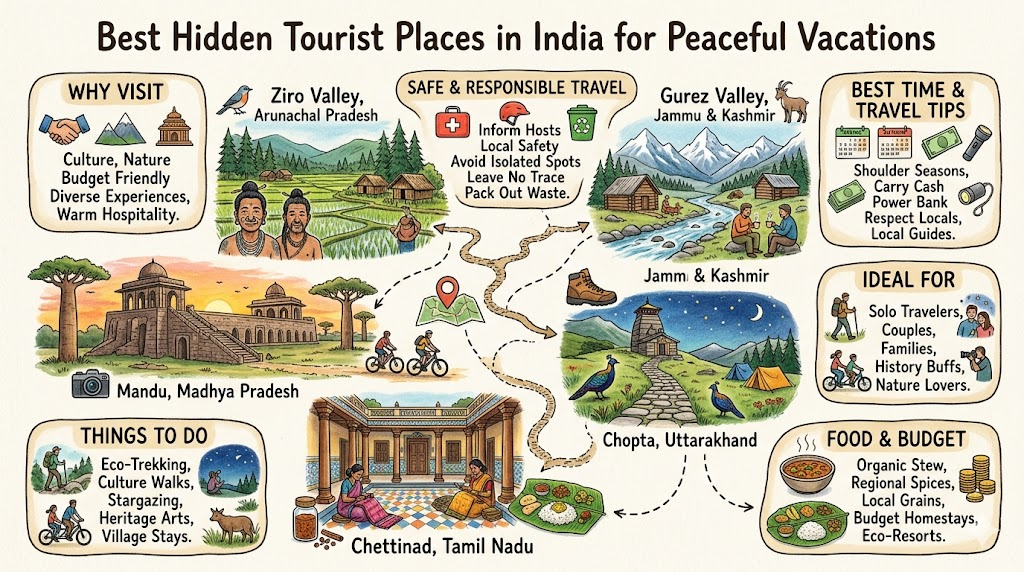
Introduction
India is a land of staggering contrasts, stretching from the snow-capped summits of the Himalayas to the tropical, sun-drenched coastlines of the deep south. For decades, the global image of an India trip planning cycle revolved around a few ultra-famous golden routes: checking out the majestic Taj Mahal, exploring Jaipur’s regal palaces, or losing oneself in the neon nightlife and crowded shorelines of popular party hubs. While these destinations are deeply iconic, a new wave of travelers is looking for something profoundly different. They seek silence over chaos, pristine natural sanctuaries over crowded commercial boardwalks, and meaningful cultural immersions over transactional sightseeing. Today’s travelers—whether they are solo backpackers, couples looking for romantic isolation, or families wanting to bond away from modern digital distractions—long for peaceful spots where time slows down.
This comprehensive India travel guide is designed to crack open the country’s best-kept secrets. Beyond the famous landmarks lies a hidden landscape rich in diverse experiences: ancient living heritage, untamed biodiversity, hyper-local culinary arts, and soul-stirring tranquility. Exploring these lesser-known landscapes lets you see the true, uninterrupted heartbeat of the country. By wandering off the beaten track, you find pristine vistas and form deep, authentic connections with rural communities that keep old traditions alive. Let us take you on an introductory journey to the hidden places in India, where peaceful vacations are not just a possibility, but an unforgettable reality.
Why India is a Must-Visit Country
Labeling India as a single destination misses the point entirely; it functions more like an incredibly diverse continent bound together by shared warmth and hospitality. For an international tourist or a domestic weekend traveler, India is a must-visit country because it offers an unparalleled diversity of experiences within a single geography. It serves as an open-air museum where ancient spiritual traditions exist naturally alongside breathtaking geographical wonders. Whether you want to trek through deep valleys, relax by quiet seas, or savor complex, aromatic local foods, the country provides endless choices for every type of traveler.
Practically speaking, India stands out as an exceptionally budget-friendly and accessible destination. Internal transport infrastructure has seen major upgrades, featuring extensive high-speed train networks, budget-friendly domestic airlines connecting regional towns, and app-based cab ecosystems running in almost every major hub. The deeply ingrained cultural ethos of “Atithi Devo Bhava” (The Guest is equivalent to God) ensures that solo travelers, first-time visitors, and families are met with incredible hospitality. From luxurious heritage homestays to minimalist backpacker hostels, the country welcomes every budget type while delivering rich, soul-stirring travel moments that stick with you for a lifetime.
Essential Guide for Exploring India’s Hidden Gems
Best places to visit
The top hidden places in India span distinct geographic zones: Ziro Valley in the far Northeast, Gurez Valley along the northern high-altitude border, Chopta in the central Himalayan belt, Mandu in the historic heartland of Madhya Pradesh, and Chettinad in the southern peninsula. Each offers exceptional peace, thin crowds, and pristine local environments.
Things to do
Travelers can indulge in low-impact eco-trekking, wildlife watching, ancient temple photography, architectural walks, rural homestays, and stargazing in zero-light-pollution skies. It is also an incredible chance to learn heritage arts directly from indigenous communities and sample hyper-local culinary traditions that never make it to mainstream city menus.
Entry fees if applicable
Most hidden natural sites do not charge standard entry fees. However, historical monuments under the Archaeological Survey of India (ASI) typically charge nominal fees: ₹25 to ₹40 for domestic visitors and ₹300 to ₹600 for international tourists. Certain remote regions near international borders require specific inner line permits (ILP), which usually cost a small administrative fee ranging from ₹100 to ₹500.
Travel tips
Always carry physical cash, as digital payment networks can be spotty in high-altitude valleys or deep rural sectors. Pack weather-appropriate layers, as temperatures drop rapidly in forest and mountain zones after sunset. Hire local village guides to enrich your journey; they offer deep insights into local folklore and route safety that digital maps simply cannot provide.
Nearby attractions
Every hidden spot serves as a gateway to broader exploration. Mountain valleys lead to high-altitude galactic viewpoints and hidden monasteries, while offbeat heritage towns sit just a short drive away from major cultural hubs or uncrowded national park buffer zones.
Food options
Embrace regional kitchens. In mountain villages, expect slow-cooked organic stews, local red rice, wild ferns, and freshly steamed dumplings. In the southern plains, look forward to authentic, spice-rich meals served on traditional banana leaves, utilizing sun-dried vegetables and freshly ground local spices.
Budget planning
Hidden destinations are remarkably light on the wallet. Budget travelers and backpackers can comfortably spend around ₹1,200 to ₹2,000 per day on cozy homestays and local meals. Mid-range boutique heritage stays or eco-resorts generally range from ₹3,500 to ₹7,000 per night, which often includes personalized guided tours and authentic local meals.
Safety tips
Inform your hosts or local accommodation managers about your exact trekking routes or daily sightseeing plans before setting off. Keep standard first-aid kits and personal prescription medicines fully stocked, as commercial pharmacies can be many miles away through winding terrain.
Local transport options
Options range from shared regional jeeps and state transport buses to renting light, fuel-efficient geared motorcycles or scooters in nearby base towns. For remote rural homestays, walking along village pathways remains the absolute best way to explore your immediate surroundings.
Family-friendly suggestions
Choose accessible heritage properties or well-managed farmstays that require minimal strenuous trekking. Opt for destinations like Mandu, where wide, grassy monument lawns offer safe spaces for children to run around, and well-paved pathways accommodate older family members comfortably.
Couple-friendly suggestions
Book private, eco-conscious luxury tents or secluded mountain cottages featuring private balconies. Spend quiet evenings stargazing by a bonfire, enjoying intimate candlelit dinners featuring local farm-to-the-table menus, and embarking on early morning nature walks through misty forests.
Hidden or less-crowded options
To experience these destinations at their absolute quietest, plan your trips during the shoulder seasons—either right before or immediately following the primary monsoon or winter cycles. Traveling mid-week rather than over long holiday weekends ensures you will have these stunning landscapes completely to yourself.
Best Places or Experiences Related to the Topic
1. Ziro Valley, Arunachal Pradesh
- Location: Lower Subansiri District, Arunachal Pradesh, Northeast India.
- Why it is worth visiting: A stunning, high-altitude plateau framed by pine-clad mountains and layered rice fields, Ziro is the ancestral home of the Apatani tribe. It offers a rare look at sustainable tribal co-existence with nature, far away from urban stress.
- Best things to do: Walk through the historic, old-world villages of Hong and Hari; admire the unique traditional facial tattoos and nose plugs of the community elders; hike through the lush Tale Valley Wildlife Sanctuary; and enjoy the crisp mountain air.
- Best time to visit: March to May for lush green landscapes, or October to November for golden harvest views and pleasant weather.
- Ideal for whom: Solo travelers, backpackers, cultural explorers, and photographers looking for deep, meaningful human connections.
- Travel tip: Domestic tourists must secure an Inner Line Permit (ILP), while international travelers need a Protected Area Permit (PAP). Arrange these online a couple of weeks before your trip.
2. Chopta, Uttarakhand
- Location: Rudraprayag District, Uttarakhand, North India.
- Why it is worth visiting: Often called the “Mini Switzerland of India,” Chopta is an uncrowded, pristine hamlet nestled within a vast meadow ecosystem. It offers sweeping, unobstructed views of grand Himalayan peaks, including Nanda Devi, Trishul, and Chaukhamba. It is an essential addition to any offbeat North India travel guide.
- Best things to do: Trek up the stone-paved trail to Tungnath, the highest Shiva temple in the world; continue climbing up to Chandrashila Peak for a stunning 360-degree mountain panorama; spot colorful Himalayan Monal birds; and camp under dark, star-filled night skies.
- Best time to visit: April to June for pleasant weather and blooming rhododendrons, or October to November for clear, crisp autumn views.
- Ideal for whom: Trekkers, nature enthusiasts, spiritual seekers, and couples looking for a peaceful mountain getaway.
- Travel tip: Chopta runs entirely eco-consciously and has limited grid electricity. Carry fully charged power banks and a reliable flashlight for your evenings.
3. Gurez Valley, Jammu & Kashmir
- Location: Bandipora District, Jammu & Kashmir, Extreme North India.
- Why it is worth visiting: Located along the old Silk Route, Gurez is a deeply enchanting valley carved out by the roaring Kishanganga River. Shielded by massive mountain walls, it features unique log-cabin architecture and is home to the welcoming, warm-hearted Dard-Shin community.
- Best things to do: Admire the towering, pyramid-shaped Habba Khatoon peak; sit peacefully by the rushing riverbanks; stay in an authentic wooden homestay; and enjoy traditional Kashmiri pink salt tea (Noon Chai) with the locals.
- Best time to visit: June to September. The valley becomes completely snowbound and cut off by road during the harsh winter months.
- Ideal for whom: Offbeat adventurers, peace seekers, backpackers, and small groups of friends.
- Travel tip: Expect multiple security checkpoints along the route due to its close proximity to the border. Always carry your original passport or Government-issued ID cards.
4. Mandu, Madhya Pradesh
- Location: Dhar District, Madhya Pradesh, Central India.
- Why it is worth visiting: Perched beautifully on a rugged basalt cliff, Mandu is an ancient, ruined fortress city celebrating love, poetry, and brilliant stone architecture. Its grand stone palaces, mosques, and artistic pavilions sit beautifully among quiet, rural farmlands.
- Best things to do: Stand in the historic Roopmati Pavilion to watch the sunset over the winding Narmada Valley; explore the unique Jahaz Mahal (Ship Palace) built between two lakes; marvel at the incredible acoustics of Baz Bahadur’s Palace; and photograph massive, ancient Baobab trees.
- Best time to visit: July to September during the monsoon season, when the rains turn the ruins mossy green and fill the ancient lakes.
- Ideal for whom: Heritage buffs, architecture lovers, couples, and families looking for an educational yet relaxing vacation.
- Travel tip: Rent a bicycle near the main town square. Cycling is a peaceful and eco-friendly way to explore the scattered ruins at your own pace.
5. Chettinad, Tamil Nadu
- Location: Sivaganga District, Tamil Nadu, South India.
- Why it is worth visiting: Highlighting any comprehensive South India travel guide, Chettinad is a captivating cultural region world-famous for its massive, 19th-century merchant mansions. These architectural wonders feature imported East Asian teak, Italian marble, and hand-painted tiles, offering a quiet look into South India’s rich trading history.
- Best things to do: Take a slow walk through the quiet lanes of Athangudi village to see traditional clay floor tiles being handcrafted; tour the sprawling, multi-courtyard mansions; and shop for beautiful, lightweight cotton Kandangi sarees.
- Best time to visit: October to March, when the southern plains enjoy cooler, comfortable temperatures.
- Ideal for whom: Foodies, interior designers, history buffs, and families seeking a rich cultural immersion.
- Travel tip: Do not miss out on a traditional, multi-course Chettinad meal served on a banana leaf. It features beautifully complex, freshly roasted spice blends far beyond standard restaurant curries.
Travel Planning Tips for India
To ensure your journey through the hidden India tourist places remains completely stress-free, deeply restorative, and safe, keep these practical, boots-on-the-ground India vacation tips in mind:
- Book stays early during peak season: While offbeat places generally see fewer crowds, they also have very limited premium homestays or boutique eco-lodges. Booking your rooms a few months early ensures you get the best local hospitality.
- Rent scooters only with proper documents: Exploring rural roads on two wheels is incredibly freeing. However, always ensure you carry a valid driving license, wear a helmet, and thoroughly inspect the vehicle’s brakes and tires before leaving the rental shop.
- Respect beach and river safety rules: Hidden rivers and uncrowded coastal stretches near hidden India beaches can have deceptively strong undercurrents. Always talk to local fishermen or your homestay hosts before stepping into unfamiliar waters.
- Avoid isolated spots late at night: Peaceful destinations lack bright street lighting and active night economies. Wrap up your outdoor exploration by dusk and enjoy cozy evenings inside your resort or homestay.
- Carry cash for local markets: Remote handicraft artisans and small village diners rarely have reliable high-speed internet for digital cards or mobile apps. Keep small-denomination paper notes handy.
- Check weather before water activities: Flash mountain storms or sudden monsoon deluges can change local road conditions rapidly. Keep a close eye on regional weather updates before planning outdoor excursions.
- Respect local culture and environment: Dress modestly when visiting community shrines, ancestral villages, or sacred mountain sites. Always ask for permission before taking portraits of local residents.
- Keep natural sites clean: Remote towns lack industrial waste management systems. Always pack out whatever you pack in, carry a reusable water bottle, and never leave plastic waste behind.
Common Mistakes to Avoid
Many travelers run into entirely avoidable issues when exploring offbeat destinations. First, avoid poor itinerary planning; packing too many destinations into a short trip leaves you exhausted on winding rural roads rather than relaxed. Second, do not limit your horizon by visiting only crowded hotspots while entirely ignoring the southern peninsula or the Northeast, which hold some of the quietest landscapes in the country.
Third, never travel without checking your local transport options beforehand. Remote mountain villages rarely have on-demand taxi apps, so missing the single daily public bus can disrupt your schedule. Fourth, avoid overpaying for local rentals by failing to cross-check standard regional rates with your homestay host first. Finally, never make the mistake of skipping authentic local food in favor of familiar continental dishes, or ignoring basic safety rules and local advisory signs near deep forests and water bodies.
Suggested India Itinerary Angle
Integrating these hidden gems into a practical India itinerary is easy. Here is how you can structure your journey based on your available time:
1-day plan
Perfect for an offbeat side-trip from a major hub. For example, if you are staying in Madurai, dedicate a full day to exploring Chettinad. Spend your morning touring the grand mansions of Karaikudi, enjoy an authentic banana-leaf lunch at noon, watch tiles being made in Athangudi in the afternoon, and return to the city by evening.
2-day plan
Ideal for a weekend trip filled with history or nature. Spend Day 1 exploring the vast fort ruins, palaces, and scenic pavilions of Mandu. Enjoy a quiet dinner featuring local Central Indian dishes. On Day 2, take an early morning bicycle ride through the outer ruins, interact with local rural artisans, and head out after a peaceful lunch.
Weekend travel plan
A rejuvenating 3-day mountain escape. Arrive at Chopta on Friday afternoon to settle into your eco-camp and watch the sunset over the peaks. Dedicate the whole of Saturday to the rewarding trek up to Tungnath and Chandrashila Peak, returning for a cozy campfire evening. Spend Sunday morning birdwatching and taking a slow nature walk before heading back to the nearest valley railhead.
FAQs
1. How do I find authentic homestays in hidden places in India?
Look for properties registered with state tourism boards, read detailed reviews on niche travel forums, or connect directly with local community-run eco-tourism initiatives online.
2. Is language a major barrier when visiting remote villages in India?
While English or Hindi might not be spoken fluently by every resident, younger locals and homestay hosts usually speak functional English. Smiling, using polite gestures, and utilizing translation apps make communication smooth.
3. Are hidden tourist places in India safe for solo female travelers?
Yes, offbeat rural destinations are generally incredibly safe, close-knit communities. Standard precautions apply: avoid walking along isolated trails after dark, keep your hosts updated on your location, and dress respectfully.
4. What is the best way to travel around South India smoothly?
An excellent option is using the extensive Indian Railways network for inter-city travel, combined with renting a private car and local driver for navigating rural heritage circuits comfortably.
5. Do I need special permits to visit any hidden tourist places in India?
Yes, certain border states like Arunachal Pradesh require an Inner Line Permit (ILP) for domestic visitors or a Protected Area Permit (PAP) for international travelers due to geographic sensitivity.
6. Can I find vegetarian and vegan food options in remote Indian regions?
Absolutely. Vegetarianism is deeply rooted across India. Vegan food is also widely available, as many traditional rural dishes rely on coconut milk, mustard oil, or lentils rather than dairy products.
7. How reliable is mobile network connectivity in high-altitude valleys?
Major providers offer decent connectivity in central towns, but signals can drop in deep valleys or high passes. Download offline maps and emergency details beforehand.
8. What should I pack for a peaceful vacation in the Himalayan foothills?
Pack sturdy trekking shoes, comfortable layers (fleece jackets and thermals), a reliable raincoat, essential personal medicines, and power banks to handle occasional power cuts.
9. Is it expensive to hire local guides in offbeat historical sites?
No, local guides are very reasonably priced, typically charging between ₹500 to ₹1,500 for a detailed tour. Hiring them supports the local economy directly and enriches your journey.
10. How can I practice responsible, eco-friendly tourism during my India vacation?
Avoid all single-use plastics, choose locally owned homestays over big international chains, conserve water carefully, and support community artisans by buying directly from them without aggressive bargaining.
Conclusion
True travel is less about ticking famous monuments off a checklist and more about letting a destination transform you. Choosing to step away from crowded tourist centers and explore the hidden places in India opens the door to profound peace, untouched nature, and authentic hospitality. Whether you are finding quiet inspiration in the misty heights of Ziro Valley, walking among the ancient stone ruins of Mandu, or sharing a warm meal in a traditional Chettinad home, these hidden gems offer a beautiful window into the soul of India.
As you plan your next mindful journey, remember that having reliable, practical information makes all the difference. Turn to Indiaorbit.com as your comprehensive, trusted travel guide. The platform offers excellent resources for discovering local spots, mapping out smart itineraries, and making thoughtful, practical travel decisions. Travel slower, respect local traditions, leave natural sites cleaner than you found them, and allow the incredible, peaceful side of India to capture your heart.

Discovering remote pristine geographical sanctuary destinations optimizes domestic leisure travel excursion itineraries, ensuring tranquil experiential rejuvenation opportunities and accelerated offbeat heritage preservation workflows.