MOTOSHARE 🚗🏍️
Rent Bikes & Cars Directly from Owners
Motoshare connects vehicle owners with people who need bikes and cars on rent. Owners earn from idle vehicles, and renters get flexible ride options.
Visit Motoshare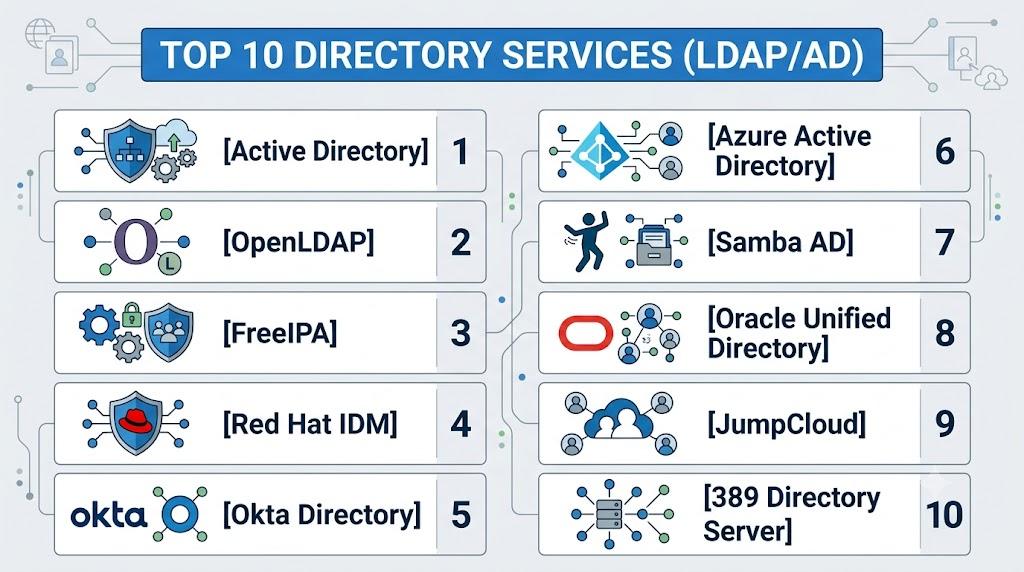
Introduction
Directory Services (LDAP/AD) are centralized identity management systems used to store, organize, and manage user identities, devices, permissions, and authentication policies across an organization. The two most widely used standards in this category are LDAP (Lightweight Directory Access Protocol) and Microsoft Active Directory (AD).
These systems act as the backbone of enterprise identity infrastructure. They ensure that users can securely log in to systems, access applications, and follow role-based permissions across on-premise, cloud, and hybrid environments.In modern IT environments, Directory Services are critical because organizations now operate across SaaS applications, cloud platforms, remote devices, and hybrid infrastructure. A centralized identity directory ensures security, consistency, and operational efficiency.
Real World Use Cases
- Centralized user authentication across enterprise systems
- Managing employee onboarding and offboarding access
- Enforcing role-based access control (RBAC)
- Integrating with SaaS applications and SSO systems
- Securing internal enterprise applications and servers
- Supporting hybrid cloud identity management
- Managing device and endpoint authentication
- Enforcing compliance and audit requirements
Evaluation Criteria for Buyers
When evaluating Directory Services (LDAP/AD), organizations should consider:
- Scalability for large user directories
- Security features (RBAC, MFA integration, encryption)
- Cloud and hybrid support capabilities
- Integration with SaaS and enterprise systems
- Replication and high availability features
- Policy and group management flexibility
- Ease of administration and tooling
- Identity federation support (SAML, OAuth, LDAP)
- Performance and query efficiency
- Compliance and audit logging capabilities
Best for
Directory Services are best for enterprises, government organizations, educational institutions, and IT-driven companies that require centralized identity management across users, systems, and applications.
Not ideal for
These systems are not ideal for very small organizations with minimal IT infrastructure or companies that rely solely on a few SaaS applications without internal identity management requirements.
Key Trends in Directory Services (LDAP/AD)
- Hybrid identity models combining on-prem AD and cloud directories
- Migration toward cloud-based directory services
- Increased integration with Zero Trust architectures
- Strong adoption of identity federation (SAML, OAuth, OpenID Connect)
- Passwordless authentication becoming more common
- Improved integration with SaaS and SSO platforms
- Enhanced automation for user lifecycle management
- AI-driven identity threat detection emerging
- Growing demand for unified identity platforms
- Increased focus on compliance and audit readiness
How We Selected These Tools
The tools included in this list were selected based on:
- Market dominance and enterprise adoption
- LDAP/AD compatibility and maturity
- Security and identity governance capabilities
- Scalability for enterprise environments
- Integration with cloud and SaaS ecosystems
- High availability and replication features
- Support for hybrid identity models
- Compliance and audit readiness
- Administration and usability efficiency
- Ecosystem maturity and community adoption
Top 10 Directory Services (LDAP/AD)
1- Microsoft Active Directory
Short description:
Microsoft Active Directory (AD) is the most widely used directory service in enterprise environments. It provides centralized authentication, authorization, and identity management for Windows-based systems and integrates deeply with enterprise infrastructure. AD is the backbone of identity management for thousands of global organizations.
Key Features
- Centralized user and group management
- Domain-based authentication
- Group Policy management
- LDAP support
- Kerberos authentication
- Role-based access control
- Identity federation capabilities
Pros
- Industry-standard enterprise directory service
- Deep integration with Windows environments
- Highly scalable and reliable
Cons
- Complex setup and administration
- Windows ecosystem dependency
- Requires skilled IT management
Platforms / Deployment
- On-prem / Hybrid
Security & Compliance
- LDAP/Secure LDAP
- Kerberos authentication
- RBAC
- Audit logs
- Group policies
Integrations & Ecosystem
Active Directory integrates with a wide range of enterprise systems and identity platforms.
- Windows Server ecosystem
- Microsoft Entra ID
- SaaS applications
- VPN systems
- Enterprise applications
- IAM platforms
Support & Community
Extensive enterprise support and global IT community adoption.
2- OpenLDAP
Short description:
OpenLDAP is an open-source implementation of the LDAP protocol widely used for directory services in Linux and Unix-based environments. It provides flexible identity management capabilities for authentication and directory-based access control.
Key Features
- LDAP directory service
- User authentication and authorization
- Directory replication
- Schema customization
- Access control mechanisms
- Lightweight identity management
- Cross-platform support
Pros
- Open-source and flexible
- Highly customizable schema
- Strong Linux integration
Cons
- Requires advanced technical expertise
- Limited GUI tools
- Manual configuration complexity
Platforms / Deployment
- On-prem / Self-hosted
Security & Compliance
- LDAP/LDAPS
- Access control lists
- Encryption support
- Audit logging
Integrations & Ecosystem
- Linux systems
- Authentication services
- Enterprise applications
- Cloud identity systems
- DevOps tools
Support & Community
Strong open-source community support.
3- FreeIPA
Short description:
FreeIPA is an integrated identity management system designed for Linux environments. It combines LDAP, Kerberos, DNS, and certificate services into a unified identity platform.
Key Features
- LDAP-based directory services
- Kerberos authentication
- Certificate management
- Identity federation
- Centralized user management
- Host-based access control
- Policy enforcement
Pros
- Unified identity platform
- Strong Linux integration
- Open-source flexibility
Cons
- Linux-focused ecosystem
- Complex deployment
- Limited Windows integration
Platforms / Deployment
- On-prem / Hybrid
Security & Compliance
- Kerberos
- LDAP
- Certificate-based authentication
- RBAC
- Audit logging
Integrations & Ecosystem
- Linux servers
- DevOps systems
- Cloud infrastructure
- Kubernetes environments
- Authentication systems
Support & Community
Strong open-source community and Red Hat ecosystem support.
4- Red Hat Identity Management
Short description:
Red Hat Identity Management is an enterprise identity platform built on FreeIPA, designed for managing authentication, authorization, and identity policies across Linux-based environments.
Key Features
- LDAP directory services
- Kerberos authentication
- Centralized identity management
- Host-based access control
- Certificate services
- Policy enforcement
- Identity synchronization
Pros
- Enterprise-grade Linux identity system
- Strong security capabilities
- Integrated Red Hat ecosystem
Cons
- Linux-centric design
- Requires Red Hat ecosystem familiarity
- Complex setup for beginners
Platforms / Deployment
- On-prem / Hybrid
Security & Compliance
- LDAP/LDAPS
- Kerberos
- RBAC
- Audit logs
- Encryption
Integrations & Ecosystem
- Red Hat Enterprise Linux
- Kubernetes
- Cloud platforms
- DevOps tools
- Identity systems
Support & Community
Enterprise Red Hat support with strong documentation.
5- Okta Directory (Universal Directory)
Short description:
Okta Universal Directory is a cloud-based identity directory service that centralizes user identity management across SaaS and enterprise applications. It extends traditional directory services into cloud-first environments.
Key Features
- Cloud-based user directory
- LDAP integration support
- SSO and identity federation
- Lifecycle management
- User provisioning automation
- MFA integration
- API-driven identity management
Pros
- Cloud-native identity directory
- Strong SaaS integration
- Easy scalability
Cons
- Premium pricing
- Less control for on-prem environments
- Requires internet dependency
Platforms / Deployment
- Cloud
Security & Compliance
- SSO/SAML
- MFA
- RBAC
- Encryption
- Audit logs
Integrations & Ecosystem
- SaaS applications
- Active Directory
- HR systems
- Cloud platforms
- DevOps tools
Support & Community
Strong enterprise SaaS identity support.
6- Azure Active Directory (Microsoft Entra ID Directory Layer)
Short description:
Azure Active Directory, now part of Microsoft Entra ID, extends traditional directory services into the cloud and hybrid identity environments. It is widely used for SaaS authentication and enterprise identity federation.
Key Features
- Cloud directory services
- Identity federation
- SSO support
- Conditional access policies
- User provisioning
- MFA integration
- Hybrid identity sync
Pros
- Deep Microsoft ecosystem integration
- Strong cloud identity capabilities
- Scalable enterprise solution
Cons
- Microsoft dependency
- Complex configuration
- Licensing complexity
Platforms / Deployment
- Cloud / Hybrid
Security & Compliance
- SSO/SAML
- MFA
- RBAC
- Audit logs
- Conditional access
Integrations & Ecosystem
- Microsoft 365
- Azure services
- SaaS platforms
- Enterprise applications
- Security tools
Support & Community
Global enterprise support through Microsoft ecosystem.
7- Samba AD
Short description:
Samba AD is an open-source implementation that provides Active Directory-compatible domain services for Linux environments. It allows Linux servers to act as domain controllers.
Key Features
- Active Directory compatibility
- LDAP support
- Kerberos authentication
- File sharing integration
- Domain controller capabilities
- User management
- Group policy support
Pros
- Open-source AD alternative
- Strong Linux integration
- Cost-effective
Cons
- Complex setup
- Limited enterprise features
- Requires expertise
Platforms / Deployment
- On-prem / Self-hosted
Security & Compliance
- LDAP
- Kerberos
- Access control
- Encryption support
Integrations & Ecosystem
- Linux systems
- Windows clients
- File servers
- Authentication systems
- DevOps environments
Support & Community
Strong open-source community support.
8- Oracle Unified Directory
Short description:
Oracle Unified Directory is a high-performance LDAP directory service designed for enterprise-scale identity management and authentication workloads.
Key Features
- LDAP directory services
- High availability architecture
- Identity synchronization
- Access control management
- Scalable directory infrastructure
- Replication support
- Policy enforcement
Pros
- High-performance directory system
- Enterprise scalability
- Strong Oracle ecosystem integration
Cons
- Complex deployment
- Oracle ecosystem dependency
- Premium enterprise pricing
Platforms / Deployment
- On-prem / Hybrid
Security & Compliance
- LDAP/LDAPS
- RBAC
- Audit logging
- Encryption
Integrations & Ecosystem
- Oracle applications
- Enterprise systems
- Cloud platforms
- Identity systems
- SaaS applications
Support & Community
Enterprise Oracle support ecosystem.
9- JumpCloud Directory Platform
Short description:
JumpCloud is a cloud-based directory platform that provides LDAP, SSO, and identity management services for modern IT environments. It is widely used by SMB and mid-market organizations.
Key Features
- Cloud LDAP directory
- SSO portal integration
- Device and identity management
- User lifecycle automation
- MFA support
- Policy enforcement
- Directory services API
Pros
- Easy deployment
- Cloud-native identity model
- Good SMB fit
Cons
- Limited enterprise depth
- Smaller ecosystem
- Advanced customization constraints
Platforms / Deployment
- Cloud
Security & Compliance
- SSO/SAML
- MFA
- RBAC
- Audit logs
- Encryption
Integrations & Ecosystem
- SaaS applications
- Cloud services
- Identity systems
- Device management tools
- HR platforms
Support & Community
Strong SMB-focused support and documentation.
10- 389 Directory Server
Short description:
389 Directory Server is an open-source LDAP directory service designed for enterprise-grade identity management, commonly used in Linux environments.
Key Features
- LDAP directory services
- High-performance authentication
- Multi-master replication
- Access control policies
- Schema customization
- Directory synchronization
- Audit logging
Pros
- Strong open-source LDAP solution
- High performance
- Enterprise scalability
Cons
- Requires technical expertise
- Limited GUI tools
- Linux-focused ecosystem
Platforms / Deployment
- On-prem / Self-hosted
Security & Compliance
- LDAP/LDAPS
- RBAC
- Encryption
- Audit logs
Integrations & Ecosystem
- Linux systems
- Enterprise authentication systems
- DevOps environments
- Cloud identity platforms
- Security tools
Support & Community
Strong open-source community support.
Comparison Table
| Tool Name | Best For | Platform(s) Supported | Deployment | Standout Feature | Public Rating |
|---|---|---|---|---|---|
| Active Directory | Enterprise identity | Windows | On-prem/Hybrid | Domain-based authentication | N/A |
| OpenLDAP | Linux LDAP systems | Linux | Self-hosted | Flexible LDAP schema | N/A |
| FreeIPA | Linux identity management | Linux | On-prem/Hybrid | Integrated identity suite | N/A |
| Red Hat IDM | Enterprise Linux IAM | Linux | Hybrid | Red Hat ecosystem integration | N/A |
| Okta Directory | Cloud identity | Web | Cloud | SaaS identity management | N/A |
| Azure AD | Microsoft cloud identity | Web | Cloud/Hybrid | Cloud identity federation | N/A |
| Samba AD | AD-compatible Linux | Linux/Windows | Self-hosted | AD compatibility layer | N/A |
| Oracle Unified Directory | Enterprise LDAP | Web | Hybrid | High-performance directory | N/A |
| JumpCloud | SMB identity directory | Web | Cloud | Cloud LDAP + SSO | N/A |
| 389 Directory Server | Open-source LDAP | Linux | Self-hosted | High-performance LDAP engine | N/A |
Evaluation & Scoring of Directory Services
| Tool Name | Core 25% | Ease 15% | Integrations 15% | Security 10% | Performance 10% | Support 10% | Value 15% | Weighted Total |
|---|---|---|---|---|---|---|---|---|
| Active Directory | 9.5 | 8 | 9.5 | 9 | 9 | 9 | 8 | 9.0 |
| OpenLDAP | 8.5 | 7.5 | 8 | 8 | 8.5 | 8 | 9 | 8.3 |
| FreeIPA | 8.5 | 8 | 8.5 | 8.5 | 8.5 | 8 | 9 | 8.5 |
| Red Hat IDM | 8.5 | 7.5 | 8.5 | 8.5 | 8.5 | 8 | 8 | 8.3 |
| Okta Directory | 9 | 9 | 9 | 9 | 9 | 9 | 8.5 | 8.9 |
| Azure AD | 9.5 | 8.5 | 9.5 | 9.5 | 9 | 9 | 8.5 | 9.1 |
| Samba AD | 8 | 7.5 | 8 | 8 | 8 | 7.5 | 9 | 8.0 |
| Oracle Unified Directory | 8.5 | 7.5 | 8.5 | 9 | 9 | 8.5 | 7.5 | 8.4 |
| JumpCloud | 8.5 | 9 | 8.5 | 8.5 | 8 | 8 | 8.5 | 8.5 |
| 389 Directory Server | 8.5 | 7.5 | 8 | 8 | 8.5 | 8 | 9 | 8.2 |
Which Directory Service Is Right for You?
Solo / Freelancer
Directory services are generally unnecessary for solo users. Basic authentication or cloud accounts are sufficient.
SMB
JumpCloud or Azure AD are strong SMB options due to simplicity, cloud-native design, and easy integration with SaaS tools.
Mid-Market
Mid-sized organizations benefit from Azure AD, FreeIPA, or Okta Directory for balanced scalability and identity governance.
Enterprise
Large enterprises should consider Active Directory, Azure AD, Oracle Unified Directory, or Red Hat IDM for advanced identity control and hybrid support.
Budget vs Premium
OpenLDAP, Samba AD, and 389 Directory Server offer cost-effective open-source options, while Azure AD and Oracle Unified Directory represent premium enterprise solutions.
Feature Depth vs Ease of Use
Active Directory and Azure AD offer maximum depth but require more expertise. JumpCloud and Okta Directory prioritize ease of deployment.
Integrations & Scalability
Organizations with large SaaS ecosystems should prioritize Azure AD or Okta Directory for broad integration capabilities.
Security & Compliance Needs
Highly regulated industries should prioritize solutions with strong audit logging, RBAC, encryption, and identity governance capabilities.
Frequently Asked Questions (FAQs)
1. What is a Directory Service?
A directory service is a centralized system that stores and manages user identities, permissions, and authentication data across an organization. It ensures secure access to systems and applications.
2. What is LDAP?
LDAP (Lightweight Directory Access Protocol) is a protocol used to access and manage directory services. It is widely used in enterprise identity systems for authentication and authorization.
3. What is Active Directory?
Active Directory is Microsoft’s enterprise directory service that provides centralized authentication, authorization, and identity management for Windows-based environments.
4. Why are directory services important?
They provide centralized identity control, improve security, simplify authentication, and help manage user access across enterprise systems efficiently.
5. Are directory services only for Windows?
No. While Active Directory is Windows-focused, LDAP-based systems and cloud directories support Linux, macOS, and hybrid environments.
6. Can directory services support cloud applications?
Yes. Modern directory services integrate with SaaS applications, cloud platforms, and identity federation systems like SAML and OAuth.
7. What is hybrid identity?
Hybrid identity combines on-prem directory services like Active Directory with cloud-based identity platforms like Azure AD for unified authentication.
8. Are LDAP systems secure?
Yes, when configured properly with LDAPS, RBAC, and encryption. Security depends on implementation and governance practices.
9. Can directory services manage SaaS applications?
Yes. Many modern directory services integrate with SaaS platforms for SSO, provisioning, and access management.
10. What is the difference between LDAP and Active Directory?
LDAP is a protocol, while Active Directory is a full directory service that uses LDAP along with other authentication and policy mechanisms.
Conclusion
Directory Services (LDAP/AD) remain the foundation of enterprise identity and access management. They provide centralized authentication, authorization, and user lifecycle management across on-premise, cloud, and hybrid environments. As organizations increasingly adopt SaaS and multi-cloud architectures, directory services continue to evolve into hybrid and cloud-integrated identity platforms.However, selecting the right solution depends on infrastructure complexity, security requirements, and scalability needs. Active Directory and Azure AD dominate enterprise environments, while LDAP-based systems like OpenLDAP and FreeIPA offer flexibility for Linux-centric architectures. Cloud-first organizations increasingly rely on JumpCloud or Okta Directory for simplified identity management.Ultimately, organizations should align directory service selection with long-term identity strategy, integration needs, and security maturity to ensure scalable and secure access control across all systems.

Deploying comprehensive unified identity access governance credential authentication directory architecture software optimizes corporate user privilege verification logistics, ensuring accelerated enterprise resource mapping tracking and seamless network security administration workflows.