MOTOSHARE 🚗🏍️
Rent Bikes & Cars Directly from Owners
Motoshare connects vehicle owners with people who need bikes and cars on rent. Owners earn from idle vehicles, and renters get flexible ride options.
Visit Motoshare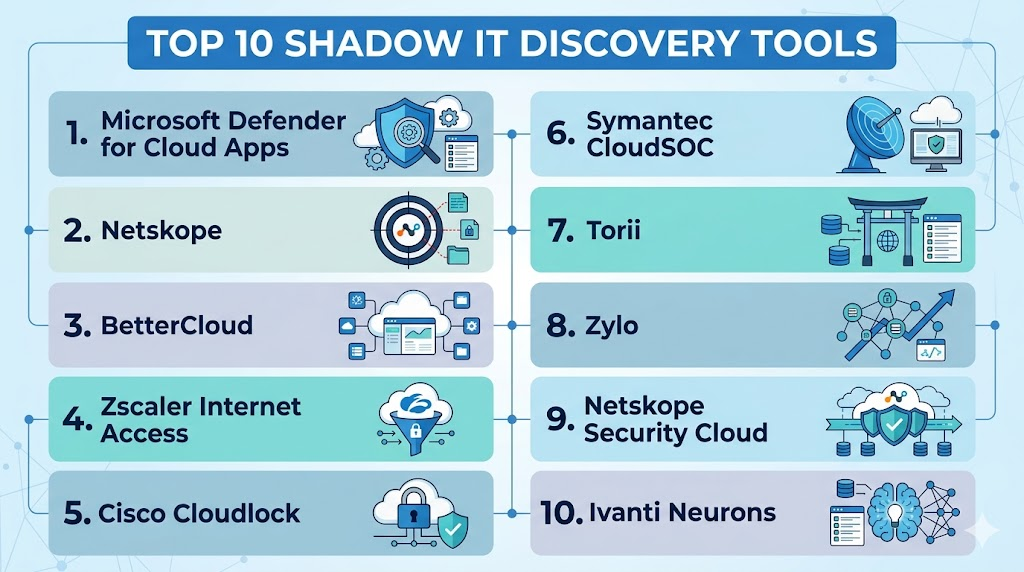
Introduction
Shadow IT Discovery Tools are security and IT governance platforms that help organizations identify, monitor, and control unauthorized software, applications, and cloud services being used across the enterprise. Shadow IT refers to any application, SaaS tool, or cloud service used by employees without official IT approval.
As organizations adopt more SaaS applications and remote/hybrid work environments expand, employees often use unapproved tools to improve productivity. While this can increase efficiency, it also introduces serious risks such as data leakage, compliance violations, security blind spots, and uncontrolled cloud spending.
Shadow IT Discovery Tools provide continuous visibility into application usage, network traffic, identity logs, and SaaS integrations to uncover hidden tools and enforce governance policies.
Real World Use Cases
- Detecting unauthorized SaaS applications used by employees
- Identifying risky file-sharing or cloud storage tools
- Monitoring unsanctioned AI tools and browser extensions
- Enforcing SaaS governance policies across departments
- Reducing data leakage through unmanaged applications
- Improving SaaS procurement and consolidation decisions
- Strengthening compliance for GDPR, SOC 2, and ISO frameworks
- Tracking application usage across hybrid and remote teams
Evaluation Criteria for Buyers
When evaluating Shadow IT Discovery Tools, organizations should consider:
- SaaS and application discovery depth
- Network and endpoint visibility coverage
- Identity-based tracking capabilities
- Integration with SSO and IAM systems
- Real-time monitoring and alerts
- Risk scoring and classification models
- Data privacy and compliance reporting
- Automation and remediation workflows
- Ease of deployment and scalability
- Integration with security and ITSM tools
Best for
Shadow IT Discovery Tools are best for enterprise IT teams, security operations centers, compliance teams, FinOps teams, and organizations with large SaaS adoption and distributed workforces.
Not ideal for
These tools are not ideal for very small organizations with minimal SaaS usage or companies with fully controlled IT environments where all software is centrally managed. They may also be excessive for startups with very limited infrastructure complexity.
Key Trends in Shadow IT Discovery Tools
- Rapid rise of AI tool discovery and governance
- Shift from reactive discovery to real-time monitoring
- Identity-driven SaaS tracking via SSO and IAM systems
- Increased focus on SaaS sprawl and application consolidation
- Integration with FinOps and SaaS optimization platforms
- Browser-level monitoring for SaaS and extensions
- Strong adoption of automated risk scoring models
- Expansion into API and cloud service discovery
- Integration with Zero Trust security architectures
- Growing demand for compliance-ready shadow IT reporting
How We Selected These Tools
The tools in this list were selected based on:
- Market adoption across enterprise IT environments
- Depth of SaaS and application discovery capabilities
- Identity and network-based detection accuracy
- Integration with IAM, SIEM, and ITSM platforms
- Real-time monitoring and alerting capabilities
- Security posture and compliance readiness
- Scalability for large enterprise environments
- Ease of deployment and usability
- Automation and remediation features
- Fit across SMB, mid-market, and enterprise organizations
Top 10 Shadow IT Discovery Tools
1- Microsoft Defender for Cloud Apps
Short description:
Microsoft Defender for Cloud Apps is a powerful cloud access security broker and Shadow IT discovery platform that provides deep visibility into SaaS usage across organizations. It identifies unauthorized applications, evaluates risk levels, and enforces governance policies across cloud services and endpoints. It is widely used in Microsoft-centric enterprise environments.
Key Features
- SaaS application discovery via traffic logs
- Risk scoring for cloud applications
- Shadow IT visibility dashboard
- Conditional access policies
- Real-time threat detection
- Integration with Microsoft ecosystem
- API-based SaaS monitoring
Pros
- Deep Microsoft ecosystem integration
- Strong enterprise security capabilities
- Comprehensive SaaS visibility
Cons
- Best suited for Microsoft environments
- Complex configuration for beginners
- Requires licensing maturity
Platforms / Deployment
- Cloud
Security & Compliance
- SSO/SAML
- RBAC
- Audit logs
- Encryption
- Compliance reporting
Integrations & Ecosystem
Integrates deeply with Microsoft security and identity ecosystems for unified cloud governance.
- Microsoft 365
- Azure AD
- Defender ecosystem
- SIEM tools
- Third-party SaaS APIs
Support & Community
Strong enterprise Microsoft support with extensive documentation.
2- Netskope
Short description:
Netskope is a leading cloud security platform offering advanced Shadow IT discovery through its cloud access security broker capabilities. It provides visibility into SaaS, cloud services, and web applications while enforcing security and compliance policies.
Key Features
- SaaS discovery engine
- Real-time cloud traffic monitoring
- Risk scoring for applications
- Data loss prevention controls
- Cloud app governance policies
- Behavioral analytics
- Compliance monitoring
Pros
- Strong cloud security visibility
- Excellent SaaS risk analytics
- Advanced DLP capabilities
Cons
- Enterprise-focused pricing
- Complex deployment setup
- Requires security expertise
Platforms / Deployment
- Cloud / Hybrid
Security & Compliance
- SSO/SAML
- RBAC
- Encryption
- Audit logging
- Compliance frameworks
Integrations & Ecosystem
- AWS
- Azure
- Google Cloud
- SIEM platforms
- CASB ecosystems
- Identity providers
Support & Community
Strong enterprise security support with global adoption.
3- BetterCloud
Short description:
BetterCloud is a SaaS operations and governance platform that provides Shadow IT discovery through SaaS monitoring, user activity tracking, and automation workflows. It is widely used for SaaS lifecycle management and IT governance.
Key Features
- SaaS application discovery
- User activity monitoring
- Shadow IT detection
- SaaS lifecycle automation
- Policy enforcement
- License optimization insights
- Security workflows
Pros
- Strong SaaS governance features
- Good automation capabilities
- Excellent IT workflow integration
Cons
- Less network-level visibility
- More IT-focused than security-focused
- Requires SaaS integration setup
Platforms / Deployment
- Cloud
Security & Compliance
- SSO/SAML
- RBAC
- Audit logs
- Encryption
Integrations & Ecosystem
- Google Workspace
- Microsoft 365
- Okta
- Slack
- Salesforce
- ITSM tools
Support & Community
Strong enterprise IT support and onboarding resources.
4- Zscaler Internet Access
Short description:
Zscaler Internet Access provides cloud security and Shadow IT discovery by analyzing internet traffic to detect unauthorized applications and services. It is widely used in Zero Trust security architectures.
Key Features
- Cloud traffic inspection
- SaaS application discovery
- Risk classification engine
- Web filtering policies
- Data protection controls
- Real-time monitoring
- Zero Trust enforcement
Pros
- Strong network-level visibility
- Excellent security enforcement
- Scalable enterprise architecture
Cons
- Complex deployment model
- Requires network restructuring
- Enterprise-focused pricing
Platforms / Deployment
- Cloud
Security & Compliance
- SSO/SAML
- RBAC
- Encryption
- Audit logs
- Compliance controls
Integrations & Ecosystem
- SIEM platforms
- Identity providers
- Cloud infrastructure tools
- Endpoint security systems
Support & Community
Strong enterprise security support with global adoption.
5- Cisco Cloudlock
Short description:
Cisco Cloudlock is a cloud access security platform that provides Shadow IT discovery, SaaS monitoring, and data protection capabilities across enterprise environments.
Key Features
- SaaS discovery and monitoring
- Cloud security posture tracking
- Data loss prevention
- Risk-based alerts
- User behavior analytics
- Policy enforcement
- Compliance reporting
Pros
- Strong enterprise security foundation
- Good SaaS visibility
- Reliable compliance tools
Cons
- Less modern UI
- Limited automation compared to newer tools
- Cisco ecosystem dependency
Platforms / Deployment
- Cloud
Security & Compliance
- SSO/SAML
- RBAC
- Encryption
- Audit logs
Integrations & Ecosystem
- Google Workspace
- Microsoft 365
- Cisco security ecosystem
- SIEM tools
- SaaS APIs
Support & Community
Enterprise-grade Cisco support and documentation.
6- Symantec CloudSOC
Short description:
Symantec CloudSOC provides Shadow IT discovery and cloud access security through monitoring SaaS usage and enforcing governance policies across enterprise environments.
Key Features
- Cloud app discovery
- SaaS usage monitoring
- Risk scoring engine
- Data protection policies
- Threat detection
- Compliance monitoring
- User activity tracking
Pros
- Strong enterprise security heritage
- Good SaaS visibility
- Reliable compliance enforcement
Cons
- Legacy UI experience
- Complex setup
- Less innovation compared to newer platforms
Platforms / Deployment
- Cloud / Hybrid
Security & Compliance
- SSO/SAML
- RBAC
- Audit logs
- Encryption
Integrations & Ecosystem
- SIEM tools
- Identity providers
- Cloud services
- Enterprise SaaS platforms
Support & Community
Strong enterprise support with security-focused services.
7- Torii
Short description:
Torii is a SaaS management platform that provides Shadow IT discovery through identity-based tracking and SaaS usage analytics. It helps organizations uncover hidden applications and optimize SaaS spending.
Key Features
- SaaS discovery engine
- Shadow IT detection
- License optimization
- Workflow automation
- SaaS usage analytics
- Renewal tracking
- Governance dashboards
Pros
- Easy-to-use interface
- Strong SaaS visibility
- Good automation workflows
Cons
- Limited network-level monitoring
- Smaller enterprise footprint
- Advanced analytics still evolving
Platforms / Deployment
- Cloud
Security & Compliance
- SSO/SAML
- RBAC
- Encryption
- Audit logs
Integrations & Ecosystem
- Okta
- Google Workspace
- Microsoft 365
- Slack
- Jira
- Finance tools
Support & Community
Responsive support with growing SaaS governance adoption.
8- Zylo
Short description:
Zylo is an enterprise SaaS management platform that includes Shadow IT discovery, SaaS usage analytics, and license optimization capabilities for large organizations.
Key Features
- SaaS discovery and tracking
- Shadow IT identification
- License optimization
- Renewal management
- SaaS spend analytics
- Vendor management
- Governance dashboards
Pros
- Strong enterprise SaaS intelligence
- Excellent renewal insights
- Deep cost visibility
Cons
- Enterprise pricing model
- Requires onboarding effort
- Less real-time network visibility
Platforms / Deployment
- Cloud
Security & Compliance
- SSO/SAML
- RBAC
- Encryption
- Audit logs
Integrations & Ecosystem
- Okta
- Microsoft 365
- Google Workspace
- Finance systems
- Procurement tools
Support & Community
Strong enterprise SaaS governance support.
9- Netskope Security Cloud (Lite CASB view)
Short description:
Netskope Security Cloud provides Shadow IT discovery through its CASB and SASE architecture, offering deep visibility into SaaS usage across networks and endpoints.
Key Features
- Cloud application discovery
- SaaS risk scoring
- Data protection controls
- Real-time monitoring
- Web traffic inspection
- Compliance enforcement
- Behavioral analytics
Pros
- Strong real-time monitoring
- Excellent security controls
- Deep cloud visibility
Cons
- Complex deployment
- Enterprise-focused pricing
- Requires network integration
Platforms / Deployment
- Cloud / Hybrid
Security & Compliance
- SSO/SAML
- RBAC
- Encryption
- Audit logs
- Compliance frameworks
Integrations & Ecosystem
- SIEM platforms
- Identity providers
- Cloud infrastructure
- Security tools
Support & Community
Strong global enterprise security support.
10- Ivanti Neurons for UEM
Short description:
Ivanti Neurons provides unified endpoint management with Shadow IT discovery capabilities by tracking application usage across devices and endpoints.
Key Features
- Endpoint application discovery
- Shadow IT detection
- Device-level monitoring
- Security policy enforcement
- SaaS usage tracking
- Compliance reporting
- Asset management
Pros
- Strong endpoint visibility
- Good IT governance integration
- Unified management approach
Cons
- Less SaaS-focused than competitors
- Complex enterprise setup
- UI can be technical
Platforms / Deployment
- Cloud / Hybrid
Security & Compliance
- SSO/SAML
- RBAC
- Encryption
- Audit logs
Integrations & Ecosystem
- Endpoint management systems
- SIEM platforms
- Identity providers
- ITSM tools
Support & Community
Enterprise IT support with strong endpoint management expertise.
Comparison Table
| Tool Name | Best For | Platform(s) Supported | Deployment | Standout Feature | Public Rating |
|---|---|---|---|---|---|
| Microsoft Defender for Cloud Apps | Microsoft environments | Web | Cloud | SaaS traffic analysis | N/A |
| Netskope | Cloud security | Web | Cloud/Hybrid | CASB visibility | N/A |
| BetterCloud | SaaS governance | Web | Cloud | SaaS lifecycle automation | N/A |
| Zscaler Internet Access | Zero Trust networks | Web | Cloud | Traffic-based discovery | N/A |
| Cisco Cloudlock | Enterprise SaaS security | Web | Cloud | Data protection controls | N/A |
| Symantec CloudSOC | Compliance monitoring | Web | Cloud/Hybrid | SaaS risk scoring | N/A |
| Torii | SaaS management | Web | Cloud | Shadow IT discovery | N/A |
| Zylo | SaaS optimization | Web | Cloud | SaaS intelligence | N/A |
| Netskope Security Cloud | CASB security | Web | Cloud/Hybrid | Real-time monitoring | N/A |
| Ivanti Neurons | Endpoint discovery | Web | Cloud/Hybrid | Device-level visibility | N/A |
Evaluation & Scoring of Shadow IT Discovery Tools
| Tool Name | Core 25% | Ease 15% | Integrations 15% | Security 10% | Performance 10% | Support 10% | Value 15% | Weighted Total |
|---|---|---|---|---|---|---|---|---|
| Microsoft Defender for Cloud Apps | 9.5 | 8.5 | 9 | 9 | 9 | 9 | 8 | 9.0 |
| Netskope | 9.5 | 8 | 9 | 9 | 9 | 9 | 8 | 8.9 |
| BetterCloud | 8.5 | 9 | 8.5 | 8.5 | 8 | 8 | 8.5 | 8.4 |
| Zscaler Internet Access | 9 | 7.5 | 9 | 9 | 9 | 8.5 | 7.5 | 8.5 |
| Cisco Cloudlock | 8 | 7.5 | 8 | 8.5 | 8 | 8 | 8 | 8.0 |
| Symantec CloudSOC | 8 | 7.5 | 8 | 8 | 8 | 8 | 7.5 | 7.9 |
| Torii | 8.5 | 9 | 8 | 8 | 8 | 8 | 8.5 | 8.4 |
| Zylo | 8.5 | 8.5 | 8 | 8 | 8 | 8 | 8.5 | 8.3 |
| Netskope Security Cloud | 9 | 8 | 9 | 9 | 9 | 9 | 8 | 8.8 |
| Ivanti Neurons | 8 | 8 | 8 | 8 | 8 | 8 | 8 | 8.0 |
These scores reflect relative maturity in visibility depth, security enforcement, SaaS discovery accuracy, and enterprise readiness. Network-centric tools provide stronger real-time detection, while SaaS-centric tools excel in governance and lifecycle management.
Which Shadow IT Discovery Tool Is Right for You?
Solo / Freelancer
Most individuals do not need Shadow IT discovery tools. Basic device management or browser-level controls are sufficient.
SMB
Torii or BetterCloud provide a good balance of SaaS visibility and governance without complex deployment requirements.
Mid-Market
Zylo, Zscaler Internet Access, or Netskope are strong options for organizations scaling SaaS usage and security governance.
Enterprise
Microsoft Defender for Cloud Apps, Netskope, and Cisco Cloudlock are best suited for enterprise-scale security and compliance environments.
Budget vs Premium
Torii and Ivanti provide cost-effective entry points, while Netskope and Microsoft Defender represent premium enterprise-grade security platforms.
Feature Depth vs Ease of Use
Microsoft Defender and Netskope provide deep visibility but require expertise, while Torii and BetterCloud offer simpler adoption.
Integrations & Scalability
Organizations with mature IT ecosystems should prioritize tools with strong IAM, SIEM, and SaaS integration capabilities.
Security & Compliance Needs
Highly regulated industries should prioritize platforms with audit logging, RBAC, SSO/SAML, and compliance reporting capabilities.
Frequently Asked Questions (FAQs)
1. What is Shadow IT?
Shadow IT refers to any software, application, or cloud service used within an organization without approval or visibility from the IT department. It creates security and compliance risks if not properly managed.
2. Why is Shadow IT dangerous?
Shadow IT can lead to data leaks, security vulnerabilities, compliance violations, and uncontrolled SaaS spending. It also reduces IT visibility into organizational systems.
3. How do Shadow IT discovery tools work?
They analyze network traffic, identity logs, SaaS integrations, and endpoint activity to detect unauthorized applications being used within an organization.
4. Can these tools detect AI apps?
Yes, modern tools increasingly detect unauthorized AI tools and browser-based applications used by employees.
5. Do these tools slow down networks?
Most modern platforms are cloud-based and optimized for minimal performance impact, especially identity-based and API-driven solutions.
6. Are Shadow IT tools only for large enterprises?
No, but they are most valuable in mid-sized and large organizations with complex SaaS environments and distributed teams.
7. What is the difference between CASB and Shadow IT tools?
CASB focuses on cloud access security, while Shadow IT tools focus specifically on discovering and monitoring unauthorized application usage.
8. Do these tools support compliance reporting?
Yes, most enterprise tools provide compliance reporting for standards like GDPR, SOC 2, and ISO frameworks.
9. Can Shadow IT tools block applications?
Yes, many tools allow policy enforcement that can block or restrict unauthorized SaaS usage.
10. How long does implementation take?
Implementation can range from a few days for SaaS-based tools to several weeks for enterprise network-integrated platforms.
Conclusion
Shadow IT Discovery Tools play a critical role in modern enterprise security by providing visibility into unauthorized SaaS usage and hidden applications across organizations. As businesses adopt more cloud services and remote work becomes standard, unmanaged software usage continues to grow, increasing security and compliance risks.These platforms help organizations shift from reactive security approaches to proactive governance by identifying risks early and enforcing policies across identity, network, and SaaS layers. However, the right solution depends on organizational size, security maturity, and infrastructure complexity. Enterprises often benefit from comprehensive platforms like Microsoft Defender for Cloud Apps or Netskope, while SMBs may prefer lighter SaaS governance tools like Torii or BetterCloud.A structured evaluation, pilot deployment, and integration review are essential before selecting a platform to ensure alignment with security operations, IT governance, and compliance requirements.

Deploying comprehensive unified unapproved cloud application visibility exploration architecture software optimizes corporate digital asset governance logistics, ensuring accelerated enterprise hidden system identification, tracking, and seamless network vulnerability mitigation workflows.