MOTOSHARE 🚗🏍️
Rent Bikes & Cars Directly from Owners
Motoshare connects vehicle owners with people who need bikes and cars on rent. Owners earn from idle vehicles, and renters get flexible ride options.
Visit Motoshare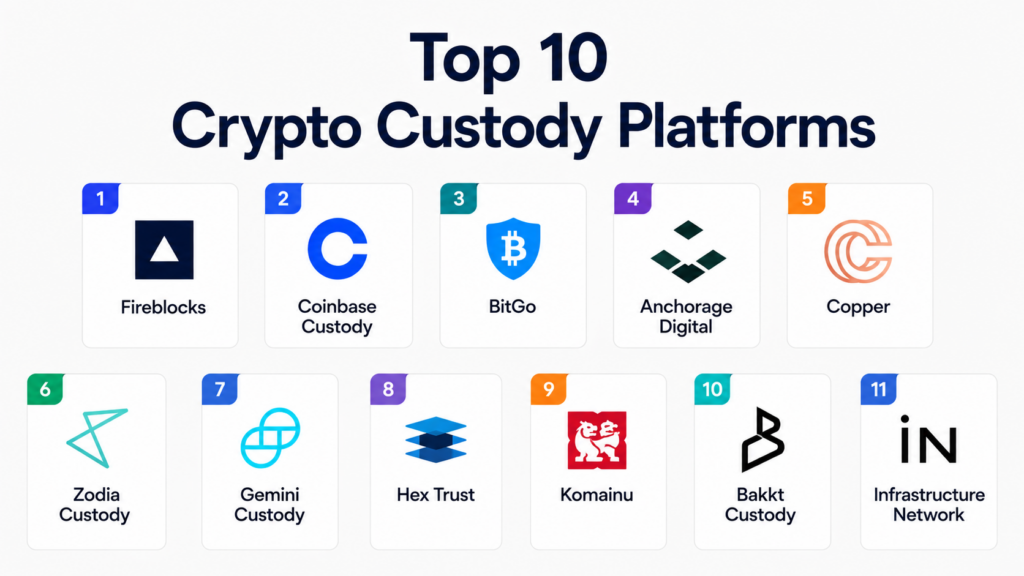
Introduction
Crypto custody platforms help individuals, institutions, exchanges, fintech companies, funds, and enterprises securely store and manage digital assets such as cryptocurrencies, stablecoins, tokenized assets, NFTs, and blockchain-based treasury holdings. In simple terms, a crypto custody platform protects the private keys or signing authority required to move digital assets on-chain. Since blockchain transactions are often irreversible, custody is one of the most important parts of any digital asset strategy.
Crypto custody matters because more organizations are handling crypto assets for trading, settlement, treasury, payments, tokenization, staking, Web3 operations, and customer-facing financial products. A strong custody platform can reduce operational risk through secure key management, approval workflows, multi-party controls, insurance options, governance policies, transaction monitoring, and institutional reporting.
Real-world use cases include digital asset treasury management, crypto exchange custody, fund custody, tokenized asset operations, stablecoin payment rails, staking operations, DAO treasury protection, Web3 company asset management, and institutional trading settlement. Buyers should evaluate custody model, key management architecture, regulatory posture, asset coverage, transaction policies, insurance options, governance workflows, APIs, reporting, staking support, wallet infrastructure, and enterprise support.
Best for: crypto funds, exchanges, fintechs, banks, asset managers, family offices, Web3 companies, DAOs, payment companies, tokenization platforms, and enterprises managing meaningful digital asset value. Not ideal for: casual users holding small amounts, teams that only need a simple software wallet, or businesses that are not ready to manage compliance, reporting, legal, and operational responsibilities around digital assets.
Key Trends in Crypto Custody Platforms
- Institutional custody demand is growing, especially from funds, fintechs, asset managers, banks, and enterprises entering digital asset markets.
- Multi-party computation key management is becoming mainstream, helping reduce single private-key risk and improve transaction approval workflows.
- Policy-based transaction governance is now essential, including approval thresholds, wallet rules, destination allowlists, spending limits, and role-based controls.
- Tokenization is expanding custody requirements, because platforms now need to support not only cryptocurrencies but also tokenized securities, real-world assets, stablecoins, and on-chain settlement workflows.
- Staking and DeFi access are becoming custody features, but institutions must balance yield opportunities with risk controls, governance, and compliance review.
- Insurance and risk coverage are important buyer questions, although coverage details vary and must be validated directly.
- API-first custody is growing, especially for fintechs, exchanges, payment platforms, and Web3 companies embedding wallets into products.
- Regulatory expectations are increasing, making auditability, transaction monitoring, segregation of duties, and reporting more important.
- Hybrid custody models are becoming more common, where organizations combine third-party custody, self-custody, multi-signature wallets, hardware security modules, and MPC workflows.
- Operational security is now as important as technical security, because insider risk, approval mistakes, phishing, compromised devices, and weak governance can still cause losses.
How We Selected These Tools
- Selected platforms widely recognized in institutional crypto custody, wallet infrastructure, digital asset operations, and secure key management.
- Balanced pure custody providers, MPC-based wallet platforms, institutional custodians, exchange-linked custody services, and enterprise digital asset infrastructure.
- Considered suitability for asset managers, exchanges, fintechs, family offices, Web3 companies, DAOs, and enterprise treasury teams.
- Evaluated custody model, security architecture, transaction governance, asset support, APIs, reporting, staking support, and operational maturity.
- Considered integration with trading venues, DeFi workflows, treasury tools, compliance processes, and institutional reporting needs.
- Avoided public ratings because reliable universal ratings are not consistently available for crypto custody platforms.
- Used “Not publicly stated” where certifications, insurance details, or compliance controls are not clearly known.
- Considered whether the platform supports secure workflows for multiple users, multiple wallets, and multiple approval policies.
- Prioritized practical production relevance over pure popularity.
- Scoring is comparative and should be validated against each buyer’s asset value, jurisdiction, regulatory obligations, and risk model.
Top 10 Crypto Custody Platforms
1- Fireblocks
Short description:
Fireblocks is a digital asset infrastructure platform widely used by institutions, fintechs, exchanges, payment companies, and Web3 businesses for secure wallet operations, custody workflows, settlement, and token management. It is known for MPC-based key management, policy controls, transaction governance, and API-driven digital asset operations. Fireblocks is especially useful for organizations that need programmable custody, treasury operations, and secure asset movement at scale. It is more than a simple wallet and is best suited for serious institutional digital asset workflows.
Key Features
- MPC-based wallet and key management architecture.
- Policy-based transaction approval workflows.
- API-driven wallet and digital asset operations.
- Supports treasury, settlement, payment, and tokenization workflows.
- Role-based controls and governance features.
- Broad support for digital asset operations across multiple networks.
- Useful for fintechs, exchanges, Web3 companies, and institutions.
Pros
- Strong fit for institutional digital asset operations.
- Good for organizations needing automation and governance.
- Useful API ecosystem for embedded wallet and payment workflows.
Cons
- May be more complex than needed for small holders.
- Pricing and setup may suit institutional buyers more than casual users.
- Requires strong internal governance to configure policies correctly.
Platforms / Deployment
Web / API-based platform.
Cloud / Institutional digital asset infrastructure.
Security & Compliance
Security capabilities may include MPC key management, approval policies, role-based controls, and transaction governance. Buyers should validate SSO, MFA, audit logs, insurance coverage, certifications, jurisdictional compliance, and regulatory requirements directly.
Integrations & Ecosystem
Fireblocks integrates into institutional crypto operations, fintech products, payment workflows, exchanges, trading venues, and treasury processes. It is commonly used where secure asset movement and programmable wallet infrastructure are required.
- Trading platforms
- Exchanges and liquidity providers
- Treasury workflows
- Payment and settlement systems
- Tokenization platforms
- APIs for embedded wallet infrastructure
Support & Community
Fireblocks is enterprise-oriented and generally suited for teams that need professional onboarding, implementation support, and operational guidance. Support levels, service commitments, and account management should be validated during vendor evaluation.
2- Coinbase Custody
Short description:
Coinbase Custody is an institutional crypto custody service designed for asset managers, funds, corporations, and organizations that want professional digital asset safekeeping. It is especially relevant for buyers that prefer a well-known crypto brand and institutional custody workflows. The platform is suited for organizations that need secure storage, asset support, reporting, and access to broader Coinbase ecosystem services. Buyers should validate jurisdiction, product availability, supported assets, and regulatory requirements for their use case.
Key Features
- Institutional digital asset custody services.
- Supports secure asset storage and account management workflows.
- Useful for funds, asset managers, and corporate crypto holders.
- Can connect with broader Coinbase ecosystem services where applicable.
- Reporting and operational controls for institutional users.
- Supports asset management and transfer workflows.
- Suitable for organizations seeking third-party custody rather than self-custody.
Pros
- Strong brand recognition in the crypto industry.
- Practical for institutions that want outsourced custody.
- Useful for funds and companies seeking professional custody workflows.
Cons
- Availability and supported assets may vary by jurisdiction.
- Less customizable than fully programmable wallet infrastructure in some cases.
- Buyers should review fees, operational limits, and service terms carefully.
Platforms / Deployment
Web / Institutional platform.
Cloud / Third-party custody.
Security & Compliance
Security and compliance details depend on the specific custody service, jurisdiction, account type, and customer agreement. Buyers should validate regulatory status, insurance coverage, audit reports, access controls, reporting, and compliance documentation directly.
Integrations & Ecosystem
Coinbase Custody may connect with institutional trading, reporting, and asset management workflows within the broader Coinbase ecosystem. It is useful for organizations that want custody plus access to related digital asset services.
- Institutional account workflows
- Trading ecosystem access where applicable
- Reporting and account management
- Fund and asset manager operations
- Corporate treasury workflows
- Supported blockchain asset management
Support & Community
Support is oriented toward institutional users and account-based service models. Buyers should validate onboarding, service levels, account management, operational procedures, and support response expectations.
3- BitGo
Short description:
BitGo is a well-known digital asset custody and wallet infrastructure provider used by institutions, exchanges, funds, and crypto businesses. It offers custody, wallet services, security controls, and operational infrastructure for managing digital assets. BitGo is especially relevant for organizations that need institutional storage, multi-user governance, and secure wallet workflows. It can fit both custody-first buyers and businesses that need wallet infrastructure for customer-facing crypto products.
Key Features
- Digital asset custody and wallet infrastructure.
- Multi-user policy and approval workflows.
- Supports institutional asset management and operational controls.
- Useful for exchanges, funds, fintechs, and crypto platforms.
- Can support treasury, transfer, and wallet operations.
- Broad digital asset support depending on product and region.
- API options for business integration.
Pros
- Strong recognition in institutional digital asset custody.
- Useful for both custody and wallet infrastructure use cases.
- Good fit for crypto businesses needing operational controls.
Cons
- Product fit depends on custody model and jurisdiction.
- Pricing and service model may not suit small users.
- Buyers should validate asset support and integration requirements.
Platforms / Deployment
Web / API-based platform.
Cloud / Custody / Wallet infrastructure.
Security & Compliance
Security capabilities may include multi-signature or institutional wallet controls, policy workflows, and account protections depending on service. Buyers should validate insurance, regulatory status, audit reports, certifications, and jurisdiction-specific compliance directly.
Integrations & Ecosystem
BitGo integrates into crypto business workflows, exchange operations, treasury systems, and institutional asset management processes. API access can support embedded wallet and transfer workflows.
- Exchanges and trading platforms
- Fund operations
- Treasury workflows
- Wallet infrastructure
- APIs for crypto businesses
- Reporting and accounting workflows
Support & Community
BitGo serves institutional and crypto-native businesses. Support expectations, onboarding process, implementation help, and account coverage should be reviewed based on customer size and service plan.
4- Anchorage Digital
Short description:
Anchorage Digital is an institutional digital asset platform focused on custody, trading access, staking, governance, and secure asset operations. It is especially relevant for institutions seeking regulated, professional digital asset custody and broader institutional crypto services. Anchorage Digital is well suited for funds, asset managers, protocols, and organizations that need secure operations around digital assets. Buyers should validate product availability, regulatory fit, supported assets, and service scope for their jurisdiction.
Key Features
- Institutional digital asset custody.
- Supports secure asset operations for professional investors.
- Staking and governance support may be available depending on asset and service.
- Useful for funds, institutions, and crypto-native organizations.
- Provides controlled workflows for digital asset management.
- Supports broader institutional digital asset operations.
- Suitable for high-value custody and operational governance.
Pros
- Strong fit for institutional custody use cases.
- Useful for organizations needing more than simple asset storage.
- Suitable for professional digital asset management workflows.
Cons
- May be more specialized for institutional buyers.
- Product availability and terms may vary by jurisdiction.
- Buyers should validate service scope and asset coverage carefully.
Platforms / Deployment
Web / Institutional platform.
Cloud / Third-party custody.
Security & Compliance
Security and compliance details should be validated directly based on customer type, jurisdiction, and service agreement. Buyers should review regulatory status, auditability, insurance details, access controls, and reporting capabilities.
Integrations & Ecosystem
Anchorage Digital can support institutional crypto operations involving custody, trading, staking, and governance. It is useful for organizations that need a professional operating model for digital assets.
- Institutional custody workflows
- Fund and asset manager operations
- Staking workflows where supported
- Governance participation where supported
- Trading-related workflows
- Reporting and operational processes
Support & Community
Support is oriented toward institutional clients. Buyers should evaluate onboarding, account management, operational procedures, service levels, and asset-specific support before adoption.
5- Copper
Short description:
Copper is a digital asset custody and collateral management platform focused on institutional investors, trading firms, and crypto market participants. It is known for infrastructure that supports secure custody and trading workflows. Copper is especially relevant for organizations that need to manage counterparty risk, trading operations, and institutional-grade crypto asset workflows. It is best suited for professional market participants rather than casual self-custody users.
Key Features
- Institutional digital asset custody.
- Trading and settlement workflow support.
- Collateral management capabilities depending on service.
- Useful for funds, trading firms, and market participants.
- Supports secure operational controls for asset movement.
- Designed for institutional crypto market workflows.
- Helps reduce operational friction in digital asset trading.
Pros
- Strong fit for institutional trading and custody workflows.
- Useful for managing asset movement around trading activity.
- Relevant for professional crypto market participants.
Cons
- Not designed for casual retail wallet use.
- Availability, asset support, and service scope should be validated.
- May require operational maturity to use effectively.
Platforms / Deployment
Web / Institutional platform.
Cloud / Custody and trading infrastructure.
Security & Compliance
Security and compliance controls depend on service model, jurisdiction, customer agreement, and account configuration. Buyers should validate regulatory status, auditability, insurance, role controls, and reporting directly.
Integrations & Ecosystem
Copper is commonly evaluated by institutional trading teams and funds that need custody connected with market access and collateral workflows. Integration requirements should be reviewed based on trading venues and operational model.
- Institutional trading workflows
- Crypto funds
- Collateral management
- Settlement workflows
- Treasury operations
- Reporting and operations teams
Support & Community
Support is typically institutional and account-oriented. Buyers should validate onboarding, service coverage, operational support, incident procedures, and trading workflow assistance.
6- Zodia Custody
Short description:
Zodia Custody is an institutional crypto custody provider focused on secure digital asset safekeeping for professional investors and financial institutions. It is suitable for organizations that need custody services with institutional controls and operational discipline. Zodia Custody is especially relevant for buyers looking for professional digital asset storage, governance, and service support. Buyers should validate jurisdiction, asset support, reporting, and regulatory fit before selection.
Key Features
- Institutional digital asset custody.
- Secure storage and asset management workflows.
- Designed for professional investors and financial institutions.
- Supports controlled transfer and governance processes.
- Useful for asset managers, institutions, and corporate holders.
- Reporting and operational workflows may be available.
- Focused on secure custody rather than casual wallet usage.
Pros
- Strong fit for financial institutions and professional investors.
- Useful for organizations seeking third-party custody.
- Designed around institutional operating needs.
Cons
- Product availability may vary by region.
- Less suitable for small crypto users or simple wallets.
- Buyers should validate supported assets and service details directly.
Platforms / Deployment
Web / Institutional platform.
Cloud / Third-party custody.
Security & Compliance
Security and compliance details should be validated directly. Buyers should review access controls, regulatory posture, insurance coverage, audit reports, custody structure, and reporting capabilities for their jurisdiction.
Integrations & Ecosystem
Zodia Custody can support institutional custody workflows for asset managers, banks, and professional digital asset participants. Integration needs depend on reporting, trading, and operational processes.
- Institutional custody operations
- Asset management workflows
- Reporting processes
- Treasury management
- Transfer approval workflows
- Financial institution operations
Support & Community
Support is designed for institutional clients. Buyers should validate onboarding process, account support, service-level expectations, and asset-specific operational support.
7- Gemini Custody
Short description:
Gemini Custody is an institutional digital asset custody service associated with Gemini’s broader crypto platform ecosystem. It is useful for institutions, funds, and businesses that want third-party custody and account-based digital asset management. Gemini Custody can support secure storage, transfer workflows, and asset management needs for professional users. Buyers should validate supported assets, jurisdiction, service terms, compliance documentation, and reporting requirements.
Key Features
- Institutional crypto custody service.
- Supports secure digital asset storage.
- Account-based workflows for professional users.
- Useful for funds, businesses, and institutions.
- Can connect with broader Gemini ecosystem where applicable.
- Supports transfer and asset management workflows.
- Suitable for organizations seeking third-party custody.
Pros
- Recognized crypto platform ecosystem.
- Useful for institutional custody and secure storage.
- Practical for organizations that prefer third-party custody.
Cons
- Availability and asset support may vary.
- Less flexible than custom wallet infrastructure for some builders.
- Buyers should validate fees, service levels, and compliance fit.
Platforms / Deployment
Web / Institutional platform.
Cloud / Third-party custody.
Security & Compliance
Security and compliance details depend on product, account type, jurisdiction, and service agreement. Buyers should validate custody structure, auditability, insurance coverage, access controls, and regulatory requirements directly.
Integrations & Ecosystem
Gemini Custody may be useful for organizations that want custody connected to broader exchange or account workflows where available. Integration needs should be reviewed based on treasury, trading, and reporting requirements.
- Institutional account workflows
- Asset storage and transfer processes
- Reporting workflows
- Treasury management
- Trading ecosystem access where applicable
- Business crypto operations
Support & Community
Support is generally account-based for institutional users. Buyers should validate onboarding, service-level expectations, customer support model, and operational procedures.
8- Hex Trust
Short description:
Hex Trust is an institutional digital asset custodian and infrastructure provider focused on secure custody, staking, DeFi access, and tokenized asset workflows. It is especially relevant for financial institutions, asset managers, Web3 companies, and enterprises in digital asset markets. Hex Trust is useful for organizations that need secure custody with broader digital asset operations. Buyers should review product availability, supported jurisdictions, asset support, and regulatory considerations before adoption.
Key Features
- Institutional-grade digital asset custody.
- Supports tokenized asset and crypto asset workflows.
- Staking and DeFi-related access may be available depending on service.
- Useful for asset managers, Web3 firms, and financial institutions.
- Secure wallet and operational governance workflows.
- Supports institutional reporting and asset management needs.
- Relevant for Asia and global digital asset market participants depending on availability.
Pros
- Strong fit for institutional digital asset operations.
- Useful for custody, staking, and tokenized asset workflows.
- Relevant for professional investors and Web3 businesses.
Cons
- Service scope and availability may vary by jurisdiction.
- Requires careful compliance and operational review.
- May be too advanced for basic wallet needs.
Platforms / Deployment
Web / Institutional platform.
Cloud / Custody and digital asset infrastructure.
Security & Compliance
Security and compliance details should be validated directly. Buyers should review custody controls, access policies, insurance, regulatory status, auditability, and jurisdiction-specific requirements.
Integrations & Ecosystem
Hex Trust can support institutional digital asset workflows across custody, tokenized assets, staking, and related operations. Integration requirements should be mapped to the buyer’s treasury, trading, and compliance processes.
- Digital asset custody workflows
- Tokenized asset operations
- Staking workflows where supported
- DeFi access workflows where supported
- Reporting and treasury systems
- Institutional crypto operations
Support & Community
Support is oriented toward institutional and professional clients. Buyers should validate onboarding, account management, technical support, and operational assistance before production use.
9- Komainu
Short description:
Komainu is an institutional digital asset custody provider focused on secure asset safekeeping for financial institutions, asset managers, and professional investors. It is suitable for organizations that need third-party custody with institutional workflows and operational controls. Komainu is especially relevant for funds, banks, and digital asset businesses that need secure custody and governance processes. Buyers should validate jurisdictional availability, asset support, and compliance documentation directly.
Key Features
- Institutional digital asset custody.
- Secure safekeeping for crypto and tokenized assets depending on support.
- Designed for professional investors and financial institutions.
- Supports controlled transfer and governance workflows.
- Useful for funds, banks, and asset managers.
- Reporting and operational processes may be available.
- Focused on institutional-grade custody.
Pros
- Strong fit for professional and regulated market participants.
- Useful for organizations seeking third-party custody.
- Designed around institutional operating requirements.
Cons
- Not suitable for casual users or simple self-custody needs.
- Asset support and service availability should be validated.
- Buyers must review legal, reporting, and operational requirements carefully.
Platforms / Deployment
Web / Institutional platform.
Cloud / Third-party custody.
Security & Compliance
Security and compliance details should be validated directly with the provider. Buyers should assess access controls, auditability, custody structure, insurance, regulatory status, and operational procedures.
Integrations & Ecosystem
Komainu can support institutional digital asset custody workflows for asset managers, banks, and professional investors. Integration planning should include treasury, trading, reporting, and governance workflows.
- Institutional custody processes
- Asset manager workflows
- Fund operations
- Treasury reporting
- Transfer governance
- Financial institution operations
Support & Community
Support is institutional and service-oriented. Buyers should evaluate onboarding support, account coverage, service levels, incident response, and operational documentation.
10- Bakkt Custody
Short description:
Bakkt Custody is a digital asset custody service designed for institutional and business users that need secure crypto asset storage and operational controls. It is relevant for organizations that want third-party custody instead of managing private keys internally. Bakkt Custody can fit businesses handling customer assets, corporate holdings, or regulated digital asset workflows. Buyers should validate current service availability, supported assets, jurisdiction, and integration scope before selection.
Key Features
- Digital asset custody for institutional and business use.
- Secure storage and operational controls.
- Useful for companies needing third-party custody.
- Supports asset management and transfer workflows depending on service.
- Relevant for corporate and financial digital asset use cases.
- Reporting and account management may be available.
- Focused on secure custody rather than casual wallet usage.
Pros
- Useful for businesses that do not want to self-custody.
- Suitable for institutional storage and operational control needs.
- Can support professional digital asset workflows.
Cons
- Product availability and service scope should be validated.
- May not fit Web3 teams needing highly programmable wallet infrastructure.
- Buyers should review fees, supported assets, and compliance fit.
Platforms / Deployment
Web / Institutional platform.
Cloud / Third-party custody.
Security & Compliance
Security and compliance details should be validated directly. Buyers should review custody model, access controls, insurance, auditability, regulatory posture, and reporting capabilities.
Integrations & Ecosystem
Bakkt Custody may support business and institutional digital asset workflows where third-party custody is required. Integration needs depend on account operations, reporting, treasury, and transfer requirements.
- Institutional custody workflows
- Business crypto operations
- Treasury processes
- Account management
- Reporting workflows
- Secure transfer processes
Support & Community
Support expectations should be validated based on business type, service model, and account agreement. Buyers should review onboarding, response times, operational procedures, and available account support.
Comparison Table
| Tool Name | Best For | Platforms Supported | Deployment | Standout Feature | Public Rating |
|---|---|---|---|---|---|
| Fireblocks | Programmable institutional wallet operations | Web / APIs | Cloud | MPC wallet infrastructure and policy controls | N/A |
| Coinbase Custody | Institutional third-party custody | Web | Cloud | Custody connected to Coinbase ecosystem | N/A |
| BitGo | Custody and wallet infrastructure | Web / APIs | Cloud | Institutional custody and wallet operations | N/A |
| Anchorage Digital | Institutional custody and digital asset operations | Web | Cloud | Institutional custody with broader asset workflows | N/A |
| Copper | Institutional custody and trading workflows | Web | Cloud | Custody linked with collateral and trading operations | N/A |
| Zodia Custody | Financial institution custody | Web | Cloud | Institutional custody focus | N/A |
| Gemini Custody | Secure third-party custody for institutions | Web | Cloud | Custody connected to Gemini ecosystem | N/A |
| Hex Trust | Institutional custody and tokenized asset workflows | Web | Cloud | Custody for crypto and tokenized assets | N/A |
| Komainu | Professional investor custody | Web | Cloud | Institutional safekeeping and governance | N/A |
| Bakkt Custody | Business and institutional crypto storage | Web | Cloud | Third-party custody for business users | N/A |
Evaluation & Scoring of Crypto Custody Platforms
| Tool Name | Core 25% | Ease 15% | Integrations 15% | Security 10% | Performance 10% | Support 10% | Value 15% | Weighted Total |
|---|---|---|---|---|---|---|---|---|
| Fireblocks | 10 | 8 | 10 | 9 | 9 | 9 | 8 | 9.10 |
| Coinbase Custody | 8 | 8 | 8 | 9 | 8 | 8 | 7 | 8.00 |
| BitGo | 9 | 8 | 9 | 9 | 8 | 8 | 8 | 8.50 |
| Anchorage Digital | 9 | 7 | 8 | 9 | 8 | 8 | 7 | 8.10 |
| Copper | 8 | 7 | 8 | 9 | 8 | 8 | 7 | 7.85 |
| Zodia Custody | 8 | 7 | 7 | 9 | 8 | 8 | 7 | 7.70 |
| Gemini Custody | 8 | 8 | 7 | 8 | 8 | 8 | 7 | 7.70 |
| Hex Trust | 8 | 7 | 8 | 9 | 8 | 8 | 7 | 7.85 |
| Komainu | 8 | 7 | 7 | 9 | 8 | 8 | 7 | 7.70 |
| Bakkt Custody | 7 | 7 | 7 | 8 | 7 | 7 | 7 | 7.15 |
These scores are comparative and should be used as an evaluation guide, not fixed public ratings. A higher score means the platform appears stronger across custody depth, usability, integrations, security expectations, performance, support, and value. A lower score may still be excellent for a specific institutional scenario, jurisdiction, or custody model. Buyers should run due diligence on custody structure, legal terms, insurance coverage, supported assets, reporting, operational controls, and regulatory fit before making a final selection.
Which Crypto Custody Platform Is Right for You?
Solo / Freelancer
Solo users and freelancers usually do not need institutional custody platforms unless they manage significant assets professionally. For small personal holdings, a reputable hardware wallet or self-custody wallet may be enough. If the user manages client funds, fund assets, or business treasury, institutional custody becomes more relevant. Fireblocks, BitGo, Coinbase Custody, and Gemini Custody may be considered depending on asset size and operating model. Solo professionals should avoid holding client assets in personal wallets without legal, compliance, and security guidance.
SMB
Small and mid-sized businesses should choose custody based on asset value, operational complexity, and who needs transaction approval authority. Fireblocks and BitGo can be strong for companies that need wallet infrastructure, multiple users, APIs, and policy controls. Coinbase Custody, Gemini Custody, or Bakkt Custody may fit businesses seeking third-party custody. If the SMB uses crypto for payments, treasury, or Web3 operations, it should define wallet ownership, approval policies, backup plans, accounting workflows, and incident response before moving funds.
Mid-Market
Mid-market organizations usually need more formal governance, reporting, and segregation of duties. Fireblocks, BitGo, Anchorage Digital, Copper, Hex Trust, and Zodia Custody can be evaluated depending on custody model, asset coverage, and jurisdiction. Trading-heavy teams may evaluate Copper or Fireblocks for operational workflows. Asset managers may focus more on third-party custody, reporting, and regulatory alignment. Mid-market teams should involve finance, legal, security, compliance, and operations before choosing a platform.
Enterprise
Enterprises should evaluate crypto custody through a risk, governance, and compliance lens. The decision should include legal structure, custody agreement, asset segregation, insurance, access controls, approval workflows, audit trails, reporting, business continuity, and vendor risk. Fireblocks may fit programmable digital asset operations, while Coinbase Custody, BitGo, Anchorage Digital, Zodia Custody, Komainu, Gemini Custody, Hex Trust, and Bakkt Custody may fit institutional custody needs depending on region and service requirements. Enterprises should conduct formal vendor due diligence before production use.
Budget vs Premium
Crypto custody should not be selected only by lowest price. Low-cost custody may be acceptable for small amounts, but high-value assets require stronger key management, governance, support, insurance review, and legal clarity. Premium custody can be justified when assets are material, customer funds are involved, or compliance obligations are high. Fireblocks-style infrastructure may create value through automation and policy controls, while third-party custody platforms may reduce internal key management burden. Buyers should compare total cost of ownership, not only custody fees.
Feature Depth vs Ease of Use
Fireblocks and BitGo offer strong infrastructure depth for wallet operations and business integration. Coinbase Custody, Gemini Custody, Zodia Custody, Komainu, and Bakkt Custody may be easier for organizations that want outsourced custody rather than custom wallet operations. Copper is strong where custody connects closely to trading and collateral workflows. Hex Trust is useful for institutions working across crypto and tokenized asset workflows. The best platform depends on whether the buyer wants custody as a service, programmable wallet infrastructure, or trading-linked operations.
Integrations & Scalability
Custody platforms must integrate with trading venues, finance systems, treasury workflows, accounting tools, compliance tools, reporting dashboards, APIs, and internal approval systems. Fintechs and exchanges may need API-first custody and wallet automation. Asset managers may need reporting, statements, and fund operations support. Web3 companies may need DeFi access, staking, token launches, and treasury controls. Scalability depends on transaction volume, number of wallets, number of users, asset coverage, policy complexity, and support requirements.
Security & Compliance Needs
Security is the most important factor in crypto custody. Buyers should evaluate key management architecture, approval policies, transaction allowlists, withdrawal controls, access permissions, device security, audit logs, recovery processes, insider risk controls, insurance coverage, and incident response. Compliance needs may include regulatory status, customer asset segregation, reporting, AML workflows, jurisdictional rules, and financial audit requirements. No custody platform removes the need for internal governance. The safest setup combines technology controls, legal review, operational policies, and employee training.
Frequently Asked Questions
1- What is a crypto custody platform?
A crypto custody platform is a service or infrastructure solution that helps protect and manage the private keys or signing authority required to control digital assets. It can be a third-party custodian that stores assets on behalf of institutions, or it can be wallet infrastructure that lets businesses control assets with advanced governance. Custody platforms are important because blockchain transactions are often irreversible. If keys are stolen, lost, or misused, recovery may be impossible. A good custody platform provides security controls, approval workflows, reporting, and operational processes. The right model depends on asset value, regulation, and business needs.
2- How much do crypto custody platforms cost?
Crypto custody pricing varies widely by provider, asset value, transaction volume, custody model, service level, and enterprise requirements. Some providers charge custody fees, transaction fees, account fees, or custom enterprise pricing. API-based wallet infrastructure may charge based on usage, wallets, transactions, or platform features. Institutional custody can also include costs for onboarding, reporting, insurance, staking, governance, and support. Buyers should ask for a full pricing breakdown before signing. The total cost should be compared against the risk of self-custody, operational mistakes, and security failures.
3- What is the difference between self-custody and third-party custody?
Self-custody means the organization or user directly controls the private keys or signing process. This provides more control but also more responsibility for backups, approvals, security, and recovery. Third-party custody means a professional custodian holds or controls assets under agreed service terms. This can reduce internal key management burden but introduces vendor dependency and legal review requirements. Some platforms offer hybrid models using MPC, policy engines, and shared control. The best model depends on asset size, compliance needs, internal expertise, and risk tolerance.
4- What is MPC custody?
MPC custody uses Multi-party Computation techniques to split signing authority across multiple parties or systems without reconstructing a full private key in one place. This can reduce single-key compromise risk and support flexible approval workflows. MPC is often used by institutional wallet infrastructure providers because it can improve security and operational control. However, MPC is not magic; it still requires strong policies, secure devices, access controls, monitoring, and recovery planning. Buyers should understand who controls signing shares and how recovery works. MPC custody should be evaluated alongside governance and operational security.
5- Are crypto custody platforms safe?
Crypto custody platforms can improve security compared with unmanaged wallets, but safety depends on the provider, architecture, policies, and user configuration. Buyers should evaluate key management, access controls, transaction approvals, insurance, auditability, withdrawal rules, incident response, and regulatory posture. Even strong platforms can be weakened by poor internal practices, weak approvals, phishing, or compromised employee accounts. Institutional custody should include both technical controls and operational controls. No platform can remove all risk. A formal security and vendor due diligence process is essential.
6- What are common mistakes when choosing crypto custody?
A common mistake is choosing a custody provider based only on brand name or price. Buyers may forget to validate supported assets, jurisdiction, insurance details, withdrawal policies, reporting, APIs, and operational workflows. Another mistake is giving too much transaction authority to one person. Some teams fail to test recovery, signer rotation, or emergency procedures. Others choose self-custody without enough internal security expertise. The best approach is to map business requirements first, then evaluate custody model, controls, legal terms, and integration fit.
7- Do crypto custody platforms support staking?
Some custody platforms support staking for selected assets, but availability varies by provider, jurisdiction, asset, and service model. Staking can create yield opportunities, but it also introduces risks such as lockup periods, validator performance, slashing risk, regulatory questions, and operational complexity. Institutions should review staking terms carefully before participating. Custody and staking should be governed through approval workflows and risk policies. Not every asset should be staked just because it is technically possible. Buyers should validate support directly with the provider.
8- What integrations should buyers evaluate?
Buyers should evaluate integrations with exchanges, OTC desks, trading platforms, accounting systems, portfolio tools, compliance tools, reporting workflows, treasury systems, and internal approval platforms. Fintechs may need APIs for wallet creation, deposits, withdrawals, and customer operations. Funds may need statements, reporting, and reconciliation. Enterprises may need finance and audit workflows. Web3 companies may need staking, DeFi access, token operations, and smart contract interaction. Integration testing should be completed before moving meaningful assets.
9- What are alternatives to crypto custody platforms?
Alternatives include hardware wallets, multi-signature wallets, self-hosted wallet infrastructure, exchange custody, institutional custody, MPC wallets, and smart contract wallets. For individuals, hardware wallets may be enough. For teams and DAOs, multi-signature wallets can provide shared control. For regulated institutions, professional custody may be required or strongly preferred. For fintechs and exchanges, wallet infrastructure platforms may be better than simple custody accounts. The best alternative depends on asset value, user type, legal responsibilities, transaction frequency, and operational maturity.
10- How should an organization evaluate custody risk?
An organization should evaluate custody risk across technology, people, process, legal, and vendor dimensions. Technology includes key management, signing architecture, access controls, and recovery. People risk includes insider threats, phishing, role misuse, and poor training. Process risk includes approval workflows, policy gaps, incident response, and reconciliation errors. Legal risk includes custody agreements, jurisdiction, asset ownership, and regulatory obligations. Vendor risk includes financial stability, support, audits, insurance, and service reliability. A good custody decision requires all of these areas to be reviewed together.
Conclusion
Crypto custody platforms are essential for organizations that manage meaningful digital asset value because private key security, transaction governance, reporting, and operational controls directly affect financial risk. Fireblocks is a strong choice for programmable wallet infrastructure and policy-driven operations, while BitGo provides a broad custody and wallet infrastructure option for institutions and crypto businesses. Coinbase Custody, Gemini Custody, Anchorage Digital, Zodia Custody, Komainu, and Bakkt Custody are relevant for organizations seeking third-party institutional custody, depending on jurisdiction and service scope. Copper is especially useful for trading and collateral workflows, while Hex Trust is relevant for institutions working with crypto and tokenized asset operations. The best platform depends on custody model, supported assets, regulatory needs, integrations, approval workflows, and internal risk tolerance. A practical next step is to shortlist custody providers, run legal and security due diligence, test reporting and transfer workflows, validate insurance and regulatory details, and start with a controlled pilot before moving significant assets into production custody.
