MOTOSHARE 🚗🏍️
Rent Bikes & Cars Directly from Owners
Motoshare connects vehicle owners with people who need bikes and cars on rent. Owners earn from idle vehicles, and renters get flexible ride options.
Visit Motoshare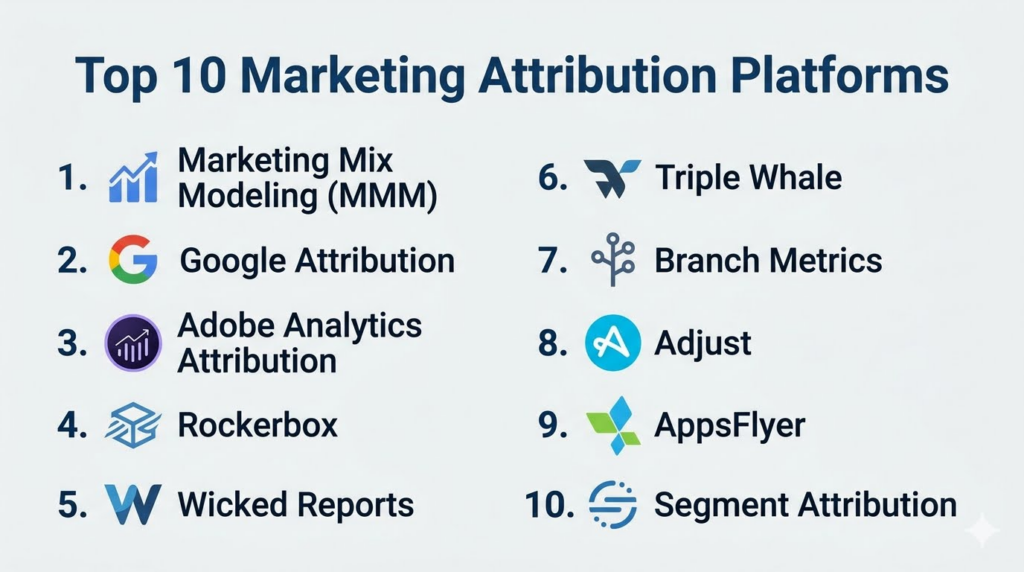
Introduction
Marketing Attribution Platforms are software solutions that help organizations understand which marketing efforts drive desired outcomes — such as sales, lead generation, conversions, or engagement — by tracking interactions across channels. They gather data from digital touchpoints, unify it, and assign credit (attribution) to campaigns, ads, keywords, content, and channels so marketers can optimize budgets and strategies.In , as omnichannel customer journeys become more complex and privacy constraints (e.g., cookie deprecation) increase, attribution platforms are evolving with AI, real‑time processing, and deeper integration with customer data systems. Marketers no longer guess which channels contribute most; they measure it and adjust spend, messaging, and targeting accordingly.
Real‑world use cases include:
- Understanding how digital ads, email, SEO, and influencers contribute to conversions
- Optimizing media spend for maximum ROI across mix models
- Evaluating multi‑touch journeys for B2B and B2C buyers
- Measuring offline to online impacts (e.g., coupon scans tied to ads)
- Identifying channels with high drop‑off or customer lifetime value
What buyers should evaluate:
- Ability to attribute multi‑touch journeys accurately
- Integration with analytics, CRM, and ad platforms
- Support for cross‑device and offline tracking
- Data privacy and compliance readiness
- AI or machine‑learning attribution capabilities
- Real‑time versus batch processing
- Visualization and reporting tools
- Scalability for enterprise workloads
- User experience and ease of setup
- Pricing models and cost efficiency
Best for: Digital marketers, performance teams, growth analysts, CMOs, ecommerce brands, and enterprises needing deep cross‑channel insights.
Not ideal for: Small businesses with limited marketing channels or minimal data, where simple analytics suffice and dedicated attribution tools may be overkill.
Key Trends in Marketing Attribution Platforms
- AI‑driven attribution modeling: Machine learning suggesting optimal credit distribution.
- Privacy‑first tracking: Attribution without reliance on third‑party cookies; identity resolution via first‑party data.
- Unified measurement: Combining online and offline channels into single reporting.
- Real‑time analytics: Immediate insights enabling rapid optimization.
- Cross‑device attribution: Better resolution of journeys across mobile, web, and apps.
- Integration ecosystems: Native connectors to CRMs, CDPs, ad platforms, and analytics stacks.
- Predictive insights: Forecasting which channels will perform best next quarter.
- Audience‑level analytics: Attribution at segment or cohort granularity.
- Simplified UX for non‑technical users: Visual interfaces for attribution exploration.
- Flexible pricing and deployment: SaaS and hybrid models tailored to different business scales.
How We Selected These Tools (Methodology)
- Market adoption / mindshare: Tools widely recognized in marketing analytics and digital measurement.
- Feature completeness: Comprehensive attribution modeling, visualization, reporting, and analytics.
- Reliability / performance signals: Stability and performance in data processing and integrations.
- Security posture signals: Support for data governance, encryption, and compliance.
- Integrations / ecosystem: Connectivity with CRM, analytics, ad platforms, and CDPs.
- Customer fit across segments: Practical for SMB, mid‑market, and enterprise organizations.
- AI or advanced modeling capabilities: ML attribution, insights, and recommendations.
- Ease of implementation and use: Practical setup and usable dashboards.
- Scalability: Handling large datasets and complex journeys.
- Support and documentation: Vendor resources for onboarding and advanced use.
Top 10 Marketing Attribution Platforms
#1 — Marketing Mix Modeling (MMM) Platforms (e.g., Nielsen / Custom MMM)
Short description:
Enterprise solutions focusing on macro attribution via statistical models that incorporate advertising spend, media channels, pricing, seasonality, and external factors like economic shifts. They combine traditional econometrics with marketing data for top‑line insight.
Key Features
- Statistical and econometric models
- Integration of ad spend data across channels
- Inclusion of external variables (seasonality, pricing)
- Forecasting and scenario analysis
- Report generation and visualization
- Cross‑channel comparison
- Custom attribution weight calculation
Pros
- Strong for high‑level budget allocation
- Combines offline & online channels well
- Good for enterprise planning
Cons
- Requires statistical expertise
- Less granular than user‑level attribution
- Longer setup and calibration
Platforms / Deployment
- Web / Cloud / Hybrid
Security & Compliance
Not publicly stated
Integrations & Ecosystem
Enterprise data stacks, CRM, finance systems.
Support & Community
Enterprise support and professional services.
#2 — Google Attribution (formerly Google Analytics Attribution)
Short description:
A tool linked closely with Google’s analytics and advertising stack, designed to attribute conversions across search, display, video, and other digital channels to help marketers optimize ad spend within the ecosystem.
Key Features
- Multi‑channel conversion paths
- Data‑driven and rule‑based attribution
- Integration with ad campaigns
- Cross‑device reporting
- Unified analytics dashboards
Pros
- Strong integration with popular Google properties
- No heavy setup for Google advertisers
- Free or bundled with analytics
Cons
- Limited outside Google ecosystem
- Less flexible than specialist platforms
Platforms / Deployment
- Web / Cloud
Security & Compliance
Not publicly stated
Integrations & Ecosystem
Google Analytics, Ad platforms, CRM via connectors.
Support & Community
Documentation and forums.
#3 — Adobe Analytics Attribution
Short description:
Part of Adobe Experience Cloud, Adobe Analytics provides advanced attribution models within a robust digital analytics suite for enterprises with complex, high‑traffic use cases.
Key Features
- AI/ML attribution options
- Pathing and journey visualization
- Unified web, app, offline data
- Advanced segmentation
- Granular touchpoint analysis
- Real‑time dashboards
Pros
- Deep analytics combined with attribution
- Suitable for large enterprises
- Strong reporting and flexibility
Cons
- Expensive and complex
- Requires training
Platforms / Deployment
- Web / Cloud
Security & Compliance
Not publicly stated
Integrations & Ecosystem
Adobe stack, CRM, CDP, martech tools.
Support & Community
Enterprise support and consulting.
#4 — Rockerbox
Short description:
Rockerbox is a multi‑touch attribution platform designed for ecommerce and digital brands, offering unified measurement by ingesting data across channels and matching to outcomes.
Key Features
- Multi‑touch attribution modeling
- Channel‑level reporting
- Event deduplication and identity resolution
- Dashboard and visualization
- Custom attribution logic
Pros
- Built for direct‑to‑consumer measurement
- Cross‑channel unification
- Identity‑centric attribution
Cons
- Less well suited for offline heavy enterprises
- Smaller market footprint
Platforms / Deployment
- Web / Cloud
Security & Compliance
Not publicly stated
Integrations & Ecosystem
Common analytics, ad, and ecommerce platforms.
Support & Community
Documentation and customer support.
#5 — Wicked Reports
Short description:
A platform that attributes sales back to original marketing sources specifically for ecommerce and direct response advertising, enabling marketers to tie revenue to campaigns across channels.
Key Features
- Revenue attribution
- Cohort and LTV tracking
- Multi‑touch attribution
- Funnel visualizations
- Automated reporting
Pros
- Strong ecommerce focus
- Revenue‑centric insights
- User‑friendly dashboards
Cons
- Bias toward ecommerce/digital channels
- Less robust for enterprise complexity
Platforms / Deployment
- Web / Cloud
Security & Compliance
Not publicly stated
Integrations & Ecosystem
Connects with ecommerce and ad platforms.
Support & Community
Support and onboarding resources.
#6 — Triple Whale Attribution
Short description:
An analytics suite built for modern ecommerce brands, offering attribution that ties customer lifecycle, media spend, and conversions across platforms.
Key Features
- Unified ecommerce dashboards
- Multi‑touch attribution
- Cohort analytics
- Ad spend normalization
- Real‑time updates
Pros
- Designed for scaling ecommerce brands
- Visual, actionable reporting
- Quick setup for common platforms
Cons
- Smaller enterprise footprint
- Focused primarily on online channels
Platforms / Deployment
- Web / Cloud
Security & Compliance
Not publicly stated
Integrations & Ecosystem
Ecommerce platforms, ad channels, analytics tools.
Support & Community
Documentation and customer support.
#7 — Branch Metrics (Attribution / Deeplinks)
Short description:
Branch provides attribution primarily for mobile and app‑centric journeys, enabling brands to measure user acquisition sources, deep link performance, and cross‑platform engagements.
Key Features
- App attribution and user routing
- Deep linking analytics
- Cross‑platform journey mapping
- Campaign measurement
- Cohort analysis
Pros
- Strong in mobile app measurement
- Industry focus on deeplinks & referral tracking
Cons
- Not a full omnichannel attribution suite
- Less suited for offline attribution
Platforms / Deployment
- Web / Cloud
Security & Compliance
Not publicly stated
Integrations & Ecosystem
Mobile SDK, analytics stacks, ad channels.
Support & Community
Documentation and support options.
#8 — Adjust Attribution
Short description:
Adjust focuses on mobile measurement and attribution, offering marketers insights into app performance and source contributions for installs and in‑app conversions.
Key Features
- SDK integration for mobile
- Traffic source attribution
- Cohort analysis
- Fraud prevention insights
- Campaign performance
Pros
- Strong mobile app analytics
- Focused attribution for installs
Cons
- Limited offline attribution
- Less enterprise multi‑touch depth
Platforms / Deployment
- Web / Cloud
Security & Compliance
Not publicly stated
Integrations & Ecosystem
Mobile app platforms, analytics, ad networks.
Support & Community
Support tiers and documentation.
#9 — AppsFlyer
Short description:
AppsFlyer attributes user acquisition and engagement across mobile and connected channels, helping marketers measure campaign effectiveness and media ROI.
Key Features
- Mobile attribution SDK
- Media source measurement
- Cohort and LTV modeling
- Analytics dashboards
- Fraud detection mechanisms
Pros
- Large mobile attribution ecosystem
- Detailed cohort insights
Cons
- Primarily mobile centric
- Less traditional web attribution depth
Platforms / Deployment
- Web / Cloud
Security & Compliance
Not publicly stated
Integrations & Ecosystem
Ad networks, analytics, CRM.
Support & Community
Documentation and support.
#10 — Segment Personas / Attribution Plugins
Short description:
Segment (now part of customer data platforms) enables businesses to unify customer data and apply attribution logic via plugins or integrated models within a broader customer data fabric.
Key Features
- Unified customer profile
- Attribution via plugins
- Data governance
- Cross‑device identity resolution
- Integrations to analytics & ad platforms
Pros
- Centralized data layer
- Flexible attribution integration
Cons
- Attribution requires configuration
- Not a standalone attribution product
Platforms / Deployment
- Web / Cloud
Security & Compliance
Not publicly stated
Integrations & Ecosystem
CRM, analytics, CDP connectors.
Support & Community
Broad documentation and community ecosystem.
Comparison Table (Top 10)
| Tool Name | Best For | Platform(s) Supported | Deployment | Standout Feature | Public Rating |
|---|---|---|---|---|---|
| Marketing Mix Modeling | Enterprise budget allocation | Web | Cloud/Hybrid | Econometric insights | N/A |
| Google Attribution | Google ecosystem marketers | Web | Cloud | Integrated ad/channel data | N/A |
| Adobe Analytics Attribution | Enterprise analytics | Web | Cloud | Advanced modeling | N/A |
| Rockerbox | Ecommerce & direct brands | Web | Cloud | Cross‑channel unify | N/A |
| Wicked Reports | Revenue attribution | Web | Cloud | Revenue tie‑back | N/A |
| Triple Whale | Ecommerce analytics | Web | Cloud | Lifecycle attribution | N/A |
| Branch Metrics | Mobile & app journeys | Web | Cloud | Deeplink attribution | N/A |
| Adjust | Mobile install & event | Web | Cloud | Mobile tracking | N/A |
| AppsFlyer | Mobile acquisition | Web | Cloud | Media source measurement | N/A |
| Segment Attribution | CDP‑linked data teams | Web | Cloud | Unified data layer | N/A |
Evaluation & Scoring of Marketing Attribution Platforms
| Tool Name | Core (25%) | Ease (15%) | Integrations (15%) | Security (10%) | Performance (10%) | Support (10%) | Value (15%) | Weighted Total |
|---|---|---|---|---|---|---|---|---|
| Marketing Mix Modeling | 8 | 6 | 7 | 7 | 8 | 7 | 7 | 7.4 |
| Google Attribution | 7 | 9 | 8 | 7 | 7 | 8 | 9 | 7.9 |
| Adobe Analytics Attribution | 9 | 6 | 9 | 8 | 9 | 7 | 7 | 8.1 |
| Rockerbox | 8 | 8 | 8 | 7 | 8 | 8 | 8 | 8.0 |
| Wicked Reports | 8 | 8 | 8 | 7 | 8 | 7 | 8 | 7.9 |
| Triple Whale | 7 | 9 | 7 | 7 | 7 | 8 | 8 | 7.8 |
| Branch Metrics | 7 | 8 | 7 | 7 | 7 | 7 | 7 | 7.3 |
| Adjust | 7 | 8 | 7 | 7 | 7 | 7 | 7 | 7.3 |
| AppsFlyer | 7 | 8 | 7 | 7 | 7 | 7 | 7 | 7.3 |
| Segment Attribution | 8 | 8 | 9 | 8 | 8 | 8 | 8 | 8.3 |
Interpreting scores:
- Higher totals signal tools with stronger combination of features, UX, integrations, and value.
- Core features emphasize attribution depth and accuracy.
- Ease and value reflect usability and ROI.
- Scores are comparative across typical marketing needs; no tool is universally best for all scenarios.
Which Marketing Attribution Platforms Tool Is Right for You?
Solo / Freelancer
Tools like Google Attribution and Triple Whale offer ease of setup and tie closely to ad platforms for quick insights.
SMB
Rockerbox, Wicked Reports, and Triple Whale provide a balance of ease, integrations, and value for growing brands.
Mid‑Market
Adobe Analytics Attribution, Segment, and Rockerbox help scale attribution across online and offline channels with deeper analysis.
Enterprise
Adobe Analytics, Marketing Mix Modeling, and Segment support large data volumes, complex journeys, and governance.
Budget vs Premium
Budget users benefit from Google Attribution and Triple Whale; premium requires Adobe Analytics or econometric modeling.
Feature Depth vs Ease of Use
Premium enterprise tools offer depth at the cost of complexity; emerging brands may prioritize ease and speed.
Integrations & Scalability
Enterprises should validate connectors to CRM, CDP, analytics, ad platforms, and offline systems.
Security & Compliance Needs
While many tools have standard security, enterprises may require deeper audit trails and governance integrations.
Frequently Asked Questions (FAQs)
1. What is Marketing Attribution?
It’s the process of assigning credit to marketing touchpoints for conversions and outcomes so teams can understand which channels influence customer journeys.
2. How do attribution models differ?
Models range from last‑touch to multi‑touch to data‑driven and econometric; each distributes credit differently based on methodology and data.
3. How does mobile attribution work?
Mobile tools track app installs, in‑app events, and user journeys with SDKs and deep linking to tie sources to outcomes.
4. Is multi‑touch attribution necessary?
For complex journeys with multiple channels, multi‑touch provides a more accurate understanding than single‑touch approaches.
5. What integration patterns matter?
CRM, CDP, analytics platforms, ad networks, ecommerce systems, and offline data sources are key.
6. How does privacy impact attribution?
With privacy constraints, tools rely more on first‑party data, identity graphs, and probabilistic methods instead of third‑party cookies.
7. How long does implementation take?
Simple setups can be weeks; enterprise attribution across systems may take months with data pipelines and governance.
8. Can these tools handle offline channels?
Enterprise tools often support offline data integration for unified measurement.
9. What common mistakes occur?
Common errors include inadequate data quality, ignoring identity resolution, over‑reliance on single models, and missing offline channels.
10. What’s the difference between analytics and attribution?
Analytics describes what happened; attribution explains why it happened by linking channels to outcomes.
Conclusion
Marketing Attribution Platforms equip organizations with data‑informed measurement across complex customer journeys. From lightweight solutions like Google Attribution and Triple Whale for ecommerce brands to deep enterprise analytics with Adobe and econometric modeling, there’s a spectrum of solutions for different scales and needs. Key considerations include data governance, integrations, privacy, accuracy of models, and alignment with business goals. Next steps for choosing include shortlisting based on channel complexity, piloting use cases, validating data pipelines, and ensuring alignment with sales and analytics teams for unified measurement.
