MOTOSHARE 🚗🏍️
Rent Bikes & Cars Directly from Owners
Motoshare connects vehicle owners with people who need bikes and cars on rent. Owners earn from idle vehicles, and renters get flexible ride options.
Visit Motoshare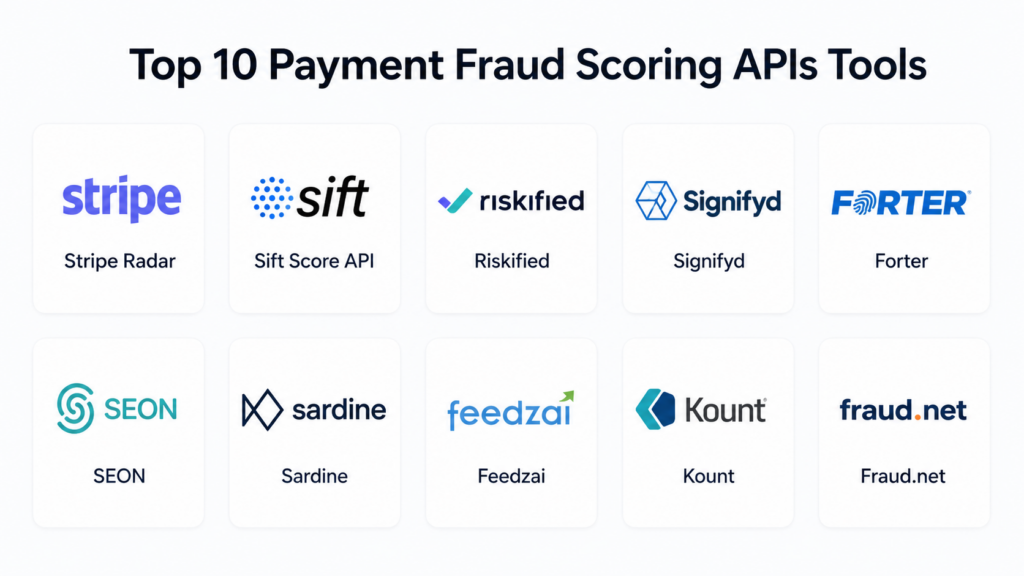
Introduction
Payment Fraud Scoring APIs help businesses evaluate the risk of a payment, order, account action, transfer, or checkout attempt in real time. In simple terms, these APIs analyze transaction data, customer identity signals, device details, behavioral patterns, payment history, velocity, location, email, phone, card, and network intelligence to produce a fraud score or decision. A higher-risk score usually means the transaction should be reviewed, challenged, blocked, or routed through stronger verification.Payment fraud scoring matters because fraud is no longer limited to stolen cards. Businesses now face account takeover, synthetic identity fraud, friendly fraud, refund abuse, promo abuse, card testing, mule accounts, bot attacks, first-party fraud, and payment return risk. Real-world use cases include ecommerce fraud screening, card-not-present fraud prevention, ACH risk scoring, bank payment fraud detection, fintech onboarding, checkout risk decisions, marketplace seller risk, payment authorization routing, chargeback reduction, and manual review prioritization.Buyers should evaluate scoring accuracy, false-positive control, API latency, payment method coverage, chargeback workflows, device intelligence, rules engine, machine learning explainability, manual review tools, integrations, compliance support, data privacy, pricing, and fraud analyst usability.
Best for: ecommerce brands, marketplaces, fintech companies, payment processors, banks, SaaS platforms, digital wallets, subscription businesses, gaming platforms, lending apps, and enterprises that need real-time payment risk decisions. Not ideal for: very small businesses with low transaction volume, teams that only need basic payment gateway rules, or companies without enough transaction context to benefit from advanced scoring.
Key Trends in Payment Fraud Scoring APIs
- Real-time risk scoring is becoming essential, because fraud decisions must happen before checkout approval, payout release, account funding, or payment settlement.
- Fraud scoring now covers more than card payments, including ACH, bank transfers, wallets, crypto onramps, marketplace payouts, account funding, and subscription billing.
- AI and machine learning are improving fraud detection, but buyers still need transparent signals, rule controls, and human review workflows.
- False positives are a major business risk, because overly strict scoring can block good customers and reduce revenue.
- Device intelligence and behavioral analytics are becoming standard, especially for detecting bots, emulators, account takeover, and identity manipulation.
- Chargeback protection models are gaining adoption, where some vendors combine scoring with liability shift or guaranteed fraud protection.
- Fraud and compliance are converging, especially in fintech, banking, crypto, lending, and payment products where AML, sanctions, KYC, and transaction monitoring overlap.
- API-first fraud infrastructure is growing, allowing teams to embed scoring into checkout, onboarding, account funding, payout, and risk orchestration flows.
- Fraud teams want explainable scores, including top risk signals, reason codes, decision logs, and analyst-friendly evidence.
- Modern fraud platforms increasingly protect the full customer journey, not just final payment authorization.
How We Selected These Tools
- Selected platforms widely recognized in payment fraud scoring, ecommerce fraud prevention, fintech risk decisioning, transaction monitoring, and payment protection.
- Balanced payment-native fraud APIs, ecommerce-focused fraud platforms, fintech risk APIs, banking fraud decisioning systems, and fraud orchestration tools.
- Considered real-time scoring, API availability, chargeback workflows, manual review, device intelligence, behavioral signals, identity intelligence, and transaction risk models.
- Evaluated suitability for startups, SMBs, mid-market merchants, fintechs, banks, marketplaces, and enterprise payment teams.
- Prioritized tools that help teams reduce fraud while controlling false declines and protecting customer experience.
- Avoided public ratings because reliable universal ratings are not consistently available for this category.
- Used “Not publicly stated” where certifications, security controls, or compliance claims are not clearly known.
- Considered whether the tool supports API-first workflows, dashboard review, rules, model outputs, and integration with payment systems.
- Included tools that serve different buyer needs, from quick payment gateway scoring to advanced fraud operations.
- Scoring is comparative and should be validated using real transaction history, fraud labels, approval rates, chargebacks, and manual review outcomes.
Top 10 Payment Fraud Scoring APIs Tools
1- Stripe Radar
Short description:
Stripe Radar is a payment fraud prevention and risk scoring solution built into the Stripe payments ecosystem. It scores transactions using payment network intelligence and machine learning, helping businesses decide whether to approve, review, or block suspicious payments. Stripe states that Radar scores every transaction by combining multiple signals, making it especially useful for businesses already using Stripe payments. It is a strong fit for ecommerce, SaaS, marketplaces, and subscription businesses that want fraud scoring tightly connected to payment processing.
Key Features
- Real-time payment fraud scoring for Stripe transactions.
- Machine learning models trained on large-scale payment signals.
- Custom rules for fraud teams.
- Manual review queue support.
- Dispute and chargeback workflow support.
- Works closely with Stripe payment processing.
- Useful for ecommerce, SaaS, marketplace, and subscription payments.
Pros
- Very easy to adopt for Stripe users.
- Strong payment-native fraud scoring workflow.
- Good balance of automation, rules, and review tools.
Cons
- Best fit is businesses using Stripe payment infrastructure.
- Advanced customization may require Radar for Fraud Teams.
- Non-Stripe payment stacks may need additional fraud tools.
Platforms / Deployment
Web / API-based.
Cloud.
Security & Compliance
Stripe Radar benefits from Stripe’s payment security infrastructure. Buyers should validate PCI scope, SSO, RBAC, audit logs, data retention, privacy controls, regional compliance, and fraud operations requirements directly.
Integrations & Ecosystem
Stripe Radar integrates directly with Stripe payment workflows, making it useful when fraud scoring must connect with checkout, payment authorization, disputes, and reporting.
- Stripe Payments
- Stripe Checkout
- Stripe Billing
- Stripe Connect
- Dispute workflows
- Custom fraud rules and review queues
Support & Community
Stripe provides strong documentation, developer resources, and business support options. Support depth depends on account type, plan, and business scale.
2- Sift Score API
Short description:
Sift Score API provides real-time fraud risk scoring that can be used inside internal fraud models, decision engines, checkout flows, and account protection workflows. Sift describes its Score API as delivering a 0 to 100 fraud risk score along with top risk signals, which helps teams understand why an action may be risky. It is especially useful for marketplaces, fintechs, ecommerce businesses, SaaS platforms, and digital communities that need scoring across multiple fraud types. It fits teams that want flexible fraud intelligence rather than only payment gateway rules.
Key Features
- Real-time fraud score API.
- Risk score output for transaction and user activity decisions.
- Risk signal explanations for analyst review.
- Machine learning and network intelligence.
- Account abuse, payment fraud, and marketplace risk workflows.
- API integration into custom decision engines.
- Useful for fraud teams needing flexible scoring infrastructure.
Pros
- Strong fit for API-first fraud scoring.
- Useful explainability through risk signals.
- Can support multiple fraud use cases beyond checkout.
Cons
- Requires thoughtful integration and event tracking.
- Model performance depends on data quality and event coverage.
- Smaller teams may need onboarding help to tune workflows.
Platforms / Deployment
Web / API-based.
Cloud.
Security & Compliance
Security details should be validated directly. Buyers should review encryption, access controls, SSO, RBAC, audit logs, data retention, privacy controls, and compliance documentation.
Integrations & Ecosystem
Sift fits into fraud decisioning workflows where businesses want to score events, users, transactions, and account actions across the customer journey.
- Ecommerce checkout
- Marketplace transactions
- Account protection workflows
- Internal fraud decision engines
- Manual review tools
- Risk operations dashboards
Support & Community
Sift provides documentation and fraud team resources. Buyers should validate implementation support, model tuning guidance, and analyst onboarding support.
3- Riskified
Short description:
Riskified is an ecommerce fraud prevention platform focused on approving good orders, reducing fraud, and protecting merchants from chargebacks through fraud decisioning and chargeback guarantee models. It is especially useful for enterprise and mid-market merchants that want automated order decisions and fraud liability protection. Riskified positions its platform around ecommerce risk management, chargeback protection, and adaptive checkout decisions. It is a strong fit for online retailers that want fraud scoring tied directly to revenue protection and order approval.
Key Features
- Ecommerce fraud prevention and order decisioning.
- Chargeback guarantee options depending on product and agreement.
- Automated approve, decline, or review workflows.
- Identity and behavior analysis for online orders.
- Policy abuse and account protection capabilities.
- Merchant dashboard and performance reporting.
- Useful for ecommerce brands and online retailers.
Pros
- Strong fit for ecommerce fraud and chargeback reduction.
- Useful for merchants wanting guaranteed fraud protection.
- Helps reduce false declines when tuned well.
Cons
- Best fit is ecommerce order fraud, not every payment type.
- Pricing and guarantee terms require careful review.
- Merchants should validate approval lift and refund workflows.
Platforms / Deployment
Web / API-based / ecommerce integrations.
Cloud.
Security & Compliance
Security and compliance details should be validated directly. Buyers should review data handling, access controls, encryption, audit logs, privacy requirements, chargeback terms, and merchant obligations.
Integrations & Ecosystem
Riskified integrates with ecommerce platforms, order management systems, payment workflows, and fraud operations teams.
- Ecommerce platforms
- Order management systems
- Payment gateways
- Chargeback workflows
- Manual review operations
- Retail fraud teams
Support & Community
Riskified provides merchant-focused support and fraud expertise. Buyers should validate onboarding, integration timeline, reporting, and chargeback guarantee terms.
4- Signifyd
Short description:
Signifyd is an ecommerce fraud protection and prevention platform used by retailers to reduce fraud, automate order decisions, and improve customer trust. It is especially useful for merchants that want fraud scoring, automated decisions, chargeback protection, and commerce protection workflows. Signifyd focuses on ecommerce fraud prevention and customer experience, helping merchants reduce manual reviews while protecting revenue. It is a strong fit for retailers and marketplaces with meaningful card-not-present order volume.
Key Features
- Ecommerce fraud prevention and order risk scoring.
- Automated approve or decline decisions.
- Chargeback protection options depending on plan and agreement.
- Machine learning and identity intelligence.
- Manual review and case workflow support.
- Abuse prevention use cases such as return or policy abuse.
- Useful for retailers, marketplaces, and ecommerce brands.
Pros
- Strong fit for ecommerce order fraud protection.
- Helps reduce manual review burden.
- Useful for merchants focused on revenue protection and customer experience.
Cons
- Less suitable for non-commerce financial crime use cases.
- Platform value depends on order volume and fraud exposure.
- Terms, guarantees, and regional coverage should be validated.
Platforms / Deployment
Web / API-based / ecommerce integrations.
Cloud.
Security & Compliance
Security details should be validated directly. Buyers should review SSO, RBAC, audit logs, encryption, data retention, privacy controls, and dispute workflow requirements.
Integrations & Ecosystem
Signifyd integrates with ecommerce systems, order management, payment workflows, and merchant fraud operations.
- Ecommerce platforms
- Order management systems
- Payment processors
- Chargeback workflows
- Manual review tools
- Retail customer support workflows
Support & Community
Signifyd provides merchant resources, implementation support, and fraud operations guidance. Buyers should validate onboarding, reporting, SLA expectations, and support tiers.
5- Forter
Short description:
Forter is a fraud and payments decisioning platform focused on digital commerce. It helps businesses make real-time decisions around payment fraud, account protection, chargebacks, abuse prevention, and payment optimization. Forter’s platform spans fraud management, account protection, payment optimization, dispute management, and abuse prevention, making it useful for ecommerce and marketplace businesses that need broader trust decisions across the customer journey.
Key Features
- Real-time fraud and payments decisioning.
- Payment fraud prevention and chargeback reduction.
- Account protection and account takeover prevention.
- Abuse prevention for returns, resellers, promotions, and policy misuse.
- Payment optimization and smart authentication workflows.
- Identity network and behavioral intelligence.
- Useful for enterprise digital commerce and marketplaces.
Pros
- Strong fit for large ecommerce and marketplace fraud teams.
- Covers more than basic payment fraud.
- Useful for optimizing approvals and reducing false declines.
Cons
- May be more advanced than small merchants need.
- Best value comes from sufficient transaction volume and data.
- Buyers should validate use-case fit, pricing, and integration scope.
Platforms / Deployment
Web / API-based.
Cloud.
Security & Compliance
Security and compliance details should be validated directly. Buyers should review data handling, access controls, audit logs, encryption, privacy obligations, and enterprise security documentation.
Integrations & Ecosystem
Forter integrates with commerce, checkout, payment, account protection, and dispute management workflows.
- Ecommerce checkout
- Marketplaces
- Payment processors
- Account protection systems
- Dispute management
- Policy abuse workflows
Support & Community
Forter provides enterprise-oriented fraud support and implementation resources. Buyers should validate onboarding, data integration, model tuning, and analyst support.
6- SEON
Short description:
SEON is a fraud prevention platform offering APIs for fraud scoring, device intelligence, email and phone intelligence, IP analysis, AML screening, and digital footprint checks. It is especially useful for fintechs, iGaming, ecommerce, lending, marketplaces, and digital platforms that need fast fraud scoring with flexible data signals. SEON’s fraud scoring resources describe fraud scores as risk values used to assess how likely a user action is fraudulent. It is a strong choice for teams that want quick API implementation and transparent signals.
Key Features
- Real-time fraud scoring API.
- Device fingerprinting and IP analysis.
- Email, phone, and digital footprint intelligence.
- Rules engine and risk scoring workflows.
- AML screening options depending on product setup.
- Useful for onboarding, checkout, account activity, and payouts.
- Dashboard for fraud analysts and risk teams.
Pros
- Fast API implementation for many digital businesses.
- Strong identity and device intelligence signals.
- Useful for fintech, lending, iGaming, and ecommerce.
Cons
- Payment-native chargeback guarantee is not the main focus.
- Requires tuning to match each business risk model.
- Buyers should validate coverage for their country and data needs.
Platforms / Deployment
Web / API-based.
Cloud.
Security & Compliance
Security details should be validated directly. Buyers should review SSO, RBAC, MFA, audit logs, encryption, data retention, privacy obligations, and regulatory fit.
Integrations & Ecosystem
SEON integrates into onboarding, checkout, account opening, login, payment, and payout workflows where risk scoring and identity signals matter.
- Fintech onboarding
- Ecommerce checkout
- Lending applications
- iGaming platforms
- Marketplace payouts
- AML and digital footprint workflows
Support & Community
SEON provides developer documentation, fraud resources, and implementation support options. Buyers should validate support tiers, tuning help, and analyst training.
7- Sardine
Short description:
Sardine is a fraud prevention and financial crime risk platform used by banks, fintechs, merchants, marketplaces, crypto platforms, and payment companies. It unifies fraud prevention, AML compliance, and real-time transaction monitoring, making it especially useful for regulated financial products. Sardine also offers payment fraud prevention and ACH risk scoring capabilities, including machine learning models that assess unauthorized ACH return risk. It is a strong fit for fintechs and payment products needing fraud scoring beyond card checkout.
Key Features
- Real-time fraud and transaction monitoring.
- Payment fraud and account funding risk scoring.
- ACH risk scoring and return risk prediction.
- Device, behavior, identity, and transaction signals.
- AML and compliance workflows depending on setup.
- Account takeover and bot detection capabilities.
- Useful for fintech, banking, crypto, and marketplace workflows.
Pros
- Strong fit for fintech and payment risk scoring.
- Useful for ACH, account funding, and transaction monitoring.
- Combines fraud and compliance signals.
Cons
- May be more complex than simple ecommerce fraud tools.
- Requires integration across customer journey events.
- Buyers should validate supported payment types and regions.
Platforms / Deployment
Web / API-based / SDK options depending on use case.
Cloud.
Security & Compliance
Security and compliance details should be validated directly. Buyers should review SSO, RBAC, audit logs, encryption, data retention, AML workflows, and financial services requirements.
Integrations & Ecosystem
Sardine integrates into fintech, banking, payment, crypto, and marketplace risk workflows.
- ACH and bank payment flows
- Account funding workflows
- Digital wallet products
- Crypto onramps
- Marketplace risk systems
- AML and fraud operations
Support & Community
Sardine provides fraud and compliance-focused resources. Buyers should validate onboarding, model tuning, workflow design, and fraud operations support.
8- Feedzai
Short description:
Feedzai is an AI-native fraud and financial crime prevention platform used by banks, payment providers, fintechs, and financial institutions. It supports real-time fraud decisions across financial journeys, payment types, and channels. Feedzai positions its platform around real-time decisions and end-to-end protection across the customer journey, making it especially useful for complex banking and payment fraud programs. It is a strong fit for enterprises needing advanced risk decisioning rather than a simple checkout plugin.
Key Features
- Real-time fraud and financial crime decisioning.
- AI-driven risk scoring and transaction monitoring.
- Multi-channel fraud detection for banks and financial institutions.
- Payment fraud, scam detection, and account protection workflows.
- Case management and analyst tools.
- Model governance and risk operations capabilities.
- Useful for banks, processors, fintechs, and enterprise payment teams.
Pros
- Strong fit for financial institutions and enterprise fraud operations.
- Useful for complex payment and financial crime workflows.
- Supports broader risk lifecycle beyond single transaction scoring.
Cons
- May be too advanced for small merchants.
- Implementation can require significant data and operations planning.
- Buyers should validate deployment scope, support, and integration effort.
Platforms / Deployment
Web / API-based / enterprise deployment options may vary.
Cloud / Hybrid depending on agreement and architecture.
Security & Compliance
Security and compliance details should be validated directly. Buyers should review enterprise controls, model governance, audit logs, access permissions, data residency, and regulatory requirements.
Integrations & Ecosystem
Feedzai integrates into bank, payment processor, fintech, and financial crime operations workflows.
- Core banking systems
- Payment processing systems
- Digital banking apps
- Case management workflows
- Transaction monitoring systems
- Fraud operations teams
Support & Community
Feedzai is enterprise-focused and typically requires structured implementation. Buyers should validate onboarding, support model, model governance support, and operational training.
9- Kount
Short description:
Kount is a fraud prevention and identity trust platform used for digital payments, ecommerce, account protection, and transaction risk decisions. It is especially useful for merchants, payment providers, and digital businesses that need fraud scoring, device intelligence, order review, and chargeback reduction. Kount has long been associated with ecommerce fraud prevention and risk decisioning. It is a good option for teams that want fraud scoring connected with identity trust and payment risk workflows.
Key Features
- Payment fraud scoring and decisioning.
- Device intelligence and identity trust signals.
- Ecommerce order risk assessment.
- Chargeback reduction workflows.
- Rules and policy configuration.
- Manual review and analyst workflows.
- Useful for merchants, payment providers, and digital platforms.
Pros
- Good fit for ecommerce and payment fraud operations.
- Useful identity and device risk signals.
- Supports rules-based and model-driven fraud workflows.
Cons
- Buyers should validate current product packaging and integrations.
- May require tuning for specific merchant categories.
- Enterprise feature depth should be reviewed directly.
Platforms / Deployment
Web / API-based.
Cloud.
Security & Compliance
Security details should be validated directly. Buyers should review SSO, RBAC, audit logs, encryption, data handling, privacy controls, and compliance documentation.
Integrations & Ecosystem
Kount integrates with ecommerce, payment processing, account protection, and fraud operations workflows.
- Ecommerce platforms
- Payment gateways
- Device intelligence workflows
- Manual review queues
- Chargeback operations
- Risk and rules engines
Support & Community
Kount provides business and technical resources for fraud prevention users. Buyers should validate support tiers, implementation help, and fraud analyst enablement.
10- Fraud.net
Short description:
Fraud.net provides fraud detection and risk assessment APIs for transactions, identities, and digital activity. Its API documentation describes transaction checks that evaluate validity by providing fraud risk assessments. Fraud.net is useful for businesses that need API-based risk scoring, workflow automation, case management, and fraud operations tools. It is a practical option for ecommerce, financial services, marketplaces, and digital platforms that want flexible fraud detection without building an internal risk platform from scratch.
Key Features
- Fraud risk assessment APIs.
- Transaction screening and fraud scoring workflows.
- Case management and alert workflows.
- Rules, machine learning, and data enrichment capabilities.
- Useful for ecommerce, fintech, and marketplace risk teams.
- API integration into custom decision workflows.
- Reporting and investigation support.
Pros
- Flexible API-based fraud risk assessment.
- Useful for teams needing workflow and case management.
- Practical for multiple digital fraud use cases.
Cons
- Buyers should validate scoring model fit with real transaction data.
- May require configuration and tuning.
- Industry-specific depth should be tested before adoption.
Platforms / Deployment
Web / API-based.
Cloud.
Security & Compliance
Security details should be validated directly. Buyers should review access controls, encryption, audit logs, SSO, RBAC, data retention, and compliance documentation.
Integrations & Ecosystem
Fraud.net integrates into transaction review, fraud operations, and risk decisioning workflows.
- Payment transaction checks
- Ecommerce fraud screening
- Fintech risk workflows
- Marketplace risk systems
- Case management
- Fraud analytics dashboards
Support & Community
Fraud.net provides documentation and business support resources. Buyers should validate onboarding, tuning assistance, and production support expectations.
Comparison Table
| Tool Name | Best For | Platforms Supported | Deployment | Standout Feature | Public Rating |
|---|---|---|---|---|---|
| Stripe Radar | Stripe payment fraud scoring | Web / APIs | Cloud | Payment-native transaction scoring | N/A |
| Sift Score API | API-first fraud scoring and signals | Web / APIs | Cloud | Real-time score with explainable risk signals | N/A |
| Riskified | Ecommerce chargeback protection | Web / APIs / ecommerce integrations | Cloud | Chargeback guarantee and order decisioning | N/A |
| Signifyd | Ecommerce fraud protection | Web / APIs / ecommerce integrations | Cloud | Automated order decisions and commerce protection | N/A |
| Forter | Enterprise commerce fraud and abuse prevention | Web / APIs | Cloud | Full customer journey trust decisions | N/A |
| SEON | Device and identity-based fraud scoring | Web / APIs | Cloud | Digital footprint and device intelligence | N/A |
| Sardine | Fintech payment and account funding risk | Web / APIs / SDK options | Cloud | ACH and real-time transaction risk scoring | N/A |
| Feedzai | Banking and enterprise fraud decisioning | Web / APIs | Cloud / Hybrid varies | Enterprise AI-native fraud decisioning | N/A |
| Kount | Ecommerce and payment risk scoring | Web / APIs | Cloud | Identity trust and device risk signals | N/A |
| Fraud.net | Flexible fraud risk assessment APIs | Web / APIs | Cloud | Transaction risk APIs and case workflows | N/A |
Evaluation & Scoring of Payment Fraud Scoring APIs
| Tool Name | Core 25% | Ease 15% | Integrations 15% | Security 10% | Performance 10% | Support 10% | Value 15% | Weighted Total |
|---|---|---|---|---|---|---|---|---|
| Stripe Radar | 9 | 9 | 9 | 9 | 9 | 8 | 9 | 8.85 |
| Sift Score API | 9 | 8 | 9 | 8 | 9 | 8 | 8 | 8.50 |
| Riskified | 9 | 8 | 8 | 8 | 8 | 8 | 8 | 8.25 |
| Signifyd | 9 | 8 | 8 | 8 | 8 | 8 | 8 | 8.25 |
| Forter | 9 | 7 | 8 | 8 | 9 | 8 | 8 | 8.20 |
| SEON | 8 | 9 | 8 | 8 | 8 | 8 | 9 | 8.30 |
| Sardine | 9 | 7 | 8 | 8 | 9 | 8 | 8 | 8.20 |
| Feedzai | 9 | 6 | 8 | 9 | 9 | 9 | 7 | 8.10 |
| Kount | 8 | 8 | 8 | 8 | 8 | 8 | 8 | 8.00 |
| Fraud.net | 8 | 8 | 8 | 8 | 8 | 7 | 8 | 7.90 |
These scores are comparative and should be used as an evaluation guide, not public ratings. A higher score means the API appears stronger across fraud scoring depth, ease of use, integrations, security expectations, performance, support, and value. A lower score may still be excellent for a specific use case such as fintech ACH risk, ecommerce chargeback protection, banking fraud operations, or device-based identity risk. Buyers should test models using real historical transactions, chargeback labels, approval outcomes, false declines, and manual review data before selecting a vendor.
Which Payment Fraud Scoring API Is Right for You?
Solo / Freelancer
Solo founders and independent builders should start with fraud tools that integrate easily into existing payment flows. Stripe Radar is practical if the business already uses Stripe. SEON, Sift, or Fraud.net may be useful when the product needs API-based scoring across login, signup, checkout, or payout events. Solo builders should avoid complex enterprise fraud platforms until they have enough transaction data and risk volume to justify them. The first priority should be stopping obvious fraud without blocking good customers.
SMB
Small and mid-sized businesses should choose based on payment stack and fraud type. Stripe Radar works well for Stripe users, while SEON and Sift are flexible for broader digital risk signals. Riskified and Signifyd are useful for ecommerce merchants that want chargeback protection and automated order decisions. Fraud.net and Kount can support transaction screening and fraud operations. SMBs should prioritize ease of integration, low false positives, clear decisioning, refund workflows, and support for manual review.
Mid-Market
Mid-market companies usually need better rules, analytics, manual review, device signals, and fraud operations workflows. Sift, Forter, Riskified, Signifyd, SEON, Sardine, and Kount are strong candidates depending on industry. Ecommerce teams may prefer Riskified, Signifyd, or Forter. Fintech and payment teams may prefer Sardine, Sift, SEON, or Feedzai. Mid-market buyers should test scoring accuracy, rule controls, analyst tools, API latency, and customer experience impact before production rollout.
Enterprise
Enterprises should evaluate Payment Fraud Scoring APIs through risk governance, security, compliance, model performance, explainability, operations, and integration depth. Feedzai is strong for banks and financial institutions, while Forter, Riskified, and Signifyd fit high-volume commerce environments. Sardine is relevant for fintechs, payment companies, and account funding risk. Sift, Kount, SEON, and Fraud.net may support broader API-first scoring and fraud operations. Enterprises should validate SSO, RBAC, audit logs, model governance, data residency, support SLAs, and integration architecture.
Budget vs Premium
Budget-conscious teams should begin with fraud scoring already available in their payment processor or a flexible API that covers their highest-risk event. Premium platforms become valuable when fraud losses, chargebacks, false declines, manual reviews, or account abuse become material. Chargeback guarantee platforms may cost more but can reduce financial exposure for ecommerce merchants. Enterprise fraud platforms may require longer implementation but provide deeper risk operations. Buyers should compare total fraud cost, not only vendor price.
Feature Depth vs Ease of Use
Stripe Radar is easy for Stripe-native payments. SEON is fast for device, email, phone, and digital footprint checks. Sift provides flexible real-time scoring and risk signals. Riskified and Signifyd focus on ecommerce order protection and chargeback workflows. Forter provides broader commerce trust decisions across fraud, abuse, and payments optimization. Sardine is strong for fintech payment risk, ACH, and account funding. Feedzai is deeper for enterprise banking fraud operations. The right choice depends on whether the priority is checkout fraud, account fraud, payment return risk, bank fraud, or chargeback protection.
Integrations & Scalability
Payment Fraud Scoring APIs must integrate with checkout, payment gateways, order management, account opening, KYC tools, device intelligence, CRM, support tools, chargeback systems, data warehouses, and manual review workflows. Scaling requires low-latency APIs, reliable webhooks, decision logs, reason codes, retry handling, case queues, and analyst dashboards. Buyers should test peak traffic, fraud attack scenarios, approval rates, false positives, and fallback behavior. A fraud scoring system should improve decisions without slowing down legitimate customers.
Security & Compliance Needs
Fraud scoring APIs process sensitive customer, device, payment, and behavioral data. Buyers should evaluate encryption, access controls, API authentication, least-privilege data sharing, audit logs, SSO, RBAC, data retention, privacy requirements, and incident response. Financial services teams may also need AML, sanctions, KYC, and model governance controls. Ecommerce teams should review chargeback evidence and customer support implications. Security review should include both vendor controls and internal implementation practices.
Frequently Asked Questions
1- What is a Payment Fraud Scoring API?
A Payment Fraud Scoring API is a software interface that evaluates transaction or user activity and returns a risk score, recommendation, or decision. The score helps businesses decide whether to approve, decline, review, challenge, or block a payment. It may analyze payment details, customer identity, device fingerprint, location, velocity, order history, behavior, and network intelligence. Some APIs return simple scores, while others provide reason codes, rules, case management, and chargeback protection. The goal is to reduce fraud while minimizing false declines. A good API should fit the business’s payment flow and risk model.
2- How much do Payment Fraud Scoring APIs cost?
Pricing varies by vendor, transaction volume, API calls, fraud products used, chargeback guarantee terms, support level, and enterprise requirements. Some tools are included with payment processors, while others charge separately by transaction, event, order, or account. Chargeback guarantee platforms may price differently because they take on certain fraud liability. Enterprise banking fraud platforms often use custom pricing. Buyers should compare vendor cost against fraud losses, chargeback fees, manual review cost, false decline revenue loss, and operational savings. The cheapest API is not always best if it blocks good customers or misses expensive fraud.
3- How accurate are fraud scores?
Fraud score accuracy depends on data quality, model training, business context, fraud patterns, and integration depth. A score is only useful if the API receives enough relevant information such as customer identity, device data, payment details, order history, and behavior signals. Accuracy also depends on how well the business labels fraud outcomes and feeds results back into the system. No fraud score is perfect. Teams should measure approval rate, chargeback rate, false positives, manual review outcomes, and customer friction. Real historical transaction testing is essential before full deployment.
4- What data is needed for fraud scoring?
Common data inputs include transaction amount, currency, payment method, billing address, shipping address, email, phone, IP address, device fingerprint, account age, login behavior, order history, velocity, product type, customer ID, and previous disputes. Fintech or banking products may also use account funding data, bank account details, KYC results, ACH return history, and behavioral biometrics. The more relevant data the API receives, the better the scoring can be. However, teams should only share data that is necessary and legally appropriate. Privacy and data minimization should be part of the design.
5- What are common mistakes when using Payment Fraud Scoring APIs?
A common mistake is relying only on one fraud score without designing clear decision rules. Another mistake is blocking too aggressively and creating false declines that hurt revenue. Some teams do not send enough data to the API, which weakens model accuracy. Others fail to track chargeback outcomes, refund abuse, and manual review decisions. Businesses may also ignore customer experience and add too much friction for low-risk users. The best approach is to combine scoring, rules, review workflows, feedback loops, and regular performance monitoring.
6- Can fraud scoring APIs reduce chargebacks?
Yes, fraud scoring APIs can help reduce chargebacks by identifying risky transactions before approval and routing suspicious orders to review or additional verification. Ecommerce-focused platforms such as Riskified, Signifyd, Forter, and Stripe Radar are commonly used for chargeback reduction and order risk decisions. Some providers also offer chargeback guarantee models where they may assume certain fraud liability under agreed terms. However, chargebacks can come from many causes, including fraud, customer disputes, delivery issues, and friendly fraud. Teams should measure chargeback reason codes and not assume all chargebacks are payment fraud.
7- What is the difference between rules and machine learning fraud scoring?
Rules are explicit conditions created by fraud teams, such as blocking certain countries, reviewing high-value orders, or flagging many failed attempts from one device. Machine learning fraud scoring uses models to evaluate many signals together and predict risk patterns that may be difficult to capture manually. Rules are transparent and controllable, while machine learning can adapt to complex behavior. Most strong fraud systems use both. Rules help enforce business policies, while machine learning helps detect evolving fraud patterns. The best setup allows analysts to tune decisions without relying on black-box automation alone.
8- What integrations should buyers evaluate?
Buyers should evaluate integrations with payment gateways, ecommerce platforms, order management systems, KYC tools, CRM, customer support, chargeback platforms, data warehouses, account systems, and manual review dashboards. APIs should support real-time scoring, webhooks, reason codes, feedback labels, and decision logs. Fintechs should test onboarding, account funding, ACH, payout, and transaction monitoring workflows. Ecommerce teams should test checkout, refund, shipping, chargeback, and customer support workflows. Integration quality can determine whether the fraud model works in production.
9- How should teams measure success?
Teams should measure fraud loss, chargeback rate, approval rate, false decline rate, manual review rate, review accuracy, customer friction, API latency, and revenue impact. A fraud tool is not successful only because it blocks more transactions. It must block fraud while approving legitimate customers. Businesses should compare performance before and after implementation using consistent metrics. Teams should also monitor model drift as fraud patterns change. The best fraud programs continuously test thresholds, update rules, review outcomes, and adjust workflows.
10- What are alternatives to Payment Fraud Scoring APIs?
Alternatives include basic payment gateway rules, manual review teams, 3D Secure, address verification, card security checks, KYC tools, device fingerprinting tools, chargeback management tools, and in-house machine learning models. These alternatives can help, but they may not provide the same real-time scoring depth or network intelligence as specialized fraud APIs. Large enterprises may build internal models, but they still often use third-party signals. Small merchants may start with payment gateway fraud tools before adopting advanced APIs. The right option depends on fraud volume, business model, payment methods, and risk tolerance.
Conclusion
Payment Fraud Scoring APIs help businesses make faster and smarter risk decisions across checkout, account funding, payouts, bank transfers, ecommerce orders, and digital financial workflows. Stripe Radar is a strong option for Stripe-native payment fraud scoring, while Sift Score API and SEON are useful for flexible API-first scoring and identity signals. Riskified, Signifyd, and Forter are especially strong for ecommerce merchants that need automated order decisions, chargeback reduction, and false-decline control. Sardine is highly relevant for fintech payment fraud, ACH risk, account funding, and compliance-adjacent workflows, while Feedzai fits banks and enterprise financial institutions needing broader fraud decisioning. Kount and Fraud.net provide practical fraud scoring, transaction screening, and risk workflows for digital businesses. The best platform depends on payment method, fraud type, transaction volume, risk appetite, customer experience goals, and operational maturity. A practical next step is to shortlist two or three APIs, test them against real historical transaction data, compare fraud capture and false-positive rates, review security and compliance controls, and run a controlled pilot before routing production payment decisions through the scoring model.
