MOTOSHARE 🚗🏍️
Rent Bikes & Cars Directly from Owners
Motoshare connects vehicle owners with people who need bikes and cars on rent. Owners earn from idle vehicles, and renters get flexible ride options.
Visit Motoshare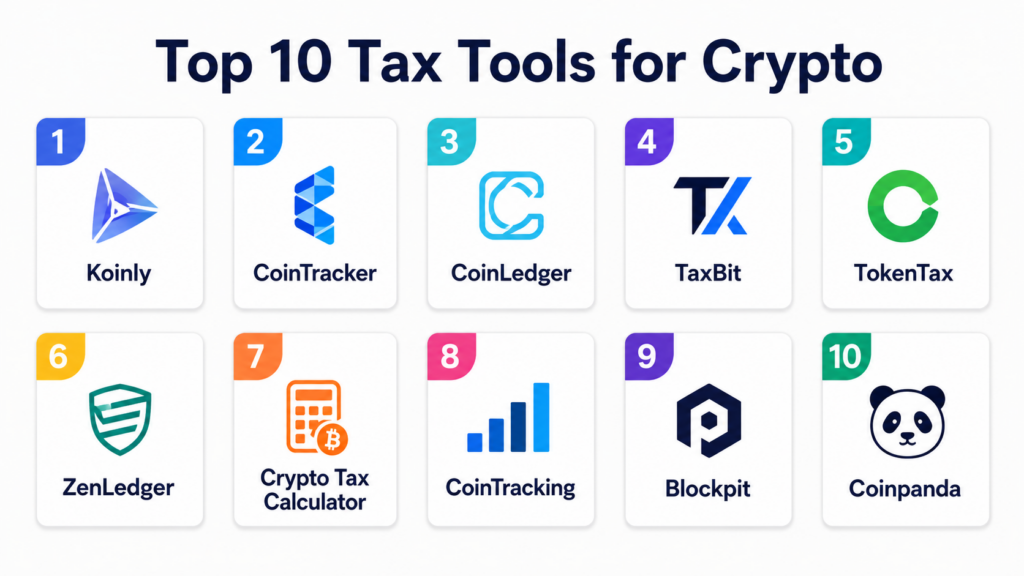
Introduction
Tax Tools for Crypto help investors, traders, accountants, fintech companies, and digital asset businesses calculate gains, losses, income, cost basis, and reportable crypto activity from exchanges, wallets, DeFi protocols, NFTs, staking, mining, futures, and cross-chain transfers. In simple terms, these tools collect crypto transaction data from multiple sources, classify taxable activity, calculate capital gains or income, and generate tax reports that users or accountants can use for filing. Crypto tax software is especially useful because manual tracking becomes difficult when users trade across many exchanges, wallets, DeFi apps, and blockchains.
Crypto tax tools matter because digital asset reporting is becoming more formal across many jurisdictions, and users increasingly need accurate records for trades, swaps, staking rewards, mining income, NFT sales, airdrops, and wallet transfers. Real-world use cases include retail investor tax reports, accountant client management, DeFi transaction reconciliation, exchange data import, NFT tax tracking, cost-basis reporting, tax-loss harvesting, and enterprise digital asset accounting.
Buyers should evaluate exchange and wallet integrations, local tax report support, DeFi coverage, NFT handling, cost-basis methods, error reconciliation, accountant access, security, pricing, customer support, and export options.
Best for: crypto investors, active traders, DeFi users, NFT collectors, accountants, tax professionals, Web3 founders, family offices, and businesses that need structured crypto tax records. Not ideal for: users with only one or two simple transactions, teams that need full enterprise accounting rather than investor tax reports, or anyone expecting software to replace qualified tax advice in complex situations.
Key Trends in Tax Tools for Crypto
- DeFi tax support is now a core requirement, because lending, liquidity pools, staking, swaps, bridging, and yield farming can create complex transaction histories.
- NFT tax reporting is becoming more important, especially for creators, collectors, marketplaces, gaming assets, and wallet-based collectible activity.
- Exchange and wallet integrations are expanding, with leading platforms supporting hundreds of exchanges, wallets, blockchains, and CSV import options.
- Cost-basis reconciliation is a major differentiator, because missing deposits, internal wallet transfers, and incomplete exchange history can distort gains and losses.
- Accountant collaboration features are growing, helping CPAs and tax professionals manage client portfolios, review reports, and correct transaction classifications.
- Enterprise digital asset tax reporting is separating from retail tax tools, with platforms like TaxBit focusing more heavily on compliance, reporting, and accounting infrastructure.
- Real-time portfolio and tax visibility is becoming expected, especially for active traders who want to preview tax liability before year-end.
- Country-specific tax reports matter more, because crypto tax treatment varies by jurisdiction, and global users need local forms, rules, and calculation methods.
- Security expectations are rising, especially around read-only API access, encryption, account permissions, audit logs, and data handling.
- Automation is improving, but manual review is still necessary, especially for DeFi, NFTs, failed transactions, spam tokens, liquidity events, and cross-chain transfers.
How We Selected These Tools
- Selected tools widely recognized in crypto tax reporting, portfolio tax tracking, digital asset accounting, and tax professional workflows.
- Balanced beginner-friendly retail crypto tax platforms with more advanced tools for accountants, active traders, DeFi users, and enterprises.
- Considered support for exchanges, wallets, blockchains, DeFi protocols, NFTs, staking, mining, margin, futures, and CSV imports.
- Evaluated tax form generation, cost-basis methods, error reconciliation, portfolio tracking, accountant access, and export flexibility.
- Considered usability for global users, including whether platforms support multiple countries or jurisdiction-specific reports.
- Reviewed whether tools are suitable for individuals, tax professionals, businesses, or enterprise digital asset operations.
- Avoided public ratings because ratings vary by platform, region, review source, and product version.
- Used “Not publicly stated” where security certifications, compliance claims, or enterprise controls are not clearly known.
- Scoring is comparative and practical, not a claim that one product is universally best.
- Prioritized tools that remain relevant for modern crypto tax scenarios, including DeFi, NFTs, multi-chain activity, and accountant collaboration.
Top 10 Tax Tools for Crypto
1- Koinly
Short description:
Koinly is a crypto tax and portfolio tracking platform used by investors, traders, and accountants to import transactions, calculate gains and losses, and generate tax reports. It supports exchange, wallet, blockchain, DeFi, NFT, mining, and staking activity through automatic integrations and CSV imports. Koinly is especially useful for global crypto users who need multi-country tax reporting support. It is a strong choice for individuals and accountants who want broad integrations with a relatively user-friendly workflow.
Key Features
- Imports data from exchanges, wallets, and blockchains.
- Supports DeFi, NFTs, mining, staking, and trading activity.
- Provides capital gains, losses, and income calculations.
- Offers country-specific tax report support for multiple jurisdictions.
- Supports automatic integrations and CSV-based imports.
- Helps identify missing cost basis and transaction issues.
- Includes portfolio tracking and tax preview workflows.
Pros
- Strong global tax report coverage.
- Good fit for DeFi, NFT, staking, and multi-wallet users.
- User-friendly interface for investors and accountants.
Cons
- Complex DeFi activity may still need manual review.
- Paid plans are usually required to download complete reports.
- Local tax interpretation may still require professional advice.
Platforms / Deployment
Web / Cloud.
Cloud.
Security & Compliance
Koinly generally uses read-only transaction imports and wallet address tracking, but buyers should validate MFA, encryption, access controls, data retention, and compliance requirements directly. Enterprise security certifications are not publicly stated here.
Integrations & Ecosystem
Koinly integrates with a large range of exchanges, wallets, and blockchain networks. It is useful for users who need one tax view across centralized exchanges, self-custody wallets, and on-chain activity.
- Exchanges and broker platforms
- Self-custody wallets
- Blockchain addresses
- DeFi protocols
- NFT activity
- Accountant and tax export workflows
Support & Community
Koinly provides documentation, help resources, and tax guidance materials. Support quality may vary by plan and complexity, so users with large DeFi histories should test import accuracy before filing.
2- CoinTracker
Short description:
CoinTracker is a crypto tax and portfolio tracking platform designed to help users sync wallets and exchanges, calculate tax liability, and generate reports for filing. It is known for integrations with major crypto platforms and tax filing workflows, making it useful for users who want both portfolio visibility and tax preparation support. CoinTracker is especially practical for users who want crypto tax reporting connected with mainstream tax filing tools. It is a strong fit for retail investors, active traders, and users who prefer automated transaction tracking.
Key Features
- Syncs crypto transactions from wallets and exchanges.
- Calculates capital gains, losses, and income.
- Generates crypto tax forms and reports.
- Provides portfolio tracking across connected accounts.
- Supports DeFi and NFT activity depending on plan and integrations.
- Connects with tax filing workflows.
- Helps users track tax impact across multiple assets.
Pros
- Strong fit for users who want portfolio and tax tracking together.
- Useful for mainstream tax filing workflows.
- Good option for users with many exchange and wallet connections.
Cons
- Some advanced features may depend on paid plans.
- Complex DeFi transactions may require manual corrections.
- Users should validate regional tax report support before relying on it.
Platforms / Deployment
Web / Cloud.
Cloud.
Security & Compliance
Security details should be validated directly. Users should check MFA, read-only API access, encryption, account permissions, data export, and privacy practices before connecting sensitive financial data.
Integrations & Ecosystem
CoinTracker works best when users need transaction imports, tax forms, and portfolio visibility in one place. It integrates with crypto platforms, wallets, and tax filing workflows.
- Crypto exchanges
- Wallets and blockchain addresses
- Tax filing tools
- Portfolio dashboards
- NFT and DeFi tracking workflows
- Accountant report exports
Support & Community
CoinTracker offers documentation and user support resources. Users with complex portfolios should review imported transactions carefully and involve a tax professional where required.
3- CoinLedger
Short description:
CoinLedger is a crypto tax software platform that helps users import transactions from wallets and exchanges, calculate gains and losses, and generate tax reports. It supports trading, staking, NFTs, DeFi, and many cryptocurrencies, making it practical for users who need a straightforward tax workflow. CoinLedger is especially useful for investors who want a guided tax report process and export options for tax filing software. It also offers additional service options for users who want professional help.
Key Features
- Imports transactions from wallets and exchanges.
- Calculates capital gains, losses, income, and tax reports.
- Supports DeFi, NFTs, staking, and trading activity.
- Provides report exports for filing workflows.
- Includes error reconciliation and missing data checks.
- Offers tax professional service options.
- Supports many cryptocurrencies and transaction types.
Pros
- Beginner-friendly workflow for crypto tax reporting.
- Good support for common crypto tax situations.
- Useful for users who want optional expert help.
Cons
- Complete report downloads typically require paid plans.
- Advanced DeFi activity may need manual cleanup.
- Enterprise accounting users may need deeper accounting platforms.
Platforms / Deployment
Web / Cloud.
Cloud.
Security & Compliance
Security controls should be validated directly. Users should check whether imports are read-only, how data is stored, whether MFA is available, and what privacy controls apply.
Integrations & Ecosystem
CoinLedger fits users who need to import activity from multiple crypto sources and export tax reports to common tax filing workflows.
- Exchanges
- Wallets
- DeFi protocols
- NFT activity
- Tax filing exports
- Accountant review workflows
Support & Community
CoinLedger provides documentation and customer support resources. Users with complex crypto history should still review classifications carefully and seek professional tax advice if needed.
4- TaxBit
Short description:
TaxBit is a digital asset tax, accounting, and compliance infrastructure platform focused on enterprises, financial institutions, government, and large-scale reporting workflows. It turns complex digital asset transaction data into tax reports, regulatory filings, and accounting outputs across many jurisdictions. TaxBit is especially useful for businesses, platforms, and institutions rather than only individual crypto investors. It is a strong fit when digital asset tax reporting must integrate with accounting, ERP, compliance, and business systems.
Key Features
- Enterprise digital asset tax and accounting infrastructure.
- Supports tax reports and regulatory filing workflows.
- Connects transaction data with accounting and reporting systems.
- Useful for financial institutions, platforms, and government workflows.
- Supports integrations with blockchains, exchanges, custody, and accounting systems.
- Designed for complex digital asset reporting operations.
- Helps businesses manage high-volume transaction data.
Pros
- Strong fit for enterprise and institutional tax reporting.
- Useful for accounting and regulatory compliance workflows.
- Better suited to large-scale operations than basic retail tools.
Cons
- May be too advanced or expensive for casual investors.
- Implementation may require enterprise integration planning.
- Product scope should be validated carefully for each jurisdiction.
Platforms / Deployment
Web / API-based.
Cloud.
Security & Compliance
TaxBit has publicly stated enterprise security and compliance credentials in some contexts, including SOC and ISO-related attestations. Buyers should validate current certifications, audit reports, access controls, data handling, and jurisdictional requirements directly.
Integrations & Ecosystem
TaxBit is strongest where crypto tax and accounting data must connect into business systems, compliance workflows, and reporting pipelines.
- Accounting software and ERPs
- Custody solutions
- Exchanges
- Blockchains
- Enterprise reporting workflows
- Government and regulatory workflows
Support & Community
TaxBit is enterprise-oriented, so support expectations should be validated through vendor engagement. Buyers should review onboarding, implementation assistance, service levels, and technical support coverage.
5- TokenTax
Short description:
TokenTax is a crypto tax software and professional service provider that supports individual and business crypto tax needs. It offers tools for tracking gains, calculating taxes, syncing wallet and account data, and generating tax forms. TokenTax is especially useful for users with complex transactions such as DeFi, NFTs, margin, and futures. It is also notable for offering professional reconciliation and tax filing support for users who do not want to manage everything alone.
Key Features
- Crypto tax calculation and reporting workflows.
- Wallet and API integrations for transaction syncing.
- Supports DeFi, NFTs, margin, and futures activity.
- Generates tax forms and filing-ready reports.
- Offers professional reconciliation services.
- Provides tax minimization and review workflows.
- Suitable for complex individual and business portfolios.
Pros
- Good fit for complex crypto tax situations.
- Professional service options are useful for high-volume users.
- Supports advanced transaction types beyond simple spot trades.
Cons
- May cost more than basic DIY crypto tax tools.
- Users with simple portfolios may not need full-service support.
- Complex reconciliation still requires careful review.
Platforms / Deployment
Web / Cloud / Professional services.
Cloud.
Security & Compliance
Security details should be validated directly. Users should review data access, account permissions, MFA availability, encryption, service handling, and privacy policies before sharing financial records.
Integrations & Ecosystem
TokenTax integrates with wallets, accounts, and tax filing workflows. It is useful where users need both software automation and human-supported tax review.
- Wallet and exchange connections
- DeFi activity
- NFT transactions
- Margin and futures trading
- Tax form exports
- CPA and professional filing workflows
Support & Community
TokenTax provides support and professional service options. It is especially useful for users who need help reconciling messy transaction histories or complex crypto tax events.
6- ZenLedger
Short description:
ZenLedger is a crypto tax software platform for calculating DeFi, NFT, and crypto taxes, generating reports, and helping users manage tax filing workflows. It supports DIY tax reporting, full-service options, and tax professional workflows. ZenLedger is especially useful for users who want a guided crypto tax experience with support for common digital asset activities. It can work well for investors, active traders, accountants, and users who need portfolio-aware tax reporting.
Key Features
- Calculates crypto, DeFi, and NFT tax activity.
- Generates tax reports for filing workflows.
- Supports DIY and full-service crypto tax options.
- Provides tools for accountants and tax professionals.
- Tracks capital gains, income, and cost-basis information.
- Supports wallet and exchange imports.
- Can assist with tax-loss harvesting workflows.
Pros
- Good fit for DeFi, NFT, and crypto tax reporting.
- Useful for users who want professional help options.
- Supports both individual and tax professional workflows.
Cons
- Complex portfolios may still require manual review.
- Paid plans may be needed for complete reporting.
- Users should validate local tax form support.
Platforms / Deployment
Web / Cloud.
Cloud.
Security & Compliance
Security controls should be validated directly. Users should review MFA, API access model, encryption, data retention, accountant permissions, and privacy policies.
Integrations & Ecosystem
ZenLedger supports crypto tax reporting across wallets, exchanges, and DeFi-related activity. It also supports workflows for accountants and professional tax preparers.
- Exchanges and wallets
- DeFi protocols
- NFT activity
- Tax filing workflows
- Accountant client management
- Portfolio and tax report exports
Support & Community
ZenLedger provides documentation, support resources, and tax professional options. Users with complicated DeFi or NFT records should still review imported classifications before filing.
7- Crypto Tax Calculator
Short description:
Crypto Tax Calculator is a crypto tax platform focused on helping users import transactions, classify complex activity, and generate tax reports across multiple jurisdictions. It is especially useful for DeFi users, NFT users, and active traders who need detailed transaction handling. The platform is often considered when users need flexible classification and local tax report support. It is a strong choice for users with complex on-chain activity who want deeper reconciliation features.
Key Features
- Imports exchange, wallet, and blockchain activity.
- Supports DeFi, NFT, staking, and trading transactions.
- Provides tax reports for supported jurisdictions.
- Helps classify complex on-chain activity.
- Supports cost-basis calculations and transaction review.
- Useful for active traders and multi-chain users.
- Includes reconciliation tools for messy transaction histories.
Pros
- Good fit for complex DeFi and NFT activity.
- Useful for users needing detailed transaction classification.
- Supports international crypto tax workflows depending on region.
Cons
- Complex review workflows may take time for beginners.
- Supported tax reports should be validated by country.
- Users may still need accountant review for unusual activity.
Platforms / Deployment
Web / Cloud.
Cloud.
Security & Compliance
Not publicly stated for all enterprise security requirements. Users should validate MFA, encryption, API permissions, data retention, and privacy practices directly.
Integrations & Ecosystem
Crypto Tax Calculator fits users who need detailed crypto tax reconciliation across wallets, exchanges, and on-chain ecosystems.
- Exchanges
- Wallets and blockchains
- DeFi protocols
- NFT marketplaces
- Accountant exports
- Local tax report workflows
Support & Community
Support resources are available through product documentation and customer help channels. Users should test a sample import before committing to full filing workflows.
8- CoinTracking
Short description:
CoinTracking is a long-standing crypto portfolio tracking and tax reporting tool used by traders, investors, and accountants. It is useful for users who want detailed transaction history, performance analytics, realized and unrealized gains, and tax reports. CoinTracking is especially relevant for active traders who need deep trade history tracking and reporting flexibility. It may feel more advanced than beginner-first tools, but it can be powerful for users who like detailed analytics.
Key Features
- Crypto portfolio tracking and tax reporting.
- Imports trades from exchanges and wallets.
- Tracks realized and unrealized gains.
- Provides performance analytics and reporting.
- Supports multiple cost-basis calculation methods.
- Useful for high-volume traders.
- Offers exports for tax and accountant workflows.
Pros
- Strong portfolio analytics and trade history depth.
- Useful for active traders and long-term record keeping.
- Mature tool with broad crypto tracking use cases.
Cons
- Interface may feel more complex for beginners.
- DeFi and NFT workflows should be validated for fit.
- Users may need time to clean and reconcile historical imports.
Platforms / Deployment
Web / Cloud.
Cloud.
Security & Compliance
Security controls should be validated directly. Users should check read-only API support, MFA, encryption, account controls, and data export options.
Integrations & Ecosystem
CoinTracking is useful for users who want portfolio analytics and tax reporting together. It can connect with exchanges and provide exports for tax review.
- Exchange imports
- Wallet transaction records
- Portfolio analytics
- Tax reports
- Accountant exports
- Trade performance reports
Support & Community
CoinTracking has documentation and long-standing community familiarity among crypto traders. New users should spend time learning report settings and reconciliation workflows.
9- Blockpit
Short description:
Blockpit is a crypto tax and portfolio reporting platform focused on helping users calculate taxes, import transactions, and generate reports for supported jurisdictions. It is especially relevant for European users and those who need region-aware crypto tax workflows. Blockpit supports exchange, wallet, and DeFi activity depending on integrations and plan. It is useful for investors and tax professionals who need a structured tax report process with jurisdiction-specific considerations.
Key Features
- Crypto tax reporting and portfolio tracking.
- Imports transactions from exchanges and wallets.
- Supports DeFi and blockchain activity depending on integration.
- Provides tax reports for supported countries.
- Helps track gains, losses, and income.
- Useful for European crypto tax workflows.
- Supports accountant and tax review processes.
Pros
- Strong fit for supported European tax jurisdictions.
- Useful for investors who need local tax reporting.
- Good balance of portfolio tracking and tax output.
Cons
- Country support should be validated before purchase.
- Complex DeFi histories may require manual cleanup.
- Users outside core supported regions should compare alternatives.
Platforms / Deployment
Web / Cloud.
Cloud.
Security & Compliance
Security details should be validated directly. Users should review MFA, encryption, data handling, read-only import options, and privacy controls.
Integrations & Ecosystem
Blockpit is useful for crypto users who need tax reports tied to supported local rules. It can connect with exchanges, wallets, and blockchain activity sources.
- Exchanges
- Wallets
- DeFi activity
- Local tax reports
- Portfolio views
- Accountant workflows
Support & Community
Blockpit provides documentation and support resources. Users should validate support availability, country-specific tax logic, and accountant collaboration features.
10- Coinpanda
Short description:
Coinpanda is a crypto tax software tool that helps users import transactions from exchanges, wallets, and blockchains, calculate gains and income, and generate tax reports. It is especially useful for users who want multi-chain and multi-exchange transaction support with a relatively straightforward reporting workflow. Coinpanda can be a good fit for investors, traders, NFT users, and DeFi participants who need broad transaction imports. It is practical for users who want a simpler alternative to more enterprise-heavy tax platforms.
Key Features
- Imports crypto transactions from exchanges, wallets, and blockchains.
- Calculates capital gains, losses, and income.
- Supports DeFi, NFTs, mining, staking, and trading activity depending on integrations.
- Generates tax reports for supported jurisdictions.
- Provides portfolio tracking and tax summaries.
- Supports CSV imports and manual transaction edits.
- Useful for individual investors and active traders.
Pros
- Good fit for multi-exchange and multi-wallet users.
- Practical for users who want a clean tax workflow.
- Supports a range of crypto transaction types.
Cons
- Local tax report support should be validated by country.
- Very complex DeFi workflows may need manual classification.
- Accountant and enterprise features may be lighter than specialist platforms.
Platforms / Deployment
Web / Cloud.
Cloud.
Security & Compliance
Security controls should be validated directly. Users should check read-only imports, MFA, encryption, account permissions, and privacy practices before connecting accounts.
Integrations & Ecosystem
Coinpanda works as a crypto tax reporting hub for users with assets across exchanges, wallets, blockchains, and DeFi activity.
- Exchange imports
- Wallet and blockchain tracking
- DeFi activity
- NFT transactions
- CSV imports
- Tax report exports
Support & Community
Coinpanda provides help documentation and customer support resources. Users should run a test import, review classifications, and confirm local report support before final filing.
Comparison Table
| Tool Name | Best For | Platforms Supported | Deployment | Standout Feature | Public Rating |
|---|---|---|---|---|---|
| Koinly | Global investors and DeFi tax reporting | Web | Cloud | Broad integrations and multi-country reports | N/A |
| CoinTracker | Portfolio tracking plus crypto tax filing | Web | Cloud | Portfolio and tax reporting in one workflow | N/A |
| CoinLedger | Beginner-friendly crypto tax reports | Web | Cloud | Guided report generation and reconciliation | N/A |
| TaxBit | Enterprise digital asset tax and accounting | Web / APIs | Cloud | Enterprise reporting and compliance infrastructure | N/A |
| TokenTax | Complex portfolios and professional support | Web | Cloud | Software plus tax professional services | N/A |
| ZenLedger | DIY and assisted crypto tax filing | Web | Cloud | DeFi, NFT, and tax professional workflows | N/A |
| Crypto Tax Calculator | Complex DeFi and NFT classification | Web | Cloud | Detailed transaction reconciliation | N/A |
| CoinTracking | Active traders and portfolio analytics | Web | Cloud | Deep trade history and performance reporting | N/A |
| Blockpit | European crypto tax reporting | Web | Cloud | Jurisdiction-aware tax reports | N/A |
| Coinpanda | Multi-chain investor tax reporting | Web | Cloud | Broad wallet and exchange import workflow | N/A |
Evaluation & Scoring of Tax Tools for Crypto
| Tool Name | Core 25% | Ease 15% | Integrations 15% | Security 10% | Performance 10% | Support 10% | Value 15% | Weighted Total |
|---|---|---|---|---|---|---|---|---|
| Koinly | 9 | 9 | 9 | 8 | 8 | 8 | 9 | 8.65 |
| CoinTracker | 8 | 9 | 8 | 8 | 8 | 8 | 8 | 8.15 |
| CoinLedger | 8 | 9 | 8 | 8 | 8 | 8 | 9 | 8.30 |
| TaxBit | 9 | 7 | 9 | 9 | 9 | 9 | 7 | 8.35 |
| TokenTax | 8 | 8 | 8 | 8 | 8 | 9 | 7 | 8.05 |
| ZenLedger | 8 | 8 | 8 | 8 | 8 | 8 | 8 | 8.00 |
| Crypto Tax Calculator | 8 | 7 | 8 | 8 | 8 | 7 | 8 | 7.75 |
| CoinTracking | 8 | 6 | 8 | 8 | 8 | 7 | 8 | 7.60 |
| Blockpit | 7 | 8 | 7 | 8 | 8 | 7 | 8 | 7.55 |
| Coinpanda | 7 | 8 | 8 | 7 | 8 | 7 | 8 | 7.60 |
These scores are comparative and should be used as an evaluation guide, not as public ratings. A higher score means the platform appears stronger across tax functionality, usability, integrations, security expectations, performance, support, and value. A lower score may still be excellent for a specific region, trader type, or tax workflow. Users should test imports, review classifications, confirm local tax report support, and involve a qualified tax professional for complex cases.
Which Tax Tool for Crypto Is Right for You?
Solo / Freelancer
Solo users with basic crypto activity should start with beginner-friendly tools such as Koinly, CoinLedger, CoinTracker, ZenLedger, or Coinpanda. These tools can import transactions, calculate gains, and generate reports without requiring heavy setup. If the user has only a few exchange trades, a simple plan may be enough. If the user has DeFi, NFTs, staking, mining, or cross-chain activity, they should choose a tool with stronger reconciliation and manual edit workflows. Solo users should always review transfers and cost basis before filing.
SMB
Small businesses that accept crypto, hold digital assets, or run Web3 products need stronger record keeping than individual investors. CoinLedger, Koinly, ZenLedger, TokenTax, and Coinpanda may help with general tax reporting, while TaxBit may be more relevant if business accounting and compliance infrastructure are needed. SMBs should evaluate whether they need investor-style tax reports, business accounting records, or both. They should also create internal policies for wallet tracking, transaction labeling, invoices, expenses, and asset valuation.
Mid-Market
Mid-market organizations usually need better integrations, accountant access, audit trails, and reporting consistency. TaxBit is strong for enterprise-style digital asset accounting and reporting workflows, while TokenTax may be useful for professional reconciliation and complex portfolios. Koinly, ZenLedger, and Crypto Tax Calculator can be useful for active users and finance teams that need detailed tax outputs. Mid-market buyers should involve finance, tax, legal, and operations teams before choosing a platform. Data quality and reconciliation workflows are often more important than the user interface alone.
Enterprise
Enterprises should evaluate crypto tax tools based on accounting integrations, regulatory reporting, controls, audit evidence, data retention, and support. TaxBit is especially relevant for large-scale digital asset tax and accounting infrastructure. Lukka-style institutional accounting tools may also be needed, but for this category the focus remains crypto tax software and reporting. Enterprises with employee wallets, customer transactions, custody workflows, or token operations need formal governance. They should not rely only on consumer investor tax tools if enterprise reporting, ERP integration, or regulated operations are required.
Budget vs Premium
Budget-conscious users can begin with free import and preview features where available, then pay only when reports are ready to download. Premium plans become valuable when users have many transactions, multiple exchanges, DeFi activity, NFTs, margin, futures, or accountant review needs. Paying for a stronger tool may be cheaper than fixing tax errors later. Users should compare transaction limits, report downloads, country support, DeFi handling, and support level. The cheapest plan is not always best if it cannot correctly classify the user’s activity.
Feature Depth vs Ease of Use
CoinLedger, CoinTracker, Koinly, ZenLedger, and Coinpanda are relatively approachable for individual users. Crypto Tax Calculator and CoinTracking may appeal to users who want more detailed classification and analytics. TokenTax is valuable when professional support matters. TaxBit is better suited for enterprise reporting and accounting workflows. Users should choose based on transaction complexity, not only interface simplicity. A beginner-friendly tool may be enough for exchange trades, but DeFi-heavy users need stronger reconciliation.
Integrations & Scalability
Crypto tax tools must integrate with exchanges, wallets, blockchains, DeFi protocols, NFT platforms, CSV files, tax filing tools, accountant workflows, and accounting systems. High-volume traders should test import limits and reconciliation speed. Businesses should evaluate API access, team permissions, export formats, and accounting integration. DeFi users should test whether liquidity pools, bridges, staking, wrapping, and token swaps are classified correctly. The best tool is the one that handles the user’s actual transaction history with the least manual cleanup.
Security & Compliance Needs
Crypto tax tools handle sensitive financial data, so security matters. Users should prefer read-only API connections, MFA, strong passwords, encryption, careful account permissions, and controlled accountant access. Businesses should also evaluate audit logs, role permissions, data retention, export controls, and vendor risk documentation. Users should never give tax software withdrawal permissions or private keys. The safest workflow is to connect read-only data sources, review imported transactions, export final reports securely, and store tax evidence safely.
Frequently Asked Questions
1- What is a crypto tax tool?
A crypto tax tool is software that imports transactions from exchanges, wallets, blockchains, and DeFi protocols, then calculates gains, losses, income, and tax reports. It helps users avoid manually tracking every trade, swap, staking reward, NFT sale, airdrop, or transfer. The tool usually identifies taxable events and separates them from non-taxable wallet transfers where possible. It may generate reports for accountants or tax filing platforms. Crypto tax tools are especially useful for active traders and DeFi users. They do not replace professional tax advice in complex or high-value cases.
2- How much do crypto tax tools cost?
Pricing depends on transaction count, report type, country support, DeFi complexity, accountant access, and whether professional services are included. Many platforms allow users to import transactions and preview results for free, then charge when users need to download tax reports. Advanced plans may cost more for high-volume traders, DeFi users, NFT collectors, and business accounts. Enterprise tools like TaxBit usually follow a different pricing model based on business requirements. Users should compare total value, not just the listed plan price. A tool that saves hours of manual reconciliation may justify a higher cost.
3- Are crypto tax tools accurate?
Crypto tax tools can be accurate when transaction data is complete, integrations work properly, and classifications are reviewed carefully. Accuracy problems often come from missing exchange history, untagged wallet transfers, unsupported DeFi protocols, spam tokens, bridge activity, or incorrect cost basis. Users should review warnings, missing cost basis alerts, and large gains or losses before filing. Complex portfolios may require accountant review. The tool performs calculations, but the user is still responsible for filing accurate information. A careful reconciliation process is essential.
4- Can crypto tax software handle DeFi?
Many leading crypto tax tools support DeFi, but quality varies by protocol, blockchain, and transaction type. Swaps, liquidity pools, staking, lending, borrowing, wrapping, bridging, and yield farming can be difficult to classify automatically. Users should test their actual wallets before assuming full support. Tools such as Koinly, CoinLedger, TokenTax, ZenLedger, and Crypto Tax Calculator are commonly evaluated for DeFi-heavy portfolios. Even with good software, manual review may be needed. DeFi users should keep clear records and avoid waiting until filing time to reconcile everything.
5- Can crypto tax tools handle NFTs?
Many crypto tax tools support NFT transaction tracking, but users should validate marketplace, wallet, and chain support. NFT tax reporting may involve purchases, sales, royalties, minting, gas fees, creator income, and collectible treatment depending on jurisdiction. Some tools classify NFT activity automatically, while others require manual edits. Users should also check whether the tool handles failed transactions and gas costs correctly. NFT creators may have different reporting needs than collectors. A qualified tax professional should review complex NFT income or business activity.
6- What integrations should users look for?
Users should look for integrations with every exchange, wallet, blockchain, DeFi protocol, NFT marketplace, and tax filing workflow they actually use. API imports are convenient, but CSV imports are still important when API support is missing or incomplete. Users should also check whether the tool supports their country’s tax reports and cost-basis methods. Businesses may need accounting exports and accountant access. DeFi users should test wallet import quality before purchasing a paid plan. The best tool is the one that imports the user’s real history with minimal manual cleanup.
7- What are common mistakes when using crypto tax tools?
Common mistakes include importing only exchange trades and forgetting self-custody wallets, DeFi activity, staking rewards, NFTs, and airdrops. Users may also mislabel transfers as sales or ignore missing cost basis warnings. Another mistake is assuming the first generated report is correct without reviewing transaction classifications. Some users connect accounts late and discover missing historical data. Others choose a tool that does not support their jurisdiction. The safest approach is to import all sources, reconcile warnings, review large gains or losses, and share reports with a tax professional when needed.
8- Do crypto tax tools support accountants?
Many crypto tax tools provide accountant access, client management, exports, or professional review workflows. ZenLedger, TokenTax, Koinly, CoinLedger, and other platforms may support tax professional collaboration depending on plan. Accountants can use these tools to review transaction classifications, generate reports, and support filing. However, accountant workflows vary significantly by product. Firms should evaluate client dashboard features, permissions, exports, audit trails, and bulk management. For enterprise clients, accountant-focused retail tools may not be enough, and digital asset accounting infrastructure may be required.
9- Are crypto tax tools safe to connect to exchanges and wallets?
Crypto tax tools should generally use read-only API access or public wallet address imports, meaning they should not be able to move funds. Users should never provide private keys, seed phrases, or withdrawal permissions to tax software. Before connecting accounts, users should confirm permission settings inside each exchange and wallet integration. MFA, strong passwords, and secure devices are important. Businesses should also review vendor security practices and access controls. If a tool asks for unnecessary permissions, users should stop and investigate before proceeding.
10- What are alternatives to crypto tax software?
Alternatives include manual spreadsheets, accountant-led reconciliation, exchange tax statements, portfolio trackers, enterprise accounting platforms, and digital asset data tools. Manual spreadsheets may work for a few transactions but become risky for active traders or DeFi users. Exchange reports may miss wallet transfers and off-platform activity. Accountants can help, but they often need structured transaction data from software. Enterprise platforms may be better for businesses with formal accounting needs. For most active crypto users, dedicated crypto tax software is the most practical starting point.
Conclusion
Tax Tools for Crypto are essential for anyone who trades, invests, stakes, mines, uses DeFi, collects NFTs, or operates with digital assets across multiple wallets and exchanges. Koinly, CoinTracker, CoinLedger, ZenLedger, Coinpanda, and Crypto Tax Calculator are strong options for individuals and active users who need tax reports across exchanges, wallets, DeFi, and NFTs. TokenTax is especially useful for complex portfolios that may need professional reconciliation, while CoinTracking is valuable for users who want deeper portfolio analytics and trade history. Blockpit is a strong choice for supported regional tax workflows, and TaxBit is better suited for enterprise digital asset tax, accounting, and compliance infrastructure. The best tool depends on your country, transaction volume, DeFi complexity, NFT activity, accountant needs, and reporting obligations.
