MOTOSHARE 🚗🏍️
Rent Bikes & Cars Directly from Owners
Motoshare connects vehicle owners with people who need bikes and cars on rent. Owners earn from idle vehicles, and renters get flexible ride options.
Visit Motoshare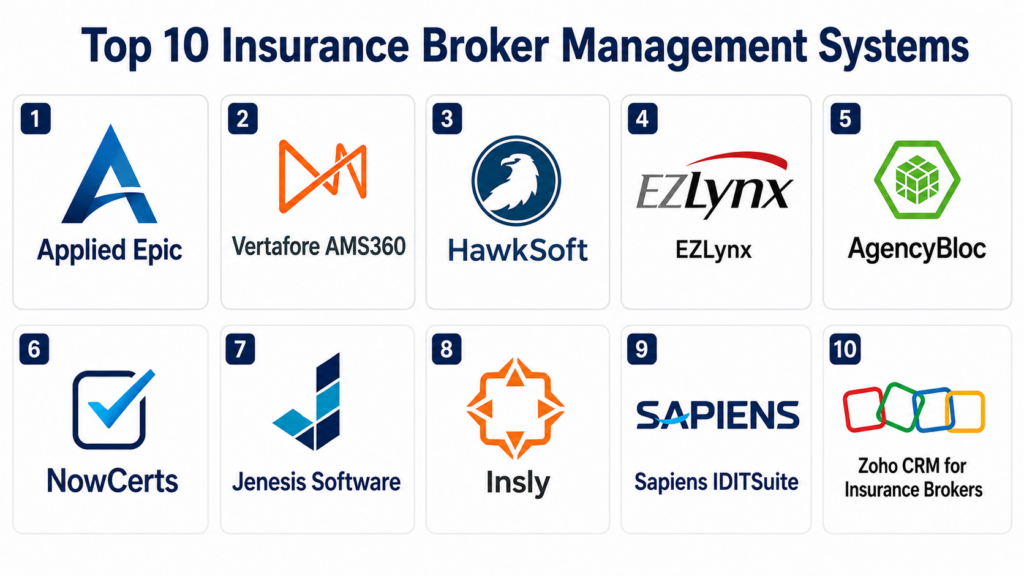
Introduction
Insurance Broker Management Systems help insurance brokers, agencies, MGAs, wholesalers, and distribution teams manage clients, policies, quotes, renewals, commissions, documents, carrier relationships, tasks, claims, and sales pipelines in one organized platform. In simple terms, these systems work as an operational backbone for insurance brokerages by replacing scattered spreadsheets, email folders, manual reminders, and disconnected policy records.
Insurance brokerage operations are becoming more complex because clients expect faster service, carriers use different portals, compliance requirements are increasing, and brokers need better visibility into renewals, producer performance, commissions, and customer relationships. A strong broker management system helps teams improve productivity, reduce errors, centralize client data, automate workflows, track policy lifecycle activity, and support better customer service.
Real World Use Cases:
- Managing client profiles, policies, renewals, claims, and documents
- Tracking quotes, submissions, carrier responses, and sales pipelines
- Automating renewal reminders, task assignments, and follow-ups
- Managing producer commissions and agency performance
- Storing certificates, policy documents, emails, and client communication history
- Supporting compliance, audit trails, role-based access, and reporting
Evaluation Criteria for Buyers:
- Client and policy management depth
- Quote, submission, and renewal workflow automation
- Carrier, MGA, and wholesaler workflow support
- Commission tracking and producer performance visibility
- Document management and email integration
- CRM, sales pipeline, and customer service features
- Reporting, dashboards, and book-of-business analytics
- Security controls, permissions, audit logs, and data protection
- Integrations with accounting, rating, e-signature, email, and carrier systems
- Ease of use, onboarding, support quality, scalability, and total cost
Best for: Insurance Broker Management Systems are best for independent insurance brokers, retail agencies, commercial lines brokers, personal lines agencies, MGAs, wholesalers, producer teams, account managers, customer service representatives, operations managers, and agency owners who need better control over client, policy, renewal, commission, and document workflows.
Not ideal for: These systems may not be necessary for very small brokers with only a handful of clients, agencies using a single carrier portal, or teams that only need a simple CRM. In those cases, a basic CRM, spreadsheet, accounting tool, or carrier portal may be enough temporarily. However, once policy volume, renewals, commissions, and service workflows grow, a dedicated broker management system becomes much more valuable.
Key Trends in Insurance Broker Management Systems
- Broker management and CRM are merging: Agencies increasingly want client relationship management, policy servicing, sales pipelines, and renewal workflows in one platform.
- Automation is reducing manual follow-up work: Modern systems automate renewal reminders, task routing, document requests, quote follow-ups, and client communications.
- Cloud-based broker platforms are becoming standard: Cloud systems make it easier for distributed agencies, remote producers, and multi-office brokerages to work from one shared source of truth.
- Digital client portals are gaining importance: Clients expect self-service access to policy documents, certificates, claims information, and renewal updates.
- Commission visibility is becoming more important: Brokerages want clearer reporting on producer performance, carrier commissions, splits, bonuses, and revenue leakage.
- Commercial lines workflows need deeper support: Agencies handling complex commercial accounts need better tools for submissions, certificates, endorsements, renewals, and multi-policy clients.
- Integration with email and documents is essential: Much insurance work happens through email, attachments, forms, policy documents, certificates, and carrier communications.
- Data analytics is becoming a competitive advantage: Brokerages want better visibility into book growth, retention, renewal risk, cross-sell opportunities, and carrier performance.
- Compliance and audit readiness matter more: Agencies need clear records of client communications, policy changes, document approvals, user activity, and service tasks.
- AI-assisted workflows are emerging carefully: Some platforms are adding AI for email summarization, document extraction, task suggestions, and policy data cleanup, but human review remains important.
How We Selected These Tools
The Top 10 tools were selected using practical evaluation logic for insurance broker management buyers.
- Recognition in insurance agency management, brokerage operations, policy servicing, and insurance CRM
- Suitability for independent agencies, brokerages, MGAs, wholesalers, commercial lines teams, and personal lines teams
- Feature depth across client records, policy management, renewals, documents, commissions, tasks, and reporting
- Ability to support quoting, submissions, carrier relationships, certificates, endorsements, claims, and service workflows
- Integration potential with email, accounting, rating, e-signature, document management, carrier systems, and CRM tools
- Ease of use for producers, account managers, CSRs, operations teams, and agency owners
- Scalability across small agencies, multi-location brokerages, and enterprise insurance distribution businesses
- Security posture signals, role permissions, auditability, and data protection expectations
- Vendor support, onboarding resources, training, implementation maturity, and customer success approach
- Practical value for improving retention, service speed, revenue visibility, and operational efficiency
Top 10 Insurance Broker Management Systems
1- Applied Epic
Short description:
Applied Epic is a widely used insurance agency and broker management platform designed for agencies, brokerages, and insurance distribution businesses. It supports client management, policy servicing, sales workflows, renewals, documents, accounting, reporting, and operational management. The platform is especially relevant for agencies that need enterprise-grade workflows and strong agency management depth. It is best for established brokerages and growing agencies that need a robust system of record for insurance operations.
Key Features
- Client, account, and policy management
- Sales pipeline and renewal management workflows
- Document and communication tracking
- Accounting and commission-related workflow support
- Reporting and agency performance dashboards
- Integration ecosystem for insurance operations
- Support for multi-location and larger brokerage environments
Pros
- Strong agency management depth for established brokerages
- Useful for managing complex client and policy records
- Good fit for agencies needing scalable operational control
Cons
- Implementation can require planning and training
- May feel complex for very small agencies
- Total cost should be evaluated against agency size and workflow needs
Platforms / Deployment
Web / Cloud / Desktop components may vary by configuration
Security & Compliance
Not publicly stated. Buyers should verify SSO, MFA, encryption, RBAC, audit logs, data retention, and compliance controls directly.
Integrations & Ecosystem
Applied Epic fits agencies that need client, policy, document, accounting, and service workflows connected in one operational environment.
- Email and document workflows
- Accounting and agency finance processes
- Rating and carrier workflows depending on configuration
- CRM and sales processes
- Reporting and analytics tools
- Client service and renewal workflows
Support & Community
Applied Systems provides implementation support, documentation, training, customer resources, and a large insurance agency user ecosystem. Support quality depends on configuration, agency size, and internal adoption.
2- Vertafore AMS360
Short description:
Vertafore AMS360 is an agency management system for independent insurance agencies and brokerages. It helps agencies manage clients, policies, renewals, documents, tasks, commissions, accounting, and reporting. The platform is especially useful for agencies that need a centralized system to manage both personal and commercial lines operations. It is best for agencies looking for a mature agency management platform with broad insurance workflow support.
Key Features
- Client and policy management
- Task, activity, and renewal workflow tracking
- Document management and communication history
- Accounting and commission management support
- Reporting and business analytics
- Personal and commercial lines workflow support
- Integration with broader insurance technology tools
Pros
- Mature agency management functionality
- Good fit for independent agencies and brokerages
- Supports daily service, renewal, and accounting workflows
Cons
- May require training for full adoption
- Configuration and workflow discipline are important
- Smaller agencies may prefer a lighter system
Platforms / Deployment
Web / Cloud
Security & Compliance
Not publicly stated. Buyers should verify SSO, MFA, encryption, RBAC, audit logs, data retention, and security documentation directly.
Integrations & Ecosystem
AMS360 is useful where agencies need policy management, accounting, documents, renewals, and service workflows connected.
- Rating and comparative rater workflows
- Email and document systems
- Accounting and commission workflows
- Carrier and policy data workflows
- Reporting and book-of-business analytics
- Client service workflows
Support & Community
Vertafore provides customer support, implementation resources, training, documentation, and a large agency technology ecosystem. Support experience may vary by package, configuration, and agency complexity.
3- HawkSoft
Short description:
HawkSoft is an agency management system built for independent insurance agencies that need practical client, policy, document, task, and workflow management. It is often valued for ease of use and agency-friendly workflows. The platform helps teams manage client service, renewals, communication, certificates, and daily agency operations. It is best for small and mid-sized agencies looking for a user-friendly broker management system without unnecessary complexity.
Key Features
- Client and policy management
- Document storage and communication history
- Renewal, task, and activity workflows
- Email integration and service tracking
- Certificate and policy servicing support
- Reporting and agency visibility
- Practical workflows for independent agencies
Pros
- User-friendly for small and mid-sized agencies
- Practical daily servicing workflows
- Good fit for agencies moving from manual processes
Cons
- May not fit very large enterprise brokerages with complex needs
- Advanced customization should be validated
- Integration depth may vary by use case
Platforms / Deployment
Web / Cloud / Desktop options may vary by configuration
Security & Compliance
Not publicly stated. Buyers should verify SSO, MFA, encryption, RBAC, audit logs, backup, and data protection practices directly.
Integrations & Ecosystem
HawkSoft supports agencies that need practical management of policy records, documents, tasks, and client communications.
- Email and document workflows
- Rating and carrier workflows depending on setup
- Client service processes
- Renewal and task management
- Reporting and agency dashboards
- Accounting workflows depending on configuration
Support & Community
HawkSoft provides onboarding, documentation, support, and agency-focused customer resources. Support is especially relevant for smaller agencies that need guidance during transition.
4- EZLynx
Short description:
EZLynx is an insurance agency management and rating platform used by independent agencies for comparative rating, client management, policy workflows, sales automation, retention, and agency operations. It is especially useful for agencies that want rating, CRM, and management capabilities in one ecosystem. The platform can support both personal lines and commercial agency workflows depending on configuration. It is best for agencies that prioritize quoting efficiency and customer lifecycle management.
Key Features
- Agency management and client records
- Comparative rating and quoting support
- CRM and sales pipeline workflows
- Renewal and retention automation
- Document and communication tracking
- Reporting and agency analytics
- Customer service and policy workflow support
Pros
- Strong fit for agencies needing rating plus management tools
- Useful for sales, retention, and service workflows
- Good option for growth-focused independent agencies
Cons
- Exact capabilities depend on selected modules
- Commercial lines depth should be validated for complex accounts
- Agencies may need training to use the full ecosystem effectively
Platforms / Deployment
Web / Cloud
Security & Compliance
Not publicly stated. Buyers should verify SSO, MFA, encryption, RBAC, audit logs, and data protection controls directly.
Integrations & Ecosystem
EZLynx fits agencies that want quoting, CRM, agency management, and retention workflows connected.
- Comparative rating workflows
- Carrier quoting workflows
- Email and communication tools
- Client service processes
- Sales pipeline and CRM workflows
- Reporting and agency analytics
Support & Community
EZLynx provides onboarding, documentation, support, and training resources. Support quality depends on selected products, agency workflows, and implementation scope.
5- AgencyBloc
Short description:
AgencyBloc is an agency management platform focused on life and health insurance agencies, benefits agencies, and insurance distribution organizations. It supports contact management, policy tracking, commissions, sales workflows, marketing, and service operations. The platform is especially useful for agencies handling health, benefits, senior market, and life insurance workflows. It is best for benefits-focused and life and health agencies that need stronger commission and client management visibility.
Key Features
- Client, contact, and policy management
- Commission tracking and revenue visibility
- Sales pipeline and lead management
- Task, activity, and workflow automation
- Email marketing and communication support depending on configuration
- Reporting for producers and agency performance
- Fit for life, health, and benefits agencies
Pros
- Strong fit for life and health insurance agencies
- Useful commission and producer visibility
- Practical CRM-style workflows for agency teams
Cons
- Less suited for complex P&C commercial lines workflows
- Carrier and policy data workflows should be validated
- May require configuration for larger distribution models
Platforms / Deployment
Web / Cloud
Security & Compliance
Not publicly stated. Buyers should verify SSO, MFA, encryption, RBAC, audit logs, data retention, and compliance controls directly.
Integrations & Ecosystem
AgencyBloc fits insurance agencies that need CRM, policy tracking, commissions, and sales workflows for life, health, and benefits lines.
- Email and marketing workflows
- Commission and accounting processes
- Producer performance reporting
- Client and policy records
- Sales pipeline workflows
- Service task management
Support & Community
AgencyBloc provides onboarding, support, documentation, and industry-focused resources for life and health agencies. Support quality depends on agency size and implementation needs.
6- NowCerts
Short description:
NowCerts is a cloud-based agency management system for insurance agencies and brokerages. It supports client records, policies, certificates, ACORD forms, commissions, tasks, documents, claims, and agency workflows. The platform is especially relevant for agencies that want a cloud-based system with broad operational functionality. It is best for small and mid-sized agencies looking for flexible agency management without heavy enterprise complexity.
Key Features
- Client and policy management
- Certificate and ACORD form support
- Commission and accounting workflow support
- Task, activity, and renewal management
- Document management and communication tracking
- Claims and service workflow support
- Reporting and agency dashboards
Pros
- Broad cloud-based agency management functionality
- Useful for certificates, documents, and service workflows
- Practical for small and mid-sized agencies
Cons
- Enterprise scalability should be validated for large brokerages
- Advanced integrations may require planning
- User experience should be tested with real agency workflows
Platforms / Deployment
Web / Cloud
Security & Compliance
Not publicly stated. Buyers should verify SSO, MFA, encryption, RBAC, audit logs, backup, and data protection practices directly.
Integrations & Ecosystem
NowCerts supports agencies that need policy servicing, certificates, forms, documents, commissions, and client communication workflows.
- ACORD and certificate workflows
- Email and document management
- Commission and accounting workflows
- Carrier and policy processes depending on setup
- Client service tasks
- Reporting and analytics dashboards
Support & Community
NowCerts provides onboarding, documentation, customer support, and training resources. Support quality depends on agency size, setup complexity, and workflow requirements.
7- Jenesis Software
Short description:
Jenesis Software is an agency management system for independent insurance agencies, with support for client records, policies, documents, notes, tasks, commissions, and daily agency workflows. It is especially useful for smaller and mid-sized agencies that want a practical system for managing customer service and policy operations. The platform supports agency productivity and organization without forcing an overly complex enterprise setup. It is best for independent agencies that want straightforward policy and client management.
Key Features
- Client and policy management
- Notes, tasks, and activity tracking
- Document and communication management
- Commission and agency workflow support
- Reporting for agency visibility
- Service and renewal workflow support
- Practical tools for independent agencies
Pros
- Good fit for smaller independent agencies
- Practical workflow support for daily agency operations
- Easier to adopt than some enterprise-heavy systems
Cons
- May not fit very large or highly complex brokerages
- Advanced integrations should be validated
- Commercial lines depth should be tested for complex accounts
Platforms / Deployment
Web / Cloud / Desktop options may vary by configuration
Security & Compliance
Not publicly stated. Buyers should verify encryption, RBAC, MFA, audit logs, backup, and data security controls directly.
Integrations & Ecosystem
Jenesis supports agencies that need simple client, policy, task, commission, and document workflows.
- Email and document workflows
- Policy and renewal management
- Commission tracking processes
- Client service workflows
- Reporting and agency dashboards
- Carrier or rating workflows depending on configuration
Support & Community
Jenesis provides support, training, onboarding resources, and agency-focused documentation. Support is especially useful for smaller agencies implementing structured agency management for the first time.
8- Insly
Short description:
Insly is an insurance software platform for brokers, MGAs, and insurance businesses that need policy administration, broker management, commissions, billing, documents, and sales workflow support. It is especially relevant for digital brokers and insurance distribution teams that want cloud-based operations with configurable product and policy workflows. The platform can support brokers and MGAs managing multiple products, customers, and distribution channels. It is best for modern insurance intermediaries seeking flexible cloud-based insurance operations.
Key Features
- Broker and policy management workflows
- Commission, billing, and revenue tracking
- Customer and document management
- Product and policy workflow configuration
- MGA and broker distribution support
- Reporting and performance visibility
- Cloud-based insurance operations platform
Pros
- Good fit for brokers and MGAs needing flexible workflows
- Supports commission and policy administration needs
- Useful for digital insurance distribution models
Cons
- Fit should be validated for specific markets and product lines
- Implementation may require product and workflow configuration
- Not always the simplest option for very small traditional agencies
Platforms / Deployment
Web / Cloud
Security & Compliance
Not publicly stated. Buyers should verify SSO, MFA, encryption, RBAC, audit logs, data retention, and compliance documentation directly.
Integrations & Ecosystem
Insly fits brokerages and MGAs that need cloud-based customer, policy, commission, and distribution management workflows.
- Policy administration workflows
- Commission and billing systems
- Broker and MGA distribution processes
- Document and customer records
- Sales and service workflows
- Reporting and analytics tools
Support & Community
Insly provides implementation support, onboarding, documentation, and customer resources. Support quality depends on product configuration, market requirements, and operational complexity.
9- Sapiens IDITSuite
Short description:
Sapiens IDITSuite is an insurance platform that supports core insurance operations including policy administration, billing, claims, customer management, and distribution workflows. While broader than broker management alone, it can support insurers, MGAs, and distribution organizations that need robust insurance operations infrastructure. It is especially relevant for larger insurance businesses that require configurable policy and distribution management. It is best for enterprise insurance organizations and MGAs needing scalable insurance platform capabilities.
Key Features
- Policy administration and customer management
- Distribution and intermediary workflow support
- Billing and claims workflow capabilities
- Product configuration and lifecycle management
- Reporting and operational visibility
- Integration with insurance ecosystems
- Enterprise-scale insurance operations support
Pros
- Strong fit for enterprise insurance operations
- Useful for insurers and MGAs with complex product workflows
- Supports broader insurance lifecycle management
Cons
- May be too large for small independent brokerages
- Implementation can be complex and resource-intensive
- Not a lightweight agency management tool
Platforms / Deployment
Web / Cloud / Hybrid depending on configuration
Security & Compliance
Not publicly stated. Buyers should verify SSO, MFA, encryption, RBAC, audit logs, data retention, and compliance controls directly.
Integrations & Ecosystem
Sapiens IDITSuite fits insurance organizations that need broker, policy, billing, claims, and distribution workflows connected.
- Policy administration systems
- Billing and claims workflows
- Distribution and broker management
- Customer and document systems
- Reporting and analytics tools
- Enterprise integration architecture
Support & Community
Sapiens provides enterprise implementation services, documentation, customer support, and insurance domain expertise. Support quality depends on deployment complexity, configuration, and regional requirements.
10- Zoho CRM for Insurance Brokers
Short description:
Zoho CRM can be configured for insurance broker workflows such as lead management, client tracking, policy reminders, renewals, tasks, documents, and sales pipeline management. It is not a dedicated insurance broker management system by default, but it can work for small agencies and brokers that need affordable CRM-driven operations. The platform is especially useful for teams that prioritize sales, follow-ups, automation, and client communication. It is best for small brokerages needing flexible CRM workflows before adopting a full insurance-specific system.
Key Features
- Lead, contact, and client management
- Sales pipeline and follow-up automation
- Renewal reminders and task workflows through configuration
- Email, document, and communication tracking
- Reporting and dashboards
- Workflow automation and custom fields
- Integration with broader Zoho business tools
Pros
- Affordable and flexible CRM option
- Easy to adapt for simple broker workflows
- Good fit for small agencies focused on sales and follow-ups
Cons
- Not purpose-built for insurance policy servicing
- Requires configuration for policies, commissions, and renewals
- May not support complex agency management needs without customization
Platforms / Deployment
Web / iOS / Android / Cloud
Security & Compliance
Not publicly stated. Buyers should verify SSO, MFA, encryption, RBAC, audit logs, data retention, and compliance controls for their plan and configuration.
Integrations & Ecosystem
Zoho CRM fits smaller brokers that want configurable customer relationship management and automation before investing in a dedicated insurance platform.
- Email and communication workflows
- Sales pipeline management
- Task and renewal reminders
- Document storage depending on configuration
- Zoho accounting and business tools
- Reporting and dashboards
Support & Community
Zoho provides documentation, community resources, onboarding options, and customer support depending on plan. Support quality depends on subscription level and customization complexity.
Comparison Table
| Tool Name | Best For | Platform Supported | Deployment | Standout Feature | Public Rating |
|---|---|---|---|---|---|
| Applied Epic | Established agencies and brokerages | Web, Desktop components may vary | Cloud | Enterprise-grade agency management depth | N/A |
| Vertafore AMS360 | Independent agencies and brokers | Web | Cloud | Mature agency management and accounting workflows | N/A |
| HawkSoft | Small and mid-sized independent agencies | Web, Desktop options may vary | Cloud | User-friendly agency management workflows | N/A |
| EZLynx | Agencies needing rating plus management | Web | Cloud | Comparative rating and agency CRM ecosystem | N/A |
| AgencyBloc | Life, health, and benefits agencies | Web | Cloud | Commission and client management for health-focused agencies | N/A |
| NowCerts | Cloud-based agency management | Web | Cloud | Certificates, forms, policies, and commission workflows | N/A |
| Jenesis Software | Smaller independent agencies | Web, Desktop options may vary | Cloud | Practical client and policy management | N/A |
| Insly | Brokers and MGAs needing configurable workflows | Web | Cloud | Policy, commission, and distribution management | N/A |
| Sapiens IDITSuite | Enterprise insurers and MGAs | Web | Cloud / Hybrid | Broader insurance core and distribution platform | N/A |
| Zoho CRM for Insurance Brokers | Small brokers needing configurable CRM | Web, iOS, Android | Cloud | Affordable CRM automation for broker workflows | N/A |
Evaluation & Scoring of Insurance Broker Management Systems
| Tool Name | Core 25% | Ease 15% | Integrations 15% | Security 10% | Performance 10% | Support 10% | Value 15% | Weighted Total 0–10 |
|---|---|---|---|---|---|---|---|---|
| Applied Epic | 9.3 | 7.5 | 9.0 | 8.2 | 8.8 | 8.7 | 7.6 | 8.5 |
| Vertafore AMS360 | 9.0 | 7.6 | 8.8 | 8.2 | 8.6 | 8.6 | 7.7 | 8.4 |
| HawkSoft | 8.3 | 8.6 | 8.0 | 7.8 | 8.3 | 8.4 | 8.4 | 8.3 |
| EZLynx | 8.5 | 8.2 | 8.5 | 8.0 | 8.4 | 8.3 | 8.2 | 8.3 |
| AgencyBloc | 8.2 | 8.4 | 8.0 | 7.8 | 8.2 | 8.3 | 8.4 | 8.2 |
| NowCerts | 8.3 | 8.2 | 8.0 | 7.8 | 8.2 | 8.1 | 8.5 | 8.2 |
| Jenesis Software | 8.0 | 8.4 | 7.8 | 7.6 | 8.0 | 8.2 | 8.5 | 8.1 |
| Insly | 8.4 | 7.8 | 8.2 | 8.0 | 8.3 | 8.0 | 8.0 | 8.1 |
| Sapiens IDITSuite | 8.6 | 7.0 | 8.8 | 8.2 | 8.7 | 8.5 | 7.3 | 8.1 |
| Zoho CRM for Insurance Brokers | 7.2 | 8.8 | 8.2 | 8.0 | 8.0 | 8.0 | 8.8 | 8.0 |
These scores are comparative and should be used as a practical guide, not as a universal ranking. A system with a slightly lower score may be the best fit if it matches your agency size, insurance lines, commission model, budget, and team workflow. Large brokerages should prioritize policy depth, accounting, reporting, integrations, and permission controls. Small agencies may prioritize ease of use, affordability, CRM automation, and fast onboarding.
Which Insurance Broker Management System Is Right for You?
Solo / Freelancer
Solo insurance brokers and independent producers usually need simple client tracking, follow-up reminders, renewal alerts, and document organization. Zoho CRM, Jenesis, HawkSoft, or NowCerts can be practical depending on budget and workflow complexity. If the producer focuses on life and health insurance, AgencyBloc may be more relevant because it supports commission and client workflows for those lines.
Solo brokers should avoid buying a system that is too heavy to maintain. The best option should make follow-ups easier, reduce missed renewals, and organize client records without slowing daily sales activity.
SMB
Small and mid-sized agencies need stronger client records, policy tracking, task management, renewal workflows, certificates, documents, and basic reporting. HawkSoft, EZLynx, NowCerts, AgencyBloc, Jenesis, and Zoho CRM can all fit different SMB profiles. Agencies with personal lines and quoting needs may prefer EZLynx, while benefits-focused agencies may prefer AgencyBloc.
SMBs should prioritize ease of use, onboarding support, email integration, renewal tracking, and affordable scalability. A system should help producers and CSRs work faster, not create unnecessary administrative complexity.
Mid-Market
Mid-market brokerages usually need stronger workflows for account management, commercial lines, producer commissions, accounting, document control, reporting, and multi-team collaboration. Applied Epic, Vertafore AMS360, EZLynx, HawkSoft, NowCerts, Insly, and AgencyBloc can all be relevant depending on agency type.
Mid-market buyers should evaluate whether the system supports multiple offices, producer teams, service teams, reporting needs, and integration with accounting, rating, e-signature, and customer communication tools.
Enterprise
Large brokerages, MGAs, wholesalers, and insurance distribution organizations need scalable systems with strong permissions, reporting, policy workflows, commission support, accounting, and integration capabilities. Applied Epic, Vertafore AMS360, Insly, and Sapiens IDITSuite are strong candidates depending on business model. EZLynx or other tools may fit specific parts of the operation.
Enterprise buyers should focus on process standardization, data migration, role-based access, reporting, producer performance, commission accuracy, and multi-entity support. Implementation planning is as important as the software itself.
Budget vs Premium
Budget-focused agencies should start with core needs: client records, renewal reminders, tasks, documents, and pipeline tracking. Zoho CRM, Jenesis, NowCerts, HawkSoft, or AgencyBloc may be practical depending on insurance line and budget.
Premium systems make sense when the agency manages high policy volume, complex commissions, commercial accounts, multiple offices, or strict operational reporting. Applied Epic, Vertafore AMS360, Insly, and Sapiens-style platforms may justify higher investment when workflow complexity is high.
Feature Depth vs Ease of Use
Applied Epic and Vertafore AMS360 offer strong agency management depth. HawkSoft, Jenesis, NowCerts, and AgencyBloc may be easier for smaller teams. EZLynx is strong when rating and agency management workflows matter together. Zoho CRM is flexible and affordable but requires customization for insurance workflows.
Choose feature depth when policy servicing, accounting, commissions, and enterprise reporting are important. Choose ease of use when the main need is client follow-up, renewal reminders, and team productivity.
Integrations & Scalability
Insurance Broker Management Systems should integrate with accounting, comparative rating, e-signature, email, document management, carrier portals, VoIP, payment tools, marketing automation, and reporting systems. Integration reduces duplicate data entry and helps teams maintain cleaner client records.
Scalability depends on number of producers, clients, policies, carriers, lines of business, offices, and commission structures. A system should support growth without forcing the agency to maintain separate spreadsheets for renewals, commissions, and service tasks.
Security & Compliance Needs
Broker management systems store sensitive client data, policy documents, financial information, claims notes, emails, and agency records. Buyers should evaluate SSO, MFA, encryption, RBAC, audit logs, data backup, user permissions, and administrator controls.
Agencies should also define who can access client records, commission data, policy documents, and reports. If a vendor does not clearly state a security or compliance control, mark it as “Not publicly stated” and request proof during procurement.
Frequently Asked Questions
1. What is an Insurance Broker Management System?
An Insurance Broker Management System is software that helps brokers and agencies manage clients, policies, renewals, documents, commissions, tasks, claims, and communications. It centralizes daily agency operations so producers, CSRs, account managers, and owners can work from one shared system. The platform can help reduce missed renewals, improve service speed, and organize customer records. Many systems also include reporting, email integration, and workflow automation. The main goal is to make agency operations more efficient and controlled.
2. How is broker management software different from a CRM?
A CRM mainly manages leads, contacts, sales pipelines, follow-ups, and customer relationships. Broker management software goes deeper into insurance-specific workflows such as policies, carriers, certificates, renewals, commissions, claims notes, endorsements, and agency accounting. Some tools combine CRM and broker management features. Small brokers may start with CRM software, but growing agencies usually need insurance-specific policy and service workflows. The right choice depends on whether the agency needs simple sales tracking or full operational management.
3. How much do Insurance Broker Management Systems cost?
Pricing varies based on number of users, modules, agency size, deployment model, integrations, support level, and implementation complexity. Smaller cloud tools may be more affordable, while enterprise platforms may require onboarding, data migration, training, and configuration services. Costs can also include accounting integration, document storage, rating tools, e-signature, and reporting add-ons. Buyers should calculate total cost of ownership rather than only monthly subscription fees. The business case should include time savings, renewal retention, commission accuracy, and service efficiency.
4. How long does implementation usually take?
Implementation time depends on agency size, data quality, number of clients and policies, system complexity, integrations, and staff training needs. A small agency can often implement a lightweight system faster than a large brokerage migrating years of policy records and documents. Data cleanup is often one of the most important steps. Agencies should also define workflows for renewals, tasks, claims, documents, and commissions before rollout. A phased implementation helps reduce disruption and improve adoption.
5. What are common mistakes when choosing broker management software?
A common mistake is choosing software based only on price or a short demo without testing real agency workflows. Another mistake is ignoring data migration, training, reporting, and integration needs. Some agencies buy a system that is too complex for their team, while others choose a simple CRM that cannot support policy servicing. Agencies should test renewal workflows, document handling, certificate requests, commission tracking, and reporting before deciding. User adoption should be a major selection factor.
6. Can broker management systems improve renewals?
Yes, broker management systems can improve renewals by tracking expiration dates, automating reminders, assigning renewal tasks, storing client history, and giving account managers better visibility into policy status. Some systems also help identify cross-sell opportunities and at-risk accounts. Renewal success still depends on strong client relationships and timely outreach. Software helps by making sure important dates and follow-ups are not missed. Better renewal tracking can directly improve retention and revenue stability.
7. Do these systems support commissions?
Many Insurance Broker Management Systems support commission tracking, producer splits, revenue reporting, and commission reconciliation, but depth varies by platform. Some systems are stronger for agency accounting, while others provide simpler revenue visibility. Life and health agencies may need different commission workflows than commercial P&C agencies. Buyers should test real commission scenarios before selecting a platform. If commission accuracy is a major business issue, choose a system with strong reporting and reconciliation support.
8. What integrations are most important?
Important integrations include email, accounting, comparative rating, e-signature, document storage, carrier systems, payment tools, phone systems, marketing automation, and reporting platforms. Email integration is important because much broker communication happens through email. Accounting integration helps reduce duplicate financial work. Rating integration improves quoting efficiency. E-signature and document workflows improve client service speed. Strong integrations reduce manual entry and help agencies maintain cleaner records.
9. How should agencies evaluate security?
Agencies should evaluate encryption, role-based access, MFA, SSO, audit logs, data backups, user permissions, and administrator controls. Broker management systems store sensitive personal, business, financial, and policy information. Access should be limited by role so producers, CSRs, managers, and accounting teams only see what they need. Agencies should also review how data is backed up and exported. If a vendor does not clearly document a security control, ask for confirmation before purchase.
10. When should an agency switch systems?
An agency should consider switching when the current system causes duplicate work, poor reporting, missed renewals, commission confusion, weak document management, or low user adoption. Switching may also be needed after rapid growth, acquisition, new offices, or expansion into new lines of business. Before switching, agencies should confirm whether the problem is software, data quality, workflows, or training. A successful switch requires data cleanup, migration planning, user training, and clear process ownership.
Conclusion
Insurance Broker Management Systems help agencies and brokerages centralize client records, manage policies, track renewals, organize documents, improve service workflows, and gain better visibility into commissions and agency performance. The best platform depends on agency size, insurance lines, workflow complexity, budget, reporting needs, and integration requirements. Applied Epic and Vertafore AMS360 are strong for established agencies needing deep agency management capabilities; HawkSoft, NowCerts, Jenesis, and EZLynx are practical for small and mid-sized independent agencies; AgencyBloc fits life, health, and benefits agencies; Insly works well for brokers and MGAs needing configurable cloud workflows; Sapiens IDITSuite fits larger insurance distribution and core operations; and Zoho CRM can help small brokers needing affordable CRM-driven workflows. There is no single universal winner because a solo producer, benefits agency, commercial lines brokerage, MGA, and enterprise insurance group all have different needs.
