MOTOSHARE 🚗🏍️
Rent Bikes & Cars Directly from Owners
Motoshare connects vehicle owners with people who need bikes and cars on rent. Owners earn from idle vehicles, and renters get flexible ride options.
Visit Motoshare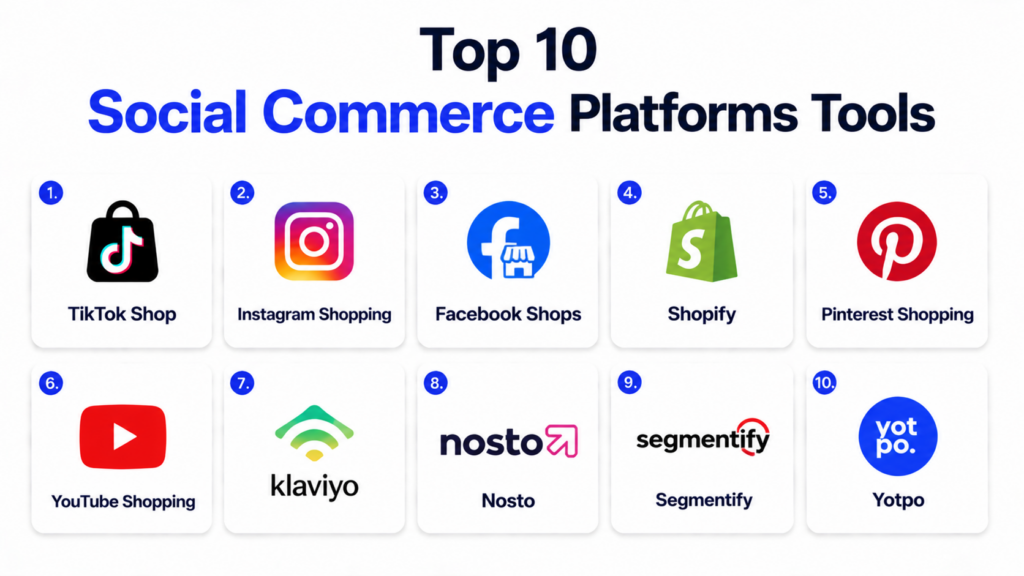
Introduction
Social Commerce Platforms help brands sell products directly through social media channels, creator communities, live shopping experiences, shoppable posts, product tags, chat-based commerce, and influencer-driven storefronts. Instead of sending customers through long buying journeys, these platforms make discovery, engagement, and purchase happen closer together.Social commerce matters because buyers increasingly discover products through creators, short videos, reviews, communities, and social feeds. For ecommerce brands, this creates a faster path from attention to purchase. For creators and influencers, it creates new monetization opportunities through product recommendations, affiliate links, and branded storefronts.
Real-world use cases include:
- Selling products through Instagram and TikTok campaigns
- Creator-led affiliate storefronts
- Live shopping events for product launches
- Social proof and review-driven ecommerce
- Community-based product discovery
Key buyer evaluation criteria include:
- Social channel coverage
- Shoppable content support
- Creator and influencer tools
- Checkout and payment experience
- Product catalog syncing
- Analytics and attribution
- CRM and ecommerce integrations
- Mobile-first experience
- Security and privacy controls
- Scalability for campaign growth
Best for: ecommerce brands, DTC companies, creators, influencers, marketplaces, fashion brands, beauty brands, consumer goods companies, agencies, and retail marketing teams.
Not ideal for: businesses with no social audience, highly regulated products with strict advertising limitations, or B2B companies where buying decisions require long sales cycles and heavy procurement workflows.
Key Trends in Social Commerce Platforms
- Short-form video is becoming a major product discovery channel.
- AI-powered recommendations are improving personalized shopping experiences.
- Creator storefronts are becoming stronger revenue channels.
- Live shopping is expanding beyond entertainment into beauty, fashion, electronics, and lifestyle commerce.
- Social proof, reviews, and user-generated content are becoming conversion drivers.
- Brands are combining influencer marketing, affiliate tracking, and social commerce in one workflow.
- Mobile-first checkout is becoming essential for reducing cart abandonment.
- Shoppable content is moving across posts, videos, livestreams, and messaging apps.
- First-party customer data is becoming more important for attribution.
- Social commerce analytics are becoming more revenue-focused.
How We Selected These Tools
The tools below were selected based on practical social commerce value, adoption, and buyer relevance.
- Strong relevance for social selling use cases
- Product catalog and storefront support
- Creator and influencer commerce capabilities
- Ecommerce integration strength
- Campaign analytics and attribution
- Ease of use for marketing teams
- Mobile-first customer experience
- Scalability for SMB and enterprise brands
- Support for reviews, UGC, or live shopping
- Security and account protection expectations
Top 10 Social Commerce Platforms Tools
#1 — TikTok Shop
Short description: TikTok Shop is a social commerce platform that allows brands, sellers, and creators to sell products directly through TikTok content, livestreams, product tags, and creator affiliate programs. It is especially powerful for discovery-led commerce where short-form video drives buying intent. Brands can use it to reach audiences through organic content, paid campaigns, creator partnerships, and live shopping experiences.
Key Features
- Shoppable short-form video
- Creator affiliate marketplace
- Live shopping support
- Product catalog management
- In-app checkout experience
- Campaign analytics
- Seller dashboard
Pros
- Strong product discovery engine
- Excellent creator commerce fit
- Good for viral product campaigns
Cons
- Performance can depend heavily on content quality
- Not ideal for all product categories
- Seller policies and marketplace rules require close attention
Platforms / Deployment
- Web / iOS / Android
- Cloud
Security & Compliance
Supports secure account access, seller controls, and payment processing. Detailed compliance information should be validated directly.
Integrations & Ecosystem
TikTok Shop connects social content, creator partnerships, and ecommerce selling into one commerce workflow.
- Ecommerce catalog syncing
- Creator affiliate tools
- Paid advertising workflows
- Product tagging
- Analytics dashboards
Support & Community
Provides seller resources, creator guidance, help documentation, and marketplace support. Support depth can vary by region and seller type.
#2 — Instagram Shopping
Short description: Instagram Shopping allows brands to create shoppable experiences through product tags, storefronts, reels, stories, and social discovery workflows. It is highly useful for lifestyle, fashion, beauty, home decor, fitness, and consumer brands that rely on visual storytelling. Businesses can connect their product catalogs and guide users from inspiration to purchase.
Key Features
- Shoppable posts and reels
- Product tagging
- Brand storefronts
- Catalog syncing
- Creator collaboration support
- Paid social commerce workflows
- Visual discovery experience
Pros
- Strong visual commerce experience
- Excellent for lifestyle brands
- Works well with influencer campaigns
Cons
- Organic reach can fluctuate
- Checkout experience varies by region
- Requires consistent content production
Platforms / Deployment
- Web / iOS / Android
- Cloud
Security & Compliance
Supports account security controls, platform moderation, and payment protections where checkout is available.
Integrations & Ecosystem
Instagram Shopping works closely with ecommerce catalogs and social advertising workflows.
- Meta Commerce Manager
- Shopify
- BigCommerce
- Product catalogs
- Creator collaborations
- Paid ads
Support & Community
Large business resource ecosystem, creator education materials, platform documentation, and agency support availability.
#3 — Facebook Shops
Short description: Facebook Shops helps businesses create social storefronts across Facebook and Meta commerce experiences. It is useful for brands that already manage Facebook communities, pages, ads, and customer conversations. Businesses can showcase products, manage catalogs, and connect shopping with social engagement.
Key Features
- Social storefront creation
- Product catalog syncing
- Messenger commerce support
- Facebook page integration
- Paid ad support
- Customer engagement tools
- Product collections
Pros
- Strong audience reach
- Useful for community-driven selling
- Good ad ecosystem integration
Cons
- Younger audiences may prefer newer platforms
- Requires catalog setup and policy compliance
- Organic visibility can be inconsistent
Platforms / Deployment
- Web / iOS / Android
- Cloud
Security & Compliance
Supports platform account protection, secure commerce workflows, and seller controls.
Integrations & Ecosystem
Facebook Shops works with broader Meta business and advertising tools.
- Meta Commerce Manager
- Shopify
- WooCommerce
- BigCommerce
- Messenger
- Meta Ads
Support & Community
Strong documentation, business help center resources, and large marketing community support.
#4 — Shopify
Short description: Shopify is a leading ecommerce platform that supports social commerce through integrations with TikTok, Instagram, Facebook, YouTube, Pinterest, and other sales channels. It is ideal for brands that want a central ecommerce backend while selling through multiple social channels. Shopify helps manage products, inventory, checkout, payments, and social selling from one commerce system.
Key Features
- Multi-channel selling
- Social sales channel integrations
- Product catalog management
- Shopify Payments
- Marketing automation
- Mobile commerce optimization
- App marketplace
Pros
- Strong ecommerce backbone
- Excellent integration ecosystem
- Scales from SMB to enterprise
Cons
- App costs can increase
- Advanced customization may require developers
- Social commerce results depend on channel strategy
Platforms / Deployment
- Web / iOS / Android
- Cloud
Security & Compliance
Supports MFA, encryption, PCI DSS compliance, GDPR support, RBAC, and enterprise security options on advanced plans.
Integrations & Ecosystem
Shopify connects social selling channels with ecommerce operations, fulfillment, payments, and marketing.
- TikTok
- YouTube
- Klaviyo
Support & Community
Strong documentation, app ecosystem, partner agencies, developer community, and support tiers.
#5 — Pinterest Shopping
Short description: Pinterest Shopping helps brands turn visual discovery into product-driven shopping journeys. It is especially strong for home decor, fashion, beauty, lifestyle, food, crafts, and design-led product categories. Buyers often use Pinterest for inspiration, which makes it valuable for brands targeting early-stage purchase intent.
Key Features
- Product pins
- Shoppable catalogs
- Visual discovery engine
- Shopping ads
- Product collections
- Trend-based discovery
- Ecommerce catalog integrations
Pros
- Strong inspiration-led commerce
- Good fit for evergreen products
- Useful for visual brand discovery
Cons
- Not ideal for every category
- Requires strong product imagery
- Conversion paths may be slower than impulse-buy platforms
Platforms / Deployment
- Web / iOS / Android
- Cloud
Security & Compliance
Supports secure account access and advertiser controls. Detailed compliance information is not publicly stated.
Integrations & Ecosystem
Pinterest Shopping connects visual product discovery with ecommerce catalogs and advertising workflows.
- Shopify
- WooCommerce
- Product feeds
- Shopping ads
- Catalog management
- Analytics tools
Support & Community
Provides business resources, merchant guidance, advertising documentation, and creator education materials.
#6 — YouTube Shopping
Short description: YouTube Shopping allows creators and brands to tag products in videos, livestreams, and channel-based shopping experiences. It is useful for product reviews, tutorials, launches, unboxings, beauty content, gaming products, tech products, and creator-led recommendations. YouTube’s strength is long-form trust-building content combined with product discovery.
Key Features
- Product tagging in videos
- Live shopping support
- Creator affiliate workflows
- Channel storefront support
- Product review commerce
- Shopping analytics
- Brand and creator collaboration support
Pros
- Strong trust-based selling environment
- Excellent for tutorials and reviews
- Good creator commerce potential
Cons
- Requires consistent video content
- Sales cycles may be longer than short-form platforms
- Setup depends on eligibility and integrations
Platforms / Deployment
- Web / iOS / Android
- Cloud
Security & Compliance
Supports Google account protection, secure commerce workflows, and creator account controls.
Integrations & Ecosystem
YouTube Shopping connects video content with ecommerce catalogs and creator monetization.
- Shopify
- Google Merchant Center
- Creator affiliate tools
- Product tagging
- Livestream commerce
- Analytics dashboards
Support & Community
Extensive creator documentation, business help resources, tutorials, and large creator community.
#7 — CommentSold
Short description: CommentSold is a live selling and social commerce platform built for boutiques, retailers, and ecommerce brands that sell through live video, social posts, mobile apps, and community engagement. It is especially popular among fashion boutiques and retail sellers that rely on live shopping events and interactive selling.
Key Features
- Live selling tools
- Comment-based purchasing
- Mobile app commerce
- Inventory management
- Social selling automation
- Customer engagement tools
- Retail analytics
Pros
- Strong live commerce workflows
- Good for boutiques and retail brands
- Supports community-driven selling
Cons
- Best suited for live selling models
- May be less useful for traditional catalog-only ecommerce
- Requires strong audience engagement
Platforms / Deployment
- Web / iOS / Android
- Cloud
Security & Compliance
Supports secure payment workflows and account protections. Detailed compliance information is not publicly stated.
Integrations & Ecosystem
CommentSold connects social selling, live commerce, and retail operations.
- Shopify
- Mobile app storefronts
- Payment systems
- Inventory tools
Support & Community
Provides onboarding, live selling education, customer support, and retailer-focused resources.
#8 — Bazaarvoice
Short description: Bazaarvoice is a user-generated content, ratings, reviews, and social commerce platform that helps brands turn customer content into conversion assets. It is useful for enterprises and retail brands that want to collect reviews, syndicate product content, activate social proof, and improve product discovery across commerce channels.
Key Features
- Ratings and reviews
- User-generated content collection
- Review syndication
- Social proof tools
- Product content insights
- Retail network distribution
- Analytics dashboards
Pros
- Strong enterprise UGC capabilities
- Useful for trust-building commerce
- Good retail ecosystem fit
Cons
- Less focused on native checkout
- May be premium for smaller brands
- Implementation can require planning
Platforms / Deployment
- Web
- Cloud
Security & Compliance
Supports enterprise-grade data handling and access controls. Specific certifications should be validated directly.
Integrations & Ecosystem
Bazaarvoice integrates customer content with ecommerce, retail, and marketing systems.
- Ecommerce platforms
- Retailer networks
- Product information systems
- CRM tools
- Analytics platforms
- Social content workflows
Support & Community
Enterprise onboarding, documentation, customer success, and implementation support are typically available.
#9 — Tagshop
Short description: Tagshop is a social commerce and shoppable content platform that helps brands turn user-generated content, social posts, and visual media into shoppable experiences. It is useful for ecommerce brands that want to add shoppable galleries, social proof, and visual commerce elements to websites and campaigns.
Key Features
- Shoppable UGC galleries
- Instagram feed commerce
- Product tagging
- Visual commerce widgets
- Social proof tools
- Ecommerce integrations
- Performance analytics
Pros
- Strong shoppable content experience
- Good for visual ecommerce brands
- Helps convert UGC into sales assets
Cons
- Less suitable as a full ecommerce backend
- Requires quality social content
- Advanced use may require setup support
Platforms / Deployment
- Web
- Cloud
Security & Compliance
Security and compliance details are not publicly stated. Buyers should validate requirements directly.
Integrations & Ecosystem
Tagshop connects social content with ecommerce storefronts and product catalogs.
- Shopify
- WooCommerce
- Product catalogs
- Website widgets
- Analytics tools
Support & Community
Provides documentation, onboarding support, and ecommerce-focused guidance.
#10 — Sprinklr Social Commerce
Short description: Sprinklr Social Commerce is part of a broader enterprise customer experience platform that supports social engagement, commerce workflows, customer care, analytics, and brand management. It is best suited for large organizations that need social commerce as part of a wider social media, customer service, and experience management strategy.
Key Features
- Enterprise social commerce workflows
- Social engagement management
- Customer care integration
- Commerce analytics
- Omnichannel customer experience
- Workflow automation
- Governance controls
Pros
- Strong enterprise governance
- Broad social customer experience capabilities
- Good for complex global teams
Cons
- Too complex for small businesses
- Implementation may require resources
- Premium platform positioning
Platforms / Deployment
- Web
- Cloud
Security & Compliance
Supports enterprise security controls, role-based access, workflow governance, and secure account management. Specific certifications should be validated directly.
Integrations & Ecosystem
Sprinklr connects social commerce with customer experience, care, and enterprise marketing workflows.
- Social platforms
- CRM systems
- Customer service tools
- Analytics systems
- Marketing workflows
- Enterprise APIs
Support & Community
Enterprise onboarding, documentation, professional services, customer success, and global support options are typically available.
Comparison Table Top 10
| Tool Name | Best For | Platforms Supported | Deployment | Standout Feature | Public Rating |
|---|---|---|---|---|---|
| TikTok Shop | Short-form video commerce | Web, iOS, Android | Cloud | Creator-led product discovery | N/A |
| Instagram Shopping | Visual social selling | Web, iOS, Android | Cloud | Shoppable posts and reels | N/A |
| Facebook Shops | Community commerce | Web, iOS, Android | Cloud | Social storefronts inside Meta | N/A |
| Shopify | Multi-channel social commerce | Web, iOS, Android | Cloud | Central ecommerce backend | N/A |
| Pinterest Shopping | Inspiration-led shopping | Web, iOS, Android | Cloud | Visual product discovery | N/A |
| YouTube Shopping | Creator video commerce | Web, iOS, Android | Cloud | Product tagging in videos | N/A |
| CommentSold | Live selling | Web, iOS, Android | Cloud | Comment-based purchasing | N/A |
| Bazaarvoice | UGC and review commerce | Web | Cloud | Review syndication and social proof | N/A |
| Tagshop | Shoppable UGC | Web | Cloud | Shoppable social galleries | N/A |
| Sprinklr Social Commerce | Enterprise social commerce | Web | Cloud | Social commerce with CX governance | N/A |
Evaluation & Scoring of Social Commerce Platforms
| Tool Name | Core 25% | Ease 15% | Integrations 15% | Security 10% | Performance 10% | Support 10% | Value 15% | Weighted Total |
|---|---|---|---|---|---|---|---|---|
| TikTok Shop | 9 | 8 | 8 | 8 | 9 | 8 | 9 | 8.5 |
| Instagram Shopping | 8 | 8 | 8 | 8 | 8 | 8 | 8 | 8.0 |
| Facebook Shops | 8 | 8 | 8 | 8 | 8 | 8 | 8 | 8.0 |
| Shopify | 9 | 9 | 10 | 9 | 9 | 9 | 8 | 9.1 |
| Pinterest Shopping | 8 | 8 | 8 | 7 | 8 | 8 | 8 | 7.9 |
| YouTube Shopping | 8 | 8 | 8 | 8 | 8 | 8 | 8 | 8.0 |
| CommentSold | 8 | 8 | 7 | 7 | 8 | 8 | 8 | 7.8 |
| Bazaarvoice | 8 | 7 | 8 | 8 | 8 | 8 | 7 | 7.7 |
| Tagshop | 7 | 8 | 7 | 7 | 7 | 7 | 8 | 7.3 |
| Sprinklr Social Commerce | 9 | 6 | 8 | 9 | 9 | 8 | 7 | 8.0 |
These scores are comparative and should be used as a practical decision guide, not as fixed rankings. Shopify scores strongly because it can act as the central ecommerce backbone for several social channels. TikTok Shop and Instagram Shopping are powerful for discovery-led commerce, while Bazaarvoice and Tagshop are stronger for social proof and shoppable content. Enterprise buyers should weigh governance, integrations, and support more heavily than basic ease of use.
Which Social Commerce Platforms Tool Is Right for You?
Solo / Freelancer
Solo creators and small sellers should consider TikTok Shop, Instagram Shopping, YouTube Shopping, and Shopify if they want a simple path to selling products through content. These platforms are useful when the creator already has an audience or can consistently produce engaging content.
SMB
SMBs should evaluate Shopify, TikTok Shop, Instagram Shopping, Facebook Shops, Pinterest Shopping, and Tagshop. Shopify can serve as the main ecommerce backend, while social platforms can drive product discovery and campaign traffic.
Mid-Market
Mid-market brands should consider Shopify, Bazaarvoice, CommentSold, YouTube Shopping, and Pinterest Shopping depending on product category. Brands with strong video or live-selling strategies may benefit from TikTok Shop and CommentSold, while brands focused on reviews and social proof may prefer Bazaarvoice.
Enterprise
Enterprises should evaluate Sprinklr Social Commerce, Bazaarvoice, Shopify Plus, YouTube Shopping, Instagram Shopping, and TikTok Shop. Enterprise teams should focus on governance, catalog management, regional operations, approval workflows, analytics, and customer care integrations.
Budget vs Premium
Budget-conscious brands can start with native social commerce tools like TikTok Shop, Instagram Shopping, Facebook Shops, and Pinterest Shopping. Premium buyers may need Shopify, Bazaarvoice, CommentSold, or Sprinklr for stronger backend operations, analytics, support, and governance.
Feature Depth vs Ease of Use
Native social platforms are easier for launching campaigns quickly, while Shopify, Sprinklr, Bazaarvoice, and CommentSold provide deeper operational workflows. Brands should avoid overcomplicating early-stage social commerce before they have proven product-market and content-market fit.
Integrations & Scalability
Shopify is strong for brands needing a scalable commerce backend. Sprinklr fits enterprises needing customer experience and governance integrations. Bazaarvoice works well for brands that need UGC and review syndication, while Tagshop is useful for adding shoppable social content to existing ecommerce stores.
Security & Compliance Needs
Enterprise brands should validate access controls, account permissions, data handling, approval workflows, payment protections, and regional privacy requirements. Social commerce involves customer data, creator relationships, payments, and public-facing brand assets, so governance should not be ignored.
Frequently Asked Questions FAQs
1. What is a Social Commerce Platform?
A Social Commerce Platform helps businesses sell products through social media, creator content, livestreams, shoppable posts, videos, messaging, and community engagement. Instead of separating product discovery and checkout completely, social commerce brings shopping closer to where customers spend time. These platforms help brands connect content, product catalogs, creators, and purchase journeys. They are especially useful for visual, lifestyle, fashion, beauty, consumer goods, and creator-led brands.
2. How is social commerce different from traditional ecommerce?
Traditional ecommerce usually starts with a customer visiting a website or marketplace to search for products. Social commerce often begins with discovery through posts, videos, influencers, reviews, livestreams, or communities. The buying journey is more content-driven and interactive. Social commerce also depends heavily on trust, engagement, social proof, and mobile-first experiences. Many brands use both models together for stronger customer acquisition.
3. Which businesses benefit most from social commerce?
Social commerce works best for brands with visually appealing products, active social audiences, strong creator partnerships, or impulse-friendly buying journeys. Fashion, beauty, home decor, fitness, food, accessories, lifestyle, digital products, and creator merchandise often perform well. It can also work for B2B brands when used for thought leadership and lead generation, but direct checkout-based social commerce is usually stronger for consumer categories.
4. What are the biggest mistakes in social commerce?
A common mistake is treating social commerce like a simple product catalog instead of a content-driven sales channel. Brands often fail when they do not invest in videos, creators, reviews, product education, and consistent engagement. Another mistake is not tracking attribution properly, which makes it difficult to understand what drives sales. Poor customer service, slow fulfillment, and unclear return policies can also damage trust quickly.
5. Do social commerce platforms support integrations?
Yes, many social commerce platforms integrate with ecommerce systems, product catalogs, payment tools, ad platforms, CRM systems, analytics platforms, and fulfillment workflows. Shopify is especially strong as a central ecommerce backend for multiple social channels. Native platforms like TikTok Shop, Instagram Shopping, and Facebook Shops also support catalog syncing and campaign workflows. Buyers should validate integration depth before launch.
6. What security features should buyers evaluate?
Buyers should evaluate account security, role-based access, payment protection, data privacy, catalog permissions, moderation controls, and fraud prevention. Enterprise brands should also check audit logs, workflow approvals, regional privacy requirements, and customer data handling policies. Since social commerce combines public content with customer transactions, poor security can affect both revenue and brand reputation.
7. Is live shopping important for social commerce?
Live shopping is important for brands that sell products requiring demonstration, urgency, trust-building, or community interaction. It works well for fashion, beauty, gadgets, accessories, and limited product drops. However, it is not required for every business. Some brands perform better with shoppable posts, short videos, UGC galleries, or creator affiliate campaigns. The right approach depends on audience behavior and product type.
8. How should brands measure social commerce success?
Brands should track revenue, conversion rate, click-through rate, average order value, customer acquisition cost, creator performance, engagement rate, repeat purchases, and attribution quality. Social commerce should not be measured only by likes or views. A campaign with fewer views but higher purchase intent can outperform a viral campaign with weak conversion. Revenue attribution and customer quality are critical metrics.
9. Can social commerce work without influencers?
Yes, social commerce can work without influencers, especially when brands create strong organic content, UGC campaigns, reviews, live demos, and community engagement. However, influencers and creators often accelerate trust and product discovery. For many brands, the best model combines owned content, customer-generated content, paid ads, and creator partnerships. This reduces dependency on one traffic source.
10. Which social commerce platform is best overall?
There is no single best platform for every business. TikTok Shop is strong for short-form video discovery, Instagram Shopping is excellent for visual brand storytelling, Shopify is ideal as a central ecommerce backend, YouTube Shopping works well for creator reviews and tutorials, and Bazaarvoice is strong for UGC and social proof. The best choice depends on your audience, product type, content strategy, budget, and integration needs.
Conclusion
Social Commerce Platforms are becoming essential for brands that want to connect product discovery, creator influence, customer trust, and checkout into a smoother buying journey. The category is no longer limited to adding product tags on posts; it now includes short-form video commerce, live shopping, creator affiliate programs, UGC galleries, review syndication, mobile checkout, and integrated ecommerce operations. The best platform depends on business model, product category, audience behavior, content capabilities, and operational maturity. TikTok Shop and Instagram Shopping are powerful for discovery-led consumer commerce, Shopify provides a strong central ecommerce foundation, YouTube Shopping works well for trust-building video content, and platforms like Bazaarvoice, Tagshop, CommentSold, and Sprinklr support more specialized social commerce needs. Before choosing a platform, brands should shortlist tools based on target channels, test product catalog syncing, validate checkout and fulfillment workflows, review security controls, measure creator and content performance, and run pilot campaigns before scaling social commerce across markets.
