MOTOSHARE 🚗🏍️
Rent Bikes & Cars Directly from Owners
Motoshare connects vehicle owners with people who need bikes and cars on rent. Owners earn from idle vehicles, and renters get flexible ride options.
Visit Motoshare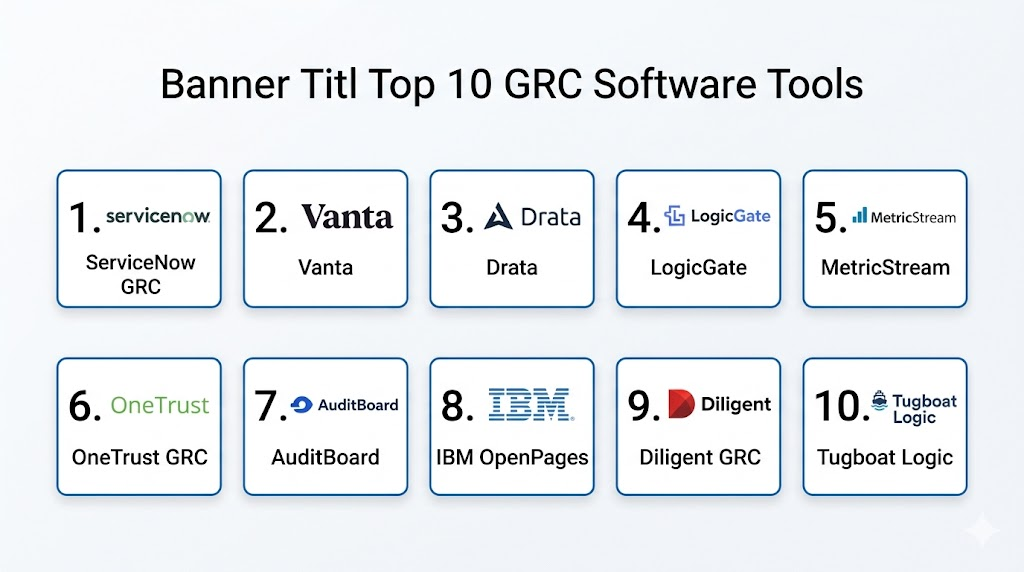
Introduction
Governance, Risk, and Compliance (GRC) platforms are integrated software solutions designed to help organizations align their IT activities with business goals, manage corporate risk, and adhere to industry regulations. In a complex global market, GRC acts as the “control center” for an organization, centralizing data that was traditionally siloed across legal, finance, IT, and operations departments. By providing a single source of truth, these platforms enable leadership to make informed decisions based on real-time risk assessments rather than reactive historical data.
The modern GRC landscape focuses heavily on automation. Instead of manual spreadsheets and periodic audits, today’s platforms utilize continuous monitoring to detect compliance gaps and risk shifts immediately. As cyber threats become more sophisticated and regulatory frameworks like GDPR, SOC 2, and ISO standards evolve, a robust GRC platform is no longer just a luxury for large corporations—it is a functional necessity for any organization handling sensitive data or operating in regulated sectors.
Real-world use cases:
- Audit Management: Automating the collection of evidence for internal and external auditors to reduce “audit fatigue.”
- Vendor Risk Management: Assessing the security posture of third-party service providers before and during a contract.
- Policy Management: Centralizing the creation, distribution, and tracking of corporate policies to ensure employee acknowledgment.
- Incident Management: Tracking security breaches or operational failures and mapping them to specific regulatory requirements.
- Regulatory Mapping: Automatically linking various controls to multiple frameworks to ensure “comply once, satisfy many” efficiency.
Evaluation criteria for buyers:
- Framework Library: The breadth of built-in templates for regulations like HIPAA, PCI DSS, and NIST.
- Automation Capabilities: The ability to collect evidence automatically from cloud providers and HR systems.
- User Interface: The ease with which non-technical stakeholders (Legal/HR) can navigate the system.
- Reporting and Dashboards: The quality of visual risk heatmaps and executive-ready reports.
- Integration Depth: How well the platform connects with Jira, AWS, Azure, Slack, and other enterprise tools.
- Scalability: The platform’s ability to grow from a single framework to a multi-national compliance program.
- Customer Support: Availability of implementation specialists and regulatory experts.
- Audit Readiness: Features that allow auditors to log in and review evidence directly within the platform.
- Workflow Customization: The flexibility to build custom risk assessment workflows.
- Total Cost of Ownership: Balancing the subscription fee against the time saved by manual labor reduction.
Mandatory Paragraph
- Best for: Enterprises in highly regulated industries (Finance, Healthcare), fast-growing tech startups seeking SOC 2 or ISO 27001 certification, and organizations managing extensive third-party vendor networks.
- Not ideal for: Small businesses with no regulatory requirements, static environments with zero digital footprint, or teams looking for a simple task manager without risk-mapping logic.
Key Trends in GRC Platforms
- Continuous Controls Monitoring (CCM): Moving away from “point-in-time” audits toward 24/7 automated verification of security controls.
- AI-Assisted Mapping: Utilizing machine learning to automatically cross-reference controls across different regulations to save time.
- Quantified Risk Management: Shifting from qualitative “High/Medium/Low” labels to financial modeling of risk in dollar amounts.
- User-Centric Compliance: Integrating compliance tasks directly into the tools employees already use, like Slack or Microsoft Teams.
- Third-Party Ecosystem Risk: Increased focus on the “fourth-party” risk—monitoring the vendors used by your vendors.
- ESG Integration: GRC platforms are expanding to include Environmental, Social, and Governance tracking to meet investor and regulatory demands.
- Regulatory Intelligence Feeds: Built-in alerts that automatically notify the organization when a law or regulation changes.
- Evidence Centralization: Creating “Evidence Warehouses” that store immutable logs and screenshots for multiple audit cycles.
How We Selected These Tools (Methodology)
To identify the top 10 GRC platforms, we evaluated the market based on technical maturity and user satisfaction. The methodology included:
- Platform Integration: We prioritized tools that offer native “connectors” to popular cloud and productivity stacks.
- Market Share: We analyzed tools preferred by both “Big Four” auditing firms and modern security leaders.
- Audit Efficiency: We assessed how much the platform reduces the manual hours required for a standard audit cycle.
- Innovation Velocity: We focused on vendors that frequently update their framework libraries and automation features.
- Scalability Signals: We looked for platforms that can manage complex, multi-layered organizational hierarchies.
Top 10 GRC Software Tools
1. ServiceNow GRC
Short description: A high-end enterprise solution that builds GRC capabilities directly onto the ServiceNow IT Service Management platform.
Key Features
- Continuous Monitoring: Automatically detects changes in your IT environment that impact compliance.
- Policy and Compliance Management: Centralizes the entire policy lifecycle from draft to retirement.
- Risk Management: Provides a centralized risk register with automated risk scoring.
- Vendor Risk Management: Streamlines the assessment of third-party risks through automated portals.
- Audit Management: Coordinates audit resources and automates the evidence-gathering process.
- Integration Hub: Seamlessly connects with other ServiceNow modules like ITOM and SecOps.
Pros
- Unrivaled for organizations already using ServiceNow for IT service management.
- Extremely powerful for large-scale, complex enterprise workflows.
Cons
- Very high cost and significant implementation time.
- Requires specialized ServiceNow administrators to maintain.
Platforms / Deployment
- Cloud / Hybrid
- SaaS
Security & Compliance
- SSO/SAML, MFA, RBAC.
- SOC 2, ISO 27001, FedRAMP High.
Integrations & Ecosystem
Integrates with virtually any enterprise tool via the ServiceNow ecosystem.
- Microsoft Azure / AWS
- Splunk
- Jira
- SAP
Support & Community
Massive global network of partners, extensive documentation, and dedicated enterprise support teams.
2. Vanta
Short description: A leader in the “automated compliance” space, specifically optimized for tech startups and mid-market companies seeking fast certifications.
Key Features
- Automated Evidence Collection: Connects to your tech stack to prove compliance without manual screenshots.
- Framework Variety: Supports SOC 2, ISO 27001, HIPAA, GDPR, and more.
- Trust Center: Allows you to share your security posture publicly or privately with customers.
- Vendor Management: Automatically tracks and assesses the security of your third-party sub-processors.
- Risk Assessment: Guided risk assessment modules tailored for growing companies.
- Employee Onboarding: Automates background checks and security training tracking.
Pros
- Incredibly fast time-to-certification compared to traditional platforms.
- User-friendly interface that doesn’t require a GRC expert.
Cons
- May lack the deep customization needed for highly complex “non-standard” enterprise risks.
- Heavily focused on cloud-native tech stacks.
Platforms / Deployment
- Cloud
- SaaS
Security & Compliance
- SSO, RBAC.
- SOC 2 Type II, GDPR.
Integrations & Ecosystem
Broad library of modern API integrations.
- AWS / GCP / Azure
- GitHub / GitLab
- Slack
- Okta / Rippling
Support & Community
Excellent customer success model and a strong community for startup security leaders.
3. Drata
Short description: A modern automation-first GRC platform that focuses on “continuous” compliance and total visibility across the security program.
Key Features
- Continuous Control Monitoring: Real-time monitoring of your systems against specific framework controls.
- Risk Management: A visual risk register that maps risks directly to controls and evidence.
- Drata Agent: An optional lightweight agent to verify compliance on employee workstations.
- Audit Hub: A dedicated space for auditors to view evidence, reducing back-and-forth emails.
- Policy Center: Built-in policy templates that are pre-mapped to major frameworks.
- Questionnaires: Automated security questionnaires for vendor assessments.
Pros
- Highly polished user interface and “autopilot” feel.
- Strong focus on data integrity and “human-in-the-loop” verification.
Cons
- Subscription costs can increase as you add more frameworks.
- Initial setup requires deep permissions into your infrastructure.
Platforms / Deployment
- Cloud
- SaaS
Security & Compliance
- SSO, MFA.
- SOC 2 Type II, ISO 27001.
Integrations & Ecosystem
Robust API-driven integration library.
- Jira / Asana
- G Suite / Microsoft 365
- Heroku
- Datadog
Support & Community
Responsive support teams and an active user community focused on modern compliance.
4. LogicGate Risk Cloud
Short description: A highly flexible, “no-code” GRC platform that allows organizations to build custom risk programs tailored to their specific needs.
Key Features
- No-Code Workflow Engine: Build and modify GRC processes without writing a single line of code.
- Visual Risk Mapping: Understand the relationship between risks, controls, and business assets.
- Standardized Frameworks: Ready-to-use content for NIST, ISO, and SOC 2.
- Automated Notifications: Triggers alerts and tasks based on risk thresholds.
- Centralized Evidence: A single repository for all compliance artifacts.
- Third-Party Risk: Specialized tools for managing the entire vendor lifecycle.
Pros
- Exceptional flexibility for organizations with unique or complex GRC requirements.
- Great visual reporting that helps communicate risk to executive boards.
Cons
- The high level of customization can lead to a longer setup period.
- Requires a clear internal GRC strategy to build the workflows effectively.
Platforms / Deployment
- Cloud
- SaaS
Security & Compliance
- SSO, SAML, RBAC.
- SOC 2.
Integrations & Ecosystem
Integrates with key business and security applications.
- Slack
- Jira
- Salesforce
- BlackSight
Support & Community
Strong professional services team and comprehensive training through “LogicGate Power User” programs.
5. MetricStream
Short description: A veteran enterprise GRC provider known for handling the complex needs of large financial institutions and global corporations.
Key Features
- Connected GRC: Links various GRC modules into a single, cohesive ecosystem.
- Regulatory Intelligence: Automated feeds that alert you to global regulatory changes.
- Internal Audit: Comprehensive tools for planning, executing, and reporting on internal audits.
- Cyber Risk: Advanced modeling for IT risk and cybersecurity posture.
- Compliance Management: Streamlines multi-framework compliance across global regions.
- Front-line Engagement: Simplified interfaces for employees to report incidents or risks.
Pros
- Deeply mature features for multi-national regulatory compliance.
- Proven reliability in the most highly regulated industries like banking.
Cons
- The interface can feel “legacy” compared to modern startup-focused tools.
- Significant learning curve for administrators.
Platforms / Deployment
- Cloud / On-premises / Hybrid
- SaaS / Managed Service
Security & Compliance
- Enterprise-grade security controls.
- SOC 2, ISO 27001.
Integrations & Ecosystem
Extensive integrations with enterprise ERP and security systems.
- SAP / Oracle
- Archer
- Microsoft 365
Support & Community
Global support network and established consulting partnerships with major firms.
6. OneTrust GRC
Short description: A module within the larger OneTrust “Trust Intelligence” platform, focusing heavily on privacy, ethics, and security.
Key Features
- Regulatory Research: Access to a massive database of global laws and regulations.
- Third-Party Risk Exchange: A network of pre-completed vendor assessments to speed up procurement.
- Privacy Management: The market leader in GDPR and CCPA compliance.
- Ethics & Compliance: Tools for whistleblower hotlines and internal investigations.
- ESG Cloud: Specifically designed tools for tracking environmental and social impact.
- Automated Workflows: Rules-based engine for risk mitigation tasks.
Pros
- Unbeatable for companies where privacy (GDPR/CCPA) is the primary concern.
- Modular design allows you to buy only what you need.
Cons
- The platform is so broad that it can feel fragmented if using multiple modules.
- Pricing can be complex due to the modular structure.
Platforms / Deployment
- Cloud
- SaaS
Security & Compliance
- SSO, MFA, Advanced encryption.
- ISO 27001, SOC 2, HIPAA.
Integrations & Ecosystem
Strong integrations with marketing and data privacy tools.
- Adobe Experience Cloud
- Salesforce
- AWS
- Snowflake
Support & Community
Excellent webinars, training, and a huge user base across the globe.
7. AuditBoard
Short description: A modern GRC platform that focuses on making the audit, risk, and compliance process more collaborative and less administrative.
Key Features
- OpsAudit: Streamlines the internal audit process from planning to fieldwork.
- Compliance: Centralizes framework management and maps controls across multiple standards.
- RiskOversight: A collaborative risk management tool for identifying and assessing enterprise risks.
- CrossComply: Specifically designed for managing compliance across various digital frameworks.
- Evidence Requests: Automated workflows for collecting files from process owners.
- Reporting: Real-time dashboards showing the status of audits and open issues.
Pros
- Strongly favored by auditors for its intuitive “workflow-first” design.
- Excellent for reducing the “manual burden” of evidence collection.
Cons
- Historically stronger in audit than in technical “automated” security monitoring.
- Can be expensive for smaller teams.
Platforms / Deployment
- Cloud
- SaaS
Security & Compliance
- SSO, MFA, RBAC.
- SOC 2.
Integrations & Ecosystem
Connects with major business collaboration tools.
- Jira
- ServiceNow
- Slack
- Microsoft Office 365
Support & Community
Very high customer satisfaction ratings and a professional community of internal auditors.
8. IBM OpenPages
Short description: An AI-powered GRC platform designed to provide a holistic view of risk and regulatory challenges across the enterprise.
Key Features
- Watson AI Integration: Uses AI to help categorize risks and map them to regulatory requirements.
- Operational Risk: Advanced tools for tracking losses and managing risk self-assessments.
- Regulatory Compliance: Links internal controls to a vast library of external regulations.
- IT Governance: Aligns IT investments and risks with business strategy.
- Business Continuity: Tools for planning and testing organizational resilience.
- Dashboarding: High-level executive views of the organization’s “risk posture.”
Pros
- Powerful AI capabilities for sorting through massive regulatory datasets.
- Backed by the stability and technical depth of IBM.
Cons
- Often requires significant professional services to implement.
- Can feel “over-engineered” for companies without massive global footprints.
Platforms / Deployment
- Cloud / On-premises / Hybrid
- SaaS / Managed
Security & Compliance
- SSO, MFA, FedRAMP options.
- SOC 2, ISO 27001.
Integrations & Ecosystem
Integrates well with IBM’s broader security and data portfolio.
- IBM QRadar
- Watson
- Cognos Analytics
Support & Community
Standard IBM enterprise support and a global network of certified consultants.
9. Diligent GRC (Formerly HighBond)
Short description: A platform that focuses on “Board-level” GRC, providing insights that connect technical risk to corporate governance.
Key Features
- Board Reporting: Specialized tools for presenting risk data to the Board of Directors.
- Analytics & Robotics: Automates data analysis to find anomalies or compliance gaps.
- Strategy Management: Maps enterprise-wide risks to the company’s long-term strategic goals.
- Incident Management: A structured way to handle and report on security or operational events.
- Entity Management: Specifically useful for global companies managing multiple legal entities.
- Internal Audit: End-to-end management of the internal audit function.
Pros
- Best-in-class for high-level corporate governance and board visibility.
- Strong data analytics capabilities integrated into the risk process.
Cons
- The pricing can be on the higher end for mid-market users.
- Integrating multiple legacy modules can sometimes be challenging.
Platforms / Deployment
- Cloud
- SaaS
Security & Compliance
- SSO, MFA.
- SOC 2, ISO 27001, FedRAMP.
Integrations & Ecosystem
Integrates with major financial and business data sources.
- SAP
- Oracle
- Tableau
- Microsoft 365
Support & Community
Excellent professional support and a dedicated academy for learning the platform.
10. Tugboat Logic (by OneTrust)
Short description: A “compliance-in-a-box” solution designed for small-to-medium businesses that need to get audit-ready quickly and affordably.
Key Features
- Policy Generator: Automatically creates customized security policies based on your needs.
- Audit Readiness: A step-by-step roadmap to prepare for SOC 2 or ISO 27001.
- Automated Evidence Collection: Direct integrations to gather proof of compliance.
- Security Questionnaires: A library to help you answer customer security questions faster.
- Risk Assessment: A simplified risk management module for smaller teams.
- Vendor Management: Tracking and storing security documentation for your suppliers.
Pros
- Extremely accessible pricing and setup for small companies.
- Educational approach that helps users understand the “why” behind compliance.
Cons
- Might be outgrown by large enterprises with complex multi-subsidiary needs.
- Reporting is functional but less “customizable” than high-end enterprise tools.
Platforms / Deployment
- Cloud
- SaaS
Security & Compliance
- SSO, MFA.
- SOC 2 Type II.
Integrations & Ecosystem
Focused on the core tech stack used by startups.
- AWS
- Jira
- G Suite
- Okta
Support & Community
Very helpful onboarding specialists and clear, actionable documentation.
Comparison Table (Top 10)
| Tool Name | Best For | Platform(s) Supported | Deployment | Standout Feature | Public Rating |
| 1. ServiceNow GRC | Large Enterprise | Cloud, Hybrid | SaaS | IT Integration | 4.6/5 |
| 2. Vanta | Cloud Startups | Cloud | SaaS | Full Automation | 4.8/5 |
| 3. Drata | Growth Companies | Cloud | SaaS | Continuous Monitoring | 4.9/5 |
| 4. LogicGate | Custom Risk | Cloud | SaaS | No-Code Builder | 4.7/5 |
| 5. MetricStream | Global Banking | Cloud, On-prem | Hybrid | Regulatory Feeds | 4.4/5 |
| 6. OneTrust GRC | Privacy Focused | Cloud | SaaS | Global Law Database | 4.5/5 |
| 7. AuditBoard | Internal Auditors | Cloud | SaaS | Collaborative Audit | 4.7/5 |
| 8. IBM OpenPages | AI-driven GRC | Cloud, On-prem | Hybrid | Watson AI Analysis | 4.3/5 |
| 9. Diligent GRC | Board Reporting | Cloud | SaaS | Strategy Mapping | 4.4/5 |
| 10. Tugboat Logic | SMB Onboarding | Cloud | SaaS | Compliance Roadmap | 4.6/5 |
Evaluation & Scoring of GRC Platforms
The scores below represent the platform’s ability to serve modern organizational needs across different weights.
| Tool Name | Core (25%) | Ease (15%) | Integrations (15%) | Security (10%) | Performance (10%) | Support (10%) | Value (15%) | Weighted Total |
| ServiceNow | 10 | 4 | 10 | 10 | 9 | 9 | 5 | 8.15 |
| Vanta | 8 | 10 | 9 | 9 | 9 | 9 | 10 | 8.85 |
| Drata | 9 | 9 | 10 | 9 | 9 | 9 | 9 | 9.00 |
| LogicGate | 8 | 8 | 8 | 9 | 8 | 9 | 7 | 7.90 |
| MetricStream | 10 | 5 | 8 | 9 | 8 | 8 | 6 | 7.60 |
| OneTrust | 9 | 7 | 8 | 9 | 8 | 9 | 7 | 8.15 |
| AuditBoard | 9 | 8 | 8 | 9 | 8 | 10 | 8 | 8.55 |
| IBM OpenPages | 9 | 5 | 8 | 9 | 8 | 8 | 6 | 7.35 |
| Diligent | 9 | 6 | 7 | 9 | 8 | 8 | 6 | 7.30 |
| Tugboat Logic | 7 | 9 | 8 | 8 | 8 | 9 | 10 | 8.05 |
Scoring Logic:
- Core Features (25%): Depth of framework library and risk modeling.
- Ease of Use (15%): How quickly a non-expert can start seeing value.
- Integrations (15%): The quantity and quality of “automated” evidence connectors.
Which GRC Platform Is Right for You?
1. Solo / Freelancer / Early Startup
If you are an early-stage company or a small shop that just needs a SOC 2 to close a deal, 10. Tugboat Logic or 2. Vanta are the clear winners. They act more like “compliance coaches” and provide the templates and automation you need without the enterprise price tag.
2. SMB (Small-to-Medium Business)
For companies that have an established security team and are managing multiple frameworks (e.g., SOC 2 and HIPAA), 3. Drata provides a perfect balance of automation and advanced risk management.
3. Mid-Market / Rapid Growth
Organizations that are beginning to face complex operational risks and require custom workflows should look at 4. LogicGate. Its no-code builder allows you to grow the platform alongside your business.
4. Large Enterprise / Global
For massive organizations where compliance is managed across multiple legal entities and countries, 1. ServiceNow GRC or 5. MetricStream offer the scale and regulatory intelligence feeds necessary for complex operations.
Budget vs Premium
- Budget: Tugboat Logic, Vanta.
- Premium: ServiceNow, IBM OpenPages, MetricStream.
Feature Depth vs Ease of Use
- Deepest Features: ServiceNow, MetricStream.
- Easiest to Use: Vanta, Drata.
Integrations & Scalability
- Best Integrations: ServiceNow, Drata.
- Best Scalability: MetricStream, IBM OpenPages.
Security & Compliance Needs
Organizations requiring “High-Security” FedRAMP environments should prioritize IBM, ServiceNow, or Diligent.
Frequently Asked Questions (FAQs)
1. What is the difference between GRC and a simple checklist?
A GRC platform links everything together. A checklist tells you what to do; GRC shows how a missed task creates a specific risk, which law it violates, and who is responsible for fixing it.
2. How much time can a GRC platform save during an audit?
On average, organizations using automation-focused GRC platforms report a reduction of 50% to 80% in manual labor during the evidence-gathering phase of an audit.
3. Do I need to be a security expert to use a GRC platform?
While modern tools like Vanta and Tugboat are designed for non-experts, enterprise tools like ServiceNow require a deep understanding of compliance frameworks and system administration.
4. Can these platforms help with GDPR and privacy?
Yes, most GRC tools have specific modules for privacy. 6. OneTrust is widely considered the market leader for privacy-specific GRC needs.
5. What is “Continuous Compliance”?
Unlike traditional compliance, which is checked once a year, continuous compliance uses automated API connections to verify that your security controls are working every single day.
6. Will a GRC platform automatically make me compliant?
No. The platform is a tool. You still need to implement the actual security controls (like MFA or encryption), but the platform will tell you exactly what is missing and help you track the proof.
7. Can I manage vendor risk in a GRC platform?
Yes, most top-tier GRC tools include a Vendor Risk Management (VRM) module that automates sending questionnaires to your suppliers and storing their security certificates.
8. How does pricing typically work?
Most platforms use a subscription model based on either the number of frameworks you use, the number of employees in your company, or the number of “controls” being monitored.
9. What is “Cross-Mapping” in GRC?
Cross-mapping allows you to use one piece of evidence to satisfy multiple frameworks. For example, your “Password Policy” evidence can satisfy requirements for SOC 2, ISO 27001, and HIPAA simultaneously.
10. Do auditors like using these platforms?
Yes, most modern auditors prefer them. They can be given a “read-only” login where they can see all evidence, policies, and tests in one place, eliminating the need for huge email threads and zip files.
Conclusion
The evolution of GRC platforms has shifted the focus from “checking boxes” to “managing trust.” Whether you are a small startup using Vanta to secure your first major enterprise contract or a global giant using ServiceNow to manage complex regulatory webs, the goal is the same: clarity and resilience. By automating the mundane tasks of evidence collection and risk mapping, GRC platforms allow security and leadership teams to spend less time on paperwork and more time on strategic growth and protection.

Very informative and easy to understand.
Grasping GRC software helps me envision how to align risk strategy with future growth.