MOTOSHARE 🚗🏍️
Rent Bikes & Cars Directly from Owners
Motoshare connects vehicle owners with people who need bikes and cars on rent. Owners earn from idle vehicles, and renters get flexible ride options.
Visit Motoshare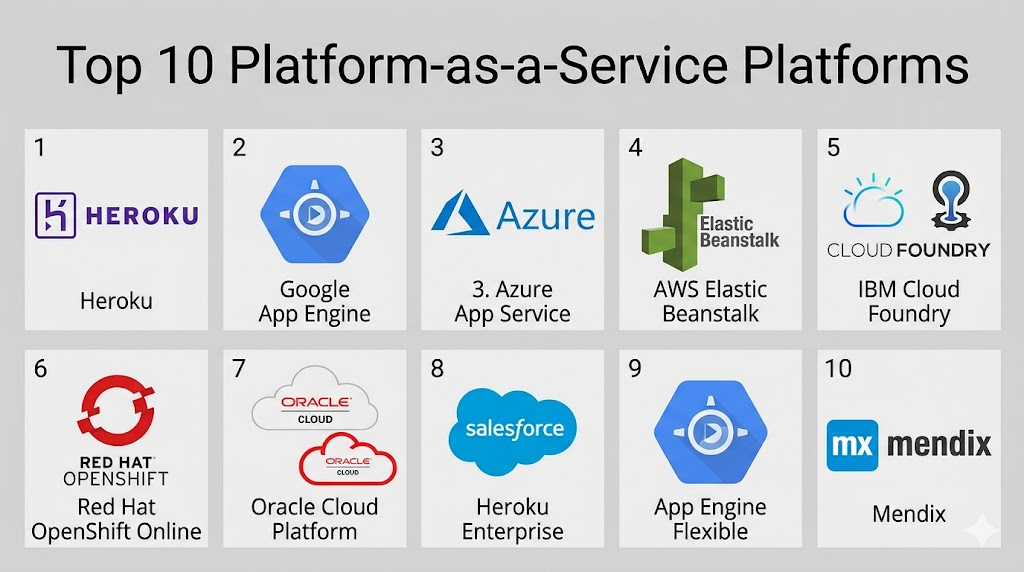
Introduction
Platform-as-a-Service (PaaS) platforms provide a complete cloud environment for developing, deploying, and managing applications without the complexity of managing underlying infrastructure. PaaS abstracts servers, storage, networking, and runtime environments while offering tools for application lifecycle management, database integration, and scalabilityIn , PaaS continues to accelerate application development, especially for organizations adopting microservices, multi-cloud strategies, or containerized workloads. PaaS empowers developers to focus on building features, accelerating time-to-market, and integrating modern development workflows without worrying about infrastructure provisioning or scaling.
Real-world use cases:
- Rapidly developing web and mobile applications with preconfigured runtimes.
- Hosting microservices with automated scaling and container orchestration.
- Streamlining DevOps pipelines with integrated CI/CD tools.
- Running AI/ML workloads without managing compute resources.
- Integrating APIs, messaging systems, and databases in a unified platform.
Evaluation Criteria for Buyers:
When evaluating PaaS platforms, consider:
- Supported programming languages, frameworks, and runtimes
- Integrated developer tools, CI/CD, and testing capabilities
- Autoscaling and high availability
- Database, storage, and messaging integrations
- Security features, including IAM and encryption
- Global reach and edge support
- Observability, monitoring, and logging capabilities
- Compliance certifications (GDPR, HIPAA, ISO)
- Cost transparency and usage-based billing
Best for: Developers, DevOps teams, cloud architects, and enterprises seeking rapid application development with managed infrastructure.
Not ideal for: Teams requiring full control over infrastructure or those running long-lived, resource-intensive compute workloads better suited for IaaS.
Key Trends in Platform-as-a-Service (PaaS) Platforms
- Multi-cloud and hybrid PaaS enabling deployments across providers without lock-in.
- Containerized PaaS offerings leveraging Kubernetes for microservices.
- Integrated developer tools for CI/CD, monitoring, and version control.
- AI/ML-ready PaaS for building intelligent applications with prebuilt runtime support.
- Serverless and FaaS integration for event-driven workflows.
- Edge and global deployment for low-latency applications.
- Granular security and compliance for enterprise and regulated workloads.
- Low-code and no-code extensions accelerating application prototyping.
- Pay-as-you-go and usage-based pricing for cost optimization.
- Observability and analytics integration for proactive monitoring and troubleshooting.
How We Selected These Tools (Methodology)
- Reviewed market adoption and global usage across startups, SMBs, and enterprises.
- Evaluated runtime and language support across popular frameworks.
- Assessed scalability, autoscaling, and multi-region deployment capabilities.
- Reviewed integration options for databases, messaging, API management, and storage.
- Evaluated developer tooling including IDE integration, CI/CD pipelines, and testing frameworks.
- Considered security posture, IAM integration, encryption, and compliance certifications.
- Benchmarked observability, logging, and monitoring capabilities.
- Assessed pricing flexibility, usage-based billing, and cost predictability.
- Reviewed ecosystem extensibility and community engagement.
Top 10 Platform-as-a-Service Platforms
#1 — Heroku
Short description: Cloud PaaS enabling developers to deploy, manage, and scale applications quickly with Git-based workflows.
Key Features
- Multiple language support (Node.js, Ruby, Python, Java)
- Git-based deployment and CI/CD integration
- Managed databases and add-ons
- Autoscaling for web and worker dynos
- Monitoring and logging via built-in tools
Pros
- Fast deployment and developer-friendly
- Large add-on ecosystem
Cons
- Higher costs for production workloads
- Limited control over infrastructure
Platforms / Deployment
- Cloud
Security & Compliance
- SSL, role-based access; Not publicly stated for certifications
Integrations & Ecosystem
- Postgres, Redis, Kafka add-ons
- CI/CD pipelines
- Third-party APIs and monitoring tools
Support & Community
Strong documentation, active developer community, commercial support options.
#2 — Google App Engine
Short description: Fully managed PaaS for building scalable web applications and APIs on Google Cloud.
Key Features
- Autoscaling and load balancing
- Multiple runtime environments (Java, Python, Node.js, Go)
- Integrated monitoring and logging
- Versioned deployments and traffic splitting
- Managed services and APIs
Pros
- Deep GCP integration
- Automatic scaling and maintenance
Cons
- Vendor lock-in concerns
- Limited configuration flexibility
Platforms / Deployment
- Cloud (GCP)
Security & Compliance
- IAM, encryption, VPC integration; Not publicly stated for certifications
Integrations & Ecosystem
- Cloud SQL, Datastore, Pub/Sub
- Stackdriver monitoring and logging
- CI/CD integration via Cloud Build
Support & Community
Google Cloud support plans, active community.
#3 — Microsoft Azure App Service
Short description: Enterprise-grade PaaS for building, deploying, and scaling web apps and APIs across Azure.
Key Features
- Multi-language and framework support
- CI/CD integration
- Autoscaling and high availability
- Integrated monitoring and logging
- Hybrid connectivity and VNET integration
Pros
- Strong Azure ecosystem integration
- Enterprise security and compliance
Cons
- Pricing can escalate with scale
- Learning curve for hybrid networking
Platforms / Deployment
- Cloud (Azure)
Security & Compliance
- Azure AD, role-based access, encryption; Not publicly stated for SOC 2/ISO
Integrations & Ecosystem
- SQL Database, Cosmos DB, Storage
- Logic Apps and Event Grid
- CI/CD via Azure DevOps
- Monitoring with Application Insights
Support & Community
Microsoft support tiers; extensive documentation and forums.
#4 — AWS Elastic Beanstalk
Short description: PaaS for deploying and managing applications without managing infrastructure, supporting multiple languages and containers.
Key Features
- Supports Java, Python, Node.js, Go, .NET
- Docker container orchestration
- Autoscaling and load balancing
- Integrated monitoring via CloudWatch
- Deployment version management
Pros
- Simplified deployment on AWS
- Supports containerized applications
Cons
- Less control compared to ECS or EKS
- AWS-specific ecosystem
Platforms / Deployment
- Cloud (AWS)
Security & Compliance
- IAM roles, VPC integration; Not publicly stated
Integrations & Ecosystem
- CloudFront, RDS, S3
- CI/CD pipelines
- Monitoring and alerting tools
Support & Community
AWS support, active community, extensive documentation.
#5 — IBM Cloud Foundry
Short description: Open-source PaaS for deploying scalable web and mobile applications with container support.
Key Features
- Multi-language support
- Container and buildpack support
- Autoscaling and logging
- DevOps workflow integration
- API management
Pros
- Enterprise-grade PaaS
- Supports multi-cloud deployments
Cons
- Smaller ecosystem outside IBM
- More complex setup
Platforms / Deployment
- Cloud
Security & Compliance
- Encryption, IAM; Not publicly stated
Integrations & Ecosystem
- Databases, messaging, CI/CD tools
- API management and observability tools
Support & Community
IBM support tiers; active Cloud Foundry community.
#6 — Red Hat OpenShift Online
Short description: Container-based PaaS with Kubernetes orchestration for cloud-native applications.
Key Features
- Kubernetes orchestration
- Multi-language and container support
- CI/CD pipelines
- Monitoring and logging
- Autoscaling and high availability
Pros
- Enterprise container orchestration
- Hybrid cloud capabilities
Cons
- Learning curve for Kubernetes concepts
- Cost for production workloads
Platforms / Deployment
- Cloud / Hybrid
Security & Compliance
- RBAC, encryption; Not publicly stated
Integrations & Ecosystem
- Kubernetes and OpenShift ecosystem
- CI/CD via Jenkins or OpenShift Pipelines
- Storage and database services
Support & Community
Red Hat support; strong Kubernetes community.
#7 — Oracle Cloud Platform
Short description: PaaS for building and deploying applications on Oracle Cloud with integration to enterprise services.
Key Features
- Multiple language runtimes
- Autoscaling and high availability
- Managed databases and messaging
- CI/CD pipelines
- Monitoring and analytics
Pros
- Enterprise-grade reliability
- Strong integration with Oracle products
Cons
- Less developer-friendly than some alternatives
- Vendor lock-in
Platforms / Deployment
- Cloud
Security & Compliance
- Encryption, IAM, audit logging; Not publicly stated
Integrations & Ecosystem
- Oracle Database, Messaging, Storage
- CI/CD pipelines
- Analytics and monitoring
Support & Community
Oracle support; smaller developer community.
#8 — Salesforce Heroku Enterprise
Short description: Enterprise PaaS for building web and mobile apps with Salesforce ecosystem integration.
Key Features
- Git-based deployment
- Multiple language support
- Add-on marketplace for services
- Autoscaling and logging
- CI/CD integrations
Pros
- Developer-friendly with add-ons
- Salesforce ecosystem integration
Cons
- Pricing for enterprise workloads
- Limited control over infrastructure
Platforms / Deployment
- Cloud
Security & Compliance
- SSL, encryption, IAM; Not publicly stated
Integrations & Ecosystem
- Salesforce APIs, databases, third-party add-ons
- CI/CD pipelines
Support & Community
Heroku support plans; active community.
#9 — Google App Engine Flexible Environment
Short description: Managed PaaS supporting containerized workloads with autoscaling and GCP service integrations.
Key Features
- Flexible runtimes and custom Docker images
- Autoscaling
- Integration with GCP services
- Logging and monitoring
- Versioned deployments
Pros
- Flexible containerized PaaS
- Deep GCP integration
Cons
- Less mature than standard App Engine
- Some cold-start overhead
Platforms / Deployment
- Cloud (GCP)
Security & Compliance
- IAM, encryption; Not publicly stated
Integrations & Ecosystem
- Cloud SQL, Pub/Sub, Cloud Storage
- CI/CD pipelines
Support & Community
Google Cloud support tiers; active community.
#10 — Mendix
Short description: Low-code PaaS enabling rapid application development with visual modeling and cloud deployment.
Key Features
- Visual development and deployment
- Autoscaling and cloud hosting
- Integration with databases and APIs
- Application lifecycle management
- Collaboration and DevOps tooling
Pros
- Rapid prototyping and development
- Minimal coding required
Cons
- Limited flexibility for complex custom logic
- Proprietary ecosystem
Platforms / Deployment
- Cloud
Security & Compliance
- Encryption, role-based access; Not publicly stated
Integrations & Ecosystem
- REST/SOAP APIs, databases, workflow tools
- CI/CD pipelines and DevOps integrations
Support & Community
Mendix support; active low-code community.
Comparison Table (Top 10)
| Tool Name | Best For | Platforms Supported | Deployment | Standout Feature | Public Rating |
|---|---|---|---|---|---|
| Heroku | Rapid app deployment | Cloud | Cloud | Git-based CI/CD | N/A |
| Google App Engine | Scalable web apps | Cloud | Cloud | Autoscaling & GCP integration | N/A |
| Azure App Service | Enterprise apps | Cloud | Cloud | Durable workflows & hybrid support | N/A |
| AWS Elastic Beanstalk | Containerized & multi-language apps | Cloud | Cloud | Easy AWS deployment | N/A |
| IBM Cloud Foundry | Enterprise cloud apps | Cloud | Cloud | Open-source PaaS foundation | N/A |
| Red Hat OpenShift Online | Container-based apps | Cloud | Cloud/Hybrid | Kubernetes orchestration | N/A |
| Oracle Cloud Platform | Enterprise integrations | Cloud | Cloud | Enterprise reliability | N/A |
| Salesforce Heroku Enterprise | Salesforce ecosystem apps | Cloud | Cloud | Add-on marketplace | N/A |
| Google App Engine Flexible | Containerized flexible apps | Cloud | Cloud | Flexible runtimes | N/A |
| Mendix | Low-code apps | Cloud | Cloud | Rapid visual development | N/A |
Evaluation & Scoring of Platform-as-a-Service Platforms
| Tool Name | Core (25%) | Ease (15%) | Integrations (15%) | Security (10%) | Performance (10%) | Support (10%) | Value (15%) | Weighted Total (0–10) |
|---|---|---|---|---|---|---|---|---|
| Heroku | 8 | 9 | 8 | 7 | 8 | 8 | 7 | 8.1 |
| Google App Engine | 8 | 8 | 8 | 8 | 8 | 7 | 7 | 7.8 |
| Azure App Service | 9 | 8 | 8 | 8 | 8 | 8 | 7 | 8.2 |
| AWS Elastic Beanstalk | 8 | 8 | 8 | 7 | 8 | 7 | 7 | 7.7 |
| IBM Cloud Foundry | 7 | 7 | 7 | 7 | 7 | 7 | 7 | 7.0 |
| Red Hat OpenShift Online | 8 | 7 | 8 | 8 | 8 | 7 | 7 | 7.7 |
| Oracle Cloud Platform | 8 | 7 | 7 | 8 | 8 | 7 | 7 | 7.5 |
| Salesforce Heroku Enterprise | 8 | 8 | 8 | 8 | 7 | 7 | 7 | 7.6 |
| Google App Engine Flexible | 8 | 8 | 8 | 8 | 8 | 7 | 7 | 7.8 |
| Mendix | 7 | 9 | 7 | 7 | 7 | 7 | 7 | 7.4 |
Which Platform-as-a-Service Tool Is Right for You?
Solo / Freelancer
Heroku or Mendix for rapid development, prototyping, and low operational overhead.
SMB
Google App Engine, AWS Elastic Beanstalk, or Azure App Service for scalable web applications with managed infrastructure.
Mid-Market
Red Hat OpenShift Online or IBM Cloud Foundry for containerized or multi-cloud deployments requiring control and compliance.
Enterprise
Azure App Service, Google App Engine Flexible, or Oracle Cloud Platform for enterprise-grade features, hybrid support, and deep ecosystem integration.
Budget vs Premium
Low-code or developer-friendly platforms reduce cost for smaller teams; enterprise PaaS delivers scale, governance, and SLAs at higher cost.
Feature Depth vs Ease of Use
Mature hyperscaler PaaS provides deep integrations and control, while low-code or Heroku-style platforms prioritize speed and simplicity.
Integrations & Scalability
Select platforms that integrate with databases, messaging systems, CI/CD, and monitoring tools and that scale elastically with workloads.
Security & Compliance Needs
Ensure IAM, encryption, and audit logging meet enterprise requirements, especially for regulated industries.
Frequently Asked Questions (FAQs)
1. What programming languages do PaaS platforms support?
Common runtimes include Node.js, Python, Java, Ruby, .NET, Go, and custom Docker containers.
2. How is pricing calculated?
Pricing is typically based on compute, storage, number of instances, or monthly subscription tiers depending on the platform.
3. Can PaaS scale automatically?
Yes. Most PaaS platforms provide autoscaling to adjust resources based on load without manual intervention.
4. Are PaaS platforms secure?
Security depends on platform; features include IAM, encryption, network isolation, and audit logging. Enterprise platforms may offer compliance certifications.
5. Can I integrate PaaS with CI/CD pipelines?
Yes. Most platforms provide native integrations or APIs to automate builds, tests, and deployments.
6. What workloads are ideal for PaaS?
Web applications, mobile backends, microservices, APIs, and lightweight batch processes.
7. Can I run containerized apps on PaaS?
Many modern PaaS offerings (OpenShift, App Engine Flexible) support Docker and containerized workloads.
8. Do PaaS platforms support multi-cloud deployments?
Some platforms offer multi-cloud or hybrid deployment support; cloud-native offerings may be limited to the provider.
9. How do I monitor applications on PaaS?
Built-in monitoring and logging dashboards or integration with observability tools provide metrics, logs, and alerts.
10. How do I choose the right PaaS?
Evaluate language support, scalability, integrations, pricing, developer tooling, and compliance requirements.
Conclusion
Platform-as-a-Service (PaaS) platforms simplify application development by abstracting infrastructure management while offering scalability, CI/CD integration, and robust ecosystems. The ideal platform depends on workload complexity, development team skill, cloud footprint, and budget. Rapid development platforms like Heroku or Mendix accelerate small projects, while enterprise-grade solutions such as Azure App Service, AWS Elastic Beanstalk, or Red Hat OpenShift provide advanced scalability, compliance, and orchestration features. To maximize adoption, shortlist platforms aligned with organizational requirements, run pilot projects to evaluate tooling and integration, and validate security and observability before full deployment.
