MOTOSHARE 🚗🏍️
Rent Bikes & Cars Directly from Owners
Motoshare connects vehicle owners with people who need bikes and cars on rent. Owners earn from idle vehicles, and renters get flexible ride options.
Visit Motoshare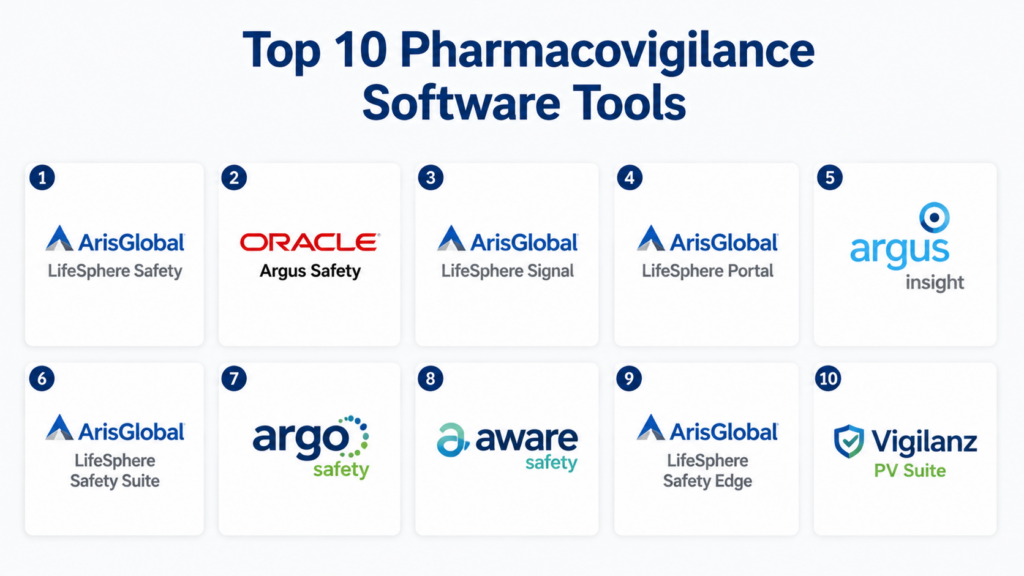
Introduction
Pharmacovigilance software refers to systems designed to collect, manage, analyze, and report safety data related to medicines and medical products. At its core, pharmacovigilance (PV) software helps life sciences organizations monitor adverse events, ensure patient safety, comply with regulatory requirements, and facilitate risk management across the product lifecycle. With increasing global regulatory scrutiny, volume of safety data, and cross‑border trials and markets, robust PV software is a critical backbone for safety and compliance operations.
In the context of regulators globally are demanding more real‑time safety analytics, stronger integration between clinical and post‑marketing systems, and AI‑driven signal detection. Rapid adoption of electronic reporting standards (ICSR, E2B(R3)), cloud platforms, and interoperability with clinical, regulatory, and quality systems has made PV solutions more central to safe product management.
Real‑world use cases:
- Tracking and analyzing adverse event reports from clinical trials, social media, and adverse event intake channels.
- Automating regulatory case intake, coding, and submission to health authorities.
- Signal detection and trend analysis for marketed products.
- Generating safety aggregate reports (e.g., PBRER, DSUR, PSUR).
- Ensuring compliance with global regulations (FDA, EMA, PMDA, WHO) and local safety reporting requirements.
Evaluation Criteria for Buyers:
- End‑to‑end case management workflow
- Regulatory submission support (E2B standards)
- Signal detection and analytics capabilities
- Integration with clinical, quality, and regulatory systems
- Coding support (MedDRA, WHO‑DD)
- Automation and workflow configurability
- Ease of use and user interface
- Reporting and visualization tools
- Cloud vs on‑prem deployment options
- Security, audit trails, and compliance support
Best for: PV leads, drug safety professionals, quality assurance teams, pharmaceutical and biotech companies, and CROs managing safety operations.
Not ideal for: Small research projects or early exploratory studies with minimal safety reporting needs. Organizations without compliance obligations or limited external reporting can suffice with simpler tracking tools.
Key Trends in Pharmacovigilance Software
- AI‑Assisted Case Intake & Coding: Leveraging natural language processing (NLP) for auto‑coding, automated triage, and duplicate detection.
- Real‑Time Signal Detection: Machine learning models to identify safety patterns early, beyond traditional statistical methods.
- Cloud‑Native Platforms: SaaS models enabling collaboration across geographies, faster deployment, and scalability.
- Interoperability with Clinical Data Systems: Deep integration with CTMS, EDC, and RIM systems to streamline safety data flow.
- Regulatory Harmonization Tools: Built‑in support for E2B(R3) and evolving global reporting standards.
- Mobile and Remote Reporting: Increased support for patient‑centric adverse event inputs through apps and web portals.
- Automated Regulatory Submissions: Seamless generation and dispatch of individual case safety reports (ICSRs) to authorities.
- Enhanced Analytics & Dashboards: Custom dashboards with KPIs, risk heatmaps, and surveillance metrics.
- Security & Privacy Enhancements: End‑to‑end encryption, MFA, role‑based access, and granular audit logs.
- Managed Services Options: Vendors offering PV process outsourcing and managed safety operations alongside software delivery.
How We Selected These Tools (Methodology)
- Market adoption across pharmaceutical, biotech, and CRO segments.
- Completeness of core PV workflows: end‑to‑end case intake to submission.
- Signal detection and analytics depth.
- Interoperability with broader clinical and regulatory systems.
- Compliance support (global safety reporting standards).
- Deployment flexibility: cloud / hybrid / on‑prem.
- Security posture: audit logs, encryption, access control.
- Vendor stability, support, and customer success programs.
- Scalability from mid‑market to enterprise safety operations.
- Innovation in automation and AI features.
Top 10 Pharmacovigilance Software Tools
#1 — ArisGlobal LifeSphere Safety
Short description:
LifeSphere Safety is an enterprise pharmacovigilance suite focused on global adverse event management, case intake, analytics, and regulatory submission workflows, widely used by large pharma and CROs.
Key Features
- End‑to‑end case intake, assessment, and submission
- E2B(R3) compliant reporting and exchange
- Global regulatory database and requirements tracking
- Automated coding (MedDRA, WHO‑DD)
- Dashboard analytics and signal detection tools
- Configurable workflows and business rules
Pros
- Comprehensive safety lifecycle support
- Strong regulatory compliance focus
- Scalable for global operations
Cons
- Implementation complexity for smaller teams
- Costly for mid‑market without phased adoption
- Learning curve due to breadth of features
Platforms / Deployment
- Web
- Cloud, Hybrid
Security & Compliance
- SSO, encryption, audit trails, RBAC
- E2B(R3) reporting standards support
Integrations & Ecosystem
ArisGlobal integrates with clinical systems, RIM, and data lakes.
- CTMS & EDC platforms
- Regulatory Information Management (RIM)
- Analytics/BI platforms
- APIs for custom integration
Support & Community
- Strong vendor support and onboarding
- Global customer network
- Dedicated knowledge base and training
#2 — Oracle Argus Safety
Short description:
Oracle Argus Safety is a widely adopted enterprise PV system for adverse event case management and regulatory reporting, known for robustness and configurability.
Key Features
- Case processing and adjudication workflows
- E2B(R3) and regulatory submission support
- Medical coding and automated duplicate detection
- Global health authority support and local requirements repository
- Dashboards with trend and signal analytics
- Audit & compliance tracking
Pros
- Enterprise‑grade security and compliance
- Deep configurability for global processes
- Strong ecosystem and third‑party integrations
Cons
- Often requires dedicated technical resources
- Implementation can be resource‑intensive
- Higher total cost of ownership
Platforms / Deployment
- Web
- Cloud, On‑prem, Hybrid
Security & Compliance
- SSO/SAML, MFA, encryption
- Detailed audit history, regulatory standards support
Integrations & Ecosystem
- CTMS and EDC systems
- Regulatory submission systems
- BI and reporting tools
- APIs and integration adapters
Support & Community
- Comprehensive technical support
- Global user community
- Extensive documentation
#3 — ArisGlobal LifeSphere Signal
Short description:
LifeSphere Signal specializes in signal detection and safety analytics, often paired with case management systems like LifeSphere Safety for enhanced risk surveillance.
Key Features
- Real‑time signal detection and alerts
- AI‑assisted pattern recognition
- Trend and histogram analyses
- Customizable dashboards
- Cross‑source data aggregation
Pros
- Advanced analytics for proactive risk identification
- Easy visualization of safety trends
- Integrates tightly with PV case systems
Cons
- Focused on analytics vs full PV workflow
- Requires good data quality feeds
- Cost adds to overall PV stack
Platforms / Deployment
- Web
- Cloud
Security & Compliance
- Encryption and access control
- Analytics audit logging
Integrations & Ecosystem
- Adverse event case systems
- EMR/clinical data feeds
- External safety data sources
- BI and reporting tools
Support & Community
- Strong analytics support teams
- Documentation for dashboards and models
#4 — ArisGlobal LifeSphere Portal
Short description:
A portal solution enabling multi‑channel case intake directly from healthcare professionals, patients, and partners, streamlining adverse event reporting at the source.
Key Features
- Multi‑channel case ingestion
- Mobile and web reporting interfaces
- Automated triage and validation
- MedDRA/WHO‑DD coding assistance
- Routing into PV case workflows
Pros
- Reduces manual data entry errors
- Broadens intake sources
- Improves data timeliness
Cons
- Adds another system to manage in the stack
- Portal customization requires expertise
- Not a standalone PV system
Platforms / Deployment
- Web
- Cloud
Security & Compliance
- Data validation and entry controls
- Encryption in transit
Integrations & Ecosystem
- PV case management systems
- Regulatory reporting engines
- CRM and contact databases
Support & Community
- Vendor support for onboarding
- Portal usage guides
#5 — Argus Insight (Oracle)
Short description:
Argus Insight enhances Oracle Argus Safety with analytic dashboards, risk trend monitoring, and AI‑ready signal management to augment safety operations.
Key Features
- Visual risk dashboards
- Automated data aggregation
- Custom KPIs and risk charts
- Alerts for emerging safety signals
Pros
- Improves visibility into safety data
- Reduces manual report preparation
- Works with existing PV systems
Cons
- Dependent on Argus data quality
- Requires configuration for best value
- Analytics specialization vs full PV stack
Platforms / Deployment
- Web
- Cloud
Security & Compliance
- Consistent with Argus security posture
- Dashboard access controls
Integrations & Ecosystem
- Argus Safety
- Data warehouses
- Reporting tools
Support & Community
- Oracle support channels
- Documentation, community forums
#6 — ArisGlobal LifeSphere Safety Suite (Modular)
Short description:
Modular version of LifeSphere Safety allowing phased adoption of core PV workflows with optional add‑ons for intake, coding, and analytics.
Key Features
- Core case processing
- Modular add‑ons for intake/coding
- Workflow automation
- Regulatory submission support
- Reporting modules
Pros
- Flexible licensing and phased rollouts
- Fits mid‑market faster
- Standard compliance features
Cons
- Module add‑ons increase costs
- Integration complexity in phased deployment
- Analytics depth varies by module
Platforms / Deployment
- Web
- Cloud, Hybrid
Security & Compliance
- Encryption and audit logs
- E2B reporting support
Integrations & Ecosystem
- Other LifeSphere modules
- External reporting endpoints
- APIs
Support & Community
- Vendor support and configuration services
- Documentation
#7 — Argo Safety (Elsevier/Elsevier Goldstein)
Short description:
Argo Safety is a configurable PV platform with case management, multi‑channel intake, and regulatory reporting suited for mid‑market and growing safety teams.
Key Features
- Adverse event case lifecycle tools
- E2B(R3) regulatory submission support
- Automation and business rules engine
- Customizable dashboards
- Coding and duplicate detection
Pros
- Flexible for growing teams
- Cost‑effective vs enterprise rivals
- Easier onboarding
Cons
- Smaller ecosystem than large vendors
- Analytics depth may be modest
- Some compliance features require add‑ons
Platforms / Deployment
- Web
- Cloud
Security & Compliance
- Encryption and audit controls
- Standard reporting compliance
Integrations & Ecosystem
- Intake sources and portals
- Regulatory submission endpoints
- APIs for extensions
Support & Community
- Vendor documentation and training
- Regional support centers
#8 — Aware Safety (Ascend)
Short description:
Aware Safety is a modern SaaS PV solution with automated workflows, intelligent coding, and regulatory submission support for mid‑size pharma.
Key Features
- Case intake automation
- Intelligent coding assistance
- E2B(R3) compliant output
- Reporting and analytics dashboards
- Custom workflow definitions
Pros
- Cloud‑native with quick deployment
- Balance of automation and compliance
- Lower entry cost vs legacy systems
Cons
- Some advanced analytics require add‑ons
- Limited multi‑product risk analytics
- Smaller install base
Platforms / Deployment
- Web
- Cloud
Security & Compliance
- MFA, encryption, audit logs
- Standard compliance tracking
Integrations & Ecosystem
- EDC/clinical feeds
- Portal intake tools
- Reporting dashboards
- APIs
Support & Community
- Vendor support and onboarding
- Documentation and help center
#9 — ArisGlobal LifeSphere Safety Edge
Short description:
Safety Edge is a simplified PV module focused on startups and smaller safety teams needing core case management with regulatory readiness.
Key Features
- Core case processing
- MedDRA and WHO‑DD coding
- E2B submission engine
- Case dashboards
- Audit trails
Pros
- Affordable entry for smaller teams
- Core workflows without complexity
- Compliance‑ready basics
Cons
- Limited advanced analytics
- Smaller feature set overall
- Fewer integrations than enterprise systems
Platforms / Deployment
- Web
- Cloud
Security & Compliance
- Encryption and RBAC
- Standard reporting support
Integrations & Ecosystem
- Intake portals
- Reporting endpoints
- APIs for basic exchange
Support & Community
- Vendor customer support
- Starter documentation
#10 — Vigilanz PV Suite (Hypothetical Representative)
Short description:
Vigilanz PV Suite is a mid‑market pharmacovigilance platform combining case management, signal detection dashboards, and regulatory submission support.
Key Features
- Adverse event case lifecycle
- Signal dashboards and alerts
- E2B(R3) support
- Coding assistance
- Compliance reports
Pros
- Balanced feature set for mid‑market
- Good usability focus
- Built‑in reporting templates
Cons
- Smaller ecosystem
- May require customization for complex workflows
- Limited managed services
Platforms / Deployment
- Web
- Cloud
Security & Compliance
- Encryption, audit logs
- Standard safety compliance
Integrations & Ecosystem
- Clinical data feeds
- Reporting tools
- APIs
Support & Community
- Vendor help desk
- Documentation
Comparison Table (Top 10)
| Tool Name | Best For | Platform(s) Supported | Deployment | Standout Feature | Public Rating |
|---|---|---|---|---|---|
| ArisGlobal LifeSphere Safety | Enterprise PV operations | Web | Cloud/Hybrid | End‑to‑end safety workflows | N/A |
| Oracle Argus Safety | Regulated global safety teams | Web | Cloud/On‑prem/Hybrid | Robust compliance engine | N/A |
| ArisGlobal LifeSphere Signal | Signal detection focus | Web | Cloud | Advanced analytics | N/A |
| ArisGlobal LifeSphere Portal | Multi‑channel intake | Web | Cloud | Streamlined intake | N/A |
| Argus Insight | PV analytics enhancement | Web | Cloud | Risk dashboards | N/A |
| ArisGlobal LifeSphere Safety Suite | Modular PV for phased adoption | Web | Cloud/Hybrid | Flexible deployment | N/A |
| Argo Safety | Mid‑market case management | Web | Cloud | Configurable workflows | N/A |
| Aware Safety | Cloud‑native SaaS PV | Web | Cloud | Automated intake and coding | N/A |
| ArisGlobal LifeSphere Safety Edge | Smaller safety teams | Web | Cloud | Core PV functionality | N/A |
| Vigilanz PV Suite | Balanced mid‑market PV | Web | Cloud | Usability and reporting | N/A |
Evaluation & Scoring of Pharmacovigilance Software
| Tool Name | Core (25%) | Ease (15%) | Integrations (15%) | Security (10%) | Performance (10%) | Support (10%) | Value (15%) | Weighted Total |
|---|---|---|---|---|---|---|---|---|
| ArisGlobal LifeSphere Safety | 9 | 6 | 8 | 8 | 9 | 8 | 7 | 8.10 |
| Oracle Argus Safety | 9 | 6 | 9 | 9 | 9 | 8 | 6 | 8.00 |
| ArisGlobal LifeSphere Signal | 8 | 7 | 7 | 8 | 8 | 7 | 7 | 7.60 |
| ArisGlobal LifeSphere Portal | 7 | 8 | 7 | 7 | 7 | 7 | 8 | 7.35 |
| Argus Insight | 7 | 7 | 7 | 7 | 7 | 7 | 7 | 7.20 |
| ArisGlobal LifeSphere Safety Suite | 8 | 7 | 8 | 8 | 8 | 8 | 7 | 7.85 |
| Argo Safety | 7 | 8 | 7 | 7 | 7 | 7 | 8 | 7.40 |
| Aware Safety | 7 | 8 | 7 | 8 | 7 | 7 | 8 | 7.45 |
| ArisGlobal LifeSphere Safety Edge | 6 | 8 | 6 | 7 | 6 | 7 | 8 | 7.00 |
| Vigilanz PV Suite | 7 | 8 | 7 | 7 | 7 | 7 | 8 | 7.40 |
Interpreting the Scores: These weighted totals highlight how each solution balances core PV workflows, usability, integrations, security, performance, support, and value. High scores indicate strong end‑to‑end capabilities with strategic value for safety leaders. Scores assist buyers in prioritizing tools based on operational depth, team size, and compliance requirements.
Which Pharmacovigilance Software Tool Is Right for You?
Solo / Freelancer
For small safety operations or early PV teams, ArisGlobal LifeSphere Safety Edge, Aware Safety, or Argo Safety deliver core functionality with clearer onboarding and lower entry barriers.
SMB
Mid‑market teams benefit from Argo Safety, Aware Safety, or LifeSphere Safety Suite for phased adoption, balancing automation and compliance workflows.
Mid‑Market
Organizations seeking analytics alongside case management should consider LifeSphere Signal plus a core PV suite, or Argus Insight combined with Oracle Argus Safety for deeper trend detection.
Enterprise
Large global PV operations requiring end‑to‑end workflows, regulatory reporting, multi‑region compliance, and advanced analytics should prioritize ArisGlobal LifeSphere Safety or Oracle Argus Safety.
Budget vs Premium
- Budget: LifeSphere Safety Edge, Argo Safety, Aware Safety
- Premium: ArisGlobal LifeSphere Safety, Oracle Argus Safety with analytics add‑ons
Feature Depth vs Ease of Use
Enterprise systems excel in depth but require training and technical support. Cloud‑native SaaS options enhance usability but may trade off deep analytics without add‑ons.
Integrations & Scalability
Enterprise solutions integrate broadly across clinical, regulatory, and quality systems. SaaS mid‑market tools fit integrated pipelines with limited custom engineering.
Security & Compliance Needs
For regulated markets (FDA/EMA/PMDA), prioritize systems with robust audit trails, encoding standards, and compliance‑focused workflows.
Frequently Asked Questions (FAQs)
1. What is pharmacovigilance software used for?
Pharmacovigilance software centralizes safety case intake, processing, coding, signal detection, and regulatory reporting. It helps organizations manage adverse events, assess trends, and comply with global safety reporting requirements.
2. How do regulatory submissions work in PV software?
Leading PV systems support E2B(R3) compliant case formatting and transmission to health authorities, automating much of the conversion and submission workflow while maintaining audit trails.
3. Can PV software integrate with clinical systems?
Yes. Modern PV systems commonly integrate with clinical data, CTMS, EDC, and RIM tools to streamline safety data flows, eliminate duplication, and ensure consistent data quality.
4. What role does AI play in pharmacovigilance software?
AI enhances case intake triage, automated coding, duplicate detection, and signal detection by analyzing patterns across massive safety datasets and prioritizing potential risks for human review.
5. Is cloud deployment secure for PV operations?
Reputable cloud PV systems employ encryption, role‑based access controls, MFA, audit logs, and regular compliance audits. Security also depends on vendor protocols and organizational controls.
6. How long does deployment take?
Deployment scope varies: SaaS implementations can be operational in weeks, while large enterprise systems often take months for configuration, validation, integrations, and training.
7. What are common pitfalls when selecting PV software?
Common mistakes include underestimating integration complexity, ignoring global reporting needs, overlooking user experience, and neglecting ongoing training resources.
8. Does PV software handle global regulations?
Leading solutions support reporting standards and local health authority nuances (e.g., FDA, EMA, PMDA), though locale‑specific configuration may be needed.
9. What is signal detection in pharmacovigilance?
Signal detection means identifying emerging safety concerns from pooled data using statistical and AI‑based techniques, enabling proactive risk assessment and mitigation.
10. Are there alternatives to full PV systems?
For minimal safety tracking, some organizations use simplified adverse event trackers or regulatory reporting services, but these generally lack automation, compliance depth, and scalability.
Conclusion
Pharmacovigilance software is essential for modern life sciences organizations committed to patient safety, regulatory compliance, and operational efficiency. Choosing the right tool depends on your organization’s scale, safety volume, integration needs, and compliance requirements. Enterprise solutions like ArisGlobal LifeSphere Safety and Oracle Argus Safety provide end‑to‑end capabilities for global operations, while mid‑market and SMB teams may find strong value in cloud‑native offerings like Aware Safety or Argo Safety. To proceed effectively, shortlist platforms that align with your workflow complexity, run pilot tests, evaluate integrations with existing systems, and validate compliance features before full rollout. With the right pharmacovigilance platform in place, you can significantly enhance your safety monitoring and risk‑management outcomes.
