MOTOSHARE 🚗🏍️
Rent Bikes & Cars Directly from Owners
Motoshare connects vehicle owners with people who need bikes and cars on rent. Owners earn from idle vehicles, and renters get flexible ride options.
Visit Motoshare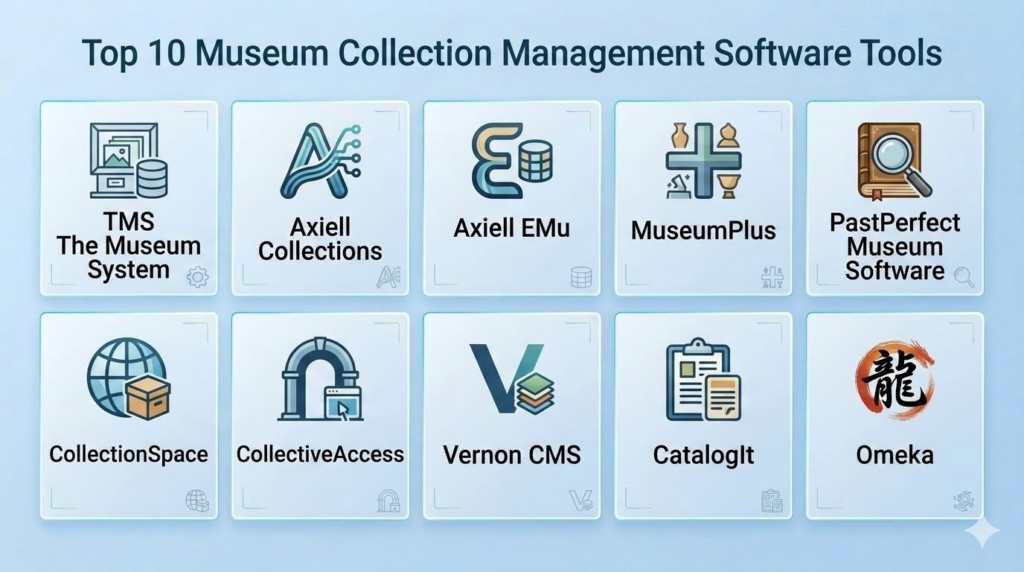
Introduction
Museum Collection Management Software helps museums, galleries, archives, cultural institutions, historical societies, and research collections organize, preserve, track, and publish information about objects and collections. These tools manage artifact records, provenance, accession details, condition reports, loans, exhibitions, images, rights information, locations, and conservation workflows.
As museums continue digitizing collections and improving public access, collection management platforms are becoming more important for daily operations and long-term preservation. Modern tools now support digital asset management, online catalogs, metadata standards, reporting, APIs, and cloud access. They help teams reduce spreadsheet dependency, improve object tracking, and maintain consistent documentation across departments.
Real-world use cases include:
- Cataloging artifacts, artworks, specimens, photographs, and archives
- Managing acquisitions, accessions, and deaccessions
- Tracking object locations, movement, loans, and exhibitions
- Managing conservation notes and condition reports
- Publishing selected collection records online
Evaluation Criteria for Buyers
- Cataloging and metadata flexibility
- Object location and movement tracking
- Digital asset management support
- Loan and exhibition management
- Conservation and condition reporting
- Search, reporting, and analytics
- Public access and online collection publishing
- Integration with DAM, websites, and archives
- Role-based access and audit controls
- Deployment model and long-term support
Best for: Museums, galleries, archives, universities, cultural heritage organizations, public collections, private collections, and research institutions managing structured collection records.
Not ideal for: Very small collections that only need a simple spreadsheet, basic photo archive, or lightweight inventory tool without formal museum workflows.
Key Trends in Museum Collection Management Software
- Cloud-based collection management is becoming more common for distributed museum teams
- Digital asset management is now a core requirement, not an optional add-on
- Public online collection access is becoming a major priority for museums
- Metadata standards and structured cataloging are becoming more important
- APIs and integrations are helping connect collections with websites and research platforms
- Conservation workflows are becoming more data-driven
- AI-assisted tagging and image enrichment are emerging, but still need human review
- Museums are focusing more on provenance, rights, and cultural sensitivity documentation
- Open-source platforms remain attractive for institutions with technical teams
- Security, permissions, and audit trails are becoming more important for sensitive collections
How We Selected These Tools
The tools in this list were selected based on practical museum and cultural heritage requirements.
- Recognition across museums, galleries, archives, and cultural institutions
- Depth of cataloging and object management features
- Support for collection documentation workflows
- Ability to manage images and digital assets
- Loan, exhibition, and conservation workflow support
- Flexibility for different collection types
- Integration and publishing capabilities
- Deployment options for small and large institutions
- Support ecosystem and implementation maturity
- Overall value for museums with different budgets and technical needs
Top 10 Museum Collection Management Software Tools
#1 — TMS The Museum System
Short description: TMS The Museum System is a well-known collection management platform used by museums with complex cataloging, registrar, loan, exhibition, and object tracking needs. It is designed for institutions that require structured data management and strong internal workflows. The system is suitable for large museums, galleries, and cultural organizations managing diverse collections. It is often selected when collection depth, governance, and reporting are high priorities.
Key Features
- Detailed object cataloging
- Accession and acquisition management
- Location and movement tracking
- Loan and exhibition workflows
- Condition and conservation records
- Reporting and data export tools
- Digital image and media association
Pros
- Strong fit for large museum operations
- Deep registrar and collection workflows
- Mature system for structured museum data
Cons
- May require expert implementation support
- Can feel complex for smaller teams
- Premium cost may not suit small museums
Platforms / Deployment
- Web / Desktop
- Cloud / Self-hosted / Hybrid varies by setup
Security & Compliance
- Role-based permissions available
- Audit and access controls may vary by configuration
- Additional certifications not publicly stated
Integrations & Ecosystem
TMS The Museum System is commonly used in environments where collection records need to connect with websites, reporting tools, digital assets, and institutional systems.
- Digital asset management systems
- Museum websites
- Reporting tools
- Data import and export workflows
- Public collection publishing systems
Support & Community
Support is typically vendor-led with implementation services, training, documentation, and professional support options for museums.
#2 — Axiell Collections
Short description: Axiell Collections is a web-based collection management platform designed for museums, archives, galleries, and cultural institutions. It supports cataloging, object management, location tracking, media handling, and collection publishing workflows. The platform is suitable for organizations looking for configurable workflows and browser-based access. It works well for institutions that need a modern system with broad cultural heritage coverage.
Key Features
- Web-based collection management
- Object cataloging and metadata control
- Image and digital media management
- Location and movement tracking
- Workflow configuration
- Search and reporting tools
- Public access and publishing options
Pros
- Strong cultural heritage focus
- Browser-based access improves usability
- Suitable for museums and archives
Cons
- Configuration may require planning
- Advanced workflows may need vendor support
- Pricing details vary by institution
Platforms / Deployment
- Web
- Cloud / Hybrid
Security & Compliance
- Role-based access support
- Authentication controls available
- Additional certifications not publicly stated
Integrations & Ecosystem
Axiell Collections supports cultural heritage workflows where collections need to connect with public discovery tools, digital media, and institutional systems.
- Public access portals
- Digital asset platforms
- Archive systems
- APIs
- Data migration workflows
Support & Community
Axiell provides professional support, onboarding, and implementation services for cultural organizations.
#3 — Axiell EMu
Short description: Axiell EMu is a collection management system known for handling complex museum, natural history, scientific, and research collections. It is suited for institutions with large datasets, detailed taxonomy, specimen records, and advanced collection structures. The platform is often chosen by museums that need flexible data modeling and deep documentation capabilities. It works best for institutions with dedicated collection management teams.
Key Features
- Advanced collection cataloging
- Natural history and research collection support
- Location and movement tracking
- Multimedia record support
- Conservation and condition documentation
- Flexible data structures
- Reporting and export capabilities
Pros
- Strong for complex and scientific collections
- Flexible data modeling
- Suitable for large museum environments
Cons
- Can require specialist administration
- May be too complex for small museums
- Implementation effort can be significant
Platforms / Deployment
- Windows / Web access varies by implementation
- Self-hosted / Hybrid
Security & Compliance
- Role-based permissions available
- Access control support
- Additional certifications not publicly stated
Integrations & Ecosystem
Axiell EMu is used in environments where complex collection data needs to connect with research systems, public access tools, and digital repositories.
- Research databases
- Public collection portals
- Digital media systems
- Reporting exports
- Data migration tools
Support & Community
Support is generally available through vendor services, implementation partners, and institutional technical teams.
#4 — MuseumPlus
Short description: MuseumPlus is a collection management platform designed for museums, galleries, cultural foundations, and heritage organizations. It helps teams manage object records, exhibitions, loans, conservation information, images, and documentation workflows. The platform is suitable for mid-sized and large institutions that need structured collection management. It is often used where collection workflows require consistency and governance.
Key Features
- Object and collection cataloging
- Loan and exhibition management
- Condition and conservation tracking
- Image and document association
- Search and reporting tools
- Rights and provenance documentation
- Multi-user workflow support
Pros
- Strong museum workflow coverage
- Suitable for structured collection operations
- Good fit for cultural institutions
Cons
- Advanced setup may require support
- Smaller museums may find it complex
- Pricing information varies
Platforms / Deployment
- Web / Desktop varies by version
- Cloud / Self-hosted / Hybrid
Security & Compliance
- Role-based permissions available
- Access management capabilities
- Additional certifications not publicly stated
Integrations & Ecosystem
MuseumPlus supports museum workflows that connect internal collections with websites, image systems, and reporting tools.
- Digital asset systems
- Public portals
- Reporting tools
- Data import and export
- Institutional databases
Support & Community
Vendor support and professional implementation services are generally available for institutional users.
#5 — PastPerfect Museum Software
Short description: PastPerfect Museum Software is a widely used collection management solution for small and mid-sized museums, historical societies, and cultural organizations. It helps manage artifacts, photographs, archives, library records, donors, and contacts. The platform is known for practical museum workflows and accessibility for smaller teams. It is a strong option for institutions that need collection management without heavy enterprise complexity.
Key Features
- Artifact and archive cataloging
- Photo and library record management
- Contact and donor management
- Accession tracking
- Loan management
- Reporting and labels
- Desktop and cloud options
Pros
- Good fit for small and mid-sized museums
- Practical and easy to understand
- Combines collections and contact management
Cons
- May not suit highly complex enterprise workflows
- Interface can feel traditional
- Integration depth may be limited
Platforms / Deployment
- Web / Windows
- Cloud / Desktop
Security & Compliance
- User access controls available
- Additional certifications not publicly stated
Integrations & Ecosystem
PastPerfect supports common museum workflows for cataloging, reporting, and collection access.
- Data import and export
- Image attachment workflows
- Reporting tools
- Contact management workflows
- Online collection publishing options
Support & Community
PastPerfect has strong support resources for small museums, including documentation, training, and customer assistance.
#6 — CollectionSpace
Short description: CollectionSpace is an open-source collection management system designed for museums, galleries, universities, and cultural heritage organizations. It supports cataloging, procedures, controlled vocabularies, and extensible data structures. The platform is well suited for institutions that need flexibility and have technical resources. It is a strong option for organizations seeking an open and customizable collection management foundation.
Key Features
- Open-source collection management
- Cataloging and procedural workflows
- Controlled vocabulary support
- Configurable data structures
- Object and media record management
- API-based extensibility
- Public access possibilities
Pros
- Open-source flexibility
- Good for custom museum workflows
- Strong extensibility for technical teams
Cons
- Requires technical expertise
- Implementation can be resource intensive
- Support depends on internal or partner capacity
Platforms / Deployment
- Web
- Self-hosted / Cloud through partners
Security & Compliance
- Access control capabilities available
- Additional certifications not publicly stated
Integrations & Ecosystem
CollectionSpace is useful when museums need open APIs and customized integrations with publishing or research systems.
- APIs
- Public collection websites
- Digital repository tools
- Data migration pipelines
- Metadata systems
Support & Community
Community and partner support are available, but institutions should plan for technical ownership.
#7 — CollectiveAccess
Short description: CollectiveAccess is an open-source collections management and publishing platform for museums, archives, and cultural heritage organizations. It supports flexible metadata, cataloging, digital assets, and public access websites. The platform is especially useful for organizations that need custom data models and online publishing. It suits teams with technical capacity or access to implementation partners.
Key Features
- Open-source collection management
- Flexible metadata modeling
- Digital asset support
- Public access publishing
- Search and discovery tools
- Custom workflows
- Multilingual support options
Pros
- Strong customization potential
- Good for public-facing collections
- Open-source model supports flexibility
Cons
- Technical setup required
- Not ideal for teams without IT support
- Support depends on community or partners
Platforms / Deployment
- Web
- Self-hosted / Cloud through partners
Security & Compliance
- Access control support available
- Additional certifications not publicly stated
Integrations & Ecosystem
CollectiveAccess supports cultural heritage publishing and flexible collection management use cases.
- Public collection portals
- Digital asset workflows
- Metadata import and export
- APIs
- Research databases
Support & Community
The platform has an open-source community and partner ecosystem, but institutions should define support responsibilities early.
#8 — Vernon CMS
Short description: Vernon CMS is a collection management system used by museums, galleries, archives, and heritage organizations. It supports cataloging, location tracking, exhibitions, loans, rights, and reporting workflows. The system is suitable for institutions needing strong documentation without overly complex enterprise implementation. It is a practical option for collection teams that value structured workflows and flexibility.
Key Features
- Object cataloging
- Location and movement tracking
- Exhibition and loan management
- Rights and reproduction records
- Conservation documentation
- Search and reporting
- Digital media association
Pros
- Strong museum workflow support
- Flexible for different collection types
- Suitable for mid-sized institutions
Cons
- Interface may require training
- Advanced integrations may need setup
- Pricing varies by institution
Platforms / Deployment
- Windows / Web options vary
- Self-hosted / Hybrid
Security & Compliance
- User permission controls available
- Additional certifications not publicly stated
Integrations & Ecosystem
Vernon CMS supports integrations with public access platforms, reporting systems, and collection publishing workflows.
- Public access tools
- Digital media systems
- Reporting exports
- Data migration tools
- Collection websites
Support & Community
Vendor support, documentation, and training are available for institutions using the platform.
#9 — CatalogIt
Short description: CatalogIt is a cloud-based collection management platform designed for museums, private collectors, historical societies, and smaller cultural organizations. It focuses on easy cataloging, image management, mobile access, and practical collection documentation. The platform is suitable for organizations that want quick adoption without heavy technical setup. It works well for small teams that need clean and accessible collection records.
Key Features
- Cloud-based cataloging
- Image and media management
- Mobile access
- Object location tracking
- Search and filtering
- Team collaboration
- Public sharing options
Pros
- Easy to use
- Strong fit for small collections
- Good mobile accessibility
Cons
- Less suitable for complex enterprise workflows
- Advanced registrar features may be limited
- Customization depth is lighter than enterprise tools
Platforms / Deployment
- Web / iOS / Android
- Cloud
Security & Compliance
- Account-based access controls available
- Additional certifications not publicly stated
Integrations & Ecosystem
CatalogIt focuses on practical cloud cataloging and simple sharing rather than complex enterprise integrations.
- Public sharing tools
- Image uploads
- Data export
- Team access
- Mobile workflows
Support & Community
Support is generally accessible for small teams, with onboarding resources and help documentation available.
#10 — Omeka
Short description: Omeka is a digital collections and online exhibition platform used by museums, libraries, archives, and academic institutions. While it is not always a full registrar-focused collection management system, it is valuable for publishing digital collections and curated exhibits online. It is especially useful for institutions focused on public access, education, and digital storytelling. It works best alongside or as a lighter alternative to traditional collection management software.
Key Features
- Digital collection publishing
- Online exhibition creation
- Metadata support
- Media management
- Themes and plugins
- Public access websites
- Academic and cultural heritage use cases
Pros
- Strong for online exhibits
- Flexible publishing options
- Useful for education and public access
Cons
- Not a full enterprise museum registrar system
- Requires technical setup for advanced customization
- Collection workflow depth may be limited
Platforms / Deployment
- Web
- Self-hosted / Cloud through hosted options
Security & Compliance
- User permissions available
- Additional certifications not publicly stated
Integrations & Ecosystem
Omeka supports digital publishing, exhibits, and cultural heritage access workflows.
- Plugins
- Metadata imports
- Digital archives
- Public websites
- Academic repositories
Support & Community
Omeka has an active academic and cultural heritage community, with documentation and community resources available.
Comparison Table
| Tool Name | Best For | Platform Supported | Deployment | Standout Feature | Public Rating |
|---|---|---|---|---|---|
| TMS The Museum System | Enterprise museums | Web, Desktop | Cloud, Self-hosted, Hybrid | Deep registrar workflows | N/A |
| Axiell Collections | Museums and archives | Web | Cloud, Hybrid | Configurable cultural heritage platform | N/A |
| Axiell EMu | Research and natural history collections | Windows, Web varies | Self-hosted, Hybrid | Complex collection data modeling | N/A |
| MuseumPlus | Mid-sized and large museums | Web, Desktop varies | Cloud, Self-hosted, Hybrid | Structured museum workflows | N/A |
| PastPerfect Museum Software | Small and mid-sized museums | Web, Windows | Cloud, Desktop | Practical collection and contact management | N/A |
| CollectionSpace | Technical museum teams | Web | Self-hosted, Cloud through partners | Open-source extensibility | N/A |
| CollectiveAccess | Custom digital collections | Web | Self-hosted, Cloud through partners | Flexible metadata and publishing | N/A |
| Vernon CMS | Heritage institutions | Windows, Web options vary | Self-hosted, Hybrid | Strong collection documentation workflows | N/A |
| CatalogIt | Small museums and collectors | Web, iOS, Android | Cloud | Simple cloud cataloging | N/A |
| Omeka | Digital exhibits and public access | Web | Self-hosted, Cloud hosted options | Online collection publishing | N/A |
Evaluation & Scoring of Museum Collection Management Software
| Tool Name | Core 25% | Ease 15% | Integrations 15% | Security 10% | Performance 10% | Support 10% | Value 15% | Weighted Total |
|---|---|---|---|---|---|---|---|---|
| TMS The Museum System | 9 | 6 | 8 | 7 | 8 | 8 | 6 | 7.6 |
| Axiell Collections | 8 | 7 | 8 | 7 | 8 | 8 | 7 | 7.6 |
| Axiell EMu | 9 | 6 | 7 | 7 | 8 | 8 | 6 | 7.4 |
| MuseumPlus | 8 | 7 | 7 | 7 | 8 | 7 | 6 | 7.2 |
| PastPerfect Museum Software | 7 | 8 | 6 | 6 | 7 | 8 | 8 | 7.2 |
| CollectionSpace | 7 | 5 | 8 | 6 | 7 | 6 | 8 | 6.9 |
| CollectiveAccess | 7 | 6 | 8 | 6 | 7 | 6 | 8 | 7.0 |
| Vernon CMS | 8 | 7 | 7 | 7 | 7 | 7 | 7 | 7.3 |
| CatalogIt | 6 | 9 | 5 | 6 | 7 | 7 | 8 | 6.9 |
| Omeka | 6 | 7 | 7 | 6 | 7 | 7 | 8 | 6.8 |
These scores are comparative and should be interpreted based on institutional needs. Enterprise museums may value deeper cataloging, registrar workflows, integrations, and governance more than ease of use. Smaller museums may prioritize affordability, simple setup, and practical cataloging. Open-source tools can offer excellent flexibility but often require stronger technical ownership. The best score for your organization depends on collection size, staff capacity, data complexity, public access goals, and long-term preservation strategy.
Which Museum Collection Management Software Tool Is Right for You?
Solo / Freelancer
Independent curators, private collectors, small galleries, and consultants usually need simple cataloging and image management. CatalogIt and Omeka are practical options when the goal is quick setup, easy access, and simple public sharing. PastPerfect Museum Software can also work well if the user needs more traditional museum-style records. Avoid heavy enterprise systems unless the collection has complex registrar, loan, or conservation workflows.
SMB
Small and mid-sized museums need reliable cataloging, accession tracking, reporting, and basic digital asset workflows. PastPerfect Museum Software, Vernon CMS, CatalogIt, and Axiell Collections can be good fits depending on budget and complexity. If public collection publishing is a major goal, Omeka or CollectiveAccess may be useful. The right choice should balance usability, support, data structure, and long-term scalability.
Mid-Market
Mid-sized museums, galleries, archives, and cultural organizations often need stronger workflows for loans, exhibitions, condition reporting, rights, and public access. Axiell Collections, MuseumPlus, Vernon CMS, and CollectiveAccess are strong candidates in this segment. Institutions with technical teams may consider CollectionSpace or CollectiveAccess for flexibility. Buyers should focus on migration support, reporting, access controls, and integration readiness.
Enterprise
Large museums, research institutions, natural history museums, and multi-site cultural organizations need mature systems that can manage complex data, departments, loans, exhibitions, and governance. TMS The Museum System, Axiell EMu, Axiell Collections, and MuseumPlus are better suited for these environments. Enterprise buyers should run detailed pilots using real data. They should also test permissions, audit trails, performance, reporting, integrations, and public publishing workflows.
Budget vs Premium
Budget-conscious institutions may prefer open-source or lightweight platforms such as CollectionSpace, CollectiveAccess, Omeka, or CatalogIt. These tools can reduce licensing costs but may require more internal planning or technical support. Premium systems usually provide stronger implementation services, deeper workflows, and enterprise scalability. The best approach is to compare total cost, including migration, training, hosting, customization, support, and long-term maintenance.
Feature Depth vs Ease of Use
TMS The Museum System, Axiell EMu, MuseumPlus, and Axiell Collections provide deeper collection management features for complex museum environments. CatalogIt, PastPerfect Museum Software, and Omeka are generally easier for small teams to adopt. Deeper systems can support stronger governance but may require more training. Easier systems can improve adoption but may not cover every advanced registrar workflow.
Integrations & Scalability
Museums planning digital access, research portals, DAM integration, or public websites should prioritize API support, export options, and metadata flexibility. CollectionSpace and CollectiveAccess are strong for technical customization, while enterprise tools often provide structured integration options. Institutions should also evaluate how well the system handles growth in records, media files, users, and locations. Scalability matters most when the collection is expanding or multiple departments need shared access.
Security & Compliance Needs
Museums may hold sensitive donor, provenance, cultural, loan, insurance, and rights information. Buyers should look for role-based permissions, audit logs, authentication controls, backup processes, and secure hosting practices. For cloud systems, ask vendors about encryption, data residency, backup recovery, and administrative access controls. If compliance certifications are not clearly stated, use “Not publicly stated” and request documentation during procurement.
Frequently Asked Questions
1. What is Museum Collection Management Software?
Museum Collection Management Software is a system used to document, organize, and manage museum objects, artworks, archives, specimens, photographs, and digital assets. It helps teams manage cataloging, object movement, condition reports, loans, exhibitions, and public access. Instead of relying on spreadsheets or disconnected files, museums can maintain structured and searchable collection records. This improves preservation, accountability, research, and visitor-facing digital access.
2. How much does Museum Collection Management Software cost?
Pricing varies widely based on collection size, number of users, deployment model, support needs, and implementation complexity. Some open-source platforms may reduce licensing costs but still require hosting, configuration, training, and maintenance. Premium enterprise systems usually involve licensing, migration, onboarding, and professional services. Museums should calculate total cost, not just subscription or license price.
3. What features should museums prioritize first?
Museums should prioritize accurate cataloging, accession tracking, object location management, image handling, search, reporting, and user permissions. Larger institutions should also prioritize loan management, exhibition workflows, conservation documentation, APIs, and audit trails. If public access is important, online publishing and metadata control become critical. The best feature set depends on the museum’s collection type, team size, and long-term digitization plan.
4. Are open-source collection management systems a good choice?
Open-source systems can be excellent for museums that need flexibility and have technical capacity. Tools like CollectionSpace, CollectiveAccess, and Omeka can support custom workflows and public access goals. However, they may require internal IT expertise or implementation partners for hosting, upgrades, configuration, and security. Small museums without technical support should evaluate whether open-source will truly reduce long-term workload.
5. Can these tools manage digital assets?
Many museum collection platforms support images, documents, audio, video, and related media files. Some systems include basic digital asset management, while others integrate with dedicated DAM platforms. Museums with large image libraries should carefully evaluate file handling, metadata linking, rights management, storage limits, and publishing workflows. Digital asset strategy is now central to modern collection management.
6. What is the difference between a collection management system and a digital asset management system?
A collection management system manages object records, provenance, accessions, loans, exhibitions, condition reports, and museum workflows. A digital asset management system focuses on storing, organizing, and distributing media files such as images, videos, and documents. Many museums use both systems together. The collection management system usually acts as the authoritative record, while the DAM manages high-volume media assets.
7. How difficult is migration from spreadsheets or older systems?
Migration can be one of the most complex parts of implementation. Museums often need to clean duplicate records, standardize metadata, map fields, validate images, and review object relationships. A good migration plan should include test imports, staff review, backup copies, and clear data governance rules. Institutions should not rush migration because poor data quality can reduce the value of the new system.
8. Can Museum Collection Management Software publish collections online?
Yes, many platforms support public access through online catalogs, portals, APIs, or website integrations. Some tools are especially strong for public publishing and digital exhibitions. Museums should decide which records, images, rights information, and metadata fields can be made public. Publishing workflows should include review controls to avoid exposing sensitive or restricted collection information.
9. What security features should museums look for?
Museums should look for role-based permissions, secure authentication, audit logs, backups, encryption, and administrative controls. Sensitive records may include donor information, object valuations, location data, repatriation documentation, and restricted cultural materials. Cloud platforms should provide clear hosting, backup, and access control information. If security certifications are not clearly available, buyers should ask vendors directly before purchase.
10. How should museums choose the right platform?
Museums should start by defining collection size, staff roles, workflow complexity, digitization goals, public access needs, and budget. Then they should shortlist tools that match their operational model rather than choosing the most feature-heavy platform. Running a pilot with real collection records is highly recommended. The final decision should consider usability, migration effort, support quality, integrations, security, and long-term sustainability.
Conclusion
Museum Collection Management Software plays a central role in preserving, organizing, and sharing cultural heritage. The best platform is not always the most advanced or expensive one; it is the one that fits the institution’s collection complexity, team capacity, public access goals, and long-term digital strategy. Large museums and research institutions may need deep systems such as TMS The Museum System, Axiell EMu, Axiell Collections, or MuseumPlus, while smaller museums and historical societies may benefit from PastPerfect Museum Software, CatalogIt, Omeka, or open-source options. Institutions with strong technical teams may prefer CollectionSpace or CollectiveAccess because of their flexibility and customization potential. Before selecting a tool, museums should shortlist realistic options, test real collection workflows, validate data migration needs, review security controls, and confirm support expectations. A thoughtful pilot will help ensure the chosen system improves documentation, strengthens accountability, supports digital access, and protects collection knowledge for the future.
