MOTOSHARE 🚗🏍️
Rent Bikes & Cars Directly from Owners
Motoshare connects vehicle owners with people who need bikes and cars on rent. Owners earn from idle vehicles, and renters get flexible ride options.
Visit Motoshare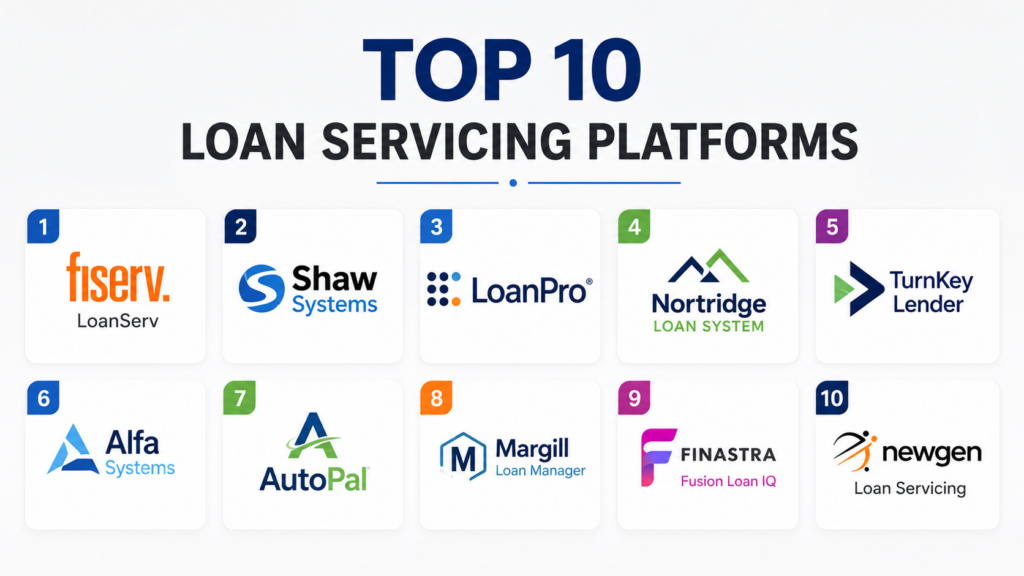
Introduction
Loan Servicing Platforms help banks, lenders, credit unions, fintech companies, and financial institutions manage loans after origination. These platforms support payment processing, escrow management, collections, borrower communication, compliance workflows, reporting, and account servicing across mortgage, consumer, SME, and commercial lending operations.
Modern lending environments require faster servicing workflows, digital borrower experiences, automated compliance, and scalable operations. Manual servicing processes often create payment errors, operational inefficiencies, compliance risk, and poor borrower experiences. Loan servicing platforms help automate repayment schedules, improve collections management, centralize servicing workflows, and integrate servicing operations with accounting, CRM, analytics, and regulatory reporting systems.
Real-world use cases include:
- Mortgage and consumer loan servicing
- Payment and collections management
- Escrow and repayment tracking
- Borrower communication workflows
- Delinquency and recovery management
- Regulatory reporting and compliance monitoring
Key evaluation criteria for buyers include:
- Loan servicing automation
- Payment processing capabilities
- Compliance and audit controls
- Borrower experience functionality
- Reporting and analytics
- Integration ecosystem
- Scalability and performance
- Workflow configurability
- Security and governance
- Cloud deployment flexibility
Best for: Banks, mortgage lenders, fintech lenders, credit unions, private lenders, and enterprise financial institutions managing moderate to high loan servicing volumes.
Not ideal for: Very small lenders with minimal servicing operations, organizations needing only basic accounting software, or businesses without structured lending workflows.
Key Trends in Loan Servicing Platforms
- AI-driven collections and borrower engagement are improving repayment efficiency.
- Cloud-native servicing platforms are replacing legacy on-premise systems.
- Automated compliance tracking is becoming a major operational priority.
- Digital borrower self-service portals are becoming standard expectations.
- API-first architectures are improving integrations with banking and lending ecosystems.
- Real-time analytics are improving delinquency and repayment visibility.
- Embedded payment processing is reducing operational friction.
- Workflow automation is helping lenders reduce manual servicing effort.
- Multi-product servicing platforms are supporting broader lending operations.
- Fraud monitoring and borrower identity verification integrations are becoming more common.
How We Selected These Tools
The platforms below were selected using practical lending operations and servicing technology evaluation criteria.
- Strong market presence in lending and servicing operations
- Breadth of loan servicing functionality
- Automation and payment workflow capabilities
- Compliance and governance readiness
- Integration ecosystem maturity
- Reporting and analytics support
- Scalability for enterprise servicing environments
- Security controls and auditability
- Borrower communication functionality
- Vendor reputation in lending technology
Top 10 Loan Servicing Platforms
#1 — Fiserv LoanServ
Short description : Fiserv LoanServ is an enterprise loan servicing platform designed for banks, mortgage lenders, and financial institutions managing large servicing portfolios. The platform supports payment processing, escrow management, collections, reporting, and compliance workflows. It is known for enterprise scalability and broad servicing functionality. LoanServ is especially suitable for large financial institutions requiring centralized servicing operations.
Key Features
- Mortgage and consumer loan servicing
- Escrow management
- Collections and delinquency tracking
- Compliance reporting
- Payment processing workflows
- Borrower communication tools
- Enterprise reporting and analytics
Pros
- Strong enterprise servicing capabilities
- Scalable for high loan volumes
- Broad operational workflow coverage
Cons
- Enterprise implementation complexity
- Requires experienced administration teams
- Smaller lenders may not need full feature depth
Platforms / Deployment
- Web
- Cloud / Hybrid
Security & Compliance
- SSO/SAML
- MFA
- RBAC
- Encryption
- Audit logs
Integrations & Ecosystem
LoanServ integrates with banking systems, payment platforms, collections tools, CRM systems, and compliance environments.
- Core banking systems
- Payment processors
- APIs
- CRM platforms
- Compliance services
- Analytics systems
Support & Community
Fiserv provides enterprise onboarding, implementation consulting, training resources, and financial services support programs.
#2 — Shaw Systems
Short description : Shaw Systems provides loan servicing software for consumer, commercial, automotive, and specialty lending operations. The platform supports payment processing, collections, borrower communication, and operational automation. It is known for flexibility across multiple lending products. Shaw Systems is particularly useful for lenders seeking configurable servicing workflows.
Key Features
- Multi-product loan servicing
- Payment management
- Collections workflows
- Borrower account management
- Delinquency tracking
- Workflow automation
- Reporting dashboards
Pros
- Strong flexibility across lending products
- Useful workflow automation
- Good servicing scalability
Cons
- UI modernization varies
- Enterprise configuration can require planning
- Smaller ecosystem visibility than larger vendors
Platforms / Deployment
- Web
- Cloud / Hybrid
Security & Compliance
- Encryption
- RBAC
- Audit logs
- Enterprise security controls
Integrations & Ecosystem
Shaw Systems integrates with lending systems, payment environments, collections workflows, and analytics platforms.
- Payment systems
- APIs
- CRM tools
- Collections platforms
- Reporting systems
Support & Community
The vendor provides onboarding services, customer support, implementation guidance, and lending workflow consulting.
#3 — LoanPro
Short description : LoanPro is a modern API-first loan servicing platform supporting consumer lending, fintech operations, and digital lending environments. The platform helps lenders automate repayment processing, collections, borrower management, and servicing workflows. It is especially useful for fintech lenders and organizations modernizing lending infrastructure.
Key Features
- API-first servicing architecture
- Payment automation
- Collections management
- Borrower self-service portals
- Loan account management
- Workflow automation
- Reporting and analytics
Pros
- Strong API and developer flexibility
- Modern cloud-native architecture
- Good fit for fintech lending environments
Cons
- Advanced custom workflows require technical resources
- Enterprise migration planning may be needed
- Traditional lenders may require operational adaptation
Platforms / Deployment
- Web
- Cloud
Security & Compliance
- Encryption
- RBAC
- Audit logs
- Enterprise security controls
Integrations & Ecosystem
LoanPro integrates with payment gateways, fintech systems, CRM platforms, analytics tools, and compliance services.
- Payment gateways
- APIs
- CRM systems
- Analytics platforms
- Fraud monitoring tools
- Compliance services
Support & Community
LoanPro provides developer documentation, onboarding support, implementation assistance, and customer success services.
#4 — Nortridge Loan System
Short description : Nortridge Loan System is a loan servicing and lending management platform supporting consumer, commercial, mortgage, and specialty lending operations. The platform provides configurable servicing workflows, payment management, collections support, and reporting functionality. It is useful for lenders seeking operational flexibility across multiple lending products.
Key Features
- Loan servicing automation
- Payment tracking
- Collections management
- Borrower communication tools
- Reporting and analytics
- Workflow configuration
- Multi-product lending support
Pros
- Flexible servicing workflows
- Supports multiple lending products
- Useful reporting capabilities
Cons
- UI modernization varies
- Advanced customization may require support
- Enterprise deployment planning is important
Platforms / Deployment
- Web / Windows
- Cloud / Hybrid
Security & Compliance
- Encryption
- RBAC
- Audit logs
- Security controls vary by deployment
Integrations & Ecosystem
Nortridge integrates with payment systems, accounting tools, borrower communication environments, and lending workflows.
- APIs
- Payment systems
- Accounting platforms
- CRM tools
- Reporting environments
Support & Community
Nortridge provides onboarding assistance, implementation consulting, documentation, and customer support resources.
#5 — TurnKey Lender
Short description : TurnKey Lender is an AI-powered lending automation platform supporting loan origination, servicing, underwriting, collections, and borrower engagement workflows. It helps lenders automate lending operations across consumer, SME, and digital lending products. The platform is suitable for lenders seeking automation-focused servicing operations.
Key Features
- AI-driven servicing automation
- Collections management
- Borrower engagement workflows
- Payment tracking
- Underwriting support
- Compliance workflows
- Analytics dashboards
Pros
- Strong automation functionality
- Supports multiple lending products
- Useful for digital lending transformation
Cons
- Mortgage-specific servicing depth varies
- Advanced workflows may require customization
- Integration planning is important
Platforms / Deployment
- Web
- Cloud
Security & Compliance
- Encryption
- RBAC
- Audit logs
- Enterprise security controls
Integrations & Ecosystem
TurnKey Lender integrates with payment systems, KYC providers, CRM platforms, fraud detection tools, and compliance workflows.
- APIs
- Payment systems
- KYC providers
- CRM systems
- Fraud detection services
Support & Community
The platform provides onboarding services, implementation support, workflow consulting, and enterprise customer guidance.
#6 — Alfa Systems
Short description : Alfa Systems is an enterprise loan servicing and asset finance platform designed for automotive finance, equipment finance, and commercial lending organizations. It supports servicing automation, collections, payment management, and operational reporting. Alfa Systems is especially suitable for large-scale lending environments requiring complex servicing workflows.
Key Features
- Asset finance servicing
- Payment management
- Collections workflows
- Workflow automation
- Reporting and analytics
- Portfolio management
- Compliance support
Pros
- Strong enterprise servicing capabilities
- Good scalability for complex finance operations
- Useful workflow automation
Cons
- Enterprise deployment complexity
- Requires implementation planning
- Smaller lenders may find it too complex
Platforms / Deployment
- Web
- Cloud / Hybrid
Security & Compliance
- SSO/SAML
- RBAC
- Encryption
- Audit logs
Integrations & Ecosystem
Alfa Systems integrates with accounting tools, payment systems, CRM platforms, analytics environments, and enterprise finance workflows.
- APIs
- Accounting systems
- CRM platforms
- Payment processors
- Analytics tools
Support & Community
Alfa provides implementation consulting, onboarding services, enterprise support, and financial services guidance.
#7 — AutoPal
Short description : AutoPal is a loan servicing platform focused on consumer and automotive lending operations. It helps lenders manage payments, collections, borrower communications, and servicing workflows through cloud-based operational tools. The platform is especially useful for lenders seeking configurable servicing workflows and payment automation.
Key Features
- Consumer loan servicing
- Automated payment tracking
- Collections workflows
- Borrower account management
- Reporting dashboards
- Workflow automation
- Cloud-based servicing
Pros
- Strong payment automation support
- Good operational flexibility
- Useful for automotive and consumer lenders
Cons
- Enterprise scalability varies
- Smaller ecosystem visibility
- Advanced reporting depth depends on setup
Platforms / Deployment
- Web
- Cloud
Security & Compliance
- Encryption
- RBAC
- Audit logs
- Secure servicing controls
Integrations & Ecosystem
AutoPal integrates with payment gateways, accounting tools, borrower communication systems, and servicing workflows.
- Payment gateways
- APIs
- Accounting systems
- CRM tools
- Collections workflows
Support & Community
AutoPal provides onboarding support, implementation guidance, customer service resources, and workflow assistance.
#8 — Margill Loan Manager
Short description : Margill Loan Manager is a lending and servicing platform used for commercial, private, and consumer lending operations. It helps lenders automate interest calculations, repayment schedules, borrower tracking, and reporting workflows. The platform is useful for organizations requiring flexible servicing calculations and operational management.
Key Features
- Loan repayment tracking
- Interest calculation automation
- Borrower management
- Reporting and analytics
- Payment scheduling
- Delinquency tracking
- Commercial lending support
Pros
- Strong calculation flexibility
- Useful for specialized lending workflows
- Good reporting functionality
Cons
- Enterprise workflow depth varies
- UI modernization may vary
- Large-scale integrations may require customization
Platforms / Deployment
- Windows / Web
- Cloud / Self-hosted
Security & Compliance
- Encryption
- RBAC
- Audit logs
- Security controls vary by deployment
Integrations & Ecosystem
Margill integrates with accounting systems, reporting tools, payment workflows, and operational lending environments.
- Accounting systems
- APIs
- Reporting tools
- Payment systems
- CRM environments
Support & Community
Margill provides onboarding resources, customer support, documentation, and lending workflow guidance.
#9 — Finastra Fusion Loan IQ
Short description : Finastra Fusion Loan IQ is an enterprise-grade loan servicing platform designed for syndicated, commercial, and corporate lending operations. It supports complex servicing workflows, payment processing, compliance, and operational management for global financial institutions. The platform is best suited for large enterprise lending environments.
Key Features
- Syndicated loan servicing
- Corporate lending workflows
- Payment and settlement management
- Compliance support
- Reporting and analytics
- Portfolio management
- Workflow automation
Pros
- Strong enterprise servicing depth
- Suitable for global financial institutions
- Good support for complex lending structures
Cons
- Enterprise implementation complexity
- Requires experienced operational teams
- Not ideal for smaller lenders
Platforms / Deployment
- Web
- Cloud / Hybrid / On-premise
Security & Compliance
- SSO/SAML
- MFA
- RBAC
- Encryption
- Audit logs
Integrations & Ecosystem
Fusion Loan IQ integrates with treasury systems, finance platforms, reporting tools, payment environments, and enterprise banking systems.
- Core banking systems
- APIs
- Treasury systems
- Reporting tools
- Payment platforms
Support & Community
Finastra provides enterprise onboarding, implementation consulting, training programs, and global financial services support.
#10 — Newgen Loan Servicing
Short description : Newgen Loan Servicing helps financial institutions automate servicing workflows, payment tracking, borrower communication, compliance management, and operational reporting. The platform supports enterprise workflow orchestration and lending automation across multiple lending products. It is suitable for lenders seeking scalable workflow-driven servicing operations.
Key Features
- Loan servicing automation
- Payment processing workflows
- Compliance tracking
- Workflow orchestration
- Borrower onboarding and communication
- Reporting dashboards
- Document management
Pros
- Strong workflow automation capabilities
- Useful enterprise servicing functionality
- Good compliance support
Cons
- Enterprise deployment planning required
- Workflow customization may require expertise
- Smaller lenders may not need full functionality
Platforms / Deployment
- Web
- Cloud / Hybrid
Security & Compliance
- SSO/SAML
- Encryption
- RBAC
- Audit logs
Integrations & Ecosystem
Newgen integrates with lending systems, banking platforms, analytics environments, compliance services, and borrower communication tools.
- APIs
- Banking systems
- CRM platforms
- Compliance services
- Reporting tools
Support & Community
Newgen provides onboarding services, implementation consulting, documentation, workflow guidance, and enterprise customer support.
Comparison Table Top 10
| Tool Name | Best For | Platform Supported | Deployment | Standout Feature | Public Rating |
|---|---|---|---|---|---|
| Fiserv LoanServ | Enterprise servicing operations | Web | Cloud / Hybrid | Large-scale loan servicing | N/A |
| Shaw Systems | Multi-product lending | Web | Cloud / Hybrid | Flexible servicing workflows | N/A |
| LoanPro | Fintech servicing environments | Web | Cloud | API-first servicing architecture | N/A |
| Nortridge Loan System | Configurable lending operations | Web, Windows | Cloud / Hybrid | Multi-product flexibility | N/A |
| TurnKey Lender | AI-driven servicing automation | Web | Cloud | AI-powered lending workflows | N/A |
| Alfa Systems | Asset and commercial finance | Web | Cloud / Hybrid | Enterprise finance servicing | N/A |
| AutoPal | Automotive and consumer lending | Web | Cloud | Payment automation workflows | N/A |
| Margill Loan Manager | Commercial and private lending | Web, Windows | Cloud / Self-hosted | Flexible repayment calculations | N/A |
| Finastra Fusion Loan IQ | Syndicated and corporate lending | Web | Cloud / Hybrid / On-premise | Complex lending operations | N/A |
| Newgen Loan Servicing | Enterprise workflow automation | Web | Cloud / Hybrid | Workflow orchestration | N/A |
Evaluation & Scoring of Loan Servicing Platforms
| Tool Name | Core 25% | Ease 15% | Integrations 15% | Security 10% | Performance 10% | Support 10% | Value 15% | Weighted Total |
|---|---|---|---|---|---|---|---|---|
| Fiserv LoanServ | 9.2 | 7.5 | 8.8 | 9.0 | 9.0 | 8.8 | 7.5 | 8.6 |
| Shaw Systems | 8.5 | 7.8 | 8.2 | 8.5 | 8.4 | 8.0 | 8.0 | 8.2 |
| LoanPro | 8.8 | 8.2 | 9.0 | 8.5 | 8.6 | 8.2 | 8.2 | 8.5 |
| Nortridge Loan System | 8.2 | 7.8 | 8.0 | 8.2 | 8.2 | 7.8 | 8.2 | 8.0 |
| TurnKey Lender | 8.6 | 8.0 | 8.5 | 8.5 | 8.5 | 8.2 | 8.0 | 8.4 |
| Alfa Systems | 8.8 | 7.2 | 8.5 | 8.8 | 8.8 | 8.4 | 7.4 | 8.3 |
| AutoPal | 7.8 | 8.2 | 7.8 | 8.0 | 8.0 | 7.8 | 8.5 | 8.0 |
| Margill Loan Manager | 7.8 | 7.8 | 7.5 | 8.0 | 8.0 | 7.8 | 8.4 | 7.9 |
| Finastra Fusion Loan IQ | 9.0 | 7.0 | 8.8 | 9.0 | 9.0 | 8.5 | 7.2 | 8.4 |
| Newgen Loan Servicing | 8.5 | 7.8 | 8.5 | 8.6 | 8.5 | 8.2 | 8.0 | 8.3 |
These scores are comparative and intended to help buyers evaluate strengths across loan servicing platforms. Enterprise-focused systems generally score higher in governance, scalability, integrations, and compliance readiness, while lighter cloud-native platforms often provide stronger usability and faster deployment. Buyers should validate payment workflows, borrower servicing operations, reporting requirements, integrations, and compliance controls through pilot implementations before final vendor selection.
Which Loan Servicing Platform Is Right for You?
Solo / Freelancer
Independent lenders and very small lending operations often benefit from lightweight and easier-to-manage servicing tools. AutoPal and Margill Loan Manager can provide sufficient servicing functionality without requiring enterprise-scale administration or infrastructure investment.
SMB
Small and mid-sized lenders should prioritize automation, borrower communication, manageable deployment effort, and payment processing flexibility. LoanPro, TurnKey Lender, Nortridge, and AutoPal are practical choices for organizations modernizing servicing operations while maintaining operational flexibility.
Mid-Market
Mid-market lenders generally require stronger integrations, analytics, compliance workflows, and servicing scalability. Shaw Systems, Newgen Loan Servicing, LoanPro, and TurnKey Lender provide balanced functionality for organizations scaling lending operations and digital servicing workflows.
Enterprise
Large banks, enterprise lenders, and financial institutions usually require advanced governance, payment processing, compliance controls, integrations, and scalability. Fiserv LoanServ, Finastra Fusion Loan IQ, and Alfa Systems are strong candidates for enterprise-scale servicing operations.
Budget vs Premium
Budget-focused organizations should avoid overinvesting in highly complex enterprise servicing systems if operational scale does not justify them. Premium enterprise platforms provide broader automation, governance, compliance readiness, and integration capabilities but often require larger implementation and operational investment.
Feature Depth vs Ease of Use
Enterprise servicing platforms deliver stronger automation, analytics, governance, and compliance functionality but may require more setup and administration. Cloud-native platforms like LoanPro and TurnKey Lender generally provide easier onboarding and modern servicing workflows. Buyers should align platform complexity with operational maturity and servicing volume.
Integrations & Scalability
Loan servicing platforms should integrate with payment gateways, banking systems, accounting tools, CRM platforms, collections workflows, analytics environments, and compliance services. API maturity is especially important for organizations modernizing lending operations. Scalability testing should include repayment processing, borrower volume, and collections workflows.
Security & Compliance Needs
Loan servicing platforms manage highly sensitive borrower and financial data, making governance critical. Buyers should prioritize SSO/SAML, MFA, RBAC, encryption, audit logs, secure APIs, and compliance-ready reporting workflows. Financial institutions operating in regulated environments should validate auditability and operational transparency carefully.
Frequently Asked Questions FAQs
1. What is a Loan Servicing Platform?
A Loan Servicing Platform is software that helps lenders manage loans after origination. These platforms support payment processing, borrower communication, collections management, escrow tracking, compliance workflows, and operational reporting. Modern servicing systems centralize workflows into structured operational environments. They are widely used by banks, fintech lenders, mortgage companies, and financial institutions.
2. Why do lenders need loan servicing software?
Loan servicing involves repetitive operational tasks, payment management, compliance requirements, borrower communication, and collections workflows. Servicing platforms help automate these processes and improve operational consistency. They also reduce manual servicing effort and improve borrower experience. Scalability and reporting visibility are major benefits.
3. What features matter most in a servicing platform?
Important features include payment automation, borrower portals, collections workflows, compliance management, reporting, integrations, workflow automation, and security controls. Borrower experience functionality is increasingly important in modern lending environments. API support and scalability also matter for long-term operational growth.
4. Are cloud-based servicing platforms better than legacy systems?
Cloud-based servicing platforms usually provide stronger scalability, accessibility, collaboration, and integration flexibility compared with older legacy systems. They also simplify operational updates and maintenance. However, some financial institutions may still require hybrid or on-premise deployments for governance or operational reasons.
5. How important are integrations in loan servicing?
Integrations are extremely important because servicing workflows depend on payment gateways, banking systems, accounting platforms, collections environments, CRM systems, and compliance services. Weak integrations create operational bottlenecks and manual reconciliation work. Strong APIs improve workflow automation and borrower servicing efficiency.
6. Can AI improve servicing operations?
AI can help automate collections prioritization, repayment forecasting, borrower engagement, fraud detection, and operational analytics. It can reduce manual servicing effort and improve operational efficiency. However, lenders still require governance, auditability, and operational oversight for regulated servicing environments. Buyers should evaluate explainability and workflow controls carefully.
7. How long does servicing platform implementation usually take?
Implementation timelines vary depending on workflow complexity, servicing volume, integrations, and compliance requirements. Smaller cloud-native platforms may deploy relatively quickly, while enterprise servicing implementations often require phased rollouts and operational redesign. Payment workflows and compliance reporting should be tested carefully before deployment.
8. What are common mistakes during platform selection?
Common mistakes include underestimating integration complexity, focusing only on payment functionality, ignoring collections workflows, and failing to involve servicing teams early. Some organizations also underestimate reporting and scalability requirements. Running pilot servicing workflows helps reduce operational and implementation risk.
9. What security features should lenders prioritize?
Lenders should prioritize SSO/SAML, MFA, RBAC, encryption, audit logs, secure APIs, and compliance-ready reporting. Loan servicing systems manage highly sensitive borrower and financial information, making governance extremely important. Operational transparency and auditability should also be evaluated carefully during vendor selection.
10. How should organizations choose the right servicing platform?
Organizations should evaluate servicing volume, workflow complexity, borrower experience goals, compliance requirements, integrations, and scalability needs before selecting a platform. Shortlisting vendors, testing repayment workflows, validating integrations, and reviewing support quality are essential steps. The best platform is the one that improves operational efficiency, compliance, and borrower servicing without creating unnecessary administrative overhead.
Conclusion
Loan Servicing Platforms have become essential for lenders modernizing repayment workflows, borrower engagement, collections management, and compliance operations across mortgage, consumer, commercial, and digital lending environments. As lending operations become more automated and data-driven, organizations need servicing platforms capable of supporting payment processing, workflow automation, reporting, integrations, and secure borrower communication at scale. The best platform depends on operational size, servicing complexity, lending products, compliance obligations, and integration requirements. Fiserv LoanServ and Finastra Fusion Loan IQ remain strong enterprise choices for large financial institutions, while LoanPro and TurnKey Lender provide modern cloud-native servicing capabilities for fintech and digital lending operations. Alfa Systems and Shaw Systems are strong options for complex enterprise lending workflows, while AutoPal and Margill Loan Manager offer practical servicing functionality for specialized lending environments. The smartest next step is to shortlist platforms, validate repayment and collections workflows, test integrations and reporting capabilities, review compliance controls, run pilot servicing scenarios, and select the platform that best aligns with operational complexity, servicing strategy, and long-term lending modernization goals.

Short, clear, and informative. Nicely done.