Shivneri
Shivneri Fort is one of the most magnificent as well as historically rich forts of India. It is situated at a distance of approximately 90 km from the Pune city of Maharashtra. The fort dates back to the time period when Shivaji was not even born yet. Shivneri Fort was built under the aegis of Sahaji, the father of Shivaji, who wanted a strong fortification that could protect his family from the enemies. Infact, Jijabai (Shivaji's mother) spent the days of her pregnancy here and it was here…
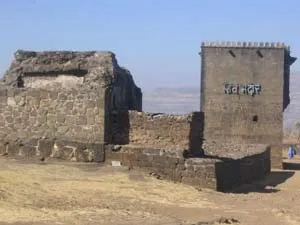
About Shivneri
Shivneri Fort is one of the most magnificent as well as historically rich forts of India. It is situated at a distance of approximately 90 km from the Pune city of Maharashtra. The fort dates back to the time period when Shivaji was not even born yet. Shivneri Fort was built under the aegis of Sahaji, the father of Shivaji, who wanted a strong fortification that could protect his family from the enemies. Infact, Jijabai (Shivaji’s mother) spent the days of her pregnancy here and it was here only that Shivaji Maharaj was born, in the year 1627.
Almost the entire childhood of Shivaji was spent playing inside the compound of the fort. He received most of his basic education here only and the lessons he learnt here were responsible, to quite an extent, in shaping his personality as a great ruler. Apart from its connection with Chhatrapati Shivaji, the fort is also quite popular for its magnificent architecture. To make the Shivneri Fort enemy proof, Sahaji ordered the construction of seven massive gates. One has to go through all the seven to gain entrance into the fort.
History
The wide base of the fort is towards the south and the narrow point is towards the north. The ascending path to the fort is defended by seven gates, the fifth one being armoured with anti-elephant spikes. The fort has several rock-hew cisterns and ponds, of which two large ones are known as Ganga and Jumuna. Today, there are only a few structures remaining in the fort. At one end there is a ruined stable and at the other end a mosque of the Mughal period. The house where shivaji was born (in February, 1630 AD) has been recently restored and a temple with statues of Shivaji and Jijabai called Shivakunja, has also been built. Sir Richard Temple in his book Shivaji and the Rise Marathas wrote about Shivaneri: You will see what a rugged precipitous place this is and what a fitting spot it was for a hero to be born in!
Junnar means “Jirna Nagar”, one of the oldest cities of ancient India. The Shaka dynasty ruled here. Gautamiputra Satkarni, who was a Satvaahan king, defeated the Shakas to establish his rule. The era of Satvaahan is the most glorious one, as many artistic works were carried out during their rule. Junnar became their capital city. This was the golden era of our culture. Here more than 100 caves were carved out in the mountains surrounding Junnar. The mountain on which fortification was constructed, is well protected by steep scarps, and is the most suitable for constructing caves. Here 64 caves were carved, and eight inscriptions are found here. After the Satavahanas, the Shivneri for was occupied by the Shilaharas, the Yadavas, the Bahamanis and the Mughals. In 1599 AD the hill fort was granted to Shivaji’s grandfather, Maloji Bhosale and passed down to Shahaji. Though Shivaji was born here, he had to surrender the fort to the Mughals and could not take it back in his lifetime.
Shivaji Maharaj left this fort in 1632 and it went into the hands of Mughals in 1637. In 1650 the local fishermen refuted against them. The folks lost to the rulers and were assassinated cruelly on the fort. In 1678 the Marathas raided Junnar, but attempt to capture Shivneri was futile. Shahu Maharaj brought the fort under his control forty years later. Later it was under the control of Peshwas.
The Shivneri cluster forts, comprising Harishchandragad, Junnar, Jivadhan, etc. was very important strategically, because it controlled the ancient Name Ghat Pass.
Interesting things to Visit
Badami Talav, a small pond situated in the heart of the fort, is one of its most endearing features. In the vicinity of the pond is a magnificent statue of Jijabai, along with her son Shivaji. There are a number of structures near the Shivneri Fort that are worth having a look at. Amongst them is a temple dedicated to Goddess Shivani. The local people of the area believe that Shivaji was named so, after the Goddess only. Then, there are the splendid Nane Ghat and the Jivdhan Fort. So, whenever you visit Pune, make sure to pay a visit to the historical fort also.
Near to the fort is Nane Ghat, providing a great view of Konkan Reigon and beautiful scenery. Very close to it is Jivdhan which is famus for trekking. One has to pass through seven doors to enter actual fort. At the center of the fort is a waterpond, ‘Badami Talav’ with statue of Jijabai with son Shivaji, to the south of it.
Shiv Janmasthan:
This is the place on the fort where the birth of Shivaji Maharaj took place. This place is named as Shiv Mandir. Ahead of Shiv Mandir there is a huge water tank.
Kadelot point :
This is the place where prisoners were punished by throwing them down the fort. This point is on the northern end of the fort.
Shiv Kunj :
Shiv Kunj is a monument constructed by the state government, in honor of Chatrapati Shivaji Maharaj. Inside Shiv Kunj there is an idol of Bal Shivaji and Jijabai made of “Panchdhatu” (An alloy of 5 metals.)
Kamani Masjid :
In front of Shiv Kunj on can see this Kamani Masjid. It might have been named Kamani because the top of this structure is like bow that is called as Kaman in Hindi. On the east-facing wall there is an inscription in Urdu.
Ganga Jamuna :
These are the water cisterns behind the Shiv Kunj. Water in these cisterns is potable. On whole of Shivneri there are more than 10 water tanks.
Koli Chauthara
This monument is built in the place where Mughals killed thousands of Koli soldiers in the year 1650.
Ambarkhana :
Every fort needs to have a warehouse for its storage of grains and food products. Ambarkhana is the place where huge amount of grain can be stored. The caretakers here keep this place very clean.When descending/ascending through the way near Ambarkhana all the seven doors of the fort can be visited. These doors help us to imagine the strength this fort would have given to its defender. The sequence of these doors is as follows
Badami talao:
At the center of the fort is a small lake, which provides for a good photo opportunity. It is flanked to the south by a large statue of a young Shivaji and his mother Jijabai.
Sound and light show:
The state government has started a light and sound show with a lot of fanfare at the fort on the lines of the show at Purana quila in New Delhi.
Temple of goddess Shivai:
The temple has a historic significance as Shivaji (who was also born at this very fort) was named after the goddess Shivai.
Buddhist caves:
There are hundreds of caves in and around the mountains of Junnar and several within the vicinity of Shivneri fort. Some of the caves located around Naneghat are known to be more than a thousand years old.
Nearest Visiting places
- Kaman Take
- Kadelot Tok
- Koli Chouthara
- Dongarmatha (the top of the fort).
- Khodad
- Arvi
- Kukadi dam nearby
Hotels/Lodge/Accommodation
- Hotel Platinum (91-9850956421, 91-9922348234) in Annarpur, Junnar
- Hotel Aashiyana in Junnar or the state guest house (021-23222002).
Help Line/Phone Number
Karla Caves is an complex of ancient Buddhist Indian rock-cut architecture cave shrines built over the period of 3rd to 2nd century B.C. Even though the caves were constructed over a period of time and the oldest one is believed to date back to 160 BC. Located in Karli near Lonavala, Maharashtra, the caves are on an major ancient trade route, running eastward from the Arabian Sea into the Deccan. Karli’s location in Maharashtra places it in a region that is the division between North India and South India……more
Mulshi is the name of a major dam on the Mula river located in the Taluka Mulshi administrative division of the Pune district of Maharashtra State, India.Water from the dam is used for irrigation as well as for producing electricity at the Bhira hydroelectric power plant, operated by Tata Power Company LTD. The station operates six 25MW Pelton turbines and was established in 1927. It mostly supplies power to Mumbai……more
Rajmachi consists of two beautiful peaks namely ‘Shrivardhan’ and ‘Manaranjan’. Rajmachi is very famous fort near twin hill stations in Maharashtra - Lonavala and Khanadala. Rajmachi fort is nearby 18/20 Kms from Lonavala but a nice way to reach the fort is from Tungarli Lake. This trek is very good for the beginners.Shrivardhan and Manaranjan can also be considered as two separate forts. There is one small platue in between them…..more
Situated 32 km south west of Pune, and standing at an imposing 1215 m above msl overlooking Pune city, Sinhagad, even today stands testimony to the grand Maratha Regime.On top of the fort, the trekkers must try the traditional breakfast of Kanda Bhaji, a delicacy enjoyed by most. Check out Tanaji Kada, Kalyan Darwaza, Tanajis memorial…Perched on an isolated cliff of the Bhuleswar range of the Sahyadri Mountains, its height above sea-level is 1350 metres. Given natural protection by its very steep slopes, the walls and bastions were constructed at only key places; it has two gates – the Kalyan Darwaza in the south-east and the Pune Darwaza in the north-east…..more
Tikona (also known as Vitandgad) is the dominant hill fort in Maval in western India. It is located near Kamshet around 60 km from Pune The village nearest the fort is called Tikona-Peth. The 3500 ft high hill is pyramidal in shape and the name Tikona means “triangle”.The fort is a trekking destination noted for the large doors, the temple of ‘Trimbakeshwar Mahadev’, a water tank and some Satvahan caves. Trek organisers also commend the views of Pawna dam and the nearby forts of Tung, Lohagad and Visapur. There is a lake at the summit…..more
Copyright 2016 HolidayLandmark All rights reserved
Location info
-
Address:90 km from Pune
-
District: Pune.
-
Nearest City: Junnar.
-
Best time to visit: Any time except summer.
How to reach Shivneri
-
Nearest Railway Station:No train connectivity to Shivneri fort or Junnar. The nearest railway station is the Pune cantonment or Shivajinagar station.
-
Nearest Airport:Pune Airport.
Road Transport:Maharashtra State Transport buses locally called ST buses are plentiful. You could board these buses for Junnar from Pune railway station or from Shivajinagar.
Things to carry
Mineral water bottles, food, first aid kit,camera and so on
Best time to visit Shivneri
October to March: cool and pleasant weather ideal for trekking. Avoid monsoon (June–September) as trails become slippery and dangerous.
Timings & opening hours
Typically open from 6:00 AM to 6:00 PM daily. Some forts may close earlier during monsoon or for maintenance.
Entry fee & tickets
Free entry for most hill forts. ASI-protected forts may charge INR 25 for Indians and INR 300 for foreign nationals.
Duration needed
3–4 hours including trek to the top and exploration. Larger forts may require a full day.
Safety tips
Wear sturdy footwear with good grip. Carry sufficient water — many forts have no water sources on top. Do not climb on unstable walls or edges. Start the trek early in the morning to avoid afternoon heat. Inform someone about your trek plan.
Nearest airport, railway & bus
Nearest airport: Pune International Airport (PNQ) or Mumbai International Airport (BOM). Nearest railway station: Pune Railway Station or nearest station on the Central Railway. Well-connected by road from Pune and Mumbai.
Mobile network coverage
Airtel, Jio, and Vi all provide excellent coverage across Maharashtra’s cities (Mumbai, Pune, Nagpur) and major tourist areas. 4G is reliable along highways and in most towns. Coverage may be weaker in deep forest areas of Tadoba, Melghat, and certain ghat sections. Free Wi-Fi is widely available in hotels and cafes.
Food & restaurants nearby
Most hill forts in Maharashtra have local snack stalls at the base serving pithla bhakri, vada pav, and tea. Carry food for longer treks — many forts on hilltops have no facilities. The nearest village or town offers Maharashtrian thali meals.
Things to do at Shivneri
Trek up to the fort through scenic trails in the Sahyadri range. Explore the ancient gates, bastions, water reservoirs, and palace ruins at the summit. Enjoy panoramic views of the surrounding valleys and hills. Photography enthusiasts will find excellent subjects in the fort’s architecture and landscape vistas.
Climate & weather
Maharashtra has a diverse climate spanning coastal Konkan, the Western Ghats, and the interior Deccan plateau. Winter (November–February) is the best time to visit: temperatures range from 12°C to 30°C depending on region. Summer (March–June) is hot, with interior areas reaching 40°C+ while hill stations (Mahabaleshwar, Lonavala) remain pleasant. The monsoon (June–September) brings heavy rainfall to the coast and ghats but transforms the landscape into lush green. October–November is pleasant post-monsoon.
Nearest petrol pump
Petrol pumps are available in the nearest town or on the approach road to Shivneri. It is advisable to fill fuel before heading to remote areas, especially hill forts and wildlife sanctuaries.
Frequently asked questions
How long does it take to trek to the top? The trek to most forts takes 1–3 hours depending on the fort’s height and the trail condition. Some forts have road access up to the entrance.
Is there food and water available on the fort? Most forts have no facilities on top. Carry at least 2 litres of water per person and some snacks. Local stalls at the base village sell refreshments.
Can I visit during monsoon? Many forts are open year-round but trails become extremely slippery during monsoon. November to February offers the best trekking conditions.
Quick facts
- Location: Maharashtra
- Best time to visit: October to March for comfortable exploration
- Ideal duration: 1-2 hours to explore the site
- Entry: Nominal entry fee at most ASI-protected sites
- Photography: Allowed at most sites; videography may require permit
Map & location view
- Destination: Shivneri
- State: Maharashtra, India
- Region: historical region of Maharashtra
- How to reach: Accessible by road from nearby towns and cities. Local transport options include buses and taxis.
- Google Maps: Search for “Shivneri, Maharashtra” on Google Maps for precise directions and navigation.
Photo gallery of Shivneri
Video gallery
Related destinations
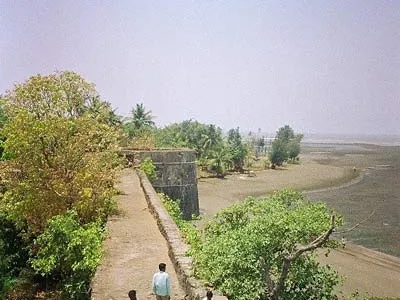
Arnala
In 1516, a local chieftain in Gujarat, Sultan Mahmud Begda originally constructed the fort on the island, strategically located at the mouth of the Vaitarna river…
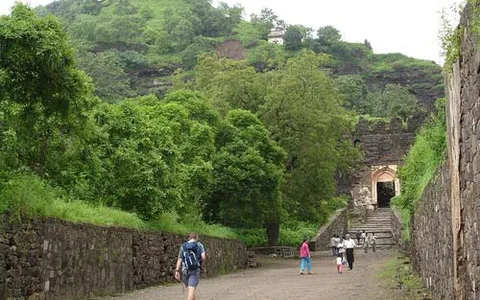
Daulatabad
The fortress of Daulatabad is surrounded by 5 km of sturdy walls. The central bastion tops a 200m high hill, originally known as Devagiri, the Hill of the Gods. It…
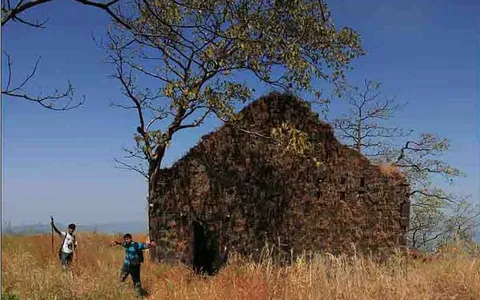
Karnala
Karnala is 120 km from Pune and 13 km from Panvel. Between Pune and Panvel lies the Fort Karnala.