Murud Janjira
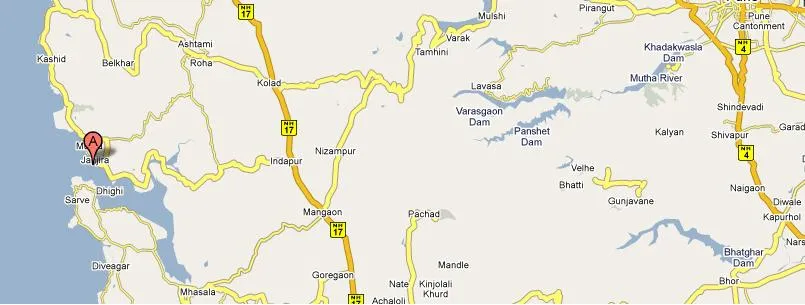
Formerly the capital town of the Siddis of Janjira, Murud is a village in Raigad district, south to Alibag. It is just 45 Kms. from Alibag.Like other villages in Konkan, Murud is also on the seashore and there are many businesses dependent on sea which are the natives lives like Fishing and tourism. Murud is not a big village but it has a huge palace of Nawab of Murud. That is the only attraction in the village.But Murud is famous for the fort of Janjira. The fort is build in the sea 2 Kms.…
About Murud Janjira
Formerly the capital town of the Siddis of Janjira, Murud is a village in Raigad district, south to Alibag. It is just 45 Kms. from Alibag.Like other villages in Konkan, Murud is also on the seashore and there are many businesses dependent on sea which are the natives lives like Fishing and tourism. Murud is not a big village but it has a huge palace of Nawab of Murud. That is the only attraction in the village.But Murud is famous for the fort of Janjira. The fort is build in the sea 2 Kms. inside of Murud. This is one of the vital sea-forts in Maharashtra. The fort is old one but still very strong. Though, today it is not in a proper condition, one can still imagine its hugeness and toughness. Some monuments inside and the walls of the fort are destroyed after so many years now. But the toughness of the fort can be still felt. There are in all 19 Buruj in the fort. Every buruj has huge guns on it especially 3 big guns ‘Kalal Bangadi’ , ‘Chavari’ and ‘Landa Kasam’ are very famous. There are 2 water tanks inside the fort and some tombs as well.Murud is today popular for its alluring beach, whispering casuarinas, coconut and betel palms, and an ancient fort.On a hillock to the north is the shrine of Lord Dattatraya, the three heads representing Brahma, Vishnu and Maheshwara.The 300-years old fort of Janjira is an architectural marvel- once upon a time considered to be impregnable. The palace of the Nawab and the Janjira caves are also a must for the tourist.
Murud-Janjira is the local name for a fort situated at the coastal village of Murud, in the Raigad district of Maharashtra, India. It is famous for being the only fort along India’s western coast that remained undefeated despite Maratha, Dutch and English East India Company attacks.
The word Janjira is not native to India, and may have originated after the Arabic word Jazeera, which means an island. Similarly, the Marathi word Habshi refers to “habes” an afro-asiatic word meaning lion, its origin is thought to be from the word the “lion of judah”, this term came to refer to judaic-christian cushtic people of the horn of africa[vague][citation needed]. Murud was once known in Marathi as Habsan, or Abyssinian’s land.
The name of the fort is a concatenation of the Konkani and Arabic words for Island, “morod” and “jazeera”. The word “morod” is peculiar to Konkani and is absent in Marathi. In Goa, the word is now more generally used for those parts of the village which were originally dry land as against the fields, which were swamps. Thus, during the rains, the fields get flooded, but the morods never flood. The State of Murud-Janjira was known to the Maratha Empire as Habsan, the land of the Habshis.
The term Siddi is an expression of respectful address commonly used in North Africa. The ruler of the Habshi state of Murud-Janjira was known as the Siddi. The Siddis or Sayyids refers to the descendants of Prophet Muhammed that were integrated into cushtic peoples and occupied in particular the Somaliland coast.
How to Reach: Murud is 170 km away from Mumbai, on the Konkan Coast. To reach Murud one has to travel by road, via Alibaug or Roha or take a ferry from Gateway to Mandwa, near Alibaug and travel about 50 kms by road.
History
The fort was built by the Koli (Fishermen) kings of Konkan and repelled all the attacks of Muslim rulers for almost two hundred years (till 1490). The subedar of Junnar, Mallik Ambar also tried to capture the fort in vain in 1485-86. Finally around 1490, he secretly sent a warship disguised as a merchant ship with 147 Habashi soldiers. The ship’s crew asked for refuge in the fort. The officer at the time, Etbatrao, agreed and took the ship in. The Habashi general, pretending to be a merchant gave liquor to the Koli soldiers. Habashi soldiers hiding in the goods containers attacked and defeated the intoxicated Koli soldiers. The fort previously in habshi hands passed to the authority of the Siddis, the Siddis engaged largely in protecting their trade routes to the African coast, the Red Sea and the Middle East, formed alliances with the Bahamani Sultan of Ahmednagar and the Habshi and Siddi states inside India, such as that of Malik Ambar (1550-1626). Before the rise of the Maratha sardars, the courts of the Bahamani sultanates were rent by rivalry between the Indian Muslims and the foreign Muslims, as a result of which, the Sultans began to patronize the Marathas as a third force, leading to the rise of Shivaji and the Maratha Empire.
Malik Amber initially rose to great prominence as the Prime Minister of Ahmednagar. He is credited with having carried out a systematic revenue settlement of major portions of the Deccan, which formed the basis for many subsequent settlements. When the Ahmadnagar kingdom was conquered by Bijapur and the Mughals in alliance, the Siddis switched their allegiance to the Sultanate of Bijapur; when the Bijapur kingdom was conquered by the Mughal Empire, the Habshis switched their allegiance to the Mughal Empire. The Siddis juggled their alliances, while intervening politically and diplomatically to decrease the political intrigue between their allies in the interior.
As allies of these Muslim states, the Siddis acted often in conjunction with their navies, and fulfilled the role of defending Muslim interests in the sea, and particularly, access by sea for the Hajj and Umrah,and trade. For this reason, the Siddis guarded their independence from the political intrigues of their allies, despite the powerful roles the Habshis and Siddis as rulers, governors and kingmakers in the interior.
The Siddis remained independent, and due to their strategic position, the coastal shipping remained subject to their protection or disruption. This vulnerability to the Siddi princely state’s naval power provoked various local powers to attempt to conquer the islands, but despite efforts by the Portuguese, Dutch, English and the Marathas, the fort was never conquered. The fort thus earned a reputation for being impregnable. The iron grip of the Siddis and their ability to mobilize allies to create diversions kept Murud-Janjira from falling .
The founder of what later developed into the Maratha Empire, Shivaji Bhosale, sent his Prime Minister or Peshwa, Moropant Pingle to conquer the Siddis during August, 1676, albeit unsuccessfully. Shivaji’s inability to capture this fort led him to build the Vijaydurg fort down the coast, and also a fort named Sindhudurg on the island of Padmagad, near the town of Malvan. The Siddis power remained undiminished. Several further attempts were made by the Marathas to conquer the Siddi principality, but in vain.
The English tried to suppress the Siddis, and the Siddis on occasion projected their power by invading the coast, for example they seized Bombay, overwhelming the English garrison, before pulling back to their fort. As the Muslim and Maratha powers of the interior waned in the face of rising English power, the Siddi state signed a treaty with England. HH Nawab Sidi Muhammed Khan II Sidi Ahmad Khan was the last Ruler of Murud-Janjira. A patron of arts and culture, he supported such musicians as Beenkar Abid Hussain Khan. The state continued in this condition until late 1947, when the last prince acceded his state to the Indian Union, and his state was merged into the Bombay Presidency which was later transformed into the State of Bombay and the State of Maharashtra.[citation
Interesting things to Visit
Sambhaji Maharaj (Son of Chatrapati Shivaji Maharaj)constructed a fort in a nearby island (Padamdurg Fort, now known as Kasa). Kasa fort is not accessible for public and requires special permission from Navy.
To Reach the Janjira Fort Sailboats are available from Murud Port ( which is behind Ekdara Village ) and Rajpuri port.
Phansad Wildlife Sanctuary: It is a small sanctuary - all of 52.71 sq. km and was hunting preserve of the erstwhile Nawab of Murud. It is an unspolit forest area with thick vegetation. The Sanctuary is situated between Murud and Kashid.
Carambi Dharan (Dam), a picnic spot providing clean water through pipes to Murud throughout the year channeled from its natural springs.
Murud not Just means Beach’s & Fort. it also has a Temple over the hill next to the New Bus Depot ( known as Datta cha Dongar) Hill of Lord Dattatray. one can have a paranormic view of murud & both the forts together from the hill.
Further ahead of the hill is an idga, the walk though the dense jungle is a experience in itself.
On a hillock to the north is the shrine of Lord Dattatraya, the three heads representing Brahma, Vishnu and Maheshwara
And just a few kilometers away are two undiscovered beaches : Nandgaon and Kashid.Nandgaon is famous for its Ganapati temple and the annual fair held in honour of this elephant headed god every February.
Alkapuri, a picnic spot favored for its lush green vegetation.
Nearest Visiting places
- The Casa Fort
This is located on another island. - The Janjira Caves
- The Temple of Lord Dattaraya
- Alibagh Beach
- Kashid Beach
- Nandgaon Beach
Hotels/Lodge/Accommodation
- Hotel Sea Face
- Sahil lodge.
- Golden Swan Beach Resort
Help Line/Phone Number
The Kundalika is a small river flowing from the Hills of Sahyadri to the Arabian Sea. This river originates at a small town called Bhira in the Indian State of Maharashtra, 150 km south east of Bombay (Mumbai). The important towns located on the banks of Kundalika are Kolad, Roha and Salav.River Kundalika is fed by the excess water from Tata Power’s Mulshi Dam Project on to a series of hydroelectric projects and dams, including Ravalje followed by Bhira and then Dholvan, where the water is released in the morning typically at 6 am…..more
River Vashishti is one of the larger rivers in the Konkan coast of Maharashtra, India. The town of Chiplun lies on its banks. The river begins in the Western Ghats and snakes its way westwards towards the Arabian Sea. Kolkiwadi Dam, near Alore has a vast reservoir which feeds a tributary of the river. During the 2005 Maharashtra floods, the river swelled its banks, causing many of the city’s residents to evacuate it……more
Alibag or Alibaug is a coastal town and a municipal council in Raigad District in the Konkan region of Maharashtra, India. It is headquarters of the Raigad district.Alibag (also called Alibagh or Alibaugh) is an idyllic, peaceful town on the western coast of India (which is known as the Konkan region). It lies on almost the same latitude as the southern tip of Mumbai and is very close to this tip across the narrow strip of the Arabian Sea, conquerable by a ferry…..more
Shriwardhan-Harihareshwar Beach is the two unexplored beaches on the Konkan coastline. If you are an adventurous person and die on seafood delicacies, Shriwardhan Beach is the place where you should be.The water is inviting and can be explored on a boat, sailing deep into the sea, cutting through the gentle winds. A small adventurous boat ride will take you to a place where Peshwas originally resided. Shriwardhan-Harihareshwar Beach is about 200km from Mumbai……more
Padmadurg is a fort in Maharashtra, India. It was built by shivaji to northwest of Janjira. Although it is not as big as Janjira but still a sea fort that can be visited and enjoyed.Spread over a vast area of about 9 acres, Padmadurg Fort is regarded as one among the major sea forts in India. A monument of great historical importance, it is situated in Raigad District of Maharashtra. This famous fort is constructed by the great Marathas in order to conquer the Janjira Fort which lies near by……more
Karnala is 120 km from Pune and 13 km from Panvel. Between Pune and Panvel lies the Fort Karnala.Just 10 km off the busy Mumbai-Pune highway a sign welcomes visitors to the Karnala Bird Sanctuary. As the road winds up a little ghat on Mumbai-Goa highway, travel-weary visitors feel a sudden freshness in the air as they enter this pocket-sized Eden…..more
Copyright 2016 HolidayLandmark All rights reserved
Location info
-
Address:Murud is 170 km away from Mumbai, on the Konkan Coast
-
District: Maharashtra state.
-
Nearest City: Mumbai
-
Best time to visit: Any time
How to reach Murud Janjira
-
Nearest Railway Station:Mumbai/Konkan Railway/nearest railhead is at Panvel 122 km away
-
Nearest Airport:Mumbai International Airport.
-
Road Transport: via Alibaug or Roha or take a ferry from Gateway to Mandwa, near Alibaug and travel about 50 kms by road
Things to carry
Mineral water bottles, food, first aid kit,camera and so on
Best time to visit Murud Janjira
October to March: cool and pleasant weather ideal for trekking. Avoid monsoon (June–September) as trails become slippery and dangerous.
Timings & opening hours
Typically open from 6:00 AM to 6:00 PM daily. Some forts may close earlier during monsoon or for maintenance.
Entry fee & tickets
Free entry for most hill forts. ASI-protected forts may charge INR 25 for Indians and INR 300 for foreign nationals.
Duration needed
3–4 hours including trek to the top and exploration. Larger forts may require a full day.
Safety tips
Wear sturdy footwear with good grip. Carry sufficient water — many forts have no water sources on top. Do not climb on unstable walls or edges. Start the trek early in the morning to avoid afternoon heat. Inform someone about your trek plan.
Nearest airport, railway & bus
Nearest airport: Pune International Airport (PNQ) or Mumbai International Airport (BOM). Nearest railway station: Pune Railway Station or nearest station on the Central Railway. Well-connected by road from Pune and Mumbai.
Mobile network coverage
Airtel, Jio, and Vi all provide excellent coverage across Maharashtra’s cities (Mumbai, Pune, Nagpur) and major tourist areas. 4G is reliable along highways and in most towns. Coverage may be weaker in deep forest areas of Tadoba, Melghat, and certain ghat sections. Free Wi-Fi is widely available in hotels and cafes.
Food & restaurants nearby
Most hill forts in Maharashtra have local snack stalls at the base serving pithla bhakri, vada pav, and tea. Carry food for longer treks — many forts on hilltops have no facilities. The nearest village or town offers Maharashtrian thali meals.
Things to do at Murud Janjira
Trek up to the fort through scenic trails in the Sahyadri range. Explore the ancient gates, bastions, water reservoirs, and palace ruins at the summit. Enjoy panoramic views of the surrounding valleys and hills. Photography enthusiasts will find excellent subjects in the fort’s architecture and landscape vistas.
Climate & weather
Maharashtra has a diverse climate spanning coastal Konkan, the Western Ghats, and the interior Deccan plateau. Winter (November–February) is the best time to visit: temperatures range from 12°C to 30°C depending on region. Summer (March–June) is hot, with interior areas reaching 40°C+ while hill stations (Mahabaleshwar, Lonavala) remain pleasant. The monsoon (June–September) brings heavy rainfall to the coast and ghats but transforms the landscape into lush green. October–November is pleasant post-monsoon.
Nearest petrol pump
Petrol pumps are available in the nearest town or on the approach road to Murud Janjira. It is advisable to fill fuel before heading to remote areas, especially hill forts and wildlife sanctuaries.
Frequently asked questions
How long does it take to trek to the top? The trek to most forts takes 1–3 hours depending on the fort’s height and the trail condition. Some forts have road access up to the entrance.
Is there food and water available on the fort? Most forts have no facilities on top. Carry at least 2 litres of water per person and some snacks. Local stalls at the base village sell refreshments.
Can I visit during monsoon? Many forts are open year-round but trails become extremely slippery during monsoon. November to February offers the best trekking conditions.
Quick facts
- Location: Maharashtra
- Best time to visit: October to March for comfortable exploration
- Ideal duration: 1-2 hours to explore the site
- Entry: Nominal entry fee at most ASI-protected sites
- Photography: Allowed at most sites; videography may require permit
Map & location view
- Destination: Murud Janjira
- State: Maharashtra, India
- Region: historical region of Maharashtra
- How to reach: Accessible by road from nearby towns and cities. Local transport options include buses and taxis.
- Google Maps: Search for “Murud Janjira, Maharashtra” on Google Maps for precise directions and navigation.
Photo gallery of Murud Janjira
Photos coming soon. In the meantime, you can find images of Murud Janjira on popular travel photography sites and social media.
Photo gallery of Murud Janjira
Video gallery
Related destinations
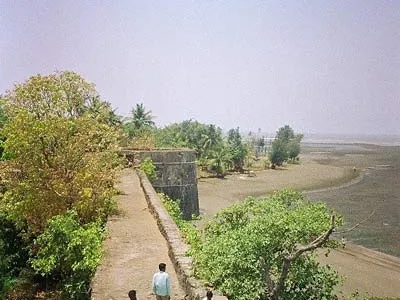
Arnala
In 1516, a local chieftain in Gujarat, Sultan Mahmud Begda originally constructed the fort on the island, strategically located at the mouth of the Vaitarna river…
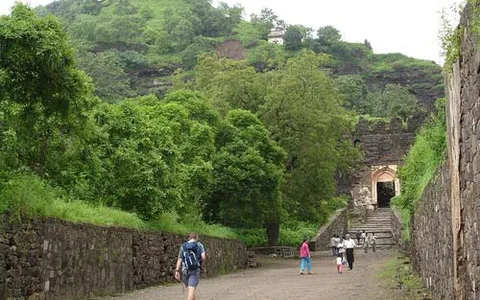
Daulatabad
The fortress of Daulatabad is surrounded by 5 km of sturdy walls. The central bastion tops a 200m high hill, originally known as Devagiri, the Hill of the Gods. It…
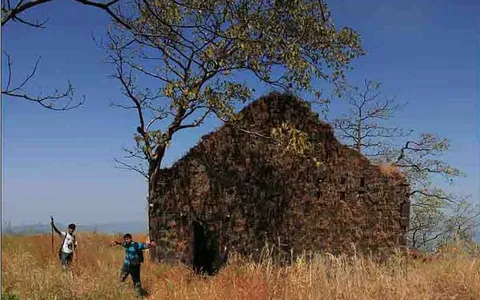
Karnala
Karnala is 120 km from Pune and 13 km from Panvel. Between Pune and Panvel lies the Fort Karnala.