Agasthyakoodam Trekking And Camping
NH7 to Tirumangalam via Salem, Dindigul and Madurai. NH208 to Thenmala via Tenkasi and Shencottai; state road to Ponmudi.
Summary
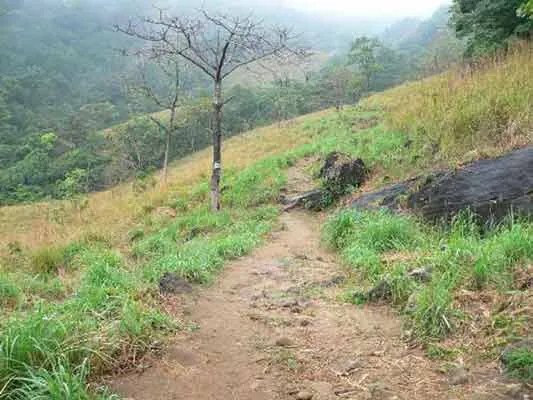
Agasthyakoodam Mountain is loacted in Agasthyakoodam, about 60km from the city, Trivandrum district, kerala. Agasthyakoodam is a forested peak in the Sahyadri Range of Mountains, and is considered the second highest peak in Kerala. Standing tall, at a height of 1890 meters above sea level, Agasthyakoodam ranks high among favored tourist destinations in Kerala.It is one of the beautiful mountain area and this place has been decalred as a reserved forest area by the government recently. As per the history, Agasthiyar is a saint and in Ayurvedam he had been considered as on of the master. The hill consists of rare ayurvedic species and hence this area is declared as the reserve area. The biodiversity of the region is enhanced by the altitudinal variations and in 1992, an area covering around 23 sq kms was established as Agasthya Vanam hill consists of rare ayurvedic species. The intention was to restore the degraded forests and to use it for educational purpose. This hill ranges is a bird watcher’s paradise and is accessible by foot from Kotoor near Neyyar Dam. The peak is famous for the ‘Neelakurinji’, a beautiful blue flower that blooms here only once in every twelve years. It’s a sight one has to see. One cannot forget the breathtaking sight of the peak looking blue in color with the flowers in full bloom.The aborigines who reside here believe that Rishi Agasthya, who lived here was a confirmed bachelor and disliked women. Hence women are not allowed up the peak here.Ponmudy is another travel spot and the place is known for the greenery and it attracts the travellers for the nature’s beauty.
The forests of Agasthyakoodam are rich in rare medicinal herbs and plant, and hued orchids and a sizable proportion of around 2000 medicinal plants used in the traditional systems of medicine are found here. The fauna here includes wild elephants, gaur, sloth bear, Nilagiri tahr etc. With its rich flora and fauna Agasthyakoodam is now becoming popular among the eco tourists and nature lovers. Virtually untouched by human intervention, this highrange station still houses the rare flora and fauna for posterity. Far from the picnic spot, for a casual traveller, Agasthyakoodam provides the ideal setting for those who love to experience nature in its sublime serenity. It is an ideal place for hard treks and jungle camping.The trekking track is surrounded by breathtaking scenery. Meadows and streams, reed groves, `bonsai’-type trees clinging to the hillsides, the lonely walkway in the woods. The only sounds you hear during the trek are the swish of the trees, gurgle of water in the rivulets, the `sudden’ chirping of a thousand crickets in unison and the sweet warbling of birds. Before reaching the sole shelter in the jungle built for trekkers at Athirumala, one has to cross three rivers - Karamana, Vaazhapindhiyaar and then Attayar. But only a few know that down stream the Attayar, there is a big waterfall known as Bona Falls.The best season for tourists to visit Agasthyakoodam for trekking is December to April. Forest Pass has be obtained from the Wildlife Warden, Forest Department, PTP Nagar, Thiruvananthapuram for trekking.
Things To Look for
Ponmundi Hill Station:
The beautiful and peaceful hill station at around a distance of 60 kms from the capital city of Thiruvananthapuram and at an altitude of 1000m above thesea level on the Western Ghats, Ponmudi is a small peaceful hill station in Kerala, South India. True to its name meaning Golden Crown in Malayalam, Ponmudi promises a treat of a lifetime to all those looking for a break from the monotony of hectic life.Ponmudi, lying very close to the sea, offers a plethora of tourist destinations and activities that the people visiting this place can indulge themselves.
Meenmutty Falls:
This breathtakingly beautiful waterfall is sited on the trek path to Agasthyarkoodam. Trekkers can avail the golden opportunity of an exciting trek through dense forests to reach the falls. Situated near the Meenmutty waterfalls is another splendid waterfall- The Kombaikani Waterfalls.
Orchids and Deer Park:
The Orchids and Deer Park, situated at a few kilometers distance from Ponmudi, is another main attraction of the place.The extensive tea plantations in Ponmudi that border the winding way uphill, is another sight that is worth seeing.
Golden Valley:
A place that is not to be missed, golden valley, gifts its visitor a sight that sparkles with copious rivulets and rapids, and polished with well-rounded pebbles, ice cool water and green trees. Just the absolute wilds of the place are enough to mesmerize its beholder.
Padmanabhaswamy temple :
The temple is dedicated to Lord Vishnu who is seen reclining on the Anantha serpent. The temple consists of a tower built of seven stories with rising pillars and intricate carvings decorated with mural paintings. Only peoples from the Hindu religion are allowed inside the temple premises places to the eastern side of the old fort ruins.
Neyyar Wildlife Sanctuary:
Neyyar Wildlife Sanctuary is established in 1958.It is located 30 kilometers away from Thiruvanathapuram, the capital city. The Neyyar sanctuary is the drainage basin of the Neyyar river and its tributaries-Mullayar and Kallar. The Neyyar river and its tributaries flow along the entire stretch of the preserve. The irrigation dam at Neyyar receives water from the Neyyar river which originates from Agasthyakoodam hill.
Sivananda Yoga Vedanta Dhanwantari Ashram:
It is located on the foothills of the Western Ghats near Neyyar Dam. It offers different courses and programs on Yoga and Vedanta. The Ashram has facilities for worship, rejuvenation therapies, panchakarma treatments, canteen, money exchange facilities, dormitories, library, and a boutique.
Crocodile Rehabilitation and Research Centre:
A crocodile farm was set up in 1977. It also includes a habitat for otters near the administrative complex. The Crocodile Rehabilitation and Research Centre in Neyyar Wildlife Sanctuary was named by the Kerala government after late Steve Irwin as Steve Irwin National Park.
Neyyar Dam:
Neyyar Dam is situated at 30km east of Thiruvananthapuram, at the foot of western ghats.Neyyar is the heaven for tourists who search for some serenity and isolation. A Tour to Neyyar Dam will refresh your spirits in such a beautiful surrounding. The dam is a part of the Neyyar Wildlife Sanctuary which is the home of unique species of flora and fauna. From wild boars and elephants to the vast range of medicinal herbs Neyyar is truly a nature lover’s paradise.
Things To Be Aware Of
The path is quiet dangerous and tiresome, BP patients and heart patients should avoid the trip,It is not advisable ladies to trek due to their security reasons, Middle river.
Permission
Need permissiom.
Wildlife Warden Forest Department
PTP Nagar, Thiruvananthapuram.
Location info
-
Distances: 60km from the Trivendrum city, Trivendrum Ditrict, kerala.
-
Camping Sites:
-
Trek Length: 1890 meters above sea level(area covering around 23 sq kms)
Helpline & emergency contacts
Emergency Details:
Wild Life Warden Office,
Peppara Wild Life Sanctuary
Thiruvananthapurm.
Phone: 0471 2320637.
Mobile network coverage
Airtel, Jio, BSNL, and Vi all provide coverage across Kerala. 4G is reliable in Kochi, Thiruvananthapuram, Kozhikode, and along the coastal belt. Coverage may be weaker in remote sections of the Western Ghats, deep forest reserves, and certain backwater stretches. Most hotels, houseboats, and cafes in tourist areas offer free Wi-Fi.
Food & restaurants nearby
Food options are available in the nearest town. Kerala cuisine — fish curry, appam with stew, puttu, and Kerala sadhya — is widely available and famously delicious.
Hotels & accommodation nearby
Accommodation is available in the nearest town or city. Options range from homestays to luxury resorts. Kerala’s homestay network is excellent and offers authentic local experiences.
Climate & weather
Kerala has a tropical monsoon climate with warm, humid conditions year-round. The best time to visit is November to February, when temperatures are a pleasant 22°C–30°C with low humidity and clear skies. March–May is hot and humid (up to 36°C). The southwest monsoon (June–September) brings heavy rainfall — the landscape transforms into lush green and this is the best time for Ayurvedic treatments. The northeast monsoon (October–November) brings shorter showers. Hill stations (Munnar, Wayanad) remain cooler year-round.
Nearest petrol pump
Petrol pumps are available in the nearest town or on the approach road — check locally for the closest option.
Accessibility
Accessibility information is not currently available for this site. Contact the venue directly or check with your accommodation for the latest accessibility details.
Rules & restrictions
Standard visitor rules apply. Check locally for any specific restrictions at this site.
Best photography spots
The best photography spots are typically during the golden hours (early morning and late afternoon). Scout the location first to identify the best angles, and consider the direction of light at different times of day.
Best time to visit Agasthyakoodam Trekking And Camping
The best time for trekking at Agasthyakoodam Trekking A Camping is from November to February when the weather is cool and dry with clear skies. Post-monsoon (September–November) offers lush green landscapes. Monsoon trekking is not recommended due to slippery trails and leeches. Summer treks are possible in early mornings but afternoons can be hot.
How to reach Agasthyakoodam Trekking And Camping
Nearest Airport: Thiruvananthapuram International Airport (TRV) (approximately 0 km). Nearest Railway Station: Thiruvananthapuram Central Railway Station. The destination is well-connected by Kerala State Road Transport Corporation (KSRTC) buses and private taxis from major towns.
Timings & opening hours
Trekking routes are accessible from 6:00 AM to 5:00 PM. All trekkers must start their trek before 10:00 AM and must complete it before sunset. Night trekking is not permitted without special permission.
Entry fee & tickets
Trekking permit fees: INR 100–500 per person for day treks. Guide charges: INR 500–1,500 per day. Forest entry fee: INR 25–50 per person. Some restricted areas (like Agasthyakoodam) require special permits from the Forest Department months in advance.
Duration needed
Half day (3–5 hours) for short treks. Full day (6–8 hours) for moderate treks. Multi-day treks require camping arrangements and advance booking.
Safety tips
Always hire a local guide for trekking routes — especially in forested and hilly areas. Carry sufficient water (at least 2 litres per person) and snacks. Start your trek early in the morning (before 7:00 AM) and aim to finish before 3:00 PM. Wear sturdy trekking shoes with good grip. Inform someone about your trekking route and expected return time. Check weather conditions before heading out.
Things to carry
Trekking shoes with good grip and ankle support (essential), rucksack/backpack (30–40 litre capacity), 2–3 litres of drinking water, high-energy snacks (nuts, dry fruits, energy bars), a first-aid kit (bandages, antiseptic, pain relievers, blister plasters), insect repellent, sunscreen, hat, raincoat/poncho, whistle (emergency), torch/headlamp with extra batteries, a map or GPS-enabled phone, and a small towel. Hire a local guide for unfamiliar routes.
Nearby visiting places
Kovalam Beach, Padmanabhaswamy Temple, Napier Museum, Shanghumugham Beach, Veli Tourist Village, Kuthiramalika Palace Museum, Poovar Island, Ponmudi Hill Station, Neyyar Wildlife Sanctuary, Varkala Beach
Nearest airport, railway & bus
Nearest Airport: Thiruvananthapuram International Airport (TRV) (approximately 0 km). Nearest Railway Station: Thiruvananthapuram Central Railway Station. The destination is well-connected by Kerala State Road Transport Corporation (KSRTC) buses and private taxis from major towns.
History of Agasthyakoodam Trekking And Camping
The trekking trails at Agasthyakoodam Trekking A Camping traverse the beautiful terrain of the Western Ghats, a mountain range that runs parallel to Kerala’s coast and is recognised as a UNESCO World Heritage Site. The Ghats are one of the most biologically diverse regions on Earth, with trekking routes passing through shola forests, grasslands, tea plantations, and spice gardens. These trails have been used by local communities for centuries for travel and trade between the coast and the interior.
Things to do at Agasthyakoodam Trekking And Camping
Trek through scenic trails passing through shola forests and grasslands, spot wildlife and birds along the trail, photograph the panoramic mountain views, enjoy a packed lunch at a scenic viewpoint, identify unique flora including medicinal plants and orchids, camp overnight (on multi-day treks), learn about the ecosystem from your guide, and challenge yourself physically while connecting with nature.
Things to visit & highlights
The scenic trekking trails through forests, grasslands, and plantations, panoramic viewpoints offering stunning valley views, diverse flora including endemic species and orchids, wildlife sightings along the trail, and the sense of adventure and connection with nature.
Frequently asked questions
Do I need a guide for trekking? — Yes, a local guide is strongly recommended and mandatory in some areas. Guides know the terrain, can point out wildlife, and ensure your safety. What fitness level is required? — Most treks in Kerala range from easy to moderate. Some treks (like Agasthyakoodam and Chembra Peak) require good physical fitness and stamina. Check difficulty levels before booking. What should I carry? — Sturdy trekking shoes, 2–3 litres of water, snacks, sunscreen, hat, raincoat, insect repellent, first-aid kit, and a camera. Do I need a permit? — Some treks require permits from the Kerala Forest Department. Agasthyakoodam treks require advance permits (limited to 100 per day) during the season.
Quick facts
- Type: Tourist Attraction
- State: Kerala
- Category: Trekking Camping
Visitor information
Please check locally for current visitor information.
Map & location view
This section is being updated and will be available shortly.
Photo gallery of Agasthyakoodam Trekking And Camping
Video gallery
Related destinations
Anamudi Trekking And Camping
Marayoor is approximately 40 kilometers away from Munnar region.There many bus tranport system from government of kerala.
Chembra Peak Trekking And Camping
This 344 km² from trivendrum city and is about 16 km east of Sultan Battery, kerala.Mysore - Nanjangod - Gundlupet - Muthanga WLS - Sulthan bathery (140 kms) and…
Dhoni Trekking And Camping
The important road is the Palakkad - Ponnani road which connects NH 47 and NH 17. It is on NH47 that links Salem to Kanyakumari via Palakkad.