MOTOSHARE 🚗🏍️
Rent Bikes & Cars Directly from Owners
Motoshare connects vehicle owners with people who need bikes and cars on rent. Owners earn from idle vehicles, and renters get flexible ride options.
Visit Motoshare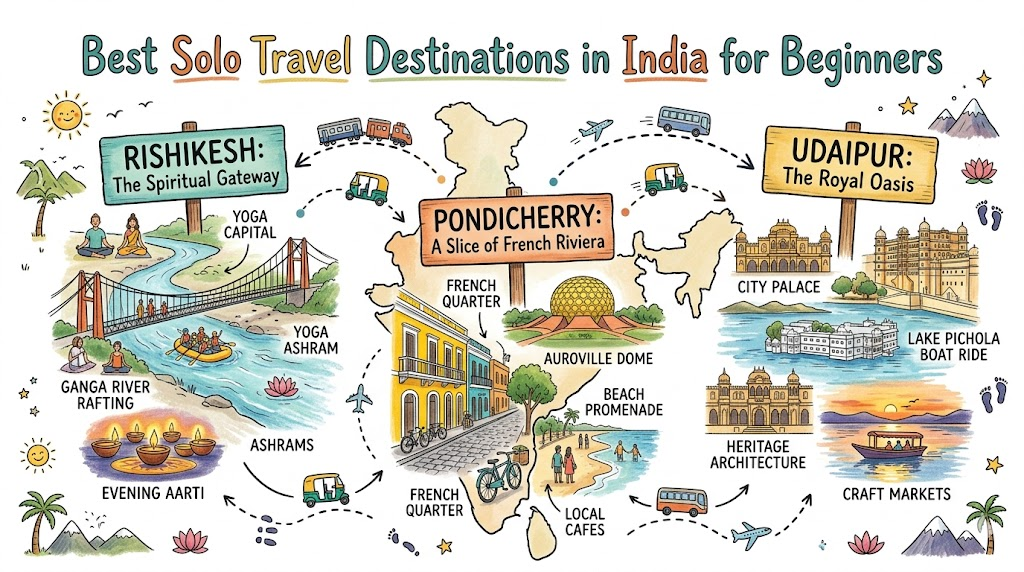
Introduction
Traveling alone for the first time can feel like a mix of intense excitement and nervous anticipation. If you are looking at India as your first solo playground, you are in for an incredible journey. There is a common misconception that India is overwhelming for a solo traveler. While it is true that the sights, sounds, and crowds can be intense, India is also one of the most rewarding, deeply welcoming, and transformative places you could ever explore.
For a beginner, the key is choosing destinations that offer a soft landing—places with well-established backpacker trails, friendly locals, reliable infrastructure, and a relaxed pace. India is far more than just commercial beaches and loud nightlife. It is a massive tapestry woven with ancient culture, diverse nature, incredible street food, adrenaline-pumping adventure, majestic heritage, and deep spiritual peace. Whether you are a classic solo backpacker, part of a couple looking for a distinct adventure, or planning a future family trip, understanding how to navigate India safely and smartly changes everything. This India travel guide is built specifically to help you take that first brave step with confidence.
Why India is a Must-Visit Country
India is not just a destination; it is an economic and cultural universe of its own. Unlike smaller countries where a single vibe dominates, every state in India feels like a different nation with its own language, traditional attire, architecture, and flavors.
For a solo traveler, it provides practical advantages that make navigation seamless:
- Incredible Value: Your budget stretches remarkably far here, allowing you to choose comfortable, high-quality stays and private transport without breaking the bank.
- Warm Hospitality: The ancient philosophy of “Atithi Devo Bhava” (The Guest is God) is deeply rooted in local communities. You will rarely feel truly isolated because people are naturally inclined to help travelers find their way.
- Extensive Transport Networks: From the historic Indian Railways network to cheap domestic flights and app-based cabs, getting between India tourist places is highly accessible.
- Vibrant Backpacker Communities: Hostels have boomed across the country over the last decade, making it easier than ever to make friends, share stories, and find travel partners.
Pondicherry’s French Quarter.
Ganga Aarti in Rishikesh.
Lake Pichola in Udaipur.
Best Places or Experiences
Rishikesh: The Spiritual Gateway
Nestled in the foothills of the Himalayas in the northern state of Uttarakhand, right along the emerald-green waters of the holy Ganga River.
- Why it is worth visiting: Known globally as the “Yoga Capital of the World,” Rishikesh combines absolute spiritual serenity with world-class adventure sports. It has zero alcohol and a completely vegetarian culinary scene, creating a clean, safe, and positive environment that is perfect for anyone trying out India trip planning for the first time.
- Best things to do: Attend the magical evening Ganga Aarti (fire ritual) at Triveni Ghat, walk across the iconic Lakshman Jhula suspension bridge, take an introductory yoga or meditation session at a local ashram, and go white-water rafting down the rapids.
- Best time to visit: September to November, and February to May when the weather is pleasant and the river is ideal for water sports.
- Ideal for whom: Solo backpackers, wellness seekers, adventure enthusiasts, and weekend travelers looking for a quick escape from Delhi.
- Travel tip: Book a hostel near the High Bank or Tapovan areas. These neighborhoods are packed with cozy cafes, organic food options, and fellow international travelers, making it incredibly easy to blend in.
Pondicherry: A Slice of French Riviera
A coastal Union Territory located on the southeastern edge of India, completely surrounded by the state of Tamil Nadu.
- Why it is worth visiting: “Pondy” offers a beautifully preserved French colonial heritage right alongside vibrant South Indian culture. The cobblestone streets, mustard-yellow villas, and quiet promenades of White Town feel incredibly peaceful, making it a very gentle introduction to India for solo travelers who want to avoid sensory overload.
- Best things to do: Rent a bicycle to explore the French Quarter, try freshly baked croissants at local cafes, spend a reflective afternoon at the international township of Auroville, and watch the sunrise along the Promenade Beach.
- Best time to visit: October to March, when the coastal humidity drops and the evening sea breezes are cool.
- Ideal for whom: Solo female travelers, architecture lovers, writers, couples seeking a slow-paced getaway, and foodies.
- Travel tip: Auroville is located a bit outside the main town. Rent a moped or use authorized local auto-rickshaws to get there early in the morning to beat the crowds visiting the Matrimandir view point.
Udaipur: The Royal Oasis
Situated in the southern part of Rajasthan, surrounded by the ancient Aravalli Hills.
- Why it is worth visiting: Rajasthan can sometimes feel intense for a beginner, but Udaipur—the “City of Lakes”—is its most romantic, safe, and visually spectacular corner. The entire city centers around majestic lakes and ornate palaces, offering a glimpse of royal India without the chaotic hustle of larger cities like Jaipur or Jodhpur.
- Best things to do: Take a sunset boat ride on Lake Pichola, tour the sprawling City Palace complex, watch a traditional Rajasthani folk dance performance at Bagore Ki Haveli, and shop for colorful handicrafts in the old city bazaars.
- Best time to visit: October to March, as summer temperatures in Rajasthan can easily skyrocket past 40 degrees Celsius.
- Ideal for whom: Solo travelers looking for heritage, couples on a romantic holiday, and photography enthusiasts.
- Travel tip: Opt for a boutique guesthouse or hostel with a rooftop terrace overlooking the lake. Dining under the stars while looking at the lit-up Lake Palace is an essential Udaipur experience that doesn’t cost a fortune.
Detailed Guide for First-Time India Travelers
Best places to visit
Apart from the trio highlighted above, beginners should look at the South India travel guide favorites like Kerala (Munnar or Varkala) for misty tea gardens and relaxed cliffside beaches. For those looking northward, the North India travel guide gold standard is the classic Golden Triangle (Delhi, Agra, Jaipur) or the peaceful mountain town of Dharamshala, the home of the Dalai Lama.
Things to do
Focus your days on immersive, low-stress experiences. Sign up for guided heritage walking tours, enroll in local cooking classes to learn the secrets of Indian spices, explore local street food trails with an expert guide, and allocate down-time just to sit in a local cafe and observe the rhythm of daily life.
Entry fees if applicable
Major heritage monuments managed by the Archaeological Survey of India (ASI)—such as the Taj Mahal, Jaipur palaces, or Udaipur’s City Palace—have tiered entry ticketing systems. Foreign nationals typically pay between 300 to 600 Indian Rupees (INR) per ticket, while domestic travelers pay around 40 to 50 INR. Always keep your digital ID or passport copy on your phone to purchase tickets online and skip long lines.
Travel tips
- Download an e-SIM or purchase a local 4G physical SIM card (Airtel or Jio are best) right at the international airport arrivals counter. Having uninterrupted internet access for navigation apps is your absolute biggest safety asset.
- Dress modestly, particularly when visiting temples, mosques, or rural areas. Covering your shoulders and knees shows deep respect for local customs and instantly reduces unwanted attention.
Nearby attractions
When visiting Rishikesh, you can easily take a 45-minute taxi to Haridwar to experience one of the holiest ancient cities in India. From Pondicherry, the magnificent stone temples of Mahabalipuram (a UNESCO World Heritage site) are just a scenic two-hour drive up the East Coast Road.
Food options
Indian food is a culinary revelation, but it requires a strategic approach for beginners. Stick to freshly cooked, hot food from busy local joints. Look for places serving a traditional Thali—a wholesome, balanced platter containing rice, flatbreads, lentils, and assorted curries that is both incredibly cheap and hygienically prepared.
| Meal Type | Average Cost (INR) | Best Choice for Beginners |
| Budget/Street Food | 50 – 120 INR | Idli-Vada, Poha, Samosa, Fresh Fruit Chat |
| Mid-Range Restaurant | 300 – 600 INR | Traditional Veg Thali, Butter Chicken, Paneer Tikka |
| Fine Dining / Boutique | 1200+ INR | Gourmet Mughlai, Coastal Seafood Curries |
Budget planning
India caters beautifully to all wallet sizes. A classic backpacker budget can easily survive on 1,500 to 2,500 INR ($20-$30 USD) per day using boutique hostels and local street food. A mid-range traveler looking for private AC rooms, heritage homestays, and sit-down meals should budget between 4,000 to 7,000 INR ($50-$85 USD) per day.
Safety tips
Always use app-based aggregators like Uber, Ola, or Rapido for local city transport rather than trying to negotiate unmetered fares on the street. Avoid walking down dark, unlit streets or completely isolated beaches alone late at night. Trust your gut instincts explicitly—if a situation or an overly aggressive street guide feels off, politely but firmly say “No, thank you” and walk directly into a busy public space.
Local transport options
For long-distance routes, opt for the comfort of AC Train Coaches (such as 2AC or 3AC classes) or book intercity AC sleeper buses via verified platforms like RedBus. Inside cities, the ubiquitous three-wheeled auto-rickshaws are fun and practical, while metros in cities like Delhi, Mumbai, and Bengaluru are clean, incredibly fast, and feature dedicated coaches for women.
Family-friendly suggestions
If you decide to return with family later, opt for private car rentals with professional drivers for the duration of your trip. Destinations like Munnar’s rolling hills or Udaipur’s lake resorts offer excellent family suites, kid-friendly parks, and highly organized boat tours.
Couple-friendly suggestions
Couples looking for unique experiences should book a private luxury houseboat stay on the emerald backwaters of Alleppey, Kerala, or secure a candlelit dinner on a lakeside terrace in Udaipur’s Old Town.
Hidden or less-crowded options
If popular spots feel a bit too energetic, slip away to Ziro Valley in the northeast for breathtaking tribal culture and rice landscapes, or explore Gokarna, which offers pristine, quiet shorelines that feel like Goa did decades ago before the crowds arrived.
Travel Planning Tips for India
To ensure your first trip across India goes off without a hitch, memorize this practical checklist of India vacation tips:
- Book stays early during peak season: The cooler months from November to February see a massive influx of both domestic and international tourists. Secure your top hostel or heritage homestay choices at least two months in advance.
- Rent scooters only with proper documents: Exploring beach towns or mountain roads on a scooter is incredibly freeing. However, never hand over your original passport as a security deposit (a photocopy is fine), and always carry an International Driving Permit (IDP) alongside your national license. Always wear a helmet!
- Respect beach safety rules: Many shorelines in India have deceptively strong undercurrents and sudden rip tides. Pay attention to the colored warning flags placed on public sands by lifeguards.
- Avoid isolated beaches late at night: Stick to well-lit beachfront strips with active open-air cafes if you are exploring after dark.
- Carry cash for local markets: While digital payments (UPI) dominate India’s economy now, international cards are rarely accepted by small street vendors, auto-rickshaws, and rural markets. Always keep a few thousand rupees in small cash denominations (100 and 200 INR notes) inside your wallet.
- Check weather before water activities: Monsoons can bring heavy rain and dangerous sea swells between June and September. Avoid booking scuba diving, rafting, or boat trips during these months.
- Respect local culture and environment: Always ask permission before taking close-up portraits of locals, especially sadhus (holy men) or tribal elders. Remove your footwear before entering any home or place of worship.
- Keep beaches clean: Carry a small reusable water bottle and trash bag to avoid leaving plastic waste behind on pristine coastal ecosystems.
Common Mistakes to Avoid
- Over-packing your itinerary: The single biggest rookie mistake is trying to see Delhi, Agra, Jaipur, Varanasi, Goa, and Kerala all in a single 10-day window. Distances in India are vast, and transit can take a toll on your energy. Pick two or three regions at most and explore them deeply.
- Ignoring South India: Many travelers land in Delhi and focus solely on the north. By skipping the southern states, you miss out on a completely different, incredibly lush side of the subcontinent known for its distinct culinary style, massive Dravidian temples, and slower pace of life.
- Visiting only crowded beaches: If you want a coastal holiday, look past the main commercial stretches of North Goa. Head south to Palolem or cross over into Karnataka and Kerala for pristine, uncrowded sands.
- Overpaying for rentals and souvenirs: Friendly bargaining is a normal part of the local market culture. As a general rule of thumb, start by politely counter-offering around 50-60% of the initial quoted price at street stalls, but always keep it lighthearted and respectful.
- Skipping local food out of fear: Don’t let the fear of a sensitive stomach keep you away from India’s incredible food. Choose stalls that have a massive line of local families waiting—high turnover means the ingredients are absolutely fresh.
Suggested India Itinerary Angle
Here is a flexible blueprint showing how you can seamlessly stitch a beginner-friendly solo destination like Pondicherry into a broader travel map.
1-Day Plan: The Quick Colonial Highlights
- Morning: Watch a magical sunrise at Promenade Beach, followed by a freshly baked breakfast in White Town.
- Afternoon: Tour the Sri Aurobindo Ashram and visit the botanical gardens.
- Evening: Enjoy a French-style wood-fired pizza at an open-air courtyard café.
2-Day Plan: Culture & Community
- Day 1: Follow the 1-day plan above to explore White Town and the main promenade.
- Day 2: Rent a scooter and spend the day at Auroville. Visit the Visitor’s Centre, learn about their sustainable farming initiatives, and view the iconic golden Matrimandir sphere.
Weekend Travel Plan: The Ultimate Coastal Escape
- Friday Evening: Arrive via a scenic drive along the East Coast Road from Chennai Airport. Check into a boutique hostel.
- Saturday: Take an early morning walking tour of the colonial buildings, shop for handmade paper and pottery, and spend the afternoon learning to surf at Serenity Beach.
- Sunday: Visit the colorful Villianur temple car festival site or explore the mangrove forests of Pichavaram nearby before heading out.
FAQs
1. Is India safe for a solo female traveler?
Yes, India is highly accessible and safe for solo female travelers, provided you use the same street-smart safety rules you would use anywhere else in the world. Stick to well-reviewed boutique hostels, avoid traveling long distances late at night alone, dress to match local norms, and keep a working local SIM card with active GPS tracking active at all times.
2. What is the best way to travel between cities on a budget?
The Indian Railways network is the most affordable and scenic way to travel. For overnight journeys, booking a berth in 2AC or 3AC (Air-Conditioned) coaches ensures a comfortable, safe sleep with bedding provided. For shorter intercity jumps, air-conditioned public and private sleeper buses are incredibly convenient.
3. How do I avoid getting a sensitive stomach (“Delhi Belly”)?
Stick strictly to filtered or bottled mineral water, and ensure the seal is intact before opening. Eat at busy restaurants or street stalls with a high turnover of local customers. Avoid raw salads, ice cubes in drinks at small stalls, and unpeeled fruits when traveling through rural areas.
4. Do I need to know Hindi or local languages to travel around India?
Not at all. English is widely spoken and understood across India, especially in the tourism industry, major transport hubs, hostels, and restaurants. Downloading Google Translate with an offline language pack for the specific state you are visiting is a great backup tool for remote areas.
5. Can I use my credit and debit cards everywhere in India?
Major hotels, boutique cafes, and established retail stores accept international Visa and Mastercard options easily. However, street food vendors, local auto-rickshaws, and small market stalls operate almost exclusively on cash or domestic mobile payment apps (UPI). Always keep small cash bills on hand.
6. What should I pack for my first solo trip to India?
Pack lightweight, breathable cotton clothing that covers your shoulders and knees. Bring a sturdy scarf or shawl (useful for covering your head when entering temples), comfortable slip-on walking shoes, a high-quality power bank, hand sanitizer, and a good sunscreen.
7. Is it necessary to book train tickets far in advance?
Yes! Train travel is incredibly popular in India, and seats in air-conditioned coaches can sell out weeks in advance. Use the official IRCTC website or authorized travel platforms to book your train journeys as soon as your travel dates are locked in.
8. What is the internet and mobile connectivity like across India?
India has some of the cheapest and fastest 4G and 5G mobile data networks in the world. You will find excellent connectivity in almost all major tourist towns, coastal hubs, and cities. Connectivity may drop slightly only in deep Himalayan valleys or remote forest reserves.
9. How do I handle aggressive vendors or street guides?
Be polite but incredibly firm. A simple, direct “Nahi Chahiye” (I don’t want it) accompanied by a firm hand gesture and breaking eye contact is usually all it takes. Keep walking toward your destination without hesitating or showing visible frustration.
10. When is the overall best time to plan a trip to India?
The winter season, running from October to March, is widely considered the absolute best time for an all-India trip. The weather is cool and dry across the north, pleasant along the coastlines, and ideal for exploring outdoor historical monuments comfortably.
Conclusion
Stepping out to explore India as a solo beginner is a beautiful act of travel bravery that will reward you with stories, friendships, and memories to last a lifetime. By choosing beginner-friendly destinations like Rishikesh, Pondicherry, or Udaipur, you give yourself the perfect environment to learn the rhythms of the road at your own comfortable pace. Remember to slow down, plan with flexibility, open your mind to local cultures, and respect the environments you travel through.

For first-time solo travelers in India, arriving before sunset and keeping day one light can make a new city feel much safer and easier to manage.