MOTOSHARE 🚗🏍️
Rent Bikes & Cars Directly from Owners
Motoshare connects vehicle owners with people who need bikes and cars on rent. Owners earn from idle vehicles, and renters get flexible ride options.
Visit Motoshare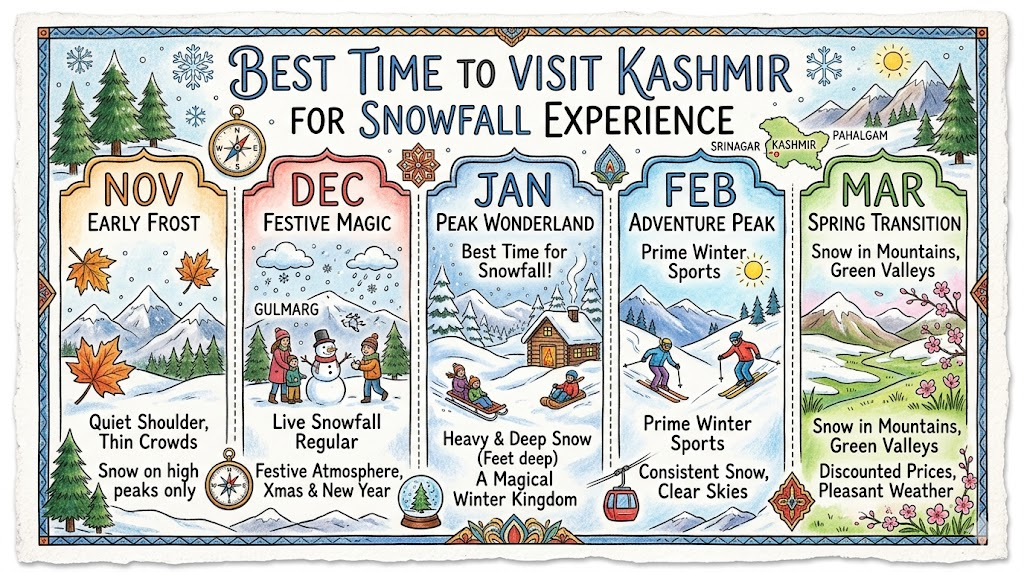
Introduction
When people think of traveling to India, their minds often drift to the sun-soaked beaches of Goa, the historic forts of Rajasthan, or the bustling night markets of Mumbai. But India is an incredibly diverse subcontinent that stretches from tropical coastlines right up to some of the highest mountain peaks in the world. Beyond its iconic culture, rich heritage, and world-famous street food, India is home to a breathtaking winter paradise that rivals the classic alpine destinations of Europe.
If you are a traveler looking for a true winter escape filled with crisp mountain air, massive snow-covered pine forests, and frozen alpine lakes, the northernmost territory of Jammu and Kashmir is where you need to go. Finding the best time to visit Kashmir for snowfall experience is the ultimate key to planning a flawless winter holiday. Whether you are a solo backpacker chasing a winter adventure, a family looking to build your first snowman, or a couple seeking a romantic hideaway in a cozy wooden cabin, timing your trip right makes all the difference. This comprehensive guide will help you navigate the winter magic of Kashmir so you can plan a seamless, unforgettable trip to India’s crown jewel.
Why India is a Must-Visit Country
India is a destination that demands to be experienced rather than just seen. For international tourists and domestic first-time visitors alike, it offers a mesmerizing blend of nature, spirituality, local experiences, and unparalleled hospitality.
+-------------------------------------------------------------------+
|                     WHY INDIA CAPTIVATES TRAVELERS                |
+---------------------+---------------------------------------------+
| Cultural Diversity  | Every state has its own language, clothing, |
|                     | architecture, and ancient traditions.       |
+---------------------+---------------------------------------------+
| Diverse Geography   | Explore the golden deserts, pristine coast- |
|                     | lines, lush rainforests, and snowy Alps.    |
+---------------------+---------------------------------------------+
| Culinary Journey    | A paradise for food lovers, ranging from    |
|                     | rich Mughlai curries to spicy street food.  |
+---------------------+---------------------------------------------+
| Value for Money     | Highly customizable for both budget-friendly |
|                     | backpackers and luxury-seeking vacationers. |
+---------------------+---------------------------------------------+
From a detailed North India travel guide perspective, the snow-clad landscapes of Jammu and Kashmir stand out as a bucket-list destination. It provides a stark, peaceful contrast to the high-energy vibe of India’s southern beaches and urban centers, making it a critical piece of any comprehensive India trip planning strategy.
The Definitive Guide to Kashmir Snowfall Months
To witness a live, fluffy snowfall or to enjoy deep fields of powdery snow, you must understand Kashmir’s distinct winter phases. The winter season here is anchored by a traditional 40-day period of harsh, extreme cold known locally as Chillai-Kalan (December 21 to January 29). Here is a breakdown of what you can expect month-by-month to help you pick your perfect travel window.
November: The Early Frost
- The Snow Reality: Snowfall is mostly confined to very high-altitude mountain peaks like Apharwat Peak in Gulmarg or Zero Point in Sonamarg. The lower valleys remain dry, but the air becomes incredibly crisp.
- The Vibe: A quiet shoulder season with thin tourist crowds. You will see the final golden-orange hues of the Chinar trees fading as winter sets in.
- Ideal For: Budget backpackers and weekend travelers who want cheap hotel rates and peace, without the expectation of deep snow on the ground.
December: The Festive Winter Magic
- The Snow Reality: Proper winter starts setting in by mid-December. Fresh, live snowfall becomes regular in Gulmarg, Sonamarg, and Pahalgam. By late December, even Srinagar gets a light dusting of white snow, and parts of the famous Dal Lake begin to freeze.
- The Vibe: Extremely festive and cheerful. Travelers flock here for Christmas and New Year’s Eve, creating a lively atmosphere.
- Ideal For: Families and couples who want to experience a classic white Christmas, enjoy early winter sports, and cozy up by a traditional wood-burning bukhari (stove heater).
January: The Peak Winter Wonderland
- The Snow Reality: January is the undisputed champion and the absolute best time to visit Kashmir for snowfall experience. Heavy, consistent, and deep snow blankets the entire valley. Gulmarg and Pahalgam frequently accumulate several feet of thick, powdery snow. Roads can occasionally close for a few hours during intense blizzards, but snow-clearing crews work rapidly.
- The Vibe: A magical, quiet winter kingdom where everything is muffled by a thick layer of white powder.
- Ideal For: True snow lovers, photographers, and adventure seekers wanting to go skiing, snowboarding, or extreme snow-trekking.
February: The Adventure and Sports Peak
- The Snow Reality: The heavy snow accumulation from January remains perfectly intact on the ground, but active blizzards slowly begin to decrease. The days get slightly longer and the skies open up to a brilliant, crisp blue.
- The Vibe: Vibrant and highly active. This is the prime time for winter sports festivals and outdoor sightseeing.
- Ideal For: Ski enthusiasts, luxury travelers, and families who want massive snow banks to play in but prefer slightly more predictable weather and clearer travel roads.
March: The Early Spring Transition
- The Snow Reality: Snow begins to thaw and melt away in lower altitudes like Srinagar. However, higher regions like Gulmarg Phase 2 and Sonamarg still hold massive, deep layers of snow.
- The Vibe: A beautiful, unique transition where you can experience the tail-end of winter snow up in the mountains and see early green grass and spring blossoms popping up in the flat valleys.
- Ideal For: Smart travelers looking for discounted resort prices, open roads, and a comfortable blend of mild weather and snow activities.
Best Places and Experiences in Kashmir for Snow
When planning your India itinerary around the Kashmir winter, focus your stay on three iconic alpine destinations. Each offers a completely unique way to enjoy the snow.
1. Gulmarg: The Snow Capital of India
- Location: Located roughly 50 km west of Srinagar, nestled deep within the Pir Panjal mountain range.
- Why it is worth visiting: Gulmarg is globally renowned for having some of the finest, lightest powder snow in Asia. It transforms into a premier international ski resort in the winter, with majestic pine trees draped in heavy white blankets.
- Best things to do: Ride the famous Gulmarg Gondola (one of the highest cable cars in the world). Phase 1 takes you to Kungdoori Bowl for skiing and sledding, while Phase 2 ascends to Apharwat Peak at over 14,000 feet for extreme snow and panoramic views.
- Best time to visit for snow: January to mid-February for deep snow; March for pleasant sightseeing.
- Entry fees: The Gondola ride costs approximately ₹810 for Phase 1 and ₹1,010 for Phase 2. Ski equipment rental and local guides vary from ₹1,500 to ₹3,000 per day.
- Ideal for: Adventure lovers, couples, and solo travelers.
- Travel tip: Book your Gondola tickets online weeks in advance via the official J&K Tourism portal. Tickets sell out completely during peak winter, and waiting in lines on-site in sub-zero temperatures can be brutal.
2. Pahalgam: The Serene Valley of Shepherds
- Location: Situated 90 km east of Srinagar, along the banks of the rushing Lidder River.
- Why it is worth visiting: While Gulmarg is about high-altitude adventure, Pahalgam is all about peaceful, raw natural beauty. The valleys of Betaab and Aru look straight out of a fairy tale when covered in clean, untouched snow.
- Best things to do: Go for a peaceful winter horse-ride walk through the snow-laden meadows of Baisaran (often called Mini-Switzerland), drink hot tea by the semi-frozen Lidder River, and enjoy casual family sledding.
- Best time to visit for snow: Late December to early February.
- Entry fees: No general entry fee for the town; local horse rides or union cabs to nearby valleys cost around ₹1,200 to ₹2,500 depending on the route.
- Ideal for: Families, honeymooners, and relaxed weekend travelers.
- Travel tip: Regular tourist vehicles from Srinagar are not allowed to drive inside certain sightseeing points in Pahalgam due to local taxi union regulations. You will need to hire a registered local 4×4 union cab at the Pahalgam taxi stand to visit Aru Valley or Betaab Valley safely in the snow.
3. Srinagar: The Frozen Heart of the Valley
- Location: The summer and winter hub city of Jammu and Kashmir, accessible via Srinagar International Airport.
- Why it is worth visiting: Experiencing Srinagar in peak winter is uniquely cultural. Watching the misty fog roll over the grand Mughal Gardens and seeing the snow settle on the ornate wooden roofs of traditional houseboats is unforgettable.
- Best things to do: Take a cozy Shikara boat ride on Dal Lake while wrapped in a warm blanket, stay overnight in a classic wooden heritage houseboat, and shop for authentic Kashmiri pashminas and carpets.
- Best time to visit for snow: January is your best bet to see a beautifully snow-covered Srinagar and catch parts of the lake turning to glass ice.
- Entry fees: Mughal Gardens cost around ₹20–₹30 per person. A Shikara ride is strictly regulated by government hourly rates, usually around ₹500–₹700 per hour.
- Ideal for: First-time visitors, families, and culture enthusiasts.
- Travel tip: Winter nights in Srinagar houseboats can get incredibly cold as the water temperature dips below freezing. Make sure to confirm with your houseboat host before booking that they provide heavy electric blankets, modern room heaters, or a fully functioning traditional wood fire chimney.
Practical Travel Planning Tips for India
Planning an unforgettable winter trip into the snow zones of North India requires smart preparation. Keep these foundational India vacation tips in mind to ensure a smooth journey:
- Book stays early during peak season: Hotels with good central heating systems in Gulmarg and Pahalgam are limited and fill up months in advance for the December-to-February window.
- Carry plenty of cash for local markets: While digital payment systems (like UPI) are common across India, data networks can become unstable in deep Kashmiri mountains during heavy snowfall. Always keep physical paper cash for tipping, local food joints, and pony rides.
- Pack proper technical layers: The temperature will drop well below zero ($0^\circ\text{C}$). Bring a high-quality windproof, waterproof heavy down jacket, thermal inner-wear, waterproof snow boots with deep rubber grips, insulated gloves, and a balaclava to shield your face.
- Hire registered local transport for snow roads: Normal sedan cars cannot drive on the icy, steep roads from Tangmarg up to Gulmarg. Always use local 4×4 SUVs equipped with heavy metal snow-chains on the tires for your safety.
- Respect the local culture and environment: Keep the mountain eco-system clean. Do not litter plastic wrappers or bottles in the pristine snow, and always dress modestly when visiting local shrines or religious places.
- Acclimatize and stay hydrated: Drink plenty of warm water and local Kashmiri Kahwa (a traditional green tea brewed with saffron, almonds, and cinnamon). It keeps your body temperature stable and helps you adjust to the higher altitude air.
Common Mistakes to Avoid
To keep your dream winter vacation from turning into a logistical headache, keep an eye out for these frequent traveler missteps:
- Poor itinerary planning without buffer days: Heavy snow storms can occasionally delay flights at Srinagar airport or cause temporary blocks on the national highway. Never schedule a tight flight connection on the exact day you are supposed to drive down from the mountains. Always keep a one-day buffer stay in Srinagar at the end of your trip.
- Overpaying for local rentals and activities: At major hubs like Gulmarg, local sledge-pullers or guide services might quote heavily inflated prices to tourists. Always check government-approved rate charts displayed at tourist offices, and feel free to politely negotiate before agreeing to a service.
- Packing regular sports shoes for a snow trip: Standard sneakers or running shoes will soak through within ten minutes of walking in snow, leading to freezing feet. If you do not own waterproof snow boots, you can easily rent high-grade rubber boots for a very small daily fee (around ₹100–₹200) at shops in Tangmarg or Pahalgam.
- Assuming Sonamarg is fully open all winter: Sonamarg (The Meadow of Gold) sits in an avalanche-prone zone. The main highway connecting it is usually closed completely by the government from mid-December until late February for safety. If you want to see Sonamarg, check local administrative notices or plan for early March instead.
- Skipping local culinary gems: Don’t just stick to standard hotel food. Missing out on a traditional Wazwan feast (a multi-course meal featuring expertly prepared local meats) or fresh street-side Tschot (Kashmiri traditional bread) means missing the true soul of the valley.
Suggested India Itinerary Angle: The Winter Snow Plan
Integrating a snowy Kashmir trip into a quick India itinerary or a dedicated weekend travel plan is highly doable if you use Srinagar as your base camp.
1-Day Express Snow Plan (For Tight Transits)
- Morning: Land early at Srinagar Airport and take a pre-booked 4×4 taxi directly to Gulmarg (roughly a 2-hour drive).
- Afternoon: Take the Stage 1 Gondola ride up to Kungdoori. Spend 2 to 3 hours playing in deep snow, enjoying a thrilling sledge ride, and sipping hot Kahwa.
- Evening: Head back down before sunset and drive straight back to Srinagar for a late-night dinner on a warm houseboat.
2-Day Weekend Travel Plan
- Day 1: Arrive in Srinagar. Spend your afternoon exploring a light snowfall at the grand, snow-dusted Shalimar Mughal Gardens. In the evening, take a romantic sunset Shikara ride across the chilly Dal Lake and check into a luxury heated houseboat.
- Day 2: Take an early morning drive to Pahalgam. Spend your day exploring the beautiful pine forests of Aru Valley covered in pure white snow. Enjoy an authentic local lunch in the town center before heading back to Srinagar for your evening flight departure.
FAQs
1. Which is the absolute best month to see live snowfall in Kashmir?
January is historically the absolute best month for live, heavy snowfall across all major India tourist places in Kashmir, including Srinagar, Gulmarg, and Pahalgam.
2. Can we find snow in Kashmir during the summer months?
You will not find snow in the lower valleys during summer, but you can see permanent glaciers and touch snow all year round at Apharwat Peak (Gulmarg Phase 2), Zero Point in Sonamarg, or Sinthan Top even in May and June.
3. Is Kashmir safe for solo female travelers and families during winter?
Yes, Kashmir is incredibly warm, welcoming, and safe for all types of travelers, including families, couples, and solo travelers. Local Kashmiris are famous for their unmatched hospitality (Mehmaan Nawazi).
4. Do I need to book my winter clothes and snow boots in advance?
No, there is no need to buy expensive snow gear for a single trip. You can easily rent heavy winter jackets, windcheaters, and high-quality rubber snow boots for a minimal daily fee at renting stands in Tangmarg (on the way to Gulmarg) and Pahalgam.
5. Are roads and airports frequently closed during a Kashmir winter?
Srinagar Airport is fully operational throughout the winter. However, during times of exceptionally heavy, active snowfall, flights may face short delays for runway de-icing. Roads to Gulmarg are cleared continuously by heavy machinery.
6. What is Chillai-Kalan, and how does it affect travel?
Chillai-Kalan is the traditional 40-day period of intense, severe cold from December 21 to January 29. While it brings sub-zero temperatures, it is the prime time for experiencing a legendary, postcard-perfect winter wonderland.
7. Can elderly travelers visit Gulmarg and Phase 2 in the winter?
Yes, Phase 1 of the Gulmarg Gondola is completely safe and comfortable for senior citizens. However, Phase 2 ascends rapidly to a very high altitude (over 14,000 feet) where the air is thin and the cold is sharp; individuals with asthma or severe heart conditions should consult a doctor first.
8. How do I get from Srinagar to Gulmarg when there is heavy ice on the road?
Standard tourist taxis drop you off at Tangmarg. From there, you must switch into a local union 4×4 SUV equipped with tire snow-chains to safely climb the remaining steep 12 km icy mountain road up to Gulmarg.
9. What are some unique hidden places in Kashmir to see snow without crowds?
If you want to escape the main tourist rush, check out Doodhpathri (The Valley of Milk) or the serene Yusmarg. Both offer spectacular, untouched snow fields and a very peaceful, isolated winter experience.
10. Can I learn skiing in Kashmir as a complete beginner?
Absolutely! Gulmarg is one of the best and most affordable places in the world to learn skiing. The Indian Institute of Skiing and Mountaineering (IISM) along with many certified local instructors offer short, highly structured 3-day to 7-day beginner courses.
Conclusion
Experiencing a crisp, white winter in Jammu and Kashmir is a soul-stirring journey that proves India is truly a land of all seasons. Watching soft snowflakes cascade over ancient pine trees, taking a quiet boat ride on a misty alpine lake, and warming your hands over a traditional fire while enjoying local hospitality will redefine how you view winter travel. By setting your India trip planning timeline around the prime snowfall months of December through February, you can enjoy this majestic region at the absolute peak of its beauty.

For winter Kashmir trips, saving offline maps, hotel contacts, and your driver’s number before leaving Srinagar can save a lot of stress when snowfall weakens mobile networks.