MOTOSHARE 🚗🏍️
Rent Bikes & Cars Directly from Owners
Motoshare connects vehicle owners with people who need bikes and cars on rent. Owners earn from idle vehicles, and renters get flexible ride options.
Visit Motoshare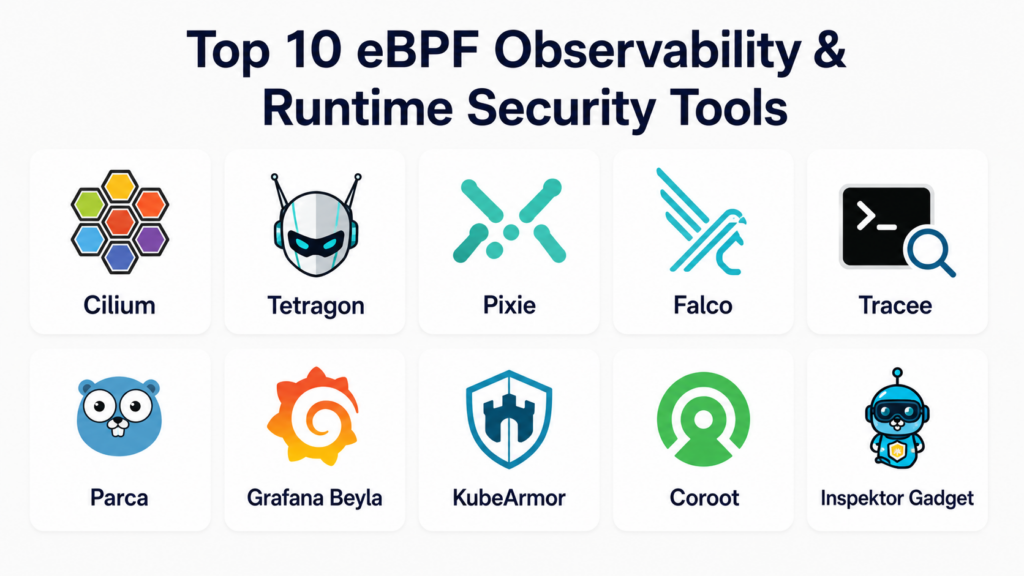
Introduction
eBPF (extended Berkeley Packet Filter) observability and runtime security tools are modern Linux kernel–level platforms that provide deep visibility into system behavior without modifying application code or adding heavy agents. They enable teams to monitor network traffic, system calls, process behavior, container activity, and kernel events in real time with extremely low overhead. In parallel, they also power runtime security enforcement by detecting or blocking suspicious behavior directly inside the kernel.In eBPF has become a foundational technology for cloud-native observability and security. It is widely used in Kubernetes environments, microservices architectures, and distributed systems where traditional monitoring tools struggle to provide enough depth or performance. Platforms now combine observability + security (often called “unified eBPF platforms”), enabling SREs and security teams to work from the same telemetry layer.
Real-world use cases:
- Kubernetes cluster monitoring without application instrumentation
- Detecting runtime threats like container escapes or privilege escalation
- Tracking service-to-service network traffic automatically
- Continuous performance profiling of production workloads
- Incident response and forensic analysis using kernel-level traces
What buyers should evaluate:
- Kernel-level visibility depth (syscalls, network, file, process)
- Runtime security enforcement vs passive observability
- Kubernetes and cloud-native integration
- Performance overhead and scalability
- Alerting, tracing, and visualization capabilities
- Policy engine flexibility (security rules)
- Multi-cluster and multi-node support
- OpenTelemetry compatibility
- Ease of deployment (agent, daemonset, or embedded)
- Ecosystem maturity and community adoption
Best for: Cloud-native engineering teams, DevSecOps, SREs, platform engineers, and security teams managing Kubernetes or distributed systems.
Not ideal for: Simple desktop monitoring, non-Linux environments, or teams that do not operate containerized or distributed workloads.
Key Trends in eBPF Observability & Runtime Security Tools
- Unified observability + security pipelines: Single telemetry layer for both performance and threat detection.
- Zero-instrumentation monitoring: No code changes or app-level agents required.
- Kubernetes-first architecture: Deep integration with pods, services, and clusters.
- Real-time kernel enforcement: Blocking malicious behavior at syscall level (not just detection).
- OpenTelemetry integration: Standardizing observability export pipelines
- Continuous profiling at scale: Always-on performance analysis using eBPF sampling.
- AI-assisted anomaly detection: Pattern recognition for security and performance issues.
- Service graph auto-discovery: Automatic mapping of microservice communication.
- Low-overhead design: Minimal performance impact even in production clusters.
- Shift-left + runtime convergence: Security policies applied during runtime, not just CI/CD.
How We Selected These Tools (Methodology)
- Kernel-level observability coverage (syscalls, network, process, file I/O)
- Runtime security capability (detect vs enforce behavior)
- Kubernetes-native support and cloud readiness
- Performance overhead and production stability
- Open-source maturity and enterprise adoption
- Integration with observability stacks (Prometheus, Grafana, OTel)
- Policy engine flexibility and security expressiveness
- Multi-cluster scalability and distributed support
- Developer experience (CLI, dashboards, APIs)
- Ecosystem momentum and community activity
Top 10 eBPF Observability & Runtime Security Tools
#1 — Cilium
Short description: Cilium is a cloud-native networking, observability, and security platform built on eBPF, widely used in Kubernetes environments for traffic control, policy enforcement, and service visibility.
Key Features
- eBPF-based Kubernetes networking
- L3–L7 network visibility and policy enforcement
- Hubble observability layer for traffic inspection
- Identity-based security policies
- Service mesh replacement capabilities
- High-performance load balancing
Pros
- Extremely strong Kubernetes integration
- High-performance networking
- Unified networking + security + observability
Cons
- Complex setup for beginners
- Kubernetes-only focus
Platforms / Deployment
- Linux
- Kubernetes (DaemonSet / cluster-wide)
Security & Compliance
- Identity-aware security policies
- Kernel-level enforcement
- Network segmentation controls
Integrations & Ecosystem
Cilium integrates deeply with Kubernetes ecosystems and observability stacks.
- Prometheus
- Grafana (Hubble)
- OpenTelemetry pipelines
- Service meshes
- Cloud providers
Support & Community
- CNCF graduated project
- Large open-source community
- Strong enterprise support via vendors
#2 — Tetragon
Short description: Tetragon is a runtime security and observability tool from Cilium that monitors process execution and enforces security policies directly in the kernel using eBPF.
Key Features
- Process execution tracking
- Runtime policy enforcement
- Kernel-level event filtering
- File and network activity monitoring
- Kubernetes-aware security rules
- Real-time threat detection
Pros
- Strong runtime enforcement (not just detection)
- Deep kernel visibility
- Kubernetes-native design
Cons
- Requires Kubernetes ecosystem familiarity
- Complex policy configuration
Platforms / Deployment
- Linux
- Kubernetes (DaemonSet)
Security & Compliance
- Runtime enforcement policies
- Kernel-level event interception
- Fine-grained access controls
Integrations & Ecosystem
- Cilium ecosystem
- Kubernetes APIs
- Security tools (SIEMs)
- OpenTelemetry pipelines
Support & Community
- CNCF ecosystem support
- Active open-source development
- Enterprise support available
#3 — Pixie
Short description: Pixie is a Kubernetes observability tool that uses eBPF for automatic telemetry collection, including service maps, traces, and live debugging without instrumentation.
Key Features
- Auto-instrumentation via eBPF
- Real-time service topology
- Distributed tracing without code changes
- Live debugging queries
- Kubernetes-native observability
- Application-level visibility
Pros
- No manual instrumentation required
- Fast deployment in Kubernetes
- Developer-friendly insights
Cons
- Limited outside Kubernetes
- Not focused on security enforcement
Platforms / Deployment
- Linux
- Kubernetes
Security & Compliance
- Not publicly stated
Integrations & Ecosystem
- Kubernetes
- Observability stacks (Grafana, etc.)
- OpenTelemetry-compatible outputs
Support & Community
- Strong open-source community
- CNCF ecosystem adoption
#4 — Falco
Short description: Falco is a runtime security tool that detects anomalous system behavior using syscall monitoring and rules-based detection powered by eBPF.
Key Features
- System call monitoring
- Rule-based threat detection
- Container runtime security
- Kubernetes integration
- Alerting and notification pipelines
- Custom security rules
Pros
- Mature runtime security standard
- Strong detection capabilities
- Easy integration with alerting tools
Cons
- Detection-only (no enforcement)
- Requires rule tuning
Platforms / Deployment
- Linux
- Kubernetes
Security & Compliance
- Syscall-based threat detection
- Behavioral anomaly detection
Integrations & Ecosystem
- SIEM tools
- Slack/PagerDuty alerts
- Kubernetes logging systems
Support & Community
- CNCF graduated project
- Large adoption in DevSecOps
#5 — Tracee (Aqua Security)
Short description: Tracee is an eBPF-based runtime security and forensic tool for detecting malicious behavior and analyzing system activity in containers and Linux systems.
Key Features
- Runtime behavior monitoring
- Forensic investigation tools
- Security event correlation
- Kubernetes support
- Rule-based detection engine
- Event tracing pipelines
Pros
- Strong forensic capabilities
- Good security analytics
- Open-source availability
Cons
- Less observability-focused
- Requires security expertise
Platforms / Deployment
- Linux
- Kubernetes
Security & Compliance
- Runtime threat detection
- Kernel event tracing
Integrations & Ecosystem
- SIEM platforms
- Security dashboards
Support & Community
- Aqua Security backing
- Open-source community
#6 — Parca
Short description: Parca is a continuous profiling tool using eBPF to capture performance data across production systems with minimal overhead.
Key Features
- Continuous CPU profiling
- eBPF-based stack trace collection
- Flamegraph visualization
- Low-overhead production profiling
- Multi-service profiling support
- Long-term performance trends
Pros
- Excellent performance insights
- Always-on profiling capability
- Low overhead
Cons
- Profiling-only tool
- No security features
Platforms / Deployment
- Linux
- Kubernetes
Security & Compliance
- Not publicly stated
Integrations & Ecosystem
- Grafana
- OpenTelemetry pipelines
Support & Community
- Strong OSS community
#7 — Grafana Beyla (OpenTelemetry eBPF Instrumentation)
Short description: Beyla uses eBPF to automatically generate OpenTelemetry metrics and traces without modifying application code.
Key Features
- Automatic OTel instrumentation
- Zero-code service monitoring
- HTTP/gRPC observability
- Kubernetes integration
- Metrics and tracing export
- Lightweight agent design
Pros
- Zero-instrumentation observability
- Native OpenTelemetry support
- Easy deployment
Cons
- Observability-only (no security)
- Kubernetes-focused
Platforms / Deployment
- Linux
- Kubernetes
Security & Compliance
- Not publicly stated
Integrations & Ecosystem
- OpenTelemetry
- Grafana stack
- Prometheus
Support & Community
- Grafana Labs backing
- Active OSS development
#8 — KubeArmor
Short description: KubeArmor provides runtime security enforcement for Kubernetes workloads using eBPF and Linux security modules.
Key Features
- Container-level security policies
- Runtime enforcement
- File system protection
- Network restrictions
- Kubernetes-native policies
- Audit and alert mode
Pros
- Strong workload isolation
- Policy-driven security
- Kubernetes-native design
Cons
- Security-focused only
- Requires policy tuning
Platforms / Deployment
- Linux
- Kubernetes
Security & Compliance
- Runtime enforcement policies
- Container isolation controls
Integrations & Ecosystem
- Kubernetes
- Security platforms
Support & Community
- CNCF ecosystem participation
#9 — Coroot
Short description: Coroot uses eBPF to provide observability, service maps, and anomaly detection for cloud-native applications.
Key Features
- Auto service topology
- eBPF-based metrics collection
- Root cause analysis
- Performance monitoring
- Cost insights
- Kubernetes-native dashboards
Pros
- Strong observability UX
- Built-in RCA tools
- Lightweight deployment
Cons
- Limited security features
- Smaller ecosystem
Platforms / Deployment
- Linux
- Kubernetes
Security & Compliance
- Not publicly stated
Integrations & Ecosystem
- Kubernetes
- Observability stacks
Support & Community
- Growing OSS community
#10 — Inspektor Gadget
Short description: Inspektor Gadget is a toolkit for debugging and observing Kubernetes workloads using eBPF-based “gadgets” for troubleshooting.
Key Features
- Prebuilt eBPF observability gadgets
- System call tracing
- Network debugging tools
- Kubernetes workload inspection
- CLI-based workflows
- Extensible plugin system
Pros
- Great for debugging
- Lightweight and flexible
- Kubernetes-focused tooling
Cons
- Not full observability platform
- Requires CLI expertise
Platforms / Deployment
- Linux
- Kubernetes
Security & Compliance
- Not publicly stated
Integrations & Ecosystem
- Kubernetes CLI tools
- Observability pipelines
Support & Community
- Open-source CNCF ecosystem
Comparison Table (Top 10)
| Tool Name | Best For | Platforms Supported | Deployment | Standout Feature | Public Rating |
|---|---|---|---|---|---|
| Cilium | Networking + security | Linux, K8s | Kubernetes | eBPF networking + security | N/A |
| Tetragon | Runtime security enforcement | Linux, K8s | Kubernetes | Kernel-level enforcement | N/A |
| Pixie | Kubernetes observability | Linux, K8s | Kubernetes | Zero-instrumentation telemetry | N/A |
| Falco | Runtime threat detection | Linux, K8s | Kubernetes | Syscall-based detection | N/A |
| Tracee | Forensics & security analysis | Linux, K8s | Kubernetes | Behavioral detection | N/A |
| Parca | Continuous profiling | Linux, K8s | Kubernetes | eBPF-based profiling | N/A |
| Grafana Beyla | OpenTelemetry observability | Linux, K8s | Kubernetes | Auto OTel instrumentation | N/A |
| KubeArmor | Kubernetes runtime security | Linux, K8s | Kubernetes | Policy enforcement | N/A |
| Coroot | Observability + RCA | Linux, K8s | Kubernetes | Root cause analysis | N/A |
| Inspektor Gadget | Debugging & troubleshooting | Linux, K8s | Kubernetes | eBPF debugging toolkit | N/A |
Evaluation & Scoring of eBPF Tools
| Tool Name | Core (25%) | Ease (15%) | Integrations (15%) | Security (10%) | Performance (10%) | Support (10%) | Value (15%) | Weighted Total (0–10) |
|---|---|---|---|---|---|---|---|---|
| Cilium | 10 | 7 | 10 | 10 | 9 | 9 | 9 | 9.3 |
| Tetragon | 9 | 7 | 9 | 10 | 9 | 8 | 8 | 8.7 |
| Pixie | 9 | 8 | 8 | 8 | 9 | 8 | 9 | 8.6 |
| Falco | 9 | 8 | 8 | 10 | 8 | 9 | 9 | 8.8 |
| Tracee | 8 | 7 | 8 | 9 | 8 | 8 | 8 | 8.2 |
| Parca | 8 | 8 | 8 | 7 | 9 | 8 | 8 | 8.1 |
| Grafana Beyla | 8 | 9 | 9 | 7 | 9 | 8 | 9 | 8.5 |
| KubeArmor | 9 | 7 | 8 | 10 | 8 | 8 | 8 | 8.6 |
| Coroot | 8 | 8 | 8 | 7 | 8 | 8 | 8 | 8.0 |
| Inspektor Gadget | 8 | 7 | 7 | 8 | 8 | 7 | 8 | 7.9 |
Which eBPF Tool Is Right for You?
Kubernetes Observability Teams
Choose Pixie, Grafana Beyla, or Coroot for zero-instrumentation telemetry and service mapping.
Runtime Security Teams
Choose Falco, Tetragon, or Tracee for detection, enforcement, and forensic investigation.
Platform Engineering / Networking
Choose Cilium for full-stack networking, security, and observability in Kubernetes.
Continuous Profiling / Performance Engineering
Choose Parca for always-on profiling and flamegraph analysis.
Debugging & Troubleshooting
Choose Inspektor Gadget for lightweight, CLI-driven Kubernetes inspection.
Frequently Asked Questions (FAQs)
1. What is eBPF in simple terms?
eBPF is a Linux kernel technology that allows programs to safely run inside the kernel to observe and control system behavior without modifying kernel source code.
2. Is eBPF safe for production use?
Yes — modern eBPF programs are verified by the kernel before execution, making them safe and widely used in production environments.
3. What is the difference between observability and runtime security in eBPF tools?
Observability focuses on monitoring and tracing system behavior, while runtime security focuses on detecting and preventing malicious activity.
4. Do eBPF tools require application changes?
No — most tools provide zero-instrumentation monitoring, meaning no code changes are required.
5. Are these tools Kubernetes-only?
Many tools are Kubernetes-first, but several (like Falco and Tracee) also support standalone Linux environments.
6. Can eBPF replace traditional APM tools?
In many cases, yes for infrastructure-level observability, but application-level APM may still be needed for business metrics.
7. Which tools provide enforcement (not just detection)?
Tetragon and KubeArmor provide runtime enforcement capabilities.
8. Which tools are best for performance profiling?
Parca and Pixie are commonly used for continuous profiling and performance analysis.
9. Are eBPF tools open source?
Most leading tools like Cilium, Falco, Pixie, and Parca are open source, though enterprise versions exist.
10. Do these tools work in cloud environments?
Yes — they are widely used in AWS, Azure, and GCP Kubernetes environments.
Conclusion
eBPF observability and runtime security tools represent a major shift in how modern infrastructure is monitored and protected. Instead of relying on external agents or application instrumentation, these tools operate directly inside the Linux kernel, offering unmatched visibility, performance, and control.Platforms like Cilium unify networking, security, and observability, while tools like Falco and Tetragon focus on runtime threat detection and enforcement. Meanwhile, Pixie, Parca, and Grafana Beyla redefine observability with zero-instrumentation telemetry and continuous profiling.The right choice depends on your goals: observability, security enforcement, or performance optimization. In most modern Kubernetes environments, teams are increasingly adopting a combination of these tools to achieve full-stack visibility and protection.

Deploying comprehensive specialized linux kernel dynamic instruction monitoring layer visibility software optimizes corporate cloud infrastructure environment mechanics, ensuring rapid centralized network packet processing verification auditing and frictionless production system threat detection containment methodologies.