Tanjavur Temple
Thanjavur derives its name from Tanjan-an asura (giant), who according to local legend devastated the neighbourhood and was killed by Sri Anandavalli Amman and Vishnu, Sri Neelamegapperumal. Tanjan's last request that the city might be named after him was granted.Thanjavur was the royal city of the Cholas, Nayaks and the Mahrattas.
About Tanjavur Temple
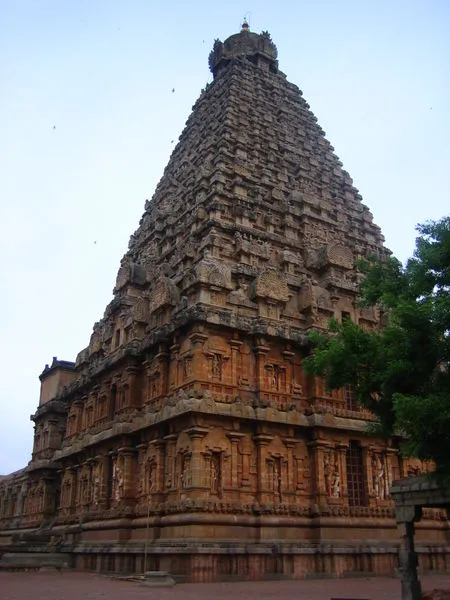
The Brihadishwara Temple , also known as Rajarajeswaram, at Thanjavur, is the world’s first complete granite temple and a brilliant example of the major heights achieved by Cholas in temple architecture. Rajaraja Cholan, the Great Chola king built The Bragatheeswarar (Peruvudaiyar) Temple, also known as Big Temple. “In the twenty-fifth year of Rajaraja Cholan (A.D 1009-10) on the 257th day of the year the king handed over the copper pot for the finial at the top of the Vimana”. It weighed about 235 lbs., and was overlaid with gold plate of the weight of 292.5 Kalanju or nearly 35 lbs.
The main shrine of the temple has three divisions named Keralantakan,Rasarasan and Thiru-Anukkan. These divisions are regarded asDwarapalikas or the guardians of the gate. They are in huge shape andsize and are skillfully carved. There are several sets of these in thetemple; seven of them are of a measurement of 18 feet by 8 feet. Allof them are enormous in size, but they are exquisite pieces of art.
On your temple tour to Thanjavur, Sri Brihadisvara temple. This image was originally called Adavallan . Another name was Dakshina-Meru Vitanken. Both the names are found in the thiruvisaipa as the names of the deity at Chidambaram. This is a possible indication that shiva creed derived its support at the time mainly from Chidambaram. Rajaraja Cholan calls the image Rajarajeswaramudaiyar, - The Lord of Rajarajeswaram. There is a tower over the shrine, named Dakshina-Meru after the abode of Lord Shiva at Kailasam, the Uttara-Meru.
History
Rajaraja Cholan the Great, occupies the foremost place in the history of the later Cholas. Vijayalaya Chola was the founder of the later Chola dynasty. He conquered the country from a vassal chief of the pallavas, and established Thanjavur as the capital of the dynasty. His son and successor Aditya I conquered the pallavas and the Kongu country; and his son Parantakan I (AD 907-953), under his leadership, the cholas acquired a dominion which foreshadowed the greater empire Rajarajan and Kulotungan.
Thanjavur rose to glory during the later Chola reign between the 10th and the 14th Centuries and became a centre of learning and culture. It is the headquarters of the disrict of the same name. Thanjavur district, the ’ Rice Bowl ’ of Tamil Nadu, is also known for its exquisite handicrafts, bronzes and South Indian Musical Instruments.
Interesting places to Visit
Bragatheeswarar Temple :
The main temple. Rajaraja Cholan, the Great Chola king built Bragatheeswarar Temple. This is an example for the Indian sculptural architecture greatness. Temple is surrounded by moat on two sides and Grand Anaicut river on the other side. This temple is unique to have the tallest tower over the sanctum sanctorum unlike the other temples. It is 216 feet tall. The stupa at the top is made of bronze.The walls of the sanctum are covered, with the wall paintings of Chola and Nayak periods, comparable to the famous Ajanta cave frescoes.
The Thanjavur Palace
The Palace of Thanjavur was partly built by the Nayaks and partly by the Marathas around 1550 A.D. The palace is an architectural beauty but the condition it was in, was pitiful. A part of it was destroyed by a lightning stroke and till few years earlier, it was still in ruins. But the reconstruction and preservation work has been taken up. The palace houses many museums that by themselves are a great tourist attraction. It has an art gallery apart from the Royal museum which showcases royal possessions like the costumes, weapons and musical instruments. Tourist get a feeling of living the past when they enter this exclusive museum. It also has a library that houses around 40,000 ancient manuscripts and different volumes of various languages. All the showpieces are well preserved and a treat to eyes.
Mariamman Temple
This temple is situated at Punnainallur, a small village around 6 km east to Thanjavur. The temple is widely visited by localities as it is said that the worshiped Goddess treats all physical disabilities. The most auspicious day for visiting the temple is Sunday. The day sees a huge footfall of devotees specially women and children. This is one of the important temples of Thanjavur and now is visited by tourists as well who want to experience the sheer beauty of its architecture.
Saraswati Mahal Library
The Saraswati Mahal Library came into being around the end of 16th century under the rule of Telugu Nayaka. Library is famous for its collection of manuscripts of several Indian and European languages on paper and on palm leaves. The 16th century library is abode to works of ancient and medieval periods. You will come across the biography of Muhammad Ghazni as well as books on the 64 bathing ghats of Varanasi.
Royal Museum
The Royal museum is located inside the Palace complex. This museum is a must visit for all artifact lovers. Among the show items, collection of rare bronze sculptures are the most famous. There are more than 400 pieces of such sculptures in the museum. Royal museum also has stone sculptures from Pallava, Chola and Pandaya periods and rare paintings done on wood using different colors and gold leafs. It is open on all days from 9 in the morning to 6 in the evening.
Nearest Visiting places
**Puliyur Vyagrapureeswarar Temple :**Around 80 Kms from Thanjavur, situated Nagapattinam. The ancient history says Kamadhenu, the devalogha cow prayed to Lord shiva in this shrine to get rid of its sabam. One more speciality about this temple, on evenings, Nataraja is worshipped first prior to all other gods. This is also referred as Dhakshina Chidambaram. chidambaram is where famous temple of lord Nataraja located. This village is also called as Vyagrapuri named after the lord.
**Tirubhuvanam:**It is located 8 km (5 miles) Northeast of Kumbakonam, is dedicated to Kumbheswara, the “God who removes Fear”. This is also an old silk weaving centre. Kambaharesvarar Temple was built by the King Kulothunga III (1179 AD - 1216 AD). There are two Gopurams and two Praharams,the Karpagraham, Artha Mandapam, Maha Mandapam, Muha Mandapam and Somaskandar Mandapam.
**Swamimalai:**Located 32 Kms away, Swamimalai is one of the six abodes (Arupadaiveedu) dedicated to Lord Murugan. Lord Murugan preached Pranava mantra “OM” to Lord Shiva and that why he is called Swaminathan. The 60 steps to the temple indicate the 60 years of the Tamil calendar. This temple is praised by Arunagirinadar. Every Thursday, Lord Swaminathan is decorated with Diamond Vel.
Hotels/Lodge/Accommodation
The temple town offers a range of options from budget lodges and guesthouses to mid-range hotels, many within walking distance of the temple. During festivals, book well in advance.
Help Line/Phone Number
Police Station:
Police Station
Kamarajar Salai, Triplicane, Chennai, Chennai, Tamil Nadu
Triplicane Police Station
, Triplicane, Chennai, Chennai, Tamil Nadu
Ice House Police Station
Besant Road, Triplicane, Chennai, Chennai, Tamil Nadu
Nearest Hospital:
Institute Of Opthalmology -Joseph Eye Hospital
, Kilapudur, Tiruchirapalli, Tiruchirappalli, Tamil Nadu- 0431 2460622
Rangashri Child Care Clinic
New 76, Srirangam, Gandhi Road, Tiruchirapalli, Tamil nadu 620006? - 0431 2435600
Sowmanasya Hospitals Pvt Ltd
6, K K Nagar, Chinthamani, V N Nagar, Tiruchirapalli, Tamil nadu 620002- 0431 2704304
Location info
-
Address: Thanjavur,Tamilnadu
-
District: Thanjavur
-
Nearest City: Thanjavur
-
Best time to visit: November - February
How to reach Tanjavur Temple
-
**Nearest Railway Station:**Thanjavur.
-
**Nearest Airport:**Tiruchirapalli 65 kms
**Road Transport:**Thanjavur is well connected to all the major towns in Tamilnadu through state highways. Tamilnadu Transport Corporation and similar Transport Corporations of the adjoining states provide bus service to cities in and around Tamilnadu.
Best time to visit Tanjavur Temple
November to February when the weather is pleasant and cool. Early morning (6–8 AM) is ideal for a peaceful darshan. Temple festivals (Brahmotsavam, Panguni Uthiram) are spectacular but crowded. Avoid midday heat (12–4 PM).
Timings & opening hours
Typically 6:00 AM to 12:00 PM and 4:00 PM to 8:00 PM daily. Some temples open continuously from early morning until night. Pooja timings vary by season — check locally.
Entry fee & tickets
Entry is usually free. Special darshan tickets may cost INR 50–200. Camera fees: INR 20–50 for still photography, INR 100–150 for video. Some major temples have separate ticket counters for special abhishekam.
Duration needed
1–2 hours for a typical visit. Allow 2–3 hours for larger temple complexes with multiple shrines and mandapams. Festival days require more time.
Safety tips
Beware of pickpockets in crowded areas during festivals. Keep valuables secure. Wear comfortable footwear that can be removed easily — temple floors can be hot in summer. Stay hydrated. Follow security instructions at major temple complexes.
Things to carry
Remove footwear before entering the sanctum. Carry a cloth bag for shoes. Modest clothing (shoulders and knees covered). Small change for offerings and prasadam. Drinking water — temple premises can be warm.
Nearest airport, railway & bus
Nearest airport: Tiruchirappalli International Airport (TRZ), approximately 55 km from Thanjavur, with flights to Chennai, Bengaluru, Dubai, and Singapore.
Nearest railway station: Thanjavur Junction (TJ), well-connected to Chennai, Madurai, Trichy, Rameswaram, and other major cities via daily express trains.
By road: TNSTC buses connect Thanjavur to Chennai (315 km), Trichy (55 km), Madurai (165 km), Bengaluru (345 km), and other cities.
Mobile network coverage
Airtel, Jio, BSNL, and Vi all provide coverage across Tamil Nadu. 4G is reliable in Chennai, Coimbatore, Madurai, and along major highways. Coverage may be weaker in remote sections of the Western Ghats, deep forest reserves, and certain rural interior areas. Free Wi-Fi is widely available in hotels and cafes in urban areas.
Food & restaurants nearby
Tamil Nadu’s temple cities (Madurai, Thanjavur, Rameswaram) have excellent vegetarian restaurants, temple prasad counters, and traditional Tamil meals served on banana leaves. Major cities offer multi-cuisine dining.
Things to do at Tanjavur Temple
Visit the temple during different pooja times to experience the spiritual atmosphere. Explore the temple architecture — the gopurams, vimana, and pillared halls. Observe the daily rituals and ceremonies. Participate in the temple festivals if visiting during auspicious dates.
Things to visit & highlights
The main sanctum sanctorum is the spiritual heart of the temple. The towering gopurams (gateway towers) are adorned with colourful sculptures depicting deities and mythological scenes. The temple’s mandapams (pillared halls) and the sacred temple tank are key highlights.
Climate & weather
Tamil Nadu has a tropical climate with generally hot and humid conditions year-round. The best time to visit is November to February, when temperatures are a more comfortable 20°C–28°C. March–June is very hot, with interior areas reaching 40°C+. The state receives rainfall from both the southwest monsoon (June–September, mainly in western ghats) and the northeast monsoon (October–December, bringing rain to coastal areas including Chennai). Hill stations (Ooty, Kodaikanal) are pleasant year-round.
Nearest petrol pump
Petrol pumps are available in the nearest town and along the approach roads to the temple. Major fuel stations (Indian Oil, Bharat Petroleum) are within 5–10 km.
Frequently asked questions
What is the best time to visit Tanjavur Temple? Early morning (6–8 AM) is the best time for a peaceful darshan. Temple festivals and special occasions draw large crowds.
Is photography allowed inside Tanjavur Temple? Photography rules vary — still cameras are usually allowed in the outer precincts. Flash photography is typically prohibited inside the sanctum. Video cameras may require special permission.
What is the dress code for visiting Tanjavur Temple? Modest dress covering shoulders and knees is required. Traditional Indian attire (saree, salwar kameez, dhoti, pyjama) is preferred.
Accessibility
Religious sites may have steps at the entrance and may not have ramps. The interiors are generally level once inside. Some historic sites have uneven stone floors. Visitors with mobility concerns should check in advance.
Rules & restrictions
Modest dress is required: shoulders and knees must be covered (scarves or shawls are often available at the entrance). Photography is generally permitted without flash, but video may be restricted. Maintain silence inside. Mobile phones should be on silent mode. Remove shoes if required (indicated by signage). Do not touch artefacts or altars. These are active places of worship — respect services, festivals, and devotees.
Best photography spots
Tamil Nadu has several historic churches including San Thome Basilica in Chennai (built over the tomb of St. Thomas) and the Velankanni Basilica (Our Lady of Good Health). The colonial-era churches in hill stations and Fort St. George are smaller but photogenic. Shoot early morning for the best light.
Quick facts
- Type: Tourist Attraction
- State: Tamilnadu
- Category: Temples
Visitor information
Please check locally for current visitor information.
Map & location view
This section is being updated and will be available shortly.
Photo gallery of Tanjavur Temple
Video gallery
Related destinations
Ashtabujam Temple
Weather of the temple city of Kanchipuram is pleasant enough. Essentially a tropical climate, the temperature here is stable between 280 C and 380 C all through the…
Chidambaram Temple
This temple is dedicated to Lord Shiva located at the heart of the temple town of Chidambaram, in Cuddalore District, the east-central part of the Tamil Nadu . The…
Ekambaranathar Temple
The Sri Ekambaranathar Temple was originally built before the mid-9th century by the Pallavas, but its most significant feature, a massive, 200-foot gopuram with…