Ekambaranathar Temple
The Sri Ekambaranathar Temple was originally built before the mid-9th century by the Pallavas, but its most significant feature, a massive, 200-foot gopuram with more than 10 stories of intricate sculptures, was a 16th-century addition by the Vijayanagar kings. The temple is dedicated to Shiva, who appears in the form of earth, one of Hinduism's five sacred elements. Inside the courtyard is a mango tree believed to be 3,500 years old; each of its four main branches is said to bear fruit with a…
About Ekambaranathar Temple
The Sri Ekambaranathar Temple was originally built before the mid-9th century by the Pallavas, but its most significant feature, a massive, 200-foot gopuram with more than 10 stories of intricate sculptures, was a 16th-century addition by the Vijayanagar kings. The temple is dedicated to Shiva, who appears in the form of earth, one of Hinduism’s five sacred elements. Inside the courtyard is a mango tree believed to be 3,500 years old; each of its four main branches is said to bear fruit with a different taste, representing the four Hindu Vedas (sacred texts). The temple’s name may be a modification of Eka Amra Nathar (Lord of the Mango Tree). Of the original 1,000 pillars that once stood in the mandapam, fewer than 600 remain.
All the temples in the southern part of India mainly reflect the Dravidian style of architecture. Every temple has a huge gopura or gateway, which is a trademark of all the temples located in south Indian states.The Ekambaranathar Temple is dedicated to Lord Shiva and is one of the largest temples in the city of Kanchipuram.The temple is spread over a huge area of 12 hectares, which is one of the primary features that attract the attention of the visitor. The construction of the temple began during the reign of the Pallavas and continued even during the Chola dynasty that followed the reign of the Pallavas.The gopura, which has been built by a famous king, Krishnadevaraya who dominated one of the most illustrious empires of Vijayanagar. The height of the gopura is a stunning 59 meters and is one of the tallest gopuras among the south Indian temples.The temple hallway hallway is known as “Aayiram Kaal Mandapam”, which means a hallway with thousand pillars. This expanse of the hallway leaves every visitor spellbound. Apart from this hallway, the interior walls of the temple consist of 1008 Shiva Lingams.
Interesting places to Visit
Thillaikaliamman Temple:The Thillaikaliamman Temple is on the northern end of the town. Kopperunjingan, king who ruled between AD 1229 and 1278, built this temple. This temple is dedicated to Goddess Kali. It is said that Goddess Kali’s anger did not subside even after killing the demon Tarakasura. Hence, Lord Nataraja performed tandava dance to contain her anger. It is enjoined that all those who visit Chidambaram should pay a visit to Thillaikaliamman temple.
Annamalai University :The Annamalai University owes its existence to the farsighted vision, enlightened wisdom, benefaction and philanthropy of a single individual – Dr. Rajah Sir Annamalai Chettiar of Chettinad. As early as 1920, he founded the Sri Meenakshi College at Chidambaram, a great pilgrimage centre and also a centre for South Indian traditional culture and learning. In 1928, the Annamalai University Act was passed and Sri Meenakshi College became the nucleus for the University which is unitary, residential, rural in its settings and progressive in its outlook. During his tenure as Pro-Chancellor for 19 years he paid immaculate care and detailed attention to the growth and development of the University in every field. He paid great attention in the appointment of Vice-Chancellors. Equal attention was also paid by him in the appointment of enlightened staff, especially the Professors and Heads of Departments. The Professors of Annamalai University were always scholars and scientists of great renown in their own field.
Nearest Visiting places
Pichavaram :This is a seaside resort and has backwaters and mangroves and lies 15 km east of Chidambaram. It is also a birdwatcher?s paradise with a wide variety of bird life to be seen
Vaitheeswaran koil:The famous Nadi astrologers can also be found in a nearby village 25 km from here.
Tiruvakkarai:country’s first national fossil wood park
Hotels/Lodge/Accommodation
The temple town offers a range of options from budget lodges and guesthouses to mid-range hotels, many within walking distance of the temple. During festivals, book well in advance.
Location info
-
**Address:**Chidambaram,Chidambaram Taluk Cuddalore District Tamil nadu ,India
-
District: Cuddalore
-
Nearest City: Cuddalore,Pondicherry
-
Best time to visit: Throughout the year
Climate & weather
The climate of Chidambaram is tropical with mercury touching up to 37°C in the summers and around 20°C in the winters.
History of Ekambaranathar Temple
The Ekambareshvara temple is the principle Shaiva sanctuary and its soaring gopuras dominate the city’s skyline. This temple was erected in 1509 by the Vijayanagara emperor Krishnadeva Raya. The temple is preceded by a long columned mandapa into which earlier shrines and altars have been incorporated. A corridor surrounds the principle shrine on four sides, presenting a continuous sequence of receding piers.
Things to do at Ekambaranathar Temple
Take a bus ride of about fifteen kilometres through breath taking green paddy fields and observe village life centred around a canal that runs along the bus route
How to reach Ekambaranathar Temple
-
**Nearest Railway Station:**Chidambaram
-
**Nearest Airport:**Tiruchirapalli(195 km),Chennai (245 km)
-
**Road Transport:**There are good number of buses available to various places in Tamilnadu, Andhra Pradesh, Karnataka, and Pondicherry states from Chidambaram.
Best time to visit Ekambaranathar Temple
November to February when the weather is pleasant and cool. Early morning (6–8 AM) is ideal for a peaceful darshan. Temple festivals (Brahmotsavam, Panguni Uthiram) are spectacular but crowded. Avoid midday heat (12–4 PM).
Timings & opening hours
Typically 6:00 AM to 12:00 PM and 4:00 PM to 8:00 PM daily. Some temples open continuously from early morning until night. Pooja timings vary by season — check locally.
Entry fee & tickets
Entry is usually free. Special darshan tickets may cost INR 50–200. Camera fees: INR 20–50 for still photography, INR 100–150 for video. Some major temples have separate ticket counters for special abhishekam.
Duration needed
1–2 hours for a typical visit. Allow 2–3 hours for larger temple complexes with multiple shrines and mandapams. Festival days require more time.
Safety tips
Beware of pickpockets in crowded areas during festivals. Keep valuables secure. Wear comfortable footwear that can be removed easily — temple floors can be hot in summer. Stay hydrated. Follow security instructions at major temple complexes.
Things to carry
Remove footwear before entering the sanctum. Carry a cloth bag for shoes. Modest clothing (shoulders and knees covered). Small change for offerings and prasadam. Drinking water — temple premises can be warm.
Nearest airport, railway & bus
By Air: Chennai International Airport (MAA) is the primary international gateway. Regional airports include Coimbatore International Airport (CJB), Madurai International Airport (IXM), and Tiruchirappalli International Airport (TRZ), depending on location.
By Train: Tamil Nadu has an extensive railway network. Major junctions include Chennai Central (MAS), Coimbatore Junction (CBE), Madurai Junction (MDU), Tiruchirappalli Junction (TPJ), and Salem Junction (SA). From the nearest station, local transport is readily available.
By Road: Tamil Nadu State Transport Corporation (TNSTC) operates an extensive bus network connecting all parts of the state. National highways NH 44, NH 48, and NH 32 provide excellent connectivity. Private buses and taxis are also available from nearby towns and cities.
Mobile network coverage
Airtel, Jio, BSNL, and Vi all provide coverage across Tamil Nadu. 4G is reliable in Chennai, Coimbatore, Madurai, and along major highways. Coverage may be weaker in remote sections of the Western Ghats, deep forest reserves, and certain rural interior areas. Free Wi-Fi is widely available in hotels and cafes in urban areas.
Food & restaurants nearby
Tamil Nadu’s temple cities (Madurai, Thanjavur, Rameswaram) have excellent vegetarian restaurants, temple prasad counters, and traditional Tamil meals served on banana leaves. Major cities offer multi-cuisine dining.
Things to visit & highlights
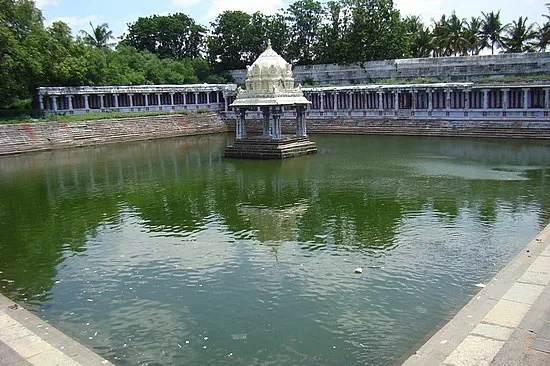
The main sanctum sanctorum is the spiritual heart of the temple. The towering gopurams (gateway towers) are adorned with colourful sculptures depicting deities and mythological scenes. The temple’s mandapams (pillared halls) and the sacred temple tank are key highlights.
Helpline & emergency contacts
Tourist Helpline: 1364. Police: 112. Ambulance: 108. For medical emergencies, the nearest government hospital or primary health centre can provide assistance.
Nearest petrol pump
Petrol pumps are available in the nearest town and along the approach roads to the temple. Major fuel stations (Indian Oil, Bharat Petroleum) are within 5–10 km.
Frequently asked questions
What is the best time to visit Ekambaranathar Temple? Early morning (6–8 AM) is the best time for a peaceful darshan. Temple festivals and special occasions draw large crowds.
Is photography allowed inside Ekambaranathar Temple? Photography rules vary — still cameras are usually allowed in the outer precincts. Flash photography is typically prohibited inside the sanctum. Video cameras may require special permission.
What is the dress code for visiting Ekambaranathar Temple? Modest dress covering shoulders and knees is required. Traditional Indian attire (saree, salwar kameez, dhoti, pyjama) is preferred.
Accessibility
Religious sites may have steps at the entrance and may not have ramps. The interiors are generally level once inside. Some historic sites have uneven stone floors. Visitors with mobility concerns should check in advance.
Rules & restrictions
Modest dress is required: shoulders and knees must be covered (scarves or shawls are often available at the entrance). Photography is generally permitted without flash, but video may be restricted. Maintain silence inside. Mobile phones should be on silent mode. Remove shoes if required (indicated by signage). Do not touch artefacts or altars. These are active places of worship — respect services, festivals, and devotees.
Best photography spots
Tamil Nadu has several historic churches including San Thome Basilica in Chennai (built over the tomb of St. Thomas) and the Velankanni Basilica (Our Lady of Good Health). The colonial-era churches in hill stations and Fort St. George are smaller but photogenic. Shoot early morning for the best light.
Quick facts
- Type: Tourist Attraction
- State: Tamilnadu
- Category: Temples
Visitor information
Please check locally for current visitor information.
Map & location view
This section is being updated and will be available shortly.
Photo gallery of Ekambaranathar Temple
Video gallery
Related destinations
Ashtabujam Temple
Weather of the temple city of Kanchipuram is pleasant enough. Essentially a tropical climate, the temperature here is stable between 280 C and 380 C all through the…
Chidambaram Temple
This temple is dedicated to Lord Shiva located at the heart of the temple town of Chidambaram, in Cuddalore District, the east-central part of the Tamil Nadu . The…
Kailasanathar Temple
Kailasanathar Temple Kanchipuram is one of the ancient temples of Tamil Nadu. Built by Rajasimha and his son Mahendra in 7 th century, this temple site is dedicated…