Kanyakumari Temple
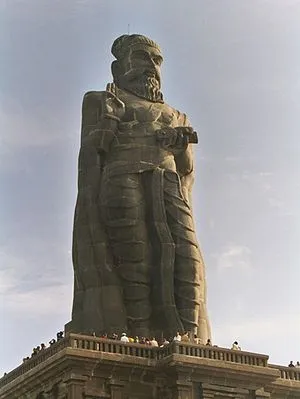
Kanyakumari is the southernmost tip of India and the merging point of three seas,the Arabian Sea, the Indian Ocean and the Bay of Bengal. It is named after the virgin Goddess Kanyakumari whose temple is situated here on its shore. Kanniyakumari is famous for its spectacular sunrises and sunsets, especially on full moon day. It is at its best during Chitra Pournami when the sun and moon are face to face at the same horizon. The temple overlooks the shoreline. It is dedicated to Parvati as Devi…
About Kanyakumari Temple
Kanyakumari is the southernmost tip of India and the merging point of three seas,the Arabian Sea, the Indian Ocean and the Bay of Bengal. It is named after the virgin Goddess Kanyakumari whose temple is situated here on its shore. Kanniyakumari is famous for its spectacular sunrises and sunsets, especially on full moon day. It is at its best during Chitra Pournami when the sun and moon are face to face at the same horizon. The temple overlooks the shoreline. It is dedicated to Parvati as Devi Kanya, the Virgin Goddess who did penance to obtain the hand of Lord Shiva. The deity, Devi Kanyakumari is’ the protector of India’s shores’ has an exceptionally brilliant diamond on her nose ring which is supposed to shine out to sea.
Legends have it that Kanya Devi, an incarnation (avatar) of Goddess Parvati, was to wed Lord Shiva but he did not turn up for the wedding and the marriage never took place. According to legends, the rice and cereals meant for the marriage remained uncooked. Even today, stones that look exactly like rice and cereals are available in the market. It is a common belief that these stones are the leftovers of the legendary marriage, which could not be solemnized. As the marriage could not take place, Kanya Devi became a virgin goddess
Interesting places to Visit
Kanyakumari Beach: The Kanyakumari beach with multi-colored sand and rocky shoreline is definitely one of the most beautiful beaches in south India and offers a great change from all other beaches. The waves that hit the shore are quite strong and frequent, that means that one does not get to enjoy a step into the shallow water or a sea bath.
Vivekananda Memorial Rock It is about 500 meters away from mainland**.** This memorial stands on one of two rocks separated by about 70 meters**.** It was built in 1970. This memorial is dedicated to Swami Vivekananda, the greatest social reformer. Swamy Vivekananda was supposed to have meditated on the rock where the memorial stands today. A meditation hall is also attached with the memorial.
Gandhi Mandapam :Not far from the Kumari Amman Temple is the Gandhi Mandapam, constructed at the spot where the urn containing the ashes of Mahatma Gandhi was kept for public view before a portion of its contents was immersed in the three seas. It resembles an Oriyan temple and was designed so that on Gandhiji’s birthday (2nd October), the sun’s rays fall on the place where his ashes were kept.
Hotels/Lodge/Accommodation
The temple town offers a range of options from budget lodges and guesthouses to mid-range hotels, many within walking distance of the temple. During festivals, book well in advance.
Help Line/Phone Number
Nearest Hospital:
CSI Hospital: 222222
Vijayakumar Hospital: 275045
Abdul Kadher Hospital: 240804
Catherine Booth Hospital: 275516
Dr. Kumarsamy Health Center: 270636
Kumaran Nursing Home: 231418
Irudhayams Hospital: 241561
Bedesta Hospital: 232233
Jeyasekhran Hospital: 271620
Krishnakumar Hospital: 230021
J. Mathias Hospital: 223137
Manju Nursing Home: 273849
Holy Cross Hospital: 230897
Moses Mathias Hospital: 232601
Moris Mathias Hospital: 276009
Location info
-
**Address:**Kanyakumari,Kanyakumari District ,Tamil nadu ,India
-
**District:**Kanyakumari District
-
Nearest City: Thiruvananthapuram
-
Best time to visit: Throughout the Year
History of Kanyakumari Temple
According to this story Kanya Devi, an incarnation of Goddess Parvati, was to marry Lord Shiva, however, since Shiva did not appear at the right time and the wedding ceremony could never take place. This is why the rice and cereals entailed for the wedding remained unprepared. Till today, there is a popular custom of buying stones that look like rice and cereals. Local people believe that these stones are the remnants of the legendary wedding ceremony, which could not be held. And thus the princess Kanya Devi, remained a virgin goddess blessing the travelers and pilgrims abroad.
How to reach Kanyakumari Temple
-
**Nearest Railway Station:**Tirunelvelli (90 kms)
-
**Nearest Airport:**Trivandrum (80kms)
-
**Road Transport:**Kanyakumari is very well connected to all the major cities in the Southern India.there are good number of buses to every cities
Nearest visiting places
VattaKotai Fort & Beach:Vattakottai Fort (or ‘Circular Fort’) is a seaside fort near Kanyakumari, the southern tip of India. It was built in the 18th century as a coastal defence-fortification and barracks in the erstwhile Travancore kingdom.It was constructed under the supervision of Captain Eustachius De Lannoy, an ex-Dutch naval officer of the VOC, who became commander of the Travancore army in the 18th century, by earning the trust of the Travancore King Marthanda Varma. De Lannoy constructed Vattakottai, as part of the defence-fortifications he undertook throughout Travancore.
Padbanabhapuram Palace:Padmanabhapuram Palace : This is located in at Padmanabhapuram Fort, close to the town of Thuckalay in Kanyakumari District, Tamilnadu. It is about 20 km from Nagercoil. The palace is inside an old granite fortress around four kilometers long. The palace is located at the foot of the Veli Hills, which form a part of the Western Ghats.
Best time to visit Kanyakumari Temple
November to February when the weather is pleasant and cool. Early morning (6–8 AM) is ideal for a peaceful darshan. Temple festivals (Brahmotsavam, Panguni Uthiram) are spectacular but crowded. Avoid midday heat (12–4 PM).
Timings & opening hours
Typically 6:00 AM to 12:00 PM and 4:00 PM to 8:00 PM daily. Some temples open continuously from early morning until night. Pooja timings vary by season — check locally.
Entry fee & tickets
Entry is usually free. Special darshan tickets may cost INR 50–200. Camera fees: INR 20–50 for still photography, INR 100–150 for video. Some major temples have separate ticket counters for special abhishekam.
Duration needed
1–2 hours for a typical visit. Allow 2–3 hours for larger temple complexes with multiple shrines and mandapams. Festival days require more time.
Safety tips
Beware of pickpockets in crowded areas during festivals. Keep valuables secure. Wear comfortable footwear that can be removed easily — temple floors can be hot in summer. Stay hydrated. Follow security instructions at major temple complexes.
Things to carry
Remove footwear before entering the sanctum. Carry a cloth bag for shoes. Modest clothing (shoulders and knees covered). Small change for offerings and prasadam. Drinking water — temple premises can be warm.
Nearest airport, railway & bus
By Air: Trivandrum International Airport (TRV) is the nearest major airport, well-connected to domestic destinations including Chennai, Bengaluru, Mumbai, Delhi, and Hyderabad. Taxis and app-based cabs are available from the airport.
By Train: Nagercoil Junction (NCJ) is the nearest major railway station, served by express and passenger trains connecting to cities across India. From the station, local transport including auto-rickshaws, taxis, and buses are available.
By Road: Kanyakumari Temple is well-connected by Tamil Nadu State Transport Corporation (TNSTC) buses and private operators. Regular bus services from Thiruvananthapuram and nearby towns connect to the destination. National and state highways provide good road connectivity for self-drive visitors.
Mobile network coverage
Airtel, Jio, BSNL, and Vi all provide coverage across Tamil Nadu. 4G is reliable in Chennai, Coimbatore, Madurai, and along major highways. Coverage may be weaker in remote sections of the Western Ghats, deep forest reserves, and certain rural interior areas. Free Wi-Fi is widely available in hotels and cafes in urban areas.
Food & restaurants nearby
Tamil Nadu’s temple cities (Madurai, Thanjavur, Rameswaram) have excellent vegetarian restaurants, temple prasad counters, and traditional Tamil meals served on banana leaves. Major cities offer multi-cuisine dining.
Things to do at Kanyakumari Temple
Visit the temple during different pooja times to experience the spiritual atmosphere. Explore the temple architecture — the gopurams, vimana, and pillared halls. Observe the daily rituals and ceremonies. Participate in the temple festivals if visiting during auspicious dates.
Things to visit & highlights
The main sanctum sanctorum is the spiritual heart of the temple. The towering gopurams (gateway towers) are adorned with colourful sculptures depicting deities and mythological scenes. The temple’s mandapams (pillared halls) and the sacred temple tank are key highlights.
Climate & weather
Tamil Nadu has a tropical climate with generally hot and humid conditions year-round. The best time to visit is November to February, when temperatures are a more comfortable 20°C–28°C. March–June is very hot, with interior areas reaching 40°C+. The state receives rainfall from both the southwest monsoon (June–September, mainly in western ghats) and the northeast monsoon (October–December, bringing rain to coastal areas including Chennai). Hill stations (Ooty, Kodaikanal) are pleasant year-round.
Nearest petrol pump
Petrol pumps are available in the nearest town and along the approach roads to the temple. Major fuel stations (Indian Oil, Bharat Petroleum) are within 5–10 km.
Frequently asked questions
What is the best time to visit Kanyakumari Temple? Early morning (6–8 AM) is the best time for a peaceful darshan. Temple festivals and special occasions draw large crowds.
Is photography allowed inside Kanyakumari Temple? Photography rules vary — still cameras are usually allowed in the outer precincts. Flash photography is typically prohibited inside the sanctum. Video cameras may require special permission.
What is the dress code for visiting Kanyakumari Temple? Modest dress covering shoulders and knees is required. Traditional Indian attire (saree, salwar kameez, dhoti, pyjama) is preferred.
Accessibility
Religious sites may have steps at the entrance and may not have ramps. The interiors are generally level once inside. Some historic sites have uneven stone floors. Visitors with mobility concerns should check in advance.
Rules & restrictions
Modest dress is required: shoulders and knees must be covered (scarves or shawls are often available at the entrance). Photography is generally permitted without flash, but video may be restricted. Maintain silence inside. Mobile phones should be on silent mode. Remove shoes if required (indicated by signage). Do not touch artefacts or altars. These are active places of worship — respect services, festivals, and devotees.
Best photography spots
Tamil Nadu has several historic churches including San Thome Basilica in Chennai (built over the tomb of St. Thomas) and the Velankanni Basilica (Our Lady of Good Health). The colonial-era churches in hill stations and Fort St. George are smaller but photogenic. Shoot early morning for the best light.
Quick facts
- Type: Tourist Attraction
- State: Tamilnadu
- Category: Temples
Visitor information
Please check locally for current visitor information.
Map & location view
This section is being updated and will be available shortly.
Photo gallery of Kanyakumari Temple
Video gallery
Related destinations
Ashtabujam Temple
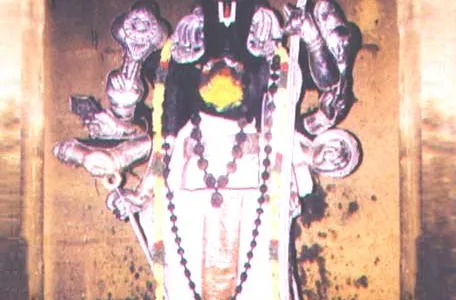
Weather of the temple city of Kanchipuram is pleasant enough. Essentially a tropical climate, the temperature here is stable between 280 C and 380 C all through the…
Chidambaram Temple
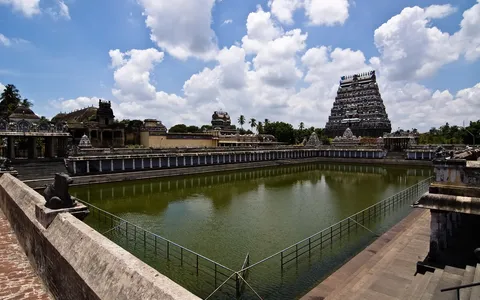
This temple is dedicated to Lord Shiva located at the heart of the temple town of Chidambaram, in Cuddalore District, the east-central part of the Tamil Nadu . The…
Ekambaranathar Temple
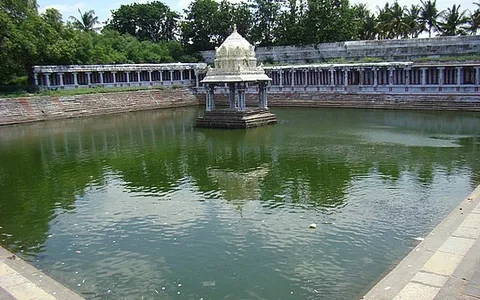
The Sri Ekambaranathar Temple was originally built before the mid-9th century by the Pallavas, but its most significant feature, a massive, 200-foot gopuram with…