Rajagiri Fort
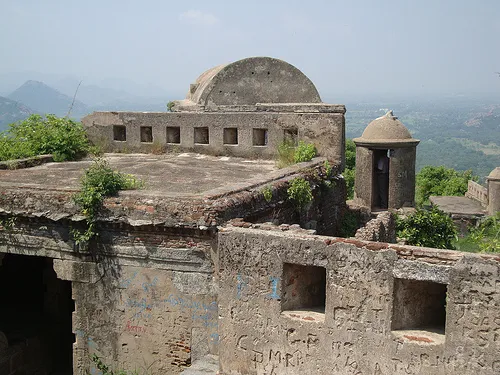
Gingee has three famous forts situate in a triangular set up known as Rajagiri, Krishnagiri and Chandragiri within a striking distance of one another. While Rajagiri is the primary fort, the other two forts are feminine parts of it with a low profile and fewer visitors than Rajagiri.The Rajagiri Fort was built in 1200 AD. Its is located in Rajagiri meaning Kings Hill. It is 1 km away from Gingee Market. It is made up of saffron and Black rock Gingee fort is situate on the state highway between…
About Rajagiri Fort
Gingee has three famous forts situate in a triangular set up known as Rajagiri, Krishnagiri and Chandragiri within a striking distance of one another. While Rajagiri is the primary fort, the other two forts are feminine parts of it with a low profile and fewer visitors than Rajagiri.The Rajagiri Fort was built in 1200 AD. Its is located in Rajagiri meaning Kings Hill. It is 1 km away from Gingee Market. It is made up of saffron and Black rock Gingee fort is situate on the state highway between Tindivanam and Thiruvannamalai and it is roughly about 38 km away in the northwest of Villupuram and some 150 km away in the South West of Chennai, the capital of Tamil Nadu.
Gingee has three famous forts situate in a triangular set up known as Rajagiri, Krishnagiri and Chandragiri within a striking distance of one another. While Rajagiri is the primary fort, the other two forts are feminine parts of it with a low profile and fewer visitors than Rajagiri. A fort wall stretching and encompassing all these forts had also been built and it still remains as a standing monumentRajagiri Fort counts amongst the few forts that are still in existence in Tamil Nadu. It is situated in the Villupuram district, which is situated at a distance of approximately 160 km from the Chennai city of India. The district also lies close to the union territory of Pondicherry.
Interesting things to Visit
Fortification Walls : The massive fortification walls of Gingee interconnect the three inaccessible hills-krishnaglri, chakkilidrug and Rajagiri. The three hills are disported in the form of triangle, while the main wall connecting them is 20 meters thick. The tops of the three hills form impregnable citadels, while the inner fort contains many fortifications and gates. The Rajagiri citadel is the highest, about 800 ft. in height, and the most inaccessible. The 20 meters deep chasm is now connected by a bridge.
Venugopala swamy Temple : Located to the west of the inner gate of the lower citadel, the temple contains a remarkable sculpture depicting Lord krishna playing on the flute with is two consorts. Another interesting feature in this temple is a finely polished, broadsmooth slab found in front of the temple
Kalyana Mahal: Built in the indo-Islamic style, the kalyana Mahal is one of the most attractive ruins in the fort. It consists of a square court, surrounded by rooms for the ladies of the Governors household. In the middle of this court, is a 27 meter high square tower, built of stone. The tower has a pyramidal roof. The rooms in this tower are very similar to other Vijayanagar Nayaka buildings elsewhere.
The Ponds: The way to the Hanuman Temple, outside the lower fort, abounds in temple ponds and many impressive structures. Chakkarakulam and chettikulam are the two famous ponds in this fort.Chettikulam was built by Raja shetty during the Maratha occupation of the place, towards the end of the 18****th century. To the north of this pond is a platform believed to be Raja Desingh funeral pyre, where his young wife committed sati.
The famous Ranganatha temple. Built in typical Indo-Islamic style, the Audience hall is a damaged roof supported by a series of graceful little pointed arches. The Magazine building is also a noteworthy structure. Built in typical Vijayanagar style, is the famous Rangantha Temple. To the south of the watch-tower, is a big iron cannon, roughly 4 meters long, and 2 meters in circumference. In style and form, this cannon is very similar to the Malik-1-Maidan of Bijapur.
Kamalakkanni Amman Temple : This small shrine dedicated to Kamalakkani Amman (Goddess Durga), a local delty, is found on the way to the citadel on Rajagiri Hill. It contains a sacrificial altar and well-preserved mural paintings belonging to the Nayak period.
Thumpoor : The Temple of lord Nagamman. This temple is 1450 years old
Esalam : Built by Rajendra Cholan I (1012) lord sri Ramanatha Eswarar. The legend found in Sanskrit language and in grantha character. Written on the periphery of the seal is as follows, Rajad-Rajanya Makuta sreni-ratnesu sasanam Etad Rajendra Cholasya parakesari varmanah.
Hotels/Lodge/Accommodation
For accommodation near Rajagiri Fort, nearby towns offer budget lodges, guesthouses, and mid-range hotels. Book ahead during peak season (December-March).
Help Line/Phone Number
Villupuram West Police Station
NH 45A, Villupuram, Villupuram, Tamil Nadu
Pudupet Police Station
SH 68, Puthupet, Panruti, Cuddalore, Tamil Nadu
Villianur Police Station
Pondicherry, Pondicherry?
NELLIKUPPAM POLICE STATION
Nellikkuppam, Cuddalore, Tamil Nadu
CLINIC NALLAM
86, EASWARAN KOIL STREET, PUDUCHERRY, Puducherry 605001 - 0413 2335463
Dr.Ramadoss Hospital
Dr.Ramadoss Hospital Tindivanam-604001
GPHOSPITAL
104/40, Ramalinganar Main Street,, Tiruvannamalai, Tamil Nadu 606601 - 04175 224851
Shankara Global Marketing Services
64/1, Bazaar Street, chidambaram, Tamil Nadu 608001- 041 44224787
Location info
-
**Address:**Gingee,Villupuram district tamil Nadu
-
District: Villupuram
-
Nearest City: Villupuram
-
Best time to visit: December To February
History of Rajagiri Fort
These three forts are said to have been built by some Konars, that refers to the names of some chieftains, during the period between 1200 A.D and 1240 A.D.Thereafter, Gingee had been ruled over by Nayaks of Vijayanagara Empire and the Marathas and then came under the influence of the Moguls. In the year 1791, the Gingee Forts were captured by the French East India company; some of the rock pillars of the forts were dismembered and taken away by the French soldiers as a mark of their victory over Gingee and they still guard the Dupleix statue in Pondicherry
How to reach Rajagiri Fort
-
**Nearest Railway Station:**Tindivanam
-
**Nearest Airport:**Chennai 150kms
**Road Transport:**To reach the Gingee fort from Chennai, one has to take NH45 and proceed till Tindivanam from where there is a road going towards the right which connects to NH66. The Gingee fort is located about 25km from Tindivanam.
Best time to visit Rajagiri Fort
November to February when the weather is cool and pleasant. Early morning (8–10 AM) or late afternoon (3–5 PM) are the best times to explore, avoiding the midday heat. Forts are particularly photogenic during golden hour (4–5:30 PM).
Timings & opening hours
Open from 9:00 AM to 5:00 PM on all days. Some forts remain closed on national holidays (Republic Day, Independence Day, Gandhi Jayanti). Last entry is usually 30–45 minutes before closing.
Entry fee & tickets
Entry fee for Indian nationals: INR 10–25. Foreign nationals: INR 100–250. Camera fee: INR 20–50 (still), INR 100 (video). Children under 15 years generally enter free. Maintained by the Archaeological Survey of India at most locations.
Duration needed
2–3 hours to explore the fort thoroughly. Allow extra time if you plan to climb the ramparts or visit any museum within the fort complex. Photography enthusiasts may need more time.
Safety tips
Wear sturdy walking shoes — fort floors can be uneven with loose stones and steps. Carry water as the climb can be strenuous, especially in summer. Some unguarded edges may be dangerous — stay within visitor areas. Watch for monkeys near eating areas.
Things to carry
- Comfortable Walking Shoes: Uneven terrain.
- Water Bottle: Limited facilities inside forts.
- Hat and Sunglasses: Sun protection.
- Camera: Capture architecture and views.
- First-Aid Kit: For minor injuries.
Nearby visiting places
Other historical sites in the region, nearby temples, and local towns with traditional markets and cuisine.
Nearest airport, railway & bus
Nearest airport: varies by fort location. Chennai International Airport (MAA) for northern forts, Madurai Airport (IXM) for southern forts.
Nearest railway station: the nearest station in the closest town.
By road: accessible via state highways and local roads.
Mobile network coverage
Airtel, Jio, BSNL, and Vi all provide coverage across Tamil Nadu. 4G is reliable in Chennai, Coimbatore, Madurai, and along major highways. Coverage may be weaker in remote sections of the Western Ghats, deep forest reserves, and certain rural interior areas. Free Wi-Fi is widely available in hotels and cafes in urban areas.
Food & restaurants nearby
Forts in Tamil Nadu typically have limited food options on-site. The nearest town offers traditional Tamil meals, idli-dosa shops, and vegetarian restaurants. Carry water and snacks.
Things to do at Rajagiri Fort
Explore the fort’s massive ramparts, bastions, and gateways that showcase military architecture from a bygone era. Climb to the highest point for panoramic views of the surrounding landscape. Visit the small museum inside (if present) to see artefacts and historical exhibits.
Climate & weather
Tamil Nadu has a tropical climate with generally hot and humid conditions year-round. The best time to visit is November to February, when temperatures are a more comfortable 20°C–28°C. March–June is very hot, with interior areas reaching 40°C+. The state receives rainfall from both the southwest monsoon (June–September, mainly in western ghats) and the northeast monsoon (October–December, bringing rain to coastal areas including Chennai). Hill stations (Ooty, Kodaikanal) are pleasant year-round.
Nearest petrol pump
Petrol pumps are available on the approach road and in the nearest town. Indian Oil, Bharat Petroleum, and HPCL outlets are within 3–8 km of the fort.
Frequently asked questions
What is the best time to visit Rajagiri Fort? Early morning (8–10 AM) or late afternoon (3–5 PM) between November and February for comfortable weather.
How much time is needed to explore Rajagiri Fort? 2–3 hours is adequate for a full exploration. History enthusiasts and photographers may need an additional hour.
Is there a guided tour available at Rajagiri Fort? Local guides are available at the entrance. Audio guides may be available at major forts. Information boards in English and Tamil are present.
Accessibility
Historic forts typically have uneven stone pathways, steep staircases, and no ramps. Forts are built on elevated ground — reaching them requires a climb on foot or by vehicle to the base followed by stairs. Visitors with mobility issues may find the outer grounds and lower levels more accessible than the upper ramparts. Wear sturdy footwear and allow extra time.
Rules & restrictions
Do not climb on unstable walls or beyond marked boundaries. Some bastion platforms are partially collapsed. Graffiti and defacement are illegal. Alcohol and smoking are not permitted inside most historic sites. Drones may require permission. Large bags may be checked at the entrance. Photography is permitted but tripods may need special permission. Respect heritage rules — these monuments are protected under the Ancient Monuments and Archaeological Sites and Remains Act.
Best photography spots
The ramparts offer the best panoramic views — arrive early morning or late afternoon for golden light across the landscape. The bastions and arched windows make excellent natural frames. Wide-angle lenses capture the scale of the fortifications; telephoto lenses isolate details of the stonework and distant views. Sunset silhouettes of the fort walls against the sky are iconic.
Quick facts
- Type: Tourist Attraction
- State: Tamilnadu
- Category: Forts
Visitor information
Please check locally for current visitor information.
Map & location view
This section is being updated and will be available shortly.
Photo gallery of Rajagiri Fort
Video gallery
Related destinations
Alamparai Fort
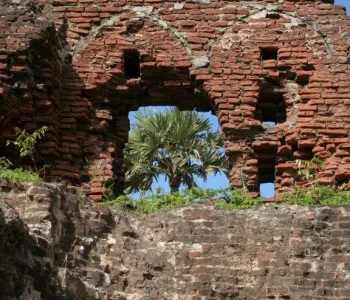
Backwaters is very scenic- Good and safe for a swim. Local fisherman offer to take you for a ride on the boat-charges will be in the range of Rs. 200-500 for 30…
Dindigul Fort
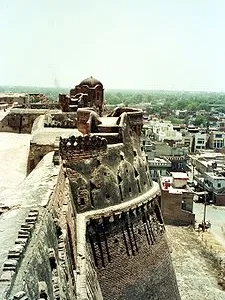
Dindigul Fort is situated in Dindigul, Tamil Nadu, India and was built by the Madurai Nayak kings in 1605 and was later passed on to Kingdom of Mysore. In 1799 it…
Fort St. David
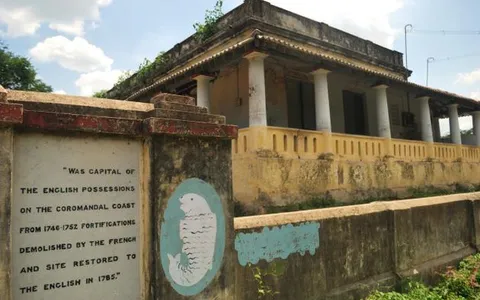
Fort St. David, located near the town of Cuddalore, approximately 100 miles south of Chennai on the Coromandel Coast of India, has a significant history tied to…