Dnyanganga Sanctuary
Dnyanganga Sanctuary is situated 8 km from Buldhana and 20 km from Khamgaon town of Maharashtra. It is close to the Buldhana Taluk of Buldhana District, near the Dnyanganga River. There are two lakes within the 205 sq km sanctuary. Leopards, sloth bears, barking deer, blue bulls, spotted deer, hyenas, jungle cats and jackals along with tigers give more attraction. About 150 species of birds are there. The ideal time to visit the sanctuary is from January to June. Wild animals are best sighted…
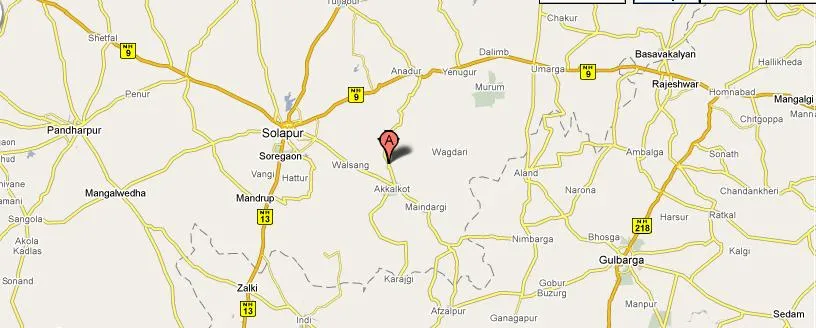
About Dnyanganga Sanctuary
Dnyanganga Sanctuary is situated 8 km from Buldhana and 20 km from Khamgaon town of Maharashtra. It is close to the Buldhana Taluk of Buldhana District, near the Dnyanganga River. There are two lakes within the 205 sq km sanctuary. Leopards, sloth bears, barking deer, blue bulls, spotted deer, hyenas, jungle cats and jackals along with tigers give more attraction. About 150 species of birds are there. The ideal time to visit the sanctuary is from January to June. Wild animals are best sighted from February to May.
The terrain is undulating, interspersed with hillocks having gentle slpes. There are two lakes with in santuary.
Flora:
The forest area is Southern tropical dry deciduous forest, consisting mainly of Teak and Anjan.
Fauna:
The protected area is rich in faunal life such as Leopards, sloth bears, barking deers, Sambars, Blue Bulls, spotted deers, hyenas, jungle cats and jackals. The tigers are also sighted in the sanctuary.
Interesting things to Visit
There are lots of tourist attractions in Buldhana District. The region is known for its scenic beauty and charming atmosphere. A large number of sightseeing tours are arranged by the local tourist board and the travel agencies. Some popular places to see in the area are:
Lonar crater
Shegaon
Purna River
There are two lakes within the 205 sq km sanctuary. About 150 species of birds are there.Several bird species including both resident and migratory types can be found in this sanctuary.
An added attraction of the Buldhana District, Maharashtra is the festivals. Travelers can visit the Sarai Mahasiddha Baba fair and Shri Balaji fair. One can buy wide range of local handicrafts and artifacts from the fairs.
Nearest Visiting places
Aurangabad (172kms from Dnyanganga Sanctuary) is a must place to visit if you are one among the great history lovers. some to mention are as follows.
Bibi Ka Maqbara: Situated about 3 km. from the city is Bibi Ka Maqbara, the burial place of Aurangzeb’s wife,Rabia-ud-Durrani. It is an imitation of the Taj at Agra and due to its similar design, it is popularly known as the Mini Taj of the Deccan. The Maqbara stands in the middle of a spacious and formally planned Mughal garden with axialponds, fountains, water channels, broad pathways and pavilions. Behind the mausoleum is located a small archaeological museum.
Panchakki (water mill): Is a 17th century water mill situated at a distance of 1 km from the city. An intriguing water mill, the Panchakki is famous for its underground water channel, which traverses more than 8 km. to its source away in the mountains. The channel culminates in a mesmerising ‘artificial’ waterfall that powers the mill. The beauty of the mosque housed in the inner enclosure is enhanced by a series of ‘dancing’ water fountains.
Bhadkal Gate built by Malik Ambar in commemoration of his victory against the Mughals.
Gates in aurangabad: One of the things that makes Aurangabad stand out from the several other medieval cities in India are its 52 ‘gates’ each of which have a local history or had individuals linked with them. Not many people are aware of the fact that Aurangabad is also known as the ‘City of Gates’.
Aurangabad Caves: Situated at a distance of 5 km, nestled amidst the hills are 12 Buddhist caves probably dating back to 3 A.D. Of particular interest are the Tantric influences evident in the iconography and architectural designs of the caves. One is also treated to a panoramic view of the city as well as the imposing Maqbara from this point.
Ellora-Ghrishneshwar Temple: Is half a kilometer away from the Ellora Caves, and 30 km. from Aurangabad. The present structure is an 18th century temple that presents outstanding architecture and carving. This place forms one
of the five Jyotirlinga sites in Maharashtra where Lord Shiva is worshipped. The Ahilya Devi Holkar temple nearby is a must-see.
Khuldabad: Is a walled town lying at a distance of 3 km. from Ellora. It is also termed as the Karbala town and forms the holy shrine of Deccan Muslims. It is believed that the Mughal Emperor Aurangazeb was buried here. His
simple tomb remains an eloquent testament to the staunch faith and spartan lifestyle of this pious Muslim ruler.
Pitalkhora Caves: Lies peacefully nestled in the Satmala ranges of the Sahyadris, at a distance of 78 kilometres from Aurangabad. There are 13 cave sanctuaries embedded in this region. These monasteries date back from 2nd century BC to 5th century AD. Rich carvings with elaborate details can be seen in these monuments.
Daulatabad fort: Earlier known as Devgiri, is situated at a distance of 13 kilometres from Aurangabad. Also termed as the city of foutune, it houses a stupendous 12th century fortress well placed atop a charming hill. This invincible fortress boasts of a 5 kilometer sturdy wall and an intricate series of ramparts.
Quil-E-Ark: In 1692, Aurangzeb ordered a palace to be built and named it as the Killa Arrak. The space enclosed by the Killa Arrak or citadel covered nearly the whole ground between the Mecca and Delhi gates of the city.
Barra Darri: Salar Jang’s palace and Govind Baksh’s mahal were between the Paithan and the Jafar gate. The Damri Mahal and the Barr Darri of Ivaz Khan are close to the Delhi gate. The Mahal is new occupied by the Collector’s
Office. The Barra Darri and the adjoining buildings were erected by Ivaz, Khan. A covered aqueduct passes over one of the buildings and in the olden days water descended in a shower into an oblong cistern below containing several
fountains. It is now inoperative.
Damri Mahal: The Damri Mahal which is close by was built after the completion of the Barra Darri. It is so named because it was constructed by levying a contribution of a ‘damri’ or the quarter of a dub, on an labourers
employed on Barr Darri.
Jalna (110kms from Dnyanganga Sanctuary)- The Godavari flows along the southern boundary of the district from west to east direction. The rivers, Dudhana, Gulati, Purna are the principal tributaries of the Godavari, which flow through the district. The river Purna flows from the central part of the district and meets the Godavari in the neighboring district. The rivers, Khelna and Girja are the important tributaries of river Purna which flow through the district.
Akola (110 kms from Dnyanganga) “Raj Rajeshwar Temple” in Akola is a famous pilgrimage place for worshippers of Lord Shiva and has a great historical heritage. (see attached photo) During the marathi calendar month of ‘Shravan’, there is a huge rush of devotees to worship Lord Shiva especially on every Monday of the month. The month of Shravan is very sacred according to Hindu Religion and worshippers from long distances travel to Raj Rajeshwar Temple to worship Lord Shiva.
Narsingh Maharaj Mandir at Akot and Baladevi temple at Balapur both in Akola District are also famous religious temples near Akola. Also in Balapur, ‘Chatri’ memento by Raja Jaisingh in the memory of his Horse is also famous.
The Atishay kshatra Shri Antariksh Parshvanath Jain Temple is situated in Shirpur (Akola District) about 75 km away from Akola. The Black colored idol of Bhagawan Parshvanath is very Ancient and is amongst very famousJain Temples in Maharashtra.
Shri Sant Gajanan Maharaj, Shegaon (Buldhana District).
Other Temples in Akola city are:
Birla Mandir (Shri Ram Temple) Shreenath Dutta Mandir, Ramdas Peth, Jain Temple
Shegaon (in Buldhana District), a very famous pilgrimage place of “Shri Sant Gajanan Maharaj”, is just 45 km away from Akola. Sant Gajanan Maharaj Sansthan is the biggest temple trust in the Vidarbha region and is so called as “Pandharpur of Vidarbha”. The origin of Sant Gajanan Maharaj is untraceable in history. People from all over Maharashtra visit Shegaon and offer their prayers to Shri Sant Gajanan Maharaj.
Akola is known as a colorful city because of its many festivals. Ganesh Chaturthi, Makar Sankranti, Dashera, Diwali, Holi and Eid are celebrated with special enthusiasm.
Hotels/Lodge/Accommodation
Accommodation is easily available in Buldhana. There are a number of guest houses, lodges and hotels in Buldhana. They offer satisfactory lodging facilities at moderate rates. Most of them are located close to the main town center.
Please contact :
Varvande , Reservation Authority Dy. C.F.,Buldana
Matargaon Reservation Authority Dy. C.F.,Buldana
Buldana Reservation Authority E.E.,P.W.D., Buldana
Help Line/Phone Number
Copyright 2016 HolidayLandmark All rights reserved
Location info
-
Address: Dnyanganga Sanctuary is situated 8 km from Buldhana and 20 km from Khamgaon town of Maharashtra.
-
**District:**Buldhana
-
Nearest City: Khamgaon town
-
Best time to visit: The ideal time to visit the sanctuary is from January to June. Wild animals are best sighted from February to May.
Climate & weather
It is having a very extreme climate, the winters are very cold where as the summers are very hot. The summer months are hot and humid while the winters are pleasant.Summer temperatures can go as high as 49˚C. There are also dry spells sometimes in summer.
Things to do at Dnyanganga Sanctuary
The most popular activity is the guided trips inside the sanctuary to watch the animals, conducted by the local forest department. Regular morning and evening safari rides take tourists into the forest.
Nearest petrol pump
There are numbers of petrol pump surrounding the sanctuary to the highway to Wardha.
Society petrol pump, chikhali road, Buldhana
Mobile network coverage
All major Network coverage present in Buldhana and around its Highway.
Things to carry
Carrying a tour guide book will work wonder. It will help you gaining heaps of information about the region, which will definitely add delight to your touring experience.
Equip yourself with all necessary amenities like trekking kit, cameras and binoculars.
Always put a personal first-aid-box in your bag.
And plenty of water.
Tips & suggestions
Wear loose fitting and simple clothes that blend with the sanctuary surroundings.
Best time to visit Dnyanganga Sanctuary
October to June: best wildlife sightings in dry months (March–June) when animals gather near water sources. Parks are closed during peak monsoon (July–September).
Timings & opening hours
Open from sunrise to sunset. Safari timings are typically 6:00 AM to 10:00 AM and 3:00 PM to 6:00 PM.
Entry fee & tickets
INR 50–200 per person for Indian nationals, INR 500–1500 for foreign nationals. Safari vehicle charges extra (INR 1000–3000).
Duration needed
2–4 hours for a jeep safari. Full-day safaris are also available at some parks.
Safety tips
Follow safari rules — do not get out of the vehicle. Do not feed or tease animals. Carry binoculars for wildlife viewing. Maintain silence to avoid disturbing animals. Follow your guide’s instructions at all times. Wear neutral-coloured clothing.
Nearest airport, railway & bus
Nearest airport: depends on location (Nagpur, Pune, or Mumbai). Nearest railway station: the nearest station. Accessible by road from nearest city.
Food & restaurants nearby
Food options are available in the nearest town. Maharashtrian cuisine — missal pav, vada pav, puran poli, and local thalis — is widely available.
History of Dnyanganga Sanctuary
This protected area was established to conserve the rich biodiversity of Maharashtra’s forests. It provides a safe habitat for numerous species of flora and fauna.
Frequently asked questions
What is the best time for wildlife sightings? The dry season (March–June) offers the best sightings as animals gather near water sources. Morning safaris (6:00–10:00 AM) are generally more productive than afternoon ones.
How do I book a safari? Safari bookings can be made online through the forest department website or at the park entrance. Advance booking is strongly recommended, especially for Tadoba and Pench.
Are entry fees and safari charges separate? Yes, entry fees and vehicle safari charges are separate. Gypsy (jeep) safaris cost INR 1000–3000 depending on the park and zone.
Accessibility
Accessibility information is not currently available for this site. Contact the venue directly or check with your accommodation for the latest accessibility details.
Rules & restrictions
Standard visitor rules apply. Check locally for any specific restrictions at this site.
Best photography spots
The best photography spots are typically during the golden hours (early morning and late afternoon). Scout the location first to identify the best angles, and consider the direction of light at different times of day.
Quick facts
- Location: Maharashtra
- Best time to visit: October to March for ideal wildlife sightings
- Ideal duration: Half day to full day for a complete experience
- Safari timings: Early morning and late afternoon shifts available
- Entry: Entry fee applicable for Indian and foreign tourists
- Accommodation: Forest lodges and resorts available nearby
Visitor information
- Timings: Generally open from sunrise to sunset. Verify local timings before planning your visit.
- Entry fee: Entry and safari charges applicable. Advance booking recommended during weekends.
- Best time to visit: October to March for the most comfortable weather conditions.
- Duration needed: 1 to 2 hours recommended for a comfortable visit.
Map & location view
- Destination: Dnyanganga Sanctuary
- State: Maharashtra, India
- Location details: Aurangabad Airport or Chikkalthana Airport Telephone 91-240-485234 Fax 91-240-485344 E-Mail apd_vaau@aai; Khamgaon is the nearest (20kms) railway station, on Nagpur-Mumbai main line, where all important trains have halts
- Region: forest and wildlife region of Maharashtra
- How to reach: Accessible by road from nearby towns and cities. Local transport options include buses and taxis.
- Google Maps: Search for “Dnyanganga Sanctuary, Maharashtra” on Google Maps for precise directions and navigation.
Photo gallery of Dnyanganga Sanctuary
Photos coming soon. In the meantime, you can find images of Dnyanganga Sanctuary on popular travel photography sites and social media.
How to reach Dnyanganga Sanctuary
Nearest Railway Station: Khamgaon is the nearest (20kms) railway station, on Nagpur-Mumbai main line, where all important trains have halts.Nearest Airport: Aurangabad Airport or Chikkalthana Airport Telephone 91-240-485234 Fax 91-240-485344 E-Mail apd_vaau@aai.aeroRoad Transport: Buldana ( 8 kms) and Khamgaon (20 kms.) are the nearest towns.Dnyanganga Sanctuary Contacts & Suggestions Address: Dy.Conservator of Forests (WL) In front of District Court, Railway Station Road, Ramdaspeth, Akola-444001 Phone No. : 0724-436869 (O), 442548(R) wlakola@bom6.vsnl.net.in
Photo gallery of Dnyanganga Sanctuary
Video gallery
Related destinations
Anerdam Wildlife Sanctuary
Located in Shirpur Tehsil of Dhule District on the southwestern range of Satpura range, the Anerdam wildlife sanctuary is one of the most famous sanctuaries in…
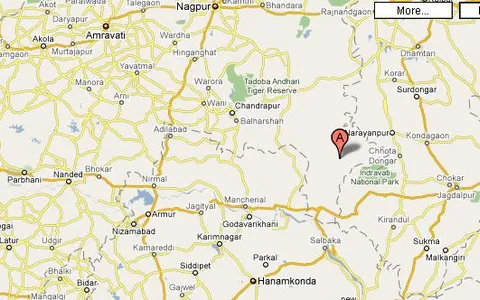
Bhamragarh Wildlife Sanctury
The Bhamragarh Wildlife Sanctuary is one of the most beautiful wildlife sanctuaries in India. Covering an area of approximately 104 square kilometers, the…
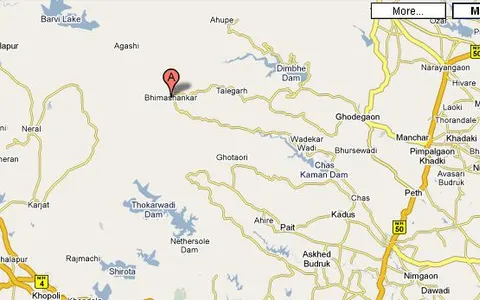
Bhimashankar Wildlife Sanctuary
The sanctuary is located in the northern part of the Western Ghats. It is spread over three districts Pune, Thane and Raigad. There is a shrine in the forest with…