The Chintamani Temple
The Chintamani Ganpati temple was erected by Shri Daharnidhar Maharaj Devji a scion of Maurya Gosaviji. After hundred years Madhavrao Peshwa made the Sabhamandap of the temple. A few years ago the shikhar- the crest, of the temple was anointed in gold.The idol of Chintamani is purvabhimukha-facing east and its eyes are studded with precious stones.The main gate of the temple faces North. There is a road that connects the Mahadwar to the river Mula Muth. The Sabhamandap of the temple is made of…
About The Chintamani Temple
The Chintamani Ganpati temple was erected by Shri Daharnidhar Maharaj Devji a scion of Maurya Gosaviji. After hundred years Madhavrao Peshwa made the Sabhamandap of the temple. A few years ago the shikhar- the crest, of the temple was anointed in gold.The idol of Chintamani is purvabhimukha-facing east and its eyes are studded with precious stones.The main gate of the temple faces North. There is a road that connects the Mahadwar to the river Mula Muth. The Sabhamandap of the temple is made of wood and in its centre is a fountain made of Stone.
One of the interesting things about the temple is the separate section for meditation. It is called a Overry. These sections were found often in old temples but temples made in recent times do not have these sections.There is also a small Shiva temple in the premises of this temple.
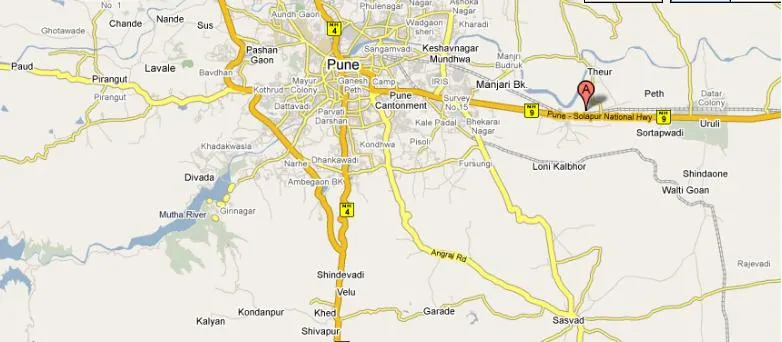
At Theyoor in the Haveli Taluka of Pune district in Maharashtra is the temple dedicated to Chintamani Vinayak. The village is along the river Mulamutha. Ganesh as Chintamani is god who brings peace of mind and drives away all perplexities of the mind.
It is believed that Brahma the creator once felt tharva that is restive. To still his mind he called upon Lord Ganesh. The place where Brahma achieved the quietude he was looking for is known as the Sthavar region or as Theur.
Interesting things to Visit
Shri Girijatmajvinayak:
Out of 18 Buddhist caves on mountain, Girijatmaj Vinayak’s temple is in the eighth cave. These caves are also called Ganesh caves. The entire temple is carved out of single stone and is facing south. In front of the main mandir, there is a huge Sabhamandap (Hall) which is nearly 18 meters long and about 17 meters broad and, surprisingly, there is no any single pillar in that Sabhamandap. It has 18 small meditation rooms. Shri Girijatmaja’s abode is the central one. The sabhamandap, about 2 meters high, has six stone pillars decorated with cow, elephant, etc. carvings.
Kamar Ali Darvesh Dargah:
Kamar Ali Darvesh Dargah is a highly honored mosque located at the small village of Khed Sivapur, about 25 km south of Pune. Hazrat Kamar Ali Darvesh was a saint who was known to help poor people. He came from the north and chose to settle in Khed Shivapur more than 800 years ago. After his death, this Dargah was built on his tomb and has been known to possess miraculous powers ever since. A large number of devotees come here daily to offer flowers at the Dargah. Every year, a grand fair is held here with much merriment. Urs festival is also held here annually. Pune Junction Railway Station is 25 km from here. Pune Lohegaon Airport is the nearest airport.
Dashmesh Darbar:
Dashmesh Darbar is located in Pune and was built in 1950. It is associated with Guru Gobind Singh. Guru Nanak Jayanthi, Baisakhi and Guru Gobind Singh Jayanthi are the three important days observed in the Gurdwara.
Har sunday ko guru ka langar banaya jata hai jise har verg ke log bina bedbav ek pangat (line) me baith kar khate hain.Har Roj nitnem se gurbani ki kathha aur Kirtan Hota hai.
guru Granthh Sahib kalyug mein manvata Ke bhalai ke liye hi avtar liye hain.
Ganesh Peth Gurdwara:
Ganesh Peth Gurdwara is commonly known as Gurusingh Sabha. It is considered to be the first Gurdwara in Pune city. It opens early in the morning with prayers. A community lunch is served on all Sundays, after the morning sessions. The main festival celebrated here is the birth anniversaries of the first guru, Guru Nanak and tenth guru, Guru Govindsingh.
Khandoba Temple:
The Khandoba temple can be divided into two parts, the Mandap and Gabhara. The idol of Khandoba enshrined in Jejuri temple speaks volumes about the talent of its craftsmen. The weapons situated inside the temple namely a sword a damaru and a paral, have historical importance attached to them. The temple also serves as a venue of Sword Competition held every year on Dasera Day. Jejuri town is also important from historical point of view. It was here that Shivaji meet his father Sahaji, after a long period of time and discussed the strategy to be followed against the Mughals..
Dagdusheth Ganpathi Temple:
The Shrimant Dagdusheth Halwai Sarvajanik Ganpati Trust, based in Pune was established in the year 1893 and has thus been in the service of devotees since 108 years. It was in 1893 when Lokmanya Balgangadhar Tilak gave a public form to the celebration of the festival of Ganpati and made it a genuinely people’s festival. The Shrimant Dagdusheth Halwai Sarvajanik Ganpati trust exists from the year of the inception of the sarvajanik (public) Ganpati festival and is the fulcrum of all sarvajanik(public) celebrations in Maharashtra.
Nearest Visiting places
Raja Dinakar Kelkar Museum:
It is one of the most important museums of the city and is housed in a Rajasthani building located on the Bajirao Road. It houses a wide range of fascinating Indian arts and crafts apart from a large number of other interesting artifacts. The museum is divided into 36 sections that include carved palace and temple doors, exquisite pottery works, traditional Indian lamps and paintings belonging to 17th century.
Tribal Museum:
This museum houses interesting artifacts that were excavated from the Sahyadri and Gondhwa regions of Maharashtra. The archaeologists will surely find this museum an amazing one.
Shaniwar Waada:
This impressive palace was constructed by the Peshwas in the year 1736. The imposing brass studded gates and lotus pools are the only major attractions left in this palace as it was destroyed by a huge fire in the year 1827. This palace is counted among the major tourist attractions in Pune and it is now recognized as symbol of Pune culture. Don’t miss out the ‘Light & Sound Show’ which is held here every evening.
Aga Khan Palace:
This palace is an important highlight of this town and flaunts beautiful arches, gracious building having salons, suites and spacious lawns. The palace holds a lot of historical importance since during the 1942 Quit India Movement, Mahatma Gandhi and his wife Kasturba Gandhi were placed under house arrest by the British in this building. You must not miss this palace when you travel to Pune.
Parvati Hill temples:
It is a splendid temple built by Balaji Baji Rao and occupies a significant place for the pilgrim tourists. You have to climb 108 steep and narrow steps in order to reach the hill top temple. Formerly it was the private shrine of the Peshwas. It also houses Parvati museum featuring portraits of Peshwas, ancient manuscripts and coins. From the top of the temple you can get the awe-inspiring views of the town.
Bund Garden:
This is one of the most popular tourist attractions in Pune and is also known as Mahatma Gandhi Udhayan. It is located on the right bank of the Mula-Mutha Rivers and was built by Sir Jamshedji Jeejeebhoy to provide the poor with water during hot months of the summers. The adventure enthusiasts can indulge here in boat rides and horse rides.
Touristplacesinindia.com offers online information on the Pune Tourist Attractions and also offers useful inputs about Pune.
Help Line/Phone Number
Karla Caves is an complex of ancient Buddhist Indian rock-cut architecture cave shrines built over the period of 3rd to 2nd century B.C. Even though the caves were constructed over a period of time and the oldest one is believed to date back to 160 BC. Located in Karli near Lonavala, Maharashtra, the caves are on an major ancient trade route, running eastward from the Arabian Sea into the Deccan. Karli’s location in Maharashtra places it in a region that is the division between North India and South India……more
Mulshi is the name of a major dam on the Mula river located in the Taluka Mulshi administrative division of the Pune district of Maharashtra State, India.Water from the dam is used for irrigation as well as for producing electricity at the Bhira hydroelectric power plant, operated by Tata Power Company LTD. The station operates six 25MW Pelton turbines and was established in 1927. It mostly supplies power to Mumbai……more
Rajmachi consists of two beautiful peaks namely ‘Shrivardhan’ and ‘Manaranjan’. Rajmachi is very famous fort near twin hill stations in Maharashtra - Lonavala and Khanadala. Rajmachi fort is nearby 18/20 Kms from Lonavala but a nice way to reach the fort is from Tungarli Lake. This trek is very good for the beginners.Shrivardhan and Manaranjan can also be considered as two separate forts. There is one small platue in between them…..more
Situated 32 km south west of Pune, and standing at an imposing 1215 m above msl overlooking Pune city, Sinhagad, even today stands testimony to the grand Maratha Regime.On top of the fort, the trekkers must try the traditional breakfast of Kanda Bhaji, a delicacy enjoyed by most. Check out Tanaji Kada, Kalyan Darwaza, Tanajis memorial…Perched on an isolated cliff of the Bhuleswar range of the Sahyadri Mountains, its height above sea-level is 1350 metres. Given natural protection by its very steep slopes, the walls and bastions were constructed at only key places; it has two gates – the Kalyan Darwaza in the south-east and the Pune Darwaza in the north-east…..more
Tikona (also known as Vitandgad) is the dominant hill fort in Maval in western India. It is located near Kamshet around 60 km from Pune The village nearest the fort is called Tikona-Peth. The 3500 ft high hill is pyramidal in shape and the name Tikona means “triangle”.The fort is a trekking destination noted for the large doors, the temple of ‘Trimbakeshwar Mahadev’, a water tank and some Satvahan caves. Trek organisers also commend the views of Pawna dam and the nearby forts of Tung, Lohagad and Visapur. There is a lake at the summit…..more
Copyright 2016 HolidayLandmark All rights reserved
Location info
-
**Address:**Theur Maharashtra,India
-
District: Pune
-
Nearest City: Pune
-
Best time to visit: October To March
Climate & weather
Summer: Maximum 400C Minimum 290C
Winter: Maximum 260C Minimum 100C
History of The Chintamani Temple
The history of the Chintamani Ganesh Temple dates back to the ancient period when the people used to believe in the notion that the gods and he goddesses come alive on the earth for their purpose or to attend their follower’s ardent prayers; from such a notion came the idea that the Lord Ganesh came into the earth and created the temple for himself in Ujjain is very popular.
During Sagar Manthan, churning of the sea by the Gods and the Demons, Amrita or nectar came up from the ocean. One drop fell in Ujjain thereby making it sacred. Whosoever visits this place shall be filled with all the blessings of the Gods and Goddesses residing there.
Things to do at The Chintamani Temple
Worship: Vighnasura surrendered to Ganesha, pleading for mercy. The Lord agreed to spare his life, on the condition that he would never appear where Ganesha was worshipped
How to reach The Chintamani Temple
-
**Nearest Railway Station:**Manjri Railway Station pune,Maharastra
-
**Nearest Airport:**Pune airport
-
**Road Transport:**Excellent road network connects Mumbai and Pune. State-run as well as private buses operate on a frequent basis between the two cities.
Hotels & accommodation nearby
- **Taj hotel:**Taj Blue Diamond, Pune, 11 Koregaon Road, Pune,Maharasatra
**Hotel Sagar Plaza:**Bund Garden Road, Pune, Maharashtra
Nearest petrol pump
- Magarpatta City Petrol Pump, pune,Maharastra
Best time to visit The Chintamani Temple
Throughout the year. Major festivals draw large crowds. October to March offers the most comfortable weather.
Timings & opening hours
Typically open from 5:00 AM to 9:00 PM daily. Some temples close for a few hours in the afternoon (12:00 PM to 4:00 PM).
Entry fee & tickets
Free entry. Special darshan or pooja may require separate fees.
Duration needed
1–2 hours for darshan and exploration. More time during festivals or special occasions.
Safety tips
Remove footwear before entering the sanctum. Follow temple dress codes — cover shoulders and knees. Secure your belongings. Be aware of pickpockets in crowded areas during festivals.
Things to carry
Modest clothing (shoulders and knees covered), a shawl or scarf, small change for offerings, and a water bottle.
Nearest airport, railway & bus
Nearest airport: depends on location (Mumbai, Pune, or Nagpur). Nearest railway station: the nearest station on the Central or Western Railway line. Well-connected by state highways.
Mobile network coverage
Airtel, Jio, and Vi all provide excellent coverage across Maharashtra’s cities (Mumbai, Pune, Nagpur) and major tourist areas. 4G is reliable along highways and in most towns. Coverage may be weaker in deep forest areas of Tadoba, Melghat, and certain ghat sections. Free Wi-Fi is widely available in hotels and cafes.
Food & restaurants nearby
Maharashtra’s cities have diverse food scenes. Mumbai and Pune offer everything from street food (vada pav, pav bhaji) to fine dining. Hill stations have chikki and local snacks. Temple towns offer Maharashtrian thali and local specialities.
Frequently asked questions
What are the temple timings? Most temples open early morning (around 5:00–6:00 AM) for the first aarti and close after the evening aarti (around 8:00–9:00 PM). Many temples close for a few hours in the afternoon.
Is there a dress code? Yes, modest clothing covering shoulders and knees is required at most temples. Some temples provide shawls or sarongs at the entrance.
Are cameras allowed inside? Photography is often allowed in the temple complex but may be restricted inside the inner sanctum. Check signage at the entrance.
Accessibility
Religious sites may have steps at the entrance and may not have ramps. The interiors are generally level once inside. Some historic sites have uneven stone floors. Visitors with mobility concerns should check in advance.
Rules & restrictions
Modest dress is required: shoulders and knees must be covered (scarves or shawls are often available at the entrance). Photography is generally permitted without flash, but video may be restricted. Maintain silence inside. Mobile phones should be on silent mode. Remove shoes if required (indicated by signage). Do not touch artefacts or altars. These are active places of worship — respect services, festivals, and devotees.
Best photography spots
Mumbai’s Gothic and Victorian churches, Pune’s colonial-era churches, and the Portuguese-influenced churches of the Konkan coast offer rich architectural photography. The Basilica of Our Lady of the Mount in Bandra is iconic. Early morning light is best for city churches.
Quick facts
- Location: Maharashtra
- Best time to visit: October to March for comfortable weather
- Significance: Important religious and spiritual site for devotees
- Dress code: Traditional and modest attire recommended
- Photography: Check local guidelines; photography may be restricted in inner sanctums
Visitor information
- Timings: Generally open from sunrise to sunset. Verify local timings before planning your visit.
- Entry fee: Free entry at most temples. Donations are voluntary.
- Best time to visit: October to March for the most comfortable weather conditions.
- Duration needed: 1 to 2 hours recommended for a comfortable visit.
Map & location view
- Destination: The Chintamani Temple
- State: Maharashtra, India
- Region: religious precincts of Maharashtra
- How to reach: Accessible by road from nearby towns and cities. Local transport options include buses and taxis.
- Google Maps: Search for “The Chintamani Temple, Maharashtra” on Google Maps for precise directions and navigation.
Photo gallery of The Chintamani Temple
Photos coming soon. In the meantime, you can find images of The Chintamani Temple on popular travel photography sites and social media.
Photo gallery of The Chintamani Temple
Video gallery
Related destinations
Afghan Memorial
The Afghan Memorial Church of St. John the Baptist, also known as St John's Church is located at Colaba, Mumbai. It was established in 1847 AD and consecrated 11…
Ambadevi Temple
Shri Ambadevi Temple is situated in the Amravati city of Maharashtra. The temple is dedicated to Goddess Ambadevi and lies right in the middle of the city. Amba…
Ambarnath Akoli
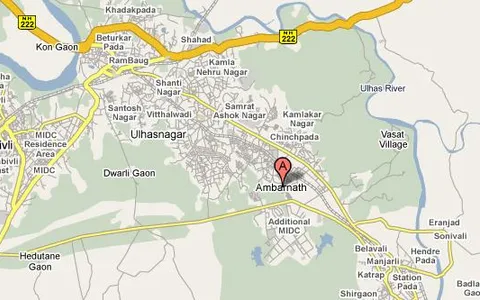
Ambarnath is a small town located near Akoli in Thane district of Maharashtra. This town is on Mumbai-Pune railway line. Ambarnath houses a fascinating temple…