Sidhi Vinayak Temple
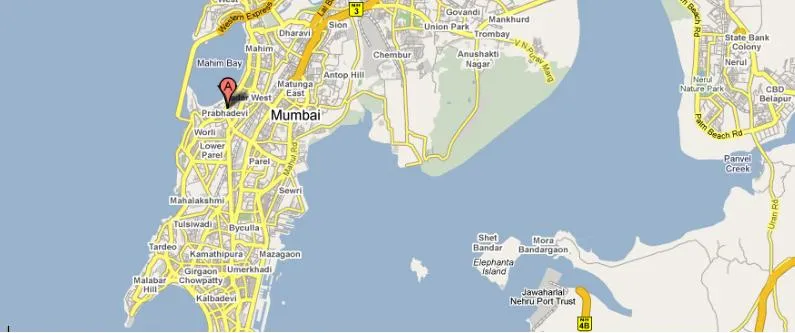
The Siddhivinayak Temple is located in Prabhadevi, Mumbai. The temple is flooded with thousands of visitors throughout the year. The temple is dedicated to Lord Ganesha. Inside the Siddhivinayak Temple there is a small hall with wooden doors, gold plated roof and an idol of Ganesh with four arms. There are also the carvings of Asthya Vinayak. The four armed Ganesh bears a lotus, an axe, modakas, and a garland of beads. The idol of Ganesh is also flanked by Ridhhi and Siddhi, two of his wives.
About Sidhi Vinayak Temple
The present form of the temple was re-constructed five years ago. The temple has a Kalash, which is a pointed dome of 12 feet high Gabhara (sanctum sanctorum) weighing 1500 kg and plated in gold. So, it facilitates the ‘Darshan’ of Sri Siddhivinayak from either the area surrounding the Gabhara or the stage (Sabha Mandap) constructed to conduct pujas and festivities.
Most icons of Ganapati depict the elephant faced God with his trunk curled towards his left. Siddhi Vinayak in Mumbai, Siddhi Vinayak at Siddhatek in Maharashtra as well as Karpaka Vinayakar at Pillayarpatti in Tamilnadu are depicted with a trunk pointing to the right (Valampuri). Ganapati here is depicted with four arms bearing a lotus, an axe, modakas and a garland of beads, flanked by his consorts Siddhi and Riddhi.
History
The idol of Ganpati has four arms therefore He is also called Chaturbhuj. A lotus is held in the upper right hand symbolises auspicious piety and a small axe in the upper left, a holy rosary of beads (Japmala) are held in the lower right and a bowl full of Modaks (a delicacy which is a perennial favorite with Sri Siddhivinayak) in the lower left. The seated glowing idol of Shree Siddhivinayak with deity on both sides are Riddhi and Siddhi, a sign of great purity and power or ’jagrata’.
On the forehead of the deity there is an eye, which resembles the third eye of Lord Shiva. Shree Siddhivinayak himself follows Bhramhatva. His snake shaped sacred thread with Brair Tej bestows knowledge & wisdom to all. Lord Shiva has provided his dutiful son Shree Siddhivinayak with his fiery eye to destroy evil (thoughts) from within the wicked. This is a unique feature this particular vigilant deity.
It cannot be seen in any other Ganesh idol. The idol of Shree Siddhivinayak is of black stone and is 2.5 feet high and 2 feet wide, with the trunk on the right is considered to be the dynamic form of Ganpati. The idol is Gajmukh, however the belly of the idol is not big. Riddhi & Siddhi are sitting on each lap of Vinayaka. The face is very calm & serene. The statue is in one corner of a hillock. The pradakshana (circumnavigation) of this God is said to be very fruitful.
One has to travel 5 km to complete one Pradkshana as the idol is attached to the hill itself. Devotees who wish to circumambulate the temple have to go round the entire hillock. This takes about thirty minutes. The idol made of black stone was placed in a small structure; the existing temple was rebuilt on the site of a 200-year old temple. The sanctum sanctorum housing the deity was altered time and again and finally gave way to a monolithic and magnificent structure, which was accomplished by a series of rituals, which lasted a fortnight.
Interesting things to do
Tuesday is considered to be the most auspicious days to visit Siddhivinyak temple when devotees converge in great numbers to pray. In the Hindu religion and mythology Lord Ganesha hold the most revered position and all the new works begin with His prayer. And hence, the Shri Siddhivinayak T emple is regularly visited by the renowned persons. Millions of devotees congregate to Vinayak Temple every month just to have a glimpse of the deity and offer their prayers.
Interesting things to Visit
Elephanta Island :
Elephanta Island is one of the islands in Mumbai Harbor. The name Elephanta, was given by 17th C Portuguese explorers, after seeing a stone sculpture of an elephant near the shore. The rock-cut temple caves are the main and most popular tourist destination on the island.
Gateway of India:
The Gateway of India was opened in 1924 and the last British troops to leave India passed through the gate in a ceremony in 1948, making the gateway redundant.The Gateway is now a favorite hangout for locals and traditionally the first thing visitors see upon arrival in Mumbai.
Mani Bhavan:
Mani Bhavan was a focal point of Gandhi’s political activities in Mumbai between 1917 and 1934. The rooms of Mani Bhavan remain untouched and in the same condition they were when Gandhi visited.Mani Bhavan now houses a research library, a photo exhibit of Mahatma Gandhi’s life, and other well preserved memorabilia.
Juhu:
Nicknamed as the uptown bourgeois paradise, Juhu Beach is a place that attracts a large number of visitors throughout the year. Characterised by walkers, screaming children and courting couples, the beach covers an area of about 5 kilometres. Juhu beach is attractively studded with many five star hotels offering the customers a splendid view of the coast. The beach remains noticeably crowded on weekends. Moreover, the beach activities ike camel rides, pony rides, acrobats, performing monkeys and entertainers will keep you enthralled all the time. Keep away from hawkers.
Prince of Wales Museum:
The Prince of Wales museum is another major attraction of Mumbai. Built in the year 1914, it is surrounded by a beautiful landscape forming an ideal getaway for the people of Mumbai. The museum houses art, sculpture, rare coins, and old firearms and a priceless collection of miniature paintings. The Prince of Wales museum is regarded as one of the best museums in the country. The Prince of Wales museum is another major attraction of Mumbai. Built in the year 1914, it is surrounded by a beautiful landscape forming an ideal getaway for the people of Mumbai. The museum houses art, sculpture, rare coins, and old firearms and a priceless collection of miniature paintings. The Prince of Wales museum is regarded as one of the best museums in the country.
Hanging Gardens:
Mumbai Tourist Attractions, Mumbai Bombay attractions, Mumbai sightseeing, Mumbai places to visit,All inclusive India The Hanging Gardens makes another must see site in Mumbai. The park was built during the early 1880s over Mumbai’s main reservoir at the top of the Malabar Hills. The reason of its location being to cover the water from the potentially contaminating activity of the nearby Towers of Silence. Located just opposite the Kamala Nehru Park, this terraced garden, also known as Ferozeshah Mehta Garden, is famous among the locals as well as tourists. The garden provides lovely sunset views over the Arabian Sea.
Taj Mahal Palace:
The Taj Mahal Palace and Tower is located opposite the Gateway of India in Mumbai. Built in 1903, this landmark faces the harbor and is a striking monument on the waterfront. In 1973, the Tower Wing was added and the Taj Mahal Palace is a member of the ‘Leading Hotels of the World’. Leisure activities offered at the Taj Mahal Hotel include swimming, use of the fitness center, golf, badminton, squash, billiards, tennis and table tennis.
Victoria Terminus:
Victoria Terminus was opened on January 1st, 1882 as the main railway station of Mumbai. Designed by F.W. Stevens, this Gothic building features carvings of peacocks, gargoyles, monkeys, and lions. Domes, turrets, spires and stained glass windows are other architectural items of note. The style of the Victoria Terminus is more like a cathedral than a railway station.
Sanjay Gandhi National Park (formerly Borivali National Park):
Sanjay Gandhi National Park is located north of Mumbai with virgin forests that have become a bird watcher’s paradise. Over 270 species of birds have been recorded such as Jungle owlets, Golden orioles, magpies, robins, hornbills, herons, peacock, and woodpeckers. The best time to see the birds is from October to April.
Jain Temple: Jain temple of Mumbai also makes the interesting place to visit in the city. Located on the Malabar Hill, the Jain temple houses frescoes depicting various events in the lives of the 24 Jain Tirthankaras. It also has a black marble shrine decorated with celestial personifications of the planets painted onto the ceiling. A large number of devotees as well as tourists come here every day.
Chowpatty beach:
Chowpatty beach is situated at the top end of Marine Drive. It is the only beach in the central part of Mumbai. This beach is the venue where many Hindu religious ceremonies can be witnessed like the annual thread-tying ceremony initiating young boys into the Brahmin caste. Another festival ‘Nariel Purnima’ is celebrated towards the end of the monsoons. Here the idols of Ganesha are immersed on the last day of ’Ganesh Chaturthi.
Iskcon Temple in Mumbai:
Iscon, Mumbai is a part of the series of temples built across the world to propagate the message of Bhagwat Gita nad raise the consciousness about Lord Krishna. ISKCON temples are not mere places of worship or places of aesthetic and architectural beauty. These are symbol of intellectual development and mediums of movement on higher plane-spiritual plane..
Nearest Visiting places
Victoria and Albert Museum:
This Victoria and Albert museum, Mumbai was built due to the idea of Dr. Buist , in the year 1884 when the whole country was under the rule of East India Company. Dr. Buist was a collector. His Idea flourished and gave birth to various other museums like the Central Museum
Sewri Fort:
The Sewri Fort ia Up to the eighteenth century, Mumbai consisted of several small islands. In 1661, seven of these islands were ceded by the Portuguese to the British as part of the dowry of Charles II of England. The harbour proved eminently apposite, and the British planned to shift base from Surat to Mumbai. The Siddis, who were of African descent and noted for their navies, had allied themselves with the Mughals. The British, under the East India Company and the Mughals were constantly waged war on each other. As allies of the Mughals, the Siddis also declared the British as enemies.
Horniman Circle Gardens:
Horniman Circle Gardens in Mumbai is a mega park in the Fort District of South Mumbai. Encompassing an area of 10.101 sq meters, the Horniman Circle Gardens is surrounded by premier banks.Primarily known as Bombay Greens in the 18th Century, Horniman Circle Gardens was meant to be an open space in the middle of the Walled city. With well laid out walkways, the Bombay Greens had trees planted all around.
Later the whole complex was renamed as Elphinstone Circle after the then Governor, Lord Elphinstone.In the late 19th Century the condition of the park became atrocious and appeared as the dumping ground for the debris. However, the then Police Commissioner Charles Forjett resurrected the circle with active support from governors Lord Mountstuart Elphinstone and Sir Bartle Frère. By 1872, the Garden gained a new and captivating look. It was renamed after India’s Independence in 1947 into Horniman Circle Gardens, after Benjamin Horniman, a pro-freedom editor of the Bombay Chronicle.
Ajanta Caves:
The Ajanta Caves have 30 rock cut Bhuddhist caves and it is 106 km from Aurangabad. The basic designs of the caves are called Chaitya grihas and Viharas. Five caves are Buddhist cathedrals and the remaining 25 are monasteries. The Chaityas are large, rectangular chambers separated by rows of pillars. They are decorated by sculptures and murals which depict the many incarnations of Buddha. The Vhharas are rectangular shaped halls. They have series of small cells which are attached on both sides. Opposite to the entrance is an image of Buddha.
Ellora Caves:
The Ellora caves, locally known as ‘Verul Leni’ is located on the Aurangabad-Chalisgaon road at a distance of 30 km north-northwest of Aurangabad, the district headquarters. The name Ellora itself inspires everyone as it represents one of the largest rock-hewn monastic-temple complexes in the entire world. Ellora is also world famous for the largest single monolithic excavation in the world, the great Kailasa (Cave 16). The visit to these caves is enjoyed maximum during monsoon, when every stream is filled with rainwater, and the entire environ is lush green. The monsoon is not only a season of rains in this part, the local visitors are attracted to visit these ideal locations to have a glimpse of the mother nature in full bloom.
Help Line/Phone Number
Eaque ipsa quae ab illo inventore veritatis et quasi architecto beatae vitae dicta sunt explicabo.
Copyright 2016 HolidayLandmark All rights reserved
Location info
-
**Address:**Prabhadevi,Mumbai,Maharashtra,India
-
District: Mumbai
-
Nearest City: Mumbai
-
Best time to visit: October & February
How to reach Sidhi Vinayak Temple
-
**Nearest Railway Station:**Mumbai railwaystation
-
**Nearest Airport:**Mumbai International airport
-
**Road Transport:**Road with all the places in the state as well as the country
Hotels & accommodation nearby
- Hotel Intercontinental Mumbai: Mumbai City, Maharashtra
Nearest petrol pump
- **Lotus Petrol Pump:**Mumbai suburban, Maharashtra
Best time to visit Sidhi Vinayak Temple
Throughout the year. Major festivals draw large crowds. October to March offers the most comfortable weather.
Timings & opening hours
Typically open from 5:00 AM to 9:00 PM daily. Some temples close for a few hours in the afternoon (12:00 PM to 4:00 PM).
Entry fee & tickets
Free entry. Special darshan or pooja may require separate fees.
Duration needed
1–2 hours for darshan and exploration. More time during festivals or special occasions.
Safety tips
Remove footwear before entering the sanctum. Follow temple dress codes — cover shoulders and knees. Secure your belongings. Be aware of pickpockets in crowded areas during festivals.
Things to carry
Modest clothing (shoulders and knees covered), a shawl or scarf, small change for offerings, and a water bottle.
Nearest airport, railway & bus
Nearest airport: depends on location (Mumbai, Pune, or Nagpur). Nearest railway station: the nearest station on the Central or Western Railway line. Well-connected by state highways.
Mobile network coverage
Airtel, Jio, and Vi all provide excellent coverage across Maharashtra’s cities (Mumbai, Pune, Nagpur) and major tourist areas. 4G is reliable along highways and in most towns. Coverage may be weaker in deep forest areas of Tadoba, Melghat, and certain ghat sections. Free Wi-Fi is widely available in hotels and cafes.
Food & restaurants nearby
Maharashtra’s cities have diverse food scenes. Mumbai and Pune offer everything from street food (vada pav, pav bhaji) to fine dining. Hill stations have chikki and local snacks. Temple towns offer Maharashtrian thali and local specialities.
Climate & weather
Maharashtra has a diverse climate spanning coastal Konkan, the Western Ghats, and the interior Deccan plateau. Winter (November–February) is the best time to visit: temperatures range from 12°C to 30°C depending on region. Summer (March–June) is hot, with interior areas reaching 40°C+ while hill stations (Mahabaleshwar, Lonavala) remain pleasant. The monsoon (June–September) brings heavy rainfall to the coast and ghats but transforms the landscape into lush green. October–November is pleasant post-monsoon.
Frequently asked questions
What are the temple timings? Most temples open early morning (around 5:00–6:00 AM) for the first aarti and close after the evening aarti (around 8:00–9:00 PM). Many temples close for a few hours in the afternoon.
Is there a dress code? Yes, modest clothing covering shoulders and knees is required at most temples. Some temples provide shawls or sarongs at the entrance.
Are cameras allowed inside? Photography is often allowed in the temple complex but may be restricted inside the inner sanctum. Check signage at the entrance.
Accessibility
Religious sites may have steps at the entrance and may not have ramps. The interiors are generally level once inside. Some historic sites have uneven stone floors. Visitors with mobility concerns should check in advance.
Rules & restrictions
Modest dress is required: shoulders and knees must be covered (scarves or shawls are often available at the entrance). Photography is generally permitted without flash, but video may be restricted. Maintain silence inside. Mobile phones should be on silent mode. Remove shoes if required (indicated by signage). Do not touch artefacts or altars. These are active places of worship — respect services, festivals, and devotees.
Best photography spots
Mumbai’s Gothic and Victorian churches, Pune’s colonial-era churches, and the Portuguese-influenced churches of the Konkan coast offer rich architectural photography. The Basilica of Our Lady of the Mount in Bandra is iconic. Early morning light is best for city churches.
Quick facts
- Location: Maharashtra
- Best time to visit: October to March for comfortable weather
- Significance: Important religious and spiritual site for devotees
- Dress code: Traditional and modest attire recommended
- Photography: Check local guidelines; photography may be restricted in inner sanctums
Visitor information
- Timings: Generally open from sunrise to sunset. Verify local timings before planning your visit.
- Entry fee: Free entry at most temples. Donations are voluntary.
- Best time to visit: October to March for the most comfortable weather conditions.
- Duration needed: 1 to 2 hours recommended for a comfortable visit.
Map & location view
- Destination: Sidhi Vinayak Temple
- State: Maharashtra, India
- Region: religious precincts of Maharashtra
- How to reach: Accessible by road from nearby towns and cities. Local transport options include buses and taxis.
- Google Maps: Search for “Sidhi Vinayak Temple, Maharashtra” on Google Maps for precise directions and navigation.
Photo gallery of Sidhi Vinayak Temple
Photos coming soon. In the meantime, you can find images of Sidhi Vinayak Temple on popular travel photography sites and social media.
Photo gallery of Sidhi Vinayak Temple
Video gallery
Related destinations
Afghan Memorial
The Afghan Memorial Church of St. John the Baptist, also known as St John's Church is located at Colaba, Mumbai. It was established in 1847 AD and consecrated 11…
Ambadevi Temple
Shri Ambadevi Temple is situated in the Amravati city of Maharashtra. The temple is dedicated to Goddess Ambadevi and lies right in the middle of the city. Amba…
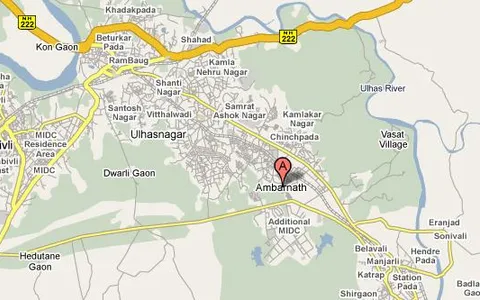
Ambarnath Akoli
Ambarnath is a small town located near Akoli in Thane district of Maharashtra. This town is on Mumbai-Pune railway line. Ambarnath houses a fascinating temple…