Bibi Ka Maqbara
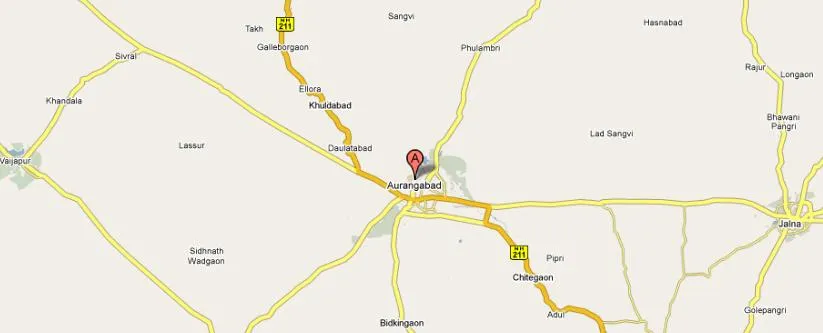
Bibi Ka Maqbara is a beautiful Mughal monument situated just 5 km from Auragabad in the state of Maharashtra. The monument is a cheap imitation of the great Taj Mahal and is the mausoleum for Aurangzeb's first wife Rabia-ud-Durrani. The structure was built in 1679 by Aurangzeb's son Azam Shah in the memory of his mother (Bibi). An archaeological museum located just behind the mausoleum houses a rare collection of artifacts and articles of personal use from the times of the Mughal era.
About Bibi Ka Maqbara
Despite the layout and surrounding of the tomb is very much similar to Taj Mahal, somehow the architecture fails to produce the magic of the Taj. Hence, it is considered to be a poor imitation of the Taj Mahal. The chief architect of the monument is a Persian called Ustad - Ata - Ullah. The inscription on the walls of the tomb reveals that it cost precisely Rs. 665,283 and 7 Annas to build this monument.
Bibi Ka Maqbara has four towering minarets like Taj Mahal. An octagonal lattice-screen of white marble surrounds the raised plinth supporting Rabia Daurani’s grave inside the tomb. The tips of its pillars are made of red stone. The monument becomes so beauty when its reflection falls on the water as soon as the sun’s first rays fall on it. MTDC organizes a fair every October as the Bibi Ka Maqbara festival. Aurangabad is well connected through air, train and road. Accommodation facilities are available at various hotels at Aurangabad.
The reason for this is that, despite the fact that it could not be an adequate competitor for the Taj, it is still a magnificent monument. Bibi Ka Maqbara has been set amidst picturesque surroundings, with the mountain ranges providing the perfect backdrop. In the center of the north, east and western part of the enclosure wall of Bibi ka Makbara, one can find pillared pavilions. Its gardens follow the typical Mughal Char-Bagh pattern in their layout, adding to the splendor of the mausoleum.
The mausoleum is built on a high square platform with four minarets at its corners, which is approached by a flight of steps from the three sides. A mosque is found to the west of the main structure, which was a later addition caused, by Nizam of Hyderabad resulting closure of the entrance. The mausoleum is encased with marble up to the dado level. Above the dado level, it is constructed of basaltic trap up to the base of dome; the latter is again built of marble. A fine plaster covers the basaltic trap and given a fine polished finish and adorned with fine stucco decorations. The mortal remain of Rabia-ul-Daurani is placed below the ground level surrounded by an octagonal marble screen with exquisite designs, which can be approached by a descending flight of steps. The roof of this chamber that corresponds to the ground level of the mausoleum is pierced by an octagonal opening and given a low barricaded marble screen. Thus the tomb can also be viewed from the ground level also through this octagonal opening. The mausoleum is crowned by a dome pierced with trellis works and accompanying panels decorated with flower designs.
History
The Bibi-Ka-Maqbara is a beautiful mausoleum of Rabia-ul-Daurani alias Dilras Banu Begum, the wife of the Mughal Emperor Aurangazeb (1658-1707 A.D.). This mausoleum is believed to be constructed by Prince Azam Shah in memory of his mother between 1651 and 1661 A.D. An inscription found on the main entrance door mentions that this mausoleum was designed and erected by Ata-ullah, an architect and Hanspat Rai, an engineer respectively. The marble for this mausoleum was brought from mines near Jaipur.
According to Tavernier, around three hundred carts laden with marbles, drawn by at least 12 oxen were seen by him during his journey from Surat to Golconda. The mausoleum draws its inspiration from the world famous Taj Mahal of Agra (constructed between 1631 and 1648 A.D.) and hence it is rightly known as the “Taj of Deccan”. The mausoleum was intended to rival the Taj Mahal, but, the decline in architecture and proportions of the structure had resulted in a poor copy of the latter. Even this decline cannot stop one appreciating the setting of the tomb complex in a garden setting with the mountain ranges behind providing as a backdrop. A huge ‘U’ shaped gap in between the hills behind provides the perfect harmony in which the mausoleum is blended.
Interesting things to Visit
Aurangabad Caves:
Aurangabad Caves are artificial caves, dug out of the rather soft rock during the 6th and 7th century. This caves are found on two separate locations, called Western Group Caves (caves 1-5) and Eastern Group Caves (caves 6-10), about 1km from each other. In all, there are nine caves which are mainly ‘Viharas’. The most interesting among these are Caves 3 and 7.Bani
Begam Bagh:
Aurangabad, you can find the tomb of Bani Begam - companion to one of Aurganzeb’s sons. It lies amidst extensive landscaped gardens, scatter with fluted pillars, elegant domes and artistic fountains - showcasing the impressive architecture of the times.
Suneri Mahal :
Situated to the north of Bibi ka Maqbara (currently in the university compound), which is a notable building in the late Mughal style. It is of interest for the patches of old painting and gold work that decorate the walls. Every year ‘Ajanta-Ellora-Aurangabad Festival’ celebrated in the Suneri Mahal.
Ghrishneshwar Temple:
Aurangabad City and half kilometer from Ellora Caves, lies this 18th century temple with its beautiful architecture and carving, one of the five ‘Jyotirlingas’ in Maharashtra were Shiva is worshipped.
Khuldabad:
Aurangabad city lies Khuldabad, sorrounded by beautiful natural and eye catching mountains, literally ‘heavenly abode’. It is the holy shrine of Muslims. The final resting place of last great Moghul Emperor Aurangzeb, He built the crenellated wall around the town, once an important center for the Mughal Emperor Aurangzeb and few great Sufis.
Pitalkhora Caves:
In the Satmala range 78 kilometers from Aurangabad, there are 13 cave sanctuaries - Chaityas B.C. to the 5th century A.D. The relief work at Pitalkhora is richer and more complex, the carving more accurate than that of earlier times.
Darwazas:
Most of the monuments in Aurangabad are of the Mughals and Maratha period. There are to 52 Darwazas, out of which very few are presently are in good condition. There are four main Darwazas leading into the city, which along with nine secondary darwazas formed part of the defense systems of the city. Few of the gates are Delhi Gate, Paithan Gate, Roshan Gate, Bhadkal Gate, Rangeen Darwaza, Kaala Darwaza, Kat Kat Gate, Buland Darwaza, Barapulla Gate etc.
Help Line/Phone Number
The Ellora caves, locally known as ‘Verul Leni’ is located on the Aurangabad-Chalisgaon road at a distance of 30 km north-northwest of Aurangabad, the district headquarters. The Ellora caves is one of the World Heritage Sites in India. The Elora caves are one of the wonders of the time and speak volumes about the excellent craftsmanship of the Ellora artists, sculptors and painters. The structures at Ellora caves are not creation of a particular period but were built over a long period of time from the 6th century AD to 10th century. The structures at Ellora comprise of Buddhist, Hindu and Jain cave temples and monasteries……more
Jaikwadi dam, also known as Nath Sagar is located near Paithan.It is about 50 km from Aurangabad, built on river Godavari and about 110 km from Ahmednagar. Its area is 1300 km². It supplies water to Aurangabad City and generates power.The power station is at the foot of dam and is generating 12 MW power with reversible type generator.The Jaikwadi Dam supplies water to Aurangabad City and generates ample hydroelectric power……more
Copyright 2016 HolidayLandmark All rights reserved
Location info
-
**Address:**Aurangabad, Maharashtra
-
District: Aurangabad
-
Nearest City: Aurangabad
-
Best time to visit: Jun TO Jan 8 am to 6 pm.
Climate & weather
Max: 39oC Min: 21.5oC , Winter : Max: 31.3oC Min: 10oC
Things to do at Bibi Ka Maqbara
It is a scared and a sightseeing spot for many vacationers and worshippers. The layout and the surroundings are very similar to Taj Mahal in Agra, India and it is considered by many as a replica of the famous wonder of the world- Taj Mahal.
How to reach Bibi Ka Maqbara
-
Nearest Railway Station: Aurangabad,Railway Station
-
**Nearest Airport:**Aurangabad ,Airport
-
**Road Transport:**Bustop Aurangabad (Maharashtra)
Hotels & accommodation nearby
- **Manor Hotel:**Aurangabad, Maharashtra,
**Hotel Classic:**Near Goldie Cinema, Aurangabad, Maharashtra
Nearest visiting places
- Gautala Wildlife Sanctuary
The Gautala Wildlife Sanctuary is a renowned sanctuary in the state of Maharashtra.It is located in Aurangabad District of Maharashtra and lies in the Satmala and Ajantha hill ranges of Sahyadri
- Ajanta Caves
AJANTA is world’s greatest historical monument recognised by UNESCO far near from Jalgaon city of Maharashtra,Ajanta Cave Temple can be reached easily from anywhere in Maharashtra by means of regular tourist buses or by hiring taxis. The nearest airport is located at Aurangabad that lies at a distance of 99 kms from the temples. The charisma, of these caves, attracts millions of visitors each and every year
- Bhaja Buddhist Caves
Bhaja Caves, situated in the Aurangabad district, lie at a distance of 60 km from Pune. The caves are said to be as old as the 2nd century, i.e., the early Theravadin phase of Buddhism, when the Mauryans used to rule over India. The eighteen caves at Bhaja are dedicated to Lord Buddha and have been beautifully carved with His images. Some of the images represent Lord Buddha, in symbolic terms also, and some showcase the incidents surrounding His life. The carved images include that of the lotus or elephant, symbolizing his birth
- Ellora Caves
The Ellora caves, locally known as ‘Verul Leni’ is located on the Aurangabad-Chalisgaon road at a distance of 30 km north-northwest of Aurangabad, the district headquarters. The Ellora caves is one of the World Heritage Sites in India. The Elora caves are one of the wonders of the time and speak volumes about the excellent craftsmanship of the Ellora artists, sculptors and painters. The structures at Ellora caves are not creation of a particular period but were built over a long period of time from the 6th century AD to 10th century. The structures at Ellora comprise of Buddhist, Hindu and Jain cave temples and monasteries
- Junnar Caves
Junnar caves are situated in the Aurangabad district of Maharashtra. They lie at a distance of approximately 177 km from the city of Mumbai, on the Mumbai-Aurangabad route. There are three major groups of caves in the hills surrounding Junnar plains, of which the most prominent ones are Tulija Lena and the Ganesh Lena. All of the Junnar caves, situated in India, were founded somewhere between 2nd Century BC and 3rd Century AD
- Jaikwadi Dam
Jaikwadi dam, also known as Nath Sagar is located near Paithan.It is about 50 km from Aurangabad, built on river Godavari and about 110 km from Ahmednagar. Its area is 1300 km². It supplies water to Aurangabad City and generates power.The power station is at the foot of dam and is generating 12 MW power with reversible type generator.The Jaikwadi Dam supplies water to Aurangabad City and generates ample hydroelectric power
- Anwa Temple
Anwa Temple is located 10 km away from Golegaon close to Aurangabad, Maharashtra. Presiding deity is Lord Shiva, and the temple dates back to 12th century. The temple has a sanctuary and a mandap (open hall) with decorated pillars. Anwa is a small village on the main road leading from Aurangabad to the Ajanta Caves
- Kailash Temple
Kailash Temple is situated near the village of Ellora, 30 km from Aurangabad. The temple is considered as one of the most astonishing buildings in the history of architecture. This is one of the largest 34 excavations at Ellora, which took almost a century. Kailash Temple is dedicated to Lord Shiva. The idol measures 109 feet wide by 164 feet long
- Daulatabad
The fortress of Daulatabad is surrounded by 5 km of sturdy walls. The central bastion tops a 200m high hill, originally known as Devagiri, the Hill of the Gods. It was named Daulatabad, the City of Fortune, in the 14th century by Mohammed Tughlaq, who conceived the crazy plan of not only building himself a new capital here, but marching the entire population of Delhi 1100 km south to populate it.The fort has been considered as the most powerful, puissant fort that offered robust resistance to the enemies
- Jaikwadi Wildlife Sanctuary
Nearest petrol pump
- Jango D Printer Bharat Petroliam Co: Baba Petrol Pump, Aurangabad, 431001, India.
**Baba Petrol Pump:**Cbs Road, Aurangabad
Best time to visit Bibi Ka Maqbara
October to March: mild weather ideal for exploration. Summer can be very hot in interior areas.
Timings & opening hours
Typically open from 8:00 AM to 6:00 PM daily.
Entry fee & tickets
INR 25 for Indian nationals, INR 300 for foreign nationals at ASI-protected sites. Some forts are free.
Duration needed
2–3 hours to explore the site. Major forts may require 3–4 hours.
Safety tips
Stay on visitor pathways. Do not climb or sit on ancient walls and structures. Respect heritage rules — these are protected monuments. Photography may be restricted in certain areas.
Things to carry
Comfortable walking shoes, water bottle, hat, sunscreen, camera, and a raincoat during monsoon.
Nearest airport, railway & bus
Nearest airport: Pune or Mumbai International Airport. Nearest railway station: depends on location — well-connected by road from major cities.
Mobile network coverage
Airtel, Jio, and Vi all provide excellent coverage across Maharashtra’s cities (Mumbai, Pune, Nagpur) and major tourist areas. 4G is reliable along highways and in most towns. Coverage may be weaker in deep forest areas of Tadoba, Melghat, and certain ghat sections. Free Wi-Fi is widely available in hotels and cafes.
Food & restaurants nearby
Food options are available in the nearest town. Maharashtrian cuisine — missal pav, vada pav, puran poli, and local thalis — is widely available.
Frequently asked questions
What is the entry fee for Bibi Ka Maqbara? INR 25 for Indian nationals and INR 300 for foreign nationals. Free for children under 15.
Is Bibi Ka Maqbara similar to Taj Mahal? Yes, it is often called the “Taj of the Deccan” and bears a striking resemblance to the Taj Mahal, though it is smaller in scale. It was built as a memorial to Aurangzeb’s wife.
What are the visiting hours? The monument is open from 8:00 AM to 6:00 PM daily.
Quick facts
- Location: Maharashtra
- Best time to visit: October to March for comfortable weather
- Significance: Important religious and spiritual site for devotees
- Dress code: Traditional and modest attire recommended
- Photography: Check local guidelines; photography may be restricted in inner sanctums
Map & location view
- Destination: Bibi Ka Maqbara
- State: Maharashtra, India
- Region: religious precincts of Maharashtra
- How to reach: Accessible by road from nearby towns and cities. Local transport options include buses and taxis.
- Google Maps: Search for “Bibi Ka Maqbara, Maharashtra” on Google Maps for precise directions and navigation.
Photo gallery of Bibi Ka Maqbara
Photos coming soon. In the meantime, you can find images of Bibi Ka Maqbara on popular travel photography sites and social media.
Photo gallery of Bibi Ka Maqbara
Video gallery
Related destinations

Afghan Memorial
The Afghan Memorial Church of St. John the Baptist, also known as St John's Church is located at Colaba, Mumbai. It was established in 1847 AD and consecrated 11…
Ambadevi Temple
Shri Ambadevi Temple is situated in the Amravati city of Maharashtra. The temple is dedicated to Goddess Ambadevi and lies right in the middle of the city. Amba…
Ambarnath Akoli
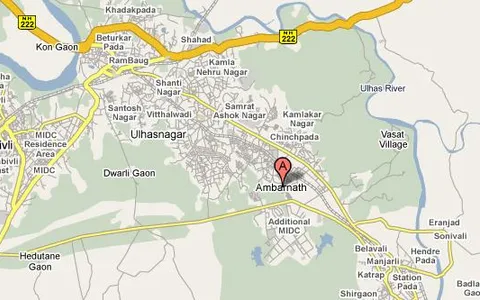
Ambarnath is a small town located near Akoli in Thane district of Maharashtra. This town is on Mumbai-Pune railway line. Ambarnath houses a fascinating temple…