Mohiniyattom Dance
Mohiniyattam Dance is one of the most beautiful dance forms of Kerala. Also called Mohiniyattam, this dance form has close resemblances with Bharathnatyam.Mohiniyattam Dance in Kerala which originally practiced by Devdasis in the strict confinements of the temple. Through this dance a woman expressed her love which could be carnal, devotional as well as maternal.The dance which has influences and elements from two South Indian dance forms, the Bharatanatyam and Kathakali, was formulated in the…
About Mohiniyattom Dance
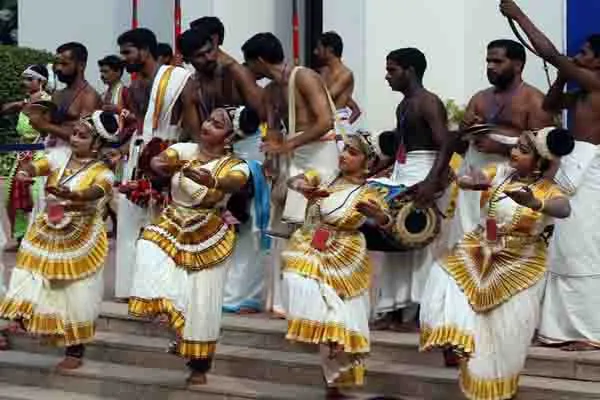
Mohiniyattam Dance is one of the most beautiful dance forms of Kerala. Also called Mohiniyattam, this dance form has close resemblances with Bharathnatyam.Mohiniyattam Dance in Kerala which originally practiced by Devdasis in the strict confinements of the temple. Through this dance a woman expressed her love which could be carnal, devotional as well as maternal.The dance which has influences and elements from two South Indian dance forms, the Bharatanatyam and Kathakali, was formulated in the court of king Swati Tirunal by Vadivelu, one of the Thanjavur Quartet. The dance involves the swaying of broad hips and the gentle movements of erect torso from side to side.Mohiniyattam also spelled as mohiniaattam, mohiniattom or mohiniyattam; Malayalam: is a traditional South Indian dance form from Kerala, India. Usually, the theme of Mohiniattam dance is “sringara” or love. Subtle subjects of love are executed with suggestive abhinaya, subtle gestures, rhythmic footwork and lilting music. The legend of Vishnu as “Mohini”, (the enchantress) forms the core of Mohiniattam dance.The distinctive style of Mohiniattam is the complete absence of heavy stamping and rhythmical tension. Footwork in Mohiniattam is gentle and soft and sliding. The movements are never abrupt, they are dignified, easy and natural, but the vertical line of the body is never broken. Hence, among the styles detailed by Bharata Muni in the ancient Indian treatise on dance, the Natya Sastra, Mohiniattam resembles the Kaisiki type meaning graceful. Various teachers and Gurus kept the Mohiniattam dance tradition alive by their efforts. In 1930, Mahakavi Valathol founded Kerala Kala Mandalam and along with Kathakali he included Mohiniattam so as to revive the dance form. The first dancer was Kalyaniamma. She also taught in Shantiniketan under Rabindranath Tagore’s invitation. They have been likened to the sway of palm leaves in the gentle breeze.
Once Mohiniyattam was performed only in Temples premises and royal courts. The first reference to Mohiniyattam is found in ‘Vyavaharamala’ composed by Mazhamangalam Narayanan Namboodiri, of 16th century AD. Major contributions to this art form were given by Maharaja Swathi Thirunal, Irayimman Thampi and Kuttikunju Thankachi.It is only in recent times in the 20th century that Mohiniattam has spread all over India and abroad. Mohiniattam is essentially a solo form of dance.The performers of Mohiniattam dance usually wear an off-white colored sari with gold brocade borders. Hairs of the dancer are gathered in a bun and decorated with jasmine flowers. The Mohiniattam dancer is adorned with Gold Jewellery including necklaces, bangles, waistbands and anklets. The tinkling of the Jewellery produces music as the dancer performs the dance. Mohiniattam dance is accompanied by musical instruments like violin, Veena and Mridangam and the dancer narrates episodes from the epics and legends through elegant steps, rhythmic movements of her arms and amazing facial expressions. To make Mohiniattam a distinctive and attractive art form he composed a number of pieces called varnams and padams and made the music of this art form lyrically rich and attractive. He brought about reforms and improvements in the style and included Mohiniattam recitals in festive celebrations.
Usefull Links
http://bamaevents.blogspot.com/2008/06/mohiniattam-dance-kerala-day-livermore.html
http://ramarights.blogspot.com/2009/10/dancing-queen-hema-malini.html
http://anindianart.blogspot.com/2009/04/mohiniattam-dance-of-enchantress.html
http://indiandanceforms.blogspot.com/2007/08/m-o-h-i-n-i-t-t-m.html
History of Mohiniyattom Dance
The first reference to Mohiniattam has been found in ‘Vyavaharamala’, composed by Mazhamangalam Naryanam Namboodiri, assigned to the 16th century A.D. In 19th century, Swati Thirunal, the king of erstwhile Travancore, tried to encourage the development of this dance style. After him, Mohiniattam suffered heavily, owing to the exploitation by the Satraps and the Landlords. Poet Vallathol revived it once again and gave it a prominent status throughout Kerala, through Kalamandalam, which he founded in 1930. Kalamandalam Kalyaniamma and Chinnammu Amma are the last links of a disappearing tradition that nurtured aspirants in the discipline at Kalamandalm.
Location info
kerala.
Mobile network coverage
Airtel, Jio, BSNL, and Vi all provide coverage across Kerala. 4G is reliable in Kochi, Thiruvananthapuram, Kozhikode, and along the coastal belt. Coverage may be weaker in remote sections of the Western Ghats, deep forest reserves, and certain backwater stretches. Most hotels, houseboats, and cafes in tourist areas offer free Wi-Fi.
Food & restaurants nearby
Food options are available in the nearest town. Kerala cuisine — fish curry, appam with stew, puttu, and Kerala sadhya — is widely available and famously delicious.
Hotels & accommodation nearby
Accommodation is available in the nearest town or city. Options range from homestays to luxury resorts. Kerala’s homestay network is excellent and offers authentic local experiences.
Climate & weather
Kerala has a tropical monsoon climate with warm, humid conditions year-round. The best time to visit is November to February, when temperatures are a pleasant 22°C–30°C with low humidity and clear skies. March–May is hot and humid (up to 36°C). The southwest monsoon (June–September) brings heavy rainfall — the landscape transforms into lush green and this is the best time for Ayurvedic treatments. The northeast monsoon (October–November) brings shorter showers. Hill stations (Munnar, Wayanad) remain cooler year-round.
Helpline & emergency contacts
Tourist Helpline: 1364 (toll-free, 24×7). Police: 112 (all-India emergency). Ambulance: 108. Women’s Helpline: 1091. Kerala Police Tourist Helpline: +91-471-2722255.
Nearest petrol pump
Petrol pumps are available in the nearest town or on the approach road — check locally for the closest option.
Best time to visit Mohiniyattom Dance
Mohiniyattom Dance performances are held throughout the year. Kathakali performances are typically evening events (6:30 PM onwards). Theyyam performances are seasonal and linked to specific temple festivals, primarily between November and May. Cultural centres in major cities offer regular performances for tourists.
How to reach Mohiniyattom Dance
Nearest Airport: Cochin International Airport (COK) (approximately 0 km). Nearest Railway Station: Ernakulam Junction / Ernakulam Town Railway Station. The destination is well-connected by Kerala State Road Transport Corporation (KSRTC) buses and private taxis from major towns.
Timings & opening hours
Cultural performances (Kathakali, Theyyam, Mohiniyattam) typically take place in the evenings. Kathakali performances usually start at 6:30 PM–7:00 PM and last for about 2–3 hours. Theyyam performances occur at specific temple festivals and timings vary.
Entry fee & tickets
Kathakali performance tickets: INR 200–500 per person. Theyyam performances during festivals are free to watch. Dance festivals and cultural centres may charge INR 100–500 for entry. Some performances are included in temple festival events (free).
Duration needed
Kathakali performances: 2–3 hours. Theyyam performances: 30 minutes to 2 hours per performance (festivals have multiple performances throughout the day).
Safety tips
Kathakali and other dance performances are well-organised cultural events — follow venue rules. Arrive early for good seats. Photography may be restricted during performances (no flash). Some performances (like Theyyam) occur at temple grounds — follow temple customs.
Things to carry
A camera (check performance photography rules — flash is generally prohibited), a light sweater or wrap for evening performances (many venues are open-air), and comfortable seating. Some Theyyam venues are temple grounds — carry modest covering as required.
Nearby visiting places
Fort Kochi, Mattancherry Palace, Cherai Beach, Bolghatty Island, Marine Drive, Chinese Fishing Nets, Hill Palace Museum, Kerala Kathakali Centre, St. Francis Church
Nearest airport, railway & bus
Nearest Airport: Cochin International Airport (COK) (approximately 0 km). Nearest Railway Station: Ernakulam Junction / Ernakulam Town Railway Station. The destination is well-connected by Kerala State Road Transport Corporation (KSRTC) buses and private taxis from major towns.
Things to do at Mohiniyattom Dance
Watch a live Kathakali/Mohiniyattam/Theyyam performance, arrive early to see the elaborate makeup application process (for Kathakali), learn about the mudras (hand gestures) and expressions used in the dance, take photographs (where permitted), visit the green room to see performers preparing, attend a lecture-demonstration (offered by many cultural centres), and buy traditional dance-related souvenirs like Kathakali masks.
Things to visit & highlights
The elaborate costumes, makeup, and facial expressions (in Kathakali), the graceful movements and hand gestures (mudras), the live traditional music accompaniment, the storytelling aspect of the performance, and the backstage experience of watching performers prepare.
Frequently asked questions
How long is a Kathakali performance? — A full Kathakali performance lasts 2–3 hours. Most tourist-focused centres offer 1-hour condensed performances that include the highlights. Where can I watch authentic performances? — Kochi has several Kathakali centres (Kerala Kathakali Centre, Cochin Cultural Centre). Theyyam performances are best witnessed at local temple festivals. Is photography allowed? — Photography is usually allowed without flash. Video recording may require additional permission or fee. Some performances restrict photography during certain segments.
Quick facts
- Type: Destination
- State: Kerala
- Category: Dance
Map & location view
This section is being updated and will be available shortly.
Photo gallery of Mohiniyattom Dance
Video gallery
Related destinations
Chavittunatakom Dance
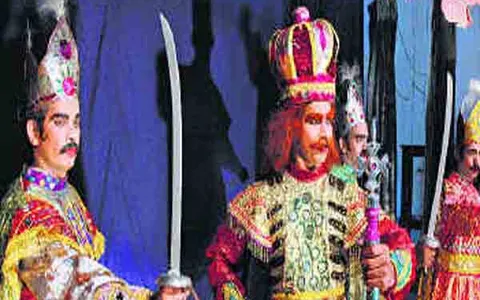
Chavittunatakom Dance in Kerala is one of the oldest dance forms in Kerala. This is one of the Christian dance forms of Kerala whose origin can be traced to the…
Duffmuttu Dance
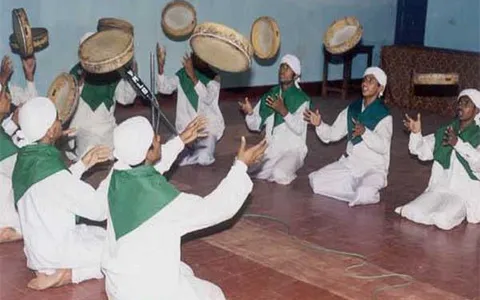
The Duff Muttu or the Dubh Muttu, or the Duff Kalli is an art form performed in Kerala by the Muslim community to commemorate their festivals, nuptial ceremonies or…
Kakkarissi Natakom Dance
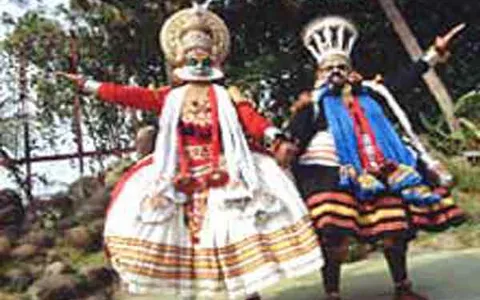
http://seekerala.blogspot.com/2008/03/dances-and-folk-arts-of-kerala.html http://folks-musics.blogspot.com/2008/07/folk-dance-music-of-kerala.html…