Somnath Temple
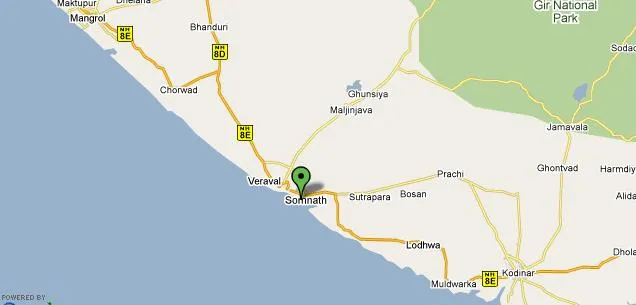
Somnath of Prabhas Pattana, situated on the southern coast of Saurastra, in the province of Sorath, now known as Jungadh in the state of Gujarat, holds the prestigious temple of Sri Someshwar, which is supposed to have witnessed the dawn of time. The present temple is an imposing structure: its imposing exterior is adorned with marvellous sculpture; it has a grand sabha mandap in front; its shikhara measures 155 feet. The jyotirlinga installed on the Brahmasila is about four feet in height and…
About Somnath Temple
Somnath of Prabhas Pattana, situated on the southern coast of Saurastra, in the province of Sorath, now known as Jungadh in the state of Gujarat, holds the prestigious temple of Sri Someshwar, which is supposed to have witnessed the dawn of time. The present temple is an imposing structure: its imposing exterior is adorned with marvellous sculpture; it has a grand sabha mandap in front; its shikhara measures 155 feet. The jyotirlinga installed on the Brahmasila is about four feet in height and is adorned with spectacular sandal paste decorations, a novelty here. There are hundreds of priests in the service of the Lord, attending to His needs, round the clock.
The Somnath temple is dedicated to Someshwara, another name of Lord Shiva with moon on his head. The temple is situated in Saurashtra. It is believed that Somraj, the Moon God himself had originally built the temple out of gold. Somnath is the first of all the 12 jyotirlingas. Though the temple is of Hindu origin, the Architecture has Jain influences. The Somnath temple has been destroyed six times and have been rebuilt. The temple faces the east direction. Externally the Somnath temple resembles the Rudramala temple at Siddhapur. The dome of the temple is the biggest ever made in this century. The temple has large central hall with entrances on three sides, each protected by a lofty porch. The temple carvings and the sculptures speak about the great artistic endeavor made by the craftsmen of that era. At a certain interval in the balconied corridor is a deformed Nataraja statue.
Chandra married the twenty seven daughters (stars) of Daksha, but was very partial and showed lot more love and affection to rohini. The remaining twenty six wives not only felt neglected but also insulted. They were disappointed with their husband and went and complained to their father. Daksha was upset to see his daughters suffer thus, and tried twice to convince his son-in-law to change himself, but in vain. He put a curse on him that Chandra would be “decreasing” in size.
The Devas (Celestial gods) were very sad at Chandra’s plight and went to Brahma. The Creator, in order to find out a remedy for this condition of Chandra and get a solution for redressing the curse. Brahma told them that the only way out was to worship Vrishabhdhwaj Shankar at Prabhas Kshetra Mahamrityunjay. Chandra went on a penance for six months and prayed to Lord Shiva, at the end of which Shankara appeared before him. He gave Chandra the boon that in a month, he would grow for fifteen days in one half and in the other half he would keep loosing one Kala (shade) per day and decrease in size. He was pleased with the Devas and in order to increase the prestige of the place, Lord Shiva Himself came to be known as Someshwar, meaning famous moon (Soma). The Devas established a Someshwar Kund there. By taking a holy dip in this pond or Kund, it is believed that one would obtain release from all the sins.
Interesting things to Visit Somnath Temple
It is a pleasant spot connected by good roads. ‘Gangaji Fair’ is a organized here every year which attracts plenty of tourist.There are few other attractive tourist places s in Daman like Devka Beach, Jampore Beach, irrigation pond-lake in Kachigam, Nani Danan jetty garden and Hilsa summer house near Hilsa fish Aquarium.
Lakshmi Narayanan Temple:
Shri Lakshminarayan Mandir is closeby to the Balramjiki Gufa a place from where the banks of Hiran are at a distance of 1.5km from Somnath temple.. The Balramjiki Gufa is the place from where Bhagwan Shrikrishna’s elder brother Balaramji took journey to his nijdham-patal. This temple is closeby to Gita mandir temple.Both these temples are said to be built recently.It is dedicated to Lord LakshmiNarayanan which is said to be the replica of the LakshmiNarayanan temple in Badrinath.This temple depicts one of the sacred places of the Prabhas teerth.
Old Somnath Temple:
The Somnath Temple located in the Prabhas Kshetra near Veraval in Saurashtra, on the western coast of Gujarat. Somnath means The Protector of Moon God.The temple is also known as the Shrine Eternal. This temple has the Shivling built below ground level which is accepted by Hindus having great divinity. The rituals/Pooja performed here are believed to bring fruition to the wishes. The temple was (re)built by the Maratha warrior and saint queen Ahilyabai Holkar famous for building other important temples at locations where temples were destroyed by the muslim looters (gaznis). India is one of the twelve Jyotirlings (lingas of light) symbols of the God Shiva. The temple has been destroyed six times it has been rebuilt every single time.
Somnath Parasuram Temple:
This is a sacred spot at the holy banks of Triveni where Bhagwan Parshuram conducted his long penance and he was relieved from the curse of Kshatriya killings by Bhagwan Somnath. Divine leela Parshuram is perpetnated here by a beautiful Parshuram Temple and two ancient kunds.
The temple has a very simple architecture. The plan is formed by, a sabhamandap, the easternmost part of the scheme, a central mandap, and a garbhagriha.The garbhagriha has 3 idols with Lord Parasuram in the middle and Kala and Kama to the right and left.Outside the temple there is a small courtyard with Hanuman shrine & Ganesh shrine.Behind the temple there is a structure devoted to Lord Parasurams mother Renuka.
Panch Pandav Gufa:
Panch Pandava temple is located near Lalghati.It is believed that this temple was found in the year 1949 by the late Baba Narayandas.Panch Padava temple in Somnath is dedicated to the Pandavas, … vyas gufa, hauman temple and finally to Narayan temple which is a 108 divya desam.
In the temple the devotees can find, beautiful idols of Lord Shiva, Ram - Laxman, Sitaji, Goddes Durga and Hanuman built. People and devotees from different places come for darshan everyday. A sanskrit college is also located in the campus. people interested in taking up varied Sanskrit courses can join this institution.
Jyothirlinga Temple:
The Somnath temple is dedicated to Someshwara, another name of Lord Shiva with moon on his head. The temple is situated in Saurashtra. It is believed that this temple was originally built in gold. Of all the 12 jyotirlingas Somnath is the first. Though the temple is of Hindu origin, the Architecture has Jain influences.
The Somnath temple has been destroyed six times and have been rebuilt. The temple faces the east direction. Externally the Somnath temple resembles the Rudramala temple at Siddhapur. The temple has biggest dome ever made and large central hall with entrances on three sides, each protected by a lofty porch. The temple carvings and the sculptures depicts the great artistic endeavor made by the craftsmen of that era. At a certain interval in the balconied corridor is a deformed Nataraja statue.
Suraj Mandir:
Suraj in Sanskrit means sun. Suraj Mandir or the Sun Temple dates back to the same time as the Somnath Temple. Though its history is obscure we know for certain that it was raided by Mahmud of Gazni during the same time as he raided somnath.
This temple is located North of the sangam (where three rivers meet). The architecture features many animal figurines like lions, and huge elephant trunks. People in those times were nature worshippers and use to believe blindly the forces of nature. Suraj Mandir was set up as a reverence to the sun god.It is a place of historical importance
Triveni Ghat:
Triveni Ghat in Somnath is one such spot where three Rivers namely Hiran, Kapil and Saraswati meet with the Arabian Sea. The confluence of the three rivers or Sangam as it is referred to in Hindu religious terms is one of the most pious places in India.
Nearest Visiting places from Somnath Temple
Sasan Gir Forest,Gir National Park:
Sasan Gir National Park & Lion Sanctuary is the last home of the Asiatic Lion. Spread over an area of 1412 square kilometers near Junagadh district in Gujarat, Sasan Gir is a dry deciduous habitat for the lions, dominated by short and gnarled teak trees , thorn bushes and grassland.Gir has a strange beauty in its harshness. I visited Gir at the onset of the hot and dry Indian summer in early May. Most of the vegetation had turned a golden yellow mixed with shades of brown. In this bleak and dusty landscape one came across a few green oasis’s around the many rivers that run run through Gir. The starkness of the contrast is truly a Gir experience. While Sasan is rightfully best known as the home of the lion, it is by no means the only inhabitant of the forest. Gir’s bio-diversity rivals any National Park in India and supports over 450 plant species, 32 mammals, 310 birds, 24 reptiles and over 2,000 insects.
Summer Palace,Holiday Camp Chorwad:
In dhirubhai ambani chorwad, holiday camp chorwad, junagadh tourism, nawab of junagadh, reliance industries limited, ril, saurastra tourism, summer palace chorwad, tourism corporation of gujarat Junagadh(Saurastra) Tourism Hub Holiday Camp,Chorwad languishes in neglect. Holiday Camp (Chorwad),Well-known tourist place Holiday Camp situated on the picturesque shoreline of Chorwa…
Shakkarbaug Zoo:
In girnar junagadh gujarat, junagadh, junagadh city, junagadh district news, junagadh gujarat india, junagadh news, junagadh tourism, kathiyavad, saurastra news, shakkarbaug zoo, singapore zoo cheetahs Indian summer too hot for Cheetahs from Singapore. Authorities in the Shakkarbaug Zoo of Gujarat’s Junagadh Town have removed a pair of Cheetahs received from Singapore in June last year from…
Girnar Hill:
Mount Girnar is one of the hill in Ahmedabad which is most sacred to the Jain community (the other hill is the Shatrunjaya hill located in Palitana). This hill rises to a height of more than 600 m, a climb marked by 10,000 stone-steps. On this hill various Hindu and Jain temples are located. Among these temples, five temples are the Jain temples.
Willing Dam:
The Dam is situated in the east of city with a beautiful garden at the foot hill of Dattar. The Dam was completed in 1936 AD.T
Chorwad Beach:
A visit to Chorwad Beach in Gujarat, India, offers ample of opportunity to the tourists to know about the ins and outs of the Chorwad Beach in Gujarat, India. Chorwad Beach in Gujarat, India is yet another beautiful and scenic spot which if marketed well can figure high in the itinerary of the domestic and international tourists. Chorwad Beach is an interesting and alluring amalgamation of rocky crags and bowlderish seafront along with jaunty boat rides across the Chorwad seafront and to cap it all with opportunities to visit Porbandar and Somnath and other nearby beach destinations and other travel destinations worth their salt in terms of beauty and ambience.
Help Line/Phone Number
Copyright 2016 HolidayLandmark All rights reserved
Location info
-
**Address:**Somnath Patan,Gujrat,India
-
District: Junagadh
-
Nearest City: Veraval
-
Best time to visit: December to February
Climate & weather
Summer :Maximum 38.C ,winter Minimum 5.0.C
History of Somnath Temple
The fabled Temple of Somnath stands 6km east of Veraval and is nearly 80km from Junagarh. Somnath is one of the most revered shrine in the country, for it has one of the twelve pre-eminent Jyotirlingas which hold a special significance for the Hindus. Somnaths glory and fame are legendary. Somnath is amired in many myths It is believed to have appeared first in gold, at the behest of the moon-god, next in silver, created by the sun-god, a third time in wood at the command of Krishna, and finally in stone, built by Bhimdeva, the strongest of the five Pandava brothers form Mahabharata.
Things to do at Somnath Temple
worship:
A disturbed Chandra, came down to Prabhasa with Rohini and worshipped the Sparsa Linga of Somnath after which he was blessed by Shiva to grow and shine in the bright half.,Must be Gujrati month os sravan
How to reach Somnath Temple
-
**Nearest Railway Station:**Veraval railway station
-
**Nearest Airport:**Rajkot airport 99.km
-
**Road Transport:**State Transport buses and private luxury coaches connect various centres of Gujarat.
Hotels & accommodation nearby
- **TCGL-Hotel:**somnath Viraval,Gujrat,India
**Hotel Paradise:**Veraval,Junagadh,Gujarat,India
Nearest petrol pump
- Petrol Pump: Somnath,Junagadh,Gujarat,India
Sangh Petrol Pump: Kodinar,Junagadh,Gujarat,India
Best time to visit Somnath Temple
October to March with pleasant temperatures.
Timings & opening hours
6:00 AM to 8:00 PM daily. Specific Aarti timings vary by temple.
Entry fee & tickets
No entry fee.
Duration needed
1 to 3 hours depending on the temple.
Safety tips
Follow temple security procedures. Remove shoes before entering. Respect religious practices.
Things to carry
Modest clothing covering shoulders and knees. Offerings can be purchased outside the temple.
Nearest airport, railway & bus
Nearest airport and railway station in the nearest city.
Mobile network coverage
Airtel, Jio, and Vi all provide good coverage across Gujarat’s major cities and tourist areas. 4G is generally reliable in Ahmedabad, Vadodara, Surat, and along major highways. Coverage may be weaker in remote areas of Kutch and interior Saurashtra. Most hotels and cafes in tourist areas offer free Wi-Fi.
Food & restaurants nearby
Temples and religious sites in Gujarat often have nearby food stalls and thali restaurants. Major pilgrim centres (Somnath, Dwarka, Ambaji) have extensive food options. The nearest town typically offers traditional Gujarati thali and multi-cuisine restaurants.
Frequently asked questions
What are the temple timings? Generally 6:00 AM to 8:00 PM.
What is the significance of Somnath Temple? It is a revered pilgrimage site in Gujarat.
What is the best time to visit? October to March.
Accessibility
Religious sites may have steps at the entrance and may not have ramps. The interiors are generally level once inside. Some historic sites have uneven stone floors. Visitors with mobility concerns should check in advance.
Rules & restrictions
Modest dress is required: shoulders and knees must be covered (scarves or shawls are often available at the entrance). Photography is generally permitted without flash, but video may be restricted. Maintain silence inside. Mobile phones should be on silent mode. Remove shoes if required (indicated by signage). Do not touch artefacts or altars. These are active places of worship — respect services, festivals, and devotees.
Best photography spots
Gujarat’s churches (primarily in Diu and Daman) showcase Portuguese colonial architecture. Shoot in the early morning or late afternoon for the best light on the whitewashed facades. The interiors are simpler than Goan churches but the colonial-era details are worth capturing.
Quick facts
- Type: pligrims
- Location: Gujarat, India
- Ideal for: History enthusiasts, cultural travelers, and photographers
- Best time to visit: October to March (pleasant winter season)
- Photography: Allowed at most areas; some sites may have restrictions inside sanctums
Plan your visit to Somnath Temple with these essential quick facts for a smooth and enjoyable trip to Gujarat.
Visitor information
Planning your visit to Somnath Temple
- Language: Gujarati is the local language; Hindi and English are widely understood at tourist sites.
- Getting around: Auto-rickshaws, taxis, and state transport buses are readily available. Hiring a private vehicle is recommended for comfort.
- What to wear: Light cotton clothing in summer; light woolens in winter. Comfortable walking shoes are essential. Modest dress is advised at religious sites.
- Photography: Check for photography restrictions before entering. Some temples and museums may charge a separate camera fee.
- Best time to visit: October to March when the weather is pleasant for sightseeing.
- Local cuisine: Don’t miss Gujarati thali — a wholesome meal with dal, rice, vegetables, roti, and sweets like dhokla, khandvi, and mohanthal.
Nearby facilities
- ATMs: Available in nearby towns and at major tourist sites.
- Medical facilities: Primary health centers and hospitals can be found in district headquarters.
- Restrooms: Public restrooms are available at major tourist spots; carry hand sanitizer and tissues.
Make your visit to Somnath Temple comfortable and hassle-free with these practical visitor tips for Gujarat.
Map & location view
Somnath Temple is located in the vibrant state of Gujarat, India. The destination is accessible by road and is well-connected to major cities and towns in the region, making it a convenient addition to any Gujarat travel itinerary.
How to reach
- By Air: The nearest airport is connected to major Indian cities including Mumbai, Delhi, Ahmedabad, and Vadodara with regular domestic flights.
- By Rail: The nearest railway station is connected to the Indian railway network with regular trains from major cities across India.
- By Road: State transport buses, private taxis, and self-drive options are available from nearby cities. Gujarat has a well-maintained network of state highways and national highways.
Use GPS navigation or local maps to find the exact location of this destination in Gujarat. The Gujarat Tourism website provides additional travel resources for visitors.
Photo gallery
Visual highlights of Somnath Temple
Visitors to Somnath Temple will find plenty of photogenic spots worth capturing. From architectural details to natural landscapes, the destination offers diverse subjects for photography enthusiasts.
What to photograph:
- Architecture: Intricate carvings, structural details, and traditional Gujarati craftsmanship
- Landscapes: Surrounding natural beauty, gardens, and panoramic views of the Gujarat landscape
- Local life: Candid moments of visitors, vendors, and daily activities around the site
- Details: Close-up shots of carvings, paintings, decorative elements, and textures
Photography tips:
- Early morning (6:00 AM – 8:00 AM) and late afternoon (4:00 PM – 6:00 PM) offer the best natural light for photography in Gujarat’s climate
- Check if photography is allowed inside buildings before taking photos
- A wide-angle lens is ideal for capturing architectural grandeur at Gujarat’s heritage sites
- Mobile phone photography works well in well-lit outdoor areas
Browse through our collection of photographs showcasing the beauty and heritage of Somnath Temple. New images are added regularly as part of our ongoing content enrichment for this Gujarat destination.
Photo gallery of Somnath Temple
Video gallery
Related destinations
Ajit Nath Temple
Ajitnath Temple located 56 kms from Mehsana, nestled in the hills of Taranga, is the temple devoted to Ajitnath, the 22nd Tirthankara of Jains. One of the most…
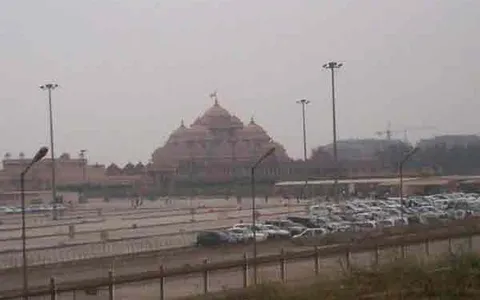
Akshar Dham Temple
A specimen of fine craftsmanship, the Akshardham temple in Gandhinagar is one of the largest and most prominent temples in the entire state of Gujarat. Located in…
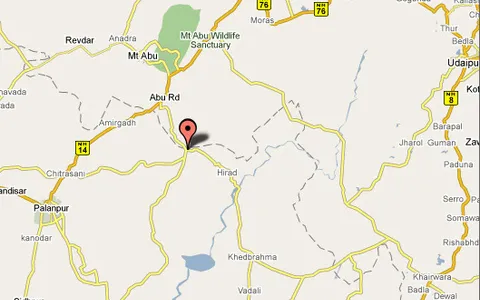
Ambaji Temple
At a distance of 65 Kms from Palanpur and 45 Kms from Mt. Abu near Gujarat Rajasthan border the religious town of Ambaji is located. This town is famous for the Maa…