Ambaji Temple
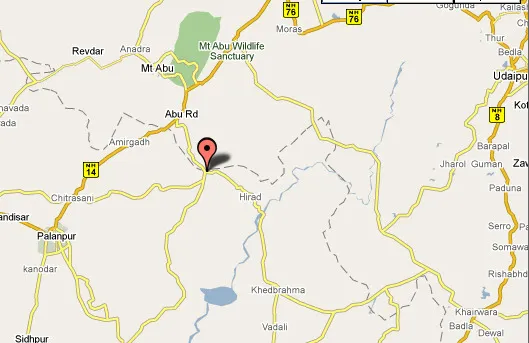
At a distance of 65 Kms from Palanpur and 45 Kms from Mt. Abu near Gujarat Rajasthan border the religious town of Ambaji is located. This town is famous for the Maa Ambaji temple, one of the richest and holiest temple in Gujarat attracting lakhs of pilgrims from Gujarat and neighbouring Rajasthan every year. The original seat of Ambaji Mata is on Gabbar Hilltop, which is 3 Kms away from Ambaji town. Ambaji Mata temple is one of the 51 shakti peeths where it is believed the heart of Goddess…
About Ambaji Temple
At a distance of 65 Kms from Palanpur and 45 Kms from Mt. Abu near Gujarat Rajasthan border the religious town of Ambaji is located. This town is famous for the Maa Ambaji temple, one of the richest and holiest temple in Gujarat attracting lakhs of pilgrims from Gujarat and neighbouring Rajasthan every year. The original seat of Ambaji Mata is on Gabbar Hilltop, which is 3 Kms away from Ambaji town. Ambaji Mata temple is one of the 51 shakti peeths where it is believed the heart of Goddess Parvati fell.
Mother Goddess, is a popular pilgrim place for Hindus. People of Gujarat take the name of the Goddess in high regard. Ambaji temple is also considered as one of the Shakti Peethas in India. The Goddess is a manifestation of Shiva’s consort, Parvati. Ambe Mata is the Adya Shakti- the primordial female power, the Mother Goddess.
The Navratri celebrations are organized on a large scale in the Ambaji temple. During the festival, a huge fair is organized here every year. People celebrate the occasion with great pomp and show. They sing and dance in praise of the glory of the Goddess. The temple is located on the Arasur hill in the Aravalli Range. The most fascinating feature of the shrine is that it does not contain any idol. It only has a yantra, made of marble which is engraved at a spot.
A large number of devotees throng the Ambaji Temple during Purnima fairs held, on the full moon day, in the months of Kartik, Chaitra and Bhadrapad. A short distance from Ambaji, there is a hill named Gabbar Hill. People believe that the Goddess revealed herself on the hill and left the imprints of Her feet. She is even considered the prime Goddess of the region. This has made the place a pilgrim for the Hindus in the state and outside.
Help Line/Phone Number
Copyright 2016 HolidayLandmark All rights reserved
Location info
-
**Address:**Ambaji ,Gujrat,India
-
District: Palanpur
-
Nearest City: Ahmedabad
-
Best time to visit: Navember to March
History of Ambaji Temple
History Ambaji-the Origin of the Supreme Cosmic Power of the Universe is one of the fifty one 51 ancient Shakti Piths Tirth in India. There are 12 main Shakti Pith Tirth, significant places of pilgrimage for the worship of Shakti, namely, Ma Bhagwati Mahakali Maha Shakti at Ujjan, Ma Kamakshi at Kanchi Puram, Mata Bramaramba at Malay Giri, Shri Kumarika at Kanya Kumari, Mataji Ambaji at Anartgujarat Mata Mahalaxmidevi at Kohlapur, Devi Lalita at prayag, Vindhya Vasini at Vindhya, Vishalakshi at Varansi, Mangalavati at Gaya and Sundari Bhavani at Bangal & Guhya Kesari in Nepal.
The Great Miracle of this Holy Place is that there is no idol or picture in the Nij Mandir the Temple of Shri Arasuri Mata Ambaji, but a simple cave like Gokh in the inner wall, in which A Gold Plated Holy Shakti Visa Shree Yantra having kurma back convex shape and 51 Bij letters therein, connected with that of the original Yantras of Nepal and Ujjain Shakti Piths, is also ritually installed in such a way it can be visible for devotion, but never photographed in past nor can be so done in future. The worship of this Visa Shree Yantra is done only after tying a bandage on the eyes.
Things to do at Ambaji Temple
Ambaji Mata temple at Gabbar is very ancient, origin of which is lost in antiquity. It is believed that Goddess Amba was one of the deities of Pre-Aryan race, which Aryans absorbed in their pantheon. On the Gabbar Hill the footsteps of Goddess are imprinted. The imprint of Her chariot is also found here. It is believed that the tonsure ceremony of Lord Krishna also took place here. Ambaji temple has a golden yantra made jointly with the yantra of Nepal Shaktipeeth at Ujjain. There are 51 shlokas on the yantra.
Lakhs of devotees visit the temple every year especially on Purnima days culminating into a large mela on Bhadarvi Purnima. Goddess Ambaji Mata has been fulfilling wishes of her devotees for thousands of years.
Things to visit & highlights
Koteshwar Temple:
Koteshwar Mahadev Temple can be fetched in the dense regions, 8 km from Ambaji Temple. Constructed on the originating source of Saraswati River, this ancient temple lets you glimpses of sacred ruins with a holy kund. The river Saraswati flows from a Gomukh (the mouth of a cow) at Koteshwar Mahadev Temple. And, there is a great legend that adds credibility to this awesome place of peace. As per the legend there was aashram of Valmiki Rishi at this spot where Valmiki, the author of Ramayana, composed the holy book of Ramayana. Later, Rana Pratap, the King of Mewad renovated this holy temple during his reign.
Kailash Tekari:
A beautiful, quondam Shivalaya, Kailash Tekari is located on a high altitude near Ambaji Temple. The temple is frequented by pilgrims and devotees who visit Ambaji Temple as it is too close to the shrine area. The old sanctum sanctorum of Lord Shiva in Kailash Tekari is pleasant experience after a few steps of trek. Watching the sun setting from this place is a nice see. As a recent architectural addition to Mahadev Temple at Kailash Tekari, there is a whole, new artistic stone gate at the temple entrance.
Someshwar Mahadev & Chamunda Math:
Just 1 km away from Kumbharia Jain Temple in the village of Jetwas village of Danta Taluka, there is an ancient place of Someshawar Mahadev which is also on the water spring. Just adjacent to this temple is located Chamunda Math.
Richhadia Mahadev & Richhadia Dam:
Sprawling on the site of a Dam, Richhadia Mahadeva Temple is an undoubtedly a place of tourist’s attraction. A Shivalaya on the banks of Astakoni Vav dots the place in consecration.
Kumbheshwar Mahadev:
Kumbheshawar Mahadev Temple built near Kumbharia Jain is sui generis architectural marvel that has been built on Vaastu principles, the ancient Indian Science of Architecture. There are wonderful pieces of architecture with idols Ling of Ashutosh, Jaladhari and Shivalinga.
Mount Abu:
In the lap of Aravallis, Mount Abu is a serene place, and has served as a site for meditation of great saints and seers of India. Located in the backyard of Ambaji, this mountainous beauty is a treasure trove of natural attractions such as Nakki Lake, Dilwara Temple, head Quarters of Bramhakumari Foundations etc.
How to reach Ambaji Temple
-
**Nearest Railway Station:**Abu railway station
-
Nearest Airport: Ahmedabad airport
-
**Road Transport:**State transport buses and private luxury coaches are available to reach Ambaji from various cities of Gujarat.
Hotels & accommodation nearby
- **Hotel Akash Ganga:**Abaji,Gujrat,Indai
Balaram Resort: Abaji,Gujrat,Indai
Nearest visiting places
Sri Tirth:
Built by King Prahlad, this Temple is famous as the temple of Prahladan Parshvanath. Today it is known as the temple of Pallaviya Parshvanath. This brave king melted the metal idol of Delvada in Abu and made an idol of Shiva riding a bull. Inflicted by leprosy, the agonized king went to the forest. There he met Acharyashri Shalibhadrasurisvar. He repented for what he had done and then according to the instructions and with blessings of the Acharya, he made a temple of Bhagwan Parshvanath.
He poured on his body the water with which the idol was bathed and got cured of his disease. King Prahlad then becomes a follower of the Jain religion. He performed many acts of religion. He was a scholar and wrote many books. His dramatic work entitled “ Parshva Parakram Vyasang“ is famous even today. It speaks highly about his Scholarship.
Balaram Mahadev Temple:
The sacred temple of Balram Mahadev is situated about 12 kms from in Banaskantha district. The palaces of the Nawab and Hindu Temples are also worth seeing.
Nearest petrol pump
- **Mansurbhai Mohasinbhai Master Petrol Pump:**Palanpur,Banaskantha,Gujarat,India
**Shiv Shakthi Petrol Pump:**Palanpur, Banaskantha, Gujarat
Best time to visit Ambaji Temple
October to March with pleasant temperatures.
Timings & opening hours
6:00 AM to 8:00 PM daily. Specific Aarti timings vary by temple.
Entry fee & tickets
No entry fee.
Duration needed
1 to 3 hours depending on the temple.
Safety tips
Follow temple security procedures. Remove shoes before entering. Respect religious practices.
Things to carry
Modest clothing covering shoulders and knees. Offerings can be purchased outside the temple.
Nearest airport, railway & bus
Nearest airport and railway station in the nearest city.
Mobile network coverage
Airtel, Jio, and Vi all provide good coverage across Gujarat’s major cities and tourist areas. 4G is generally reliable in Ahmedabad, Vadodara, Surat, and along major highways. Coverage may be weaker in remote areas of Kutch and interior Saurashtra. Most hotels and cafes in tourist areas offer free Wi-Fi.
Food & restaurants nearby
Temples and religious sites in Gujarat often have nearby food stalls and thali restaurants. Major pilgrim centres (Somnath, Dwarka, Ambaji) have extensive food options. The nearest town typically offers traditional Gujarati thali and multi-cuisine restaurants.
Climate & weather
Gujarat has a diverse climate ranging from arid in Kutch to semi-humid along the coast. Winter (November–February) is the best time to visit: temperatures range from 12°C to 29°C with clear skies and pleasant days. Summer (March–June) is very hot, with temperatures reaching 40–45°C in interior areas. The monsoon (July–October) brings moderate to heavy rainfall, with coastal areas receiving more rain. The Rann of Kutch and cultural festivals are best experienced in winter.
Frequently asked questions
What are the temple timings? Generally 6:00 AM to 8:00 PM.
What is the significance of Ambaji Temple? It is a revered pilgrimage site in Gujarat.
What is the best time to visit? October to March.
Accessibility
Religious sites may have steps at the entrance and may not have ramps. The interiors are generally level once inside. Some historic sites have uneven stone floors. Visitors with mobility concerns should check in advance.
Rules & restrictions
Modest dress is required: shoulders and knees must be covered (scarves or shawls are often available at the entrance). Photography is generally permitted without flash, but video may be restricted. Maintain silence inside. Mobile phones should be on silent mode. Remove shoes if required (indicated by signage). Do not touch artefacts or altars. These are active places of worship — respect services, festivals, and devotees.
Best photography spots
Gujarat’s churches (primarily in Diu and Daman) showcase Portuguese colonial architecture. Shoot in the early morning or late afternoon for the best light on the whitewashed facades. The interiors are simpler than Goan churches but the colonial-era details are worth capturing.
Quick facts
- Type: pligrims
- Location: Gujarat, India
- Ideal for: History enthusiasts, cultural travelers, and photographers
- Best time to visit: October to March (pleasant winter season)
- Photography: Allowed at most areas; some sites may have restrictions inside sanctums
Plan your visit to Ambaji Temple with these essential quick facts for a smooth and enjoyable trip to Gujarat.
Visitor information
Planning your visit to Ambaji Temple
- Language: Gujarati is the local language; Hindi and English are widely understood at tourist sites.
- Getting around: Auto-rickshaws, taxis, and state transport buses are readily available. Hiring a private vehicle is recommended for comfort.
- What to wear: Light cotton clothing in summer; light woolens in winter. Comfortable walking shoes are essential. Modest dress is advised at religious sites.
- Photography: Check for photography restrictions before entering. Some temples and museums may charge a separate camera fee.
- Best time to visit: October to March when the weather is pleasant for sightseeing.
- Local cuisine: Don’t miss Gujarati thali — a wholesome meal with dal, rice, vegetables, roti, and sweets like dhokla, khandvi, and mohanthal.
Nearby facilities
- ATMs: Available in nearby towns and at major tourist sites.
- Medical facilities: Primary health centers and hospitals can be found in district headquarters.
- Restrooms: Public restrooms are available at major tourist spots; carry hand sanitizer and tissues.
Make your visit to Ambaji Temple comfortable and hassle-free with these practical visitor tips for Gujarat.
Map & location view
Ambaji Temple is located in the vibrant state of Gujarat, India. The destination is accessible by road and is well-connected to major cities and towns in the region, making it a convenient addition to any Gujarat travel itinerary.
How to reach
- By Air: The nearest airport is connected to major Indian cities including Mumbai, Delhi, Ahmedabad, and Vadodara with regular domestic flights.
- By Rail: The nearest railway station is connected to the Indian railway network with regular trains from major cities across India.
- By Road: State transport buses, private taxis, and self-drive options are available from nearby cities. Gujarat has a well-maintained network of state highways and national highways.
Use GPS navigation or local maps to find the exact location of this destination in Gujarat. The Gujarat Tourism website provides additional travel resources for visitors.
Photo gallery
Visual highlights of Ambaji Temple
Visitors to Ambaji Temple will find plenty of photogenic spots worth capturing. From architectural details to natural landscapes, the destination offers diverse subjects for photography enthusiasts.
What to photograph:
- Architecture: Intricate carvings, structural details, and traditional Gujarati craftsmanship
- Landscapes: Surrounding natural beauty, gardens, and panoramic views of the Gujarat landscape
- Local life: Candid moments of visitors, vendors, and daily activities around the site
- Details: Close-up shots of carvings, paintings, decorative elements, and textures
Photography tips:
- Early morning (6:00 AM – 8:00 AM) and late afternoon (4:00 PM – 6:00 PM) offer the best natural light for photography in Gujarat’s climate
- Check if photography is allowed inside buildings before taking photos
- A wide-angle lens is ideal for capturing architectural grandeur at Gujarat’s heritage sites
- Mobile phone photography works well in well-lit outdoor areas
Browse through our collection of photographs showcasing the beauty and heritage of Ambaji Temple. New images are added regularly as part of our ongoing content enrichment for this Gujarat destination.
Photo gallery of Ambaji Temple
Video gallery
Related destinations
Ajit Nath Temple
Ajitnath Temple located 56 kms from Mehsana, nestled in the hills of Taranga, is the temple devoted to Ajitnath, the 22nd Tirthankara of Jains. One of the most…
Akshar Dham Temple
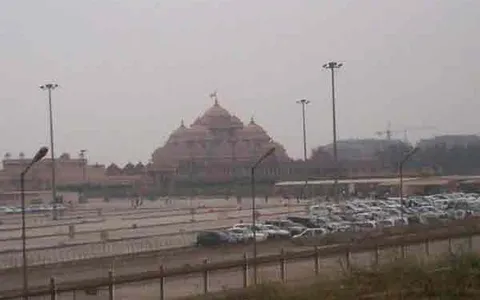
A specimen of fine craftsmanship, the Akshardham temple in Gandhinagar is one of the largest and most prominent temples in the entire state of Gujarat. Located in…

list of popular oldest temples and Bhadreshwar Jain temple in Gujarat, India | HolidayLandmark
list of popular oldest temples and Bhadreshwar Jain temple in Gujarat, India | HolidayLandmark is one of the notable places to visit in Gujarat.