Sarangpur Hanumanji Temple
Hanumanji Maharaj at Sarangpur, is famed around the world for expelling spirits and Ghosts from people plagued with such problems. This was due to the blessing of Gopalanand Swami to Vagha Khachar, who invoked Hanumanji with his wand, to be ever present in the idol to drive out such evils. The kind Swami helped Vagha Khachar with such blessing as he readily served saints and devotees offering them hospitality. As a result his income had dwindled. Swami therefore decided to help him by…
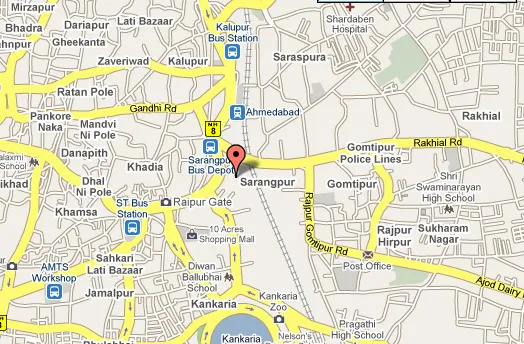
About Sarangpur Hanumanji Temple
Hanumanji Maharaj at Sarangpur, is famed around the world for expelling spirits and Ghosts from people plagued with such problems. This was due to the blessing of Gopalanand Swami to Vagha Khachar, who invoked Hanumanji with his wand, to be ever present in the idol to drive out such evils. The kind Swami helped Vagha Khachar with such blessing as he readily served saints and devotees offering them hospitality. As a result his income had dwindled. Swami therefore decided to help him by installing the idol of Hanuman, which provided a strong source of income, which facilitated him to continue to render service to saints and devotees. Later on he dedicated the income permanently to the temple at Gadhpur.This service continues today as hundreds comes to Sarangpur at the feet of Hanumanji Maharaj to be rid of such problems.
Shri Hanuman Mandir, Sarangpur is a Hindu temple located in Sarangpur, Gujarat and comes under the Vadtal Gadi of the Swaminarayan Sampraday. It is dedicated to Hanuman in the form of Kastbhanjan (Crusher of sorrows). It is the only Swaminarayan temple to have Hanuman as a central deity. In other temples, the central deity is a human form with the shrine of Hanuman along with that of Ganpati at the entrance of the temple.
History of Sarangpur Hanumanji Temple
Hanuman was born to ‘Anjana’, a female vanara. Anjana was actually an apsara or a celestial being, named ‘Punjikasthala’, who, due to a curse, was born on the earth as a female vanara. The curse was to be removed upon her giving birth to an incarnation of Lord Shiva.Along with Kesari, Anjana performed intense prayers to Shiva to beget Him as her Child. Pleased with their devotion, Shiva granted them the boon they sought.
Interesting things to Visit
Sidi Saiyad’s Jadi:
Sidi Saiyad’s Mosque, close to the river, was once part of the old citadel wall. Sidi Saiyad Mosque was constructed in 1573 by Sidi Saiyad, a sometime slave of Ahmed Shah and a general of Abysinian origin. This mosque is one of the Ahmedabad’s most stunning buildings. This mosque is best known for its intricate perforated stone work and has beautiful carved stone windows or jalis which depict the intricate intervening of the branches of the kalpa tree.
Rani Sipri’s Mosque:
The Rani Sipri’s Mosque is situated to the southeast of the centre of the Ahmedabad city. This small mosque is also known as the Masjid-e-Nagira or Jewel of the Mosque due to its graceful construction, with slender minarets. It is said to have been commissioned in 1514 by the wife of Sultan Mahmud Begara after he executed their son for some minor mistake. She is also buried here.
Rani Rupmati’s Mosque:
Rani Rupmati’s Mosque is situated to the north of the centre of the Ahmedabad city. This mosque was built between 1430 and 1440 and was named after the Hindu wife of the Sultan. The minarets were damaged in the great earthquake of 1819. The dome is elevated to allow light in around its base. This mosque combines elements of Hindu and Islamic design.
Hathee Singh Temple:
The Hathee Singh temple Ahmedabad is a very famous Jain temple; one of the most popular Jain temples in Ahmedabad. The temple has been named after its founder Seth Hathee Singh, a prosperous Jain merchant, and is now one of the well known holy places in Ahmedabad.The Hathee Singh Temple is an architectural marvel in white marble. Hathee Singh Jain temple is a double storied construction that has a dome on the front side. The other two sides of the temple consist of lavishly carved out galleries. The Hathee Singh Temple Ahmedabad is one of the most beautiful Jain temples in Ahmedabad Gujarat and follows the typical Jain temple architecture commonly to be seen in the temples of Dilwara and Ranakpur in the neighboring state of Rajasthan.
Nearest Visiting places from Sarangpur Hanumanji Temple
Akshardham:
Akshardham is a unique cultural complex built in Gandhinagar in memory of Lord Swaminarayan. Inspired by H. D. Pramukh Swami Maharaj, Akshardham is a miracle worked by the service and devotion of thousands of volunteers. It is an intricately carved, majestic monument of 6000 tons of pink sand stone. The entire monument was built without the use of steel. Besides a 7 feet gold leafed idol of Lord Swaminarayan and his holy relics, there are three exhibitions on Indian Culture with light and sound shows, a multimedia show and an animatronic show. Games, rides and food refreshments are other attractions of Akshardham.
Hussain-Doshi’s Gufa:
Hussain-Doshi’s Gufa It is a gallery housing the collaborative efforts of artist M. F. Hussain and the architect B. V. Doshi. Here, art and architecture fuse to become a unique experience, both complementing each other magnificently.Located in the campus of the Centre for Environment Planning and Technology, the Gufa is a configuration of cave-like structures buried under the ground. This marvel of contemporary architecture was constructed using computer aided design and tribal initiative.
Sayaji Bagh:
Sayaji Baug (the famous park) is situated on river Vishwamitri and was built by Sayajirao III in 1879. Sprawling over 113 acres, it also includes an excellent zoo, the Baroda Museum and Picture Gallery, the Museum of Health and Hygiene and the Sardar Patel Planetarium.A major attraction for children is the 3.5 kms joy ride through the park on the toy train.
Fateh Singh Museum:
Maharaja Fateh Singh Museum houses a remarkably huge number of art works of the royal family. Maharaja Sir Sayajirao Gaekwad III during his several visits abroad collected pieces of art and stored them here. The most fascinating collection of this museum however comprises of host of paintings by European and Indian artists. In this collection, paintings of Raja Ravi Varma who was specially deployed by the then Maharaja of Baroda catches the limelight. His collections essentially comprises of the portraits of the Royal family and paintings based on Hindu mythology. Hindu mythology was the forte of Raja Ravi Varma.
This apart, at Maharaja Fateh Singh Museum in Vadodara you will also get to see the striking collection of sculptures in marble and bronze. This collection comprises of the representation of great masters in bronze specially made to order by the Maharaja and also originals by famous artists. Besides, you will also come across works of an Italian artist called Fellicci who not only decorated the museum with his fine works but also the Lakshmi Vilas Palace.
Help Line/Phone Number
Copyright 2016 HolidayLandmark All rights reserved
Location info
-
**Address:**Sarangpur,Gujrat,India
-
**District:**Ahemadabad
-
Nearest City: Ahemadabad
-
Best time to visit: October to March
Climate & weather
Summers at Ahmedabad are usually very hot with temperatures rising up to 45 degree
Winters are also very chilly with temperatures dropping up to 5 degree centigrade.
Things to do at Sarangpur Hanumanji Temple
worship:
Lord Hanumanji is worshipped very widely in India by all the castes and communities as he is considered the god for all the human beings. There are thousands of Hanumanji temples all over the country. Even you will find Hanumanji temple in every small village3 in India. Moreover,Hanumanji statue shall be always kept in the temples of Lord Ram and Lord Shiva temples. However, there are very few most important and vital temples of Hanumanji in India. One of such most vital temple is situated at Sarangpur near Dhandhuka in the Central Gujarat. This Hanumanji temple is considered most holy and sacred, as the statue of Hanumanji is self produced and is not manmade.
How to reach Sarangpur Hanumanji Temple
-
**Nearest Railway Station:**Ahmedabad, Baroda railway line
-
**Nearest Airport:**Ahemdabad airport
-
**Road Transport:**State Transport and Luxury buses are available from Ahmedabad and Vaodara.
Hotels & accommodation nearby
- **Hotel Sanmati:**Sarangpur,Ahmedabad,Gujrat,India
**Sky Camy Hotel:**Sarangpur,Ahmedabad,Gujrat,India
Best time to visit Sarangpur Hanumanji Temple
October to March with pleasant temperatures.
Timings & opening hours
6:00 AM to 8:00 PM daily. Specific Aarti timings vary by temple.
Entry fee & tickets
No entry fee.
Duration needed
1 to 3 hours depending on the temple.
Safety tips
Follow temple security procedures. Remove shoes before entering. Respect religious practices.
Things to carry
Modest clothing covering shoulders and knees. Offerings can be purchased outside the temple.
Nearest airport, railway & bus
Nearest airport and railway station in the nearest city.
Mobile network coverage
Airtel, Jio, and Vi all provide good coverage across Gujarat’s major cities and tourist areas. 4G is generally reliable in Ahmedabad, Vadodara, Surat, and along major highways. Coverage may be weaker in remote areas of Kutch and interior Saurashtra. Most hotels and cafes in tourist areas offer free Wi-Fi.
Food & restaurants nearby
Temples and religious sites in Gujarat often have nearby food stalls and thali restaurants. Major pilgrim centres (Somnath, Dwarka, Ambaji) have extensive food options. The nearest town typically offers traditional Gujarati thali and multi-cuisine restaurants.
Nearest petrol pump
Petrol pump available in the nearest town.
Frequently asked questions
What are the temple timings? Generally 6:00 AM to 8:00 PM.
What is the significance of Sarangpur Hanumanji Temple? It is a revered pilgrimage site in Gujarat.
What is the best time to visit? October to March.
Accessibility
Religious sites may have steps at the entrance and may not have ramps. The interiors are generally level once inside. Some historic sites have uneven stone floors. Visitors with mobility concerns should check in advance.
Rules & restrictions
Modest dress is required: shoulders and knees must be covered (scarves or shawls are often available at the entrance). Photography is generally permitted without flash, but video may be restricted. Maintain silence inside. Mobile phones should be on silent mode. Remove shoes if required (indicated by signage). Do not touch artefacts or altars. These are active places of worship — respect services, festivals, and devotees.
Best photography spots
Gujarat’s churches (primarily in Diu and Daman) showcase Portuguese colonial architecture. Shoot in the early morning or late afternoon for the best light on the whitewashed facades. The interiors are simpler than Goan churches but the colonial-era details are worth capturing.
Quick facts
- Type: pligrims
- Location: Gujarat, India
- Ideal for: History enthusiasts, cultural travelers, and photographers
- Best time to visit: October to March (pleasant winter season)
- Photography: Allowed at most areas; some sites may have restrictions inside sanctums
Plan your visit to Sarangpur Hanumanji Temple with these essential quick facts for a smooth and enjoyable trip to Gujarat.
Visitor information
Planning your visit to Sarangpur Hanumanji Temple
- Language: Gujarati is the local language; Hindi and English are widely understood at tourist sites.
- Getting around: Auto-rickshaws, taxis, and state transport buses are readily available. Hiring a private vehicle is recommended for comfort.
- What to wear: Light cotton clothing in summer; light woolens in winter. Comfortable walking shoes are essential. Modest dress is advised at religious sites.
- Photography: Check for photography restrictions before entering. Some temples and museums may charge a separate camera fee.
- Best time to visit: October to March when the weather is pleasant for sightseeing.
- Local cuisine: Don’t miss Gujarati thali — a wholesome meal with dal, rice, vegetables, roti, and sweets like dhokla, khandvi, and mohanthal.
Nearby facilities
- ATMs: Available in nearby towns and at major tourist sites.
- Medical facilities: Primary health centers and hospitals can be found in district headquarters.
- Restrooms: Public restrooms are available at major tourist spots; carry hand sanitizer and tissues.
Make your visit to Sarangpur Hanumanji Temple comfortable and hassle-free with these practical visitor tips for Gujarat.
Map & location view
Sarangpur Hanumanji Temple is located in the vibrant state of Gujarat, India. The destination is accessible by road and is well-connected to major cities and towns in the region, making it a convenient addition to any Gujarat travel itinerary.
How to reach
- By Air: The nearest airport is connected to major Indian cities including Mumbai, Delhi, Ahmedabad, and Vadodara with regular domestic flights.
- By Rail: The nearest railway station is connected to the Indian railway network with regular trains from major cities across India.
- By Road: State transport buses, private taxis, and self-drive options are available from nearby cities. Gujarat has a well-maintained network of state highways and national highways.
Use GPS navigation or local maps to find the exact location of this destination in Gujarat. The Gujarat Tourism website provides additional travel resources for visitors.
Photo gallery
Visual highlights of Sarangpur Hanumanji Temple
Visitors to Sarangpur Hanumanji Temple will find plenty of photogenic spots worth capturing. From architectural details to natural landscapes, the destination offers diverse subjects for photography enthusiasts.
What to photograph:
- Architecture: Intricate carvings, structural details, and traditional Gujarati craftsmanship
- Landscapes: Surrounding natural beauty, gardens, and panoramic views of the Gujarat landscape
- Local life: Candid moments of visitors, vendors, and daily activities around the site
- Details: Close-up shots of carvings, paintings, decorative elements, and textures
Photography tips:
- Early morning (6:00 AM – 8:00 AM) and late afternoon (4:00 PM – 6:00 PM) offer the best natural light for photography in Gujarat’s climate
- Check if photography is allowed inside buildings before taking photos
- A wide-angle lens is ideal for capturing architectural grandeur at Gujarat’s heritage sites
- Mobile phone photography works well in well-lit outdoor areas
Browse through our collection of photographs showcasing the beauty and heritage of Sarangpur Hanumanji Temple. New images are added regularly as part of our ongoing content enrichment for this Gujarat destination.
Photo gallery of Sarangpur Hanumanji Temple
Video gallery
Related destinations

Ajit Nath Temple
Ajitnath Temple located 56 kms from Mehsana, nestled in the hills of Taranga, is the temple devoted to Ajitnath, the 22nd Tirthankara of Jains. One of the most…
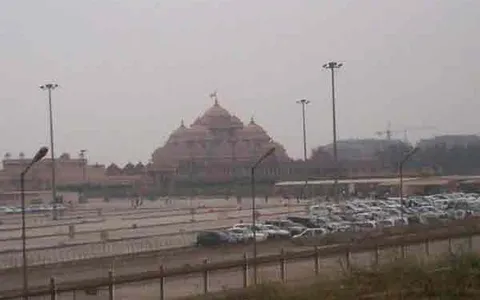
Akshar Dham Temple
A specimen of fine craftsmanship, the Akshardham temple in Gandhinagar is one of the largest and most prominent temples in the entire state of Gujarat. Located in…
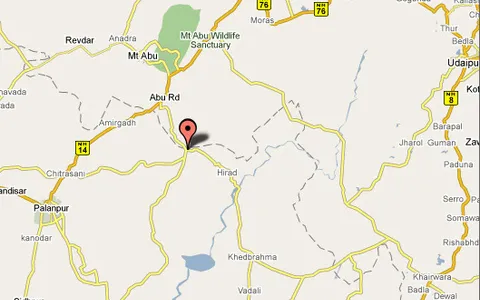
Ambaji Temple
At a distance of 65 Kms from Palanpur and 45 Kms from Mt. Abu near Gujarat Rajasthan border the religious town of Ambaji is located. This town is famous for the Maa…