Manav Mandir Temple
Manav Mandir is a lotus shaped, pink temple erected by the Ashirvad society and is located at Cinema Road. It is also known as Kamal Mandir. The presiding deity of the temple is Mataji also known as Ambaji - the source of Shakti-Spiritual energy. Darshan is open to visitors from morning 6.00am to 12.30 noon and from 3.00pm to 9.30pm. The Arti timings are 7.00am and 7.00pm. During the Navaratri festival (September-October) special prayer programmes and yagna are performed.
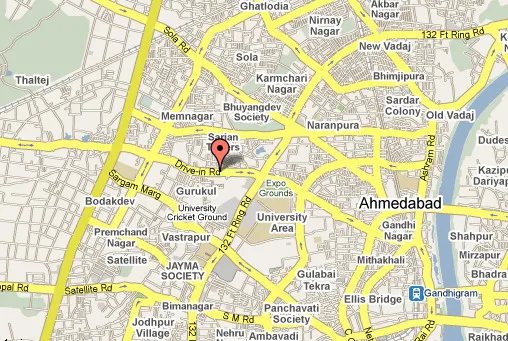
Quick facts
| Nearest Petrol Pump nearby Manav Mandir | MMercury Petrol Pump:Ellisbridge,Ahmedabad,Gujrat,IndiaPanchavati Petrol Pump:Panchavati, Ahmedabad,Gujrat,India |
|---|
About Manav Mandir Temple
Manav Mandir is one of the famous temples in the district. It is a lotus-shaped, pink temple erected by the Ashirvad society. Dedicated to Mataji, the source of power or spiritual energy, the temple attracts more than 10,000 devotees a year. The temple is also famous as Kamal Mandir. A wide range of pujas are arranged in the temple.
History of Manav Mandir
Situated in the Heart of City, Pink Lotus shaped Manav Mandir shines since 1980. It has become favourite Tourist Attraction center welcoming thousands of worshipers from all around the world, seeking Darshan and Blessings of deity holy mother which brings eternal peace.
Interesting things to Visit
Calico Textile Museum:
Amongst the most celebrated institutions in the country, the Calico Textile museum is renowned for its comprehensive collection of textiles and artifacts. The museum offers visitors an insight into the Bronzes, Pichhwais, and Jain art … Read full description of Calico Textile Museum
Hathisingh Jain Temple:
The Hathsingh Jain Temple is situated north of the Delhi Gate and was built in the year 1848. Constructed in spectacular white marble this structure is devoted to the 15th Jain saint Read full description of Hathisingh Jain Temple
Kankaria Lake:
The largest lake in Ahmedabad, the Kankaria Lake is a large attraction for the residents of the city. A 1.4 mile circumference allows this large lake to be a space for … Read full description of Kankaria Lake
Kite Museum:
Come January and the city of Ahmedabad is in a hue of spectacular colours cutting across the blue skies as the International kite festival brings the most fantastic shades and designs. The kite festival … Read full description of Kite Museum
Lalbhai Dalpatbhai Museum of Indology:
Come January and the city of Ahmedabad is in a hue of spectacular colours cutting across the blue skies as the International kite festival brings the most fantastic shades and designs. The kite festival … Read full description of Lalbhai Dalpatbhai Museum of Indology
Manek Chowk:
Manek Chowk is amongst the busiest areas in Ahmedabad. It’s amongst the most popular market areas in the city renowned for its gold trade market. Situated on the east of the Jama Masjid, the market … Read full description of Manek Chowk
Rani Sipris Mosque:
The Rani Sipri’s Mosque is yet another fantastic example of Muslim and Hindu architecture. Built by the wife of Mehmud Begada, Rani Sipri in 1514 the mosque is rather small, just 54 ft … Read full description of Rani Sipris Mosque
Sabarmati Ashram:
Situated north to the city, the Sabarmati ashram otherwise known as the Gandhi ashram is situated on the silent stretch along the Sabarmati River. Set up in 1915 by M. K. … Read full description of Sabarmati Ashram
Siddi Bashir Mosque:
Also called the Shaking Minarets, the Siddi Bashir Mosque is renowned for its unique construction. The minarets vibrate on shaking and stall almost as surprisingly within a few seconds. The vibration is set off … Read full description of Siddi Bashir Mosque
Siddi Saiyyad Mosque:
Built in 1573, the mosque is amongst the more popular mosques in Ahmedabad. It is the last remaining symbols of the sultanate of Gujrat. With large windows and intricately netted partitions the mosque allows … Read full description of Siddi Saiyyad Mosque
Swami Narayan Mandir:
The Swami Narayan Mandir in Ahmedabad is the worlds first Swami Narayan temple. The temple land was built by the British Imperial government who were deeply touched and impressed by the devotion and the cause. … Read full description of Swami Narayan Mandir
Nearest Visiting places from Manav Mandir
Hatheesing Temple:
The Hatheesing temple is located outside the Delhi Gate to the north of the old city at a distance of three kilometres from Ahmedabad Railway station. Built in 1848 by Sri Kesarsing Hatheesing and made of white marble, this temple is dedicated to Dharmnath, the 15th Jain Tirthankara (teacher). The main temple is surrounded by 52 small temples. It has been named after its founder Seth Hathee Singh, a prosperous Jain merchant. The temple is a double storied construction with a dome on the front side while the sides are embellished with lavishly carved out balconies. The temple has a cemented courtyard that is enclosed by row of cloisters. The 52 shrines surrounding the main temple have an image each of a Tirthankara.
Swaminarayan Temple:
The Swaminarayan temple is located in Kalupur in Ahmedabad. It is believed to be the first ever Swaminarayan temple to be built. The interiors and exteriors of the temple have been adorned with typical Gujarati designs and has beautifully decorated domes and galleries. There are lush green lawns outside the temple which accentuate its beauty. On the southern side of the Temple there are nine tombs which are popularly known as ‘Nau Gaz Pir’ or Nine Yard Saints..
ISKCON Temple:
The ISKCON temple in Ahmedabad is located close to the Gujarat Samachar Press. It is a temple dedicated to Lord Krishna and his consort Radha. It is also known as the Hare Krishna temple. ISKCON stands for International Society for Krishna Consciousness. The society was established in 1966 by Bhaktivedanta Swami Prabhupada and is also known as the Hare Krishna movement. It has more than 350 centres, 60 rural communities, 50 schools and 60 restaurants worldwide.
The temple has huge halls which are illuminated with grand looking chandeliers. The interiors are quite spacious and as regards the exteriors, the campus is filled with large number of flowering trees and plants. The temple has a peaceful and tranquil atmosphere and the devotees who come to the temple are supposed to maintain the silent and peaceful atmosphere of the temple premises. Prayer sessions are held here in the mornings and evenings. The prayer ceremonies are accompanied with chanting of religious songs called ‘kirtans’. The temple hosts two main festivals- Janmashtami (birthday of Lord Krishna) and Nand Mahotsav (the day following Krishna’s birthday). On Janmashtami Day, the entire temple is illuminated and lavishly decorated. ‘Mangal Aarti’ is held in the evening which is attended by a large number of people. Flowers, fruits, incense and sweets are offered to the deities on this day and there are discourses from the Bhagvad Gita- the holy book of the Hindus. Nand Mahotsav is celebrated the day after Janmashtami. On this day thousands of devotees throng the temple premises to offer their prayers. The temple arranges for lunch for the devotees on this auspicious occasion.
Mahaveer Swami Temple:
Mahaveer Swami temple is a highly revered Jain temple located in Ahmedabad. The presiding deity of the temple is Bhagwan Mahaveer. Besides there are metal idols of twenty three Tirthankaras of the Jains. This ancient temple is assumed to be of a period earlier than the year 1619. The temple possesses a large dome, then there are sculptural carvings of Goddesses in the open square. A bluish crystal idol of Bhagwan Shantinath and a silver coated carved fort of Ashtapadji are the other attractions. A marble built model of Pavapuri, the place at which Mahaveer attained nirvana can be seen on the terrace. There is complete absence of electric bulbs in the temple and the illumination inside the temple comes from the lamps burnt with coconut oil. Devotees visit the temple on the first day of the bright half of the month of Kartik (March-April) and on the first day of the bright half of the month of Bhadrapad (mid of September to mid of October) as it is considered auspicious.
Gheekanta Shankeshwar Teerth:
Gheekanta Shankeshwar Teerth is a famous Jain pilgrim centre located in the Gheekanta locality in Ahmedabad city. The presiding deity is Parikaryukta Bhagwan Shankeshwar Parshwanath in the Padmasana posture. It is a 53cm high white coloured idol. The temple has a simple and low-built structure without any ancient workmanship. People come to this temple for worship on the first and fifteenth day of the month and also on Sundays. Other deities worshipped here include Adinath, Bhagwan Shantinath, Parshva Yaksh and Padmavathi Devi.
Sri Karnavati Teerth:
Sri Karnavati Teerth is an important Jain pilgrim centre located in Ahmedabad city. It is dedicated to Sri Dharmanath Bhagwan. The idol is a white coloured one in the ‘padmasana’ posture.
Top
Jagannath Temple:
Jagannath temple is an ancient Vaishnavite temple located in the Jamalpur area of Ahmedabad district. The presiding deity is Lord Krishna. The other deities worshipped are Balram and Subhadra. The highlight of this temple is the annual rath yatra. Every year in the month of June/July a massive procession is taken out from the Jagannath temple. It is known as ‘Rath Yatra’ and is similar to the one at Puri Jagannath temple. Chariots, carrying the idols of Lord Jagannath (Krishna), Balram and Subhadra are the main attraction of the procession which starts in the morning. The chariots are decorated and adorned with garlands. Decorated elephants, gymnasts, acrobats, saints and devotees, all form part of the procession.
Param Dham:
Param Dham is located on top of a hillock at Bhavnirjar in Ahmedabad. The shrine is dedicated to Lord Krishna who presides here as Sri Venu Gopal who is the main deity. The idol of the main deity is flanked by the idol of Lord Ganesha in ‘narthana’ pose and Hanuman as Veer Maruti. The highlight of the temple is its unique architectural style.
Manav Mandir:
Manav Mandir is a lotus shaped, pink temple erected by the Ashirvad society and is located at Cinema Road. It is also known as Kamal Mandir. The presiding deity of the temple is Mataji also known as Ambaji - the source of Shakti-Spiritual energy. Darshan is open to visitors from morning 6.00am to 12.30 noon and from 3.00pm to 9.30pm. The Arti timings are 7.00am and 7.00pm. During the Navaratri festival (September-October) special prayer programmes and yagna are performed.
Sri Mahalakshmiji Temple:
Sri Mahalakshmiji Temple is an ancient shrine located at Ahmedabad. The presiding deity of the temple is Goddess Lakshmi. The area where the temple is situated is known as Mahalakshmi - Ni-Pole.
Vageshwari Mataji Temple:
Vageshwari Mataji Temple is an ancient shrine located at Ahmedabad and was established about 550 years ago. It lies in the Vageshwari-ni-Pole area and is dedicated to Vageshwari Mataji, the family deity of Shrimali Sonis.
Top
Jama MasjidJama Masjid:
Jama Masjid is located in the centre of the old city beside the Mahatma Gandhi road and to the east of Teen Darwaza. It was built by Sultan Ahmed Shah in 1423 and is one of the biggest and oldest mosques of India. Jama Masjid combines the best of Hindu and Muslim styles of architecture and is built in yellow sandstone. The mosque has 260 pillars supporting 15 domes (cupolas) arranged symmetrically. It has entrances on three sides- west, south and north. The Muluk-Khana or Royal Gallery is the special feature of the mosque. It is a platform standing on pillars and enclosed upto the roof with beautiful stone work. The court has a large marble courtyard with a long rectangular ablution tank in the centre. The prayer hall of the mosque is a rectangular area with five symmetrical domes. The central Mihrab (position indicating the direction of the Holy Mecca ) of the mosque has inscriptions commemorating its completion in 1424 by Sultan Ahmed Shah I. The masjid also had tall minarates which were destroyed in an earthquake.
Rani Rupmati’s Mosque**:**
Rani Rupmati’s mosque is located on the northern side of the Ahmedabad city. The mosque was established by Sultan Mahmud Beghara and was named after his wife Rani Rupmati. The special features of this mosque are its impressive domes, carved galleries and tall minarates. The prayer hall consists of exquisite carvings. The three domes are duly supported by pillars and the one in the central position illuminates the mosque with natural light. Small domes located in the front, rear and at the centre rise in crescent like shape.The architecture of the mosque is a combination of both Hindu and Muslim styles. The minarates of the mosque were lost in earthquake. The tomb of Rani Rupmati is located next to the main mosque. Also located close to the mosque are the mosque of muhafiz Khan and Saiyad Usman Mausoleum.
Rani Sipri’s Mosque**:**
Rani Sipri’s Mosque is yet another combination of Hindu and Muslim Architecture. It was built by Rani Sipri, wife of Mahmud Beghara who executed their son for a minor misdemeanour. It is a small mosque but outshines Rani Rupmati’s mosque with its intricately carved decoration, jali screens with flowering plant and tree forms and the building’s elegant design.It is also known as the Masjid-e-Nagira (Jewel of a Mosque) because of its extremely graceful and well-executed design. It has a separate area of worship, upstairs, for women called ‘Jenana’. After the death of Rani Sipri, she was buried in the premises of the mosque.
Jhulta Minara:
Jhulta Minara or ‘Swaying Minarates’ as they are known in English are one of the most ancient structures of Ahmedabad city and are actually a part of the Sidi Bashir mosque. Each minarate has three storeys, girdled by carved stone balconies. The special feature of these minarates which gets them their name is that when one of the minarates is shaken the other one also rocks in tandem. This feature of the minarates is believed to be a protection against earthquakes. An example of superb craftsmanship the secret behind the swaying minarates still remains a mystery to even the trained minds of architects and engineers. The minarates have stood the test of time. Being situated close to the railway station they have withstood the pressure of fast moving trains and also dismantling at the hands of humans. It is believed that an Englishman once made an attempt to demolish one of the minarates unravel the mystery behind their swaying. However he was unable to find out the theory behind the swaying minarates and could not replace the dismantled parts either.
Top
Ahmed Shah’Mosque:
Ahmed Shah’s mosque is located on the Sardar Patel Road. It lies to the south-west of the Bhadra fort. It was built in the year 1414 AD by Sultan Ahmed Shah, the founder of Ahmedabad city. It is one of the oldest mosques in the city. The prayer halls (Mehrabs) have been intricately designed using black and white marbles. Towards the north-east corner lies the separate prayer room for women which is known as ‘Zenana’. The mosque initially was meant only for royal class but nowdays it has become a popular tourist destination.
Raj Babri Mosque:
Raj Babri mosque is located on the outskirts of Ahmedabad, near the suburb of Gomtipur. It is an ancient shrine believed to have been built in the 15th century and also has its share of fame in the form of its shaking minarates. The minarates were damaged during the Gujarat earthquake and the government has since been trying to restore them. Like most of the other mosques in Ahmedabad, Raj Babri’s mosque also exhibits a combination of Hindu and Muslim architectural styles.
Bai Harir Mosque:
Bai Harir mosque is a highly revered shrine in Ahmedabad. It is believed to have been built by Bai Harir Sultani who was the superintendent of th eharem of Sultan Beghara. The central mirhab or prayer area of the mosque shows inscriptions. The sculptural work int he centre of the prayer room and upper part of the walls depict features of Gujarati architecture. The courtyard of the mosque has a few sealed passages that are possibly connected to the nearby stepwell or with some spacious underground alcoves. Near the mosque are located Dada Hari Vav (step well) and Bai Harir’s tomb.
Bai Harir tomb is located on the north-eastern part of Bai Harir mosque. The entrance of the tomb faces towards the south. the mausoleum has a tomb chamber with a huge semi circular dome. This is surrounded by low corridors with four small domes. Plant sculptures and geometric patterns resembling Gujarati art decorate the basement of corridors and the bottom of the mausoleum.
Bibi ki Masjid:
Bibi ki Masjid is an ancient mosque located at Ahmedabad in Gujarat. It was built by Makhduma-I-Jahan, mother of Sultan Ahmed Shah II sometime in 1454 AD. The mosque has a royal gallery enclosed by a carved dome with a luxuriant spiral pendant and is an example of Indo-Islamic architecture. Another feature of the mosque is the presence of shaking minarates here too.
Badshah-no-Hajiro:
The tomb of Ahmed Shah the founder of Ahmedabad is called Badshah-no-Hajiro.It is located just outside the east gate of Jama Masjid. It is square in shape with porticos on each side and has perforated stone windows. Women are not allowed into the central chamber of the structure. The tomb also has cenotaphs of Ahmed Shahs son and grandson. Opposite the Hajiro and across the main gate lies the Rani-no-Hajiro where the queens of subsequent sultans were buried.
Roza of Shah Alam:
Roza of Shah Alam is a monument built in the memory of Muslim saint Shah Alam. It is believed that the roza was built by the brother of the Mughal Empress NoorJahan. The complex of the roza is believed to contain the footprints of the Prophet in marble. The tomb is supported by 12 columns and the brass doors are set in carved marble frames and the floors are tiled in black and white marble. The annual Shah Alam fair is held here in the month of March/April and is attended by thousands of devotees from far and near.
Kutbi Mazar:
Kutbi Mazar in Ahmedabad is a colossal monument built in memory of Syedna Qutubuddin Shaheed, the high priest of Bohra community.
Hotels/Lodge/Accommodation nearby Manav Mandir
**Pride Hotel:**Bodakdev,Ahmadabad,Gujarat,India
Fortune Hotel: Ashram Road ,Ahmedabad,Gujarat,India
Help Line/Phone Number
Copyright 2016 HolidayLandmark All rights reserved
Location info
-
Address: Ahmedabad,Gujrat,India
-
District: Ahmedabad
-
Nearest City: Ahmedabad
-
Best time to visit: Sept to Feb
Climate & weather
Winter season is from has 20 degree C to 32,hot season 28 degree C to 42
Things to do at Manav Mandir Temple
The place is always filled with a lot of people having come to find peace of mind while others to find more about the extra ordinary structure consisting of the entire temple on a single grounded pillar. It is a treat to visit the Temple during the ‘NAVRATRIS’ (festival of nine nights of worship in Sept-Oct) where in Goddess is Dressed in different colorful dresses depicting various moods at different hours. Maximum worshipers arrive at 6-0 am in the morning as well as in the evening to participate in the AARTI which holds ritual importance.
How to reach Manav Mandir Temple
-
Nearest Railway Station: Ahmedabad railway station
-
Nearest Airport: Ahmedabad airport
-
**Road Transport:**State Transport buses, private buses and taxis and conducted tours run in Ahemedabad
Nearest petrol pump
**MMercury Petrol Pump:**Ellisbridge,Ahmedabad,Gujrat,India
**Panchavati Petrol Pump:**Panchavati, Ahmedabad,Gujrat,India
Best time to visit Manav Mandir Temple
October to March with pleasant temperatures.
Timings & opening hours
6:00 AM to 8:00 PM daily. Specific Aarti timings vary by temple.
Entry fee & tickets
No entry fee.
Duration needed
1 to 3 hours depending on the temple.
Safety tips
Follow temple security procedures. Remove shoes before entering. Respect religious practices.
Things to carry
Modest clothing covering shoulders and knees. Offerings can be purchased outside the temple.
Nearest airport, railway & bus
Nearest airport and railway station in the nearest city.
Mobile network coverage
Airtel, Jio, and Vi all provide good coverage across Gujarat’s major cities and tourist areas. 4G is generally reliable in Ahmedabad, Vadodara, Surat, and along major highways. Coverage may be weaker in remote areas of Kutch and interior Saurashtra. Most hotels and cafes in tourist areas offer free Wi-Fi.
Food & restaurants nearby
Temples and religious sites in Gujarat often have nearby food stalls and thali restaurants. Major pilgrim centres (Somnath, Dwarka, Ambaji) have extensive food options. The nearest town typically offers traditional Gujarati thali and multi-cuisine restaurants.
Frequently asked questions
What are the temple timings? Generally 6:00 AM to 8:00 PM.
What is the significance of Manav Mandir Temple? It is a revered pilgrimage site in Gujarat.
What is the best time to visit? October to March.
Accessibility
Religious sites may have steps at the entrance and may not have ramps. The interiors are generally level once inside. Some historic sites have uneven stone floors. Visitors with mobility concerns should check in advance.
Rules & restrictions
Modest dress is required: shoulders and knees must be covered (scarves or shawls are often available at the entrance). Photography is generally permitted without flash, but video may be restricted. Maintain silence inside. Mobile phones should be on silent mode. Remove shoes if required (indicated by signage). Do not touch artefacts or altars. These are active places of worship — respect services, festivals, and devotees.
Best photography spots
Gujarat’s churches (primarily in Diu and Daman) showcase Portuguese colonial architecture. Shoot in the early morning or late afternoon for the best light on the whitewashed facades. The interiors are simpler than Goan churches but the colonial-era details are worth capturing.
Visitor information
Planning your visit to Manav Mandir Temple
- Language: Gujarati is the local language; Hindi and English are widely understood at tourist sites.
- Getting around: Auto-rickshaws, taxis, and state transport buses are readily available. Hiring a private vehicle is recommended for comfort.
- What to wear: Light cotton clothing in summer; light woolens in winter. Comfortable walking shoes are essential. Modest dress is advised at religious sites.
- Photography: Check for photography restrictions before entering. Some temples and museums may charge a separate camera fee.
- Best time to visit: October to March when the weather is pleasant for sightseeing.
- Local cuisine: Don’t miss Gujarati thali — a wholesome meal with dal, rice, vegetables, roti, and sweets like dhokla, khandvi, and mohanthal.
Nearby facilities
- ATMs: Available in nearby towns and at major tourist sites.
- Medical facilities: Primary health centers and hospitals can be found in district headquarters.
- Restrooms: Public restrooms are available at major tourist spots; carry hand sanitizer and tissues.
Make your visit to Manav Mandir Temple comfortable and hassle-free with these practical visitor tips for Gujarat.
Map & location view
Manav Mandir Temple is located in the vibrant state of Gujarat, India. The destination is accessible by road and is well-connected to major cities and towns in the region, making it a convenient addition to any Gujarat travel itinerary.
How to reach
- By Air: The nearest airport is connected to major Indian cities including Mumbai, Delhi, Ahmedabad, and Vadodara with regular domestic flights.
- By Rail: The nearest railway station is connected to the Indian railway network with regular trains from major cities across India.
- By Road: State transport buses, private taxis, and self-drive options are available from nearby cities. Gujarat has a well-maintained network of state highways and national highways.
Use GPS navigation or local maps to find the exact location of this destination in Gujarat. The Gujarat Tourism website provides additional travel resources for visitors.
Photo gallery
Visual highlights of Manav Mandir Temple
Visitors to Manav Mandir Temple will find plenty of photogenic spots worth capturing. From architectural details to natural landscapes, the destination offers diverse subjects for photography enthusiasts.
What to photograph:
- Architecture: Intricate carvings, structural details, and traditional Gujarati craftsmanship
- Landscapes: Surrounding natural beauty, gardens, and panoramic views of the Gujarat landscape
- Local life: Candid moments of visitors, vendors, and daily activities around the site
- Details: Close-up shots of carvings, paintings, decorative elements, and textures
Photography tips:
- Early morning (6:00 AM – 8:00 AM) and late afternoon (4:00 PM – 6:00 PM) offer the best natural light for photography in Gujarat’s climate
- Check if photography is allowed inside buildings before taking photos
- A wide-angle lens is ideal for capturing architectural grandeur at Gujarat’s heritage sites
- Mobile phone photography works well in well-lit outdoor areas
Browse through our collection of photographs showcasing the beauty and heritage of Manav Mandir Temple. New images are added regularly as part of our ongoing content enrichment for this Gujarat destination.
Photo gallery of Manav Mandir Temple
Video gallery
Related destinations

Ajit Nath Temple
Ajitnath Temple located 56 kms from Mehsana, nestled in the hills of Taranga, is the temple devoted to Ajitnath, the 22nd Tirthankara of Jains. One of the most…
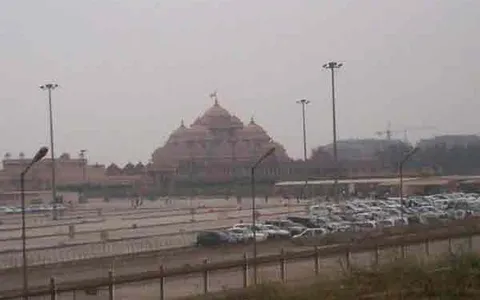
Akshar Dham Temple
A specimen of fine craftsmanship, the Akshardham temple in Gandhinagar is one of the largest and most prominent temples in the entire state of Gujarat. Located in…
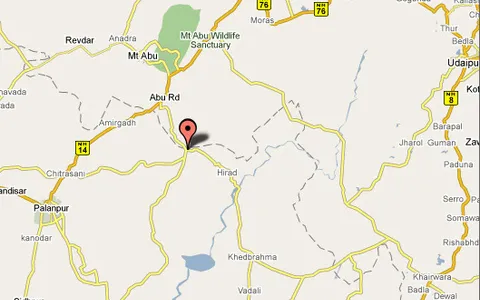
Ambaji Temple
At a distance of 65 Kms from Palanpur and 45 Kms from Mt. Abu near Gujarat Rajasthan border the religious town of Ambaji is located. This town is famous for the Maa…