Chotila Chamunda Temple
Chamunda - Chamunda mata or Rann-chandi ( warrior goddess ) is the goddess of power and another form of Durga.Her illusion is twinlike as she is also called Chandi-Chamunda. The fierce mother goddess has big eyes dressed in red and green adorned with garlands of flowers and in front of her is vehicle the Lion.Her temple is very famous in Gujrat on the moutain named Chotila.
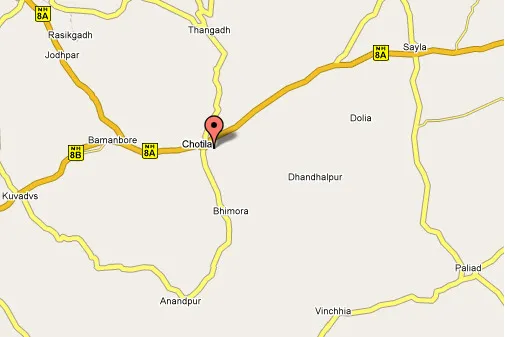
About Chotila Chamunda Temple
Two Demons named ‘Chanda’ and ‘Munda’ did great penance for many years to please Lord Brahma. When Brahma was pleased he apeared in front of them and the demons asked for being very strong warriors and that they would rule the world and take over heaven. Lord Brahma was merciful so he granted the wish.
There was big chaos in the world and the demons became very greedy and attempted to take over heaven aswell as the three abodes of Vishnu (Vaikunth), Shiva (Kailas) and Brahma (Brahmalok ).The three gods went to the mother goddess Parvati who took the form of Chandi and Chamunda who slayed Chand and mund.
A temple dedicated to Goddess Chamunda is built on a hill called chotila at a height of 1,173 feet. The temple is crowded with tourists and pilgrims all round the year specially during the Navratri Festival. The Chotila village is sited at the foot of the Chotila hill.At the end of the navaratri festival a big havan is taken place on top of the chotila hill. Chotila has more than 700 steps.
At the bottom when you come down from chotila hill there are many shops were you can by many religious items such as matajis chundari,kunko(religious powder), cassetts and lots more.thestory is when Demons Chand and Mund came to conquer Devi Mahakali and in the fight that ensues, the Devi cut their heads and presented these to Maa Ambika, who in turn told Mahakali that you will be worshipped as Chamunda Devi.
History of Chotila Chamunda Temple
Chamunda - Chamunda mata or Rann-chandi ( warrior goddess ) is the goddess of power and another form of Durga. Her illusion is twinlike as she is also called Chandi-Chamunda. The fierce mother goddess has big eyes dressed in red and green adorned with garlands of flowers and in front of her is vehicle the Lion.Her temple is very famous in Gujrat on the moutain named Chotila.
Two Demons named ‘Chanda’ and ‘Munda’ did great penance for many years to please Lord Brahma. When Brahma was pleased he apeared in front of them and the demons asked for being very strong warriors and that they would rule the world and take over heaven. Lord Brahma was merciful so he granted the wish.
There was big chaos in the world and the demons became very greedy and attempted to take over heaven aswell as the three abodes of Vishnu (Vaikunth), Shiva (Kailas) and Brahma (Brahmalok ).The three gods went to the mother goddess Parvati who took the form of Chandi and Chamunda who slayed Chand and mund.
Interesting things to do Chotila Chamunda Temple
A temple dedicated to Goddess Chamunda is built on a hill called chotila at a height of 1,173 feet. The temple is crowded with tourists and pilgrims all round the year specially during the Navratri Festival. The Chotila village is sited at the foot of the Chotila hill.
Many Hindu people go to pilgrimages mostly mataji ones they probally go to these places because to do the darshan,yatra or even to to puja and darshan to the mataji. People also go to that religious place because that is there kuldevi(family goddess). Matajis religious places are scattered all over india , but most in Gujurat. Some of these places have been here for thousands and thousands of years. Mataji comes to protect us from evil and when she does come, Mataji comes in different forms (Avatars) this is why we have some May mataji in the hindu religion.
Nearest Visiting places from Chotila Chamunda Temple
Kaba Gandhi No Delo:
The Kaba Gandhi No Delo in Rajkot is one place which you should not miss during your tour to the famous monuments in Gujarat, India. It is the place where Mahatma Gandhi, also known as Mohandas Karamchand Gandhi, lived during his stay in the city of Rajkot.How the residence got its name has an interesting reason behind it. Mahatma Gandhi’s father, Karamchand Gandhi, was popularly known as Kaba Gandhi. This is the reason why the house was named Kaba Gandhi No Delo, which mean’s Kaba Gandhi’s residence. It is Gandhiji’s ancestral home and has now been renovated into a museum, which is called Gandhi Smriti and is a permanent exhibition place. The museum is open from Monday to Saturday. Kaba Gandhi No Delo is where India’s Father of the Nation grew up. You can easily locate the house in the old city of Ghee Kanta Road in Rajkot, which is one of the major tourist attractions in Gujarat.
Watson museum:
Watson museum is situated at Jubilee Garden, Rajkot.The museum was setup in 1888.It has a huge collection of art and science objects. The museum remains closed on Sundays and other Public Holidays.
Aji Dam Garden:
Aji Dam Garden, Rajkot is a major Tourist Attraction in Rajkot. The Aji Dam Garden in Rajkot is a beautiful garden beside the Aji Dam. The garden is situated downstream and looks beautiful with lovely flower plants, trees and different types of floras. The Aji Dam Garden in Rajkot in Gujarat in India also has amusement parks and zoos. There are food courts and children parks. In the amusement parks both the adults and the children can have a nice time. The Aji Dam Garden in Rajkot is a spot which is visited bypeople of all ages.
Jubilee Garden:
Jubilee Garden, Rajkot is a major Tourist Attraction in Rajkot. Jubilee Garden is visited by people of all ages. The Jubilee Garden in Rajkot is known for the natural beauty and the beautiful atmosphere of the place. Jubilee Garden in Rajkot is situated in the heart of the city. Many other tourists attraction in Rajkot is all located near by the Jubilee Garden in Rajkot. The
amusement parks in the Jubilee Garden attract both adults and children. People of all ages like to visit and spend time in theJubilee Garden at Rajkot in Gujarat in India.
Jalaram Mandir:
Virpur is a small village about 52 K.M from Rajkot.It is situated on National Highway No. 8b.This village had become holy after the birth of Shri Jalaram Bapa.It had become famous now all over the world due to events that had taken place in the life of Shri Jalaram Bapa. More over the people from all over the world come here to see the native place of Shri Jalaram Bapa and to see the “JHOLI” and “DANDA” given by god to Virbai Maa and the Original Hanumanji’s Idol.The people in the village are still feeling Bapa near them and if you try to feel them with pure heart then you will also feel that Bapa is with you also.
Mattel:
The story of Khodiyar Maa goes back to around 700A.D. It begins from a village called Roishala. Roishala was a part of Vallabhipur province near the now Bhavnagar city in Saurashtra (Gujrat, India).Maharaj Shilbhadra was the ruler of the Vallabhipur province. Mamaniya Gadhvi lived in the small town, Roishala in his kingdom. He used to be Maharaj Shilbhadra’s best companion and a close confidant. Honest by heart, the humble and eloquent Shiv bhakt, Mamaniya Gadhvi was appointed as a Rajgadhvi by his friend. The king would talk to him for hours at his palace and consult him for important governance issues.
Help Line/Phone Number for Chotila Chamunda Temple
Copyright 2016 HolidayLandmark All rights reserved
Location info
-
**Address:**Chotila,Gujrat,India
-
District: Rajkot
-
Nearest City: Rajkot
-
Best time to visit: July to September.
Climate & weather
Summer24 °C to 42°C maximum,Winter 10°C to 24° ,Minimum
Things to visit & highlights
Virji Bhagat:
Sayala’s Lalji Bhagat, Virpur;s Jalaram Bapa and Chotila’s Virji Bhagat have been the renowned and religious souls of Gujarat. Virji Bhagat was born in the Bhalada region in the year 1876. Bhoj Khachar belonging to the Darbar race had great faith in Virji Bhagat’s preachings. He had also offered a piece of land to Virji Bhagat where the temple was later built in 1925.
Sati Ranik Devi:
This is a popular tourist spots in Gujarat with an interesting legend. The story behind the building of this temple is that Ranik Devi was a beautiful girl born in the Junagadh territory, when … Read full description of Ancient Temple of Sati Ranik Devi
Chotila Hill:
The famous Chamunda Mataji temple is situated at Chotila, a small town near Rajkot in Gujarat State. Chotila is situated exactly in the middle of Ahmedabad and Rajkot, the two … Read full description of Chotila Hill
Trineteshwar Temple:
The famous Trinetreshwar temple is the divine abode of Lord Shiva, also called as Trinetheshwar or the three-eyed one. Thisancient temple is situated at a distance of 9 km from Than and is .Read full description of Trineteshwar Temple
Zharia Mahadev:
Built in the 15th Century, the Jariya Mahadev temple stands surrounded by scenic beauty. The temple got its name because of the miraculous water which naturally flows from the stone above the shivling of Lord … Read full description of Zharia Mahadev
How to reach Chotila Chamunda Temple
-
**Nearest Railway Station:**Rajkot railway station
-
**Nearest Airport:**Rajkot,airport
-
**Road Transport:**As it is situated on Ahmedabad-Rajkot Main Highway,This place is easily reachable through roadways.Local transport is available from Rajkot.
Hotels & accommodation nearby
- **Dharmshala:**Chotila,Rajkot,Gujrat,India
**Hotel Samrat Internaitonal:**Rajkot, Gujarat,India
Nearest petrol pump
- IOC Petrol Pump: Chotial,Gujarat,India
Best time to visit Chotila Chamunda Temple
October to March with pleasant temperatures.
Timings & opening hours
6:00 AM to 8:00 PM daily. Specific Aarti timings vary by temple.
Entry fee & tickets
No entry fee.
Duration needed
1 to 3 hours depending on the temple.
Safety tips
Follow temple security procedures. Remove shoes before entering. Respect religious practices.
Things to carry
Modest clothing covering shoulders and knees. Offerings can be purchased outside the temple.
Nearest airport, railway & bus
Nearest airport and railway station in the nearest city.
Mobile network coverage
Airtel, Jio, and Vi all provide good coverage across Gujarat’s major cities and tourist areas. 4G is generally reliable in Ahmedabad, Vadodara, Surat, and along major highways. Coverage may be weaker in remote areas of Kutch and interior Saurashtra. Most hotels and cafes in tourist areas offer free Wi-Fi.
Food & restaurants nearby
Temples and religious sites in Gujarat often have nearby food stalls and thali restaurants. Major pilgrim centres (Somnath, Dwarka, Ambaji) have extensive food options. The nearest town typically offers traditional Gujarati thali and multi-cuisine restaurants.
Frequently asked questions
What are the temple timings? Generally 6:00 AM to 8:00 PM.
What is the significance of Chotila Chamunda Temple? It is a revered pilgrimage site in Gujarat.
What is the best time to visit? October to March.
Accessibility
Religious sites may have steps at the entrance and may not have ramps. The interiors are generally level once inside. Some historic sites have uneven stone floors. Visitors with mobility concerns should check in advance.
Rules & restrictions
Modest dress is required: shoulders and knees must be covered (scarves or shawls are often available at the entrance). Photography is generally permitted without flash, but video may be restricted. Maintain silence inside. Mobile phones should be on silent mode. Remove shoes if required (indicated by signage). Do not touch artefacts or altars. These are active places of worship — respect services, festivals, and devotees.
Best photography spots
Gujarat’s churches (primarily in Diu and Daman) showcase Portuguese colonial architecture. Shoot in the early morning or late afternoon for the best light on the whitewashed facades. The interiors are simpler than Goan churches but the colonial-era details are worth capturing.
Quick facts
- Type: pligrims
- Location: Gujarat, India
- Ideal for: History enthusiasts, cultural travelers, and photographers
- Best time to visit: October to March (pleasant winter season)
- Photography: Allowed at most areas; some sites may have restrictions inside sanctums
Plan your visit to Chotila Chamunda Temple with these essential quick facts for a smooth and enjoyable trip to Gujarat.
Visitor information
Planning your visit to Chotila Chamunda Temple
- Language: Gujarati is the local language; Hindi and English are widely understood at tourist sites.
- Getting around: Auto-rickshaws, taxis, and state transport buses are readily available. Hiring a private vehicle is recommended for comfort.
- What to wear: Light cotton clothing in summer; light woolens in winter. Comfortable walking shoes are essential. Modest dress is advised at religious sites.
- Photography: Check for photography restrictions before entering. Some temples and museums may charge a separate camera fee.
- Best time to visit: October to March when the weather is pleasant for sightseeing.
- Local cuisine: Don’t miss Gujarati thali — a wholesome meal with dal, rice, vegetables, roti, and sweets like dhokla, khandvi, and mohanthal.
Nearby facilities
- ATMs: Available in nearby towns and at major tourist sites.
- Medical facilities: Primary health centers and hospitals can be found in district headquarters.
- Restrooms: Public restrooms are available at major tourist spots; carry hand sanitizer and tissues.
Make your visit to Chotila Chamunda Temple comfortable and hassle-free with these practical visitor tips for Gujarat.
Map & location view
Chotila Chamunda Temple is located in the vibrant state of Gujarat, India. The destination is accessible by road and is well-connected to major cities and towns in the region, making it a convenient addition to any Gujarat travel itinerary.
How to reach
- By Air: The nearest airport is connected to major Indian cities including Mumbai, Delhi, Ahmedabad, and Vadodara with regular domestic flights.
- By Rail: The nearest railway station is connected to the Indian railway network with regular trains from major cities across India.
- By Road: State transport buses, private taxis, and self-drive options are available from nearby cities. Gujarat has a well-maintained network of state highways and national highways.
Use GPS navigation or local maps to find the exact location of this destination in Gujarat. The Gujarat Tourism website provides additional travel resources for visitors.
Photo gallery
Visual highlights of Chotila Chamunda Temple
Visitors to Chotila Chamunda Temple will find plenty of photogenic spots worth capturing. From architectural details to natural landscapes, the destination offers diverse subjects for photography enthusiasts.
What to photograph:
- Architecture: Intricate carvings, structural details, and traditional Gujarati craftsmanship
- Landscapes: Surrounding natural beauty, gardens, and panoramic views of the Gujarat landscape
- Local life: Candid moments of visitors, vendors, and daily activities around the site
- Details: Close-up shots of carvings, paintings, decorative elements, and textures
Photography tips:
- Early morning (6:00 AM – 8:00 AM) and late afternoon (4:00 PM – 6:00 PM) offer the best natural light for photography in Gujarat’s climate
- Check if photography is allowed inside buildings before taking photos
- A wide-angle lens is ideal for capturing architectural grandeur at Gujarat’s heritage sites
- Mobile phone photography works well in well-lit outdoor areas
Browse through our collection of photographs showcasing the beauty and heritage of Chotila Chamunda Temple. New images are added regularly as part of our ongoing content enrichment for this Gujarat destination.
Photo gallery of Chotila Chamunda Temple
Video gallery
Related destinations
Ajit Nath Temple
Ajitnath Temple located 56 kms from Mehsana, nestled in the hills of Taranga, is the temple devoted to Ajitnath, the 22nd Tirthankara of Jains. One of the most…
Akshar Dham Temple
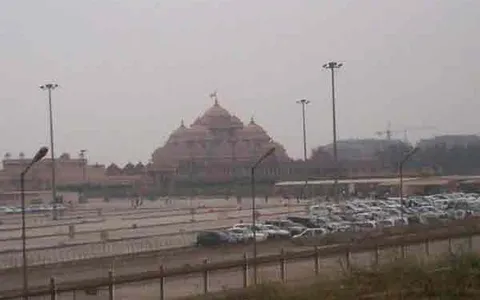
A specimen of fine craftsmanship, the Akshardham temple in Gandhinagar is one of the largest and most prominent temples in the entire state of Gujarat. Located in…
Ambaji Temple
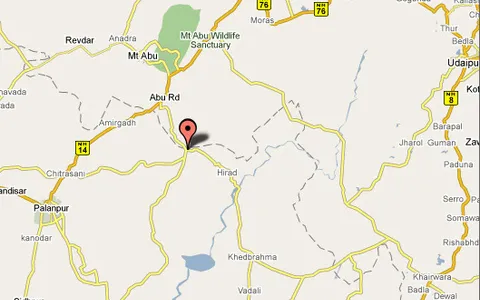
At a distance of 65 Kms from Palanpur and 45 Kms from Mt. Abu near Gujarat Rajasthan border the religious town of Ambaji is located. This town is famous for the Maa…