Gir Forest National Park
Located in the south-west fringes of the Saurashtra Peninsula, The Gir National Park is a haven to about 300 Asiatic Lions... unfortunately their last surviving population.This area flanked with three unique and unusual reserves, the Nalsarovar Lake and Sanctuary, where a large number of water birds can be seen; the bare saline flats of The Rann of Kutch, the home of the Indian Wild Ass and Flamingo Islands which is home to the flamingo, make it a very interesting tourist spot. The 1412.13 sq…
About Gir Forest National Park
Located in the south-west fringes of the Saurashtra Peninsula, The Gir National Park is a haven to about 300 Asiatic Lions… unfortunately their last surviving population.This area flanked with three unique and unusual reserves, the Nalsarovar Lake and Sanctuary, where a large number of water birds can be seen; the bare saline flats of The Rann of Kutch, the home of the Indian Wild Ass and Flamingo Islands which is home to the flamingo, make it a very interesting tourist spot. The 1412.13 sq km sprawling park has a rugged terrain and the steep rocky hillsides are covered with mixed deciduous forests.
The Asiatic lion once had a wide range in natural territory running from India through Persia to Arabia. But unfortunately hunted as a coveted trophy item during the British Raj era, it is now only found in the Gir forest of Gujarat. The famine of decimated the Asiatic lion population that Lord Curzon cancelled his shoot at Gir, where he was staying as the guest of Nawab Junagadh. Curzon persuaded the Nawab to protect the remaining lions. In 1965, the India Government declared this place as a National park. The lion population which had sunk to an alarming two dozen in the early 20th century has slowly climbed over the years since, and now numbers about
History of Gir Forest National Park
In India, lions became a coveted hunting trophy during the time of British Raj and hunting at Gir was a privilege. Dignitaries and royalty alike coveted an invitation from the Nawab of Junagadh for a “shikar” at Gir.During the famine years betweem 1899 - 1904, lion populations were decimated given that they started encroaching on farms and precious livestocks. Lord Curzon had come to Gir to hunt as a guest of Nawab of Junagadh. However, in learning about the dangerously declined lion population, cancelled his shoot.
Interesting things to Visit
Water reserves:
The seven major perennial rivers of the Gir region are Hiran, Shetrunji, Datardi, Shingoda, Machhundri, Ghodavari and Raval. The four reservoirs of the area are at four dams, one each on Hiran, Machhundri, Raval and Shingoda rivers, including the biggest reservoir in the area, the Kamleshwar Dam, dubbed ‘the lifeline of Gir’.During peak summer, surface water for wild animals is available at about 300 water points. When drought hits the area following a poor rainfall, surface water is not available at a majority of these points, and water scarcity becomes a serious problem (mainly in the eastern part of the sanctuary). Ensuring the availability of water during peak summer is one of the major tasks of the Forest Department staff.
Lion:
Gir Sanctuary is the last and only home of the critically endangered Asiatic Lion. These lions are a smaller more compact version of their African version, and are best viewed at dawn or dusk when they are on the move. The major difference between the two is that the African Lion appears larger than the Indian Lion because of its large and luxuriant mane.
Leopards:
Leopard is considered to be one of the most beautiful and graceful animals in the jungle, also the most dangerous one. Popularly known as the Prince of Cats, this animal is the most adaptable from the family of predators, one the reason why it occupies a much larger spread of Gujarat forest cover, and in Gir National Park it has been found in all the varied habitats and vegetation types. The approximate population of 210 Leopards resides within the sanctuary area.
Reptiles:
Not leaving the water predators behind, Mash crocodiles are often seen along the Kamleshwar Dam Site. Another major attraction among the reptile population of Gir National Park are the numerous non-venomous Snakes such as the Indian Rock Python along with the four venomous varieties, which are Indian Cobra, Common Krait, Saw Scaled Viper, Russell’s Viper.
Wildlife:
The foremost attraction in the park is the beasts that roam around freely, the most majestic being undoubtedly the lion. It is this majestic beast that attracts the maximum tourists to this park. Of course, you must understand that it would probably take a long time to view lions or lionesses with their cubs, since they don’t emerge too quickly out of their hiding. However, other creatures that inhabit the park and that are equally interesting to look out for are leopards, jungle cat, hyenas, jackals and mongoose.
Birds:
A sure bird-watcher’s paradise, the park has quite a variety of vultures, crested serpent eagle, the endangered bonelli’s eagle, crested hawk-eagle and the great horned owl. Occasionally the Indian grey hornbill can also be spotted here.
Nalsarovar Lake and Bird Sanctuary:
This sanctuary comes under the Gir Forest and is home to a large number of birds. It is the largest wetland and bird sanctuary in India.
Crocodile Breeding Farm:
The Crocodile Breeding Farm near Sasan is an interesting place to see, where reptiles are hatched and reared before they are set free into the forest in their natural habitat.
Tulsi Shyam Temple:
A temple dedicated to Lord Krishna is present in the area belonging to the Nalsarovar Bird Sanctuary. Hot springs nearby are also a major attraction. The strong smell of sulphur here makes the area easily recognizable.
Nearest Visiting places from Gir Forest National Park
Uperkot Fort:
The state of Gujarat boasts of a number of historical Forts and monuments in Junagadh. Built and rebuilt repeatedly, the Uperkot Fort, Junagadh, one of the two fortifications of the city, has of late become one of the main Tourist attractions in Junagadh. Adding to the advantage of the fort being less thronged has helped it retain the ethnicity without losing any bit of its charm.From the little chronological information that we get regarding the historical origin of the Uperkot Fort, Junagadh, was built by Chandragupta Maurya in 319 B.C. Later, around 10th century, Rah Grahar reconstructed the entire palace out of the ruins and built the fort along with all the updated requirements of a proper one. However, according to whatever evidence is available, it can be said that the fort was erected in or around the third century or in the times of the Mahabharata.
Mahabat Maqbara:
The etymological meaning of Junagadh is “old Fort”. It is located in the state of Gujarat in the laps of the sacred hills of Girnar in Saurashtra. Amongst the various forts and monuments in Junagadh, one of the major Tourist attractions in Junagadh, the Mahabat Maqbara, Junagadh is an exquisite exhibition of the nineteenth century art and architecture.The city of Junagadh can boast of some beautiful ancient mausoleum erected by the Nawabs of Junagadh in the 18th century in the area around Chitkana Chowk. These mausoleum are charming in their own way, with nicely designed arches, vertical columns, and intricate stone carvings. However, the mausoleum built later; or rather the newer ones are more attractive and lure a greater number of tourists who floch to this place every year.Started in 1878 by Mahabat Khanji and completed in the year 1892 by his successor, Bahadur Kanji, the Mahabat Maqbara, Junagadh houses the tombs of Mahabat Khan, Baha-ud-din, minister of Nawab Rasul Khanji.
Junagadh Zoo Museum:
The Junagadh Zoo Museum, Junagadh is one of the most frequented Tourist attractions in Junagadh for obvious reasons. A museum incorporated within the premises of a zoological garden is undoubtedly exclusive in its own sense. It is situated at the foothills of Mount Girnar.Set up in 1863 A.D, and situated at 4km north of the southern part of Junagadh, the Sakkar Bagh Zoo, Junagadh, is oldest of its kind in the entire state of Gujarat, set up by the Nawab with a view to keep poaching under control of the Asiatic lion. It is a well maintained animal park , home to several species of motley colored birds, including flamingos, tigers, lions, leopards and other royal beasts. In the very premises of the zoo, there exists the Junagadh Zoo Museum, Junagadh with various objects which emit cultural evidences from the past.The co-existence of a zoo and a museum undoubtedly makes Junagadh Zoo Museum one of the most visited Tourist attractions in Junagadh. The zoo, comprising of the various animals and birds of a variety of taxonomic categories, also is home to a museum which preserves the very valuable documents, manuscripts, sovereigns, sculptures, various letterings, miniature paintings.
Temple of Amba Mata:
Tourists coming to Junagadh would be fascinated by its picturesque setting. The religious places and historical monuments of Junagadh attract many travelers from every nook and corner of the world. In the register of the Holy Places in Junagadh, the Temple of Amba Mata, Junagadh stands out and merits a special mention. Owing to buses that ply frequently between Junagadh and other chief locations of Gujarat, you can reach the Junagadh Temple of Amba Mata without any trouble.
Temple of Mallinath:
Tourists coming to Junagadh would be enchanted by its numerous temples, forts and museums. Amongst the Holy Places in Junagadh, the Temple of Mallinath, Junagadh deserves a special mention. As Junagadh is well linked to other key locations of Gujarat via regular bus services, reaching this temple would not pose any problem.The credit of the construction of Temple of Mallinath, Junagadh, Gujarat, India goes to two brothers named Vastupal and Tejpal. Junagadh Temple of Mallinath was erected in 1177 by this duo.Actually the Junagadh Temple of Mallinath is a triple temple. The exteriors of this temple are exquisitely carved and present a stunning sight to behold. At this temple, you would be able to get a captivating insight into Jain religious rituals. Akin to a Hindu temple, pilgrims at this place also offer leaves, fruit, flowers, vermilion, sandalwood paste and grains to the deity, amidst ringing of the bells and chanting of mantras. Once the pooja gets over, these devotees adorn their foreheads with liberal daubs of vermilion as well as sandalwood paste. A generous amount of money is also offered for the upkeep of the shrine.
Bhavnath Mahadev Temple:
Located at the foot hills of the Girnar Hills, the Bhavnath Mahadev Temple is one of the foremost Holy Places in Junagadh. Nothing much is known about its precise origin but there is no scope of doubt about its historicity. It has stood their since ancient times. Visited by religious minded devotees all along the year, it is however best known for being the venue of the famous Bhavnath Fair.Held in the month of Magha as per the Hindu calendar (roughly coincides with January/February) this fair is the meeting point of a large number of people and is celebrated with a great deal of mirth and good cheer. It continues for five days. Events include performances put up by folk singers and dancers. One of the most striking features of this fair hosted at the Bhavnath Mahadev Temple is the active participation of the Naga Bavas.The worship starts at mid night on the 14th day of the dark half in the Magha month and as soon as the puja commences these sages are seen advancing towards the Bhavnath Mahadev Temple seated on elephants holding flags in their hands. The air reverberates with the sounds of the conch shells, the tungis and the turis. A strong belief is prevalent that on this day Lord Shiva himself visits the Bhavnath Mahadev Temple. The organizers serve free meals to the visitors on this auspicious occasion.
Temple of Gorakhnath:
Tourists coming to Junagadh would be captivated by its various museums, temples and forts. In the category of the Holy Places in Junagadh, the Temple of Gorakhnath, Junagadh merits a special mention. As buses ply regularly between Junagadh and other key locations of the State of Gujarat, you would be able to reach this temple without any trouble.The Temple of Gorakhnath, Junagadh, Gujarat, India is an ancient temple. However, no comprehensive records are found till date to establish the date of its construction.Junagadh Temple of Gorakhnath is positioned at the Girnar Hill in the district of Junagadh, Gujarat. Girnar Hill lies about 5 kms to the east of Junagadh. The presiding deity at this temple is Lord Gorakhnath. In the vicinity of this beautiful temple, you would get the chance to see several other Hindu temples along with a number of Jain temples.So, visit the Temple of Gorakhnath, Junagadh at your earliest to experience divine bliss. This visit would surely remain etched in your mind for a long time to come.
Somnath Temple:
The temple of Somnath, one of the 12 Jyotirlingas of Lord Shiva is situated 79 Kms. from Junagadh and 25 Kms. from Chorwad. According to the legend, Somnath is as old as creation, built by none other than the Moon God himself. The remains of the temple of Somanath “withstood the shocks of time and survived the attacks of destroyers. The temple has imposing architecture and is a beautiful sight facing the blue expanse of the Arabian Sea. A short distance from the Somnath temple is Bakhla Tirth, where Lord Krishna was said to have been struck by the stray arrow of a Bhil tribal. The Present Temple, Kailash Mahameru Prasada is built in the chalukya style of temple architecture and reflects the inherent skill of Sompuras, Gujarat’s master masons.
Chorwad Beach:
A visit to Chorwad Beach in Gujarat, India, offers ample of opportunity to the tourists to know about the ins and outs of the Chorwad Beach in Gujarat, India. Chorwad Beach in Gujarat, India is yet another beautiful and scenic spot which if marketed well can figure high in the itinerary of the domestic and international tourists. Chorwad Beach is an interesting and alluring amalgamation of rocky crags and bowlderish seafront along with jaunty boat rides across the Chorwad seafront and to cap it all with opportunities to visit Porbandar and Somnath and other nearby beach destinations and other travel destinations worth their salt in terms of beauty and ambience.Chorwad Beach in Gujarat, India, is home to a Palace which has now been transformed into a lovable and attractive resort which was constructed in the past by Nawab Saheb Mohabbat Khan, who was the regional satrap of the times. Nawab Saheb Mohabbat Khan, is one person who organized his dog’s bizarre weddings, royal banquets and other related royal processions to his own merriment and since then the memories of such a memorably royal past lie embedded in the confines of the Palace Resort on the Chorwad Beach in Gujarat, India. The Daria Mahal Palace is another structure which is considered attractive in the confines of the Chorwad Beach in Gujarat, India. Then, the exquisite Chorwad Beach, also has an association with Mahatma Gandhi.
Hotels/Lodge/Accommodation nearby Gir Forest National Park
**Hotel Indral:**Junagadh,Gujarat,India,ph:0285 2658511
**Hotel Shree Paramount:**Kalva Chowk,Junagadh,Gujarat,ph:0285 2623983
Help Line/Phone Number
Copyright 2016 HolidayLandmark All rights reserved
Location info
-
**Address:**Gir Forest National Park,Junagadh,Gujarat,India
-
District: Junagadh
-
Nearest City: Junagadh,Veraval
-
Best time to visit: November and June.
Climate & weather
summer, with noon temperature reaching 43 °C or 109 °F,summer, with noon temperature reaching 43 °C or 109 °F
How to reach Gir Forest National Park
-
**Nearest Railway Station:**Junagadh railaway station
-
**Nearest Airport:**Gir is Keshod airport 90-kms via Veraval,
**Road Transport:**Gir is situated at a distance of 400-kms from Ahmedabad via Rajkot, Junagadh and Mendarda. State Transport buses are easily available from Junagadh and Veraval to Gir, between November and June.
Best time to visit Gir Forest National Park
December to April. The park is closed during monsoon (July-October).
Timings & opening hours
Safari timings: 6:00 AM to 10:00 AM and 3:00 PM to 6:00 PM (November to June). Park closed during monsoon (July to October).
Entry fee & tickets
INR 50-100 for Indians for safari. Additional gypsy hiring fees apply.
Duration needed
Full day for a complete safari experience.
Safety tips
Follow park rules. Do not feed or disturb animals. Stay inside the vehicle during safaris. Carry insect repellent.
Things to carry
Binoculars, camera, water bottle, hat, sunscreen, insect repellent.
Nearest airport, railway & bus
Nearest airport and railway station in the nearest city.
Mobile network coverage
Airtel, Jio, and Vi all provide good coverage across Gujarat’s major cities and tourist areas. 4G is generally reliable in Ahmedabad, Vadodara, Surat, and along major highways. Coverage may be weaker in remote areas of Kutch and interior Saurashtra. Most hotels and cafes in tourist areas offer free Wi-Fi.
Food & restaurants nearby
Food options are available in the nearest town. Traditional Gujarati thali restaurants and local eateries offer a range of vegetarian dishes.
Things to do at Gir Forest National Park
Take a jeep safari to spot Asiatic lions, leopards, deer, and over 300 bird species. Visit the Crocodile Breeding Farm.
Nearest petrol pump
Petrol pump available in the nearest town.
Frequently asked questions
What is the best time to visit Gir Forest National Park? October to March (park closed during monsoon).
What wildlife can be seen? Native species including deer, leopards, and birds.
Is prior booking needed? Recommended during peak season.
Accessibility
Accessibility information is not currently available for this site. Contact the venue directly or check with your accommodation for the latest accessibility details.
Rules & restrictions
Standard visitor rules apply. Check locally for any specific restrictions at this site.
Best photography spots
The best photography spots are typically during the golden hours (early morning and late afternoon). Scout the location first to identify the best angles, and consider the direction of light at different times of day.
Quick facts
- Type: national-park
- Location: Gujarat, India
- Ideal for: History enthusiasts, cultural travelers, and photographers
- Best time to visit: October to March (pleasant winter season)
- Photography: Allowed at most areas; some sites may have restrictions inside sanctums
Plan your visit to Gir Forest National Park with these essential quick facts for a smooth and enjoyable trip to Gujarat.
Visitor information
Planning your visit to Gir Forest National Park
- Language: Gujarati is the local language; Hindi and English are widely understood at tourist sites.
- Getting around: Auto-rickshaws, taxis, and state transport buses are readily available. Hiring a private vehicle is recommended for comfort.
- What to wear: Light cotton clothing in summer; light woolens in winter. Comfortable walking shoes are essential. Modest dress is advised at religious sites.
- Photography: Check for photography restrictions before entering. Some temples and museums may charge a separate camera fee.
- Best time to visit: October to March when the weather is pleasant for sightseeing.
- Local cuisine: Don’t miss Gujarati thali — a wholesome meal with dal, rice, vegetables, roti, and sweets like dhokla, khandvi, and mohanthal.
Nearby facilities
- ATMs: Available in nearby towns and at major tourist sites.
- Medical facilities: Primary health centers and hospitals can be found in district headquarters.
- Restrooms: Public restrooms are available at major tourist spots; carry hand sanitizer and tissues.
Make your visit to Gir Forest National Park comfortable and hassle-free with these practical visitor tips for Gujarat.
Map & location view
Gir Forest National Park is located in the vibrant state of Gujarat, India. The destination is accessible by road and is well-connected to major cities and towns in the region, making it a convenient addition to any Gujarat travel itinerary.
How to reach
- By Air: The nearest airport is connected to major Indian cities including Mumbai, Delhi, Ahmedabad, and Vadodara with regular domestic flights.
- By Rail: The nearest railway station is connected to the Indian railway network with regular trains from major cities across India.
- By Road: State transport buses, private taxis, and self-drive options are available from nearby cities. Gujarat has a well-maintained network of state highways and national highways.
Use GPS navigation or local maps to find the exact location of this destination in Gujarat. The Gujarat Tourism website provides additional travel resources for visitors.
Photo gallery
Visual highlights of Gir Forest National Park
Visitors to Gir Forest National Park will find plenty of photogenic spots worth capturing. From architectural details to natural landscapes, the destination offers diverse subjects for photography enthusiasts.
What to photograph:
- Architecture: Intricate carvings, structural details, and traditional Gujarati craftsmanship
- Landscapes: Surrounding natural beauty, gardens, and panoramic views of the Gujarat landscape
- Local life: Candid moments of visitors, vendors, and daily activities around the site
- Details: Close-up shots of carvings, paintings, decorative elements, and textures
Photography tips:
- Early morning (6:00 AM – 8:00 AM) and late afternoon (4:00 PM – 6:00 PM) offer the best natural light for photography in Gujarat’s climate
- Check if photography is allowed inside buildings before taking photos
- A wide-angle lens is ideal for capturing architectural grandeur at Gujarat’s heritage sites
- Mobile phone photography works well in well-lit outdoor areas
Browse through our collection of photographs showcasing the beauty and heritage of Gir Forest National Park. New images are added regularly as part of our ongoing content enrichment for this Gujarat destination.
Photo gallery of Gir Forest National Park
Video gallery
Related destinations
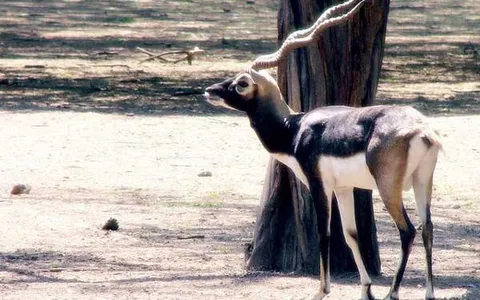
Blackbuck National Park
Once found in open plains throughout the country and the state of Gujarat. Its largest population at present occurs in Velavadar N.P. This exclusively Indian animal…
Marine National Park
Each one the work of a colony of countless tiny animals - come in an amazing variety of shapes and sizes, from the convolutedbrain coral corals that look like…
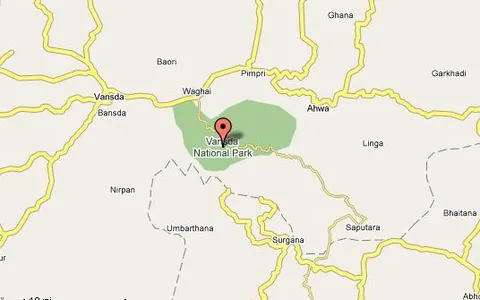
Vansda National Park
The types of forest found in the park are mainly Moist deciduous and Dry deciduous covered with bamboos, tall teak trees, mango groves and gigantic creepers. In all…