Blackbuck National Park
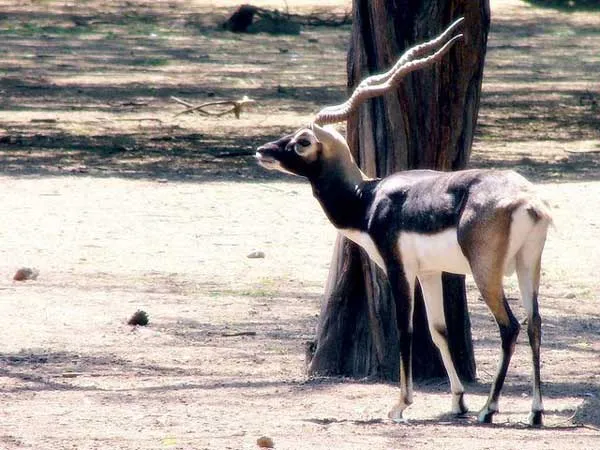
Once found in open plains throughout the country and the state of Gujarat. Its largest population at present occurs in Velavadar N.P. This exclusively Indian animal is perhaps the most graceful and beautiful of its kind. It has ringed horns that have a spiral twist of three to four turns and are up to 70 cm long. The body’s upper parts are black and the underparts and a ring around the eyes are white. The light brown female is usually hornless.
Quick facts
| Nearest Petrol Pump nearby Blackbuck National Park | ioc petrol pump:Bhavanagar,Gujarat,India |
|---|
About Blackbuck National Park
The wolf and the jackals are the main predators in t park. Wolves here use shrub land for lying-up, denning and for rendezvous and depend on blackbuck, hare and other small animals as their prey. Another rare sight is that of the lesser florican who migrate here and settle here to breed in the grasslands. After arrival, the male bird marks the territory and displays to attract the female. The courtship display of the male is a spectacular vertical leap up to a hight of two meters and may display over 500 times in a day! Velavadar is also an excellent place to see a large number of harriers. The Park is very rich in other birdlife as well.
The animal was once found in the plains and the state. Today, its habitat has been restricted within the boundaries of the national park. The beauty of the animal could have been one of the major reasons behind its decreasing population. As the name suggests, the upper part of its body is black in color, while the lower part is white. There are also white rings around its eyes, but the most striking attribute of the animal is its horns. Its ringed horns are approximately 70 cm long and have three to four spiral twists.
The female black buck is usually brown in color and does not possess horns. Black Buck Wildlife Sanctuary was once the private grasslands of the ex princely state of Bhavnagar, specifically to be used by the Maharaja. It is surrounded by Gulf of Kambhat towards south and wastelands and agricultural land on the other. Herds of Antelopes are seen wandering which attracts a number of tourists in the region. There is a bungalow provided by the Government Forest Department, which can be a good accommodation option.
The principal attraction of the park is the massive population, the largest in the country, of blackbuck, the handsome Indian antelope, seen here in numbers running into thousands. Rated among the most elegant antelopes and fastest long-distance runners (90km or 58 miles per hour), the exclusive Indian Blackbuck is one of the most graceful and beautiful animal of its kind. The males are black and white with a white ring around the eyes and ringed horns that have a spiral twist of three to fours turns and are up to 70 cm long. The light brown female is usually hornless. The fauna of the park comprises mainly of Blackbuck, Antelope, Wolf, jackal and endangered species of birds.
Velavadar is also one of the few places in the world where the wolf is proliferating in India, indeed the world, though they are rarely seen in the daylight. The wolves and the jackals are the prime predators of Velavadar national park. Wolves here use shrub land for lying-up, denning and for rendezvous and depend on blackbuck, hare and other small animals as their prey. Other mammals like nilgais, jungle cat, hyena, wild pig, wild boars, hare, Indian fox and rodents are more easily seen on the periphery. Rarities include the bush cat. All these animals can be viewed on the open flat grassland from very close range. The best time for viewing is early in the morning and dusk. The best time to visit the park is from October to June. The park is closed during the monsoons.
Interesting things to Visit
Safaris:
Bear in Velavada National ParkThe jungle trail located in the park is a straight path with watchtowers dotted around it. The ‘wetland’, located just 3 km from the entry gate is an ideal spot to check out the wildlife. There are no safaris provided by the forest department, so your own vehicle is the only source of enjoying a ride around the park but be cautioned as animals cross the roads at all times, so be sure to drive slowly and safely.
lesser florican:
Another rare sight is that of the lesser florican who migrate here and settle here be breed in the grasslands during the rainy season. The male bird attracting the female is an unusual sight to watch. The male bird first marks its territory and then begins the courtship display which is a spectacular vertical leap up to a height of two meters, and which may be repeated over 500 times in a day
cowherds and shepherds:
Sometimes in the early morning or late evening, the colorful ‘Kathi’ cowherds and shepherds adorned in homespun, heavily embroidered kareya-chauni and traditional jewellery mingle naturally with the scene as they herd their oxen through the winding narrow expanse. Their cries to their animals an eternal assurance that life, in this sanctuary at least, is as it always was, always have been – safe, secure and peaceful. The cool and refreshing morning breeze, the reddish black earth, the wide expanse of flat, open grasslands teeming with gold, the grazing fauna, the sudden flights of birds, the tinkle of the cowbells, the shrill cries of the cowherds, all add to the panorama of serenity and timelessness in the lap of nature.
Nearest Visiting places from Blackbuck National Park
Ghogha has an average literacy rate of 65% which is higher than the national averag eliteracy rate of 59.5%. The male literacy rate is 76% and the female literacy rate is 53%.During ancient times this place was a major center of business. The three ancient Digambar Jain temples make Ghogha a popular pilgrim center. Chopra Mandir is a famous temple dedicated to Bhagwan Chandra Prabhu, the eight Tirthankar and Bhagwan Nemi Nath. A large number of ancient idols are installed in the temples of Ghogha. The idol is believed to be constructed 2500 years ago. Gujarati Mandir and Dandia Mandir are the other temples worth visiting.
Takhteshwar Temple:
Built in the year of 1893, Takhteshwar Temple is one of the prime places to see in Bhavnagar. The temple is located on top of a small hill, which is near the main railway station of the city. Takhteshwar Temple in Bhavnagar is also close to Mahuva, which is a small town near Bhavnagar in Gujarat. Lord Shiva is worshipped as the main deity of this shrine.The architectural beauty of the Takhteshwar Temple in Gujarat represents the typical late 19th century style and is made of pure marble. The temple is named after Maharaja Takhtasinhjii, as it was built in his memory. As the temple is situated on an elevated land, people can enjoy magnificent beauty of the city as well as the Gulf of Khambat.
Gandhi Smriti Museum or Gandhi Memorial:
Gandhi Smriti stands in Bhavnagar city as the vital link of the life of the political leader and the city. The memorial, which houses a hoard of photographs of the Mahatma, stands by the clock tower in Crescent Circle.Gandhi Smriti stands in the center of Bhavnagar city as an institution that commemorates the life and meritorious service of the Father of the Nation. Established in 1955, the Gandhi Smriti has since then become one of the most frequented places in Bhavnagar.Gandhi Smriti in Bhavnagar preserves a huge collection of books and other memorabilia used by Mahatma Gandhi. The repository also displays photographs that recreate the various events in the life of this great leader. Artifacts like religious carvings and betal cutters that are cultural representatives of Saurashtra are also found in Gandhi Smriti at Bhavnagar.
Barton Library and Museum:
Barton Library and Museum, one of the oldest monuments in Bhavnagar, is a favorite place for all age groups. The museum was established in 1895. Elderly people spend their time here reading newspapers, dailies and magazines. The museum houses old books, manuscripts, rare coins, arms and armours used by the rulers of Bhavnagar. Other collections include farming tools, beadwork, wood carvings, weapons, musical instruments and reminders of Mahatma Gandhi’s period as a student of Bhavnagar University.
Bhavnagar Lock Gate:
Bhavnagar Lock Gate is a popular tourist spots in the city of Bhavnagar in Gujarat, India. It enables the ships to remain afloat when the tide is low. The Lock Gate of Bhavnagar is situated in a dockyard of the city that was built 100 years ago. It is a very old dry dock of the country, which is still operational. It is at present used for the making of ships.
Gopnath Beach:
Gopnath Beach being profusely supplied with a dainty and colorful birdlife along with the presence of limestone cliffs and other adjuncts to the Gopnath Beach like a pleasurable sea breeze and breathtakingly beautiful views to enthrall the tourists who come down to the Gopnath Beach. It also houses the world“s biggest ship breaking zone and along with that there is the sacred presence of the Talja temple, which is built on a 350 feet high Volcanic hill.
Nava Bandar:
Bhavnagar Port, on the west coast of India is an all weather direct berthing port for small vessels. It is located in the Gulf of Cambay at a latitude and longitude of 21° 45“ N and 72° 14“ E respectively. Bhavnagar city is only 10 km from the port. Vessels to be disembarked alongside the concrete jetty must pass through the Lock Gate Door.
Mahuva:
Mahuva is a small town located in the district of Bhavnagar in Gujarat. It is also addressed as Kashmir of Saurashtra, because of the scenery around. The coconut tree plantations add to the beauty of the town. Tourists also enjoy at the beach of the city. Near the beach is the ancient Bhavani Temple, which is an important attraction of the city of Bhavnagar. The town enjoys an extremely pleasant climate throughout the year.
Gaurishankar Lake:
Gaurishankar Lake aka Bor Talav, named after a very able 19th century minister of the king, is a reservoir originally planned for water supply to the town. It is a popular picnic spot where one can watch a setting sun over lake and enjoy a stroll on the parapet wall of the lake. A small planetarium for children is also worth a visit. Bhav Vilas Palace lies on the shores of the lake.
Hotels/Lodge/Accommodation nearby Blackbuck National Park
**Hotel Apollo:**Bhavnagar,Gujarat,India
**White Rose Hotel:**Bhavnagar,Gujarat,India
Location info
-
**Address:**Blackbuck National Park,Bhavnagar,Gujarat,India
-
District: Bhavnagar
-
Nearest City: Bhavnagar
-
Best time to visit: October and June
History of Blackbuck National Park
The Blackbuck National Park is located around 72 km from the district headquarter city of Bhavnagar in Bhal region. In 1976, Government on India has declared aprox. 34 Sq.Km. of grassland as National Park Blackbuck. The movements of blackbucks and nilgais (Blue bull) increase beauty of this park. The blackbuck is most famous for its jumping over the levels of grass. Since it is grassland, beauty of this park can be seen from long distant.
How to reach Blackbuck National Park
**Nearest Railway Station:**Bhavnagar railhead, connected by trains from Mumbai. Another railway station is at Dhala: 55 km away, but there is no regular public transportation from there to the park.
- **Nearest Airport:**Bhavnagar airport. Mumbai is connected to Bhavnagar through domestic flights. Be sure to book in advance as not many flights are available.
**Road Transport:**The nearest town, Valabhaipur, is 32 km away, and Ahmedabad 145 km away. If you come by private vehicle, the Black Buck National Park is entered from Valabhaipur on the old highway or Adhelai on the Bhavnagar-Ahmedabad highway. Otherwise, the park is accessed by bus from Bhavnagar (72 km away). Two buses travel daily between Bhavnagar and the park; leaving the city at 2 or 3:30pm and returning from the park at 6 or 6:30am the next morning. For a day trip you will need your own vehicle; taxis can be hired in Bhavnagar for Rs. 700-1000 per day.
Helpline & emergency contacts
-
**Police Station:**100
-
Nearest Hospital:
Goverment hospital:Bhavanagar,Gujarat,India
Dholakia hospital:Bhavanagar,Gujarat,India -
Society/Community Phone Number:
-
**Link:**www.tourism.webindia123.com
Best time to visit Blackbuck National Park
October to March.
Timings & opening hours
6:00 AM to 6:00 PM daily. Park closed during monsoon.
Entry fee & tickets
INR 25 for Indians.
Duration needed
2 to 3 hours.
Safety tips
Follow park rules. Do not feed or disturb animals. Stay inside the vehicle during safaris. Carry insect repellent.
Things to carry
Binoculars, camera, water bottle, hat, sunscreen, insect repellent.
Nearest airport, railway & bus
Nearest airport and railway station in the nearest city.
Mobile network coverage
Airtel, Jio, and Vi all provide good coverage across Gujarat’s major cities and tourist areas. 4G is generally reliable in Ahmedabad, Vadodara, Surat, and along major highways. Coverage may be weaker in remote areas of Kutch and interior Saurashtra. Most hotels and cafes in tourist areas offer free Wi-Fi.
Food & restaurants nearby
Food options are available in the nearest town. Traditional Gujarati thali restaurants and local eateries offer a range of vegetarian dishes.
Things to do at Blackbuck National Park
Spot blackbucks, nilgai, wolves, and migratory birds. Enjoy the grassland landscape.
Climate & weather
Gujarat has a diverse climate ranging from arid in Kutch to semi-humid along the coast. Winter (November–February) is the best time to visit: temperatures range from 12°C to 29°C with clear skies and pleasant days. Summer (March–June) is very hot, with temperatures reaching 40–45°C in interior areas. The monsoon (July–October) brings moderate to heavy rainfall, with coastal areas receiving more rain. The Rann of Kutch and cultural festivals are best experienced in winter.
Nearest petrol pump
Petrol pump available in the nearest town.
Frequently asked questions
What is the best time to visit Blackbuck National Park? October to March (park closed during monsoon).
What wildlife can be seen? Native species including deer, leopards, and birds.
Is prior booking needed? Recommended during peak season.
Accessibility
Accessibility information is not currently available for this site. Contact the venue directly or check with your accommodation for the latest accessibility details.
Rules & restrictions
Standard visitor rules apply. Check locally for any specific restrictions at this site.
Best photography spots
The best photography spots are typically during the golden hours (early morning and late afternoon). Scout the location first to identify the best angles, and consider the direction of light at different times of day.
Visitor information
Planning your visit to Blackbuck National Park
- Language: Gujarati is the local language; Hindi and English are widely understood at tourist sites.
- Getting around: Auto-rickshaws, taxis, and state transport buses are readily available. Hiring a private vehicle is recommended for comfort.
- What to wear: Light cotton clothing in summer; light woolens in winter. Comfortable walking shoes are essential. Modest dress is advised at religious sites.
- Photography: Check for photography restrictions before entering. Some temples and museums may charge a separate camera fee.
- Best time to visit: October to March when the weather is pleasant for sightseeing.
- Local cuisine: Don’t miss Gujarati thali — a wholesome meal with dal, rice, vegetables, roti, and sweets like dhokla, khandvi, and mohanthal.
Nearby facilities
- ATMs: Available in nearby towns and at major tourist sites.
- Medical facilities: Primary health centers and hospitals can be found in district headquarters.
- Restrooms: Public restrooms are available at major tourist spots; carry hand sanitizer and tissues.
Make your visit to Blackbuck National Park comfortable and hassle-free with these practical visitor tips for Gujarat.
Map & location view
Blackbuck National Park is located in the vibrant state of Gujarat, India. The destination is accessible by road and is well-connected to major cities and towns in the region, making it a convenient addition to any Gujarat travel itinerary.
How to reach
- By Air: The nearest airport is connected to major Indian cities including Mumbai, Delhi, Ahmedabad, and Vadodara with regular domestic flights.
- By Rail: The nearest railway station is connected to the Indian railway network with regular trains from major cities across India.
- By Road: State transport buses, private taxis, and self-drive options are available from nearby cities. Gujarat has a well-maintained network of state highways and national highways.
Use GPS navigation or local maps to find the exact location of this destination in Gujarat. The Gujarat Tourism website provides additional travel resources for visitors.
Photo gallery of Blackbuck National Park
Video gallery
Related destinations
Gir Forest National Park
Located in the south-west fringes of the Saurashtra Peninsula, The Gir National Park is a haven to about 300 Asiatic Lions... unfortunately their last surviving…
Marine National Park
Each one the work of a colony of countless tiny animals - come in an amazing variety of shapes and sizes, from the convolutedbrain coral corals that look like…
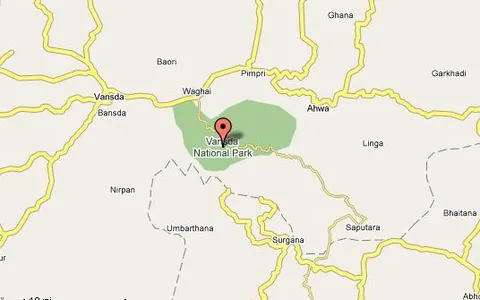
Vansda National Park
The types of forest found in the park are mainly Moist deciduous and Dry deciduous covered with bamboos, tall teak trees, mango groves and gigantic creepers. In all…