Sardar Vallabhai Patel Museum
A major attraction of the Sardar Patel national memorial museum in Ahmedabad consists of the national flag that was designed by the Indian National Congress in 1930 -1931. In the surroundings of the museum, lies a garden called Sardar Open Garden. The best thing about the garden is that, here you can get to see the peacocks (our national bird) roaming freely. Monkeys can also be commonly seen, so just be a little careful. Besides the museum and garden, there is also the Sardar Open Air Theatre,…
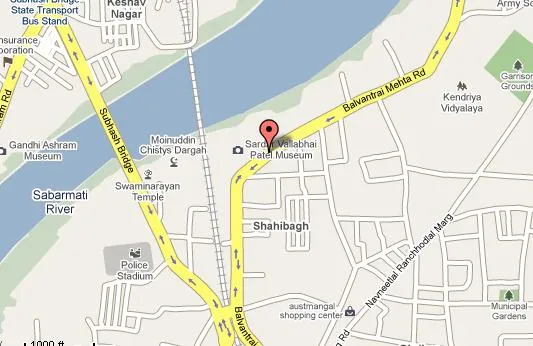
About Sardar Vallabhai Patel Museum
A major attraction of the Sardar Patel national memorial museum in Ahmedabad consists of the national flag that was designed by the Indian National Congress in 1930 -1931. In the surroundings of the museum, lies a garden called Sardar Open Garden. The best thing about the garden is that, here you can get to see the peacocks (our national bird) roaming freely. Monkeys can also be commonly seen, so just be a little careful. Besides the museum and garden, there is also the Sardar Open Air Theatre, where documentary films are shown during specific occasions.
The Sardar Patel Museum in Surat is a multipurpose museum which is located in Sonifalia. It plays host to several pieces of antiques such as that made of wood, metal, ivory, stone, sandalwood, porcelain and terracotta. Several old oil paintings, miniatures, textiles, manuscripts and many such other items are also displayed in the exhibition organized by this museum. This is the only museum in Surat that has gained a lot importance owing to its rich collection of ancient historical items that are important part of the national heritage too. One will come across 10, 000 specimen of the various arts and crafts at this place. There is also an open air theater which can accommodate about 4000 people at a time.
Sardar Vallabhabhai Patel Museum is a multi-faceted museum, in which one finds articles like traditional textiles, porcelain, glassware, metal ware, paintings, old books, wood carvings, stuffed specimens of animal and birds, marine specimens such as things made of shells, a variety of conches, corals, minerals and precious stones in which the different phases of the moon as well as eclipse appear. Other similar specimens are also exhibited. All such specimens are classified in sections which are allotted one alphabet in order to facilitate easy documentation. (see overleaf).
While celebrating the centenary year of Surat Borough Municipality in 1952, an exhibition was organised in Sorabji J.J. Training College, Chowkbazar, which got good response. Encouraged by this, the authorities of the Borough Municipality decided to developed Winchester Museum. Shri Rajendra C.Surkatha was appointed as Honorary Curator on 19-10-1953. he took great pains to developed this museum. Gradually the inadequecy of the available space was felt and the museum was sifted to a bigger building, called Leiy Weaving Shade in 1953. in 1956, a bigger planned accommodation, was constructed to house the present museum.
which was inaugurated on 6-5-1956 by the late Shri Lal Bahadur Shastri, the Union Minister for Railways, who later became the Prime Minister of India. On 24-12-1957 the new museum was christened after the name of Shri Sardar Vallabhbhai Patel, the Iron man of India who hailed from Gujarat. The museum possesses antiquities as well as objects which represent cultures that are disappearing fast. It h as preserved evidences of the past occupations, industries, handicrafts, historical personalities, costumes and dresses which can be admired by the generations to come. Thus, the museum is homage to our past, but at the same time, it is there to inspire our future generations.
Interesting things to Visit
Old Fort:
The city of Surat is located on the bank of river Tapi in the West Indian state of Gujarat. Surat was a grand port city during the Mughal period. Since the ancient times, the early port of Surat has been well-known for its elite quality fine silks and beautiful brocades and its trade in various spices. Surat has been one of the most progressive of India’s cities in the 17th and 18th centuries. Presently, Surat is a chief industrial city with many textile mills. Besides, Surat is also an imperative diamond-cutting centre in India. Surat features many attractive tourist destinations. Monuments in Surat are a popular destination with tourists visiting the famous Old Fort which stands tall in the city.
Surat Old Fort was built by Muhammad Tughlak in the 14th century to serve as the defense fortification against the Bhils. Ghiyas-ud-din Tughlaq was the original of the Tughlaqs to rule Delhi. Subsequent to Muhammad Sahab-ud-din Ghori, the next mention of Surat is in 1347 A.D., in connection with the rebellion of Gujarat during the time Surat was under Muhammad Tughlak (1325 to 1351). In 1373 A.D., the emperor Firoz Tughlak(1351 to 1388) is said to have built a fort at Surat to guard the town against Bhils attack who wanted to conquer the land.
Dutch Garden:
One of the most important tourist attraction in Surat is the ancient Dutch garden. Actually it is the cemetery of the Dutch officers who had landed and settled in Gujarat for their business enterprise. The huge striking tombs here are splendid symbols of history and narrates the story of the erstwhile power and glory.
The tombs of Christopher Oxenden and George Oxenden, the two English traders, who were in charge of English factory in Surat are the biggest tombs in the cemetery. Another tomb that stands impressively in the garden is of Baron Adrian Van Reede, the director of the Dutch Company in India who had died in 1691. The well maintained cenotaphs and the pleasant garden area around, attracts a lot of tourists.
Rangupavan:
Rangupavan is an open-air amphitheater that is considered to be the biggest theater in the country which can accommodate about 4000 audiences at a time. Set amidst in a picturesque setting and spread across several acres of land, the theatre that overlooks a height of 18meters has a stage, which has the height of 10.5 meter. This theatre has been recently closed.
Dumas:
The renowned health resort, Dumas is located about 16 km away from Surat railway station. Overlooking the Arabian sea, this beautiful picnic spot has a sandy sea beach that attracts tourists. Cottages are available for accommodation purpose.
Hajira:
Situated 28 Kms. away from Surat, Hajira is another health resort on the creek of the Arabian sea. The Hajira beach, fringed by caserne trees is a popular hangout for the tourists and the local people alike has comfortable holiday homes. The place has two wells with full of water rich in iron and sulphur.
Chintanamani:
A 400 hundred year old wooden temple at Shahpor. Chintamani Jain Temple is considered as an outstanding example of craftsmanship and architecture in Gujarat. The temple boasts some of the rarest paintings of Jain preacher Acharya Hemchandra, Solanki King and King Kumarpala. The sandalwood replica of Chintamani Jain Temple is placed in London Museum 90 years ago.
Tapi River:
The Tapti River, ancient original name Tapi River is one of the major rivers of peninsular India with a length of around 724 km. It is one of only three rivers - the others being the Narmada River and the Mahi River that runs from east to west.
Choppati:
Choppati is a popular tourist destination of the city with a big beautiful garden. It is also a center for enjoying delicious Indian snacks like Paav Bhajee and Paani puri.
Nearest Visiting places from Sardar Vallabhai Patel Museum
Sanjan:
Sanjan was one of the primary Parsi settlements in India. A number of excavations carried out in Surat’s Sanjan have thrown a new light on the momentous episode of the flight of the Zoroastrians from Iran, about 1,400 years ago. According to the popular belief Surat’s Sanjan was founded by the Zoroastrians who took shelter here after they were compelled to flee Iran. The progeny of those Zoroastrians are, at present, known as the Parsis.
Navsari:
A large number of tourists from the different places of the country come to have a look at Navsari close to Surat. Several people from the Parsi origin also come here to see this site as this was the first dwelling place of the Parsis who migrated to Gujarat. The excellence of the Parsi architecture can be well understood from the various edifices of this place that are built in the authentic Parsi style. The Parsi Vad is one such structure that has become a heritage site and attracts a lot of tourists. Being one of the important tourist attractions in Surat, Navsari is also popular for its various types of Zoroastrian arts, crafts, food items and many other such items.
Saputara:
This hill station is situated in Dang district at the southeast corner of the state. It has an altitude of 1000m. This place has the Sarpagana river flowing nearby which has a sacred snake image on its banks. Saputara -literally, the Abode of Serpents-is Gujarat’s best-known hill resort, situated atop the second highest plateau in the Sahyadri range and in the midst of thick forests. Saputara is picture postcard perfect with lakes, streams, woodlands and hills.
Ukai:
It is situated 94 kms from Surat. A major multipurpose irrigation project of Gujarat, the storage of water at the dam site is almost as large as that of Bhakra Nangal Dam in Punjab .
Bardoli:
It is situated 34 kms from Surat. Gandhiji had launched a farmers’ movement known as the ‘Bardoli Satyagrah’ in 1921-22 under the leadership of Sardar Vallabhbhai Patel. Swaraj Ashram at Bardoli has become a place of pilgrimage in India.
Tithal:
It is situated 108 kms from Surat and 5 kms from Valsad on the Bombay Vadodara Western Railway. A beautiful sandy beach palm sheltered cottages is what you would get to see there.
Dandi:
Situated on the coastline and well known as a salt centre, Dandi has acquired a name in history after the famous ‘Dandi March Salt Satyagraha’ launched by Gandhiji in March, 1930 AD. While overtly the Dandi march purported to protest against the hateful Salt Tax levied by the British, the underlying purpose was to kindle the spark of Civil Disobedience and thereby attain independence. On a warm April morning in 1930, Gandhi and his 78 followers marched 241 miles to Dandi and formally breached the Salt Law, an act that would go down in the annals of history as the first salvo to be fired against the British Empire.
Palitana:
Palitana houses perhaps the largest cluster of Jain temples anywhere. From the base to the peak of the Shatrunjaya Hill, where the Palitana temples are located, there are in all 863 temples. These temples were built in two phases-the 11th and 12th centuries as a part of the resurgence of temple building all over India, and in the 16th century. Some of the earliest temples built in the 11th century were destroyed by Muslim invaders in the 14th and 15th centuries. The current temples date back to 16th century onwards. Not any one person or group was responsible for the construction of these magnificent temples. It was the effort of the wealthy businessmen who were followers of Jainism that these buildings came into existence.
Narmada river:
The Narmada river originates from the Maikal ranges at Amarkantak, 1057 m above the sea-level, now in Shahdol district of Madhya Pradesh. In its 1312 km long journey before joining the Arabian Sea, the Narmada flows through the three states of Madhya Pradesh (MP), Maharashtra and Gujarat. Nearly 90% of the flow is in MP, and most of the remaining is in Gujarat. It flows for a very brief stretch through Maharashtra.
Help Line/Phone Number
Copyright 2016 HolidayLandmark All rights reserved
Location info
-
**Address:**Sardar Vallabhai Patel Museum,Surat,Gujrat,India
-
**District:**Surat
-
Nearest City: Surat
-
Language: Gujarati, Hindi.
-
Best time to visit: October to March
Climate & weather
Summer temperature ranges from 42oC to 24oC, and Winter temperature ranges from 31oC to 12oC
History of Sardar Vallabhai Patel Museum
ISardar Vallabhbhai Patel Museum, Chowkbazar in the historical city of Surat, though small in size, occupies a unique place in South Gujarat. Its origin dates back to 1890, when the Collector of Surat, Mr. Winchester through his benevolent efforts, organised the museum near Mecca bridge in western corner of the then Ranibaug or Victoria Garden, (which has been renamed as Gandhibaug). The museum was named WINCHESTER MUSEUM. It was then just a monohall structure where few collections (Jariwork, sandalwood, woodwork and metal ware) were displayed. Gradually the philanthropic noble gentry of this prosperous city lent support to enrich the collection to the present status.
How to reach Sardar Vallabhai Patel Museum
-
**Nearest Railway Station:**Surat railway station
-
**Nearest Airport:**Baroda, airport
**Road Transport:**Good network of roads connect Surat to cities of Gujarat, Maharashtra, Rajasthan and Madhya Pradesh. Buses are availbale from Vadodara (140 kms), Ahmedabad (267 kms), Gandhinagar (280 kms) and Mumbai (326 kms) to Surat.
Hotels & accommodation nearby
- **Tex Palazzo Hotel:**Sanjay Nagar,Surat,Gujarat,India,Ph:0261 6616021
**
Hotel Yuvraj:**Surat,Gujarat,India,Ph:0261 2413001
Nearest petrol pump
- **Rushb Petrol Pump:**Surat,Gujarat,India,Ph:0261 2363391
Best time to visit Sardar Vallabhai Patel Museum
October to March with pleasant temperatures.
Timings & opening hours
10:00 AM to 5:00 PM daily. May be closed on public holidays.
Entry fee & tickets
INR 10 to 20 for Indians.
Duration needed
1 to 2 hours.
Safety tips
Standard museum visit precautions. Follow museum rules regarding photography.
Things to carry
Camera (check photography policy). ID proof.
Nearest airport, railway & bus
Nearest airport and railway station in the nearest city.
Mobile network coverage
Airtel, Jio, and Vi all provide good coverage across Gujarat’s major cities and tourist areas. 4G is generally reliable in Ahmedabad, Vadodara, Surat, and along major highways. Coverage may be weaker in remote areas of Kutch and interior Saurashtra. Most hotels and cafes in tourist areas offer free Wi-Fi.
Food & restaurants nearby
Food options near the museum may be limited. The nearest town typically has restaurants and cafes. Carrying water is recommended — most museums do not allow food inside.
Things to do at Sardar Vallabhai Patel Museum
Explore the museum exhibits and learn about the collections.
Frequently asked questions
What is Sardar Vallabhai Patel Museum? A museum in Gujarat.
What are the timings? 10:00 AM to 5:00 PM.
Is photography allowed? Check at the entrance.
Accessibility
Museum accessibility varies. Major museums in cities have level access or ramps at the entrance. Smaller, privately-run museums in older buildings may have steps and narrow doorways. Contact the museum in advance for specific accessibility information.
Rules & restrictions
Photography rules vary — some museums prohibit all photography, others allow photography without flash. Check signage at the entrance. Do not touch exhibits. Food and drinks are not permitted inside most museums. Large bags may need to be checked. Follow the designated visitor route and respect gallery closures.
Best photography spots
Check the museum’s photography policy before shooting — some prohibit all photography. For permitted photography, use available light — flash is rarely allowed. Focus on details: artefact textures, gallery compositions, and architectural features of the museum building itself.
Quick facts
- Type: museums
- Location: Gujarat, India
- Ideal for: History enthusiasts, cultural travelers, and photographers
- Best time to visit: October to March (pleasant winter season)
- Photography: Allowed at most areas; some sites may have restrictions inside sanctums
Plan your visit to Sardar Vallabhai Patel Museum with these essential quick facts for a smooth and enjoyable trip to Gujarat.
Visitor information
Planning your visit to Sardar Vallabhai Patel Museum
- Language: Gujarati is the local language; Hindi and English are widely understood at tourist sites.
- Getting around: Auto-rickshaws, taxis, and state transport buses are readily available. Hiring a private vehicle is recommended for comfort.
- What to wear: Light cotton clothing in summer; light woolens in winter. Comfortable walking shoes are essential. Modest dress is advised at religious sites.
- Photography: Check for photography restrictions before entering. Some temples and museums may charge a separate camera fee.
- Best time to visit: October to March when the weather is pleasant for sightseeing.
- Local cuisine: Don’t miss Gujarati thali — a wholesome meal with dal, rice, vegetables, roti, and sweets like dhokla, khandvi, and mohanthal.
Nearby facilities
- ATMs: Available in nearby towns and at major tourist sites.
- Medical facilities: Primary health centers and hospitals can be found in district headquarters.
- Restrooms: Public restrooms are available at major tourist spots; carry hand sanitizer and tissues.
Make your visit to Sardar Vallabhai Patel Museum comfortable and hassle-free with these practical visitor tips for Gujarat.
Map & location view
Sardar Vallabhai Patel Museum is located in the vibrant state of Gujarat, India. The destination is accessible by road and is well-connected to major cities and towns in the region, making it a convenient addition to any Gujarat travel itinerary.
How to reach
- By Air: The nearest airport is connected to major Indian cities including Mumbai, Delhi, Ahmedabad, and Vadodara with regular domestic flights.
- By Rail: The nearest railway station is connected to the Indian railway network with regular trains from major cities across India.
- By Road: State transport buses, private taxis, and self-drive options are available from nearby cities. Gujarat has a well-maintained network of state highways and national highways.
Use GPS navigation or local maps to find the exact location of this destination in Gujarat. The Gujarat Tourism website provides additional travel resources for visitors.
Photo gallery
Visual highlights of Sardar Vallabhai Patel Museum
Visitors to Sardar Vallabhai Patel Museum will find plenty of photogenic spots worth capturing. From architectural details to natural landscapes, the destination offers diverse subjects for photography enthusiasts.
What to photograph:
- Architecture: Intricate carvings, structural details, and traditional Gujarati craftsmanship
- Landscapes: Surrounding natural beauty, gardens, and panoramic views of the Gujarat landscape
- Local life: Candid moments of visitors, vendors, and daily activities around the site
- Details: Close-up shots of carvings, paintings, decorative elements, and textures
Photography tips:
- Early morning (6:00 AM – 8:00 AM) and late afternoon (4:00 PM – 6:00 PM) offer the best natural light for photography in Gujarat’s climate
- Check if photography is allowed inside buildings before taking photos
- A wide-angle lens is ideal for capturing architectural grandeur at Gujarat’s heritage sites
- Mobile phone photography works well in well-lit outdoor areas
Browse through our collection of photographs showcasing the beauty and heritage of Sardar Vallabhai Patel Museum. New images are added regularly as part of our ongoing content enrichment for this Gujarat destination.
Photo gallery of Sardar Vallabhai Patel Museum
Video gallery
Related destinations
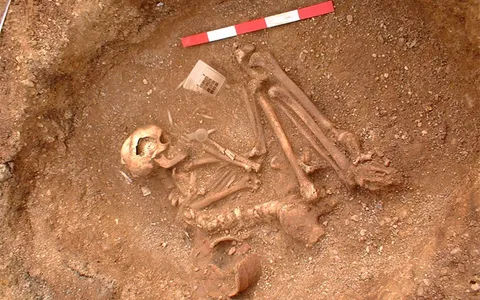
Archaeological Museum
.The museum was setup in 1976 in order to display the artifacts recovered from the excavation conducted from 1952 to 1961. The Museum has three galleries. In the…
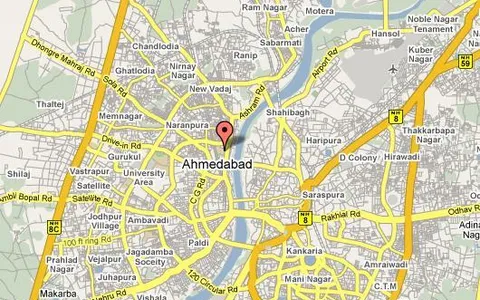
Arts And Crafts Museum
An arts and crafts museum it has a collection of arts and crafts objects of Gujarat and well known crafts of different states of India, including Indian textiles.
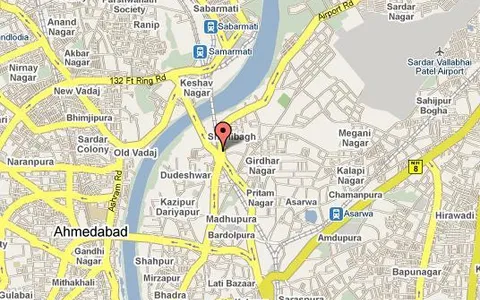
Calico Museum of Textiles
The textiles on display include court textiles used by the Mughal and provincial rulers of 15th to 19th centuries. Also on display are regional embroideries of the…