Archaeological Museum
.The museum was setup in 1976 in order to display the artifacts recovered from the excavation conducted from 1952 to 1961. The Museum has three galleries. In the front gallery depicts an artist’s conjectural idea of Harappan town of Lothal. There are also introductory write-ups and maps about the site. The gallery at left side has showcases with beads, terracotta ornaments, replicas of seal and sealings, shell and ivory objects, copper and bronze objects, tools and potteries yielded from…
Quick facts
| Nearest Petrol Pump from Archaeological Museum | Alakha Petrol pump:Limbdi,Gujarat,India |
|---|
About Archaeological Museum
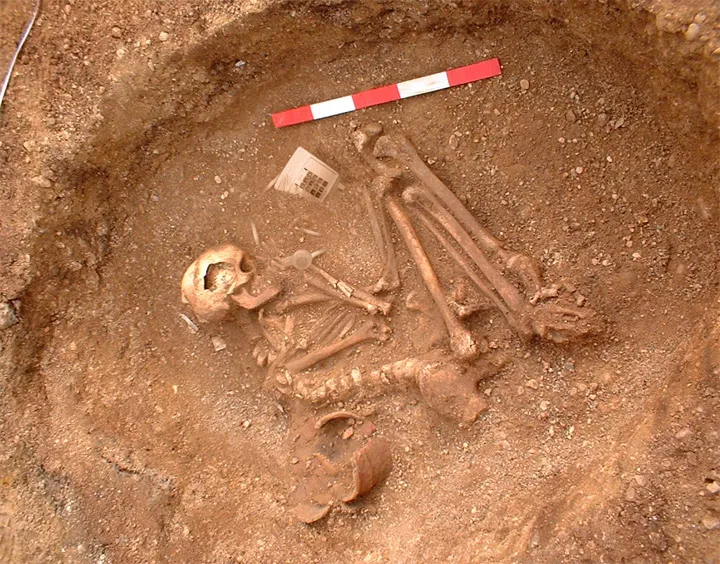
.The museum was setup in 1976 in order to display the artifacts recovered from the excavation conducted from 1952 to 1961. The Museum has three galleries. In the front gallery depicts an artist’s conjectural idea of Harappan town of Lothal. There are also introductory write-ups and maps about the site. The gallery at left side has showcases with beads, terracotta ornaments, replicas of seal and sealings, shell and ivory objects, copper and bronze objects, tools and potteries yielded from excavations. The gallery at right has game objects animal and human figurines, weights, painted potteries, objects recovered from burials and ritual objects, miniature potteries, bricks besides a replica of a joint burial and a scaled model of Lothal site. Out of the 5089 objects unearthed during the excavation, 800 objects are on display in the museum.
Apart from the exhibited antiquities, the most fabulous antiquities of Lothal are beads, steatite seals with unicorn motif and inscription, terracotta sealing with an elephant motif, Persian Gulf type seal, gold necklace copper / bronze fish hooks, bangles, dish on stand, perforated jar, jar painted with the stories of thirsty crow and cunning fox, terracotta bull, horse, model boat, model of mummy, ivory scale and shell compass, chess dice, etc.
Guys, this museum contains items from the dug up site of what was probably a port town of the Harappan civilization.. The Museum has three galleries. In the front gallery describes an artists divinatory idea of Harappan town of Lothal. There are also basic write-ups and maps about the site. The gallery at left side has demonstrates with beads, terracotta ornament
At the museum of Lothal, you will find finger rings, bangles, other shell and terracotta ornaments, more than 200 seals, etc. In the seals found in Lothal you will get portrayed animals like mythical unicorn, elephant, mountain goat, tiger and the mythical elephant bull. The people also seemed to worship fire god and did animal sacrifice. The sacrificial altars found in the site prove the point.
Interesting things to Visit
seals:
Lothal holds the third largest collection of seals and sealings, engraved on steatite, with animal and human figurines and letters from Indus script, but these remain undeciphered, so they do not provide as much insight into the material culture as the other findings. They do however show aspects of the spiritual culture; there are signs of worship of fire, and of the sea goddess, but not of the mother goddess.
Beads:
Lothal had a highly developed bead-making industry that has not been surpassed even by the modern Cambay craftspeople working 4000 years later. Lothal was famous for its micro-beads that were made by rolling ground steatite paste on string, baking it solid, and then cutting it with a tiny saw into the desired lengths. The expertise is evident in the micro-beads of gold under 0.25 mm in diameter which cannot be found anywhere else. The gold, like today, was most likely only for the upper classes, while the poorest citizens had to make do with shell and terracotta ornaments.
weights and measures:
Despite the vast area over which the Harappan culture spread, it developed an extraordinarily precise system of weights and measures, standardized across the empire, represented in the local materials at Lothal.
Underground drainage:
There were also 12 private paved baths on the upper town, probably for the ruling classes. These all show a remarkably forward thinking concern for hygiene and sanitation.On plan, Lothal stands 285 metres (935 ft) north-to-south and 228 metres (748 ft) east-to-west. At the height of its habitation, it covered a wider area since remains have been found 300 metres (1000 ft) south of the mound. Due to the fragile nature of unbaked bricks and frequent floods, the superstructures of all buildings have receded. Dwarfed walls, platforms, wells, drains, baths and paved floors are visible
Dock and warehouse:
The dockyard allowed ships to sluice from the sea, and expertly constructed lock gates allowed them to float while loading or unloading their cargo. Apparently the dockyard could, at that time, hold 30 ships of 60 tonnes, or 60 ships of 30 tonnes, a capacity comparable to that of the modern docks of Vishakapatnam. The dock allowed sea trade with West Asia, in particular, to expand greatly.
Nearest Visiting places from Archaeological Museum
When food and water are scarce in Nalsarovar, some birds go away for short periods to nearby areas and return to the lake after monsoon to a feast of fish and insects. These are the resident birds. The lake - Nalsarovar - and the wetlands around it were declared a bird sanctuary in 1969. Spread over 120 sq.kms, the lake and the extensive reed beds and marshes are an ideal habitat for aquatic plants and animals. The lake attracts a large variety of birds like plovers, sandpipers and stints.
Thol lake bird sanctuary:
Thol lake bird sanctuary is a shallow freshwater body surrounded by marshes on the edge and scrubby forest embarking the sides. The lake sanctuary covering an area of 7 square kilometers was declared officially in 1988 and is also known by the name of Thol Bird Sanctuary.
The shallow water reservoir speckled with reed beds gives it a distinct ambience while being an ideal dwelling for varied species of birds and insects. The agricultural land surrounding the lake provide ample amount of food for quite a number of birds while the hydrological ecosystem takes care of the others. One gets overwhelmed with flocks of bird flying together and crating graphical patterns on the sky while long-legged elongated necked cranes keep stalking for fishes and small insects. The still and serene ambience of the locale gets melodiously symphonized with the echoing of thousands birds and illustrated by the varied movements of these spirited creatures.
A visual treat for any tourist and a treasurable experience for a bird watcher or ornithologists, this place is home to more than 100 species of birds. Cranes, geese, flamingoes, pelicans, egrets, herons, spoonbills, ducks, whistling teals and many other migratory birds nest and breed in the lap of this natures exuberance. The most commonly noticed Indian Saras Crane with its long bare legs, elongated head and red head gracefully pecks insects while walking around the lake with dance like movements. This bird which flaunts the status of being the tallest flying bird on earth is often see in pairs and has over centuries inspired poets and artists with its elegance and beauty.
Hotels/Lodge/Accommodation nearby Archaeological Museum
**Hotel Shiv International:**SH 20,Surendra Nagar,Gujarat,India
**Hotel Jamna:**Limbdi,Surendranagar,Gujarat,India
Help Line/Phone Number
Copyright 2016 HolidayLandmark All rights reserved
Location info
-
**Address:**Archaeological Museum ,Lothal,Gujarat,India
-
**District:**Ahmedabad
-
Nearest City: Bavla
-
Language: Gujarati, Hindi.
-
Best time to visit: October to March
Climate & weather
Maximum temperature during summer hovers around 23°- 44°C while the minimum temperature during winter dips down to around 10°-36°C.
History of Archaeological Museum
The Archaeological Museum,it was discovered in the year 1954, but its excavation work began on the February 13, 1955, which continued till May 19, 1960.There are also introductory write-ups and maps about the site. The gallery at left side has showcases with beads, terracotta ornaments, replicas of seal and sealings, shell and ivory objects, copper and bronze objects, tools and potteries yielded from excavations
Things to do at Archaeological Museum
worshipped:
The people of Lothal worshipped a fire god, speculated to be the horned deity depicted on seals named Atha (Athar) and Arka, which is also evidenced by the presence of private and public fire-altars where sacrifices of animals and cattle were apparently conducted. Archaeologists have discovered gold pendants, charred ashes of terra-cotta cakes and pottery, bovine remains, beads and other signs that may indicate the practice of the Gavamayana sacrifice, associated with the ancient Vedic religion.
How to reach Archaeological Museum
-
**Nearest Railway Station:**Bhurkhi railway station,Bhavnagar to Ahmedabad railway line.
-
**Nearest Airport:**Ahmedbad (78 km),Airport
-
**Road Transport:**State and private buses are always available. Apart from this,Lothal is 78 km from Ahmedabad. Buses from Ahmedabad take 3 hours.
Best time to visit Archaeological Museum
October to March with pleasant temperatures.
Timings & opening hours
10:00 AM to 5:00 PM daily. May be closed on public holidays.
Entry fee & tickets
INR 10 to 20 for Indians.
Duration needed
1 to 2 hours.
Safety tips
Standard museum visit precautions. Follow museum rules regarding photography.
Things to carry
Camera (check photography policy). ID proof.
Nearest airport, railway & bus
Nearest airport and railway station in the nearest city.
Mobile network coverage
Airtel, Jio, and Vi all provide good coverage across Gujarat’s major cities and tourist areas. 4G is generally reliable in Ahmedabad, Vadodara, Surat, and along major highways. Coverage may be weaker in remote areas of Kutch and interior Saurashtra. Most hotels and cafes in tourist areas offer free Wi-Fi.
Food & restaurants nearby
Food options near the museum may be limited. The nearest town typically has restaurants and cafes. Carrying water is recommended — most museums do not allow food inside.
Nearest petrol pump
Petrol pump available in the city.
Frequently asked questions
What is Archaeological Museum? A museum in Gujarat.
What are the timings? 10:00 AM to 5:00 PM.
Is photography allowed? Check at the entrance.
Accessibility
Museum accessibility varies. Major museums in cities have level access or ramps at the entrance. Smaller, privately-run museums in older buildings may have steps and narrow doorways. Contact the museum in advance for specific accessibility information.
Rules & restrictions
Photography rules vary — some museums prohibit all photography, others allow photography without flash. Check signage at the entrance. Do not touch exhibits. Food and drinks are not permitted inside most museums. Large bags may need to be checked. Follow the designated visitor route and respect gallery closures.
Best photography spots
Check the museum’s photography policy before shooting — some prohibit all photography. For permitted photography, use available light — flash is rarely allowed. Focus on details: artefact textures, gallery compositions, and architectural features of the museum building itself.
Visitor information
Planning your visit to Archaeological Museum
- Language: Gujarati is the local language; Hindi and English are widely understood at tourist sites.
- Getting around: Auto-rickshaws, taxis, and state transport buses are readily available. Hiring a private vehicle is recommended for comfort.
- What to wear: Light cotton clothing in summer; light woolens in winter. Comfortable walking shoes are essential. Modest dress is advised at religious sites.
- Photography: Check for photography restrictions before entering. Some temples and museums may charge a separate camera fee.
- Best time to visit: October to March when the weather is pleasant for sightseeing.
- Local cuisine: Don’t miss Gujarati thali — a wholesome meal with dal, rice, vegetables, roti, and sweets like dhokla, khandvi, and mohanthal.
Nearby facilities
- ATMs: Available in nearby towns and at major tourist sites.
- Medical facilities: Primary health centers and hospitals can be found in district headquarters.
- Restrooms: Public restrooms are available at major tourist spots; carry hand sanitizer and tissues.
Make your visit to Archaeological Museum comfortable and hassle-free with these practical visitor tips for Gujarat.
Map & location view
Archaeological Museum is located in the vibrant state of Gujarat, India. The destination is accessible by road and is well-connected to major cities and towns in the region, making it a convenient addition to any Gujarat travel itinerary.
How to reach
- By Air: The nearest airport is connected to major Indian cities including Mumbai, Delhi, Ahmedabad, and Vadodara with regular domestic flights.
- By Rail: The nearest railway station is connected to the Indian railway network with regular trains from major cities across India.
- By Road: State transport buses, private taxis, and self-drive options are available from nearby cities. Gujarat has a well-maintained network of state highways and national highways.
Use GPS navigation or local maps to find the exact location of this destination in Gujarat. The Gujarat Tourism website provides additional travel resources for visitors.
Photo gallery
Visual highlights of Archaeological Museum
Visitors to Archaeological Museum will find plenty of photogenic spots worth capturing. From architectural details to natural landscapes, the destination offers diverse subjects for photography enthusiasts.
What to photograph:
- Architecture: Intricate carvings, structural details, and traditional Gujarati craftsmanship
- Landscapes: Surrounding natural beauty, gardens, and panoramic views of the Gujarat landscape
- Local life: Candid moments of visitors, vendors, and daily activities around the site
- Details: Close-up shots of carvings, paintings, decorative elements, and textures
Photography tips:
- Early morning (6:00 AM – 8:00 AM) and late afternoon (4:00 PM – 6:00 PM) offer the best natural light for photography in Gujarat’s climate
- Check if photography is allowed inside buildings before taking photos
- A wide-angle lens is ideal for capturing architectural grandeur at Gujarat’s heritage sites
- Mobile phone photography works well in well-lit outdoor areas
Browse through our collection of photographs showcasing the beauty and heritage of Archaeological Museum. New images are added regularly as part of our ongoing content enrichment for this Gujarat destination.
Photo gallery of Archaeological Museum
Video gallery
Related destinations
Arts And Crafts Museum
An arts and crafts museum it has a collection of arts and crafts objects of Gujarat and well known crafts of different states of India, including Indian textiles.
Calico Museum of Textiles
The textiles on display include court textiles used by the Mughal and provincial rulers of 15th to 19th centuries. Also on display are regional embroideries of the…
City Museum
The tourists can also get a glimpse of ancient art, pottery, woodcraft and frescoes of medieval India in the City Museum, Ahmedabad. There are historical evidences…