Kacchchh Museum
The Kutch Museum at Bhuj initially formed part of the School of Art established by Maharao Khengarji on 1st July, 1877. It is the oldest museum of Gujrat. At the time of Maharao Khengarji’s marriage, an exhibition of 5897 items were exhibited and items worth Rs. 3300 were given to the Museum which necessitated the construction of a new building.Accordingly, on 14th November, 1884, the foundation stone for the present museum building was laid. The building consisting of 2 floors cost Rs. 32000.…
About Kacchchh Museum
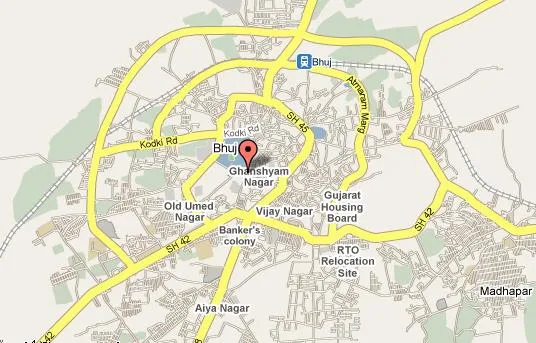
The Kutch Museum at Bhuj initially formed part of the School of Art established by Maharao Khengarji on 1st July, 1877. It is the oldest museum of Gujrat. At the time of Maharao Khengarji’s marriage, an exhibition of 5897 items were exhibited and items worth Rs. 3300 were given to the Museum which necessitated the construction of a new building.Accordingly, on 14th November, 1884, the foundation stone for the present museum building was laid. The building consisting of 2 floors cost Rs. 32000. The museum is situated almost on the banks of the beautiful Hamirsar lake and just opposite the Nazar Baugh garden.
On the ground floor of the museum, in the centre room, ‘Airavat’ is displayed. ‘Airavat’ is a carved, wooden, snow white Indian elephant with seven tusks. ‘Airavat’ was prepared in Mandvi in the 18th century in the worship of Tirthankar. The rest of its body is painted with flowers. The Indian Government issued a postal stamp showing ‘Airavat’ for the memory of this amazing ‘Airavat’.Kutch museum has a large number of varieties of Kshatrap inscriptions. The oldest Kshatrap inscription found in Andhau and the only Gujarati Abhir inscription of the 3rd century are the main attractions. This museum has almost 11 sections. The archeological section has Indus seals. Different kinds of stone tablets are available also. The painting showing the different vocations of Kutch are on the display. There is also an excellent section which covers classical and musical instruments like Nagfani, Morchang etc. put on the display of the museum.
Kutch museum has also a very fine collection of Kutchi silver and golden work, enamellings, textiles, wood work, coins, old utensils, arms and other archeological objects. Here, a section on the communications of the district is also available.Kutch museum opens daily (except Wednesdays, 2nd & 4th Saturdays of the month and public holidays) from 9 am to 12 pm and 3 pm to 6 pm. The entrance fee of this museum is Rs. 5 each. Photography and videography are allowed. Museum publications are on sale. Researchers can use the reference library.
The oldest in Gujarat and regarded as one of the best, this museum has an excellent collection.Sir James Ferguson, who was Governor of Bombay under the British Raj, the museum was earlier referred to as the Ferguson Museum. The museum broadly contains, a picture gallery, an anthropological section, an archeological section, textiles, weapons, musical instruments, a shipping section, and even stuffed animals
History of Kutch Museums
On 14th November, 1884, the foundation stone for the present museum building was produced by the Governor of Bombay, Sir James Fergusson. The two-story building was designed by the state engineer Mc Lelland and it cost about Rs. 32000. The museum remained the preserve of the Maharao who showed it only to his personal guests. The museum was opened to the public only on important religious occasions.
Interesting things to do
Kutch Utsav:
Kutch Utsav ia a journey into history. One visits India’s oldest traditional and cultural icons. For the children of urbania, an almost spiritual experience away from the stress, strife and claustrophobia of modern life.
Interesting things to Visit
Folk Museum:
The Folk Museum in Bhuj, India, is also known as Bharatiya Sanskruti Darshan, Bhuj. The Bhuj Folk Museum is situated in proximity to the office of the collector of Bhuj which makes it easily accessible by a variety of modes of transport. These include the services of the luxury coaches, auto-rickshaws, and taxis.One of the chief attractions of Folk Museum, Bhuj which you will hardly find in any of the other Museums in Bhuj, is a rare fossil of a Crocodilian which is which is an extinct species of the crocodile of the modern age. This creature was double the size of a crocodile of today measuring as much as 9 meters as compared to the modern species which measures only 3 to 4 meters in length.
Jama Masjid:
Jama Masjid in Bhuj is held auspicious by the people of the Muslim religion. The edifice is equally respected by people of any other caste or creed. The intricate designs on the walls of the mosque are worth seeing. All people who follow the Islamic religion come to the Jama Masjid at Bhuj to offer their prayers. People from all other caste can also come here to offer prayers or just to visit the mosque and get a glimpse of the beautiful design and the intricate patterns that are made on the wall. The Jama Masjid stands as a demonstration of the Islamic architecture. The Jama Masjid in Bhuj is noted for its beautifully designed minaret, the dome and the large prayer hall. The Jama Masjid of Bhuj also offers lessons on Islamic religion.
Swaminarayan Temple:
The Swaminarayan Temple, Bhuj is famous all over the world as one of the most spiritually highlighted temple in Bhuj. The Swaminarayan Temple was set by the BAPS, Bochasanwasi Akshar Purushottam Swaminarayan Sanstha as it is known. BAPS is an organization which operates by the philosophies of Swaminarayan. BAPS as an organization was established in the year 1907 by Shastriji Maharaj.The Swaminarayan Temple, Bhuj operates in the same way as all other temples which belong to the same organization. The Swaminarayan Temple of Bhuj is recognized for spiritual value, social work and the humanitarian service that they offer to the world. As all other temples that operate under BAPS, Swaminarayan Temple in Bhuj is also known for the beautifully carved stone temples.
Bharatiya Sanskruti Darshan:
Mr Ramsinhji K Rathod a scholar of the folk art of Kutch and winner of many state Government awards has created an excellent museum in Bhuj which is called Bharatiya Sanskruti Darshan. The museum epitomizes the rustic life styles of the Kutchi villager containing around 4500 exhibits. Also, there are more than 1500 rare books on art and culture.
The Little Rann of Kutch Wildlife Sanctuary: 93 kms from Ahmedabad and on an important route.
It has salt plains, caused by flooding of the Rann by sea, river and rain water; punctuated by highlands called beyts, above the monsoon flood mark where scrub flora and grasslands offer a refuge to wildlife. This is one of the largest wildlife sanctuaries in India, spanning some 4950 sq ft in area, and comprising a range habitats from saline desert plains, arid grasslands, rocky and thorn scrub to lakes and marshes. This is the only home for the endangered Asiatic Wild Ass, which is the member of wild horse family.
Mata Nu Madh:
The 1,200 years old temple with unique architectural expositions of dimensions and space.Madh or Mata-no-Madh is about 80 kilometers away from Bhuj and 43 kilometers away from Lakhpat. It is situated in the north-west of Bhuj and in the south-east of Lakhpat. Madh is bordered by hills on both banks of a small stream. Three of the coals-Gypsum, Mata nu Madh, KutchBauxite and Lignite were found here and they are still available in Madh. A division of some local religious importance, the Kapdis have their headquarters here in Madh. The village Mata-no-Madh has a temple of Ashapura Mata, the family goddess of the Raos of Kutch.
It is said that this temple was built in the beginning of the 14th century by two Karad Vanias, Ajo and Anagor, ministers of the father of Lakha Fulani. This temple of Ashapura Mata was completely destroyed by the earthquake of 1819. It was rebuilt in 1823 by Brahmakshatriya Sundarji Shivji and Vallabhaji. This temple is 58 feet long, 32 feet wide and 52 feet high. The temple has a large sized brass-bell weighing about 400 kg. It is also said that this temple was set up by Mir Gulamsha Kalora of Sind. In 1762 A.D., when his army attacked this temple, his soldiers became blind by the curse of the goddess Ashapura. Then, Gulamsha took a swear to set up a huge bell in the temple. Finally, his soldiers regained their sight and Gulamsha kept his words.
Nearest Visiting places from Kutch Museums
Mandvi:
Mandvi, founded in 1581 A.D. is an ancient seaport. The town has a very pleasant climate throughout the year and was a summer retreat of the Kutch Maharaos. Mandvi is situated about 78 Kms. from Bhuj. Mandvi Hawa Mahal is also imposing, and is reminiscent of similar palaces of royal traditions of Rajasthan. Mandvi is also a 400-year-old shipbuilding center. The Vijay Vilas Palace has its own private, maintained in an eco-friendly manner to preserve its pristine beauty. This palace has been used as the setting in many Hindi pictures and has now become a popular tourist destination.
Prag Palace:
The Prag Mahal, across the courtyard from the Aina Mahal, is a new marble and sandstone palace built at the end of the 19th century. Tourists can visit the Durbar Hall and the clock tower. There are paintings of former maharajas in the Durbar Hall. The Prag Mahal is a magnificent building made of ornate Italian marble and sandstone.
Narayan Sarovar:
A few kilometers away from the Narayan Sarovar is the Chin Kara Sanctuary. It is about 210 Kms. from Bhuj. This sanctuary is the home of the Chin Kara or the Indian gazelle. Other animals found in this sanctuary are blue bull, spotted deer, wild boar and a rich variety of smaller wildlife. Main Attractions are Blue Bull, Wild Boar.
Koteshwar:
Koteshwar, an important pilgrimage center for the Hindu religion, is at a short distance from Narayan Sarovar. Koteshwar-the western most tip of the country housing an ancient Shiva temple. It stands as a sentinel on the seashore, rising boldly from the sea that washes its western parts. The view of the sunset is excellent from here. The brass Nandi of the temple is an exquisite piece of art.
Dhrang:
Dhrang is about 40Km from Bhuj and it is known for the Samadhi of the famous Saint Makad Dada, who died here. Dada Makad was born in village called Nani Khombhadi. Dada Makad in his younger days specialized in rescuing people who where dying of thirst in the terrible wastes of the Rann. Makad Dada`s dog Motia would scent out the sufferers, his donkey Lalia would follow afterwards and would carry the sufferers to the shelter where the saint would care for them. Makad Dada is the St. Christopher of Kutch, the patron saint whose blessings assure a safe journey. When he became the Guru of Maharao Deshal, every one in Kutch knew that their ruler fully deserved the blessing which had come to him.
Tomb of Jesal Toral:
On tour to Gujarat you will come across magnificent sites of tourist attractions. You can distinguish one site from the other on the virtue of their architectural patterns. Be it a holy place, museum or forts and monuments in Gujarat all will cater to your aesthetic sense. In fact the elaborate works in the sites will be the veritable feast for your eyes. On a travel to Gujarat if you first arrive at Bhuj then several Hindu temples, attractive palaces and intricately engraved wooden pavilions will mesmerize you like anything. However from here you should take excursions to nearby famous places like Anjar and others. These places have many things to offer you and make your trip to Gujarat an unforgettable experience of life. On an excursion to Anjar you will first be taken to Tomb of Jesal Toral. The Tomb of Jesal Toral in Anjar is the one which has brought special recognition to this small town.
Banni/Khavda:
Desert lands of infinite dimensions. Here you will come across mater craft person’s expositioning in their traditional art. Banni is the last village on the border is a desert land of infinite dimensions, and in its midst, quaint little villages suspended in time. Here, will. The flamingo colony can be approached from Khavda by road and they’re after on camel back. Banni villages to experience tribal life of Kutch in various types like Meghawal, Harijans, Jat, and Mutva etc. the villages are visit here hodhka, dhoido, Khavda, ludia, bhindiarana, nirona, jurah, sumrasar etc.
Bhadreshwar:
One of the holiest pilgrim centres of Jain religion, here you will encounter some of the world’s truly unique architectural marvels. The tour will also cover stepwell, Sol Thambhi Mosque, Jagdu Shah Palace, Lal Shabhar Mosque, Chokunda Mahadev Temple and Kera temple - a visit that will expose you to many religious traditions of India, congregated in one region.
Kanthkot:
Kanthkot is an old fort about 5 km circularly situated on the top of an isolated rocky hill. This place was the capital of Kathis in 8th century and it was taken from them by the Chavdas. After the Chavdas, the Solankis came and after them the Vaghelas. Mod befriended Vaghela who not only gave Kanthkot but also his daughter in marriage to Mod’s son Sad. Sad lived in Kanthkot and made it his capital. Sad’s son Ful named the fort Kanthadurg. Bhimdev sought shelter from Mahmud of Ghazni in 11th century at Kanthkot. In 1816 it surrendered to the British who razed it to the ground. On the hill are remains of three temples of which one is dedicated to the ascetic Kanthadnath, the second a Jain temple and the third a temple of the sun.
Roha Fort:
Roha fort is situated on the hillock of the same name, 50 km from Bhuj. It’s height is 500 feet from the ground level and 800 feet from the sea level. Roha was the leading Jagir of Kutch state and there were 52 villages under this Jagir. Rao Khengarji I (1510-1585) established Kutch and became a ruler of Kutch. His brother Sahebji set up Roha village and died after a battle with Raysinhji Zala of Halvad. After his death his successor Jiyaji built two big tanks on the Roha Hill. His son built a fort on Roha hill. Thakore Kalapi was famous poet in Gujrat. He wrote romantic poems at Roha hill because atmosphere of Roha was peaceful and close to the nature with many peacocks and other birds which can be seen here even now. Roha is called Sumari Roha after the princesses of the Sumara state Umarkot in Sindh. Fleeing Allaudin Khilji the princesses sought asylum with Abda, who died fighting Allaudin. Consequently the princesses took Samadhi at Roha. The present Thakore of Roha, Thakore Virensinhji Saheb lives in Bhuj and would like to develop the Roha hill as a tourist point.
Tera Fort:
lies 85 km west of the town of Bhuj. Tera castle on the western edge of the state of Gujrat dominates the plains of Kutch from its position on the banks of Tretara (Three lakes) namely Chattasar, Sumerasar and Chatasar. Tera Jagir consisted of 41 villages and was one of the largest Jagirs of Kutch state. There are Ramayan wall paintings in the Tera castle. There are elaborate carved and beautiful paintings on glass in the Jain temple. Bandhani (tie & dye), Block printing, mirror work, Jats embroidery are the main crafts of this town. There are many of wild life animals chinkara, Blue Bull, Wild Boar, Hyena, The Great Indian Bustard, Peacock, Black partridge, etc. A very famous Mahadev temple Pinglaswar is 35 km far from Tera.
Hotels/Lodge/Accommodation nearby Kutch Museums
**Hotel Abha International:**Bhuj,Kutch,Gujarat,India
Help Line/Phone Number
Copyright 2016 HolidayLandmark All rights reserved
Location info
-
**Address:**Kutch Museums,Kutch,Gujrat,India
-
District: Kutch
-
Nearest City: Bhuj
-
Language: Gujarati, Hindi.
-
Best time to visit: October to March
Climate & weather
Weather of Kutch is tropical monsoon with an average annual rainfall of approximately 14 inches. In Summer temperature can reach up to 48°c. In Winter temperature ranges from 12 °c to 27 °c.
How to reach Kacchchh Museum
**Nearest Railway Station:**New Bhuj Railway Station is 1 km north of Bhuj. Direct trains ply on the metre gauge line from Ahmedabad and on the broad gauge line for Mumbai.
- **Nearest Airport:**Bhuj is connected by air with Mumbai and Ahmedabad. The Indian Airlines is Jet Airways have daily flights to Mumbai.
**Road Transport:**State roadways buses as well as private buses. There is good bus service for Ahmedabad (7-hour trip) and to other towns in Gujarat and Rajasthan. There are regular buses for villages around Bhuj.
Best time to visit Kacchchh Museum
October to March with pleasant temperatures.
Timings & opening hours
10:00 AM to 5:00 PM daily. May be closed on public holidays.
Entry fee & tickets
INR 10 to 20 for Indians.
Duration needed
1 to 2 hours.
Safety tips
Standard museum visit precautions. Follow museum rules regarding photography.
Things to carry
Camera (check photography policy). ID proof.
Nearest airport, railway & bus
Nearest airport and railway station in the nearest city.
Mobile network coverage
Airtel, Jio, and Vi all provide good coverage across Gujarat’s major cities and tourist areas. 4G is generally reliable in Ahmedabad, Vadodara, Surat, and along major highways. Coverage may be weaker in remote areas of Kutch and interior Saurashtra. Most hotels and cafes in tourist areas offer free Wi-Fi.
Food & restaurants nearby
Food options near the museum may be limited. The nearest town typically has restaurants and cafes. Carrying water is recommended — most museums do not allow food inside.
Nearest petrol pump
Petrol pump available in the city.
Frequently asked questions
What is Kacchchh Museum? A museum in Gujarat.
What are the timings? 10:00 AM to 5:00 PM.
Is photography allowed? Check at the entrance.
Accessibility
Museum accessibility varies. Major museums in cities have level access or ramps at the entrance. Smaller, privately-run museums in older buildings may have steps and narrow doorways. Contact the museum in advance for specific accessibility information.
Rules & restrictions
Photography rules vary — some museums prohibit all photography, others allow photography without flash. Check signage at the entrance. Do not touch exhibits. Food and drinks are not permitted inside most museums. Large bags may need to be checked. Follow the designated visitor route and respect gallery closures.
Best photography spots
Check the museum’s photography policy before shooting — some prohibit all photography. For permitted photography, use available light — flash is rarely allowed. Focus on details: artefact textures, gallery compositions, and architectural features of the museum building itself.
Quick facts
- Type: museums
- Location: Gujarat, India
- Ideal for: History enthusiasts, cultural travelers, and photographers
- Best time to visit: October to March (pleasant winter season)
- Photography: Allowed at most areas; some sites may have restrictions inside sanctums
Plan your visit to Kacchchh Museum with these essential quick facts for a smooth and enjoyable trip to Gujarat.
Visitor information
Planning your visit to Kacchchh Museum
- Language: Gujarati is the local language; Hindi and English are widely understood at tourist sites.
- Getting around: Auto-rickshaws, taxis, and state transport buses are readily available. Hiring a private vehicle is recommended for comfort.
- What to wear: Light cotton clothing in summer; light woolens in winter. Comfortable walking shoes are essential. Modest dress is advised at religious sites.
- Photography: Check for photography restrictions before entering. Some temples and museums may charge a separate camera fee.
- Best time to visit: October to March when the weather is pleasant for sightseeing.
- Local cuisine: Don’t miss Gujarati thali — a wholesome meal with dal, rice, vegetables, roti, and sweets like dhokla, khandvi, and mohanthal.
Nearby facilities
- ATMs: Available in nearby towns and at major tourist sites.
- Medical facilities: Primary health centers and hospitals can be found in district headquarters.
- Restrooms: Public restrooms are available at major tourist spots; carry hand sanitizer and tissues.
Make your visit to Kacchchh Museum comfortable and hassle-free with these practical visitor tips for Gujarat.
Map & location view
Kacchchh Museum is located in the vibrant state of Gujarat, India. The destination is accessible by road and is well-connected to major cities and towns in the region, making it a convenient addition to any Gujarat travel itinerary.
How to reach
- By Air: The nearest airport is connected to major Indian cities including Mumbai, Delhi, Ahmedabad, and Vadodara with regular domestic flights.
- By Rail: The nearest railway station is connected to the Indian railway network with regular trains from major cities across India.
- By Road: State transport buses, private taxis, and self-drive options are available from nearby cities. Gujarat has a well-maintained network of state highways and national highways.
Use GPS navigation or local maps to find the exact location of this destination in Gujarat. The Gujarat Tourism website provides additional travel resources for visitors.
Photo gallery
Visual highlights of Kacchchh Museum
Visitors to Kacchchh Museum will find plenty of photogenic spots worth capturing. From architectural details to natural landscapes, the destination offers diverse subjects for photography enthusiasts.
What to photograph:
- Architecture: Intricate carvings, structural details, and traditional Gujarati craftsmanship
- Landscapes: Surrounding natural beauty, gardens, and panoramic views of the Gujarat landscape
- Local life: Candid moments of visitors, vendors, and daily activities around the site
- Details: Close-up shots of carvings, paintings, decorative elements, and textures
Photography tips:
- Early morning (6:00 AM – 8:00 AM) and late afternoon (4:00 PM – 6:00 PM) offer the best natural light for photography in Gujarat’s climate
- Check if photography is allowed inside buildings before taking photos
- A wide-angle lens is ideal for capturing architectural grandeur at Gujarat’s heritage sites
- Mobile phone photography works well in well-lit outdoor areas
Browse through our collection of photographs showcasing the beauty and heritage of Kacchchh Museum. New images are added regularly as part of our ongoing content enrichment for this Gujarat destination.
Photo gallery of Kacchchh Museum
Video gallery
Related destinations
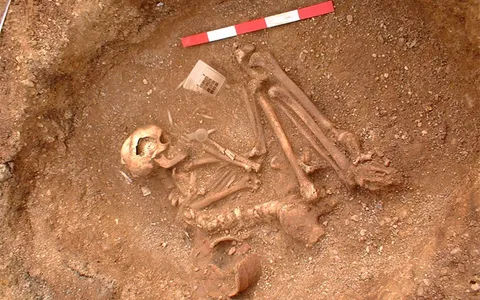
Archaeological Museum
.The museum was setup in 1976 in order to display the artifacts recovered from the excavation conducted from 1952 to 1961. The Museum has three galleries. In the…
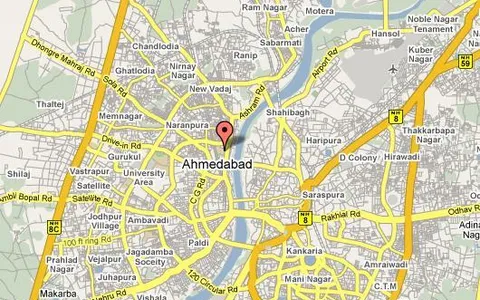
Arts And Crafts Museum
An arts and crafts museum it has a collection of arts and crafts objects of Gujarat and well known crafts of different states of India, including Indian textiles.
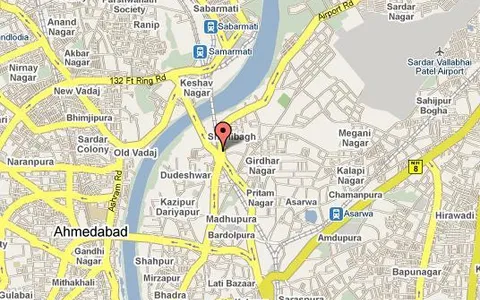
Calico Museum of Textiles
The textiles on display include court textiles used by the Mughal and provincial rulers of 15th to 19th centuries. Also on display are regional embroideries of the…