Lakhota Palace
One of the most striking relics of the rich past of regal India, a Tour To Jamnagar is considered to be a definite must have if you are planning a tour itinerary to Gujarat. Almost the entirety of the erstwhile princely state of Jamnagar is still alive, resplendent in the rich glory of the times gone by, standing as a mute witness to the era of richness which still heavily influences the way of life of not just Jamnagar but the entirety of the province of Gujarat as well. Home to a history,…
About Lakhota Palace
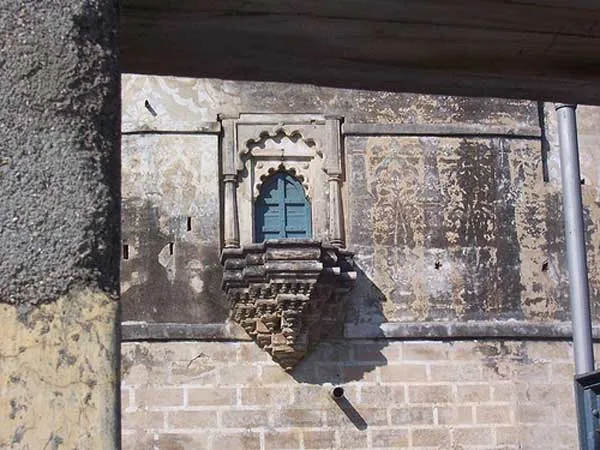
One of the most striking relics of the rich past of regal India, a Tour To Jamnagar is considered to be a definite must have if you are planning a tour itinerary to Gujarat. Almost the entirety of the erstwhile princely state of Jamnagar is still alive, resplendent in the rich glory of the times gone by, standing as a mute witness to the era of richness which still heavily influences the way of life of not just Jamnagar but the entirety of the province of Gujarat as well. Home to a history, which the city proudly protects even today, the long list of the various Forts and Monuments Of Jamnagar are led by, perhaps, the exotic beauty of the Lakhota Palace, Jamnagar.
The Lakhota Palace, Jamnagar is connected to the town with an arched stone bridge with balustrade. Today the palace also houses a small museum. It has on display the sculptures from 9th to 18th century. You will also find here pottery that has been recovered from the ruined medieval villages. The museum at Lakhota Palace in Jamnagar, Gujarat can be visited daily except on Wednesdays when it remains closed. The museum is reached by a short causeway from the Ranmal Lake.
Interesting things to Visit
Lakhota Fort:
This small palace, on an island in the middle of the Lakhota lake, once belonged to the Maharaja of Nawanagar. This fort like palace has semi-circular bastions, turrets, a pavilion with guard-rooms housing swords, powder flasks and musket loops. An arched stone- bridge with balustrade connects the Lakhota Palace with the town. Today it houses a small museum. The fort museum has a good collection of sculptures that spans a period from the 9th to18th century and pottery found in ruined medieval villages from the surrounding area. The museum is reached by a short causeway from the northern side of Ranmal Lake and is open daily except on Wednesdays.
Willingdon Crescent:
The impressive Willingdon crescent was constructed by Jam Ranjit Singh, inspired by his European journey. It comprises arcades of cusped arches, larger on the ground floor and smaller on the upper storey, pilasters on the curving walls, and balusters on the parapet. The statue of Jam Saheb is situated in the centre of the crescent. Gujarat Earthquake in 2001 has caused only a slight damage to this shopping area.
Pratap Vilas Palace:
The beautiful Pratap Vilas Palace, built during the rule of His Royal Highness Jam Ranjitsinhji, is a distinct place to visit for a variety of reasons. It has European architecture with Indian carvings that give it a totally distinct appeal. It was built as a mimic of Victoria Memorial Building of Calcutta but the domes built on it are according to Indian architecture, out of which 3 domes are made of glass. Carvings of creepers, flowers, leaves, birds and animals on the columns make the palace lively. Damage in the 2001 earthquake has caused a costly loss of some parapets, and the separation of some upper walls at the roof level in some corners. Timings : 10 am to 5 pm.
Kotha Bastion:
The Kotha Bastion is Jamnagar’s prize possession. It has a fine collection of sculptures, coins, inscriptions and copper plates and the skeleton of a whale. One of its most interesting sights is an old well where the water can be drawn by blowing into a small hole in the floor.
Dhanvantri Mandir:
Dhanvantri Mandir was built under the personal supervision of Dr. Pranjivan Manekchand Mehta, Chief Medical Officer of Guru Govindsingh Hospital. After independence it gained the status of Ayurveda University. It has a good library, workshop and been a place of research and international seminars on Ayurveda- an ancient Indian medicinal system.
Solarium:
Also known as the Ranjit Institute of Poly-Radio Therapy, the Solarium was built by Jam Shri Ranjitsinhji during his rule by bringing in an expert from France. This slowly revolving tower provides full daylong sunlight for the treatment of skin diseases. With the destruction of two similar solaria in France during World War II, this is probably now the only one of its kind in the world, and certainly in Asia. It is open to visitors after working hours.
Bhujio Kotho:
Bhujio Kotho enjoys a distinct place among the tourists because of its height and circumference. It is on the bank of the Lakhota Tank, near Khambholiya Gate. This monument having five floors was believed to be constructed for protection during the invasions. On the first floor there are guns placed in each directions and in the walls, holes are made to place the rifles. On the upper floor a tank is constructed to store water and on its peak a dancing peacock is placed.
Shantinath Mandir:
Shantinath Mandir is situated, south-west of Bedi Gate, in Jamnagar. The temple has intricate carvings and the walls are adorned with fine murals, which depict the life of Jain saints. The floor is made of marble and decorated with distinctive Jain patterns in yellow, black, white and red.
Vardhman Shah’s Temple:
Vardhman Shah’s Temple is a delightful shrine and one of the four main Jain temples in Jamnagar. The foundation stone of this shrine was laid in 1612, during the reign of Jam Jasaji I and was completed in the year 1620. Fifty two very small temples or ‘Deri’ were built around the temple in 1622.
Bala Hanuman Temple:
The Bala Hanuman Temple is on the south-eastern side of Ranmal Lake. The temple is famous for the continuous 24-hour chanting of the mantra ‘Sri Ram, Jai Ram, Jai Jai Ram’, since August 1, 1964. This devotion has earned Bala Hanuman Temple a place in the Guinness Book of Records. Thousands of devotees visit the temple every year. Early evening is particularly a good time to visit the temple.
Khijadia Bird Sanctuary:
Khijadia Bird Sanctuary, located 10 km north east of Jamnagar, represents the combination of seasonal freshwater shallow lake, inter-tidal mudflats, creeks, saltpans, saline land and mangrove scrub. The place is a known breeding ground of the Great Crested Grebe. Apart from it, Little Grebe, Purple Moorhen, Coot, Black-winged Stilt and Pheasant-tailed Jacana are also recorded breeding here. Raptors, including harriers, eagles, hawks and falcons are also spotted here. The sanctuary also shelters migratory birds such as swallows, martins, wagtails and various waterfowls. It is considered as an important site for ecological research and education.
Marine National Park:
India’s first marine sanctuary, the park is situated almost 16 nautical miles away in Great Arabian Sea near Jamnagar and spreads over an area of about 458 km2. Located at about 7 km from the city centre, the park comprises an archipelago of 42 islands noted for their coral reefs and mangroves. It is possible to see dolphins, finless porpoise and sea turtles and a variety of colourful tropical fish. The entire forest have various marine lives. The area also attracts a host of water birds. The best period to visit is October to March. Read more details..
Rozi and Bedi Ports:
Rozi and Bedi are two prominent ports along the shores of the mighty Arabian Sea. These attractive seaside picnic spots offer excellent facilities for fishing and angling.
Cremation Park:
Cremation park is situated 10 minutes north of the city centre. The park holds statues of saints and deities, as well as scenes from the Ramayana. This is an interesting place to visit. The circle of life showing the stages in life of man is also thought evoking.
Lakhota Museum:
The History of Jamnagar states that the city was built by Jam Rawal in the year 1540. He belonged to one of the most respected Royal dynasties of Gujarat. It is after Jam Rawal, that the city of Jamnagar gets its name. The previous name for the city was Nawagarh, which can be literally translated to mean “New City”. The Lakhota Palace in Jamnagar in Gujarat in India was built by the Jam dynasty as a royal munitions store, which could come handy during the times of war.
Nearest Visiting places from Lakhota Palace
Dwarka:
The sacred town of Dwarka, one of the main centers of the Krishna legend, 145 Kms. from Jamnagar, sits on the western most tip of the Gujarat peninsula, a sentinel over looking the Arabian Sea.Archaeological excavations show that present day Dwarka is the 6th city on this site, the earlier five having been submerged in the sea. The inner sanctum of the main Dwarkadhish Temple-known as the Nij Mandir - dates back 2,500 years. Legend has it Lord Krishna left Mathura and settled in the Western part of India with his Yadava clan and built a golden city and named it Dwarika. Dwarkanath, the main temple here, is dedicated to Krishna.
Junagadh:
Junagadh is situated in the western state of Gujarat at the foothills of the Girnar Hills. The city of Junagarh takes its name from the fort that encloses the old city. Junagarh was an important trade center as testified by the Ashokan edicts dating from 250 BC. The present-day city has many archeological sites and historical monuments that reflect the rich history of the place.
Sasan Gir:
Sasan Gir Lion Sanctuary, which lies on the southwestern fringes of the Saurashtra Peninsula (west-central India), is the last home of some 300 Asiatic lions. It was created in 1913 to protect the largest surviving groups of the Asiatic lions. It was given a sanctuary status in 1965. The vegetation in the area consists of teak with a mixture of deciduous trees, including sal (Shorea), dhak (Butea frondosa), and thorn forests. A few springs also exist, but their flow is rather eccentric depending upon the season. Gir Forest is today the only place in the world outside Africa, where the lion can be seen in his natural habitat.
Bhuj (Kachchh):
The capital of erstwhile state of Kachchh, Bhuj is the Headquarter of the district and the most important city of this region. Kachchh is famous the world over for its sturdy horses, cows and the Bandhini (tie and dye) saris.The Museums, Palaces, Cenotaphs, Lakes, colorful bazaars and fascinating handicrafts make Bhuj a real paradise for visitors. Bhuj is 411 km. from Ahmedabad via Rajkot by road. It is also linked with Ahmedabad by rail. There is a direct fight to Bhuj from Bombay. There are many good hotels and a Circuit House for visitor’s stay.
Hotels/Lodge/Accommodation nearby Lakhota Palace
**Hotel President:**Teen Batt,Jamnagar,India
Location info
-
**Address:**Lakhot Palace,Jamnagar,Gujrat,India
-
District: Jamnagar
-
Nearest City: Jamnagar
-
Language: Gujarati, Hindi.
-
Best time to visit: October to March
Climate & weather
Summer temperature ranges from 24-C to 42-C and Winter temperature ranges from 10-C to 24-C.
History of Lakhota Palace
The History of Jamnagar states that the city was built in the year 1540, by Jam Rawal, who belonged to one of the most respected Royal dynasties of Gujarat. It is after Jam Rawal, that the city of Jamnagar was renamed to its present name. The previous name for the city was Nawagarh, a name which can be literally translated to mean New City. The Lakhota Palace in Jamnagar in Gujarat in India was built by the Jam dynasty as a royal arsenal, which could come handy in times of war.
Things to do at Lakhota Palace
Culture:
Most residents of Jamnagar are Gujarati and speak Gujarati language. A small percentage speak Kachchi language which is written in the Gujarati script but is not mutually intelligible with Gujarati. Kathiawadi Language (which is a variant of Gujarati)is widely used for day to day communication. Major communities include Dawoodi Bohras Satvara(dalvadi)Ahirs(Yadav), Patels , Bhanushalis , Rajputs (Darbars), Mers , Jains, Lohanas etc.
How to reach Lakhota Palace
-
**Nearest Railway Station:**Jamnagar is directly connected with Ahmedabad and Bombay railway line.
-
**Nearest Airport:**Indian Airlines service connects Jamnagar with Bombay and Bhuj
-
**Road Transport:**Sate connected Jamnagar to Palitana 246 km, Rajkot 86 km, Ahmedabad 304 km, Somnath 257 km, Dwarka 148 km.
Nearest petrol pump
- **Panchvati petrol pump:**rishikesh apartment, behind viral bag, palace road,jamnagar,Gujrat,Inaia
Helpline & emergency contacts
-
**Police Station:**100
-
Nearest Hospital:
Indu Madhu Hospital:Jamnagar,Gujarat,India
V.M.Shah Hospital:Jamnagar,Gujrat.India -
Society/Community Phone Number:
-
**Links:**www.planetware.com
Best time to visit Lakhota Palace
October to March with pleasant temperatures.
Timings & opening hours
9:00 AM to 5:00 PM daily.
Entry fee & tickets
No entry fee or nominal fee.
Duration needed
1 to 2 hours.
Safety tips
Follow site guidelines. Wear comfortable footwear. Carry water.
Things to carry
Camera, water bottle, hat.
Nearest airport, railway & bus
Nearest airport and railway station in the nearest city.
Mobile network coverage
Airtel, Jio, and Vi all provide good coverage across Gujarat’s major cities and tourist areas. 4G is generally reliable in Ahmedabad, Vadodara, Surat, and along major highways. Coverage may be weaker in remote areas of Kutch and interior Saurashtra. Most hotels and cafes in tourist areas offer free Wi-Fi.
Food & restaurants nearby
Food options are available in the nearest town. Traditional Gujarati thali restaurants and local eateries offer a range of vegetarian dishes.
Frequently asked questions
What is Lakhota Palace? A historical site in Gujarat.
What is the best time to visit? October to March.
What are the timings? Generally 9:00 AM to 5:00 PM.
Accessibility
Accessibility information is not currently available for this site. Contact the venue directly or check with your accommodation for the latest accessibility details.
Rules & restrictions
Standard visitor rules apply. Check locally for any specific restrictions at this site.
Best photography spots
The best photography spots are typically during the golden hours (early morning and late afternoon). Scout the location first to identify the best angles, and consider the direction of light at different times of day.
Quick facts
- Type: historical-places
- Location: Gujarat, India
- Ideal for: History enthusiasts, cultural travelers, and photographers
- Best time to visit: October to March (pleasant winter season)
- Photography: Allowed at most areas; some sites may have restrictions inside sanctums
Plan your visit to Lakhota Palace with these essential quick facts for a smooth and enjoyable trip to Gujarat.
Visitor information
Planning your visit to Lakhota Palace
- Language: Gujarati is the local language; Hindi and English are widely understood at tourist sites.
- Getting around: Auto-rickshaws, taxis, and state transport buses are readily available. Hiring a private vehicle is recommended for comfort.
- What to wear: Light cotton clothing in summer; light woolens in winter. Comfortable walking shoes are essential. Modest dress is advised at religious sites.
- Photography: Check for photography restrictions before entering. Some temples and museums may charge a separate camera fee.
- Best time to visit: October to March when the weather is pleasant for sightseeing.
- Local cuisine: Don’t miss Gujarati thali — a wholesome meal with dal, rice, vegetables, roti, and sweets like dhokla, khandvi, and mohanthal.
Nearby facilities
- ATMs: Available in nearby towns and at major tourist sites.
- Medical facilities: Primary health centers and hospitals can be found in district headquarters.
- Restrooms: Public restrooms are available at major tourist spots; carry hand sanitizer and tissues.
Make your visit to Lakhota Palace comfortable and hassle-free with these practical visitor tips for Gujarat.
Map & location view
Lakhota Palace is located in the vibrant state of Gujarat, India. The destination is accessible by road and is well-connected to major cities and towns in the region, making it a convenient addition to any Gujarat travel itinerary.
How to reach
- By Air: The nearest airport is connected to major Indian cities including Mumbai, Delhi, Ahmedabad, and Vadodara with regular domestic flights.
- By Rail: The nearest railway station is connected to the Indian railway network with regular trains from major cities across India.
- By Road: State transport buses, private taxis, and self-drive options are available from nearby cities. Gujarat has a well-maintained network of state highways and national highways.
Use GPS navigation or local maps to find the exact location of this destination in Gujarat. The Gujarat Tourism website provides additional travel resources for visitors.
Photo gallery of Lakhota Palace
Video gallery
Related destinations
Aina Mahal
The Aina Mahal in Bhuj is an old palace that was built in the 18th century. The erstwhile palace which belonged to Maharao Lakhpatji has now been transformed into a…
Capital Complex
A domed building on a podium in the middle of the lake inside, the campus is known as the Vithalbhai Patel Bhavan which houses the Vidhan Sabha and the legislature…
Gandhi Ashram
The Gandhi Ashram Ahmedabad is situated on the banks of the Sabarmati River. It used to the nerve center for the Indian Freedom movement. During the lifetime of…