MOTOSHARE 🚗🏍️
Rent Bikes & Cars Directly from Owners
Motoshare connects vehicle owners with people who need bikes and cars on rent. Owners earn from idle vehicles, and renters get flexible ride options.
Visit Motoshare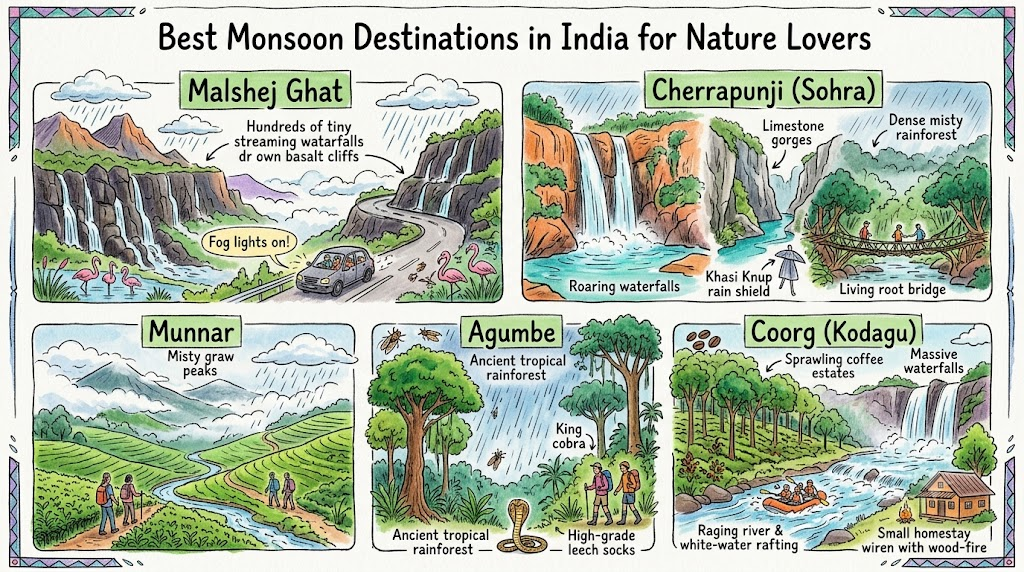
Introduction
When the first heavy raindrops hit the parched Indian soil, the collective instinct of the urban traveler is often to check flight tickets to predictable, concrete-heavy holiday resorts. But for those who crave the raw, unfiltered theater of the natural world, the Indian monsoon offers something far more profound. Instead of hiding from the downpour in overcrowded commercial malls, true travelers seek out places where the rain behaves like an artist, transforming dusty landscapes into dripping, neon-green wonderlands. This guide bypasses the typical, sanitized vacation spots to immerse you in regional pockets where deep cultural roots, ancient geography, and the sheer power of the Indian monsoon unite to create an unforgettable sensory experience.
Why India’s Monsoon Circuits are a Must Visit
The Indian subcontinent during the rainy season (typically spanning from June to September) undergoes a geographical rebirth that has shaped its history, folklore, and agricultural soul for millennia. From the basalt cliffs of the Western Ghats—a UNESCO World Heritage site older than the Himalayas—to the hyper-humid valleys of Meghalaya, the monsoon unlocks ecological spectacles that remain completely invisible during the dry summer months. Waterfalls that dry up to a trickle suddenly roar to life with terrifying majesty, and misty cloud covers descend so low they wrap around hill stations like a soft blanket.
The Western Ghats in full monsoon bloom.
Navigating these rain-washed corridors has become increasingly seamless for all types of travelers. Modernized national highways, robust mountain railway networks, and a flourishing network of eco-resorts mean that whether you are a solo backpacker or a family traveling with children, you can access the heart of the wilderness without sacrificing basic comfort. Below is a macro-level snapshot of the premier regional monsoon circuits across the country.
| Circuit Region | Primary State | Distinct Environmental Landscape | Signature Monsoon Phenomenon |
|---|---|---|---|
| The Sahyadri Corridor | Maharashtra | Basalt plateaus, deep gorges, and historic hill forts | Thousands of temporary roadside waterfalls and dense fog |
| The Malabar Highlands | Kerala | Layered tea plantations, shola forests, and deep valleys | High-altitude petrichor and mist-shrouded spice routes |
| The Khasi Hills Circuit | Meghalaya | Limestone caves, deep gorges, and living root bridges | World-record rainfall and pristine, swollen river channels |
| The Coorg Highlands | Karnataka | Coffee estates, dense bamboo forests, and river islands | Heavy, romantic downpours and rushing river rapids |
Best Places or Experiences
Malshej Ghat
Nestled high up in the rugged Sahyadri range, Malshej Ghat is a dramatic mountain pass that serves as a sanctuary for those who want to experience the raw fury and beauty of the Maharashtra monsoon. The entire landscape is a masterclass in volcanic geology, where dark basalt rock walls contrast sharply with the vibrant, almost neon-green flora that sprouts overnight after the first rains. As you drive through the winding roads, cloud banks drift directly across the asphalt, completely obscuring visibility one moment and revealing hundreds of silver water streaks cascading down the cliffs the next.
Beyond its scenic drives, this region holds deep historical and ecological value. It lies in close proximity to the birthplace of Chhatrapati Shivaji Maharaj (Shivneri Fort), anchoring it firmly in Maratha history. For wildlife enthusiasts, the area undergoes a remarkable transformation as it welcomes migratory birds, most notably flocking pink flamingos that make the nearby Pimpalgaon Joga Dam their temporary monsoon home.
The vibrant green canvas of high-altitude hill stations.
- Location: Pune/Thane district border, approximately 130 km from Mumbai and 120 km from Pune.
- Why it is worth visiting: It offers one of the highest concentrations of seasonal waterfalls in the Western Ghats alongside unique monsoon bird-watching opportunities.
- Best things to do: Walk through the misty corridors of Harishchandragad fort, spot seasonal bio-luminescent fungi on night trails, and watch the reverse waterfall phenomenon near the main plateau edge.
- Best time to visit: July to September, specifically early morning when the fog behaves like a moving sea.
- Ideal for whom: Trekkers, photography enthusiasts, road-trippers, and nature lovers.
- Travel tip: The pass is prone to heavy fog and sporadic rockfalls; ensure your vehicle’s fog lights are operational and avoid stopping directly under unstable overhanging cliffs.
Cherrapunji (Sohra)
Perched high on a sub-plateau in the East Khasi Hills, Cherrapunji—historically and locally known as Sohra—is a place where rain is not a seasonal event but a cultural identity. The geography here creates a unique funneling effect for monsoon clouds rising from the plains of Bangladesh, resulting in some of the highest recorded rainfalls on Earth. The landscape is defined by breathtakingly deep limestone gorges, vertical cliffs, and massive plunging waterfalls like Nohkalikai, which drops down a sheer rock face into a pool of deep turquoise water.
The local Khasi people have lived in harmony with this extreme moisture for generations, developing indigenous bio-engineering marvels like living root bridges to cross swollen torrents. Walking through the wet pine forests of Sohra feels like stepping into an ancient, primeval world where every surface is covered in thick moss and rare orchids.
The dramatic waterfalls of the East Khasi Hills.
- Location: East Khasi Hills District, 54 km south of the state capital, Shillong.
- Why it is worth visiting: To experience the unparalleled scale of the wettest place on Earth and witness waterfalls operating at maximum hydraulic power.
- Best things to do: Trek down the steep valley steps to see the Double Decker Living Root Bridge in Nongriat, explore the dripping stalactites inside Mawsmai Cave, and stand at the Eco Park viewpoint to see the plains of Bangladesh stretching out below.
- Best time to visit: June to August for peak waterfall power; September for slightly clearer views between rain showers.
- Ideal for whom: Adventure hikers, seasoned backpackers, and cultural explorers.
- Travel tip: Standard umbrellas are useless against the slanting rain here; buy a traditional Khasi knup (a turtle-shell shaped woven bamboo rain shield) or bring high-grade heavy-duty rain ponchos.
Munnar
While Munnar is a famous summer getaway, the monsoon strips away the tourist crowds and unmasks its true, tranquil identity. The endless, rolling hills covered in neat rows of tea bushes take on an incredibly rich emerald hue, glistening constantly under soft, persistent rain showers. The damp mountain air becomes heavily saturated with the scent of wet earth, crushed tea leaves, and wild cardamom from the nearby spice plantations.
The geological layout of Munnar features deep valleys and high peaks like Anamudi, which stay perpetually wrapped in thick rain clouds. Streams that are usually quiet during the summer become rushing torrents, cutting through the tea estates and feeding into expansive reservoirs like Mattupetty and Kundala.
- Location: Idukki District, Kerala, around 110 km from Cochin International Airport.
- Why it is visit worthy: The visually stunning contrast of perfectly manicured green tea carpets rolling under dramatic, moody monsoon skies without the usual tourist rush.
- Best things to do: Take a slow rain walk through the Lakshmi Hills trail, watch the mist rise over the Attukad Waterfalls, and sample freshly brewed hot single-origin tea at a local estate factory while watching the downpour.
- Best time to visit: June to September for the full monsoon transformation.
- Ideal for whom: Couples looking for a romantic retreat, slow travelers, and landscape photographers.
- Travel tip: Mountain roads in Idukki can get incredibly slick and are prone to minor mudslides; avoid driving late at night when visibility drops to near zero.
Agumbe
Often referred to as the “Cherrapunji of the South,” Agumbe is a tiny, pristine hamlet nestled deep within the central Western Ghats of Karnataka. This region is wrapped in dense, low-altitude tropical evergreen rainforests that receive staggering amounts of rainfall every single year. The moisture fosters an incredibly rich ecosystem, making it a globally recognized hotspot for biodiversity and home to the Agumbe Rainforest Research Station (ARRS).
The air here feels ancient and alive, ringing with the symphonies of cicadas and endemic amphibians that emerge only during the wet months. Agumbe is also famously the natural habitat of the majestic King Cobra, adding an aura of thrilling wilderness to every trail.
- Location: Shimoga District, Karnataka, approximately 350 km from Bengaluru and 95 km from Mangaluru.
- Why it is worth visiting: It is the ultimate destination for raw rainforest exploration, macro-photography, and spotting endemic monsoon wildlife.
- Best things to do: Trek through the dense jungle canopy to reach the hidden Barkana and Onake Abbi falls, view the dramatic sunset over the Arabian Sea from the Agumbe ghat window (on rare clear evenings), and learn about rainforest conservation at the ARRS.
- Best time to visit: July to late September for prime rainforest activity and maximum waterfall volumes.
- Ideal for whom: Wildlife biologists, hardcore nature lovers, trekkers, and off-beat travelers.
- Travel tip: The forest floor crawls with thousands of blood-sucking land leeches during the monsoon; always wear high-grade knee-length leech socks smeared with salt or tobacco paste before stepping onto any trail.
Coorg (Kodagu)
Coorg, or Kodagu, undergoes a spectacular transformation when the southwest monsoon sweeps across its craggy highlands. The vast stretches of coffee plantations, shaded by massive native trees, turn into a deep, moody jungle wonderland. The region’s major river, the Kaveri, swells dramatically, creating roaring rapids and feeding massive cascades like the Abbey and Iruppu falls, which crash down with immense power over slick granite rocks.
The local Kodava culture adds a unique layer to the landscape; the monsoon is a time of agricultural focus and celebration of nature’s life-giving forces. The mist settles thick over the rolling ridges of Brahmagiri, creating an ethereal atmosphere where indoor wood-fires and spicy regional food become the center of daily life.
- Location: Kodagu District, Karnataka, roughly 240 km from Bengaluru and 120 km from Mysore.
- Why it is worth visiting: To experience premium plantation stays, witness powerful waterfalls, and enjoy white-water rafting opportunities on the turbulent rivers.
- Best things to do: Go white-water rafting on the swollen Barapole River, take a guided wet walk through an organic spice and coffee estate, and visit the elephant camp at Dubare to see elephants enjoying the rain.
- Best time to visit: July and August for thrill-seekers wanting big rapids; September for lush green landscapes with lighter showers.
- Ideal for whom: Multi-generational families, adventure enthusiasts, and corporate professionals seeking a digital detox.
- Travel tip: Power outages are incredibly common in Coorg during heavy monsoon gales; always pack high-capacity power banks and ensure your accommodation has reliable generator backup.
Offbeat Exploration: Hidden Gems Tourists Miss
Aahupe Ghat Reverse Waterfall
Located at the very edge of the Bhimashankar Wildlife Sanctuary in Maharashtra, this is a spectacular hidden cliff edge where the sheer force of the monsoon wind catches the falling water streams and blows them straight back upward. The result is a surreal, upside-down waterfall that looks completely magical. Most tourists stop at the mainstream Bhimashankar temple, leaving this breathtaking viewpoint completely deserted.
Nongkhnum River Island
While everyone flocks to the living root bridges of Cherrapunji, very few venture out to Nongkhnum, the largest river island in Meghalaya and the second largest in Asia. During the monsoon, the Kynshi River splits and rages around this island, creating a dramatic landscape of sand beaches, deep bogs, and the thunderous Langshiang Falls. It offers an incredible sense of isolated majesty.
The Silent Valley Rainforest Trails
Tucked away in the Palakkad district of Kerala, the Silent Valley National Park contains some of the oldest undisturbed rainforests on the planet. While most tourists stick to the commercial lakes of Munnar, entering Silent Valley during a monsoon downpour allows you to experience a truly wild forest where elephants, lion-tailed macaques, and rare hornbills rule the canopy completely undisturbed by human noise.
Detailed Practical Guidance for Travelers
| Destination | Standard Entry Fee | General Timings | Best Local Food Options Nearby | Recommended Nearby Attractions |
|---|---|---|---|---|
| Malshej Ghat | Free (Public Highway) | 24/7 (Daylight preferred) | Hot Misal Pav and spiced Kanda Bhajji at roadside dhabas | Shivneri Fort, Pimpalgaon Joga Dam |
| Cherrapunji | ₹50 – ₹100 for specific parks | 7:00 AM – 5:00 PM | Authentic Khasi Jadoh (rice cooked in broth) and Dohneiiong (pork with black sesame) | Nongriat Double Decker Bridge, Mawsmai Cave |
| Munnar | ₹30 – ₹50 for eco-points | 8:30 AM – 4:30 PM | Spicy Kerala Meen Curry (Fish Curry) with red rice, hot banana fritters | Eravikulam National Park, Mattupetty Dam |
| Agumbe | Free (Jungle fees apply) | 6:00 AM – 6:00 PM | Traditional Neer Dosa with coconut chutney and hot Kashaya (herbal brew) | Kavaledurga Fort, Jogi Gundi Falls |
| Coorg | ₹20 – ₹50 at waterfall gates | 8:00 AM – 5:30 PM | Authentic Pandi Curry (Spiced Pork) with Kadambuttu (steamed rice balls) | Raja’s Seat, Iruppu Falls, Talakaveri |
Logistics & On-Ground Navigation
Local Transport Options
- State Transport & Private Volvos: Excellent for initial inter-city connectivity (e.g., Mumbai to Malshej or Bengaluru to Coorg), but they will drop you only at main highway junctions.
- Chauffeur-Driven SUV Rentals: The absolute best and safest option for navigating treacherous mountain hairpin bends and wet ghat roads. Local drivers know exactly how to handle sudden aquaplaning and heavy mist conditions.
- Local Auto-Rickshaws: Readily available in smaller towns like Munnar and Madikeri for quick point-to-point travel, though they offer poor protection against heavy, wind-blown monsoon downpours.
- Self-Drive Two-Wheelers: Heavily marketed in hill stations but strongly discouraged during peak monsoon due to slick, mossy roads and poor visibility.
Budget Planning
Budget / Backpacking Tier (₹1,500 – ₹2,500 per day)
- Stay: Local homestays, basic farm cabins, or hostel dorms (where available).
- Food: Local dhabas, street-side tea stalls, and traditional mess halls.
- Transport: Utilizing state transport buses and sharing local jeeps or autos.
Mid-Range / Comfort Tier (₹4,500 – ₹8,000 per day)
- Stay: Premium plantation bungalows, eco-resorts with views, or private cottages.
- Food: In-house resort dining, boutique cafes, and established local fine-dining restaurants.
- Transport: Private dedicated AC sedan or SUV rental for the entire duration of the trip.
Safety and Inclusivity Tips
- For Families: Always choose resorts with 24/7 power backup and in-house kitchens. Keep a steady supply of children’s rehydration salts and dry snacks, as road closures can cause unexpected delays.
- For Couples: Prioritize safety over isolated romance. Avoid pitching tents near uncharted riverbanks or walking down unmarked valley trails alone after dusk.
- General Safety: Never step into unknown natural pools or rivers during the monsoon; flash floods can raise water levels by several feet in less than a single minute.
Strategic Travel Planning Guardrails
Travel Planning Tips
- Book Accommodations Months in Advance: Premium eco-resorts with direct waterfall views sell out quickly among seasoned monsoon chasers.
- Keep Liquid Cash Ready: Digital payment networks (UPI/Cards) frequently fail in deep mountain pockets like Agumbe or Cherrapunji when heavy rains disrupt cellular towers.
- Pack Dry-Bags and Silica Gel: Put all your electronics, passports, and cameras inside certified dry bags before stepping outdoors.
- Pack Insect Repellent and Antiseptic Creams: The moisture brings out a massive surge in mosquitoes, midges, and ticks.
- Respect Local Dress Codes: When visiting rural shrines or villages near these natural spots, keep your clothing modest and remove footwear wherever traditionally required.
Common Mistakes to Avoid
- Over-packing Itineraries: Planning to see five different waterfalls in a single day is a recipe for disaster; mountain roads double your travel time when it pours.
- Ignoring Local Weather Bulletins: Always check the Indian Meteorological Department (IMD) color-coded alerts; never drive into an area under a red warning.
- Assuming All Water is Safe: Waterborne bugs thrive during the monsoon; stick strictly to boiled or reliably filtered water even at high-end resorts.
- Skipping Regional Monsoon Cuisine: Don’t order standard continental food; sample the local rain-season specials like colocasia leaves in gram flour or wild bamboo shoot curries.
- Packing Heavy Denim: Heavy denim fabrics take days to dry in high humidity; pack lightweight, quick-dry synthetic nylon clothing instead.
Suggested Itinerary Blueprints
Day Quick Dash (The Sahyadri Waterfall Run)
- Day 1: Morning drive from Mumbai to Malshej Ghat; stop at roadside waterfalls; evening check-in at a cliff-side resort.
- Day 2: Early morning trek to Harishchandragad base; afternoon exploration of Pimpalgaon Joga Dam for bird watching.
- Day 3: Visit the reverse waterfall point; slow lunch at a local village homestay; late evening drive back to the city.
Day Deep-Dive (The Malabar Emerald Route)
- Day 1 & 2: Arrive in Munnar via Cochin; spend two days exploring the mist-shrouded Lockhart tea valley, Attukad falls, and sampling single-origin teas.
- Day 3 & 4: Move deeper into Marayoor sandalwood forests; explore ancient dolmens; track seasonal waterfalls inside Chinnar Wildlife Sanctuary.
- Day 5: Return to Cochin via the spectacular Athirappilly waterfall circuit, viewing the massive cascades at maximum volume.
Complete Weekend Travel Plan (The Khasi Cloud Loop)
- Friday: Arrive at Guwahati airport by morning; direct drive up to Shillong; evening walk around the cafes in Police Bazaar.
- Saturday: Early morning drive to Cherrapunji; trek down the iconic Nongriat steps to the Double Decker Living Root Bridge; overnight stay in Sohra.
- Sunday: Morning exploration of Mawsmai Cave and Seven Sisters falls; afternoon drive back to Guwahati for a late-night return flight.
Common Tourist Mistakes to Avoid
- Geographic Blunders: Trying to combine geographically opposed zones—like trying to visit northern Coorg and southern Coorg waterfalls on the same afternoon. Mountain geography means a 30 km distance can take up to two hours to cross in heavy downpours.
- Commercial Traps: Spending your precious vacation time inside air-conditioned shopping blocks in hill towns rather than sitting on a simple wooden porch listening to the rhythm of the rain.
- Neglecting Modern/Alternative Zones: Forgetting to explore the quieter, residential, artistic, or cafe-centric expansions of places like Shillong or Munnar, where local independent musicians and artists gather during the rainy months.
- Transport Overpayment: Falling prey to unmetered tourist taxis at transit hubs. Always cross-reference prices with ride-sharing apps where available, or ask your homestay host to arrange a trusted local driver at standard local rates.
- Luxury Dining Bias: Sticking purely to sterile resort buffets. Missing out on street-level vendors selling roasted corn-on-the-cob (bhutta) smeared with lemon and chili salt deprives you of the true culinary soul of an Indian monsoon experience.
Frequently Asked Questions
1. Is it safe to travel to hill stations in India during peak monsoon?
Yes, it is generally safe if you stick to main routes, follow local weather warnings, and avoid steep, unregulated trekking paths. Always check for active landslide alerts before heading into mountainous areas like the Western Ghats or Himachal Pradesh.
2. What are the absolute essential items to pack for a monsoon trip?
You should pack high-grade waterproof ponchos, quick-dry synthetic clothing, knee-length leech socks (crucial for rainforests), a sturdy flashlight, dry-bags for electronics, liquid cash, and an ample supply of personal insect repellents.
3. How do I protect my expensive camera gear from heavy rain and humidity?
Invest in a certified waterproof dry-bag backpack and use silica gel packets inside your camera pouch to absorb ambient moisture. Never change lenses out in the open air while it is actively raining or misting.
4. Can we experience white-water rafting in India during the rainy season?
Yes, regions like Coorg (on the Barapole River) and Dandeli offer excellent, high-adrenaline white-water rafting options during the peak monsoon months when the rivers are completely swollen.
5. Are local transport networks reliable when it rains heavily in remote areas?
State transport buses run quite regularly, but private taxis or rented self-driven SUVs offer the most reliable flexibility, especially since heavy rains can cause sudden, temporary road blocks that require taking alternative routes.
6. How do I deal with leeches while trekking through tropical rainforests?
Always wear tightly woven, knee-length leech socks over your trousers. You can also rub a thick paste of common salt, tobacco water, or neem oil onto your footwear to deter them from climbing up your legs.
7. Is digital payment widely accepted in remote monsoon destinations?
While UPI and card payments are common across India, heavy monsoon storms frequently knock out local cell towers and electricity lines in remote areas. Always carry enough physical cash to cover your food, fuel, and local transport needs.
8. Which Indian destination receives the highest rainfall during the monsoon?
Mawsynram and Cherrapunji (Sohra) in Meghalaya consistently battle for the title of the wettest place on Earth, receiving over 11,000 millimeters of rainfall annually due to their unique high-altitude funneling geography.
9. Are national parks open for wildlife safaris during the rainy season?
Most major tiger reserves (like Kanha or Jim Corbett) close their core zones during the monsoon for animal breeding seasons and unpaved road washouts. However, rainforest zones like Agumbe and Silent Valley remain open and are best explored on foot.
10. What kind of footwear is best suited for a monsoon holiday?
Avoid leather shoes or flip-flops completely. Opt for lightweight, waterproof trekking shoes with deep rubber grooves for grip on mossy rocks, or heavy-duty outdoor sandals with secure ankle straps.
11. Is drinking tap water safe at local roadside eateries during the rainy season?
No, waterborne pathogens spread very easily during the monsoon due to groundwater contamination. Always insist on packaged drinking water, or ensure your accommodation uses a multi-stage water purification system.
12. What unique local foods should I try during the monsoon in Maharashtra?
You must try freshly fried Kanda Bhajji (crispy onion fritters) served with steaming hot Chai, and Misal Pav—a spicy sprouted bean curry topped with crunchy farsan and served with soft buttered bread.
Conclusion
Choosing to step into the heart of the Indian monsoon rather than flying to a predictable, sun-drenched resort is a transition from being a mere tourist to becoming a true explorer. The rewards of this journey are deeply sensory and restorative: the unforgettable smell of rich earth soaking up water, the sight of ancient mountains draped in thick velvet green, and the peaceful hum of rain falling over a quiet forest canopy. It is a travel experience that doesn’t just fill up your camera roll, but actively rejuvenates your spirit, reminding you of the raw, untamed rhythm of the natural world.

A valuable addition would be an emergency communication plan covering offline maps, local rescue contacts, shared itineraries, and check-in deadlines. Mobile networks often fail during heavy rain, making preparation essential for remote journeys.