MOTOSHARE 🚗🏍️
Rent Bikes & Cars Directly from Owners
Motoshare connects vehicle owners with people who need bikes and cars on rent. Owners earn from idle vehicles, and renters get flexible ride options.
Visit Motoshare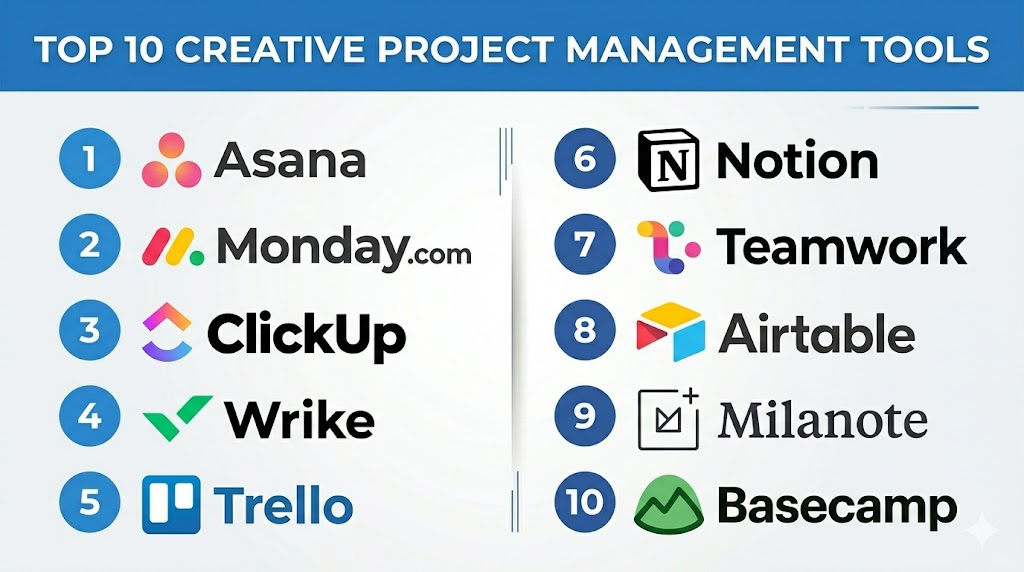
Introduction
Creative Project Management Tools help creative teams organize workflows, manage tasks, collaborate on assets, track approvals, handle revisions, and deliver projects efficiently across design, marketing, branding, video production, and content operations. These platforms are built for workflows that involve creative briefs, iterative feedback, client approvals, file collaboration, campaign timelines, and cross-functional teamwork. Creative work is different from traditional project management because it involves constant revisions, asset handoffs, visual collaboration, and stakeholder approvals. Modern creative project management platforms now combine task tracking, proofing, collaboration, automation, resource planning, AI-assisted workflows, asset management, and reporting dashboards to support distributed creative teams and agencies. Common use cases include marketing campaign management, design collaboration, video production workflows, content approvals, branding projects, creative asset tracking, agency operations, and creative resource planning.Buyers should evaluate collaboration workflows, proofing tools, creative asset support, approval workflows, automation capabilities, integrations, scalability, reporting depth, usability, and resource management features.
Best for: Creative agencies, marketing teams, design studios, video production teams, branding agencies, in-house creative departments, content teams, and distributed creative operations.
Not ideal for: Teams needing only simple task tracking, organizations with minimal collaboration requirements, or businesses that primarily manage non-creative operational workflows.
Key Trends in Creative Project Management Tools
- AI-assisted task automation is reducing repetitive project coordination work.
- Creative proofing and approval workflows are becoming central platform features.
- Visual collaboration boards are becoming more common for creative ideation.
- Resource planning and budgeting are increasingly integrated into creative workflows.
- Real-time collaborative editing is improving distributed team coordination.
- Creative asset management is becoming tightly integrated with project tracking.
- Workflow automation is helping reduce review bottlenecks.
- AI-powered reporting and predictive analytics are improving delivery forecasting.
- Video collaboration and review workflows are becoming increasingly important.
- Cross-platform integrations with design and communication tools are expanding rapidly.
How We Selected These Tools
The tools in this list were selected using practical creative operations and project delivery evaluation criteria.
- Market adoption and creative industry reputation
- Collaboration and approval workflow depth
- Task and resource management capabilities
- Creative asset and file handling support
- Automation and AI-assisted workflows
- Reporting and analytics flexibility
- Integration ecosystem and extensibility
- Ease of onboarding and usability
- Scalability for agencies and enterprises
- Overall balance between collaboration, flexibility, usability, and operational value
Top 10 Creative Project Management Tools
1- Asana
Short Description: Asana is a widely used project management platform that helps creative teams manage campaigns, tasks, approvals, timelines, and cross-functional collaboration workflows. It supports visual project tracking, automation, resource coordination, and collaborative task management. Asana is especially useful for marketing teams, creative agencies, and distributed creative operations requiring structured workflow visibility.
Key Features
- Task and workflow management
- Timeline and calendar views
- Creative approvals
- Automation workflows
- Team collaboration
- Reporting dashboards
- Resource tracking
Pros
- Strong usability and onboarding
- Flexible workflow customization
- Good collaboration support for creative teams
Cons
- Advanced reporting may require premium plans
- Large workflows can become complex
- Asset management depth is lighter than specialist tools
Platforms / Deployment
- Web / Windows / macOS / iOS / Android
- Cloud
Security & Compliance
Supports SSO, MFA, encryption, administrative permissions, audit controls, and enterprise governance features.
Integrations & Ecosystem
Asana integrates with communication, design, automation, and productivity systems for creative collaboration workflows.
- Adobe Creative Cloud
- Slack
- Google Workspace
- Microsoft Teams
- API integrations
Support & Community
Provides onboarding guidance, workflow templates, customer support, extensive documentation, and strong community adoption.
2- Monday.com
Short Description: Monday.com is a visual work management platform designed to help creative teams organize campaigns, manage approvals, track production workflows, and collaborate on creative deliverables. It combines dashboards, automations, timeline views, and customizable workflows into a highly visual interface. Monday.com is especially useful for agencies and marketing departments managing many concurrent creative projects.
Key Features
- Visual workflow dashboards
- Creative approvals
- Timeline management
- Workflow automation
- Team collaboration
- Resource planning
- Reporting tools
Pros
- Highly visual interface
- Strong workflow flexibility
- Good automation capabilities
Cons
- Complex setups may require planning
- Advanced features increase pricing
- Heavy customization can become overwhelming
Platforms / Deployment
- Web / Windows / macOS / iOS / Android
- Cloud
Security & Compliance
Supports encryption, SSO, permissions management, audit workflows, and governance controls.
Integrations & Ecosystem
Monday.com integrates with design, communication, CRM, and productivity systems.
- Adobe Creative Cloud
- Slack
- Microsoft Teams
- Google Workspace
- API integrations
Support & Community
Provides onboarding resources, implementation support, documentation, templates, and customer success programs.
3- ClickUp
Short Description: ClickUp is an all-in-one productivity and project management platform widely used by creative teams for task management, collaboration, documentation, approvals, and workflow automation. It offers highly customizable views, dashboards, automation, and collaboration features that support marketing, design, and content production workflows. ClickUp is especially attractive for creative teams seeking flexibility and broad functionality.
Key Features
- Task and project management
- Creative workflow automation
- Docs and collaboration
- Gantt and Kanban views
- Time tracking
- Dashboards and reporting
- Goal tracking
Pros
- Highly customizable workflows
- Strong feature depth
- Good value for growing teams
Cons
- Learning curve for new users
- Interface complexity for large workspaces
- Some advanced workflows require configuration
Platforms / Deployment
- Web / Windows / macOS / Linux / iOS / Android
- Cloud
Security & Compliance
Supports SSO, encryption, administrative controls, permissions management, and audit logging.
Integrations & Ecosystem
ClickUp integrates with design, communication, storage, and productivity systems.
- Slack
- Google Workspace
- Adobe workflows
- Microsoft Teams
- API integrations
Support & Community
Provides templates, onboarding resources, extensive documentation, customer support, and strong community adoption.
4- Wrike
Short Description: Wrike is an enterprise-focused project management platform designed for complex creative operations and marketing workflows. It supports proofing, approvals, resource planning, campaign management, and cross-functional collaboration. Wrike is especially useful for enterprise creative teams managing large campaigns and multi-department workflows.
Key Features
- Creative proofing workflows
- Resource management
- Campaign planning
- Automation workflows
- Reporting dashboards
- Team collaboration
- Workload balancing
Pros
- Strong enterprise workflow capabilities
- Advanced reporting support
- Good creative approval management
Cons
- Higher pricing structure
- Setup may require onboarding
- Smaller teams may not need full complexity
Platforms / Deployment
- Web / Windows / macOS / iOS / Android
- Cloud
Security & Compliance
Supports encryption, SSO, permissions management, audit controls, and enterprise governance workflows.
Integrations & Ecosystem
Wrike integrates with creative, collaboration, and productivity systems.
- Adobe Creative Cloud
- Slack
- Microsoft Teams
- Salesforce
- API integrations
Support & Community
Provides enterprise onboarding, implementation support, customer success programs, and workflow guidance.
5- Trello
Short Description: Trello is a visual Kanban-based project management platform used by creative teams for lightweight collaboration, campaign planning, content tracking, and workflow organization. It helps teams organize projects visually using boards, cards, checklists, and automation workflows. Trello is especially useful for smaller creative teams and freelancers seeking simplicity and fast onboarding.
Key Features
- Kanban boards
- Task management
- Workflow automation
- Team collaboration
- Checklists and labels
- Calendar views
- File attachments
Pros
- Extremely easy to use
- Fast onboarding experience
- Good lightweight collaboration support
Cons
- Enterprise reporting depth is limited
- Advanced workflow management is lighter
- Large projects can become difficult to scale
Platforms / Deployment
- Web / Windows / macOS / iOS / Android
- Cloud
Security & Compliance
Supports encryption, secure authentication, permissions management, and administrative controls.
Integrations & Ecosystem
Trello integrates with communication, storage, and productivity systems.
- Slack
- Google Drive
- Dropbox
- Microsoft Teams
- Power-Ups ecosystem
Support & Community
Provides onboarding resources, templates, customer assistance, and strong community support.
6- Notion
Short Description: Notion is a collaborative workspace platform combining documentation, project tracking, knowledge management, and creative planning workflows. It helps creative teams organize briefs, campaigns, content calendars, production pipelines, and collaboration workflows in one workspace. Notion is especially useful for teams wanting flexibility and centralized creative documentation.
Key Features
- Collaborative documentation
- Project tracking
- Creative briefs
- Databases and templates
- Knowledge management
- Content planning
- Team collaboration
Pros
- Highly flexible workspace structure
- Strong documentation support
- Good creative planning workflows
Cons
- Advanced project management is lighter
- Large workspaces may become difficult to organize
- Enterprise reporting depth is limited
Platforms / Deployment
- Web / Windows / macOS / iOS / Android
- Cloud
Security & Compliance
Supports secure authentication, encryption, permissions management, and workspace governance features.
Integrations & Ecosystem
Notion integrates with collaboration, storage, and workflow systems.
- Slack
- Google Workspace
- Figma
- Zapier
- API integrations
Support & Community
Provides templates, onboarding resources, documentation, and strong creator community support.
7- Teamwork
Short Description: Teamwork is a project management platform focused on agencies and client-service organizations managing creative delivery workflows. It supports task tracking, client collaboration, time tracking, billing workflows, and resource planning. Teamwork is especially useful for creative agencies managing client projects and operational workflows together.
Key Features
- Task and project tracking
- Client collaboration
- Time tracking
- Resource management
- Billing workflows
- Reporting dashboards
- Team communication
Pros
- Strong agency-focused workflows
- Good client collaboration support
- Useful operational management capabilities
Cons
- Interface depth may require onboarding
- Advanced automations are lighter
- Smaller teams may not need billing workflows
Platforms / Deployment
- Web / iOS / Android
- Cloud
Security & Compliance
Supports encryption, secure authentication, permissions management, and governance workflows.
Integrations & Ecosystem
Teamwork integrates with communication, billing, CRM, and productivity systems.
- Slack
- HubSpot
- Google Workspace
- QuickBooks
- API integrations
Support & Community
Provides onboarding support, customer assistance, templates, and workflow guidance for agencies.
8- Airtable
Short Description: Airtable combines spreadsheet-style flexibility with database-driven project management workflows for creative teams. It helps organizations manage content calendars, campaign production, approvals, and asset tracking through highly customizable workflows. Airtable is especially useful for marketing and content operations teams needing flexible structured collaboration.
Key Features
- Database-driven workflows
- Content production tracking
- Collaboration tools
- Automation workflows
- Calendar and Kanban views
- Asset tracking
- Reporting dashboards
Pros
- Highly customizable workflows
- Strong content operations support
- Flexible data organization
Cons
- Complex setups may require expertise
- Large-scale governance can become difficult
- Advanced reporting may require integrations
Platforms / Deployment
- Web / Windows / macOS / iOS / Android
- Cloud
Security & Compliance
Supports secure authentication, encryption, permissions management, and administrative controls.
Integrations & Ecosystem
Airtable integrates with creative, productivity, and automation systems.
- Slack
- Google Workspace
- Adobe workflows
- Zapier
- API integrations
Support & Community
Provides onboarding resources, templates, documentation, and customer support.
9- Milanote
Short Description: Milanote is a visual collaboration and creative project organization platform designed specifically for designers, marketers, and creative professionals. It uses visual boards to help teams organize ideas, assets, briefs, and creative workflows. Milanote is especially valuable for brainstorming, mood boards, and visual collaboration workflows.
Key Features
- Visual collaboration boards
- Mood board creation
- Creative asset organization
- Notes and planning
- Team collaboration
- Visual task management
- File sharing
Pros
- Excellent visual collaboration experience
- Strong ideation workflows
- Good fit for design and branding teams
Cons
- Traditional PM depth is lighter
- Advanced resource management is limited
- Enterprise workflows may require additional tools
Platforms / Deployment
- Web / Windows / macOS / iOS / Android
- Cloud
Security & Compliance
Supports secure authentication, encrypted workflows, and workspace permissions.
Integrations & Ecosystem
Milanote integrates with creative and collaboration workflows.
- Adobe workflows
- Google Drive
- Slack
- File sharing systems
- Visual collaboration workflows
Support & Community
Provides onboarding resources, creative templates, documentation, and active creative community usage.
10- Basecamp
Short Description: Basecamp is a collaborative project management platform designed to simplify communication, task management, approvals, and team coordination. It helps creative teams centralize discussions, files, timelines, and project updates in one workspace. Basecamp is especially useful for agencies and small creative teams prioritizing communication simplicity over highly complex workflows.
Key Features
- Team communication
- Task tracking
- Message boards
- File sharing
- Project timelines
- Check-ins and notifications
- Collaboration workflows
Pros
- Extremely simple communication workflows
- Easy onboarding for teams
- Good collaboration organization
Cons
- Advanced reporting depth is limited
- Automation workflows are lighter
- Complex enterprise operations may outgrow platform capabilities
Platforms / Deployment
- Web / Windows / macOS / iOS / Android
- Cloud
Security & Compliance
Supports encryption, secure authentication, permissions management, and administrative controls.
Integrations & Ecosystem
Basecamp integrates with communication, storage, and workflow systems.
- Google Workspace
- Slack
- Zapier
- File sharing workflows
- API integrations
Support & Community
Provides onboarding guidance, customer assistance, templates, and extensive documentation.
Comparison Table
| Tool Name | Best For | Platform(s) Supported | Deployment | Standout Feature | Public Rating |
|---|---|---|---|---|---|
| Asana | Marketing and creative collaboration | Web, Windows, macOS, iOS, Android | Cloud | Workflow organization and usability | N/A |
| Monday.com | Visual creative workflows | Web, Windows, macOS, iOS, Android | Cloud | Visual dashboards and automation | N/A |
| ClickUp | Flexible all-in-one workflows | Web, Windows, macOS, Linux, iOS, Android | Cloud | Deep customization capabilities | N/A |
| Wrike | Enterprise creative operations | Web, Windows, macOS, iOS, Android | Cloud | Creative proofing workflows | N/A |
| Trello | Lightweight creative collaboration | Web, Windows, macOS, iOS, Android | Cloud | Simple Kanban workflows | N/A |
| Notion | Creative planning and documentation | Web, Windows, macOS, iOS, Android | Cloud | Flexible workspace management | N/A |
| Teamwork | Agency operations and delivery | Web, iOS, Android | Cloud | Client collaboration workflows | N/A |
| Airtable | Content and production operations | Web, Windows, macOS, iOS, Android | Cloud | Database-driven workflows | N/A |
| Milanote | Visual creative collaboration | Web, Windows, macOS, iOS, Android | Cloud | Mood boards and visual organization | N/A |
| Basecamp | Simple team communication | Web, Windows, macOS, iOS, Android | Cloud | Centralized communication workflows | N/A |
Evaluation & Scoring of Creative Project Management Tools
| Tool Name | Core (25%) | Ease (15%) | Integrations (15%) | Security (10%) | Performance (10%) | Support (10%) | Value (15%) | Weighted Total |
|---|---|---|---|---|---|---|---|---|
| Asana | 9.2 | 9.0 | 8.9 | 8.8 | 8.9 | 8.7 | 8.3 | 8.8 |
| Monday.com | 9.1 | 8.8 | 8.8 | 8.7 | 8.8 | 8.6 | 8.2 | 8.7 |
| ClickUp | 9.3 | 8.2 | 9.0 | 8.7 | 8.8 | 8.5 | 9.0 | 8.8 |
| Wrike | 9.4 | 8.0 | 9.1 | 9.0 | 9.1 | 8.7 | 7.9 | 8.8 |
| Trello | 8.0 | 9.5 | 8.1 | 8.2 | 8.3 | 8.4 | 9.2 | 8.5 |
| Notion | 8.5 | 8.9 | 8.4 | 8.3 | 8.4 | 8.5 | 8.8 | 8.5 |
| Teamwork | 8.8 | 8.4 | 8.6 | 8.5 | 8.6 | 8.5 | 8.5 | 8.6 |
| Airtable | 8.9 | 8.3 | 8.8 | 8.5 | 8.6 | 8.4 | 8.4 | 8.6 |
| Milanote | 8.1 | 9.1 | 7.8 | 8.0 | 8.2 | 8.3 | 8.7 | 8.3 |
| Basecamp | 8.0 | 9.2 | 7.9 | 8.2 | 8.3 | 8.4 | 8.8 | 8.4 |
These scores are comparative and designed to help buyers evaluate creative project management tools based on operational fit rather than absolute rankings. Enterprise-focused platforms generally score higher in workflow depth, governance, and scalability, while lightweight tools often perform better in usability and affordability. Buyers should prioritize collaboration workflows, approvals, automation, and creative asset support when comparing platforms.
Which Creative Project Management Tool Is Right for You?
Solo / Freelancer
Solo creatives and freelancers usually need lightweight collaboration, simple task tracking, visual organization, and easy onboarding. Trello, Notion, and Milanote are excellent choices because they are flexible, affordable, and fast to deploy. Simplicity and visual collaboration are often more important than advanced reporting.
SMB
SMBs and growing creative agencies often require campaign coordination, collaboration, approval workflows, automation, and reporting without enterprise complexity. Asana, ClickUp, Monday.com, and Teamwork provide a strong balance between usability, automation, and workflow flexibility. SMB buyers should focus on scalability and collaboration depth.
Mid-Market
Mid-market organizations typically need stronger resource management, reporting dashboards, approval workflows, and cross-functional collaboration. Wrike, Airtable, Asana, and Monday.com are strong choices for growing creative operations managing multiple campaigns and distributed teams.
Enterprise
Enterprise organizations often require governance, permissions, resource planning, workflow automation, advanced reporting, and multi-department collaboration. Wrike, Asana, Monday.com, and ClickUp are especially strong for enterprise creative operations and large marketing organizations. Enterprises should carefully evaluate governance, integrations, and scalability.
Budget vs Premium
Budget-conscious teams may prefer Trello, Notion, Milanote, or ClickUp because they provide strong collaboration capabilities at lower operational cost. Premium buyers requiring enterprise governance and workflow depth often benefit more from Wrike, Asana, or Monday.com.
Feature Depth vs Ease of Use
Wrike and ClickUp provide deeper workflow and automation capabilities but require more onboarding. Trello, Basecamp, and Milanote are easier to learn and deploy. Buyers should choose depth when workflows are complex and simplicity when fast adoption matters more.
Integrations & Scalability
Creative teams using Adobe Creative Cloud, Slack, Google Workspace, CRM systems, and automation tools should evaluate integration flexibility carefully. Large organizations should also review reporting dashboards, automation capabilities, and cross-team collaboration workflows.
Security & Compliance Needs
Organizations managing sensitive client assets, campaigns, or enterprise creative workflows should review authentication controls, permissions, governance workflows, audit logging, and administrative visibility before deployment.
Frequently Asked Questions
1. What is a Creative Project Management Tool?
A Creative Project Management Tool helps creative teams organize tasks, approvals, collaboration, revisions, and production workflows across design, marketing, branding, and content operations. These tools centralize project communication and improve visibility into deadlines, approvals, and asset management. Creative workflows typically involve more collaboration and revisions than standard operational projects.
2. Why are creative workflows different from traditional project management?
Creative projects involve subjective feedback, iterative revisions, asset collaboration, and approval cycles that require flexible workflows. Traditional project management tools often focus more on operational tasks and linear delivery. Creative teams need visual collaboration, proofing, asset sharing, and stakeholder review workflows that support experimentation and rapid iteration.
3. What features should buyers prioritize first?
Buyers should prioritize collaboration workflows, proofing tools, task management, approval workflows, automation, reporting, integrations, and creative asset support. Agencies should additionally evaluate client collaboration and billing workflows, while enterprises should review governance and resource management capabilities.
4. Are Creative Project Management Tools useful for small teams?
Yes. Small creative teams often benefit significantly because these tools improve organization, communication, and deadline visibility. Lightweight platforms such as Trello, Notion, and Milanote are especially useful for freelancers and SMBs because they are easier to deploy and manage without operational complexity.
5. What are common mistakes in creative project management implementation?
A common mistake is forcing rigid operational workflows onto creative teams without adapting for collaboration and revisions. Another issue is failing to define approval responsibilities clearly. Teams also struggle when they separate communication, files, and tasks across too many disconnected systems. Centralized collaboration is important for creative efficiency.
6. How important are proofing and approval workflows?
Proofing and approval workflows are extremely important because creative work often goes through multiple rounds of feedback and revisions. Built-in approvals reduce confusion, improve accountability, and help teams deliver projects faster. These workflows are especially valuable for agencies and marketing teams managing many stakeholders.
7. Do Creative Project Management Tools support resource planning?
Many platforms support resource planning, workload balancing, budgeting, and time tracking workflows. Enterprise and agency-focused tools such as Wrike, Teamwork, and Monday.com are particularly strong for managing creative team capacity and project forecasting.
8. How should enterprises evaluate Creative Project Management Tools?
Enterprises should evaluate scalability, governance controls, workflow automation, integrations, reporting dashboards, resource management, and permissions management. Large organizations often require cross-functional collaboration, approval tracking, and advanced reporting for distributed creative operations.
9. Can these tools manage creative assets and files?
Yes. Many modern platforms support file sharing, asset organization, version control, and creative collaboration workflows. Some tools integrate deeply with design and storage systems to improve creative asset management and reduce workflow fragmentation.
10. What alternatives exist if a company does not need a full creative PM platform?
Alternatives include lightweight collaboration tools, spreadsheets, communication platforms, shared drives, or basic task management systems. Smaller teams with simple workflows may not require enterprise-grade project management until collaboration complexity and approval requirements increase.
Conclusion
Creative Project Management Tools have become essential for organizations managing collaborative design, marketing, branding, content production, and campaign delivery workflows across distributed teams. Modern platforms now combine task management, approvals, collaboration, automation, reporting, resource planning, and creative asset workflows into unified systems that improve visibility and reduce operational friction. The best platform depends on workflow complexity, collaboration needs, integrations, governance requirements, and team size. Enterprise organizations often benefit most from Wrike, Asana, Monday.com, or ClickUp because of their scalability and workflow depth, while SMBs and smaller creative teams may prefer Trello, Notion, Milanote, or Basecamp for easier deployment and operational simplicity. Agencies requiring client collaboration and operational workflows may also find Teamwork especially valuable because of its billing and resource management capabilities. Before selecting a platform, teams should map current workflows, identify approval bottlenecks, test collaboration experiences, validate integrations, review automation needs, and run pilot creative projects to ensure the system aligns with long-term creative operations and delivery goals.
