MOTOSHARE 🚗🏍️
Rent Bikes & Cars Directly from Owners
Motoshare connects vehicle owners with people who need bikes and cars on rent. Owners earn from idle vehicles, and renters get flexible ride options.
Visit Motoshare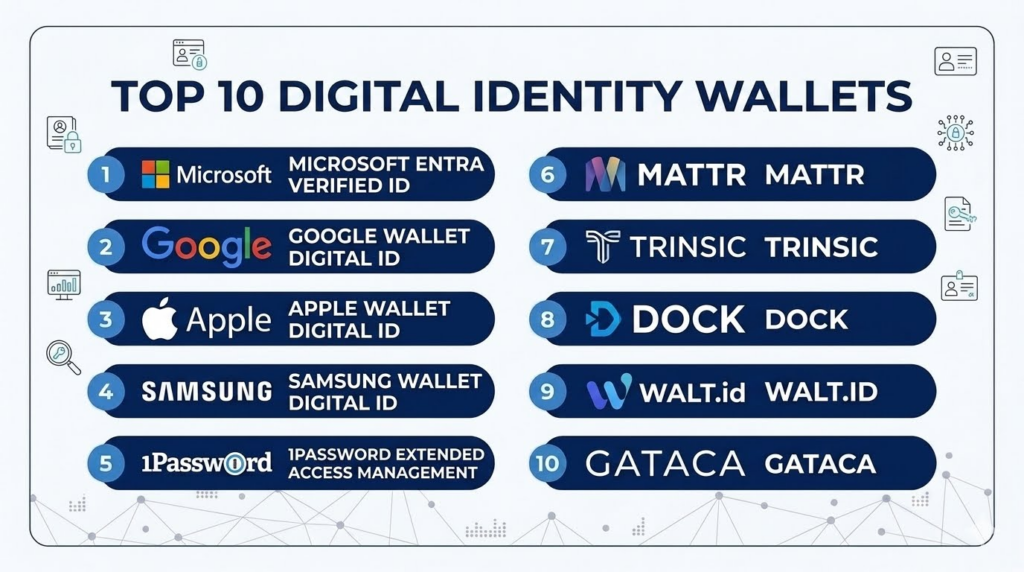
Introduction
Digital Identity Wallets are secure apps or platforms that let people store, manage, and share verified identity credentials digitally. These credentials may include government IDs, employee IDs, education certificates, professional licenses, age verification credentials, healthcare identity data, or business identity documents. Instead of repeatedly uploading documents or filling forms, users can share only the required verified information with banks, employers, government portals, travel services, marketplaces, or online platforms.
Digital identity wallets matter because organizations need faster, safer, and privacy-focused ways to verify users. Traditional identity verification often depends on repeated document uploads, manual checks, and centralized databases, which can increase fraud risk and data exposure. Modern wallets use verifiable credentials, cryptographic proof, consent-based sharing, and selective disclosure to give users more control over their identity data.
Real-world use cases include:
- Digital onboarding for banks and fintech apps
- Age verification for restricted products or services
- Employee identity and workplace access
- Travel identity verification
- Education and professional credential sharing
Evaluation criteria buyers should consider:
- Verifiable credential support
- Mobile wallet experience
- Issuance and verification capabilities
- Standards support and interoperability
- Privacy and consent controls
- API and SDK availability
- Security and encryption model
- Enterprise integration flexibility
- Governance and audit controls
- Scalability across regions and identity ecosystems
Best for: Banks, fintech companies, public sector agencies, universities, healthcare organizations, travel platforms, workforce identity teams, and enterprises building privacy-first identity verification workflows.
Not ideal for: Small teams that only need basic login authentication, simple password management, or one-time document upload without credential issuance, verification, or wallet-based identity sharing.
Key Trends in Digital Identity Wallets
- Privacy-first identity sharing is becoming a major requirement as users expect more control over personal data.
- Verifiable credentials are gaining adoption for education records, licenses, employment credentials, and government IDs.
- Selective disclosure is becoming important because users can prove specific facts without exposing full documents.
- Mobile-first identity wallets are becoming central to travel, banking, workplace, and public service access.
- Enterprise identity platforms are adding wallet-based credential issuance and verification.
- Decentralized identity standards are improving interoperability between wallets, issuers, and verifiers.
- Biometric authentication is increasingly used to protect wallet access on mobile devices.
- API-first wallet infrastructure is helping developers embed identity verification into apps and portals.
- Public sector identity wallet programs are influencing private-sector adoption.
- Digital wallets are expanding beyond personal identity into business identity, device identity, and employee credentials.
How We Selected These Tools
The tools included in this list were selected using practical buyer-focused evaluation criteria.
- Market recognition across digital identity and verifiable credential ecosystems
- Support for wallet-based credential storage, issuance, or verification
- Enterprise readiness and integration flexibility
- Mobile user experience and accessibility
- Privacy-focused identity sharing capabilities
- Standards alignment and interoperability potential
- Security posture and credential protection model
- Suitability across public sector, fintech, enterprise, and developer use cases
- API, SDK, and ecosystem maturity
- Long-term relevance for digital identity transformation
Top 10 Digital Identity Wallets
#1 — Microsoft Entra Verified ID
Short description:
Microsoft Entra Verified ID helps organizations issue, verify, and manage decentralized identity credentials within enterprise identity workflows. It is especially useful for companies already using Microsoft identity infrastructure. The platform supports verifiable credentials for workforce identity, partner verification, education records, and secure access scenarios. It is best suited for enterprises that want digital identity wallet capabilities connected to existing cloud identity systems.
Key Features
- Verifiable credential issuance and verification
- Integration with Microsoft identity ecosystem
- Decentralized identity support
- Enterprise access and authentication use cases
- Credential-based onboarding workflows
- API-based verification support
- User-controlled credential sharing
Pros
- Strong enterprise identity ecosystem
- Good fit for Microsoft-based organizations
- Useful for workforce and partner identity workflows
Cons
- Best value is within Microsoft environments
- May require identity architecture expertise
- Less consumer-wallet focused than mobile-native wallets
Platforms / Deployment
- Web / Mobile
- Cloud
Security & Compliance
- MFA
- Conditional access support
- Encryption
- Enterprise access controls
- Audit capabilities
Integrations & Ecosystem
Microsoft Entra Verified ID integrates well with enterprise identity, access management, and cloud security environments.
- Microsoft Entra ID
- Enterprise applications
- HR systems
- Access management workflows
- Developer APIs
Support & Community
Strong enterprise documentation, Microsoft ecosystem support, and professional implementation options are available.
#2 — Google Wallet Digital ID
Short description:
Google Wallet supports digital identity credentials for mobile users, including digital IDs and credential sharing in supported environments. It is designed for everyday identity usage across Android devices, travel, verification, and app-based identity flows. Google’s ecosystem makes it highly relevant for consumer-facing digital identity adoption. It is best for organizations that want to support mobile identity verification for Android users.
Key Features
- Mobile digital identity storage
- Device-based credential protection
- Selective identity sharing support
- Integration with Android ecosystem
- Digital ID presentation capabilities
- Biometric device authentication
- Consumer-friendly wallet experience
Pros
- Strong mobile adoption potential
- User-friendly identity wallet experience
- Good fit for consumer verification workflows
Cons
- Availability varies by region and credential type
- Enterprise customization is limited
- Not a full enterprise KYB or KYC platform by itself
Platforms / Deployment
- Android
- Cloud / Mobile wallet
Security & Compliance
- Device-level encryption
- Biometric authentication
- Secure credential storage
- Not publicly stated for enterprise certifications
Integrations & Ecosystem
Google Wallet works within the Android ecosystem and can support app-based digital credential sharing where available.
- Android apps
- Travel verification workflows
- Digital ID ecosystems
- Mobile credential sharing
- Consumer service integrations
Support & Community
Strong consumer ecosystem support and developer resources are available through Google’s platform documentation.
#3 — Apple Wallet Digital ID
Short description:
Apple Wallet supports digital identity credentials in supported regions and use cases, allowing users to store identity documents securely on Apple devices. It is focused on privacy, device security, and simple user-controlled sharing. Apple Wallet is especially relevant for mobile-first identity verification, travel, and consumer credential use cases. It is best for organizations serving users in Apple-heavy environments.
Key Features
- Mobile digital ID storage
- Device-based credential security
- Biometric authentication support
- Selective identity sharing
- Consumer-friendly wallet experience
- Strong mobile ecosystem integration
- Offline-friendly credential presentation in supported scenarios
Pros
- Strong privacy-focused user experience
- High consumer trust
- Excellent mobile usability
Cons
- Availability depends on region and issuer support
- Limited enterprise customization
- Not suitable as a standalone enterprise identity platform
Platforms / Deployment
- iOS
- Mobile wallet
Security & Compliance
- Device encryption
- Face ID / Touch ID support
- Secure element-based protection in supported use cases
- Not publicly stated for enterprise certifications
Integrations & Ecosystem
Apple Wallet works within Apple’s mobile ecosystem and supports identity presentation in approved environments.
- iOS apps
- Travel verification workflows
- Government ID ecosystems
- Mobile credential sharing
- Consumer identity use cases
Support & Community
Strong consumer support ecosystem with developer guidance available for supported wallet and credential experiences.
#4 — Samsung Wallet Digital ID
Short description:
Samsung Wallet supports mobile identity credentials, payment credentials, access credentials, and digital document storage on Samsung devices. It is designed for Android users within the Samsung ecosystem and provides a secure mobile wallet experience. For digital identity use cases, it is useful where Samsung devices are widely used. It works best for consumer-facing identity, access, and credential-sharing workflows.
Key Features
- Mobile digital identity storage
- Biometric wallet access
- Secure credential storage
- Payment and identity wallet features
- Device-based authentication
- Consumer credential management
- Mobile-first user experience
Pros
- Strong Samsung device ecosystem
- Convenient user experience
- Useful for consumer identity adoption
Cons
- Device ecosystem dependent
- Availability varies by region
- Limited enterprise workflow customization
Platforms / Deployment
- Android
- Mobile wallet
Security & Compliance
- Device encryption
- Biometric authentication
- Secure mobile credential storage
- Not publicly stated for enterprise certifications
Integrations & Ecosystem
Samsung Wallet works across Samsung’s mobile ecosystem and supported credential environments.
- Samsung devices
- Android apps
- Digital ID workflows
- Consumer credential systems
- Access and verification use cases
Support & Community
Samsung provides user support and ecosystem documentation for supported wallet experiences.
#5 — 1Password Extended Access Management
Short description:
1Password is widely known as a password and secrets manager, but its identity and access direction increasingly supports secure credential handling, passkeys, and workforce access management. It is not a traditional government ID wallet, but it is relevant for organizations managing employee credentials, passkeys, access secrets, and secure identity workflows. It is best for workforce-focused digital identity and secure access environments.
Key Features
- Secure credential storage
- Passkey support
- Workforce access management
- Device trust workflows
- Browser and mobile support
- Enterprise policy controls
- Secure sharing capabilities
Pros
- Strong user experience
- Good workforce security fit
- Mature password and credential management
Cons
- Not a full verifiable credential wallet
- Limited government ID wallet use cases
- Best suited for access credentials rather than public identity documents
Platforms / Deployment
- Web / Windows / macOS / Linux / iOS / Android
- Cloud
Security & Compliance
- MFA
- Encryption
- SSO support
- Audit logs
- RBAC
Integrations & Ecosystem
1Password integrates with enterprise access, developer, and security ecosystems.
- Identity providers
- Browser extensions
- Developer tools
- Device trust workflows
- Enterprise security platforms
Support & Community
Strong documentation, enterprise onboarding, and broad user community support.
#6 — MATTR
Short description:
MATTR provides digital trust infrastructure for issuing, holding, and verifying digital credentials. It supports organizations building wallet-based identity ecosystems for government, education, enterprise, and regulated industries. The platform is especially useful for teams that need standards-based credential issuance and verification rather than a simple consumer wallet. It is best for organizations building scalable verifiable credential programs.
Key Features
- Verifiable credential issuance
- Credential verification workflows
- Digital wallet infrastructure
- Standards-based identity support
- API and developer tooling
- Trust framework support
- Enterprise implementation capabilities
Pros
- Strong digital trust focus
- Good standards alignment
- Suitable for large credential programs
Cons
- Requires implementation planning
- May be too advanced for simple identity needs
- Enterprise pricing may vary
Platforms / Deployment
- Web / API
- Cloud / Hybrid
Security & Compliance
- Encryption
- Access controls
- Audit capabilities
- Not publicly stated for all certifications
Integrations & Ecosystem
MATTR supports integrations for issuers, verifiers, and wallet-based credential ecosystems.
- APIs
- Government systems
- Education platforms
- Enterprise identity systems
- Verification workflows
Support & Community
Professional support and implementation guidance are available for enterprise digital trust projects.
#7 — Trinsic
Short description:
Trinsic provides infrastructure for digital identity wallets, verifiable credentials, and decentralized identity applications. It is developer-friendly and supports teams building custom credential issuance and verification workflows. Trinsic is especially useful for startups, enterprises, and identity providers that want flexible APIs for wallet-based identity. It works well for custom identity ecosystems and embedded verification experiences.
Key Features
- Verifiable credential infrastructure
- Wallet and credential APIs
- Decentralized identity support
- Developer-first tooling
- Credential issuance workflows
- Verification APIs
- Custom identity ecosystem support
Pros
- Strong developer experience
- Flexible API model
- Good fit for custom wallet projects
Cons
- Requires technical implementation
- Less suitable for non-technical teams
- Some enterprise features may require custom support
Platforms / Deployment
- Web / API
- Cloud
Security & Compliance
- Encryption
- API access controls
- Not publicly stated
Integrations & Ecosystem
Trinsic is designed for developers building identity wallet and credential verification workflows.
- APIs
- SDKs
- Identity platforms
- Verification systems
- Custom applications
Support & Community
Developer documentation and technical support are available, with stronger fit for engineering-led teams.
#8 — Dock
Short description:
Dock provides decentralized identity and verifiable credential tools for organizations building digital credential ecosystems. It supports credential issuance, verification, and wallet infrastructure for use cases such as education, employment, healthcare, and compliance. Dock is particularly relevant for organizations that want blockchain-supported or decentralized credential workflows. It is best for technical teams building interoperable identity systems.
Key Features
- Verifiable credential issuance
- Digital wallet support
- Decentralized identity infrastructure
- Credential verification
- API and SDK access
- Blockchain-supported credential trust
- Privacy-focused identity sharing
Pros
- Strong decentralized identity capabilities
- Flexible developer tools
- Good fit for credential ecosystems
Cons
- Requires technical expertise
- Adoption depends on ecosystem partners
- May be more complex than traditional identity tools
Platforms / Deployment
- Web / API
- Cloud
Security & Compliance
- Cryptographic credential verification
- Encryption
- Not publicly stated for enterprise certifications
Integrations & Ecosystem
Dock integrates with systems that need credential issuance, verification, and decentralized trust workflows.
- APIs
- Wallet applications
- Education platforms
- Workforce credential systems
- Verification portals
Support & Community
Developer-focused documentation and ecosystem resources are available.
#9 — walt.id
Short description:
walt.id provides open-source digital identity infrastructure for verifiable credentials, decentralized identity, and wallet-based identity ecosystems. It is especially useful for developers and organizations that want flexibility, transparency, and standards-based identity infrastructure. The platform is well suited for custom wallet projects, public sector pilots, and enterprise digital credential systems.
Key Features
- Open-source identity infrastructure
- Verifiable credential issuance
- Wallet and verifier tooling
- Decentralized identity support
- Standards-based architecture
- Developer APIs
- Flexible deployment options
Pros
- Open-source flexibility
- Strong developer control
- Good standards support
Cons
- Requires engineering resources
- Enterprise support may require paid engagement
- Not ideal for non-technical teams
Platforms / Deployment
- Web / API
- Cloud / Self-hosted / Hybrid
Security & Compliance
- Cryptographic credential verification
- Access controls depend on deployment
- Not publicly stated for certifications
Integrations & Ecosystem
walt.id is designed for organizations building custom identity and credential ecosystems.
- APIs
- Developer SDKs
- Public sector identity systems
- Enterprise identity workflows
- Wallet and verifier applications
Support & Community
Open-source community resources are available, with enterprise support options depending on engagement.
#10 — Gataca
Short description:
Gataca provides digital identity wallet and verifiable credential solutions for organizations that need privacy-preserving identity verification. It supports credential issuance, wallet-based authentication, and identity verification workflows. The platform is useful for public sector, financial services, education, and age verification use cases. It is best for organizations looking for a packaged digital identity wallet experience with enterprise integration options.
Key Features
- Digital identity wallet application
- Verifiable credential issuance
- Credential verification workflows
- Privacy-focused identity sharing
- Wallet-based authentication
- Enterprise integration support
- Standards-aligned identity architecture
Pros
- Strong wallet-focused experience
- Good privacy-first positioning
- Useful for regulated identity workflows
Cons
- Regional ecosystem maturity may vary
- Requires issuer and verifier adoption
- Enterprise pricing not always transparent
Platforms / Deployment
- Web / Mobile / API
- Cloud
Security & Compliance
- Encryption
- Consent-based credential sharing
- Not publicly stated for all certifications
Integrations & Ecosystem
Gataca supports wallet-based identity verification and credential exchange across enterprise and public sector workflows.
- APIs
- Identity verification systems
- Public sector services
- Education platforms
- Financial services workflows
Support & Community
Professional onboarding and implementation support are available for identity wallet projects.
Comparison Table
| Tool Name | Best For | Platforms Supported | Deployment | Standout Feature | Public Rating |
|---|---|---|---|---|---|
| Microsoft Entra Verified ID | Enterprise verifiable credentials | Web / Mobile | Cloud | Microsoft identity ecosystem integration | N/A |
| Google Wallet Digital ID | Consumer mobile identity | Android | Mobile wallet / Cloud | Android digital ID experience | N/A |
| Apple Wallet Digital ID | iOS identity credentials | iOS | Mobile wallet | Privacy-focused mobile ID storage | N/A |
| Samsung Wallet Digital ID | Samsung device identity use cases | Android | Mobile wallet | Samsung mobile ecosystem support | N/A |
| 1Password Extended Access Management | Workforce credentials and passkeys | Web / Desktop / Mobile | Cloud | Secure credential and access management | N/A |
| MATTR | Digital trust infrastructure | Web / API | Cloud / Hybrid | Standards-based credential infrastructure | N/A |
| Trinsic | Developer-led wallet projects | Web / API | Cloud | Flexible credential APIs | N/A |
| Dock | Decentralized credential ecosystems | Web / API | Cloud | Decentralized identity infrastructure | N/A |
| walt.id | Open-source identity infrastructure | Web / API | Cloud / Self-hosted / Hybrid | Open-source wallet and credential tooling | N/A |
| Gataca | Packaged wallet-based verification | Web / Mobile / API | Cloud | Privacy-first credential sharing | N/A |
Evaluation & Scoring of Digital Identity Wallets
| Tool Name | Core 25% | Ease 15% | Integrations 15% | Security 10% | Performance 10% | Support 10% | Value 15% | Weighted Total |
|---|---|---|---|---|---|---|---|---|
| Microsoft Entra Verified ID | 9.0 | 8.0 | 9.2 | 9.3 | 8.8 | 8.9 | 8.0 | 8.69 |
| Google Wallet Digital ID | 8.5 | 9.2 | 8.3 | 9.0 | 9.0 | 8.5 | 8.7 | 8.72 |
| Apple Wallet Digital ID | 8.5 | 9.3 | 8.0 | 9.2 | 9.1 | 8.4 | 8.6 | 8.70 |
| Samsung Wallet Digital ID | 8.2 | 8.9 | 8.0 | 8.8 | 8.7 | 8.2 | 8.5 | 8.42 |
| 1Password Extended Access Management | 8.1 | 9.1 | 8.8 | 9.2 | 8.8 | 8.8 | 8.4 | 8.70 |
| MATTR | 8.9 | 7.8 | 8.8 | 8.7 | 8.6 | 8.3 | 8.0 | 8.45 |
| Trinsic | 8.6 | 8.2 | 8.9 | 8.4 | 8.5 | 8.1 | 8.4 | 8.45 |
| Dock | 8.5 | 7.9 | 8.5 | 8.5 | 8.3 | 8.0 | 8.3 | 8.31 |
| walt.id | 8.7 | 7.8 | 8.8 | 8.3 | 8.2 | 7.9 | 8.8 | 8.39 |
| Gataca | 8.6 | 8.4 | 8.4 | 8.6 | 8.4 | 8.2 | 8.2 | 8.41 |
These scores are comparative and should be interpreted based on buyer needs. Consumer wallet platforms score strongly in ease of use and mobile adoption, while enterprise infrastructure providers score higher in integration flexibility and credential program design. Open-source and developer-first platforms may provide strong value but require more technical ownership. The right choice depends on whether the organization needs a consumer wallet, enterprise credential issuance, decentralized identity infrastructure, or workforce access management.
Which Digital Identity Wallet Tool Is Right for You?
Solo / Freelancer
Solo users usually do not need enterprise digital identity infrastructure. A consumer wallet such as Apple Wallet, Google Wallet, or Samsung Wallet may be sufficient for storing supported identity credentials. Freelancers managing secure work credentials may also benefit from 1Password for access credentials, passkeys, and secure sharing.
SMB
Small and medium businesses should focus on ease of use, fast deployment, and simple integration. Trinsic, Gataca, or 1Password can be good options depending on whether the need is customer identity verification, credential issuance, or workforce access management. SMBs should avoid overly complex decentralized identity infrastructure unless they have technical support.
Mid-Market
Mid-market organizations often need a balance between flexibility and operational simplicity. MATTR, Trinsic, Dock, and Gataca can support credential issuance and verification workflows without forcing a fully custom identity architecture. Companies already using Microsoft identity tools may prefer Microsoft Entra Verified ID for employee and partner credential scenarios.
Enterprise
Large enterprises should prioritize governance, security controls, interoperability, integration depth, and long-term identity architecture. Microsoft Entra Verified ID, MATTR, walt.id, and Dock are strong choices for enterprise digital credential ecosystems. Consumer wallets such as Apple Wallet and Google Wallet may still matter if the enterprise needs to support customer-facing credential presentation.
Budget vs Premium
Open-source infrastructure such as walt.id may reduce licensing barriers but requires engineering effort for hosting, security, scaling, and maintenance. Premium enterprise platforms may cost more but provide stronger implementation support, governance features, and managed infrastructure. Consumer wallets are accessible to users but may not provide enterprise control over issuance and verification workflows.
Feature Depth vs Ease of Use
Consumer wallets are usually easier for end users but provide less enterprise customization. Developer-first platforms offer more flexibility but require technical implementation. Enterprise identity platforms provide strong governance but may need careful identity architecture planning.
Integrations & Scalability
Organizations building high-volume identity workflows should prioritize APIs, SDKs, verifier tools, issuer tools, mobile compatibility, and standards support. Integration with IAM, CRM, HR, onboarding, compliance, and customer portals is critical for long-term scalability.
Security & Compliance Needs
Security-focused buyers should evaluate encryption, biometric access, audit trails, access controls, consent management, credential revocation, and data minimization. Regulated industries should also validate governance workflows, data residency expectations, and compliance reporting requirements before deployment.
Frequently Asked Questions
1. What is a digital identity wallet?
A digital identity wallet is an app or platform that lets users store and share verified digital credentials. These credentials may include IDs, certificates, licenses, employee credentials, or proof of eligibility. The goal is to reduce repeated document uploads and give users more control over identity sharing.
2. How is a digital identity wallet different from a password manager?
A password manager stores login credentials, passwords, passkeys, and secrets, while a digital identity wallet stores verified identity credentials. Some modern security tools overlap with wallet-like access management, but traditional digital identity wallets focus on proof-based identity sharing and verifiable credentials.
3. What are verifiable credentials?
Verifiable credentials are digital records issued by trusted organizations that can be cryptographically verified. Examples include education certificates, employment credentials, professional licenses, or identity documents. They allow a verifier to confirm authenticity without relying on repeated manual document checks.
4. Are digital identity wallets secure?
Digital identity wallets can be highly secure when they use encryption, device protection, biometrics, and cryptographic credential verification. However, security depends on wallet design, issuer trust, user behavior, and integration quality. Buyers should evaluate access controls, recovery workflows, revocation, and audit features carefully.
5. Can digital identity wallets replace physical IDs?
In some use cases, digital identity wallets can reduce dependence on physical documents. However, replacement depends on regional regulations, issuer acceptance, verifier support, and user adoption. Many organizations currently use digital wallets as a complement to physical identity rather than a universal replacement.
6. What industries use digital identity wallets?
Digital identity wallets are useful in banking, fintech, healthcare, education, travel, public sector, workforce management, insurance, and marketplaces. Any industry that needs trusted identity verification, credential sharing, or eligibility checks can benefit from wallet-based identity workflows.
7. What should businesses evaluate before choosing a wallet platform?
Businesses should evaluate standards support, integration options, mobile compatibility, credential issuance workflows, verification capabilities, security controls, and vendor support. They should also assess whether they need a consumer-facing wallet, enterprise credential platform, or developer infrastructure.
8. What are common mistakes when adopting digital identity wallets?
Common mistakes include focusing only on wallet design while ignoring issuer and verifier adoption. Other mistakes include weak recovery flows, poor integration planning, unclear consent experiences, and lack of standards alignment. A wallet is only useful when the full identity ecosystem works smoothly.
9. Are digital identity wallets suitable for employee identity?
Yes, digital identity wallets can support employee credentials, contractor verification, workplace access, training certifications, and partner identity workflows. Enterprises can use wallet-based credentials to reduce manual verification and improve access governance across distributed teams.
10. Can businesses build their own digital identity wallet?
Yes, businesses can build custom digital identity wallets using infrastructure providers, APIs, SDKs, and open-source frameworks. However, building a wallet requires expertise in cryptography, identity standards, mobile security, credential lifecycle management, and compliance. Many companies prefer managed platforms to reduce implementation risk.
Conclusion
Digital Identity Wallets are becoming an important part of modern identity verification, privacy protection, and credential sharing. They help users control how identity information is stored and shared while helping organizations reduce manual verification, improve onboarding speed, and strengthen trust in digital interactions. Consumer wallet platforms such as Apple Wallet, Google Wallet, and Samsung Wallet are useful for mobile-first identity experiences, while enterprise and developer platforms such as Microsoft Entra Verified ID, MATTR, Trinsic, Dock, walt.id, and Gataca support deeper credential issuance and verification workflows. The best option depends on whether the organization needs consumer identity presentation, workforce credential management, decentralized identity infrastructure, or enterprise-grade digital trust architecture. Buyers should shortlist tools based on use case, run pilots with real credential workflows, validate security and integration requirements, and confirm whether the platform can scale across users, regions, issuers, and verifiers before making a long-term decision.

Securing comprehensive unique decentralized credential storage mobile cryptographic vault software optimizes organizational individual verification management mechanics, ensuring rapid electronic signature authentication auditing and frictionless personal data privacy protection ecosystem administration methodologies.