Trichy Districts
Trichy has a moderate and pleasant climate, with humidity slightly above normal. The city experiences mild winters and humid summers. The timing of the monsoon in this part of the country has lately become unpredictable, with the rainy season starting from mid-October until early-November and the rains then extending until early or mid-January.
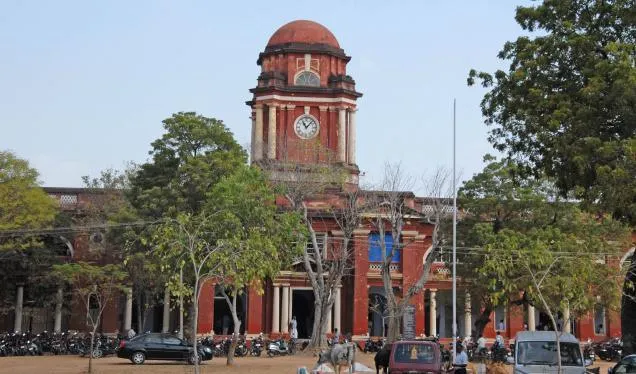
About Trichy Districts
Trichy cuisine is predominantly South Indian with rice as the main-ingredient. The city prefers a fairly mild flavour, with variations to suit the local palette. Lunch is usually served in many restaurants over a banana leaf.North Indian, Chinese and Continental cuisines are also available. Jelebi, idly, dosa, halwa (a sweet made of milk, wheat, and rice), parotta and biryani are popular among the locals.
The most famous landmark of Trichy is the Rockfort temple which is perched on a huge rocky out crop. The smooth crop was first hewn by the Pallavas but it was the Nayaks of Madurai who later built the Rock fort temple. The temple is dedicated to Lord Shiva and Lord Ganesha.[2]
Trichy city encompasses Srirangam, a Vaishnavite temple and the biggest functioning Hindu temple in the world. Trichy also contains “ThiruAnaikka” (ThiruvAnaikkaval), House of Water, one of the five main abodes (“Panchaboodha Sthalam”) of Lord Shiva. Chandrasekhara Venkata Raman was born in Thiruvanaikaval and his house has been preserved as a museum.
The city has numerous hospitals. Apart from the Government hospital, several multi-facility hospitals function in the city. The district’s health department is one of the best in terms of implementing government-initiated healthcare schemes.Rare surgical procedures have taken place in some of the hospitals in the city. The polio eradication programme is heavily assisted by various NGOs and clubs in the city. It also has many sidhdha/unani/ayurveda/homeopathic clinics.
There are several theories as the origin of the city’s name. One is that Tiruchirapalli was named after the three-headed demon Trishira (or “Chira”) who performed penance at the Shiva temple in the city and obtained favors. The city was therefore named after the demon. Another theory states that since there are three peaks in the area, which are occupied by Shiva, Parvati and Vinayaka, the name Tri-Shikharam or Tirisirapuram arose. The legend says that Shiva in the guise of a woman attended to the call of a devotee in labor, hence he is called as Matrubhuteswarar (Matru means mother, Bhuteswar is another name of Siva meaning ‘king of ghosts’) or Taayumaanavar in Tamil
History of Trichy Districts
Tiruchirapalli was originally a Chola citadel and later, during 1st millennium AD, it was occupied by other south Indian dynasties such as the Pallavas and Pandyas. The Chola’s regained control over Tiruchirapalli during the 10th century. Nearby Urayur was the capital of the Early Cholas. Later, after the fall of the Chola empire, it came under the direct conrol of the Madurai Nayak Dynasty who paid tribute to the Vijayanagara empire. The Rock Fort temple, the most famous landmark in Tiruchirapalli, was built by the Nayaks.The Madurai Nayak rulers changed their capital from Madurai to Tiruchirapalli, and back, several times.
The city is home to Nagaraj Cholan and many historic temples, monuments, churches and mosques. Urayur, the Old Tiruchy, has over 2,500 years of known history and tradition. It was the capital of the early Chola kings. The oldest human-made dam, Kallanai, was built by Karikala Cholan across the Kaveri River about 10 miles from Urayur.
Trichy was an important town in the days of the Later Cholas and of the Nayak kings, and during the early days of the British East India Company. The conquest of Tiruchirapalli by the British East India Company marked a major step in the British conquest of India.
Educational Institutions of Trichy Districts
Arts & Science:
-
J.J. College of Arts and Science, Pudukkottai
-
Arignar Anna Govt. Arts College, Musiri, Trichy
-
Government Arts College for Women, Pudukkottai
-
Govt. Arts College, Ariyalur
-
Govt. Arts College, Trichy
-
H.H. The Rajahs College (Autonomous), Pudukkottai
-
Aiman College of Arts and Science for Women, Trichy
-
Arputha College of Arts and Science, Pudukkottai
-
Auxilium College of Arts and Science for Women, Alangudi Taluk
-
Bishop Heber College, Trichy
-
Cauveri College for Women, Trichy
-
Chettinad College of Arts and Science, Trichy
-
Chidambaram Pillai College of Women, Trichy
-
Christhu Raj College, Trichy
-
Dhanalakshmi Srinivasan College of Arts and Science for Women, Perambalur
-
Holy Cross College (Autonomous), Trichy
-
Imayam College of Arts and Science, Thuraiyur
-
Jamal Mohamed College, Trichy
-
Kurinji Arts and Science College, Trichy
-
M.I.E.T. College of Arts and Science, Trichy
-
Mahatma Arts and Science College, Illuppur Taluk
-
Meenakshi Ramasamy Arts and Science College, Perambalur
-
Modern Arts and Science College, Jayankondam
-
Naina Mohamed College of Arts and Science, Aranthangi Taluk
-
National College, Trichy
-
Nehru Memorial College, Trichy
-
Pavendar Bharadhidasan Arts and Science College, Trichy
-
Periyar E.V.R. College (Autonomous), Trichy
-
Seethalakshmi Ramaswamy College (Autonomous), Trichy
-
Shrimathi Indira Gandhi College (Women), Trichy
-
Sri Bharathi Arts and Science College (W), Pudukkottai
-
Sri Saradha College for Women, Perambalur
-
Srimad Andavan Arts and Science College, Trichy
-
Srinivasan College of Arts and Science, Perambalur
-
St. Josephs College (Autonomous), Trichy
-
Sudharsan College of Arts and Science, Illuppur Taluk
-
T.B.M.L. College, Trichy
-
Thanthai Hans Roever College, Perambalur
-
Urumu Dhanalakshmi College, Trichy, Trichy
Ayurveda:
- Sri Sankar College of Ayurveda, Thiruchirappalli
Hotel Management:
-
J.J. College of Arts and Science, Pudukkottai
-
Aiman College of Arts and Science for Women, Trichy
-
Arasan Institute of Hotel Management and Catering Technology, Trichy
-
Cauveri College for Women, Trichy
-
Jenneys Institute of Hotel Management and Catering Technology, Tiruchirappalli
-
Meenakshi Ramasamy Arts and Science College, Perambalur
-
Pavendar Bharadhidasan Arts and Science College, Trichy
-
Seethalakshmi Ramaswamy College (Autonomous), Trichy
-
Sree Balaji Institute of Hotel Management and Catering Technology, Tiruchirappalli
-
Sri Adhisankarar Institute of Hotel Management and Catering Technology, Trichy
-
Srimad Andavan Arts and Science College, Trichy
-
State Institute of Hotel Management and Catering Technology, Trichy
-
V.J.P. College of Catering and Hotel Management, Trichy
Culture
One may experience typical Anglo-Indian, Andhra, Kerala and Tamil Nadu cuisines here.In addition to Pongal, the Thamizhar ThirunaThere are several theories as the origin of the city’s name. One is that Tiruchirapalli was named after the three-headed demon Trishira (or “Chira”) who performed penance at the Shiva temple in the city and obtained favors. The city was therefore named after the demon. Another theory states that since there are three peaks in the area, which are occupied by Shiva, Parvati and Vinayaka, the name Tri-Shikharam or Tirisirapuram arose.
The legend says that Shiva in the guise of a woman attended to the call of a devotee in labor, hence he is called as Matrubhuteswarar (Matru means mother, Bhuteswar is another name of Siva meaning ‘king of ghosts’) or Taayumaanavar in Tami
al, Ugadi, Holi & Onam are festivals celebrated by their respective communities retaining their cultural roots.
People living in Tiruchirapalli district have a rich ancient cultural heritage. The city served as the centre of fine arts since sangam literature. Uraiyur, the old name of Tiruchirapalli city, was the capital of early Cholas. Here lived a number of great Tamil Scholars and contributed to the Tamil literature. People living here even today speak Tamil mostly what is being used in written form than any other people living in other parts of Tamil Nadu.
Tourist Attraction of Trichy Districts
Sittanavasal :
Located at a distance of 58-km from Trichy is Sittanavasal, a site of an ancient Jain monastery with fine fresco paintings in a rock cave. Many of them are typical of the 9th century Pandyan period and include exquisitely detailed pictures of animals, fish, ducks, people gathering lotuses from a pond and two dancing figures. There are also inscriptions dating back to the 9th and 10th centuries. Fresco paintings from the 7th century can be seen on the ceiling of the Ardhamandapam.There are many pre-historic burial sites around Sittanavasal and among the relics unearthed are burial urns, cists and Kurangupatarai.
Rock Fort Temple :
The Rock Fort temple complex in Tiruchirappalli is a collection of three temples - the Manikka Vinayakar temple at the foot of the hill, the Uchhi Pillayar Koyil at the top of the hill and the Taayumaanavar Koyil (Shivastalam) on the hill. This Shivastalam is a rock cut temple on a hill and is the most prominent landmark in Tiruchirappalli that can be reached by a flight of steps on the way to the famous Ucchi Pillayar temple.
Sri Ranganathaswami Temple :
Located 7-km from Trichy is Srirangam, the abode of the Supreme Lord, Sri Ranganatha, the reclining form of Lord Vishnu. The temple of Ranganatha, the largest in India, is of particular reverence to all Hindus. Srirangam is also listed as one of the Nava Graha Sthalas, or temples representing the planets.
Jambukeshwara Temple:
Dedicated to Lord Shiva, the Jambukeshwara temple exhibits beautiful carvings on its external walls. A stream flows through the temple in which the main deity is partly submerged. The name Jambukeshwara is derived from the legend according to which it used to be worshipped by elephants.
Murugan Temple:
One of the 33 major temples ofTamil Nadu,IndiaIndia, the ancient temple of Lord Murugan at Tirupporur is 45 km from Chennai. It dates back to the times of Pallavas and is known by different names like Poriyur or Yuddhapuri or Samarapuri. There are many legends related to Tirupporur and one of them relates to Lord Shiva relieving Lord Vishnu and his consort Lakshmi from the curse of Kanva rishi. This Lord Shiva and his son Murugan are worshipped here. According to the Sthalapurana, it was here that Lord Murugan with his consorts Valli and Devayanai granted protection to the demi-gods and explained the true meaning of Pranava or the real truth to them and Agastya Muni. Thus, the hill behind the temple is known as ‘Pranava Malai’, where Lord Vishnu is said to have worshipped Lord Shiva. Inscriptions dating back to as early as the 10th century and 12th century can be seen in the temple here.
Kodumbalur:
Kodumbalur is the site of some structural temples of great beauty. Their merit marks them out as among the most outstanding monuments in India. Two monuments alone are survived. They are the celebrated Muvar-koil and Muchu-kundesvara-koil . There are survivals of an Aivar-koil and of another Siva temple. It is Muvar-koil, which is the centre of attraction. These temples are considered to be the forerunners of the great Imperial chozha temples. Some important inscriptions are also found here.
Pullamangai:
Pullamangai characterises the extraordinary quality of early Chola sculpture. The temples of this period were not very large. The purpose was not to inspire awe through size and grandeur but to take one to the world of gentleness that can be found within one. The grace of the figures and their profoundly peaceful expressions awaken in one a sense of the sublime. The figures are fully occupied with the miracle of creation and the sense of stillness that comes from this absorption. As in all Chola temples, many ganas inhabit the walls of the Brahmapurisvara temple. Siva’s ganas are those persons who were most devoted to him and who won the right to be perpetually close to him.Ganas are some of the finest expressions of Chola art. In Indian art, the entire range of emotions and human life is given a place, be it glee, sorrow or mischief. Ganas are seen lost in devotion to Siva. One can relate most easily to them as they play their musical instruments or dance with elation. When beings are so enraptured, can they be troubled at all by petty, material concerns? The temple presents the path towards a bliss that knows no end.
Hotels/Lodge/Accommodation in Trichy Districts
**Ramyas Hotels Pvt Ltd:**Williams Rd, Tiruchchirappalli,Tamil Nadu,India,Ph:0431 2415128
**Ashby Hotel:**Rockins Rd, Tiruchchirappalli,Tamil Nadu,India Ph:0431 2460652
**Hotel Sangam:**Collector Office Road, Tiruchirapalli,Tamil Nadu,IndiaPh:0431 2414700
**Jennys Residency:**3/14 Mc Donald’s Road, Tiruchirapalli,Tamil Nadu,IndiaPh:0431 2414414
**Hotel Femina (P) Ltd:**Williams Rd, Tiruchchirappalli,Tamil Nadu,IndiaPh: 0431 2414502
Links
http://www.collegesintamilnadu.com/Tamil-Nadu-Districts/Trichy-Colleges.asp
www.trichy.com
www.trichy.tn.nic.in
How to reach Trichy Districts
**Nearest Railway Station:**Tiruchirapalli junction is a main junction on the southern railway. It connects Chennai, Chidambaram, Madurai, Tuticorin, Tirunelveli, Tenkasi, Kollam, Rameswaram, Bangalore, Coimbatore, Kochi, Kanyakumari and Mangalore. Pudukkottai is also well connected by rail with the important places within and beyond the state
-
**Nearest Airport:**Tiruchirapalli (30-km).
-
**Road Transport:**There are regular buses from Tiruchirapalli, Pudukkottai and the neighbouring towns to Viralimalai.
Best time to visit Trichy Districts
November to February when the weather is pleasant for travel and exploration. The district can be visited year-round, but summer (March–June) can be very hot.
Timings & opening hours
The district is accessible year-round. Government offices operate 10:00 AM–5:30 PM on weekdays. Tourist attractions within the district have their own hours.
Entry fee & tickets
There is no entry fee for the district. Individual attractions within the district may have separate charges.
Duration needed
1–2 days to cover the main towns and attractions within the district. A comprehensive visit exploring rural areas, temples, and natural sites may require 2–3 days.
Location info
Trichy Districts is a district in Tamil Nadu, South India. It is located approximately 400 km from Chennai and is known for its cultural heritage, agricultural produce, or industrial significance..
Safety tips
Standard travel safety precautions apply. In rural areas, avoid travelling alone after dark. Keep vehicle maintained for long-distance travel within the district. Carry water, especially during summer months.
Things to carry
- Water Bottle: Stay hydrated during your visit.
- Comfortable Footwear: For walking and exploring.
- Camera: Capture memorable moments.
- Hat and Sunglasses: Sun protection.
Nearby visiting places
Neighbouring districts, major cities, and tourist attractions within a 50–100 km radius.
Nearest airport, railway & bus
Nearest airport: the nearest regional airport serving the district. The district has railway connectivity and a network of state highways. Regular bus services connect all major towns within the district.
Mobile network coverage
Airtel, Jio, BSNL, and Vi all provide coverage across Tamil Nadu. 4G is reliable in Chennai, Coimbatore, Madurai, and along major highways. Coverage may be weaker in remote sections of the Western Ghats, deep forest reserves, and certain rural interior areas. Free Wi-Fi is widely available in hotels and cafes in urban areas.
Food & restaurants nearby
Near Trichy Districts, local restaurants and eateries serve authentic Tamil Nadu cuisine including idli, dosa, vada, sambar, and rice-based meals. Visitors can also find North Indian and Chinese options at multi-cuisine restaurants in the nearest town.
Things to do at Trichy Districts
Explore the district’s towns and villages to experience authentic Tamil culture. Visit the district’s temples, historical sites, and natural attractions. Learn about local crafts, agricultural practices, and traditional industries.
Things to visit & highlights
The district’s main town or city, key temples and historical landmarks, local markets showcasing regional products, and rural areas offering a glimpse of traditional Tamil life.
Climate & weather
Tamil Nadu has a tropical climate with generally hot and humid conditions year-round. The best time to visit is November to February, when temperatures are a more comfortable 20°C–28°C. March–June is very hot, with interior areas reaching 40°C+. The state receives rainfall from both the southwest monsoon (June–September, mainly in western ghats) and the northeast monsoon (October–December, bringing rain to coastal areas including Chennai). Hill stations (Ooty, Kodaikanal) are pleasant year-round.
Helpline & emergency contacts
Tourist Helpline: 1364. Police: 112. Ambulance: 108. The district headquarters has a government hospital with emergency services.
Nearest petrol pump
Petrol pumps are available at the district headquarters town and along major highways throughout the district.
Frequently asked questions
What is the best time to visit Trichy Districts district? November to February offers the most comfortable weather for travel. Summer months (March–June) are very hot.
How can I travel within the district? Local buses connect major towns within the district. Taxis and auto-rickshaws are available in towns for local travel.
What is the local economy of Trichy Districts district known for? The economy varies by district — some are known for agriculture, others for handlooms, textiles, or small-scale industries.
Quick facts
- Type: Destination
- State: Tamilnadu
- Category: Districts
Map & location view
This section is being updated and will be available shortly.
Photo gallery of Trichy Districts
Video gallery
Related destinations
Coimbatore
When we speak of life we always speak about the positives, the interesting, the happy, joy and everlasting moments and things which have always entertained us. That…
Cuddalore Districts
Cuddalore is a fast growing industrial city located south of Pondicherry on the banks of the Bay of Bengal. The word Cuddalore literally means "Sea Town" in Tamil…
Dharmapuri Districts
Dharmapuri District is bordered by Vellore and Thiruvannamalai districts in the east, Salem District in the south, Bangalore and Chamrajnagar districts of the state…