Thanjavur Districts
Thanjavur, situated in the eastern part of Tamil Nadu, was the capital of the Cholas, Nayaks and Marathas. It is surrounded by Perambalur, Tiruchirapalli, Tiruvarur, Nagapattinam and Pudukkottai districts. According to local legend, Thanjavur derives its name from Tanjan, an asura (demon) who plagued the area and was killed by Sri Anandavalli Amman and Vishnu.
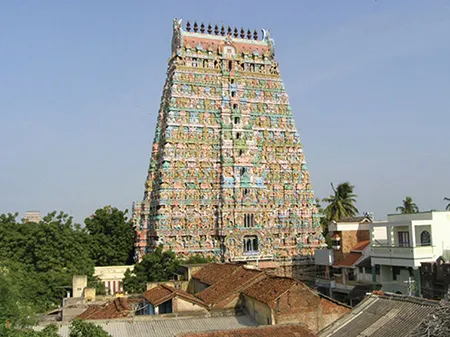
About Thanjavur Districts
The name Thanjavur is derived from “Tanjan”, a legendary asura in Hindu mythology. Thanjavur is one of the oldest cities in India and has a long and varied history dating back to Sangam period. The city rose into prominence during the rule of the Later Cholas when it served as the capital of the Chola empire. After the fall of the Cholas, the city was ruled by the Pandyas, Vijayanagar Empire, the Madurai Nayaks, the Thanjavur Nayaks, the Thanjavur Marathas and the British. It has been a part of independent India since 1947.
Thanjavur is an important center of South Indian art and architecture. Most of the Great Living Chola Temples, an UNESCO World Heritage Monument are located in an around Thanjavur. The foremost among the Great Living Chola temples, the Brihadeeswara Temple, is located in the center of the town. Thanjavur is also the home of the Tanjore painting, a painting style unique to the region. The town is an important agricultural center located at the heart of the region, known as the “rice bowl of Tamil Nadu”. South Zone Culture Centre in Thanjavur is one of many regional cultural centres established by Indian Government to preserve and promote traditional cultural heritage of India.
The name Thanjavur is believed to have been derived from Tanjan[2], an asura in Hindu mythology, who is believed to have to have been killed at this spot by the Hindu god Vishnu.[3] Also the name is believed to have been derived from Than-sei-oor, it means the place is surrounded by rivers and green paddy fields.
Thanjavur’s economy is mainly agro-based. The town acts as a focal point for food grains transported from the adjoining areas of the Cauvery Delta. The town also has some medium and small-scale enterprises. Tourism constitutes a major portion of the town’s revenue. Prominent supermarket chains such as Food World, Nilgiris, Spencers and Subhiksha have their branches in Thanjavur
Thanjavur is also famous as ‘the Rice Bowl of Tamil Nadu’ and is a preserver of deep royal and historic past. The granary of South India also known as Tanjore used to be the capital of Chola kingdom during the 9th and 13th century. Today the town is a famous picnic and excursion destination from Chennai.
The monument is known for its intricate carvings, splendid temples, sculptures and architecture. Populat attractions include Bragatheeswarar Temple built by Rajaraja Cholan, the Great Chola King. The Saraswati Mahal Library situated inside was established in 1700 and displays the rarest collection of manuscripts.
The palace was initially built in 1550 AD as a joint effort of Nayakas and Marathas. Known for its fine masonry, the complex houses several famous monuments including the University Museum housing a collection of coins and musical instruments, Nayak Durbar Hall Art Museum and the Rajaraja Chola Museum. The collection includes rare Chola Bronze remains.
Apart from the artistic brilliance carved out of stone, the region is also famous for its Tanjore paintings. Done on both glass and board, these exquisite paintings showcase a distinct style of decoration and painting. Gold leaves and precious gems decorate the background of paintings, most of which show Lord Krishna in various poses apart from some other Gods and Goddesses.
Thanjavur is famous for its splendid temples, their intricate carvings, sculptures and architecture. One of the main attractions of Thanjavur is the Bragatheeswarar Temple, which is also known as the Big Temple. It was built by Rajaraja Cholan, the Great Chola King. The most interesting feature of the temple is the Saraswati Mahal Library, which was established in 1700 and has the rarest collection of manuscripts. To enrich your experience further visit the Thanjavur Palace.
The palace was built in 1550 AD and was a joint effort of Nayakas and Marathas. This splendid structure is known for its fine masonry. Apart from this, the Tamil University in Thanjavur is also a place worth watching. The University Museum houses a collection of coins and musical instruments. Amongst these, the Nayak Durbar Hall Art Museum and the Rajaraja Chola Museum are the most important ones. They display magnificent collection of Chola Bronzes.
Last, but certainly not the least; Thanjavur is highly acclaimed for its Tanjore paintings. These paintings have a distinct style of decoration and paint. They are done on glass as well as on board and in both the cases, the figures and the background are richly decorated with gold leaves and gems. The paintings mostly show Lord Krishna in various poses, but the ones in the temples depict other Gods and Goddesses also.
Climate/Weather of Thanjavur Districts
**Summer:**Max :98 C, Min : 46C,
Winter: Max : 30C, Min : 25C
History of Thanjavur Districts
Thanjavur district stands unique from time immemorial for its agricultural activities and is rightly acclaimed as the Granary of the South India lying in the deltaic region of the famous river Cauvery and criss-crossed by lengthy network of irrigation canals, this coastal district abounds in green paddy fields, tall coconut groves, vast gardens of mango and plantain trees and other verdant vegetation. Various testimonials available in the ancient Tamil literature referring to the Cauvery as possessing the sanctity of the Ganges in conformity with the legendry and mythological stories attributed to its divine origin, rightly point out why the river is popularly called the ’ Mother Cauvery’ and its sacredness is evident from ‘Kaviri-Thala-Puranam’. The river has also been named ‘Ponni’ because it is yielding ‘pon’ -Gold in the form of paddy. That is why it is said with pride that every iota of the earth of Thanjavur is equal to an iota of gold. The tillers in Tamil literature have been rightly called as ‘Kauvirippudhalvars’ - the sons of the Cauvery as they alone are worthy of this title for the rich production of grains in this fertile soil.
Thanjavur attained prominence under the Chola rulers who were paramount in South India during 9th to 12th centuries. They were not only excellent rulers but also mighty builders, who erected a large number of exquisite temples in their empire, some of which constitute the finest specimens of architecture. Hence the district stands distinguished in the state even in its large number of temples, whose legends extend deep into early historic times. Many of these temples reflect the power, genius and architectural grandeurs of their authors displaying the unique and magnificent proficiency in sculpture, painting and wood carving. Art gallery the great Saraswathi Mahal library, the ‘Sangeetha Mahal’ (hall of music), the thriving of classical music and dance known as ‘Bharathanatyam’ and the celebration of grand annual music festival at Thiruvaiyaru, in honour of the great Saint Thiagaraja, all bear testimony to the cultural heritage.
The period of Chola Kings was not only considered as epoch-making but also an era of the cultural renaissance. Thanjavur under the Chola rulers was the cradle of Tamil Culture. Literature and civilisation and the rare Tamil manuscripts in the Thanjavur library corroborate this fact. Another notable feature is that in spite of several alien invasions, onslaughts and internal conflicts, the ancient culture and civilisation have not suffered much devastation. The inhabitants have successfully concentrated their histrionic talents in the field of art, literature, drama, music and dancing and are known for their rich cultural and religious fervour. They live in close harmony as a well knit community and the three main religious groups viz., Hindus, Muslims, and Christians, celebrate their fairs and festivals with a sense of mutual respect. On festive occasion, the Hindu devotees out-number all other participants in the shrines belonging to other religions. Similarly, in the case of some Hindu festivals, the temples are thronged by a substantial number of persons belonging to other religious group as well, who have a staunch faith and come in full reverence to pay homage to the presiding deities.
According to the known history dating back to Sangam age, the Cholas ruled over Thanjavur for about one thousand years. It was here that plans were formulated to extent the Chola supremacy by spreading their glory from Kanniyakumari in the south to Himalayas in the north. They also under their patronage cultivated fine arts, erected temples, constructed anaicuts, built ports and cities.
Among the Chola Kings who found place Sangam literature, Karikala and Koccengan were the most prominent. The name ’ Karikala’ which in Tamil refers to a man with charred leg, was derived by this King from a fire accident. He was assailed imprisoned and deprived of his birth right by his enemies. He, however, managed to regain the throne and in the great battle at Venni he defeated Pandya and Chera rulers and secured for himself the hegemony over them. He crushed both the internal and external opposition and became complete master of his country. He renovated the capital of Uraiyur, built up the renowned port of Puhar (Kaveripoompattinam) and patronised liberal arts and letters.
Karikala was succeeded by two rival kings- Nalangilli and Nedungilli who ruled from Puhar and Uraiyur respectively. The next Chola King Killivalavan from Uraiyur was a brave and able warrior, besides a patron of letters. Of the Chola of later Sangam age, Koccengan was more brilliant and illustrious in both war and peace. He showed equal zeal for both Saivism and Vaishnavism, built numerous saivite temples including the famous Jambukeswara Temple at Tirunaraiyur. After a brief set back in the Chola regime between the third century to ninth century A.D., the Cholas became the mighty race of rulers. Once again Vijayalaya (850-870) the founder of the new Chola dynasty, drove away the Muttaraiyar Chieftains from Thanjavur and assisted the Pallava King to stem the tide of the Pandiyan overlordship. His son Aditya I (870-907) soon over-threw the Pallava King Aparajita and expelled him from his territory. After conquering the Kongu country and Pandyas, he further extended his kingdom. He was an ardent saivite like his father and built temples along the banks of cauvery from Sahyadri to the sea.
Parantaka I (907-955) was more powerful and under his rule Cholas acquired a dominion which foreshadowed the great empires of Rajaraja and Kullottunga. With the rise of Rajaraja I (985-1014), the days dawned to bring about new and brilliant chapter in the history of Cholas. Both in war and peace Rajaraja and his son Rajendra proved themselves as the most outstanding personalities of their time. Rajaraja conquered Kerala (Chera country) the whole of the Pandya country and Malainadu (Coorg ) and extended his dominion. He also invaded ceylon and destroyed Anuradhapura, its capital. He was also a great statesman and administrator and endeavoured his best to establish his empire on a firm footing. He built the most magnificent temple of Rajarajeswara at Thanjavur, the fine specimen of Tamil architecture. Rajaraja was succeeded by his son Rajendra I (1014-1044). He had the advantage of possessing an empire which had already been organised on sound lines. He set about at once to improve its organisation and increase its glory. He undertook expedition to north in search of the Ganges and assumed the title of Gangai Konda Cholan”.
His most glorious expedition was to Kadaram which shows the great naval strength of the Cholas. Rajendra I was succeeded by four rulers Rajadhiraja, Rajendra II, Virarajendra and Adirajendra’s reign was brief and it became weak in his time and later the kingdom passed on to the Eastern Chalukyan. Rajendra Kulottunga (1070-1120) was a remarkable personality. He was more a statesman than a warrior. From 1120 to 1163, three Chola kings, viz, Vikrama Chola (1120-1135) Kulottunga II (1136-1150) and Rajaraja II (1151-1163) succeeded Kulottunga I and under all these rulers no wars or invasions distracted the country. During the reigns of Rajaraja III (1216-1246) and Rajendra III (1247-1279), the Pandyas in the south and Hoysalas in the north monopolised all the power. By the beginning of the 13th century, the Chola dynasty became extinct and it gave way to Pandyan supremacy.
Culture
Thanjavur Festivals:
Saint Thyagaraja Aradhana Musical Festival - January. Pongal (Tourist) Festival - 14th to 16th January. Maham Festival in Kumbakonam - February and March once in 12 year. Last held in 1992. Arulmigu Thyagarajaswamy Car Festival - March. Muthupallakku Thiruvizha - May. Annai Velannkanni Festival - August and September. Raja Raja Chola’s Birthday Sathaya Thiruvizha - October every year. Nagoor Kandoori Festival - December.
Thanjavur Culture:
Thanjavur is known for its Carnatic music. It has produced many classical musicians and Bharatnatyam dancers. It has become the second important site for the annual Natyanjali dance festival. Tiruvaiyaru, close to Thanjavur is the place where the great musician saint Tyagaraja lived. Every year in the Tamil month of Thai, the musicians from all over the country will hold Tyagaraja Aradhana. Tamil, Marathi and English are the main spoken languages of Thanjavur. Thanjavur is also known for its unique painting style called Tanjore painting. The artist use a combination of canvas background with glass, metals to depict and decorate various scenes from Hindu mythology.
Tourist Attraction of Thanjavur Districts
Brahadeeswarar Temple:
The Brahadeewarar temple, called the Big Temple, is dedicated to Lord Siva. It was built by the great Chola King Raja Raja 1 (985 -1012 A.D). it is an outstanding exmple of Chola architecture. Recognizing its unique architectural excellence, UNESCO has declared it a World Heritage Monument.
The 64. 8 Mt. tall vimanam (tower over the sanctum sanctorum) is testimony to the engineering skill of the Cholas. In keeping with the size of the temple, it has gigantic “Mahalingam” in the shrine, measuring 4 meters in height. A monolithic Nandhi chiseled out of a single rock, measures 5. 94 meters in length, 2.51 metres in breadth and 3.66 meters in height. it is the second largest Nandhi in India. The Nandhi or bull is the vehicle of Lord Siva. Beautiful Chola fresco paintings adorn the inner walls of the Temple. One of the outstanding temples in South India, the Brahadeeshwarar temple is the Chola dynast’s finest contribution to Dravidian temple architecture. What makes the construction so unique is the variation from the usual temple building style of having a tall gopuram and smaller vimanam. At the Big Temple the vimanam asoars high while the gopuram is smaller. The 64. 8m tall, 14 tier pyramid shaped vimanam raised from a square base is topped by a huge monolithic cupola carved from an 81.3 tonne block of granite. It was raised with the aid of a 6 km long inclined plane. (ph.274476).
The Palace:
Just 1 km away from the Brahadeeswarar Temple is a magnificent palace, surrounded by huge fort walls. Dating back to the 14th century A.D., it was built partly by the Nayaks and partly by the Marathas. The Maratha royal family resides in this palace. It is a fascinating building with huge corridors, spacious halls, decorated rooms, tall observation towers, beautiful stucco works, wonderful fresco painted walls and ceilings, an underground tunnel and intricate carvings. The royal family’s sacred “Chandramaulessshwarar Temple” is located within the palace walls. (P:h 223384)
Art Gallery:
The art gallery has a fabulous collection of bronze icons, stone sculpture and pieces of art. The Collection is unique for its representation of Hindu gods and goddesses, myths and legends. The exhibits are priceless for their historical association.
Saraswathi Mahal Librart:
The Thanjavur Maharaja Serfoji’s Saraswathi Mahal Library is one among the few libraries in the world with texts of the medieval period. It is a treasure house of knowledge carefully fostered and nurture by successive dynasties of Nayaks and the Marathas of Thanjavur. It contains a rare and valuable collection of manuscripts, books, maps and paintings on all aspects of Art, Culture and literature, The Encyclopedia Britannica, in its survey of the Libraries of the world, describes it as “the most remarkable Library was made a Public Library in 1918
Sangeetha Mahal (Hall of Music):
Also in the Palace in the Sangeetha Mahal, acoustically perfect music hall. It is a striking example of the engineering skill of ancient builders.
Memorial Hall:
Located in the Palace complex, it displays rate antique belonging to the Maratha Royal Family. The artefacts, manuscripts, weapons, royal robes and handicrafts made out of ivory, jade, lacquer, glass, porcelain, wood, cloth and leather are worth seeing.
Marattah Durbar Hall:
Its huge pillars, beautiful stucco paintings and fresco-painted ceiling are eye-catching.
Sharajah Madi:
This is in the eastern part of the palace, built in the Saracenic style by Raja Serfoji after his return from Varanasi. It is six-storied and well-known for its ornamental balconies. Its spacious halls bespeak the grandeur of this palace. it enables the tourists to have a panoramic view of Thanjavur City (Ph:273623).
Rajarajan Mani Mandapam:
It is in the southern part of Thanjavur. It was built during the 8th World Tamil Conference in 1995. This Manimandapam has a museum in its ground floor.
Schwartz Church:
This church was built adjacent to Siva Ganga Tank in 1779 AD by Rajah Serfoji as a token of his affection to his tutor Rev. C.VSchwartz, a Danish missionary.
Sivaganga Tank:
This water tank lies beyond the North west compound of Brahadeeswarar Temple. It is surrounded by large walls and known for it’s sweet water.
Rajagopala Beerangi (cannon):
This is a huge cannon placed at the eastern gate of the Fort. The place is called ‘Beerangi Medu’. The Cannon is amazing in size and the quality speaks of the metallurgical knowledge of the people of those times. The Beerangi is the biggest in India.
Tholkappiyar Sadukkam:
This Sadukkam (Square) was built during the 8th World Tamil Conference. One can have a panoramic view of Thanjavur town from the tower.
Hotels/Lodge/Accommodation in Thanjavur Districts
**Hotel Rayas:**18,19 Head Post Office Road, , Kumbakonam, Thanjavur, Tamil Nadu,Ph:0435 2423270
**Jennys Residency:**3/14 Mc Donald’s Road, Tiruchirapalli, Tamil Nadu,Ph:0431 2414414
**Hotel Sangam:**Collector Office Road, Tiruchirapalli, Tamil Nadu,Ph:0431 2414700
**Hotel Femina (P) Ltd:**Williams Rd, Tiruchchirappalli, Tiruchirappalli, Tamil Nadu,Ph:0431 2414501
**Ramyas Hotel:**Williams Rd, Tiruchchirappalli, Tiruchirappalli, Tamil Nadu,Ph:0431 4000400
**Srishty Garden Resorts:**145, old-Courtalam, Ayiraperi (P.O), Courtallam, Tamil Nadu,Ph:04633 220960
How to reach Thanjavur Districts
- **Nearest Railway Station:**There is a railway junction in Thanjavur. It’s well connected with Tiruchi, Chennai and Nagore.
**Nearest Airport:**Airport Trichy. Thanjavur is 65kms east of Tirchy. Next closest airport is at Madurai. It’s about 200 kms by road. If you come from other parts of the country you can land in Chennai airport. Thanjavur is around 350 kms south of Chennai by road.
Road Transport: Thanjavur is well linked with all the major towns in Tamil Nadu and is also connected with Kochi, Ernakulam, Thiruvananthapuram and Bangalore.
Best time to visit Thanjavur Districts
November to February when the weather is pleasant for travel and exploration. The district can be visited year-round, but summer (March–June) can be very hot.
Timings & opening hours
The district is accessible year-round. Government offices operate 10:00 AM–5:30 PM on weekdays. Tourist attractions within the district have their own hours.
Entry fee & tickets
There is no entry fee for the district. Individual attractions within the district may have separate charges.
Duration needed
1–2 days to cover the main towns and attractions within the district. A comprehensive visit exploring rural areas, temples, and natural sites may require 2–3 days.
Location info
Thanjavur Districts is a district in Tamil Nadu, South India. It is located approximately 400 km from Chennai and is known for its cultural heritage, agricultural produce, or industrial significance..
Safety tips
Standard travel safety precautions apply. In rural areas, avoid travelling alone after dark. Keep vehicle maintained for long-distance travel within the district. Carry water, especially during summer months.
Things to carry
- Water Bottle: Stay hydrated during your visit.
- Comfortable Footwear: For walking and exploring.
- Camera: Capture memorable moments.
- Hat and Sunglasses: Sun protection.
Nearby visiting places
Neighbouring districts, major cities, and tourist attractions within a 50–100 km radius.
Nearest airport, railway & bus
Nearest airport: the nearest regional airport serving the district. The district has railway connectivity and a network of state highways. Regular bus services connect all major towns within the district.
Mobile network coverage
Airtel, Jio, BSNL, and Vi all provide coverage across Tamil Nadu. 4G is reliable in Chennai, Coimbatore, Madurai, and along major highways. Coverage may be weaker in remote sections of the Western Ghats, deep forest reserves, and certain rural interior areas. Free Wi-Fi is widely available in hotels and cafes in urban areas.
Food & restaurants nearby
Near Thanjavur Districts, local restaurants and eateries serve authentic Tamil Nadu cuisine including idli, dosa, vada, sambar, and rice-based meals. Visitors can also find North Indian and Chinese options at multi-cuisine restaurants in the nearest town.
Things to do at Thanjavur Districts
Explore the district’s towns and villages to experience authentic Tamil culture. Visit the district’s temples, historical sites, and natural attractions. Learn about local crafts, agricultural practices, and traditional industries.
Things to visit & highlights
The district’s main town or city, key temples and historical landmarks, local markets showcasing regional products, and rural areas offering a glimpse of traditional Tamil life.
Helpline & emergency contacts
Tourist Helpline: 1364. Police: 112. Ambulance: 108. The district headquarters has a government hospital with emergency services.
Nearest petrol pump
Petrol pumps are available at the district headquarters town and along major highways throughout the district.
Frequently asked questions
What is the best time to visit Thanjavur Districts district? November to February offers the most comfortable weather for travel. Summer months (March–June) are very hot.
How can I travel within the district? Local buses connect major towns within the district. Taxis and auto-rickshaws are available in towns for local travel.
What is the local economy of Thanjavur Districts district known for? The economy varies by district — some are known for agriculture, others for handlooms, textiles, or small-scale industries.
Quick facts
- Type: Destination
- State: Tamilnadu
- Category: Districts
Map & location view
This section is being updated and will be available shortly.
Photo gallery of Thanjavur Districts
Video gallery
Related destinations
Coimbatore
When we speak of life we always speak about the positives, the interesting, the happy, joy and everlasting moments and things which have always entertained us. That…
Cuddalore Districts
Cuddalore is a fast growing industrial city located south of Pondicherry on the banks of the Bay of Bengal. The word Cuddalore literally means "Sea Town" in Tamil…
Dharmapuri Districts
Dharmapuri District is bordered by Vellore and Thiruvannamalai districts in the east, Salem District in the south, Bangalore and Chamrajnagar districts of the state…