Alagarmalai cave of Madurai
Alagar Kooil is situated at the foot of two hillocks, 21 km northeast of Madurai, the second most populous city in Tamil Nadu. In religious terms, the place is called Alagar Kooil (kooil meaning temple), and in geographical terms, it’s called Alagar Malai (malai meaning hill). The maximum height the twin hills attain is 300 meters. The hills hold high significance due to perennial springs and diverse flora and fauna, even though the forests have suffered contamination and depletion. Today, they…
Quick facts
| Location | Address: Anaimalai, Alagarmalai, Tiruparankundram, MaduraiDistrict: MaduraiNearest City: MaduraiBest time to visit: September - March |
|---|
About Alagarmalai cave of Madurai
Alagar Kooil is situated at the foot of two hillocks, 21 km northeast of Madurai, the second most populous city in Tamil Nadu. In religious terms, the place is called Alagar Kooil (kooil meaning temple), and in geographical terms, it’s called Alagar Malai (malai meaning hill). The maximum height the twin hills attain is 300 meters. The hills hold high significance due to perennial springs and diverse flora and fauna, even though the forests have suffered contamination and depletion. Today, they still harbor many valuable herb species.
A proposal to designate Alagar Kooil Valley as a protected region for the conservation of the endangered Grizzled Giant Squirrel, Ratufa Macroura (also known as the Sri Lankan Giant Squirrel), is pending. The species has only one protected site in India, approximately 100 km south of Alagar Kooil in Senbagattooppu near Rajapalayam. Fewer than 300 individuals are estimated to remain.
The stone beds in these caves suggest they were once abodes for monks. Numerous flat stones can be found in these caves, with one end of these horizontal rocks slightly raised as a headrest. The upper portions of the caves are crafted to prevent rainwater from seeping in. Wooden poles were driven into the ground in front of these caves to support thatched roofs. These shelters were typically located near water sources to meet the essential needs of the ascetics.
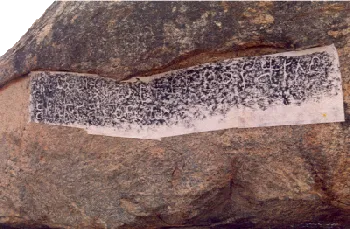
The caves are historically significant as some of the earliest stone monuments in the region. They also contain epigraphic records in the Brahmi script. It is said that the design of Hindu temples in and around Madurai was inspired by these caves. Thirunarankondrai, a village near Ulundurpet, became a renowned Jain pilgrim center and a seat of learning where monks and scholars from all over India gathered. The carved image of Paraswanathar, the 23rd Jain Tirthankara, is found on the hilltop here, depicted in a standing position with a serpent’s hood spread above his head. Locally, Paraswanathar is referred to as Appandainathar.
About Alagarmalai cave of Madurai
Alagar Kooil, located about 21 km northeast of Madurai in Tamil Nadu, is a place of immense religious and geographical significance. Known in religious terms as Alagar Kooil (with “kooil” meaning temple), this area is home to the Kallazhagar Temple, a famous pilgrimage site dedicated to Lord Vishnu. Geographically, it is referred to as Alagar Malai (“malai” meaning hill), with twin hills that rise up to 300 meters.
Alagar Malai is celebrated not only for its natural beauty, with perennial springs and rich biodiversity, but also for its historical caves. These caves were ancient dwellings for Jain monks around the 2nd century BCE, featuring stone beds with raised headrests and Tamil-Brahmi inscriptions. This makes them some of the earliest stone monuments in the region and provides valuable insights into the spread of Jainism in Tamil Nadu.
The caves are thought to have influenced the architectural style of Hindu temples around Madurai, with structures designed to withstand the elements and meet the basic needs of monastic life. This unique blend of history and architecture draws visitors and scholars alike.
Ecological Importance: Alagar Malai is home to several rare plant species and medicinal herbs. Additionally, the hills are known for harboring the endangered Grizzled Giant Squirrel (*Ratufa macroura*), a species with fewer than 300 individuals remaining in this area. Conservation efforts have been proposed to protect the Alagar Kooil Valley as a sanctuary for this species.
Festivals and Culture: The Kallazhagar Temple is a focal point during the annual Chithirai Festival, where devotees gather in large numbers as the deity is carried to Madurai in a grand procession. This event celebrates the vibrant local culture and the religious heritage of Alagar Kooil.
For more on Alagar Malai and its heritage, check this video on Alagar malai Cave Explained | Madurai | Karna | Tamil Navigation.
Climate/Weather
Summer (March to June): During this period, temperatures can reach highs around 40°C (104°F). The intense heat and humidity can make outdoor activities uncomfortable, so visitors should prepare accordingly.
Monsoon (July to September): Alagar Kooil experiences moderate to heavy rainfall, offering relief from the summer heat but also resulting in slippery trails and limited access to some areas.
Post-Monsoon and Winter (October to February): This season offers the most pleasant weather, with temperatures ranging from 20°C to 30°C (68°F to 86°F). The reduced humidity and clear skies make it an ideal time for exploration, outdoor activities, and temple visits.
Best Time to Visit: The optimal period for visiting Alagar Kooil is from October to February, when the weather is comfortable and favorable for sightseeing and religious events.
History
Alagar Kovil, also known as Azhagar Kovil, is a historic temple located about 21 km northeast of Madurai, Tamil Nadu, nestled at the foothills of the Alagar Hills. Dedicated to Lord Vishnu, revered here as Kallalagar or Sundararaja Perumal, the temple holds significant religious and cultural importance.
Ancient Origins: The origins of Alagar Kovil trace back to the Sangam period (3rd century BCE to 3rd century CE). It is mentioned in ancient Tamil literary works such as the Silappadikaram and Manimekalai, and is also glorified in the Naalayira Divya Prabandham, marking it as one of the 108 Divya Desams dedicated to Vishnu.
Pandya Dynasty Contributions: The temple flourished under the Pandya dynasty, with King Jatavarman Sundara Pandyan (1251-1270 AD) plating the vimana (tower above the sanctum) with gold, enhancing its grandeur.
Vijayanagara and Nayak Periods: Further contributions came from the Vijayanagara Empire and Nayak rulers, with Thirumalai Nayakar adding structures like the Kalyana Mandapam, which showcases the rich architectural style of the period.
Architectural Features: The temple features Dravidian architectural style, including a seven-tiered rajagopuram (gateway tower) and intricate sculptures. Within the granite walls are shrines, mandapams, and unique sculptures, like the life-size images of Narasimha and Chakratalvar with 16 hands holding 16 weapons, a rare iconographic feature.
Cultural and Religious Importance: Alagar Kovil is especially prominent during the Chithirai Festival (April-May), which reenacts the legend of Lord Kallalagar’s visit to Madurai for his sister Goddess Meenakshi’s celestial wedding. Thousands of devotees participate, with the event culminating in a grand procession to the Vaigai River. Recognized as one of the 108 Divya Desams, it is a revered site in Vaishnavism.
Alagar Kovil stands as a lasting testament to Tamil Nadu’s rich cultural and religious heritage, showcasing centuries of devotion, art, and architectural excellence.
Interesting things to Visit
**Meenakshi Temple :**Madurai or is the oldest and second largest city of Tamil Nadu. This city is located on Vaigai River and was the capital of Pandyan rulers. The Pandyan king, Kulasekhara had built a gorgeous temple around which he created a lotus shaped city. It has been a center of learning and pilgrimage, for centuries. Legend has it that the divine nectar falling from Lord Shiva’s locks gave the city its name - ‘Madhurapuri’, now known as “Madurai”.Madurai is famous for its Meenakshi Temple, one of India’s biggest Temples which is dedicated to Meenakshi, the consort of lord Shiva. Exquisite sculptures, hall of thousand pillars, icons, photographs & illustrations make this Temple a famous tourist spot. The Temple is an excellent example of Dravidian architecture. The Meenakshi temple complex is one of the largest and certainly one of the most ancient.
According to legend Madurai is the actual site where the wedding between Shiva and Meenakshi took place. The gigantic temple complex, the statues exploring the entire range of human emotions, everything here is larger than life. The soaring and exquisitely carved towers enclose the temple dedicated to Meenakashi. The south gateway contains the twin temples of Shiva and Meenakshi and is about nine storeys high.
Nearest Visiting places
Tirunelveli : Thirunelveli, the southernmost district of Tamil Nadu is described as a microcosm of the state. The district has diverse geographical and physical features such as high and lofty mountains and low plains, rivers, cascades, seacoast, thick inland forest, sandy soils and fertile alluvium, a variety of flora, fauna, and protected wild life.
Kalugumalai: Information about Kalugumalai, Thoothukudi District, Tamil Nadu, India. Kalugumalai locates in between Kovilpatti and Sankarankoil. This small beautiful town has great historic background and religious land.
Kodaikanal, 2135 metres (7000 feet) above sea level is a lovely hill resort which lies amidst the sylvan grandeur of the Palani Hills in the dindugal district. The nearest railhead is Kodaikanal Road on southern Railways. From Kodaikanal Road, one has to travel 80 kms. (50 miles) by road to reach Kodaikanal. Two-thirds of this motor journey up the hill through the ghats is an exciting experience with the vista and scenery changing at every bend and curve on the mountain road.
Nearest Petrol Pump
IndianOil - Arv Petrol Bunk: Located on Alagar Koil Main Road, Pudur Surveyor Colony, Madurai. This station operates 24 hours and provides services like nitrogen gas filling and premium petrol.
IndianOil - Cordial Agencies: Situated on Uthangudi Melur Road, Mattuthavani, Madurai, around 15 km from Alagar Kovil. Offers a variety of fuel services.
IndianOil - Arun Automobiles: Located on Melur Road, Madurai, approximately 18 km from Alagar Kovil. Provides standard fuel services.
Hotels/Lodge/Accommodation
For accommodation near Alagarmalai cave of Madurai, nearby towns offer budget lodges, guesthouses, and mid-range hotels. Book ahead during peak season (December-March).
Help Line/Phone Number
Temple Administration Phone: +91 452 247 0228
Email: alagarkoilmadurai@gmail.com
For further assistance or inquiries, you may reach out to the Alagar Kovil temple administration directly through the provided contact details.
Nearest Hospital:
Chirstian Mission Hospital
East Marret Street, East Marret Street, Madurai, Tamil Nadu 625001- 0452 2326458
Visaka Poly Clinic
#1 Katarapalayam,, T.P.K Main Road,, Madurai, Tamil Nadu 625001- 0452 2338275
Vijaya Vennila Hospital
16/185, North Veli Street, North Veli Street, Madurai, Tamil Nadu 625001- 0452 2343365
Brain Nerves Hospital
72, Vakkil New Street, Vakkil New Street, Madurai, Tamil Nadu 625001- 0452 2325123
Location info
Address: Anaimalai, Alagarmalai, Tiruparankundram, Madurai
District: Madurai
Nearest City: Madurai
Best time to visit: September - March
Best time to visit Alagarmalai cave of Madurai
November to February when the weather is comfortable for the approach walk. Early morning is ideal to avoid heat. Caves maintain a cool temperature year-round (20°C–25°C inside). Avoid visiting during heavy rain.
Timings & opening hours
Best visited during daylight hours, typically 8:00 AM to 5:00 PM. Some caves managed by the Archaeological Survey of India have fixed visiting hours. Caves may be closed during heavy rain for safety reasons.
Entry fee & tickets
Entry fee: INR 10–25 for Indian nationals, INR 100–200 for foreign nationals. Camera fee may apply (INR 20–50). Maintained by ASI or state tourism departments at most locations.
Duration needed
30 minutes to 1 hour for the cave exploration. Allow additional 30–60 minutes for the approach trek and time spent studying the cave architecture or formations.
Safety tips
Watch your head — cave ceilings may be low in places. Carry a flashlight as interior lighting may be poor. Wear non-slip shoes — cave floors can be damp and slippery. Stay on designated paths. Bats may be present — do not disturb them. Some caves have narrow passages.
Things to carry
- Water Bottle: Stay hydrated during your visit.
- Comfortable Footwear: For walking and exploring.
- Camera: Capture memorable moments.
- Hat and Sunglasses: Sun protection.
Nearest airport, railway & bus
By Air: Chennai International Airport (MAA) is the primary international gateway. Regional airports include Coimbatore International Airport (CJB), Madurai International Airport (IXM), and Tiruchirappalli International Airport (TRZ), depending on location.
By Train: Tamil Nadu has an extensive railway network. Major junctions include Chennai Central (MAS), Coimbatore Junction (CBE), Madurai Junction (MDU), Tiruchirappalli Junction (TPJ), and Salem Junction (SA). From the nearest station, local transport is readily available.
By Road: Tamil Nadu State Transport Corporation (TNSTC) operates an extensive bus network connecting all parts of the state. National highways NH 44, NH 48, and NH 32 provide excellent connectivity. Private buses and taxis are also available from nearby towns and cities.
Mobile network coverage
Airtel, Jio, BSNL, and Vi all provide coverage across Tamil Nadu. 4G is reliable in Chennai, Coimbatore, Madurai, and along major highways. Coverage may be weaker in remote sections of the Western Ghats, deep forest reserves, and certain rural interior areas. Free Wi-Fi is widely available in hotels and cafes in urban areas.
Food & restaurants nearby
Near Alagarmalai cave of Madurai, small local eateries in the nearest village or town serve traditional Tamil Nadu food including rice meals, dosa, and idli. Visitors are advised to carry water and light snacks when exploring the cave area.
Things to do at Alagarmalai cave of Madurai
Explore the cave interior to observe the rock formations, ancient inscriptions, or rock-cut architecture. Walk through the chambers and passages while appreciating the cool natural environment. Look for evidence of past habitation or religious use.
Frequently asked questions
What is the best time to visit Alagarmalai cave of Madurai? November to February offers comfortable weather. Morning hours (8–10 AM) provide good lighting near the cave entrance.
How difficult is the approach to Alagarmalai cave of Madurai? The approach varies from an easy walk of 5–10 minutes to a moderate climb of 15–20 minutes. Wear comfortable walking shoes.
Are there guides available at Alagarmalai cave of Madurai? Local guides may be available at major cave sites. For smaller caves, it is recommended to read about the site beforehand.
Accessibility
Accessibility information is not currently available for this site. Contact the venue directly or check with your accommodation for the latest accessibility details.
Rules & restrictions
Standard visitor rules apply. Check locally for any specific restrictions at this site.
Best photography spots
The best photography spots are typically during the golden hours (early morning and late afternoon). Scout the location first to identify the best angles, and consider the direction of light at different times of day.
Visitor information
Please check locally for current visitor information.
How to reach Alagarmalai cave of Madurai
By Air: The nearest airport is Madurai International Airport, located about 38 km from Alagar Kovil. From the airport, you can hire a taxi or use public transportation to reach the temple.By Train: Madurai Junction is the closest major railway station, approximately 22 km from Alagar Kovil. Regular trains connect Madurai to various cities across India. Upon arrival at the station, taxis and buses are available to take you to the temple.By Road: Madurai is well-connected by road networks. From Madurai city, you can take a bus or hire a taxi to Alagar Kovil. The journey by road typically takes around 30 to 45 minutes, depending on traffic conditions.Local Transportation: Once in Madurai, local buses operated by Tamil Nadu State Transport Corporation (TNSTC) frequently travel between the city and Alagar Kovil. Alternatively, auto-rickshaws and taxis are readily available for hire.Travel Tips: The best time to visit Alagar Kovil is from October to February for pleasant weather, ideal for sightseeing. Visiting during the Chithirai Festival (April-May) offers a unique cultural experience with grand celebrations.
Map & location view
This section is being updated and will be available shortly.
Photo gallery of Alagarmalai cave of Madurai
Video gallery
Related destinations
Anaimalai Cave of Madurai
Jainism might have originated in North India.But it has a 1000-year history in South India,particularly Tamil Nadu.The several monuments scattered in the peninsular…
Jambai cave
The earliest extant religious vestiges in Tamil Nadu are the famous Jain caves scattered throughout the region, which were once the dwelling places of several Jaina…
Kongarpuliyankulam Cave
Jainism might have originated in North India. But it has a 1000-year history in South India, particularly Tamil Nadu. The several monuments scattered in the…