Kanjirankulam Bird Sanctuary
Flora: The sanctuary vegetation can be classified generally as that of Tropical Dry Deciduous type. It is dominated by Babul (Acacia nilotica) along with Prosopis juliflora and grasses such as Cynodon dactylon and Eremopogan faveolatus. Prosopis is slowly encroaching large extent of the sanctuary area and is retarding the growth of Babuls. The tank bund and the area outside the tank are having Tamarindus indica, Ficus Spp., Neem, (Azadirachta indica), Thespesia Populnea, Albizzia amara, Moringa…
Interesting things to Visit
Flora:
The sanctuary vegetation can be classified generally as that of Tropical Dry Deciduous type. It is dominated by Babul (Acacia nilotica) along with Prosopis juliflora and grasses such as Cynodon dactylon and Eremopogan faveolatus. Prosopis is slowly encroaching large extent of the sanctuary area and is retarding the growth of Babuls. The tank bund and the area outside the tank are having Tamarindus indica, Ficus Spp., Neem, (Azadirachta indica), Thespesia Populnea, Albizzia amara, Moringa oleifera and Palmyra (Borassus flabellifer).
Fauna:
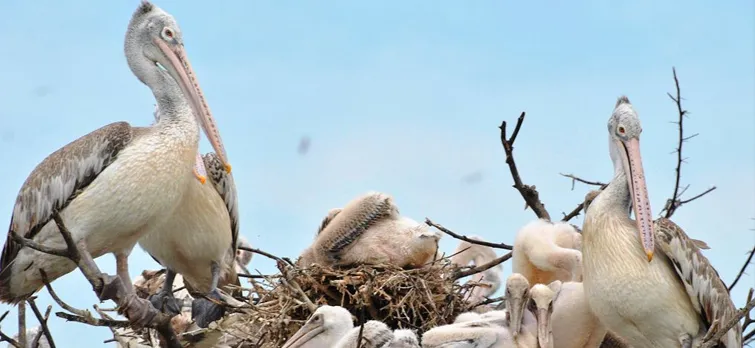
The sanctuary offers ideal habitat for winter migratory birds with considerable diversity in nesting and feeding behaviours. It is one of the preferred nesting sites for heronry species a colonial bird migrating to South India. The feathered visitors flock the sanctuary from October to February. The wetland is irregular in depth and retains water for 3 to 5 months if rain is normal. The bird sanctuaries receive nearly 170 species of birds. Breeding population consists of Painted stork, White Ibis, Black ibis, Little egret, Large egret
Ramanathaswamy Temple:
The legend says that Hunuman was sent by Lord Rama to bring a temple_tower1.jpg (205360 bytes)Lingam to worship at an appointed auspicious hour. As Human’s arrival was delayed, Sita moulded a lingam for Rama’s timely worship. It is the main deity being worshiped as Ramanathaswamy. Disappointed Hunuman was later consoled by Rama by installing the Lingam which was brought by him a little north of Ramanatha, and decreed that the Hunuman’s lingam should have precedence over the Ramanatha in all honours.
Annai Indira Gandhi Bridge:
The 2.2 km. length bridge connecting the Rameswaram Island and the mainland is the longest bridge in India constructed over a bay. It is also called as Pamban Bridge. Similarly the railway bridge connecting the island is noted for its unique opening to pass the ships through the sea.
Mandapam & Pamban:
Lying on the Ramanathapuram Rameswaram National Highway and just 19 kms before Rameswaram lies this sleepy coastal village of Mandapam . Prior to the 1914 train service linking the mainland with Rameswaram, boats were the only mode of transport to ship the pilgrims on their journey to Rameswaram. It is possible to take a boat for a cruise through the mangrove marshes to Kurusadai Island.
Villoondi Theertham:
Villoondi literally translated stands for ‘buried bow’. It is quite well known that Lord Ram always carried a bow. According to legend, at this sacred spot, located around 7 kilometers from the main temple on the way to Pamban, is this puranic place, significant because it was at this place where Lord Ram is said to have quenched the thirst of Sita by dipping the bow into the sea water. Even to this day, tourists throng this place to see where potable water is available within the vicinity of sea water.
Agnitheertham:
The calm shallow water-spread of the sea, present hardly 100 meters in front of the temple gopuram is considered as sacred. A dip in the Agnitheertham is considered to remove the sins of the pilgrims. The other theerthams (holy water tanks) in and around the temple are also important for Pilgrims.
Jadayu Theertham:
Jadayu, King of the Birds, who fought in vain with Ravana, the demon to save Sita, is said to have fallen down here as his wings were severed. Sand dunes surround the temple and the pond. The water in the pond is as sweet as that of a tender coconut.
Nearest Visiting places
Badrakali Amman Temple:
A kilometer away from the main sanctum sanctorum is the Badrakali Amman Temple with Devi Durga as its chief deity. It is very popular among Devi Durga’s worshippers hailing mainly from West Bengal & Kolkatta. This temple is en-route the Gandhamathana Parvatham.
Kothandaramaswamy Temple:
Kothandaramaswamy Temple This Vishnu shrine is located 18 kms away on the southern tip of the island called Dhanushkodi.This temple is the only structure that survived the 1964 cyclone which washed away the rest of Dhanushkodi.It can be reached by road from Rameswaram and buses ply to this place. It was the place where Vibishana the brother of Ravana is said to have surrendered to Rama.The temple has beautiful idols of Rama, Sita, Lakshmana, Hanuman and Vishnu. On the very tip of Dhanushkodi is a sacred pool – a lovely bathing ghat.
The Gandhamadana Parvatham (Hillock):
The Gandhamadana Parvatham (Hillock) It is in the north –west of the island and the most elevated point of the island. It is a two-storied structure with a ruined fort. Hanuman is said to have leapt from this point across the sea to reach Lanka.The feet of Rama is in the centre of the lower storey. It is also known as Ekantha Rameswaram and contains handsome idols of Rama, Sita and Lakshmana.Here; Rama is seen raising one of his arms. From this elevated place, one can have an excellent view of the whole island.
Coral Reefs:
The coral reefs of Rameswaram are another attraction mainly for marine biologists, who throng these islands for research and observation.
Dhanushkodi:
The southernmost tip of the island is called Dhanushkodi. It was completely washed away by a cyclone in 1964. But the Kothandaramasamy Temple here remains intact. It is 18 KMs way from Rameswaram can be reached by road. A popular belief is that, it is where Vibishana a brother of Ravana surrendered before Rama. Dhanushkodi has a fine beach, where Sea surfing is possible.
Devi patinam:
A coastal village is also known as Navashabashanam.It is believed that Lord Rama worshipped Navagraha here. The temple near by here, is dedicated to Devi, who is said to have killed the demon Mahishasura at this spot. Hindus perform religious rites for their forefathers here.
Erwadi:
The tomb of Sultan Ibrahim Syed Aulia, who came from Arabia via Cannanore is about 800 years old. Pilgrims from far off countries like Srilanka, Malaysia and Singapore are visiting this tomb. Santhanakoodu Festival is celebrated in February-March attracts thousands of pilgrims.
Satchi Hanuman Temple:
This is where Hanuman said to have delivered the good news of sita’s well being to Rama with an evidance choodamanai(Jewel) of Sita.
Five Faced Hanuman Temple:
Hanuman is adorned with senthooram here. The stone said to have used to construct the floating bridge Sethu Bandanam could be seen here.
Thiruvetriyur:
The Patham Priya Koil is situated in Thiruvetriyur in R.S. Mangalam Block of the district. The temple is spread over a vast area and has a large Tank and pilgrims flock here in hundreds every day for blessings and to pay obeisance.
Sethu karai:
A place of Puranic importance, Sethu karai (meaning the Sethu Coast) is an important pilgrim centre having religious significance owing to the belief that Lord Ram is said to have constructed a bridge from here over the sea waters to reach Sri Lanka . It is a hallowed place for Hindus as they conduct their religious rites in this place and is situated around 68 kilometers from Rameswaram and is near Erwadi Dharga.
Oiyur:
Oriyur is one of the most revered pilgrim centers for Christians the world over as it is home to the martyrdom of St. John De Britto, a Portugese Jesuit better known as ‘Arul Anandar’. It was in this place that the saint was beheaded in 1693 and the sand dune is said to have turned red, believed to be stained by the blood of the saint. Here, one can see a magnificent shrine with its Portugese façade that contains a captivating statue of Arul Anandar offering his neck in humble submission to the executioner.
Sea world aquarium:
Just opposite the Rameswaram Bus Stand, one can catch a quick glimpse of an assortment of underwater creatures in their near natural habitat in the ‘Sea World Aquarium’ – the only one of its kind in the state, and probably in the country too, filled with such varied marine life forms including exotic species such as Octopus, Snake fish, Parrot fish, Sea lizard, Sea squid, Cow fish, Lion fish, Rabbit fish, Fire fish, Butter fish, Clown fish, Crabs, Lobsters, Prawns, Sea Lotus, Beach Tamet, Star Fishes, Sea Horses and Sharks. This is quite an eye-opener for young tourists & kids and lovers of marine life.
Hotels/Lodge/Accommodation
For accommodation near Kanjirankulam Bird Sanctuary, nearby towns offer budget lodges, guesthouses, and mid-range hotels. Book ahead during peak season (December-March).
Help Line/Phone Number
Pioneer Hospitals:NH 49,Ramanathapuram,Tamil Nadu,Ph:04567 221317
Keelakarai Govt. Hospital:Keelakarai,Ramanathapuram,Tamil Nadu,India
Location info
-
**Address:**Kanjirankulam Bird Sanctuary,Ramanathapuram , Tamil Nadu, India
-
**District:**Ramanathapuram
-
**Nearest City:**Ramanathapuram
-
Best time to visit: All year round
How to reach Kanjirankulam Bird Sanctuary
**Nearest Railway Station:**Rameshwaram railway station (3kms from the city). It is connected by several trains with major cities of Tamil Nadu like Chennai, Madurai, Coimbatore, Tiruchirapalli and other places in South India. Sethu Express, Tirupati-Madurai Express, Tirunelveli Express, Rameshwaram Express, Rameshwaram -Coimbatore Fast Passenger are the major trains that connects Rameshswaram. From railway station one can hire local transport like cycle, auto-rickshwas, jeeps and taxis etc.
- **Nearest Airport:**Madurai airport at 174km
**Road Transport:**Rameswaram is well connected to all the main towns. The Pamban Bridge has made Rameshwaram accessible by road from other parts of the South via the NH 49. There is a regular bus service from Kanniyakumari, Madurai (Routes from Madurai - NH49 to Rameswaram via Ramanathapuram from Trichy NH210 to Ramanathapuram via Karaikkudi; NH49 to Rameswaram via Mandapam), Trichy, Tiruchendur and Madras to Mandapam. Rameshwaram is 527 km from Chennai, 315 km from Kanyakumari and 273 km from Tiruchirapalli
Best time to visit Kanjirankulam Bird Sanctuary
November to March when migratory birds arrive from Siberia, Europe, and Central Asia. Early morning (6–9 AM) is the best time for bird watching. Late afternoon (3–5 PM) is also good. Avoid midday when birds are less active.
Timings & opening hours
Best visited during daylight hours, typically 6:00 AM to 6:00 PM. The sanctuary may have restricted access during the breeding season to avoid disturbance. Check forest department guidelines before visiting.
Entry fee & tickets
Entry fee: INR 10–25 for Indian adults, INR 100–200 for foreign nationals. Camera fee: INR 20–50 (still). Binoculars may be available for rent at the sanctuary office.
Duration needed
2–4 hours for a thorough bird-watching session. Bird photographers and serious birders may spend 4–6 hours covering the sanctuary. Early morning visits are most productive.
Safety tips
Wear sturdy walking shoes — the sanctuary trails may be uneven or muddy. Carry insect repellent, especially near water bodies. Stay on designated paths. Do not disturb nesting birds. Maintain silence for better bird sightings. Carry sufficient water.
Things to carry
Binoculars (essential), camera with telephoto lens, bird identification guide or app, water bottle, hat, insect repellent, sunscreen, snacks, notebook. Wear muted colours.
Nearest airport, railway & bus
By Air: Chennai International Airport (MAA) is the primary international gateway. Regional airports include Coimbatore International Airport (CJB), Madurai International Airport (IXM), and Tiruchirappalli International Airport (TRZ), depending on location.
By Train: Tamil Nadu has an extensive railway network. Major junctions include Chennai Central (MAS), Coimbatore Junction (CBE), Madurai Junction (MDU), Tiruchirappalli Junction (TPJ), and Salem Junction (SA). From the nearest station, local transport is readily available.
By Road: Tamil Nadu State Transport Corporation (TNSTC) operates an extensive bus network connecting all parts of the state. National highways NH 44, NH 48, and NH 32 provide excellent connectivity. Private buses and taxis are also available from nearby towns and cities.
Mobile network coverage
Airtel, Jio, BSNL, and Vi all provide coverage across Tamil Nadu. 4G is reliable in Chennai, Coimbatore, Madurai, and along major highways. Coverage may be weaker in remote sections of the Western Ghats, deep forest reserves, and certain rural interior areas. Free Wi-Fi is widely available in hotels and cafes in urban areas.
Food & restaurants nearby
Basic food options are available at forest rest houses, eco-lodges, and small local eateries near Kanjirankulam Bird Sanctuary. These typically serve South Indian vegetarian meals including rice, sambar, poriyal, and curd. Visitors are advised to carry packed food and sufficient water when visiting the sanctuary.
History of Kanjirankulam Bird Sanctuary
Kanjirankulam Bird Sanctuary was declared a protected bird sanctuary to safeguard the avian biodiversity of the region. The sanctuary’s wetlands and water bodies attract thousands of migratory birds that travel from Siberia, Europe, and Central Asia during winter. It plays a crucial role in bird conservation along the Central Asian Flyway.
Things to do at Kanjirankulam Bird Sanctuary
Spot and identify resident and migratory bird species using binoculars and field guides. Walk along the sanctuary’s trails and watchtowers for panoramic views of the wetlands. Photography of birds in their natural habitat, especially during golden hour.
Climate & weather
Tamil Nadu has a tropical climate with generally hot and humid conditions year-round. The best time to visit is November to February, when temperatures are a more comfortable 20°C–28°C. March–June is very hot, with interior areas reaching 40°C+. The state receives rainfall from both the southwest monsoon (June–September, mainly in western ghats) and the northeast monsoon (October–December, bringing rain to coastal areas including Chennai). Hill stations (Ooty, Kodaikanal) are pleasant year-round.
Nearest petrol pump
Petrol pumps are available in the nearest town on the main road. It is advisable to fill fuel before visiting the sanctuary as options near the sanctuary are limited.
Frequently asked questions
What is the best season for bird watching at Kanjirankulam Bird Sanctuary? November to March when migratory birds arrive. December and January offer the highest diversity of species.
What birds can I expect to see? The sanctuary hosts herons, egrets, storks, ibises, pelicans, ducks, and many migratory species. Over 100 species may be recorded during peak season.
Is prior permission required to visit? For most sanctuaries, entry tickets can be purchased at the gate. For photography with professional equipment, prior permission from the forest department may be required.
Accessibility
Accessibility information is not currently available for this site. Contact the venue directly or check with your accommodation for the latest accessibility details.
Rules & restrictions
Standard visitor rules apply. Check locally for any specific restrictions at this site.
Best photography spots
The best photography spots are typically during the golden hours (early morning and late afternoon). Scout the location first to identify the best angles, and consider the direction of light at different times of day.
Quick facts
- Type: Tourist Attraction
- State: Tamilnadu
- Category: Bird Sanctuary
Visitor information
Please check locally for current visitor information.
Map & location view
This section is being updated and will be available shortly.
Photo gallery of Kanjirankulam Bird Sanctuary
Video gallery
Related destinations
Chitrangudi Bird Sanctuary
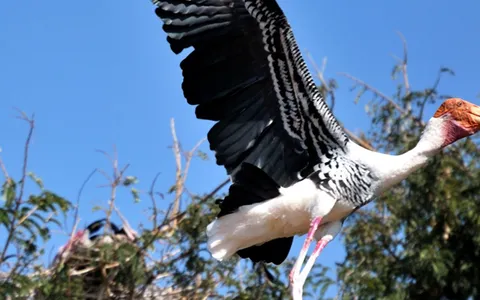
Chitrangudi Bird Sanctuary locally known as "Chitrangudi Kanmoli" is a .4763 km2 (0.2 sq mi) Protected area declared in 1989 and a part of Chitrangudi village…
Karikili Bird Sanctuary
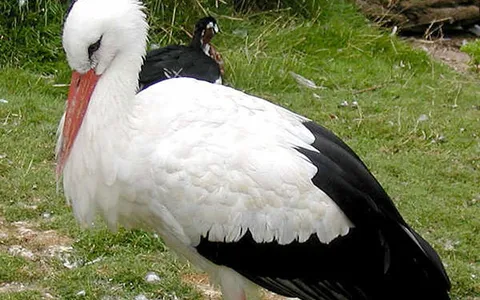
Karikili Bird Sanctuary is in Kanchipuram District near Vedanthangal Bird Sanctuary, about 90 km from Chennai with an area of 61 hectares. The Sanctuary is a…
Koonthankulam Bird Sanctuary
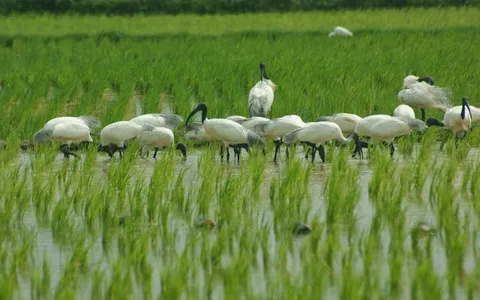
Koonthankulam Bird Sanctuary or Kunthankulam is a protected area declared as a sanctuary in 1994. It adjoins the tiny village of Koonthankulam in Nanguneri Taluk of…