Shivtharghal Waterfall
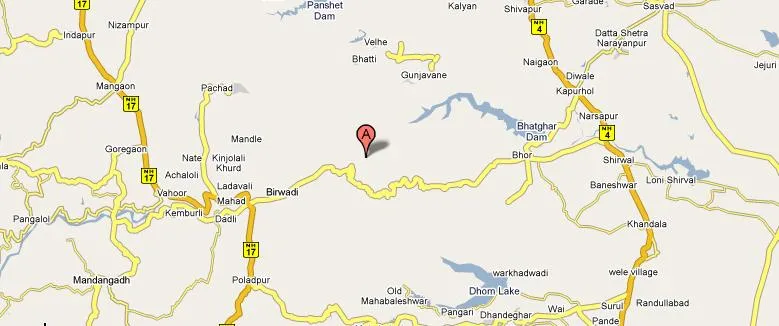
Sahyadri is one of the toughest mountains in the world. You can enjoy it's beauty in various places. Shivthar Ghal is one of such places which can be accessed from Bhor-Mahad route after crossing Varandha Ghat. It is comparatively a small and rare place but must be seen and especially in the rainy season with lots of Waterfalls. Couple of decades before, the entire area was covered with thick jungle and wild animals including tigers and was virtually inaccessible.
About Shivtharghal Waterfall
Shivthar Ghal is a quiet abode, housing some lush green places, a lovely waterfall and a river and some of the toughest on foot, picturesque mountains. Ideal for trekkers, however the silence and the natural beauty here (which can be seen in all forms possible) can soothe one and all.Located in Raigad district of Maharashtra, among the Sahyadri range (right above the Varandha ghat), Shivthar Ghal is about 1000 metres above the sea level. The place, now well maintained by SundarMath Seva Samiti and Shri Samarth Seva Mandal, has very good facilities provided by them to all those who visit Shivthar Ghal.This place is surrounded by mountains from all sides with dense forests and wild life here contains Tigers, Leoperds, fox,monkey
History
Whenever we talk about the era to which Shivaji Maharaj belongs, we cannot forget those ones who were behind the legendary hero. Shahaji Raje, Jijamata and of course, Samarth Ramdas Swami. The place where Ramdas resided after 1649 was a huge cavern, which came to be called as Shivthar Ghal (Ghal means cavern). This was where his famous “Dasbodha” was written. Adorned by exotic nature, this place is worth visiting.
The Mores ruled over the region of Javali where Shivthar Ghal is situated. This place is strategically important and very difficult to conquer. These people were serving Adilshah, but even he had no powerful control over them. Chandrarao was the title conferred upon them by Adilshah. Shivaji Maharaj defeated them and brought this region under his control in 1648. Ramdas Swami came to reside here in 1649, and stayed till 1660. Dasbodha was written here. Before proceeding on “Dakshin Digvijay”, his great campaign in the southern India in 1776, Shivaji Maharaj took Ramdas Swami’s blessings here. For many years this place was undiscovered. However in 1930, 300 years after Shivaji Maharaj was born, Shankar Krishna Dev, an eminent follower of Ramdas Swami, discovered this great pilgrimage
Interesting things to Visit
- The cavern or the ‘ghal’ which requires surpassing of 100 odd steps is a must visit. Do spend some time in the divine atmosphere (meditating would be ideal) to perhaps feel the sanctity of the place.
- A waterfall outside the cavern is a treat to eyes. Its best visited during monsoon. A river near the cavern can be a good are to play in groups.
- The plateau above the cavern houses some remnants of an obsolete palace (palace of Chandrarao More, an enemy of Swarajya-a sworn one!!). Raigad, Rajgad, Pratapgad and Torna can be spotted from far.
Nearest Visiting places
- Rajgad
- Raigad
- Pratapgad
- Torna.
Hotels/Lodge/Accommodation
You can grab some snacks at Bhor. No decent hotels beyond this point. The top of Varandha Ghat for the vista of the enchanting valley below.
Mahad has a lodge. Pune provides a wide range of options.
Help Line/Phone Number
The Kundalika is a small river flowing from the Hills of Sahyadri to the Arabian Sea. This river originates at a small town called Bhira in the Indian State of Maharashtra, 150 km south east of Bombay (Mumbai). The important towns located on the banks of Kundalika are Kolad, Roha and Salav.River Kundalika is fed by the excess water from Tata Power’s Mulshi Dam Project on to a series of hydroelectric projects and dams, including Ravalje followed by Bhira and then Dholvan, where the water is released in the morning typically at 6 am…..more
River Vashishti is one of the larger rivers in the Konkan coast of Maharashtra, India. The town of Chiplun lies on its banks. The river begins in the Western Ghats and snakes its way westwards towards the Arabian Sea. Kolkiwadi Dam, near Alore has a vast reservoir which feeds a tributary of the river. During the 2005 Maharashtra floods, the river swelled its banks, causing many of the city’s residents to evacuate it……more
Alibag or Alibaug is a coastal town and a municipal council in Raigad District in the Konkan region of Maharashtra, India. It is headquarters of the Raigad district.Alibag (also called Alibagh or Alibaugh) is an idyllic, peaceful town on the western coast of India (which is known as the Konkan region). It lies on almost the same latitude as the southern tip of Mumbai and is very close to this tip across the narrow strip of the Arabian Sea, conquerable by a ferry…..more
Shriwardhan-Harihareshwar Beach is the two unexplored beaches on the Konkan coastline. If you are an adventurous person and die on seafood delicacies, Shriwardhan Beach is the place where you should be.The water is inviting and can be explored on a boat, sailing deep into the sea, cutting through the gentle winds. A small adventurous boat ride will take you to a place where Peshwas originally resided. Shriwardhan-Harihareshwar Beach is about 200km from Mumbai……more
Padmadurg is a fort in Maharashtra, India. It was built by shivaji to northwest of Janjira. Although it is not as big as Janjira but still a sea fort that can be visited and enjoyed.Spread over a vast area of about 9 acres, Padmadurg Fort is regarded as one among the major sea forts in India. A monument of great historical importance, it is situated in Raigad District of Maharashtra. This famous fort is constructed by the great Marathas in order to conquer the Janjira Fort which lies near by……more
Karnala is 120 km from Pune and 13 km from Panvel. Between Pune and Panvel lies the Fort Karnala.Just 10 km off the busy Mumbai-Pune highway a sign welcomes visitors to the Karnala Bird Sanctuary. As the road winds up a little ghat on Mumbai-Goa highway, travel-weary visitors feel a sudden freshness in the air as they enter this pocket-sized Eden…..more
Copyright 2016 HolidayLandmark All rights reserved
Location info
-
Address:
-
District: Raigad district
-
Nearest City: Mahad
-
Best time to visit: Monsoon
How to reach Shivtharghal Waterfall
-
Nearest Railway Station:A train can be boarded on till Pune and a bus should be boarded till Mahad.
-
Nearest Airport:Pune Airport
-
Road Transport:Mumbai- 200KM /State transport buses
Things to carry
Mineral water bottles, food, first aid kit etc. Not available on the fort, one has to make arrangement for his own food.
Best time to visit Shivtharghal Waterfall
July to October: monsoon season when waterfalls are at their fullest and most spectacular.
Timings & opening hours
Accessible 24 hours. Best viewed during daylight hours (6:00 AM to 6:00 PM). Monsoon season sees peak water flow.
Entry fee & tickets
Free entry. Parking may be charged nominally at INR 10–20.
Duration needed
1–2 hours including travel from the parking area and time spent enjoying the falls.
Safety tips
Do not swim in the plunge pool — depth and underwater currents are unpredictable. Rocks near waterfalls are extremely slippery. Avoid visiting during heavy rainfall. Keep a safe distance from the falling water.
Nearest airport, railway & bus
Nearest airport: depends on location. Nearest railway station: on the Konkan Railway or Central Railway. Accessible by road from nearest town.
Mobile network coverage
Airtel, Jio, and Vi all provide excellent coverage across Maharashtra’s cities (Mumbai, Pune, Nagpur) and major tourist areas. 4G is reliable along highways and in most towns. Coverage may be weaker in deep forest areas of Tadoba, Melghat, and certain ghat sections. Free Wi-Fi is widely available in hotels and cafes.
Food & restaurants nearby
Food options are available in the nearest town. Maharashtrian cuisine — missal pav, vada pav, puran poli, and local thalis — is widely available.
Things to do at Shivtharghal Waterfall
Enjoy the breathtaking view of water cascading down the rock face. Take photographs of the falls, especially during the monsoon when the water flow is at its peak. Some waterfalls have plunge pools where visitors can take a refreshing dip (check safety conditions first).
Climate & weather
Maharashtra has a diverse climate spanning coastal Konkan, the Western Ghats, and the interior Deccan plateau. Winter (November–February) is the best time to visit: temperatures range from 12°C to 30°C depending on region. Summer (March–June) is hot, with interior areas reaching 40°C+ while hill stations (Mahabaleshwar, Lonavala) remain pleasant. The monsoon (June–September) brings heavy rainfall to the coast and ghats but transforms the landscape into lush green. October–November is pleasant post-monsoon.
Nearest petrol pump
Petrol pumps are available in the nearest town or on the approach road to Shivtharghal Waterfall. It is advisable to fill fuel before heading to remote areas, especially hill forts and wildlife sanctuaries.
Frequently asked questions
What is the best time to visit? The monsoon season (July–October) when the waterfall is at its fullest is the best time. The surrounding landscape is lush and green during this period.
Is swimming safe at the waterfall? Swimming in the plunge pool is not recommended — underwater currents, rocks, and depth variation make it dangerous. Enjoy the view from a safe distance.
Is there any entry fee? Most waterfalls in Maharashtra are free to visit. Parking may be charged at some locations.
Accessibility
Accessibility information is not currently available for this site. Contact the venue directly or check with your accommodation for the latest accessibility details.
Rules & restrictions
Standard visitor rules apply. Check locally for any specific restrictions at this site.
Best photography spots
The best photography spots are typically during the golden hours (early morning and late afternoon). Scout the location first to identify the best angles, and consider the direction of light at different times of day.
Quick facts
- Location: Maharashtra
- Best time to visit: July to October (post-monsoon season for full flow)
- Ideal duration: 1-2 hours for sightseeing and photography
- Safety: Caution advised near slippery rocks and uneven terrain
- Access: Reachable by road with a short walk or trek
Visitor information
- Timings: Generally open from sunrise to sunset. Verify local timings before planning your visit.
- Entry fee: Free entry. Local parking charges may apply.
- Best time to visit: October to March for the most comfortable weather conditions.
- Duration needed: 1 to 2 hours recommended for a comfortable visit.
Map & location view
- Destination: Shivtharghal Waterfall
- State: Maharashtra, India
- Region: Western Ghats region of Maharashtra
- How to reach: Accessible by road from nearby towns and cities. Local transport options include buses and taxis.
- Google Maps: Search for “Shivtharghal Waterfall, Maharashtra” on Google Maps for precise directions and navigation.
Photo gallery of Shivtharghal Waterfall
Photos coming soon. In the meantime, you can find images of Shivtharghal Waterfall on popular travel photography sites and social media.
Photo gallery of Shivtharghal Waterfall
Video gallery
Related destinations
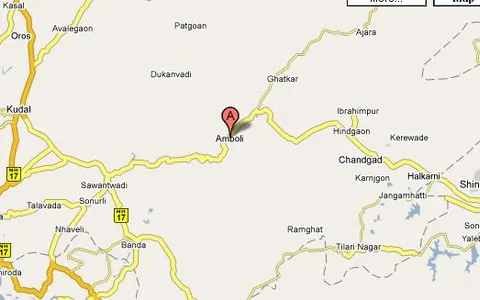
Amboli Ghat Waterfall
Amboli Ghat, nestled in the Sahyadri Hills of the Western Ghats, is often referred to as the "Queen of Maharashtra." Known for its lush greenery, mist-covered…
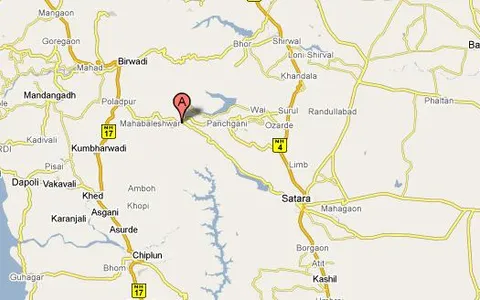
Chinaman's Waterfall
The climate around Chinaman's Waterfall, located in Mahabaleshwar, is generally cool and pleasant throughout the year. However, there are distinct weather patterns…

Chintamani Waterfall
Chintamani Waterfall is a stunning natural spot located in Maharashtra, India. Surrounded by lush greenery, it's a popular destination for nature enthusiasts and…