Elephanta Shaivite Caves
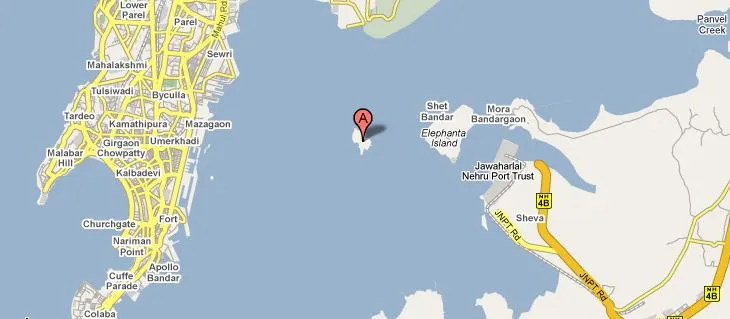
The Elephanta Caves are a great tourist attraction in the vicinity of the large Mumbai meteropolis. The Elephanta island is located 10 km away from the Gateway of India at Mumbai.Elephanta Caves are situated in Raigad district.Originally known as Gharapuri Caves. Ancient caves situated on a small island between Mumbai & Uran. All the caves belong to Shaivite Hindu sect portraying stories of Shiva & Parvati. The huge sculpture of Trimurti depicting three different facial expressions of Brahma,…
About Elephanta Shaivite Caves
The Elephanta Caves are a great tourist attraction in the vicinity of the large Mumbai meteropolis. The Elephanta island is located 10 km away from the Gateway of India at Mumbai.Elephanta Caves are situated in Raigad district.Originally known as Gharapuri Caves. Ancient caves situated on a small island between Mumbai & Uran. All the caves belong to Shaivite Hindu sect portraying stories of Shiva & Parvati. The huge sculpture of Trimurti depicting three different facial expressions of Brahma, Vishnu & Mahesh is considered unique in the history of sculptures.
The caves contain some of the most exquisite rock-hewn sculptures in the Deccan. The dating of the caves is shrouded in conflict though they were probably finished some time during the reign of the Silhara kings between the 9th and 12th century. However their use may have started earlier, during the Konkan-Mauryan period. The site is now an UNESCO World Heritage Site. There are three entrances to this temple of Shiva– one from the north, east and west respectively. The main gallery is divided by columns into equal rows and aisles. To the west, and outside this area, is a square sanctuary containing a monolithic Lingam (a phallic icon which represents the concept of Universal Creation). The huge, high-relief works in the main cave, on both sides of the three entrances and on the south wall, are characteristic of the Hindu Shaivite culture and are considered to be among the most perfect expressions of Indian art of their time.
There are seven cave excavations in the Elephanta group and these are datable from circa 6th – 7th centuries A.D. Among the cave excavations, the Cave 1 is the most impressive which represents the evolved Brahmanical rock-cut architecture. The cave is also famous for the exquisite and vibrant sculptures. On plan it almost resembles the Dumar Lena (Cave 29) of Ellora. The cave has a main entrance on the north with two other openings on the east and west respectively and a central hall with six rows of pillared columns, six in each row except on the western corner, where a shrine of lingam is provided.
The cave temple, which is the pride of Elephanta, sprawled over an area of approximately 5000 square metres, is reached by climbing a flight of more than 100 steps, to the top of a hill. Inside the temple, is a large pillared hall with rows of columns, that appear to hold up the roof of the cave. Cross beams complete the illusion of a ceiling. One’s attention is immediately drawn to the series of marvellous sculptured panels, nine in all, which are set like tableaux on the walls. Little is known about the architects and sculptors, who worked on this gem of ancient architecture.
Interesting things to Visit
Gateway of India:
Built in 1911 to commemorate the visit of George V to India, this is a principal landmark of Mumbai, situated at Colaba. This was officially inaugurated in 1924 to welcome the visitors who came to by ship. This distinctive monument was India’s principal port. The monument’s architecture reflects similarity with the conventional arch of Triumph.
Flora Fountain:
The Flora Fountain erected in 1869 in honour of Sir Bartle Frere (Governor of Mumbai in 1862-67), now bustles with busy life and is the many business centre housing many major banks and offices. Gerald Aungier began the Cathedral of St. Thomas in 1672, which was formally opened in 1718 to the fountain.
Chowpatty Beach:
Mumbai’s famous beach is no place for a sun bathe or a dip. In fact, there’s not much going on at Chowpatty at all during the day, but in the evening it develops a magical fairground atmosphere as locals come to stroll among the contortionists, masseurs, transvestites, balloon sellers, gamblers, fortune tellers, magicians, drug dealers, nut vendors, ferris wheels and shooting galleries.
Haji Ali Mosque:
Situated at the end of a long causeway poking into the Arabian Sea, is a whitewashed fairytale mosque containing the tomb of the Muslim Saint Haji Ali. The saint is believed to have been a wealthy local businessman who renounced the material world and meditated on a nearby headland following a pilgrimage to Mecca. The mosque and tomb were built by devotees in the early 19th century. Alternative versions say Haji Ali died while on a pilgrimage to Mecca and his casket amazingly floated back to Bombay and landed at this spot.
Chor Bazar:
No visit to Mumbai is complete without a foray into the bazaars of Kalbadevi, north of Crawford Market. The narrow lanes of this predominantly Muslim area are hemmed in by laundry-draped chawls , and a seething mass of people bring Mumbai’s traffic to a standstill.
Help Line/Phone Number
The Kundalika is a small river flowing from the Hills of Sahyadri to the Arabian Sea. This river originates at a small town called Bhira in the Indian State of Maharashtra, 150 km south east of Bombay (Mumbai). The important towns located on the banks of Kundalika are Kolad, Roha and Salav.River Kundalika is fed by the excess water from Tata Power’s Mulshi Dam Project on to a series of hydroelectric projects and dams, including Ravalje followed by Bhira and then Dholvan, where the water is released in the morning typically at 6 am…..more
River Vashishti is one of the larger rivers in the Konkan coast of Maharashtra, India. The town of Chiplun lies on its banks. The river begins in the Western Ghats and snakes its way westwards towards the Arabian Sea. Kolkiwadi Dam, near Alore has a vast reservoir which feeds a tributary of the river. During the 2005 Maharashtra floods, the river swelled its banks, causing many of the city’s residents to evacuate it……more
Alibag or Alibaug is a coastal town and a municipal council in Raigad District in the Konkan region of Maharashtra, India. It is headquarters of the Raigad district.Alibag (also called Alibagh or Alibaugh) is an idyllic, peaceful town on the western coast of India (which is known as the Konkan region). It lies on almost the same latitude as the southern tip of Mumbai and is very close to this tip across the narrow strip of the Arabian Sea, conquerable by a ferry…..more
Shriwardhan-Harihareshwar Beach is the two unexplored beaches on the Konkan coastline. If you are an adventurous person and die on seafood delicacies, Shriwardhan Beach is the place where you should be.The water is inviting and can be explored on a boat, sailing deep into the sea, cutting through the gentle winds. A small adventurous boat ride will take you to a place where Peshwas originally resided. Shriwardhan-Harihareshwar Beach is about 200km from Mumbai……more
Padmadurg is a fort in Maharashtra, India. It was built by shivaji to northwest of Janjira. Although it is not as big as Janjira but still a sea fort that can be visited and enjoyed.Spread over a vast area of about 9 acres, Padmadurg Fort is regarded as one among the major sea forts in India. A monument of great historical importance, it is situated in Raigad District of Maharashtra. This famous fort is constructed by the great Marathas in order to conquer the Janjira Fort which lies near by……more
Karnala is 120 km from Pune and 13 km from Panvel. Between Pune and Panvel lies the Fort Karnala.Just 10 km off the busy Mumbai-Pune highway a sign welcomes visitors to the Karnala Bird Sanctuary. As the road winds up a little ghat on Mumbai-Goa highway, travel-weary visitors feel a sudden freshness in the air as they enter this pocket-sized Eden…..more
Copyright 2016 HolidayLandmark All rights reserved
Location info
-
Address: Elephanta Island,Arabian Sea,near Mumbai, India
-
District: Raigad
-
Nearest City: Mumbai
-
Best time to visit: November to March
Climate & weather
Summers 22°- 40°C. Winters 12°-33°C
Things to do at Elephanta Shaivite Caves
Marine Drive:
On Marine Drive also lies the Taraporewala Aquarium which houses fresh water as well as saltwater fishes. A fantastic view of Mumbai can be seen from the Hanging Gardens and Kamala Nehru Park, set on the top of Malabar. The famous Mahalaxmi Temple, is the oldest temple in Mumbai, dedicated to the Goddess of Wealth which lies some distance away from Malabar Hills. A little further away is a long causeway which leads to Haji Ali tomb and mosque, accessible during low tide. In Prabhadevi comes the exquisite temple of Siddhivinayak dedicated to Lord Ganesha always bustling with devotees. Juhu Beach, Nehru Planetarium and Nehru Science Centre are other tourist attractions.
Hotels & accommodation nearby
Maharastra Tourism Department Hotel,Chateau Windsor Hotel,Grand Hyatt Mumbai.
Best time to visit Elephanta Shaivite Caves
October to March: comfortable temperatures for exploring. Caves provide natural shelter from heat.
Timings & opening hours
Typically open from 9:00 AM to 5:00 PM daily. Closed on Mondays at some sites.
Entry fee & tickets
INR 25–40 for Indian nationals, INR 300–600 for foreign nationals. Free for children under 15.
Duration needed
1–2 hours for a group of caves. Ajanta and Ellora each require half a day to a full day.
Safety tips
Carry a torch/flashlight — interior areas may be dimly lit. Watch your step on uneven stone floors. Do not touch the paintings or carvings — oils from fingers can damage them. Photography rules vary by cave.
Things to carry
Torch/flashlight, comfortable walking shoes, water bottle, camera (check photography policy), and a light jacket (caves are cooler inside).
Nearby visiting places
Other cave groups, nearby historical sites, hill stations, and temples.
Nearest airport, railway & bus
Nearest airport: Aurangabad Airport (IXU) or Mumbai International Airport. Nearest railway station: Aurangabad, Lonavala, or nearest station. Accessible by road.
Mobile network coverage
Airtel, Jio, and Vi all provide excellent coverage across Maharashtra’s cities (Mumbai, Pune, Nagpur) and major tourist areas. 4G is reliable along highways and in most towns. Coverage may be weaker in deep forest areas of Tadoba, Melghat, and certain ghat sections. Free Wi-Fi is widely available in hotels and cafes.
Food & restaurants nearby
Food options are available in the nearest town. Maharashtrian cuisine — missal pav, vada pav, puran poli, and local thalis — is widely available.
History of Elephanta Shaivite Caves
The Elephanta Caves, located on Elephanta Island in Mumbai Harbour, were carved between the 5th and 7th centuries CE. The cave complex is dedicated to Lord Shiva and features the monumental 5-metre-tall Trimurti sculpture depicting the three aspects of Shiva. The caves are a UNESCO World Heritage Site and can be reached by ferry from the Gateway of India. They represent some of the finest rock-cut architecture in India.
Nearest petrol pump
Petrol pumps are available in the nearest town or on the approach road to Elephanta Shaivite Caves. It is advisable to fill fuel before heading to remote areas, especially hill forts and wildlife sanctuaries.
Frequently asked questions
How do I reach Elephanta Caves? Ferries depart from Gateway of India in Mumbai. The ride takes about 1 hour. The first ferry is at 9:00 AM and the last return ferry at 5:00 PM.
What is the entry fee? INR 40 for Indian nationals, INR 600 for foreign nationals. The ferry ticket is separate (approximately INR 200–300 round trip).
What is the best time to visit? October to March offers pleasant weather. Avoid monsoon (June–September) when ferry services may be disrupted.
Accessibility
Accessibility information is not currently available for this site. Contact the venue directly or check with your accommodation for the latest accessibility details.
Rules & restrictions
Standard visitor rules apply. Check locally for any specific restrictions at this site.
Best photography spots
The best photography spots are typically during the golden hours (early morning and late afternoon). Scout the location first to identify the best angles, and consider the direction of light at different times of day.
Quick facts
- Location: Maharashtra
- Best time to visit: November to February for pleasant weather
- Ideal duration: 1-3 hours for a thorough exploration
- Entry: Entry fee applicable (varies for Indian and foreign tourists)
- Guided tour: Available on request at the ticket counter
- Photography: Permitted in most areas; flash may be restricted
Visitor information
- Timings: Generally open from sunrise to sunset. Verify local timings before planning your visit.
- Entry fee: Entry fee applies as per Archaeological Survey of India rates. Check at the ticket counter for current charges.
- Best time to visit: October to March for the most comfortable weather conditions.
- Duration needed: 1 to 2 hours recommended for a comfortable visit.
Map & location view
- Destination: Elephanta Shaivite Caves
- State: Maharashtra, India
- Region: archeological region of Maharashtra
- How to reach: Accessible by road from nearby towns and cities. Local transport options include buses and taxis.
- Google Maps: Search for “Elephanta Shaivite Caves, Maharashtra” on Google Maps for precise directions and navigation.
Photo gallery of Elephanta Shaivite Caves
Photos coming soon. In the meantime, you can find images of Elephanta Shaivite Caves on popular travel photography sites and social media.
How to reach Elephanta Shaivite Caves
Transport: Elephanta can be reached by regular ferries that leave from Mumbai's Gateway of India harbour throughout the year, except during the monsoon season.The first boat leaving Elephanta Island for Mumbai is at 12:00 noon and the last one is at 5:30PM. If you are fast, you can take the first boat from Mumbai to Elephanta Island and visit all caves.
Photo gallery of Elephanta Shaivite Caves
Video gallery
Related destinations
Ajantha caves
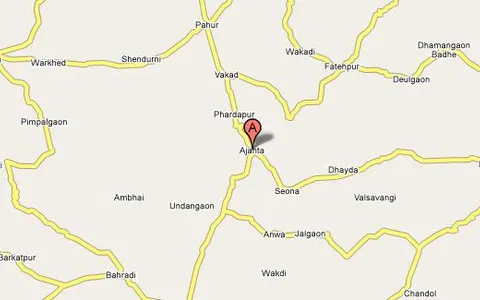
AJANTA is world's greatest historical monument recognised by UNESCO far near from Jalgaon city of Maharashtra,Ajanta Cave Temple can be reached easily from anywhere…
Bassein fort
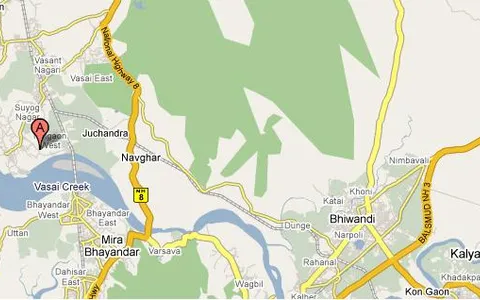
The Bassein Fort is the Sea fort in Vasai Road, which is a suburb towards north of Mumbai. Vasai Road is the third last station on the western railway towards…
Bhaja Buddhist Caves
Bhaja Caves, situated in the Aurangabad district, lie at a distance of 60 km from Pune. The caves are said to be as old as the 2nd century, i.e., the early…